



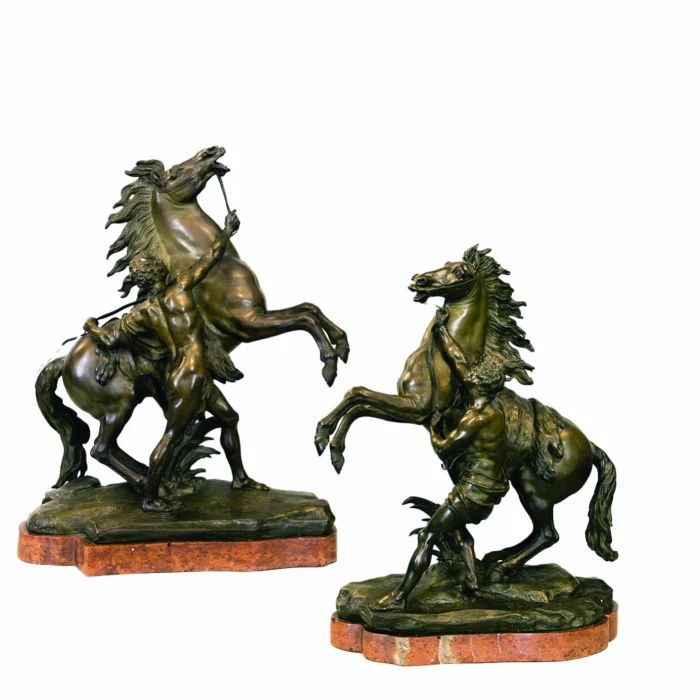
PAIR OF SCULPTURES “THE MARLY HORSES”, AFTER GUILLAUME COUSTOU THE ELDER (1677–1746) FRANCE, 19TH CENTURY
AntiqonART consultant will contact you within one business day after receiving your request.
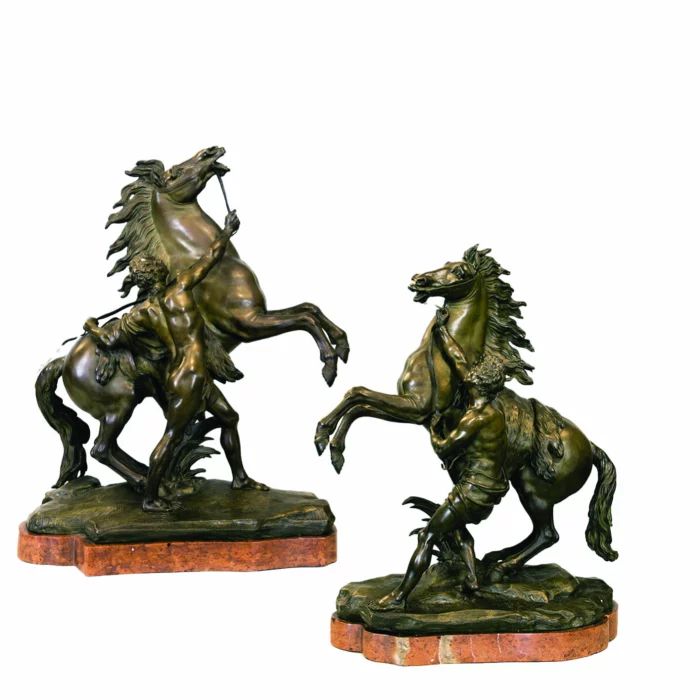
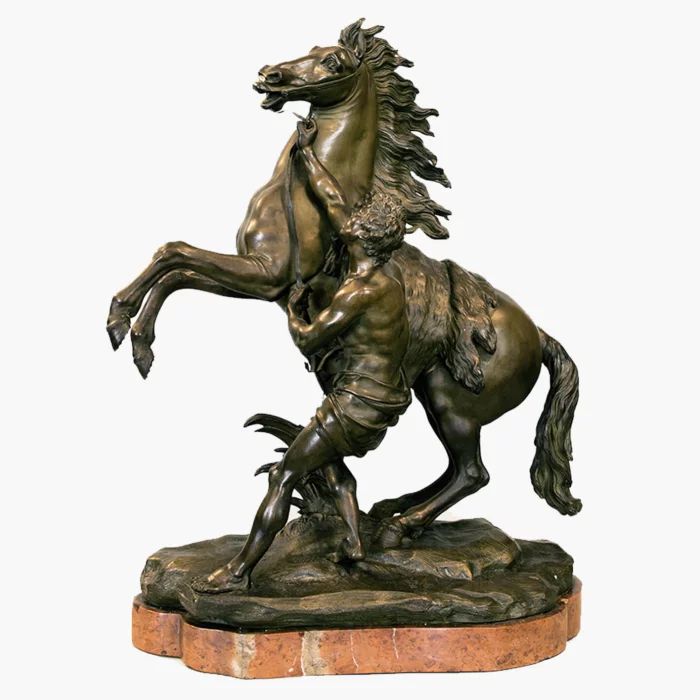
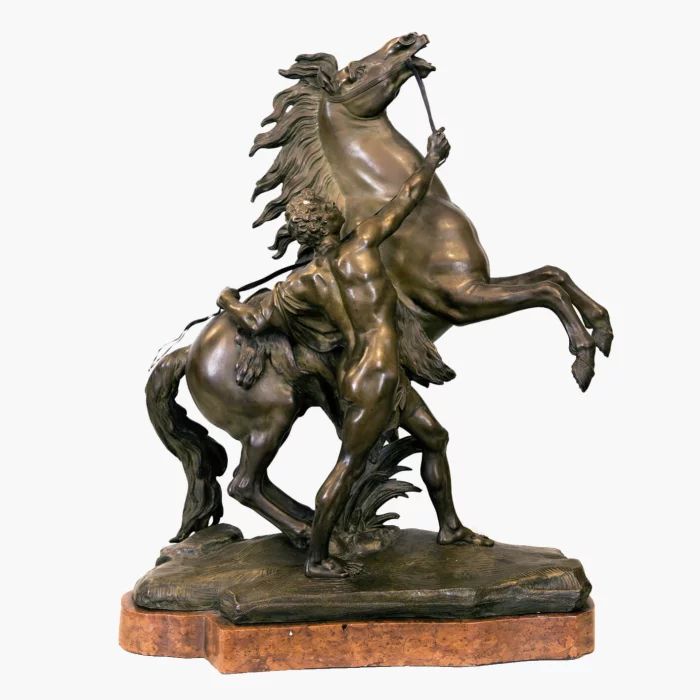
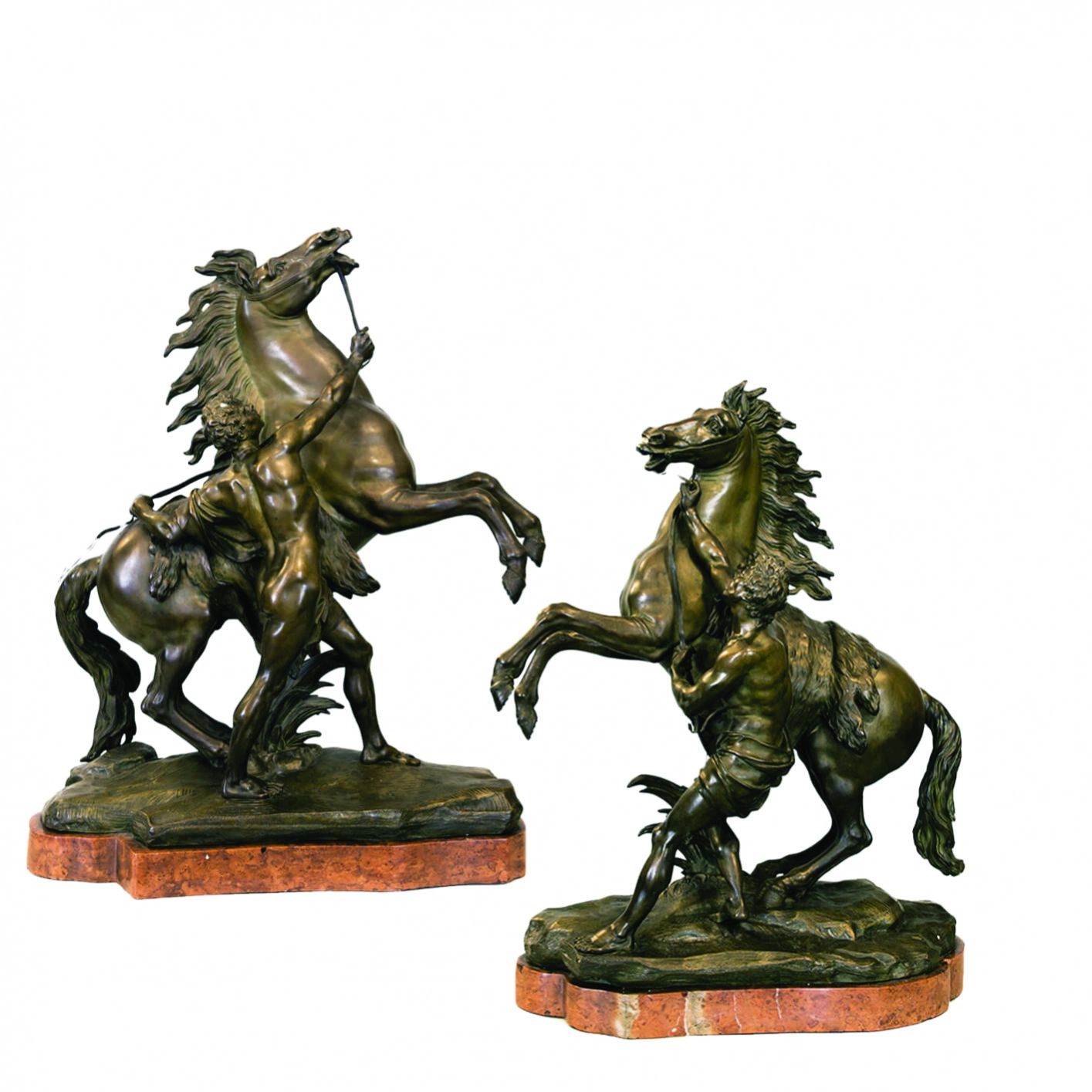
The pair of sculptural compositions known as “The Marly Horses”, also referred to as “The Horse Tamers”, represents a highly accomplished bronze interpretation of one of the most celebrated works of French court sculpture of the 18th century. The compositions derive from the original marble group created by Guillaume Coustou the Elder for the terrace of the royal château of Marly-le-Roi during the reign of Louis XV.
The sculptures depict nude youths exerting great effort to restrain rearing horses. The dramatic tension of the scene is conveyed through the powerful contrast between the untamed energy of the animals and the academically precise treatment of human anatomy. The figures are conceived in complex spatial movement, creating a strong sense of continuous action and internal dynamism characteristic of the finest examples of French monumental sculpture.
The bronzes are cast with exceptional attention to detail. The musculature of the human figures, the animated manes and strained necks of the horses, as well as the expressive gestures and corporeal plasticity, are all rendered with remarkable clarity. The surfaces retain a deep, even patina of a warm tone, enhancing the sculptural relief and the play of light and shadow. Each figure is mounted on a shaped marble base of harmonious coloration, lending the ensemble a distinctly ceremonial and interior-oriented presence.
Material: Bronze; marble.
Dimensions: Height – 66 cm; Width – 53 cm; Depth – 48 cm (each sculpture).
Condition: Good.
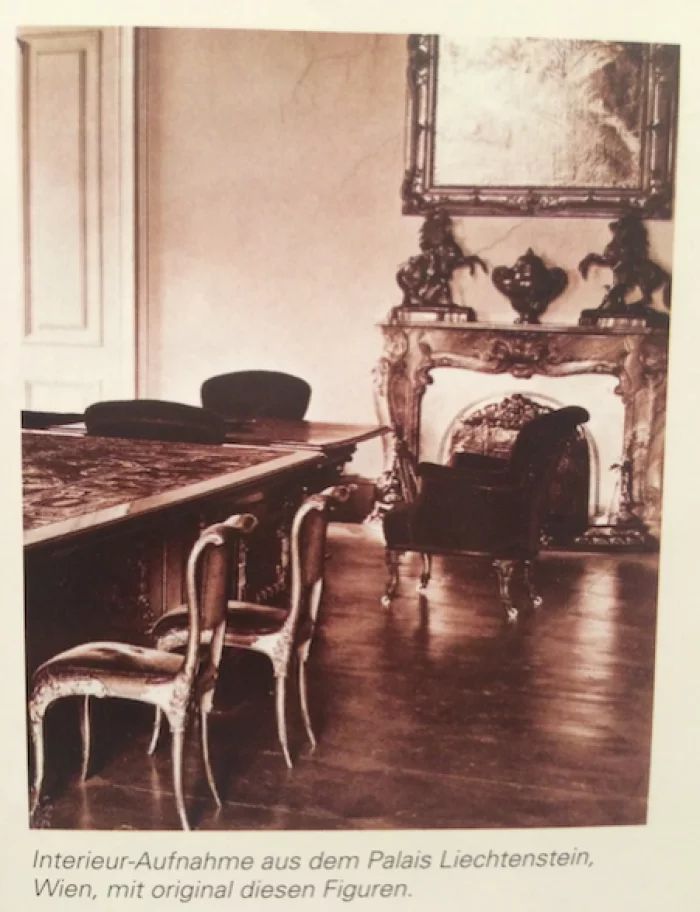
Provenance: Photo archive of a private collection. Formerly part of a private collection displayed in the Liechtenstein palaces, Stadtpalais Vienna and Schloss Vaduz, Liechtenstein, 1945.
The sculptural group known as “The Marly Horses” occupies a central position in the history of European art as one of the defining symbols of French royal sculpture under Louis XV. The original marble compositions were created between 1740 and 1745 by commission of the French crown for the terrace of the château of Marly-le-Roi, a residence intended for the monarch’s private retreats. The work embodied a new artistic ideal of the mid-18th century, replacing the static grandeur of Baroque representation with movement, emotional intensity, and complex interaction of forms.
Rather than serving as a conventional allegory of power, the composition presents a dramatic confrontation between human will and natural force. The nude youths restraining the rearing horses are commonly interpreted as an allegory of reason, discipline, and inner strength capable of mastering primal energy. This interpretation aligned closely with the philosophical and aesthetic ideals of the Enlightenment and contributed significantly to the immediate acclaim of the work.
During the 19th century, amid renewed interest in the art of the Ancien Régime, “The Marly Horses” were widely reproduced in bronze reductions of high artistic quality. These works were intended for the decoration of grand aristocratic and palace interiors throughout Europe and were regarded not as mere copies but as independent sculptural objects reflecting the advanced standards of contemporary foundry practice.
Of particular significance is the association of such sculptures with the collections of the Princely House of Liechtenstein, among the most distinguished European collectors of fine art. Displayed within the interiors of the Stadtpalais in Vienna and Schloss Vaduz in Liechtenstein, these works formed part of a carefully curated environment combining academic sculpture, Old Master painting, and decorative arts. The Liechtenstein collections were renowned for their museum-level quality, systematic approach, and ambition to present European artistic heritage as a continuous historical tradition.
The presence of bronze “Marly Horses” within this princely context underscores their status not merely as decorative interior elements but as works of significant cultural and historical value, recognized as authoritative interpretations of one of the most influential sculptural models of the 18th century, adapted to the tastes and aesthetics of the 19th century.
Overall condition is good. The bronzes display an even, deep patina. Minor traces of age and use are present, consistent with period. The marble bases are well preserved, without cracks or significant chips.
The condition report is provided for informational purposes only.
It is not comprehensive and may not reflect all defects, restorations, alterations, or adaptations, as Antiqon does not perform professional conservation-level assessments. The information is based on a qualified, yet subjective, evaluation by our specialists.Before purchasing, we recommend consultation with an independent expert.Please also consult our Terms and conditions and Glossary A-Z, which contain important information on lot characteristics and sale conditions.