SECRETARY DESK WITH A PAINTED PANEL, PAUL SORMANI  FRANCE, PARIS, SECOND HALF OF THE 19TH CENTURY

SECRETARY DESK WITH A PAINTED PANEL, PAUL SORMANI FRANCE, PARIS, SECOND HALF OF THE 19TH CENTURY

ID-ANTQ-8351
Live auction begins in:
| April 10, 2026 2:42 AM GMT+03:00
Estimate
5000 - 8000 EUR
Current Bid
EUR
 
0 bids
Register for bidding
Request more info
Use our cost calculator

Discover how the value of similar works has evolved over the past 10 years. Art is not only beauty — it's an investment.

Price History

Discover how the value of similar works has evolved over the past 10 years. Art is not only beauty — it's an investment.

Request a Shipping Quote

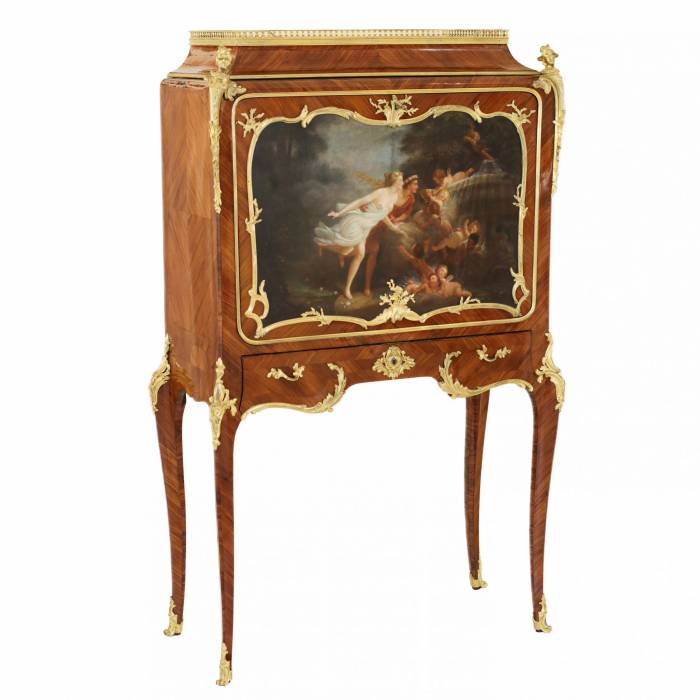
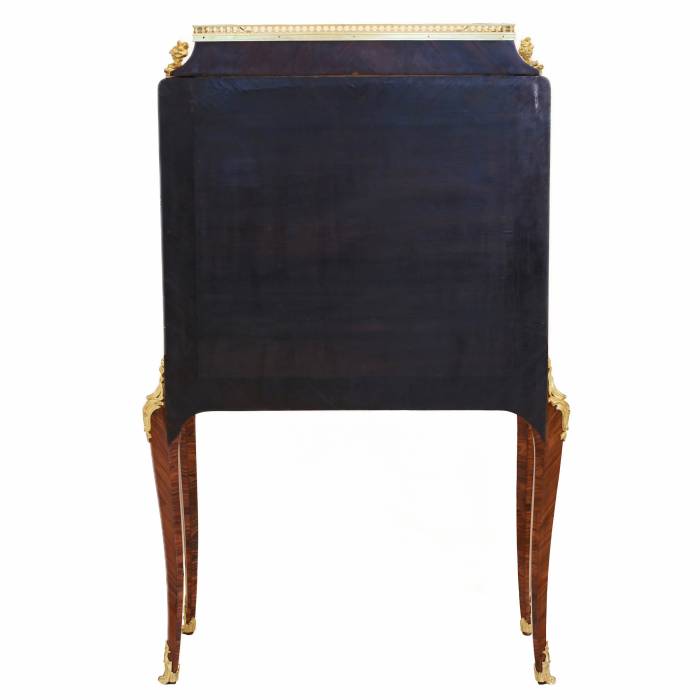
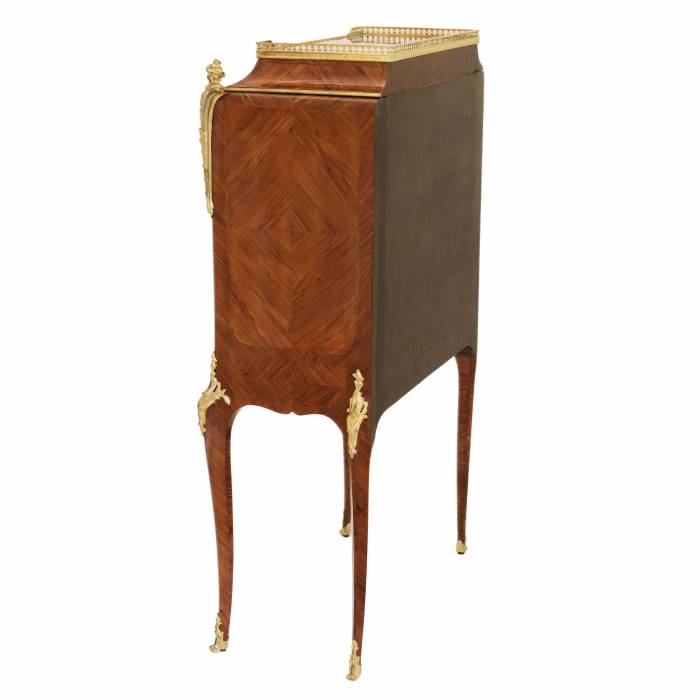
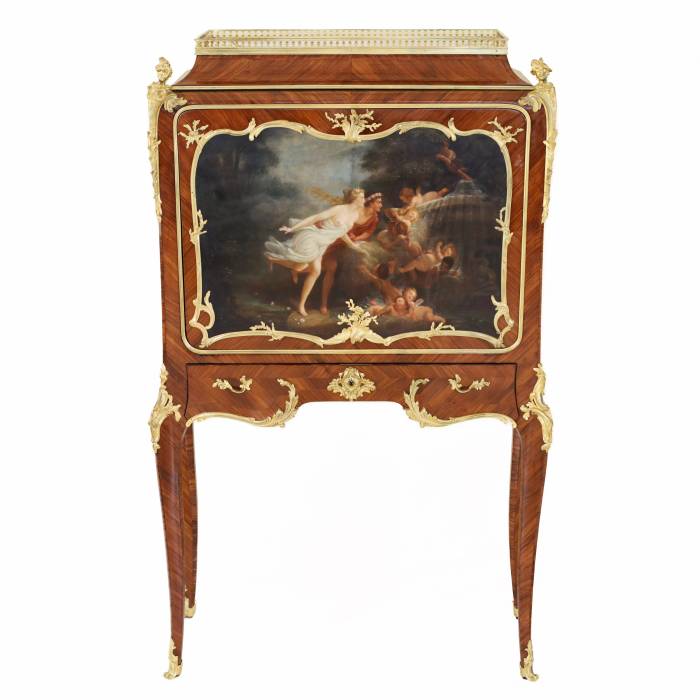
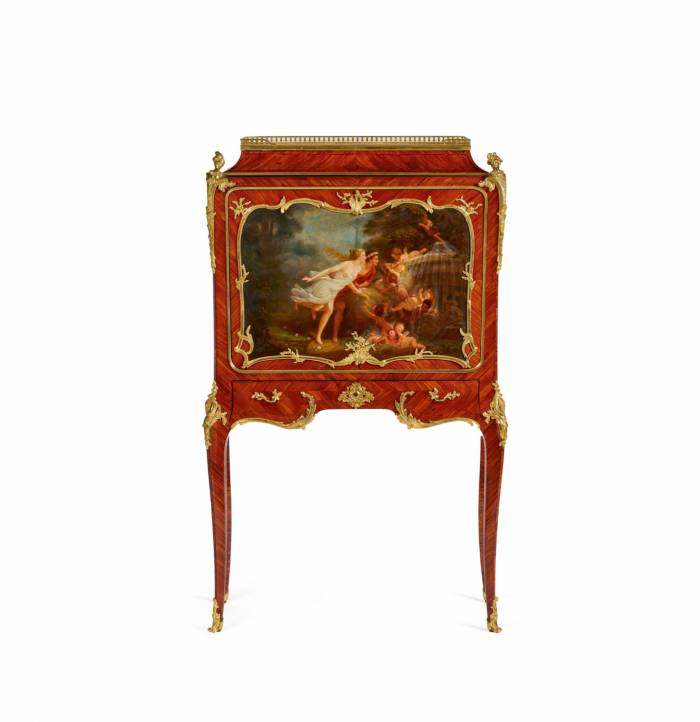
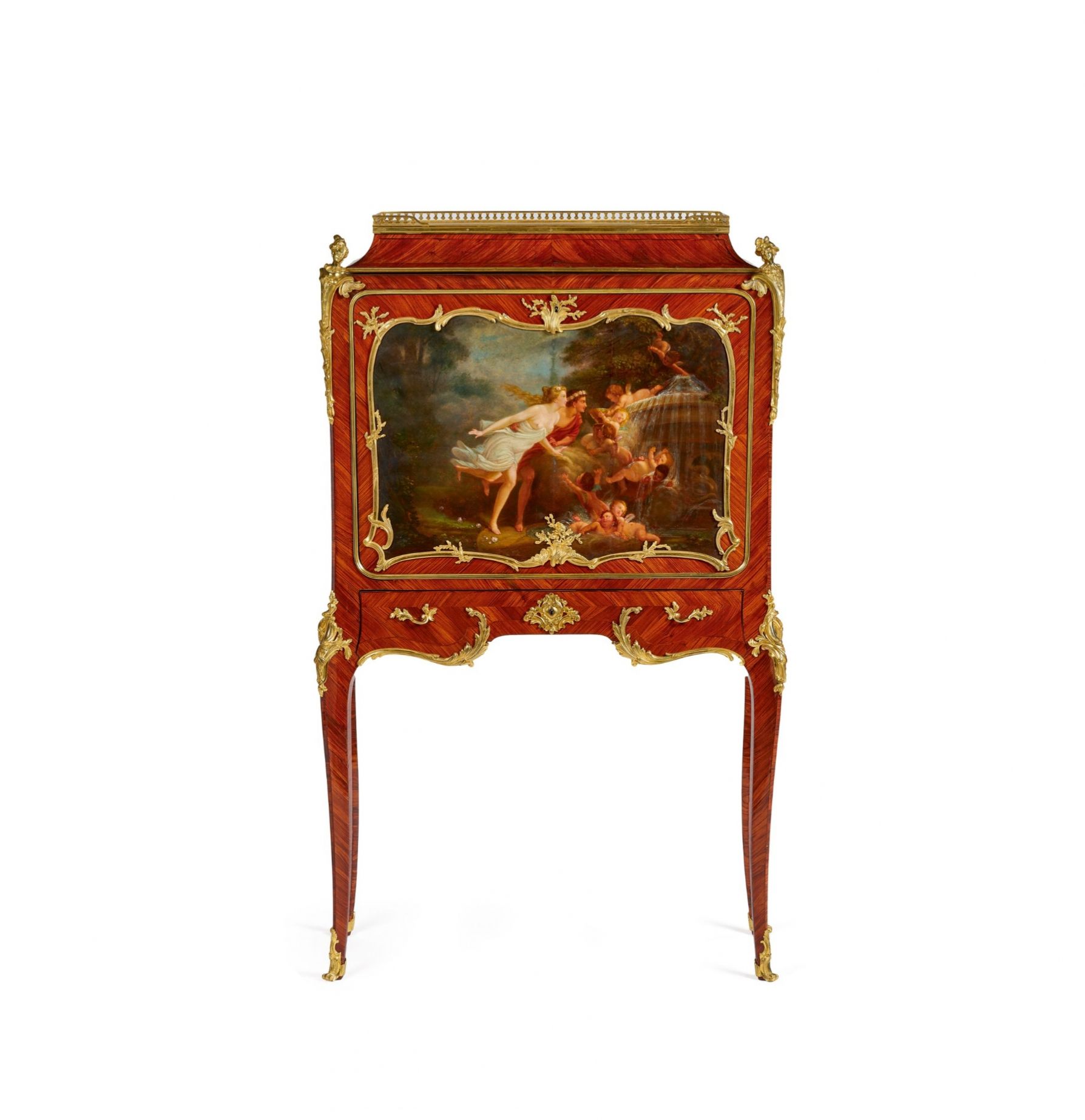
A museum-quality secrétaire created in the Parisian workshop of Paul Sormani, representing an outstanding example of French furniture of the second half of the 19th century, executed in the spirit of Historicism with refined references to the Louis XV style. The carcass is made of solid wood and veneered with kingwood, carefully selected for its grain and tone and laid in a precise geometric pattern that emphasizes the architectural clarity of the form.

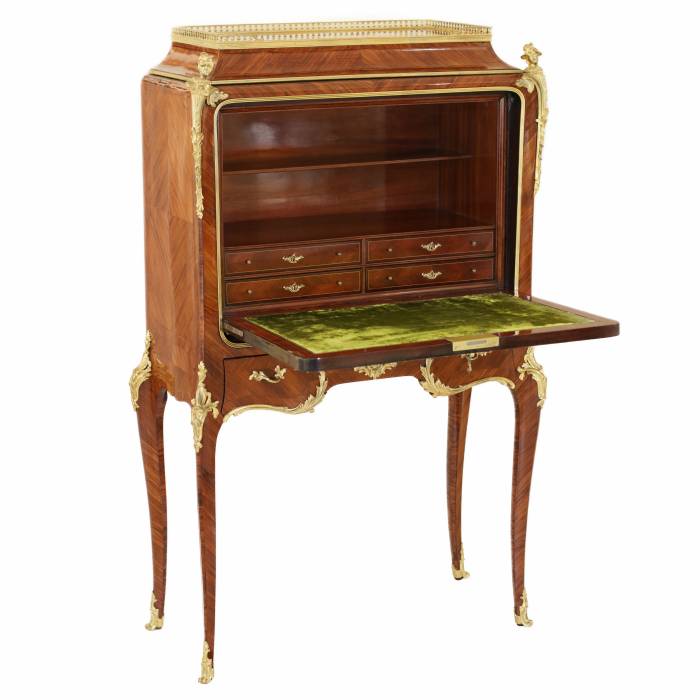
The secrétaire stands on tall cabriole legs richly adorned with gilt-bronze mounts. The flowing curves of the legs and their bases are accentuated by bronze elements with vegetal motifs, lending the piece visual lightness and elegant dynamism.

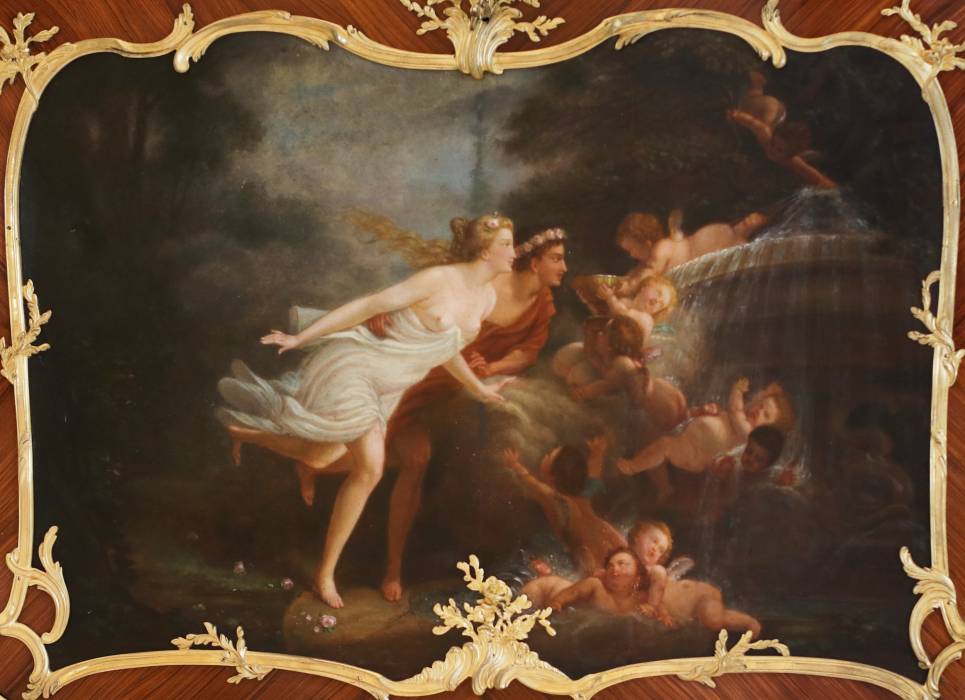
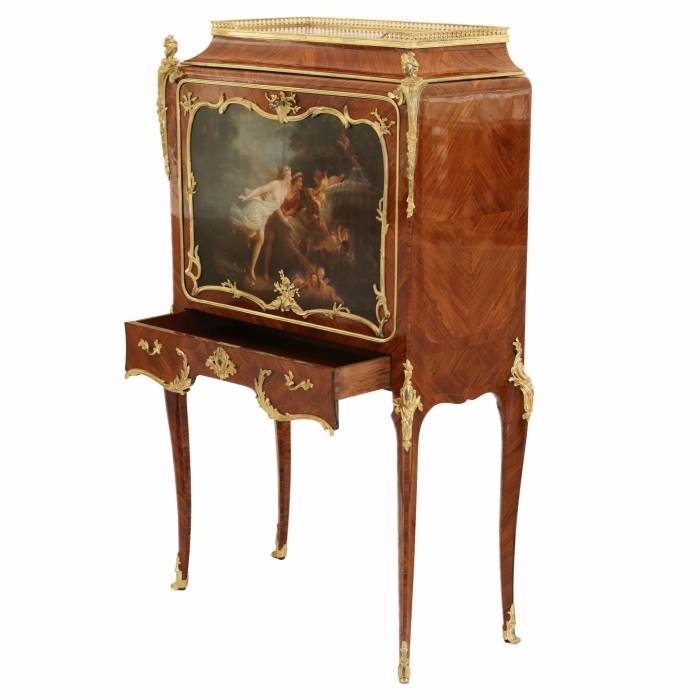
The principal artistic focal point is the large painted panel set into the fall-front, depicting classical lovers running toward a fountain, surrounded by cupids. Executed in the academic tradition, the composition displays finely modelled figures, soft chiaroscuro and a painterly depth of landscape background. The panel is framed by an elaborate gilt-bronze mount with rocaille scrolls, floral tendrils and corner mascarons in the form of female heads organically integrated into the decorative structure of the façade.

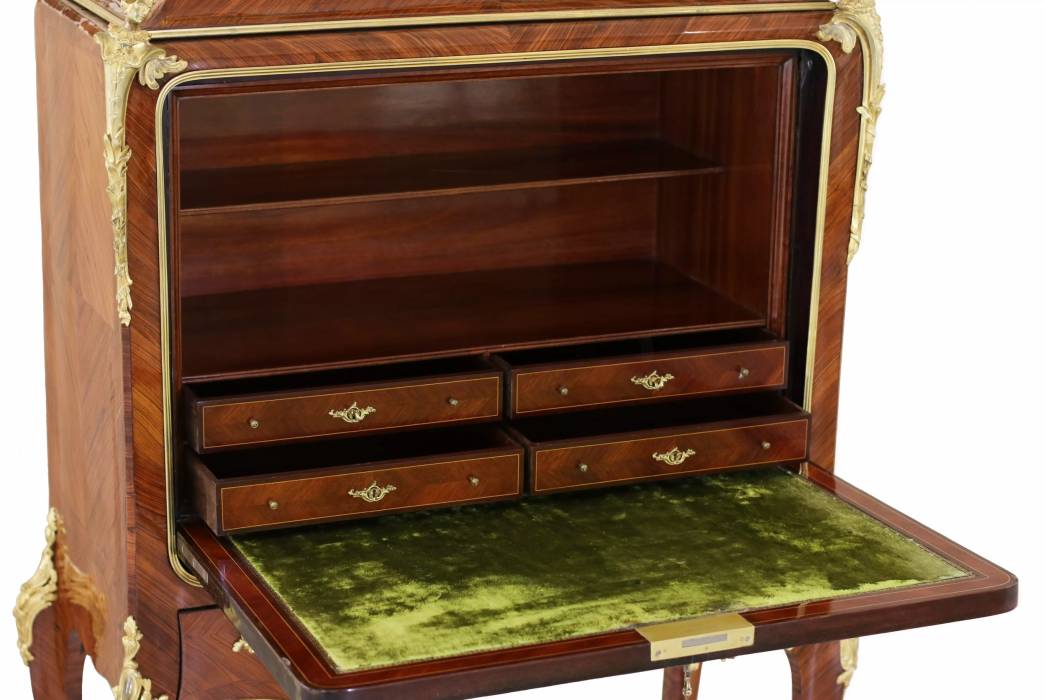
Beneath the fall-front is a drawer decorated with undulating bronze foliage and refined handles. The interior is rationally and functionally arranged: the upper section divided by a shelf, the lower fitted with four small drawers in mahogany, two of which lock with a key. The writing surface is lined with green velvet, creating a noble contrast with the warm tones of the wood and gilt bronze.

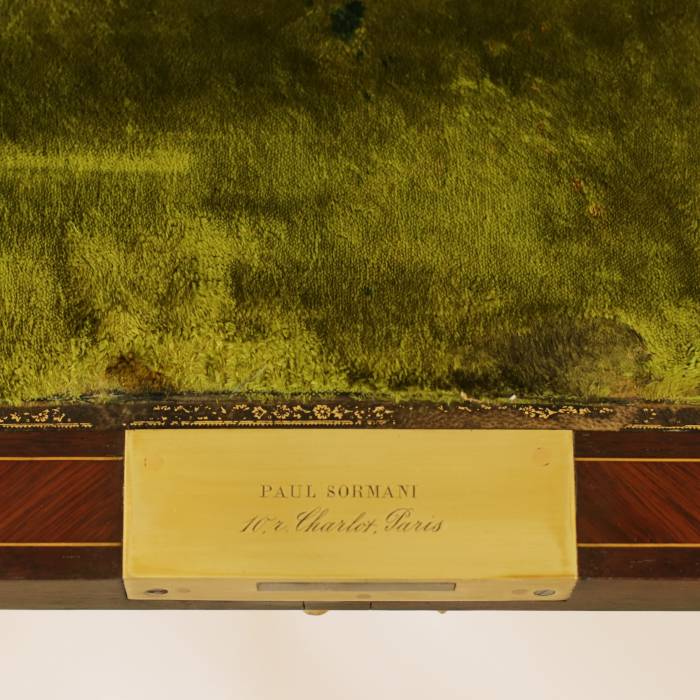
The upper section of the secrétaire is finished with a broad horizontal surface enclosed by an elegant gilt-bronze balustrade, reinforcing the ceremonial character of the piece and the completeness of its composition. The lockplate bears the maker’s signature with the Paris workshop address.

Marks: Maker’s lockplate signed “Paul Sormani, 10 r. Charlot, Paris”.

Dimensions: Height: 137 cm. Width: 87 cm. Depth: 39 cm.

Condition: Good.

Provenance: Private European collection.

Art:
europe
Height:
137 cm
Width:
87 cm
Depth:
39 cm
Period:
Mid-19th century
Style:
Louis XVI
Country:
France
Material:
Bronze, wood, Mahogany and Gilded bronze mercury, Polychrome wood
Condition:
Revive
Fair
Good
Very good
Like new

Paul Sormani occupies a distinguished place in the history of French furniture of the second half of the 19th century. His Paris workshop on rue Charlot became one of the leading centers for the production of high-quality artistic furniture for the aristocracy, the upper bourgeoisie and international collectors. Sormani’s works are characterized by exceptional craftsmanship, refined material selection and masterful use of gilt bronze produced by the finest Parisian foundries.

During the Second Empire and the decades that followed, Historicism emerged as the dominant artistic language of French decorative arts. References to the forms and ornamentation of the Louis XV period were perceived as markers of cultivated taste and cultural continuity. Furniture of this circle was not a literal copy of 18th-century models, but rather a creative reinterpretation informed by the aesthetic and technical achievements of the 19th century.

Secretaries with painted panels held a special place in the interiors of Parisian hôtels particuliers. They combined the practical function of a writing desk with the role of a decorative focal point shaping the artistic identity of an interior. The integration of painting into furniture façades elevated such objects to the status of unique works of decorative art, bridging the boundaries between furniture, painting and sculpture. Classical themes, highly favored in 19th-century academic culture, symbolized ideals of harmony, love and timeless values, making such pieces particularly desirable in representative spaces.

Today, furniture by Paul Sormani is represented in museum and major private collections and is regarded as a benchmark of French Historicist furniture, uniting high artistic culture, technical excellence and refined taste.

Overall condition is good. The structure is stable, with kingwood veneer preserved without significant losses. The gilt bronze shows an even, attractive patina consistent with age. The painted panel is well preserved, with minor age-related traces. The green velvet writing surface shows moderate wear consistent with age and use.

The condition report is provided for informational purposes only.

It is not comprehensive and may not reflect all defects, restorations, alterations, or adaptations, as Antiqon does not perform professional conservation-level assessments. The information is based on a qualified, yet subjective, evaluation by our specialists.Before purchasing, we recommend consultation with an independent expert.Please also consult our Terms and conditions and Glossary A-Z, which contain important information on lot characteristics and sale conditions.
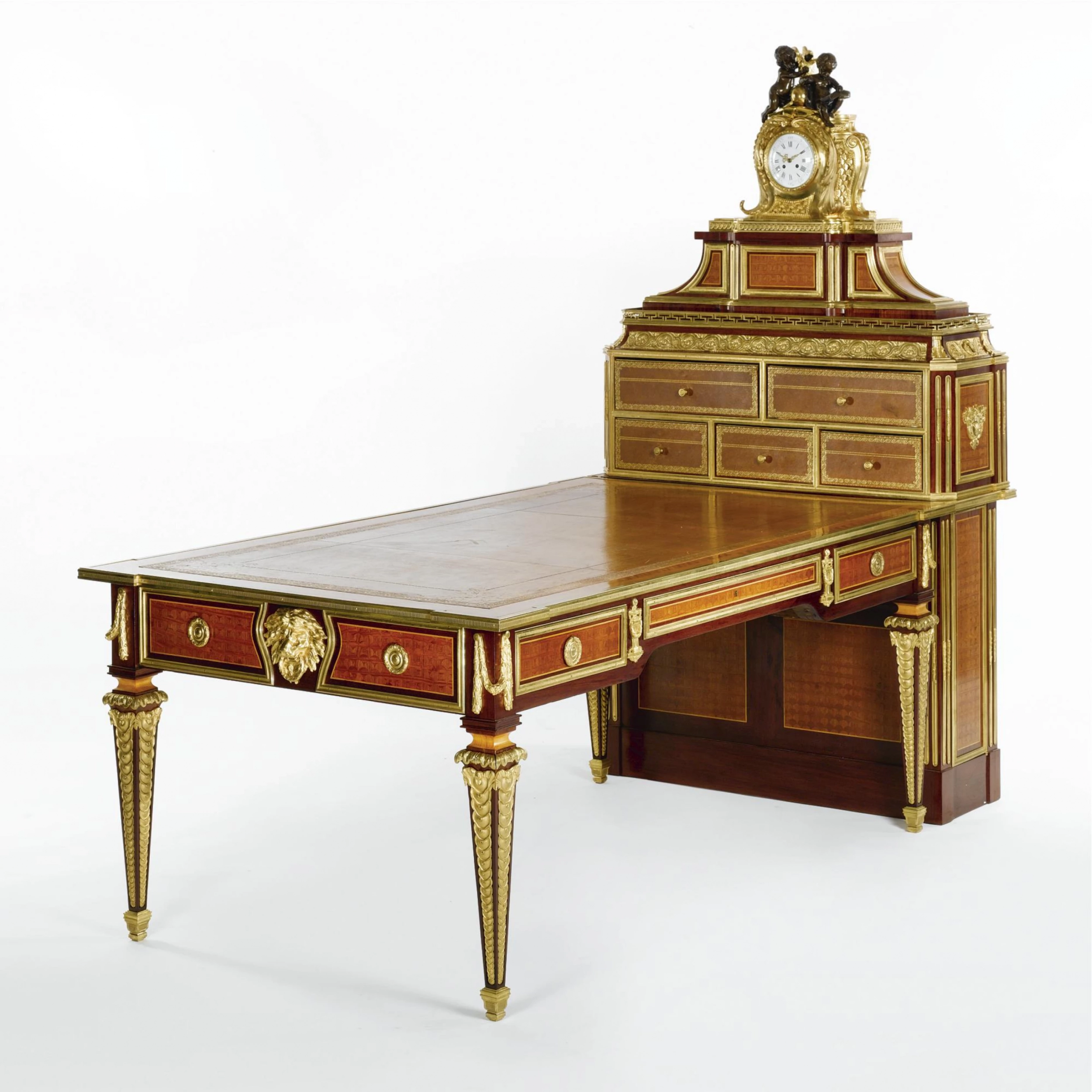
PAUL SORMANI (1817-1877)
Paul Sormani (1817-1877): Unraveling the Legacy of a Master Artisan in Fine Furniture Making Paul Sormani (1817-1877) was a renowned artisan and entrepreneur who made a significant impact on the world of fine furniture making during the 19th century. His name has become synonymous with exquisite craftsmanship and luxury, and his pieces have adorned the homes of nobles, aristocrats, and collectors worldwide. In this article, we will delve into the life and work of Paul Sormani, exploring his contributions to the art of furniture making, the enduring legacy of his creations, and his role in shaping the history of French furniture during the 19th century. Early Life and Beginnings Born in Venice, Italy, in 1817, Paul Sormani displayed an early aptitude for craftsmanship and design. His family background, which included generations of skilled woodworkers, influenced his passion for the art. He honed his skills by studying under renowned Italian craftsmen, acquiring a deep understanding of traditional techniques and design principles. Establishing in Paris In the mid-19th century, Paris was the epicenter of art, culture, and luxury, attracting creative minds from across the globe. In 1847, Paul Sormani decided to move to Paris to explore new opportunities and expand his horizons. With his exceptional skills and artistic vision, he quickly gained recognition among the elite clientele. Sormani′s Style and Influences Paul Sormani was known for blending various artistic influences into his furniture designs. He masterfully combined elements from different periods, including Renaissance, Rococo, and Neoclassical styles. This fusion of influences resulted in unique and timeless pieces that appealed to the eclectic tastes of his wealthy patrons. Royal Patronage and International Recognition Sormani′s reputation flourished when he received a commission from Emperor Napoleon III and Empress Eugénie, leading to a royal warrant in 1855. This distinguished endorsement elevated his status and attracted a broader clientele, both within France and internationally. Sormani showcased his masterpieces at various international exhibitions, garnering critical acclaim and prestigious awards. Sormani′s Workshop and Collaborations The success of Sormani′s workshop can be attributed to his ability to gather a team of skilled craftsmen and artisans who shared his passion for perfection. Collaborating with notable artists, metalworkers, and decorators, Sormani′s workshop produced exceptional furniture pieces with intricate marquetry, elegant inlays, and lavish ornamentations. Mastering the Art of MarquetryOne of Sormani′s most outstanding skills was the art of marquetry, a technique involving the intricate arrangement of wood veneers to create decorative patterns and designs. His marquetry work was unrivaled, and he often incorporated exotic woods and precious materials, such as mother-of-pearl and tortoiseshell, to enhance the opulence of his pieces. The Decline and Legacy Tragically, Paul Sormani′s life came to an end in 1877, leaving behind a legacy of remarkable furniture designs and unparalleled craftsmanship. His workshop continued to operate for several years, maintaining the high standards set by its founder. However, with changing times and tastes, the demand for such opulent pieces waned, and the workshop eventually closed its doors. Collecting Sormani′s Furniture Today In the present day, Paul Sormani′s furniture remains highly coveted by collectors, museums, and connoisseurs of fine art. Original Sormani pieces can fetch significant sums at auctions, with some reaching astronomical prices. The timeless beauty and historical significance of his works continue to captivate audiences worldwide.

Stay up to date with new arrivals
Save Tables and we let you know when new listings appears in this category
Save

Related items