LOUIS XVI STYLE WRITING DESK. MODEL BY JOSEPH-EMMANUEL ZWIENER FRANCE, PARIS, LAST QUARTER OF THE 19TH CENTURY
AntiqonART consultant will contact you within one business day after receiving your request.
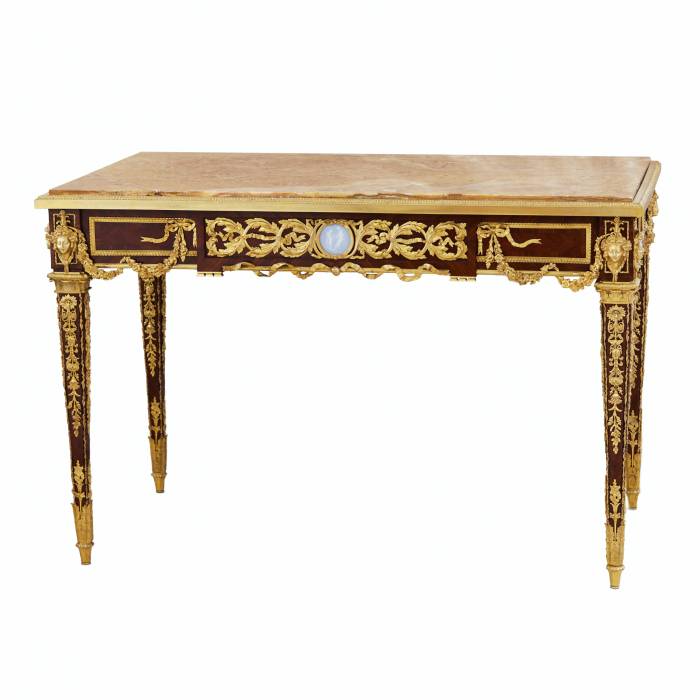
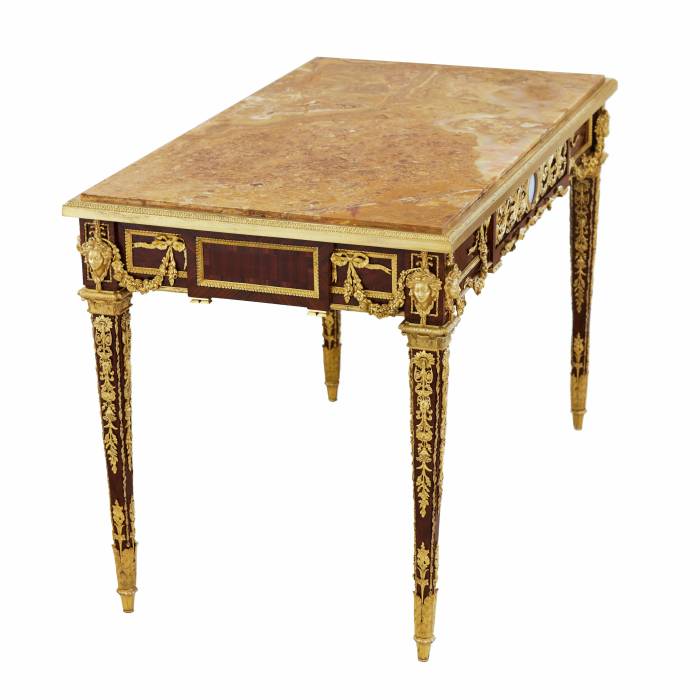
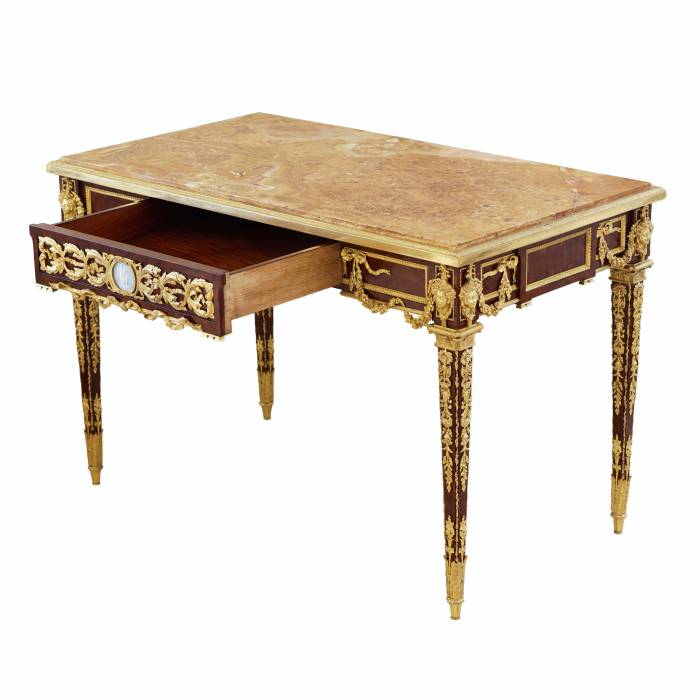
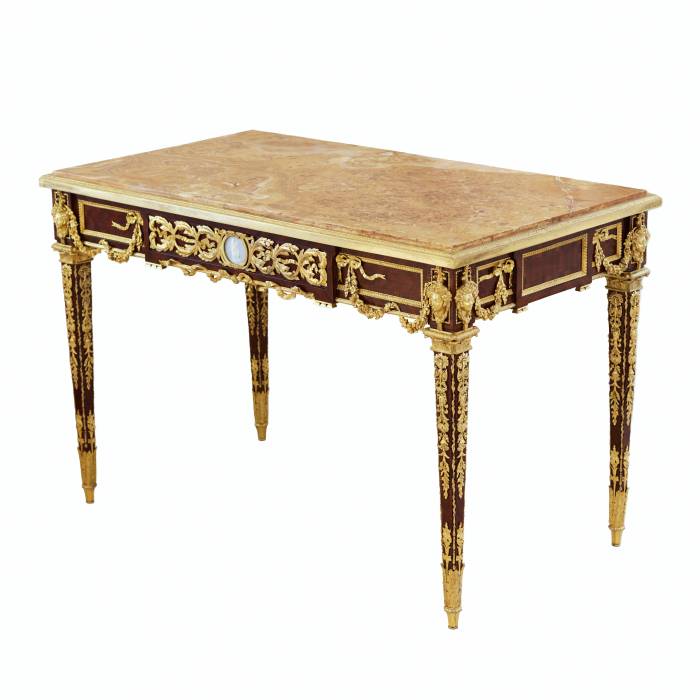
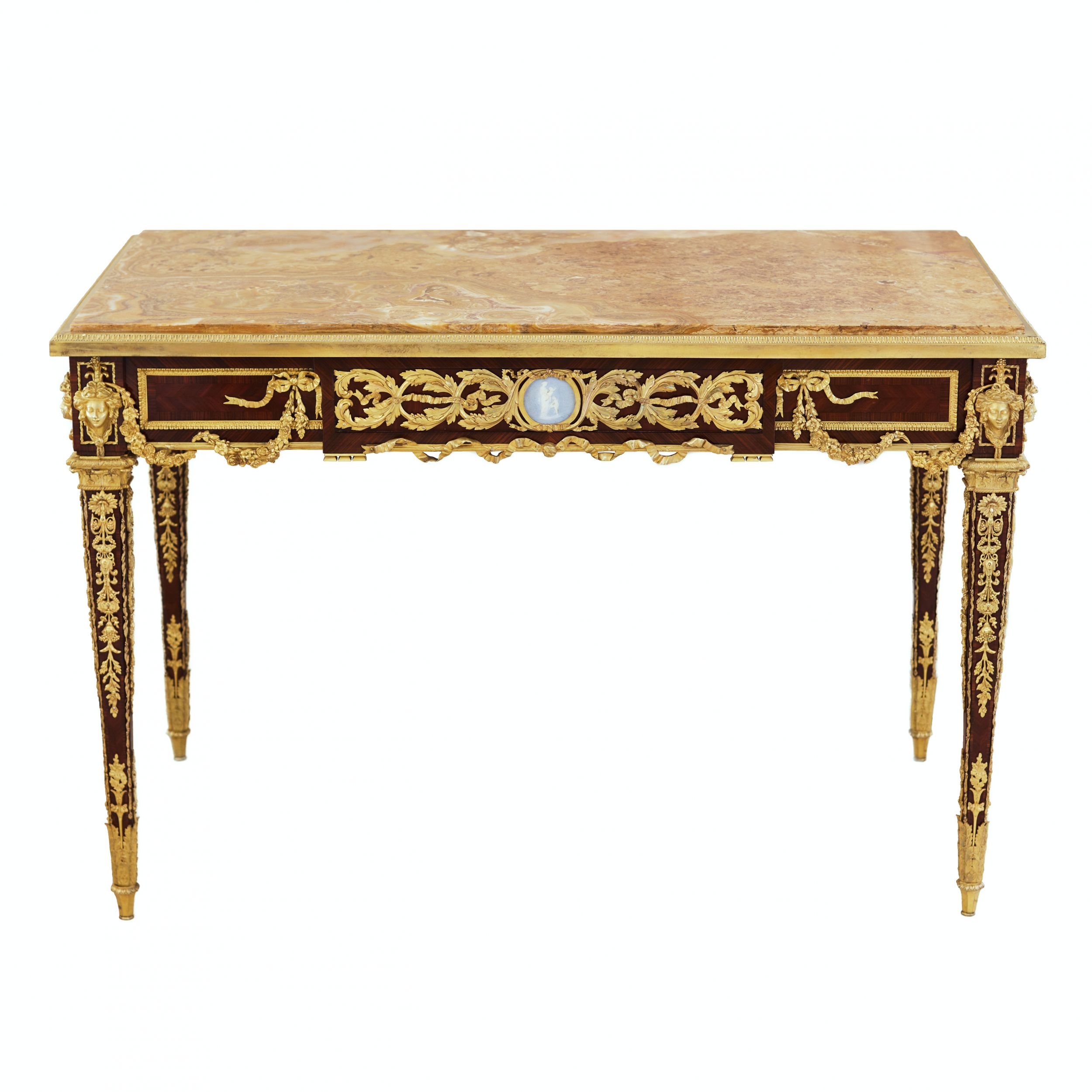
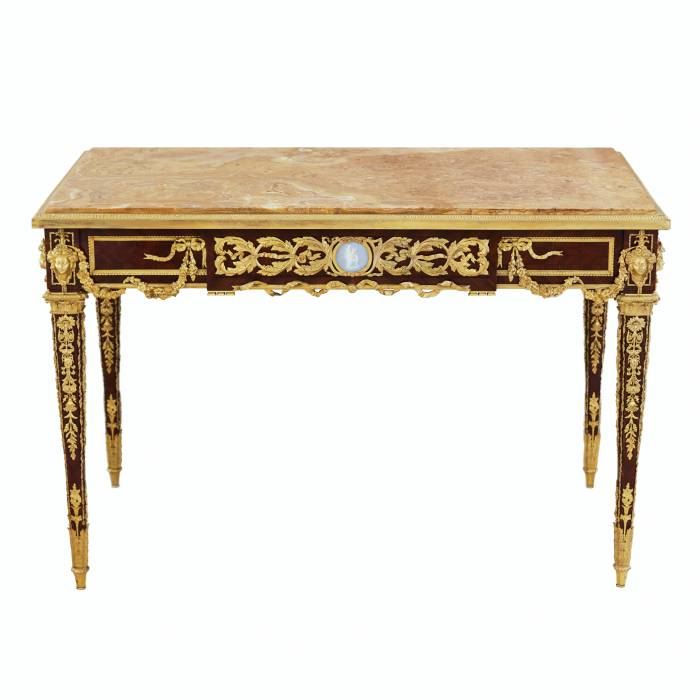
An elegant bureau plat writing desk, executed in Paris in the last quarter of the nineteenth century, represents a high-quality example of Parisian artistic furniture of the Belle Époque period, created in the tradition of the Louis XVI revival. The piece demonstrates characteristic features of French haute ébénisterie of the Napoléon III era, when cabinetmakers turned to refined models of royal furniture of the eighteenth century.
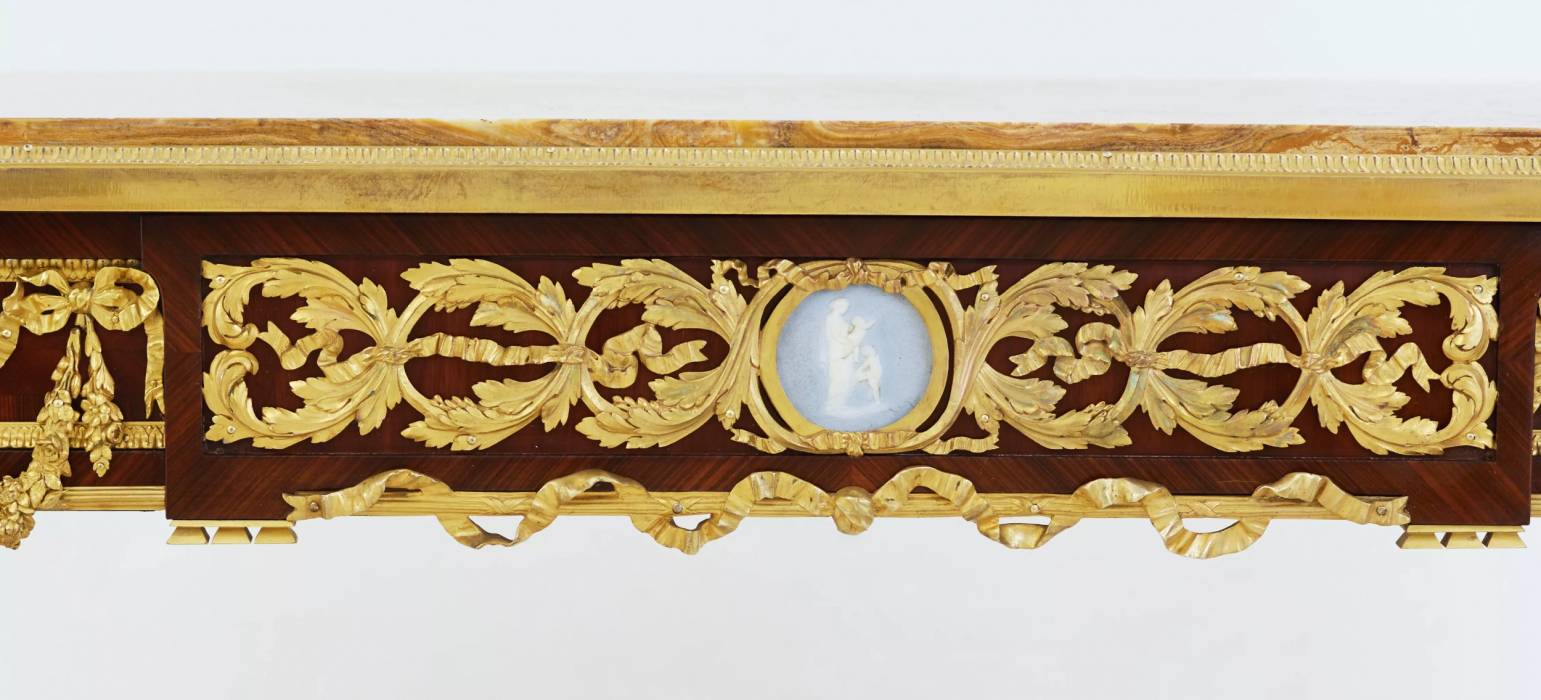
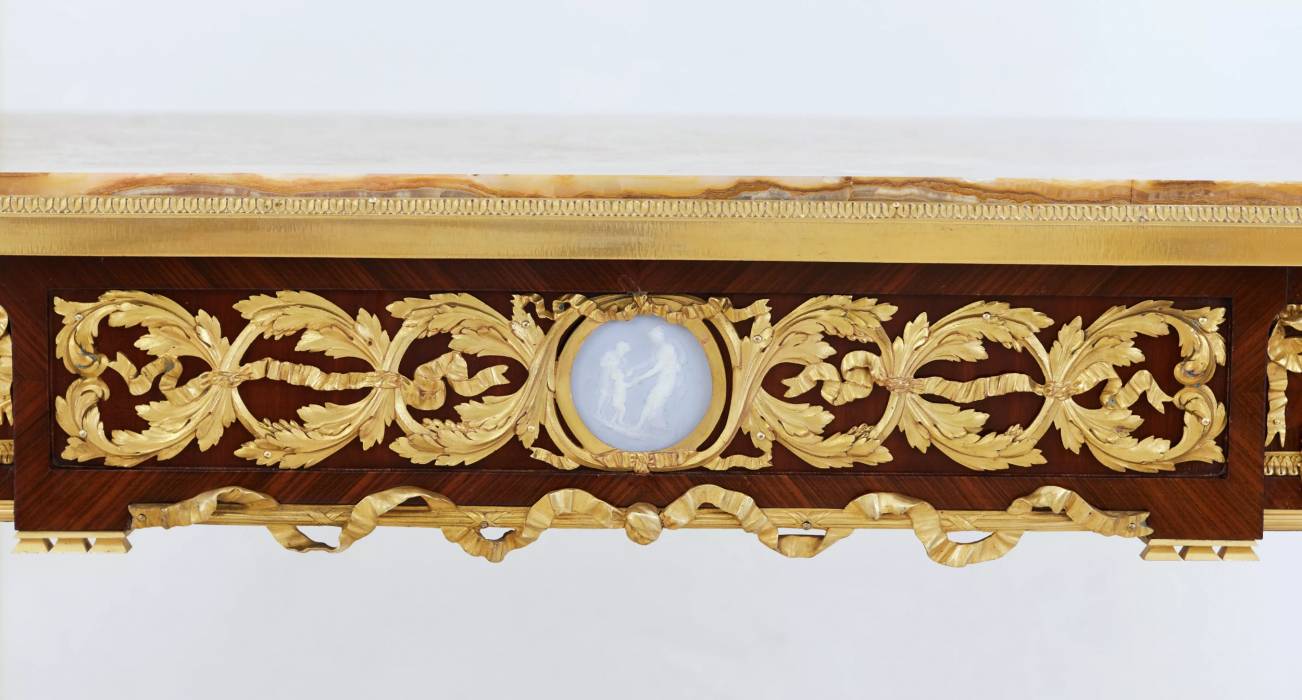
The structure is crafted from mahogany with carefully selected veneer and enriched with an elaborate set of gilt bronze (ormolu) mounts. The frieze is decorated with a graceful composition of garlands, ribbons, and vegetal motifs executed in deep chasing and refined by hand. The central part of the front frieze is adorned with a circular medallion of blue and white porcelain of the jasperware type, executed in the manner of the English Wedgwood manufactory and depicting an antique allegorical scene in relief.
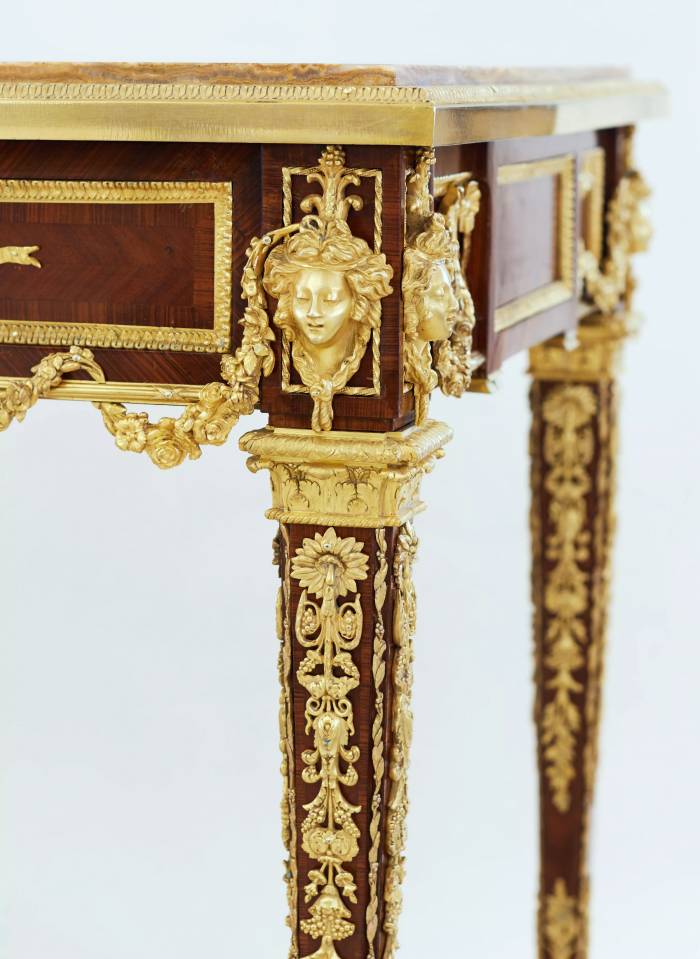
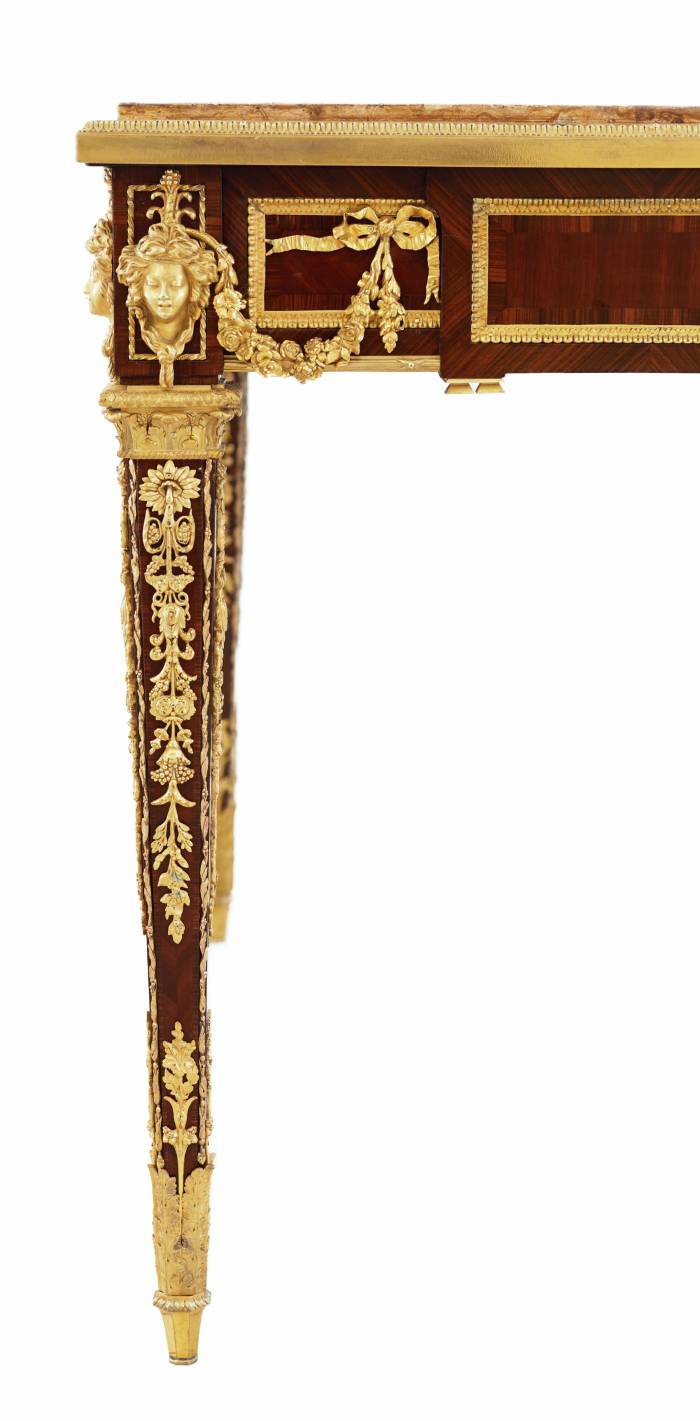
The corners of the desk are ornamented with expressive mascarons in the form of female heads with flowing hair and decorative ribbons, characteristic of high-quality Parisian bronze work. From these mascarons extend garlands that connect the corners with the central section of the frieze, creating a harmonious decorative composition.
The fluted legs are enriched with elongated gilt bronze mounts featuring vegetal ornament and terminate in elegant sabots. The architectural conception of the legs derives from furniture models of the Louis XVI period.
The desk is fitted with a concealed mechanism opening the central drawer, activated by a push element. Such technical solutions are typical of high-level Parisian cabinetmaking workshops of the late nineteenth century.
The top is executed in polished onyx of a warm honey-golden tone with a natural stone pattern, enhancing the decorative character of the piece and emphasizing its ceremonial appearance.
On the reverse side of the bronze mounts there are assembly marks in the form of engraved letters, including the combination “ZN”. Such marques de montage were widely used in Parisian bronze workshops of the second half of the nineteenth century to identify elements during the assembly of furniture and to ensure the precise fitting of decorative mounts. Comparable assembly marks are frequently encountered on furniture produced by leading Parisian haute ébénisterie workshops, including pieces attributed to the workshop of Joseph-Emmanuel Zwiener.
The stylistic features of the gilt bronze decoration, the composition of the frieze with a porcelain medallion, the character of the mascarons and garlands, the quality of bronze chasing, the refinement of bronze modelling, as well as the nature of the veneering and the structural construction allow the piece to be confidently attributed to the workshop of Joseph-Emmanuel Zwiener, one of the leading Parisian cabinetmakers of the Belle Époque, whose works were distinguished by luxurious execution and a high level of artistic craftsmanship.
Material: Mahogany, gilt bronze (ormolu), onyx, jasperware porcelain.
Dimensions: Height 75 cm. Width 115 cm. Depth 65 cm.
Condition: Very good antique condition. Minor traces of age. Gilding even and well preserved, bronze mounts in good condition. Mechanism functioning correctly.
Provenance: Private collection.
Joseph-Emmanuel Zwiener ranks among the most significant Parisian cabinetmakers of the late nineteenth century, working within the tradition of haute ébénisterie and specializing in refined interpretations of furniture in the Louis XV and Louis XVI styles. Born in Silesia, Zwiener settled in Paris during the 1880s, where he established his own workshop and quickly secured a prominent position among producers of high-end furniture. His enterprise collaborated with major Parisian furniture and antique houses, including Maison Krieger, through which many works from his workshop entered the market and were presented at international exhibitions. During this period Parisian furniture of the Belle Époque represented one of the most important expressions of European artistic craftsmanship.
Zwiener’s works were distinguished by exceptional cabinetmaking quality, sophisticated construction, and rich gilt bronze decoration produced by leading Parisian bronziers. The cabinetmaker frequently drew inspiration from eighteenth-century furniture, creating modern interpretations of the works of court ébénistes of the Ancien Régime, particularly Jean-Henri Riesener and Adam Weisweiler. Such pieces were intended for aristocratic interiors, formal studies, and luxurious bourgeois residences, and enjoyed strong demand both in France and internationally.
The present desk displays a combination of characteristic features that allow it to be associated with the production of Zwiener’s workshop. These include the high quality of chased bronze decoration, the use of elaborate garland friezes with ribbon motifs, expressive mascarons at the corners of the carcass, and fluted legs with elongated vertical bronze mounts. Such compositional solutions are regularly encountered in furniture produced by Zwiener in the Louis XVI revival style and are typical of high-quality Parisian furniture of the final third of the nineteenth century.
An additional decorative element is the circular porcelain medallion of jasperware type inspired by the products of the English Wedgwood manufactory. The incorporation of such cameo-like porcelain plaques was characteristic of Parisian workshops of the late nineteenth century that sought to combine the French tradition of neoclassical furniture with a taste for antique imagery and the popularity of English decorative porcelain.
Another important technological feature is the presence of assembly marks engraved on the reverse of the bronze elements, including the letters “ZN”. Such marques de montage were widely used in Parisian bronze workshops of the second half of the nineteenth century to identify decorative components during the assembly process and to ensure their precise adjustment after gilding. The presence of these hand-made assembly marks on individual bronze elements confirms the professional workshop origin of the mounts and corresponds to the production practices of haute ébénisterie furniture.
Museum and auction collections also record examples of furniture confidently attributed to the workshop of Joseph-Emmanuel Zwiener that do not bear the maker’s stamp but exhibit similar assembly marks and closely related decorative features. Such pieces demonstrate the same compositional principles, garland friezes, mascarons, fluted legs with elongated bronze mounts, and the use of cameo-like decorative medallions.
Writing desks of the bureau plat type in the Louis XVI style were particularly popular in the studies and libraries of aristocratic houses. Their architectural clarity, classical decorative motifs, and refined gilt bronze ornament expressed the ideals of neoclassicism and the cultivated taste of the Belle Époque. Particular attention should be drawn to the tabletop of polished yellow onyx, a rare decorative stone highly valued in luxury furniture of the late nineteenth century. Such stone surfaces were primarily used in high-level artistic furniture and are often found in pieces created for palace interiors and representative residences, where the use of costly natural materials emphasized the status of the owner and the prestige of the commission.
The combination of these characteristics, the quality of the bronze modelling, the composition of the garland frieze with the porcelain medallion, the type of mascarons, the fluted legs with elongated bronze mounts, the high standard of cabinetmaking, the presence of typical assembly marks on the bronze mounts, the use of a rare yellow onyx top, and the existence of comparable examples of Zwiener furniture without a maker’s stamp allow this desk to be confidently attributed to the workshop of Joseph-Emmanuel Zwiener as a characteristic example of high-class Parisian furniture of the Belle Époque.
The piece is in very good collector’s condition. The gilt bronze mounts and gilding are well preserved. The onyx top shows no damage. Minor traces of age and careful use are present, consistent with the period of the object. The concealed mechanism of the central drawer functions correctly.
The condition report is provided for informational purposes only.
It is not comprehensive and may not reflect all defects, restorations, alterations, or adaptations, as Antiqon does not perform professional conservation-level assessments. The information is based on a qualified, yet subjective, evaluation by our specialists.Before purchasing, we recommend consultation with an independent expert.Please also consult our Terms and conditions and Glossary A-Z, which contain important information on lot characteristics and sale conditions.