


SILVER TEA SET JAPAN, MEIJI PERIOD (1868-1912)
AntiqonART consultant will contact you within one business day after receiving your request.
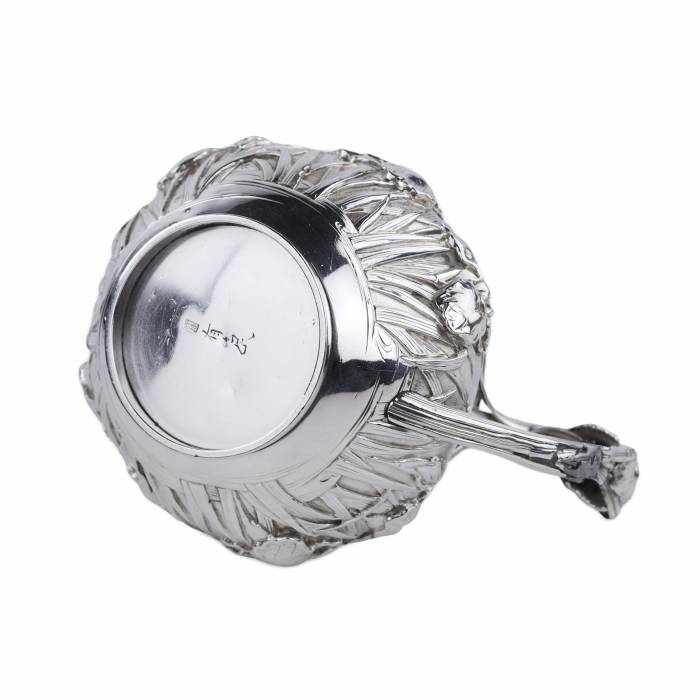
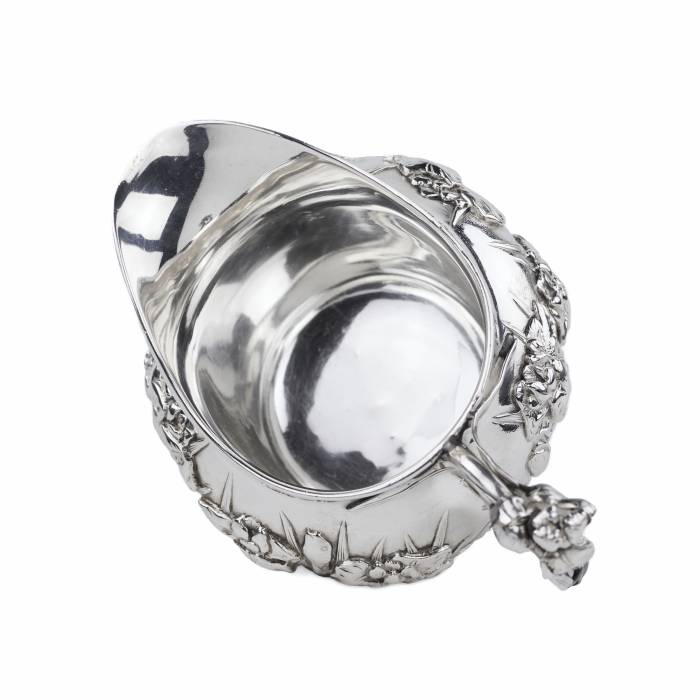
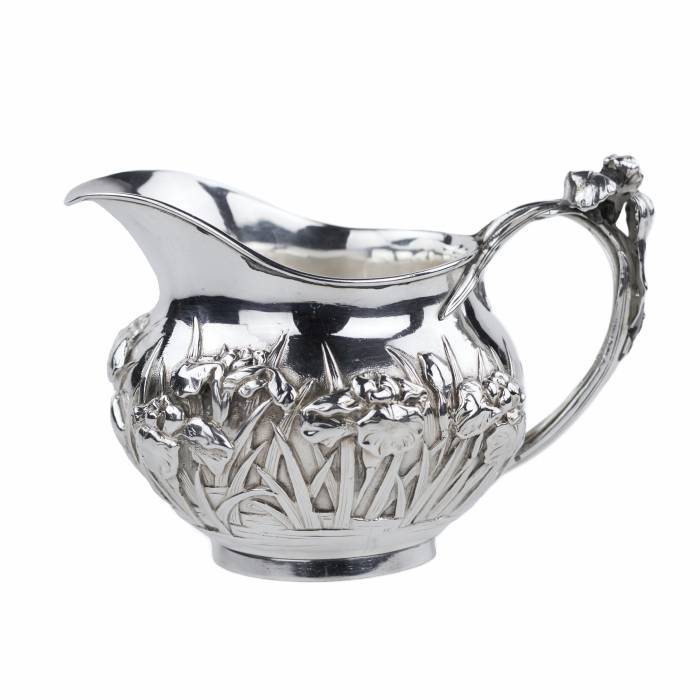
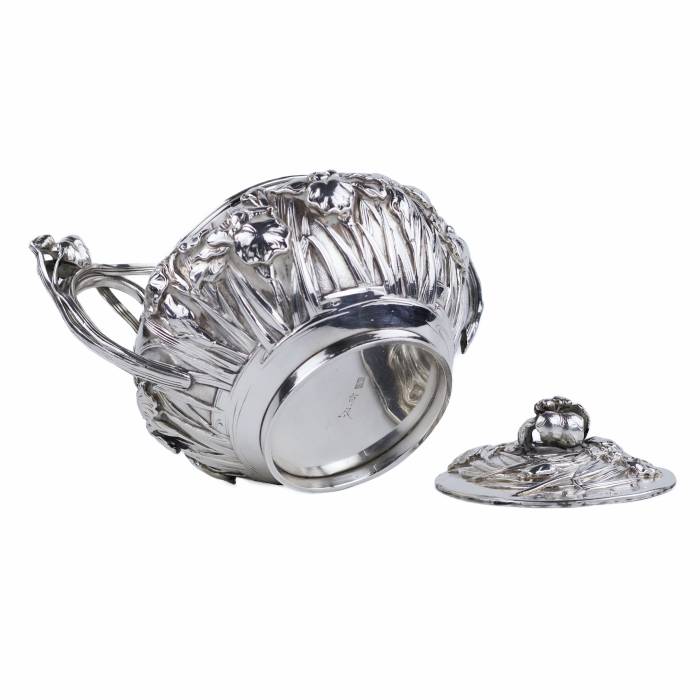
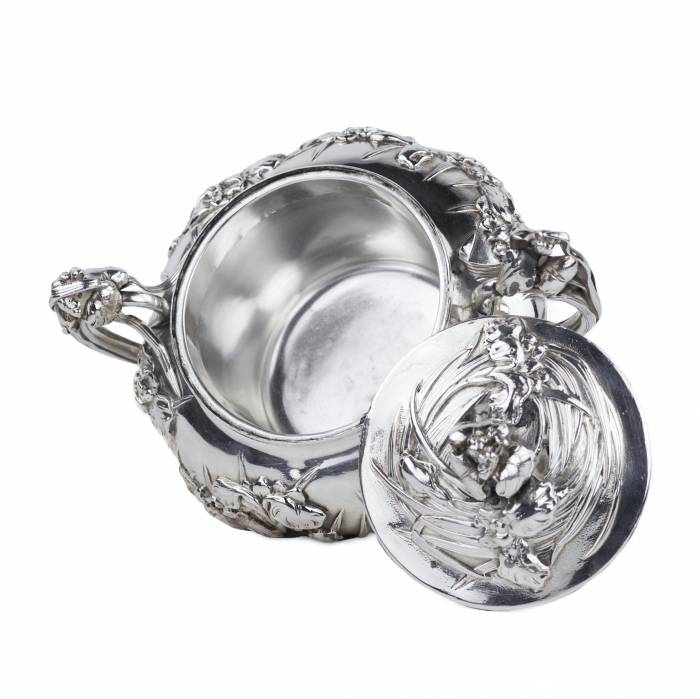
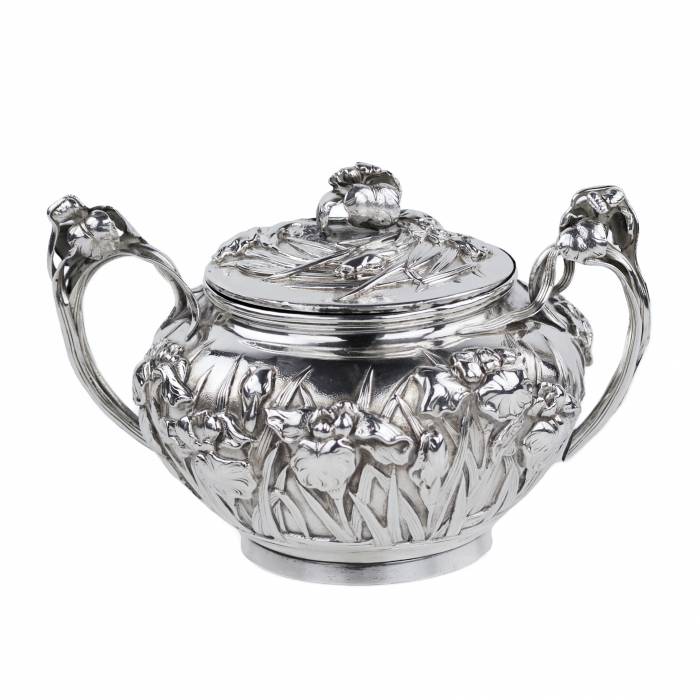
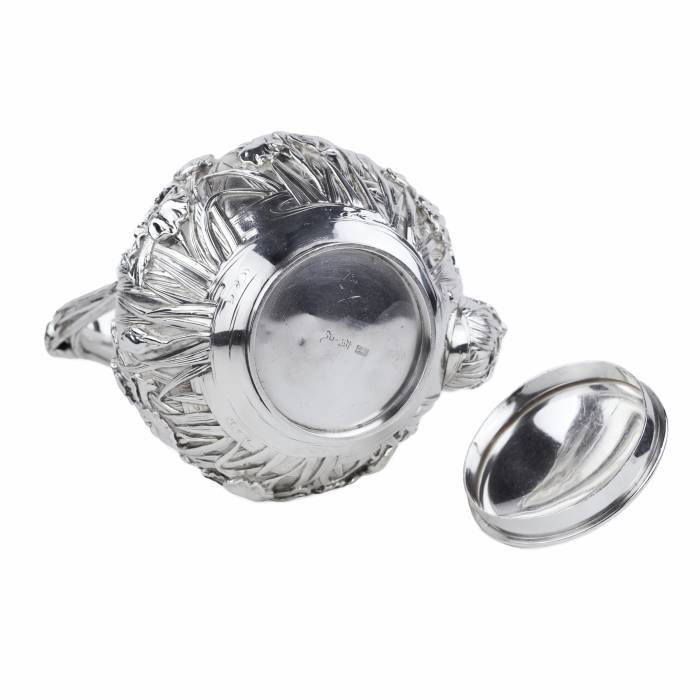
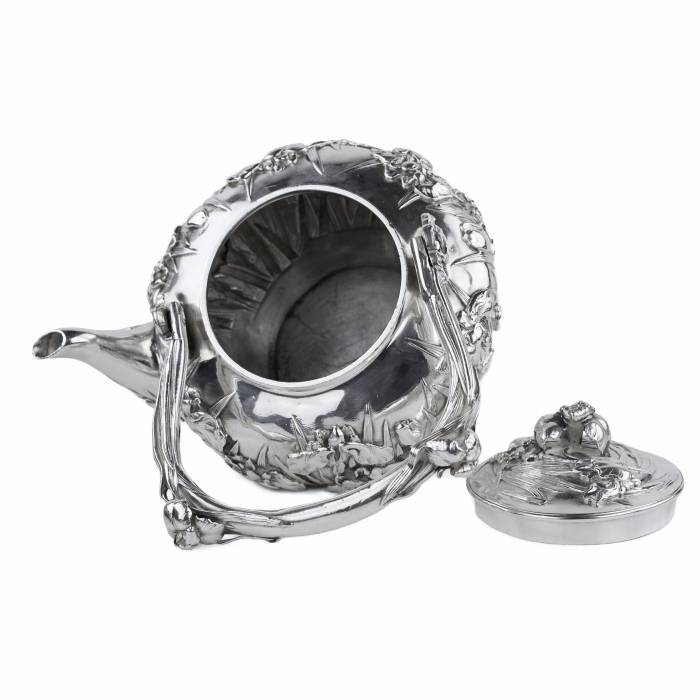
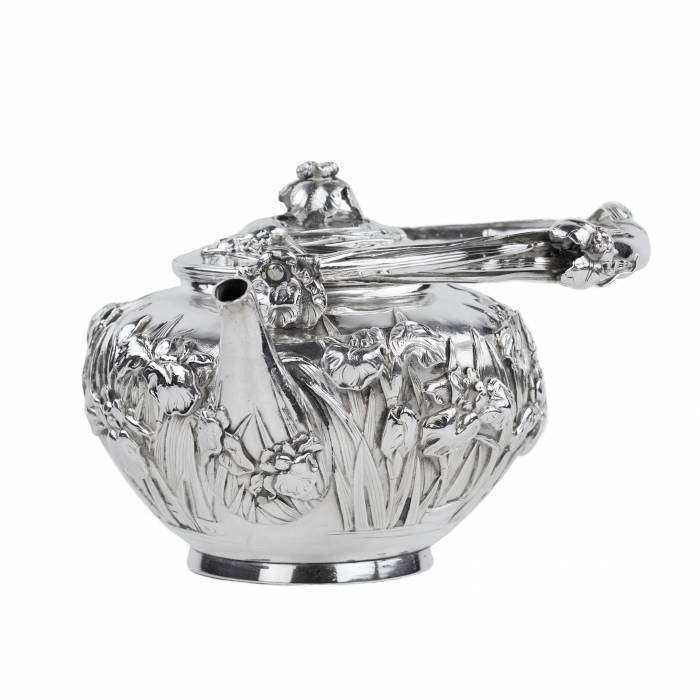
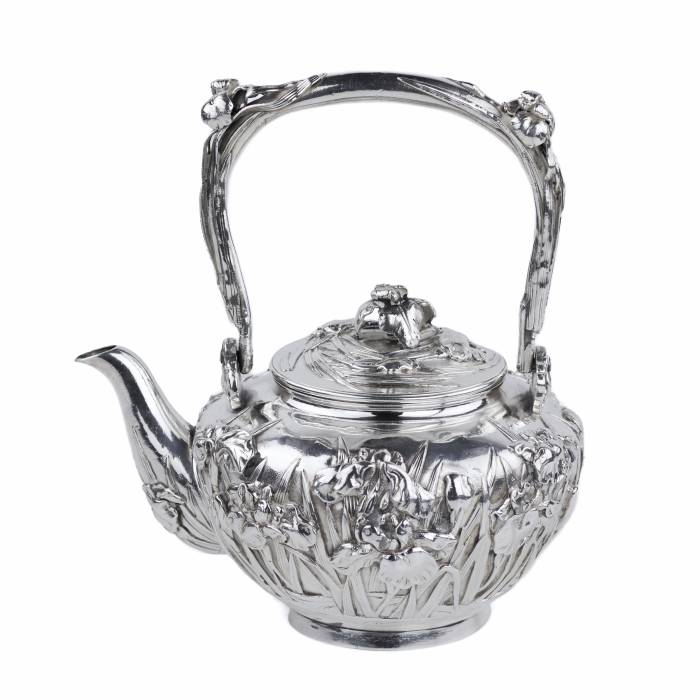
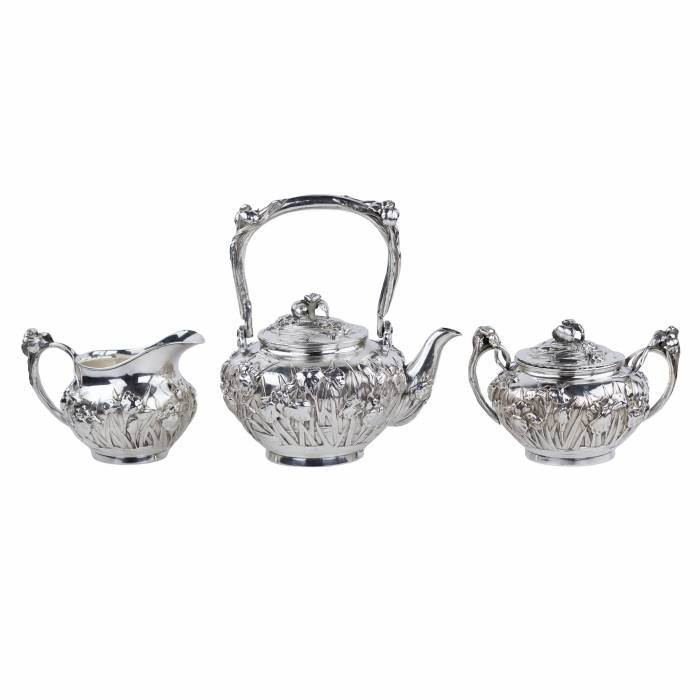
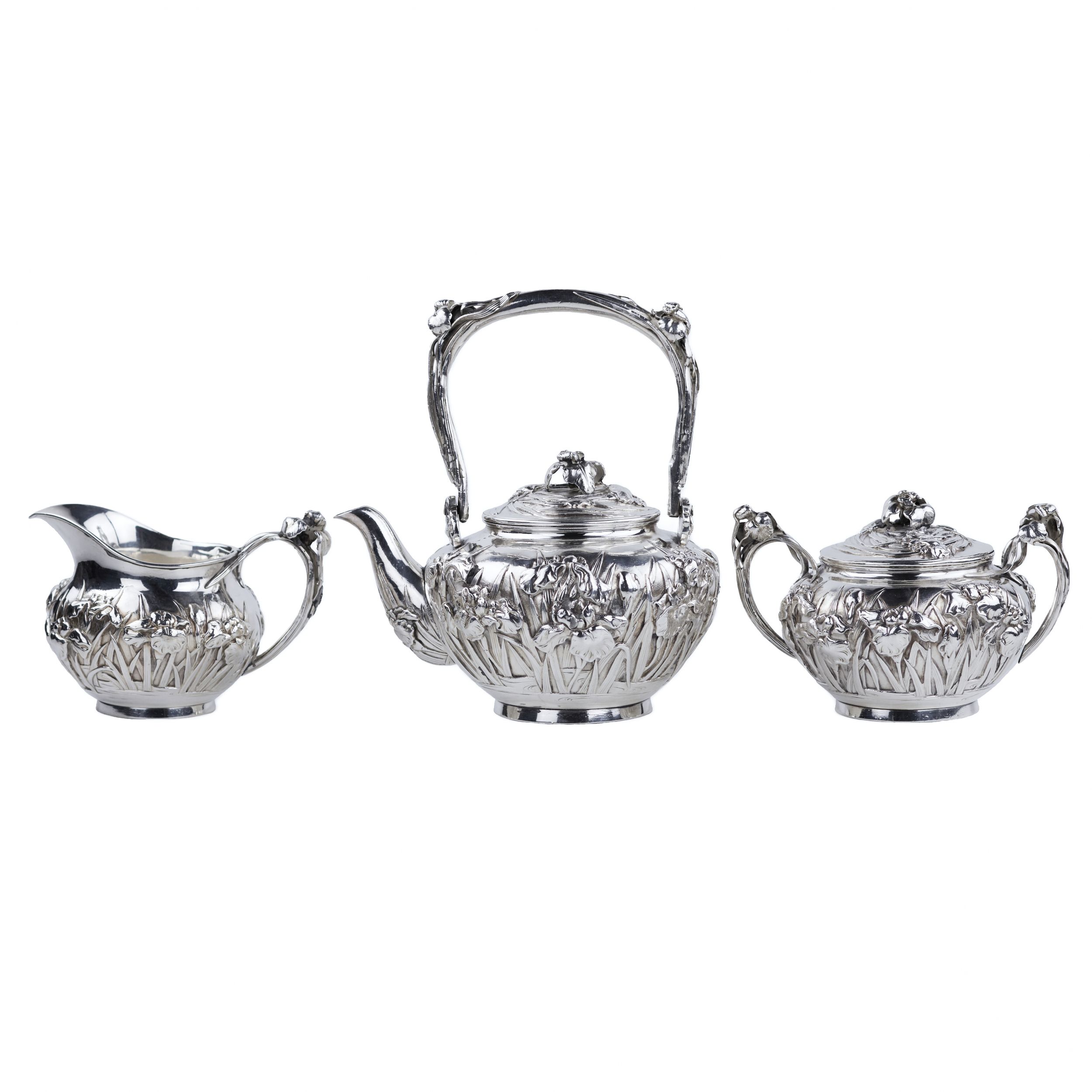
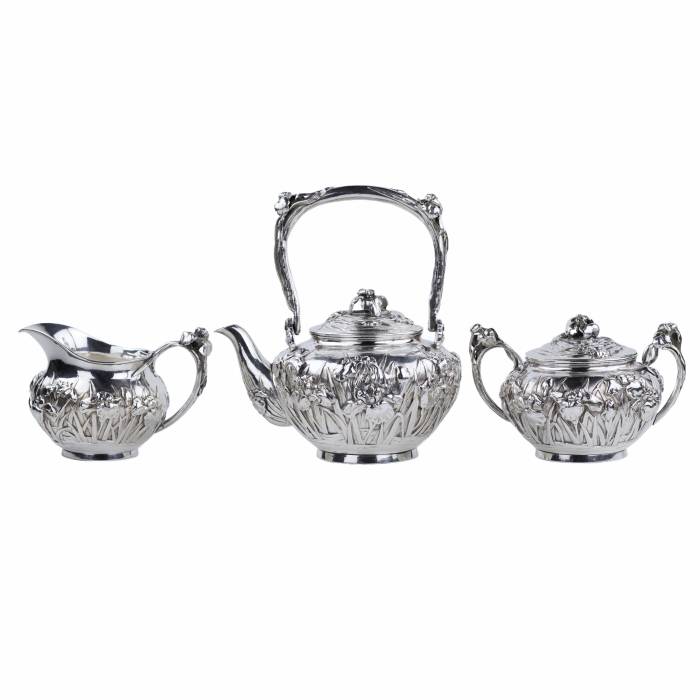
A rare and expressive Japanese silver tea service from the Meiji period, crafted in high-grade silver with exceptional detailing and sculptural finesse. The set comprises three pieces: a teapot with an arched movable handle and curved spout, a lidded sugar bowl with two ornate handles, and a cream jug. Each element is unified by a richly detailed design of blooming irises, executed in high-relief chasing.
The naturalistic decoration wraps around the body of each piece, giving them a fluid, dynamic aesthetic. The lids are topped with sculpted floral finials that echo the iris motif and enhance the visual unity of the composition. The intricate modeling of petals and stems amplifies the way light plays across the silver surface.
Particular attention is given to the handles and spouts, which are adorned with floral embellishments that seamlessly integrate into the overall form — a testament to the artisan’s skill. The interiors are highly polished, reflecting the refined standards of production.
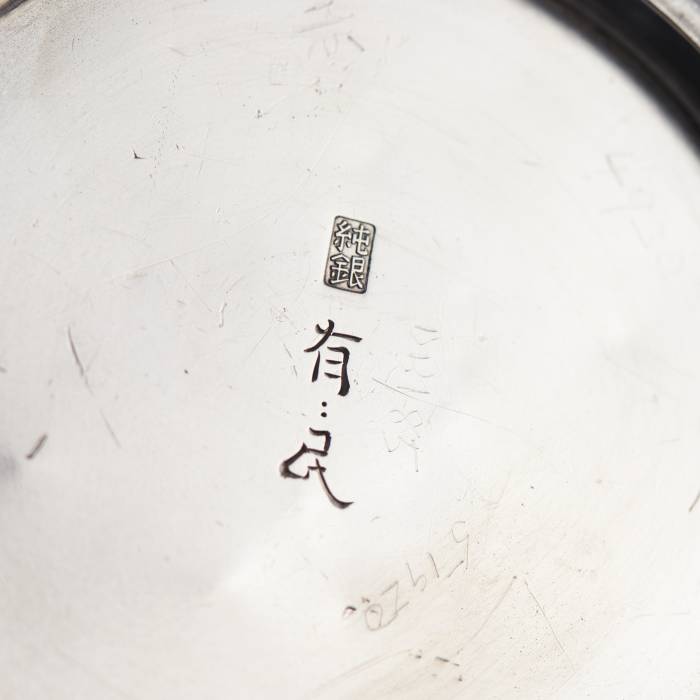
Each base is clearly stamped with:
– 純銀 (jungin – “pure silver”) in a rectangular cartouche, confirming silver purity
– 有民 (Yūmin) – the signature of the maker, likely from a Tokyo or Yokohama-based workshop active in the late 19th century and known for bespoke export silverware.
This tea service is an outstanding example of Japanese decorative silver from the Meiji era — uniting technical mastery, symbolic richness, and aesthetic harmony.
Marks:純銀 (pure silver), 有民 (Yūmin)
Dimensions: Teapot: 10 × 10 cm;Sugar bowl: 10 × 10 cm;Cream jug: 10 × 10 cm
Weight:Total: 1,296 g
Condition:
Good condition with delicate signs of use. Silver is free of losses or wear, with crisp relief and clear marks. A well-preserved piece of Meiji-period Japanese decorative art.
Provenance:Private collection
The Meiji period (1868–1912) marked Japan’s dramatic modernization and its emergence as a global cultural force. Among its most admired exports were chased silverworks created by master craftsmen for Western markets. These pieces, including tea sets, caskets, and tableware, quickly gained favor for their fine workmanship, elegant design, and distinctly Japanese aesthetics.
Irises (shōbu, 菖蒲) — the main decorative motif on this service — symbolize purity, protection, and valor in Japanese tradition. In the context of late 19th-century art, they carry both philosophical depth and refined beauty, expressing the Japanese vision of harmony between nature and daily life.
The 有民 (Yūmin) signature and 純銀 hallmark indicate that the set was produced in one of the select Tokyo or Yokohama workshops specializing in handcrafted silver for the export market. Such pieces were often created for world exhibitions or elite clientele abroad.
The exceptional craftsmanship — from the assembly to the ornamental detailing — situates this set among the highest category of Meiji-period silver. Its aesthetic strength, rarity, and documentary value make it a significant collectible and museum-worthy object.
Good condition with minor signs of use. Deep relief, clear marks, and unblemished silver. A fine and complete example of late 19th-century Japanese silverwork.
The condition report is provided for informational purposes only.
It is not comprehensive and may not reflect all defects, restorations, alterations, or adaptations, as Antiqon does not perform professional conservation-level assessments. The information is based on a qualified, yet subjective, evaluation by our specialists.Before purchasing, we recommend consultation with an independent expert.Please also consult our Terms and conditions and Glossary A-Z, which contain important information on lot characteristics and sale conditions.