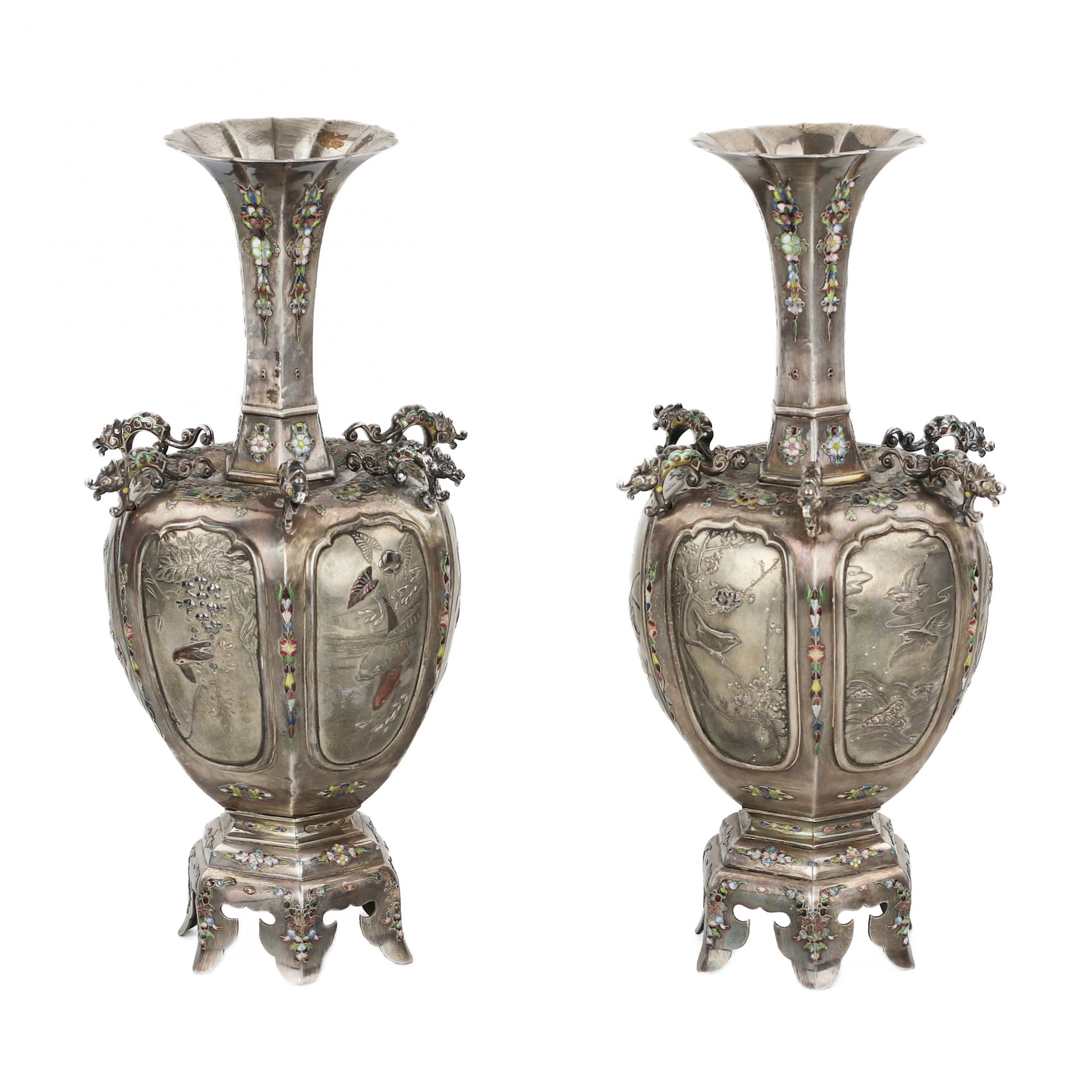



PAIR OF JAPANESE SILVER VASES WITH ENAMEL JAPAN, TURN OF THE 19TH–20TH CENTURY
AntiqonART consultant will contact you within one business day after receiving your request.
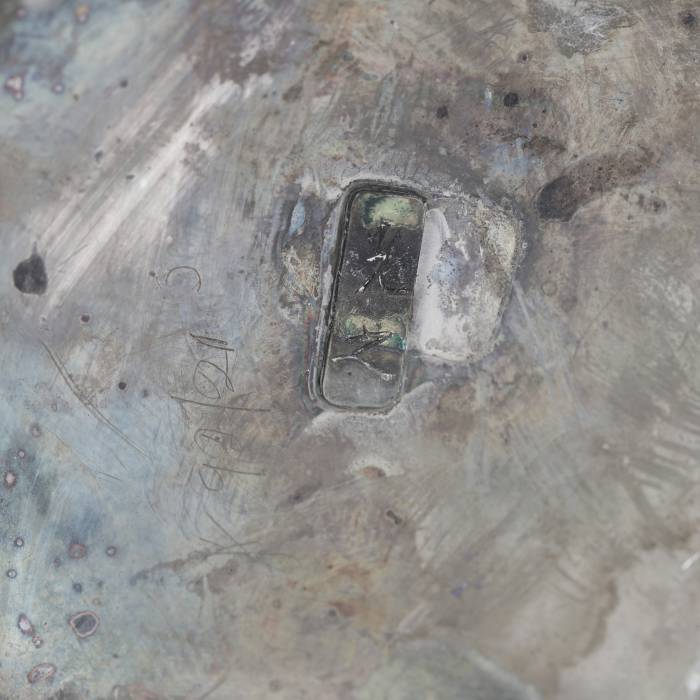
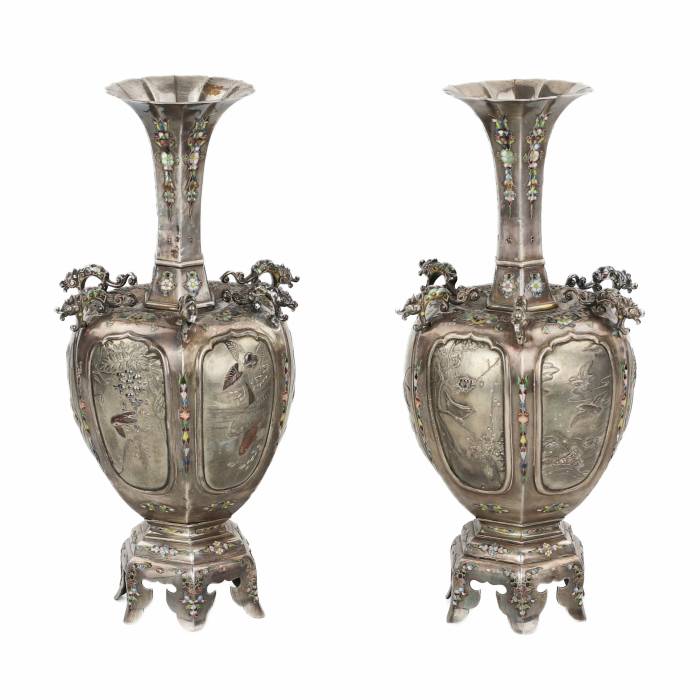
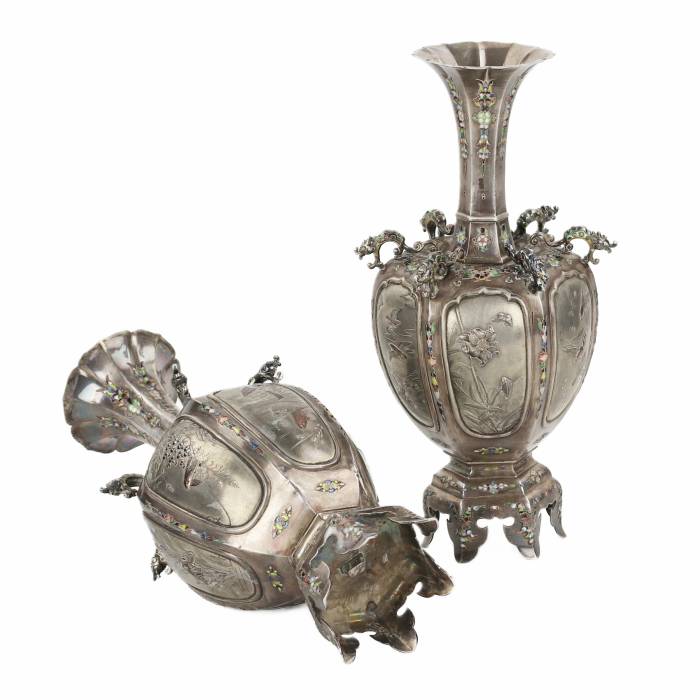
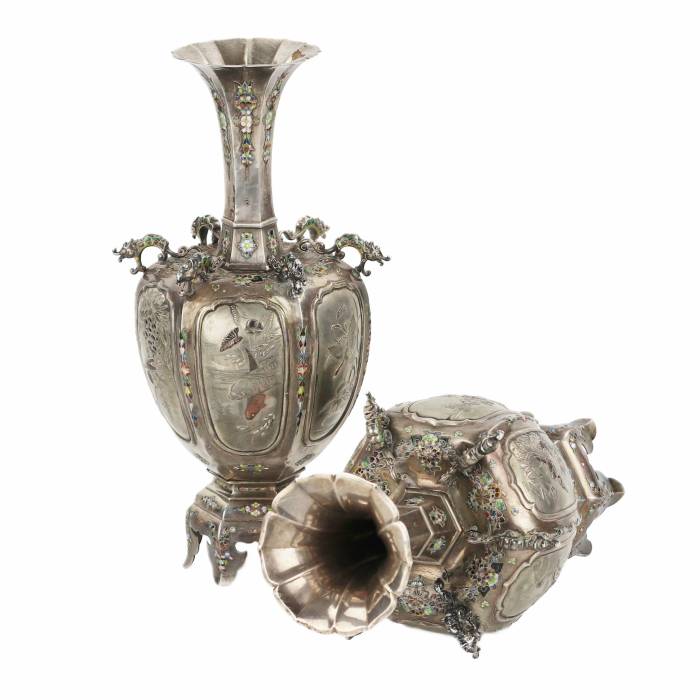
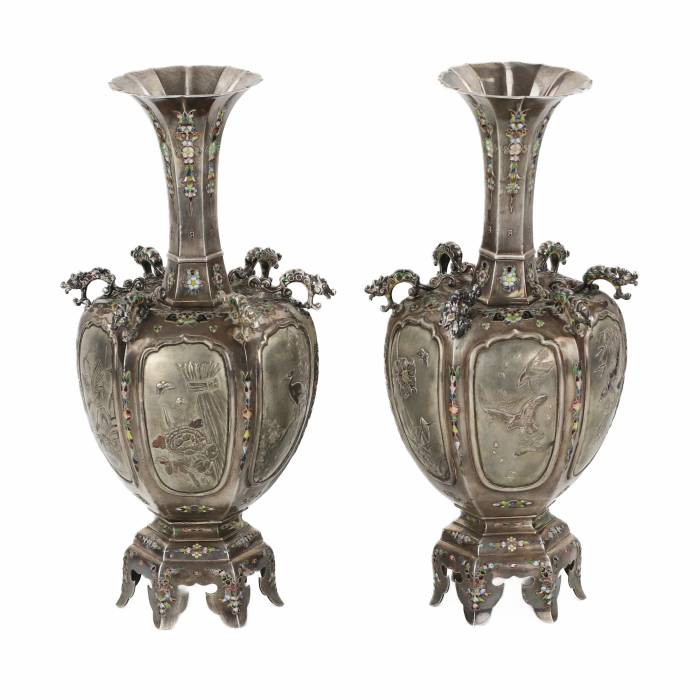
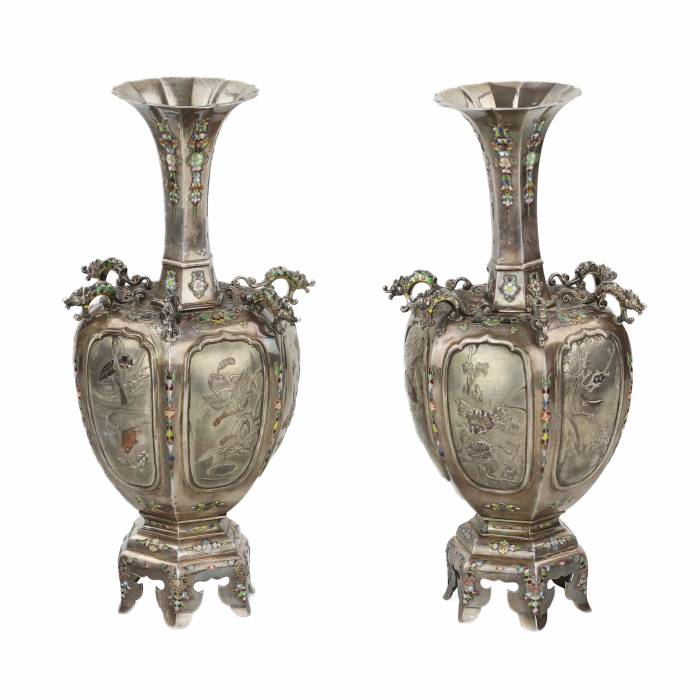
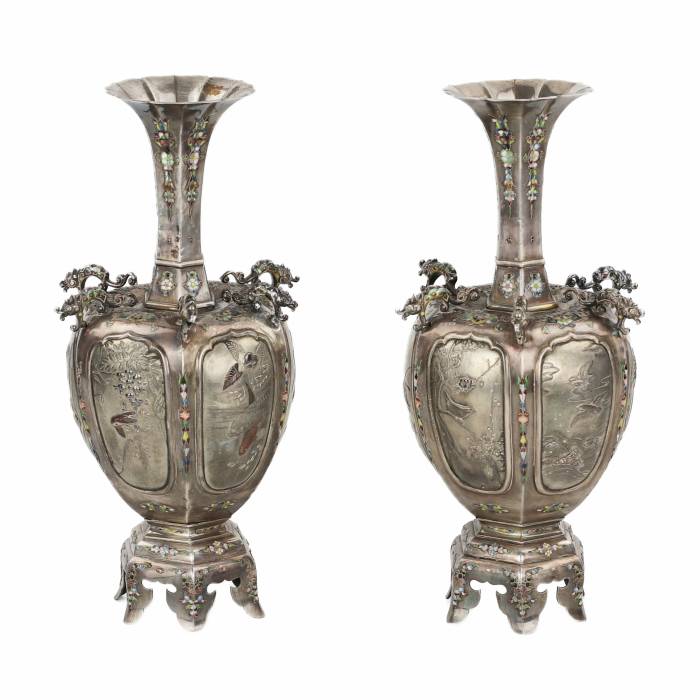
A refined pair of Japanese silver vases, crafted at the turn of the 19th–20th century, exemplifying the exquisite craftsmanship of the Meiji and early Taishō periods. Each vase features an elongated ovoid body with a tall hexagonal flaring neck, decorated with delicate polychrome enamel and mother-of-pearl inlays of floral motifs. The central panels are engraved and repoussé with birds among branches and blossoming irises, symbolizing harmony and renewal. The upper section is adorned with applied dragons, adding dynamic character and protective symbolism. The hexagonal foot with openwork base is enriched with enamel in harmony with the overall decoration. Maker’s signature on the base.
Marks: Japanese workshop, signed on the base.
Dimensions: Height 25 cm; width 15 cm; depth 8 cm.
Weight: Total weight 953 g.
Condition: Good condition with natural patina and minor traces of age, not affecting the presentation.
Provenance: Japan, turn of the 19th–20th century.
Japanese silver vases with enamel decoration from the late 19th to early 20th century represent a remarkable example of the applied arts of the Meiji (1868–1912) and early Taishō (1912–1926) periods. This era was marked by cultural renewal, combining traditional Japanese aesthetics with openness to Western influences. Metalwork flourished, especially silver combined with polychrome enamels and mother-of-pearl inlays, often destined for export markets in Europe and America, where Japanese art was highly sought after.
The motifs of irises and birds are deeply symbolic in Japanese culture: irises represent purification, protection, and masculine strength, while birds embody freedom and the balance between heaven and earth. The dragons, crowning the vases, symbolize wisdom, strength, and protection.
Comparable works were presented at major world expositions (Vienna 1873, Paris 1878, Chicago 1893) and are today preserved in leading collections such as the Victoria & Albert Museum in London and the Tokyo National Museum.
Both vases remain in good condition with uniform patina and minimal signs of wear; enamel retains brightness and integrity; maker’s signature on the base is legible.
The condition report is provided for informational purposes only.
It is not comprehensive and may not reflect all defects, restorations, alterations, or adaptations, as Antiqon does not perform professional conservation-level assessments. The information is based on a qualified, yet subjective, evaluation by our specialists.Before purchasing, we recommend consultation with an independent expert.Please also consult our Terms and conditions and Glossary A-Z, which contain important information on lot characteristics and sale conditions.