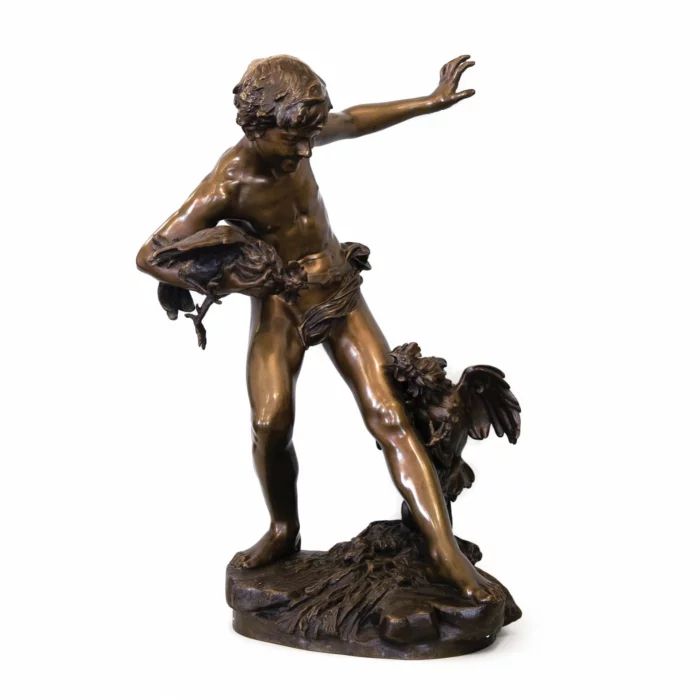
PAUL CHEVRE. BOY SEPARATING FIGHTING COCKS FRANCE / CANADA, LATE 19TH - EARLY 20TH CENTURY
AntiqonART consultant will contact you within one business day after receiving your request.
Discover how the value of similar works has evolved over the past 10 years. Art is not only beauty — it's an investment.
Discover how the value of similar works has evolved over the past 10 years. Art is not only beauty — it's an investment.
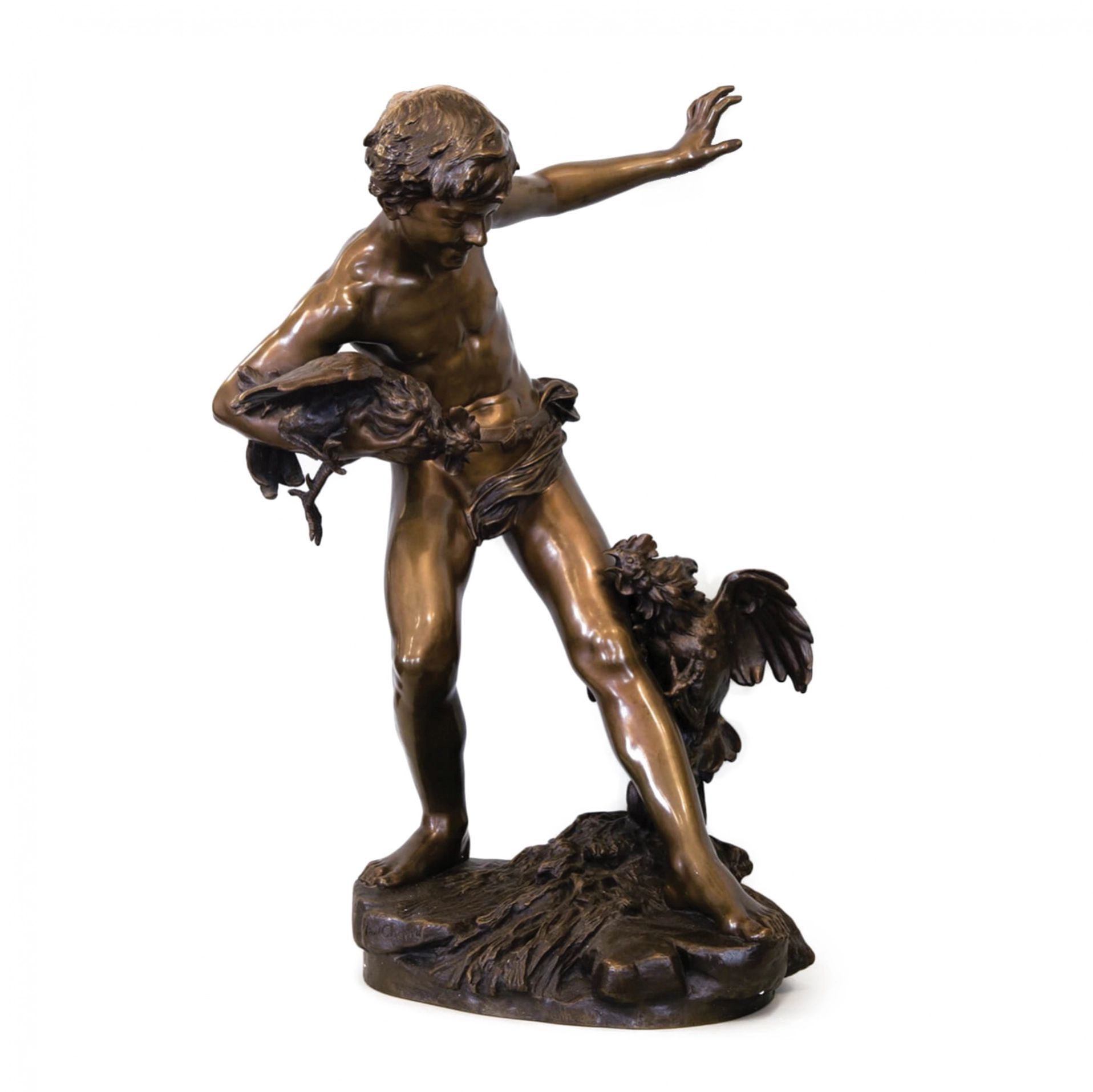
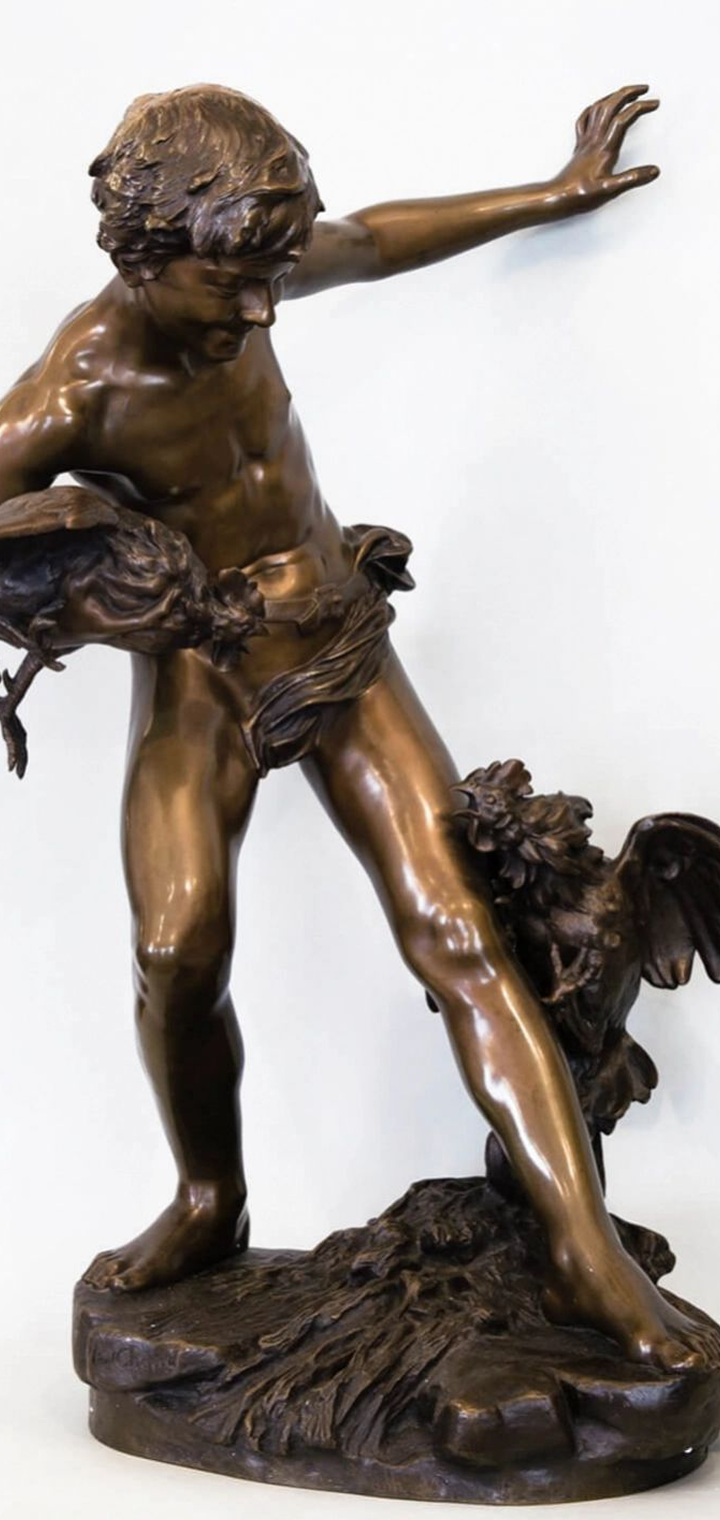
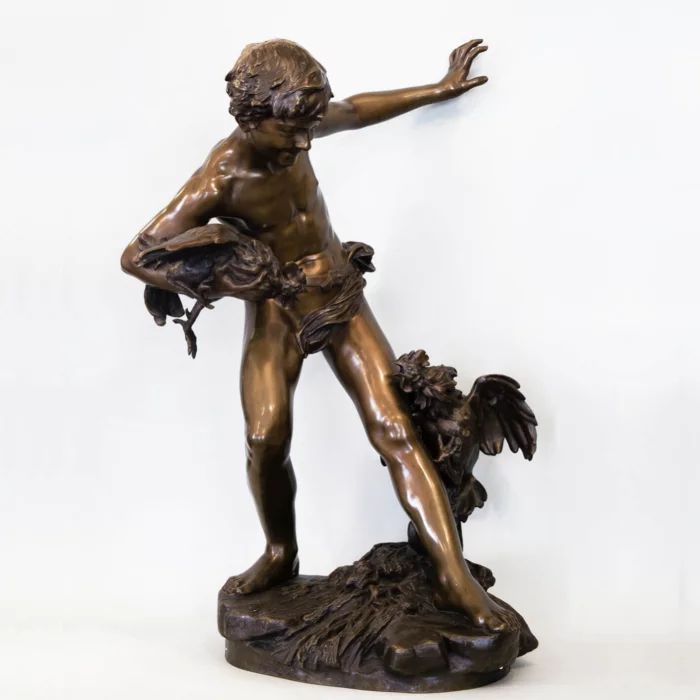
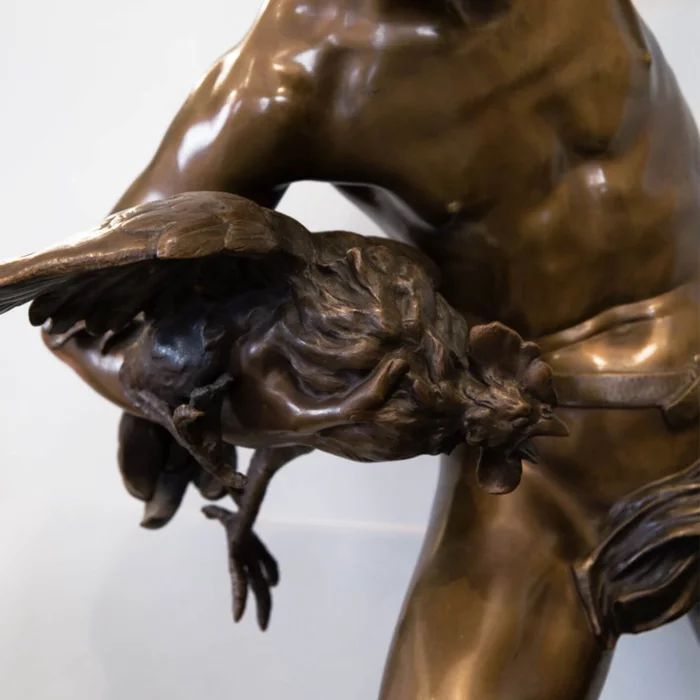
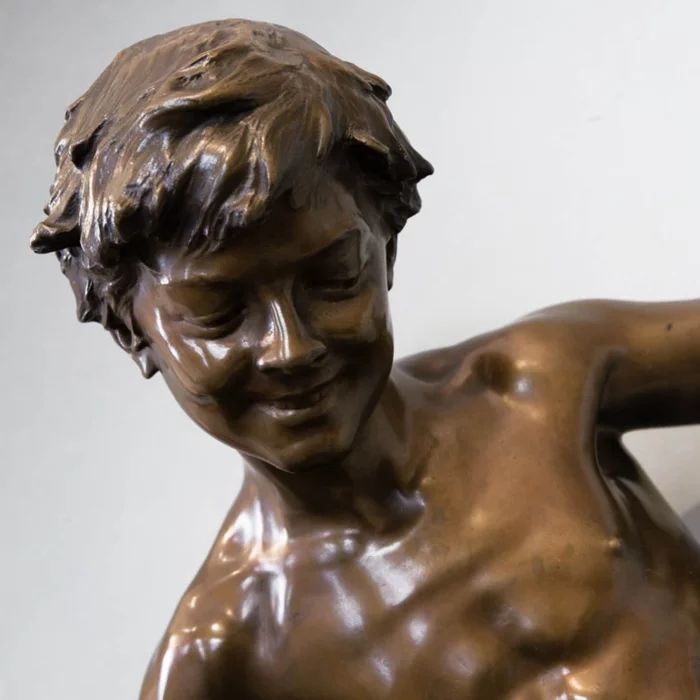
A monumental author’s bronze sculpture executed by Paul Chevré, an eminent French-Canadian master of the academic school at the turn of the nineteenth and twentieth centuries. The composition depicts a nude youth in a moment of intense movement, striving to separate two fighting cocks engaged in a furious struggle.
The figure of the boy is conceived in an antiquizing manner. The modelling of the torso reveals precise anatomical structure and a refined treatment of surface. The contrapposto enhances the sensation of a fleeting gesture captured in bronze. The diagonal formed by the outstretched wings and extended necks of the cocks cuts across the line of the body and the drapery around the hips, creating a powerful dramatic rhythm within the composition.
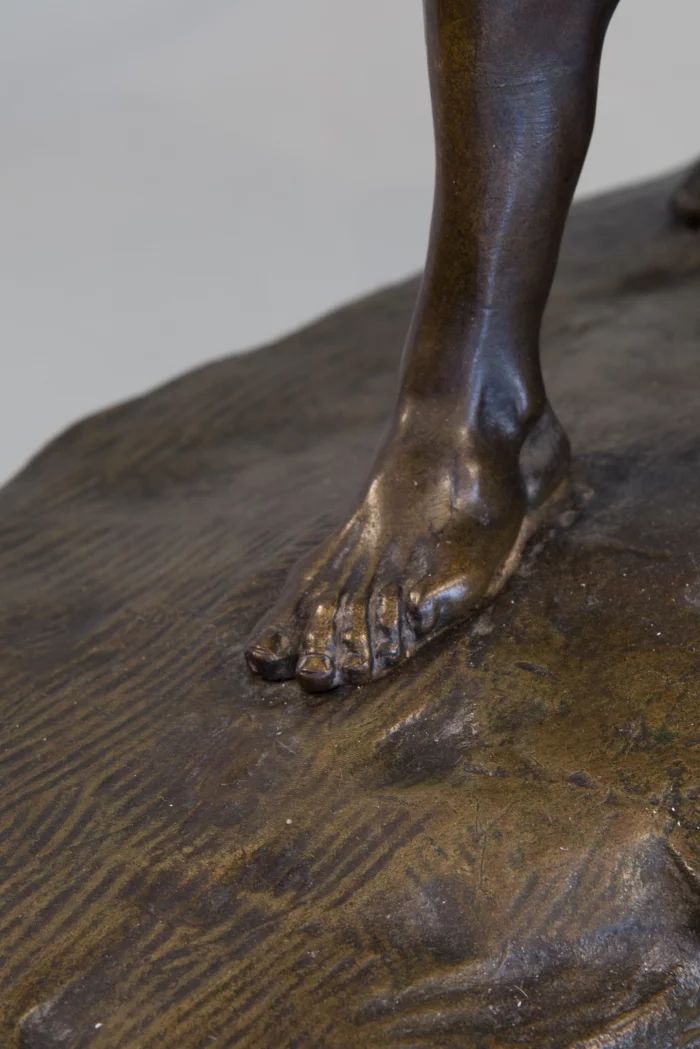
The contrast between the smooth surface of the youthful body and the textured rendering of the feathers produces an expressive interplay of light across the noble dark patina. The base is treated in a naturalistic manner and reinforces the dynamic tension of the sculptural group. The work demonstrates the maturity of the artist’s language and corresponds to the aesthetic ideals of the Belle Époque.
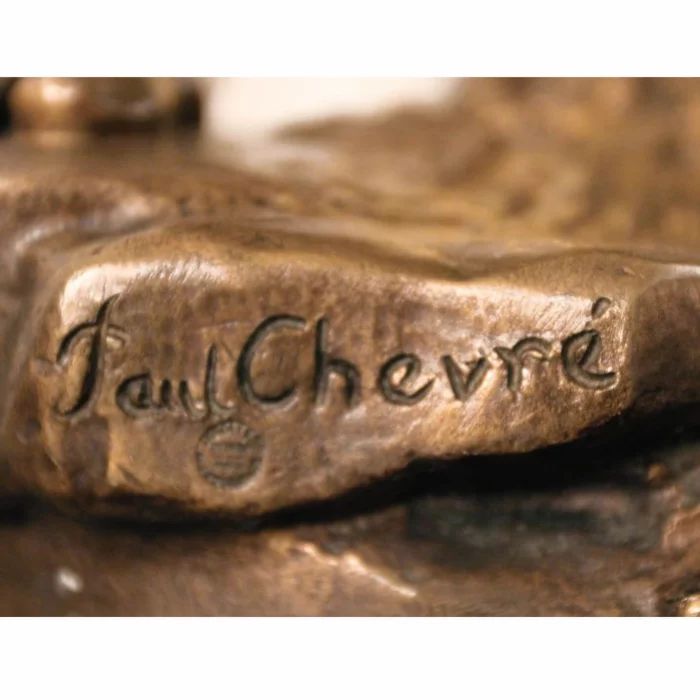
Marks: Signed “Paul Chevré” on the base; foundry mark.
Dimensions: Height 75 centimetres; width 52 centimetres.
Condition: Good. Even dark patina. Minor surface wear consistent with age.
Provenance: Private European collection.
Paul Chevré was formed as a sculptor within the environment of the Parisian academic tradition of the late nineteenth century, where anatomical precision, expressive gesture and historical narrative were of paramount importance. His works unite Neoclassicism and Realism, reflecting the artistic tendencies of the Belle Époque.
Scenes of animal combat have ancient origins and can be traced back to classical reliefs and mosaics, where the agon symbolized strength, rivalry and passion. In academic sculpture of the nineteenth century, such subjects allowed artists to demonstrate virtuosity in modelling and complex spatial composition.
Bronze sculpture of the late nineteenth and early twentieth centuries occupied an important place in bourgeois and aristocratic interiors in France and Canada. Chevré’s works are represented in museum and private collections, confirming his lasting reputation on the international art market. The composition “Boy Separating Fighting Cocks” stands as a characteristic example of academic sculpture, combining an idealized figure with vivid dramatic action.
The surface is covered with a stable patina showing natural tonal variations. Light surface wear consistent with age is visible. No cracks, deformations or restoration interventions were observed.
The condition report is provided for informational purposes only.
It is not comprehensive and may not reflect all defects, restorations, alterations, or adaptations, as Antiqon does not perform professional conservation-level assessments. The information is based on a qualified, yet subjective, evaluation by our specialists.Before purchasing, we recommend consultation with an independent expert.Please also consult our Terms and conditions and Glossary A-Z, which contain important information on lot characteristics and sale conditions.