Price:
6500 €
Add to cart
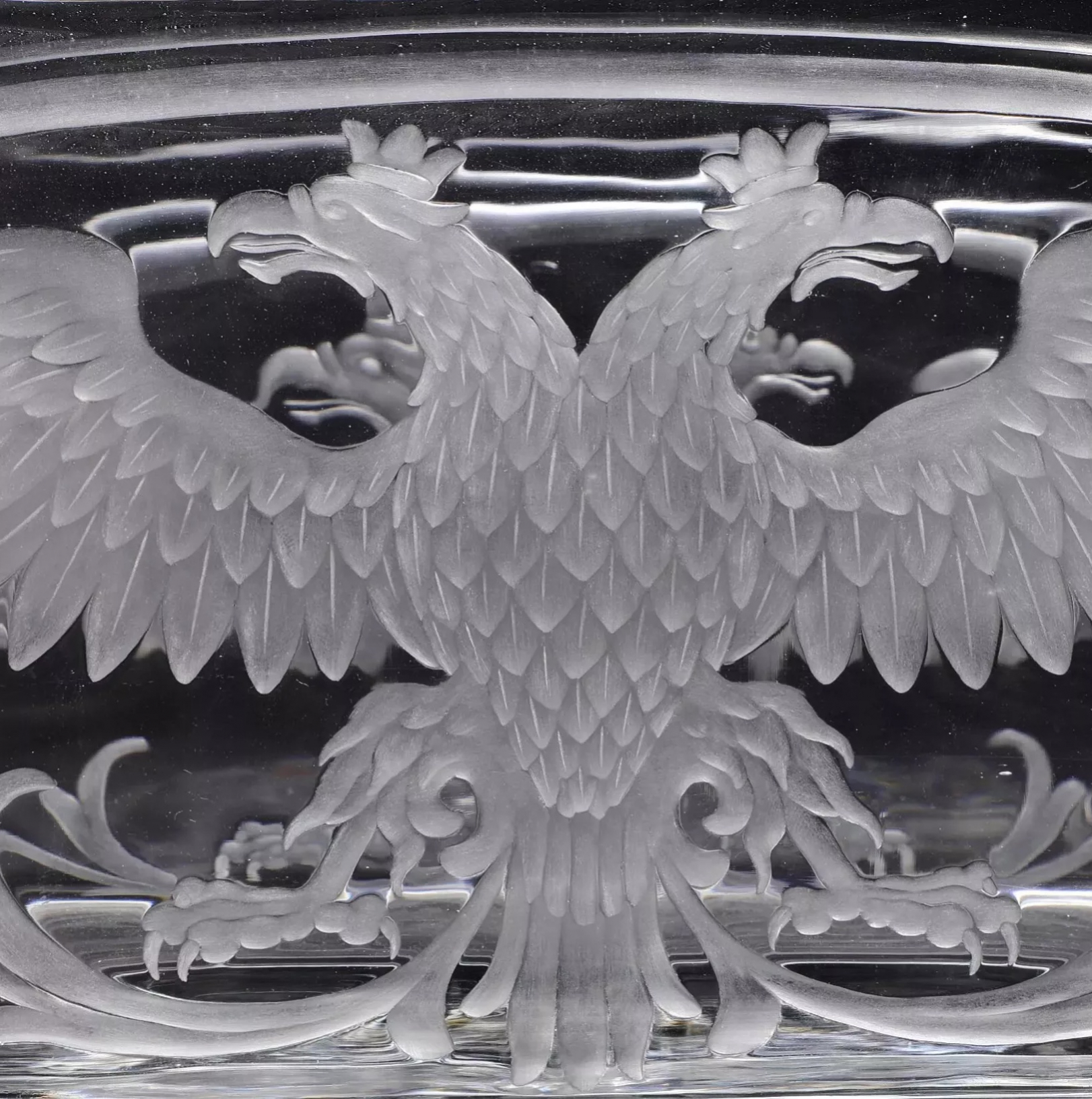
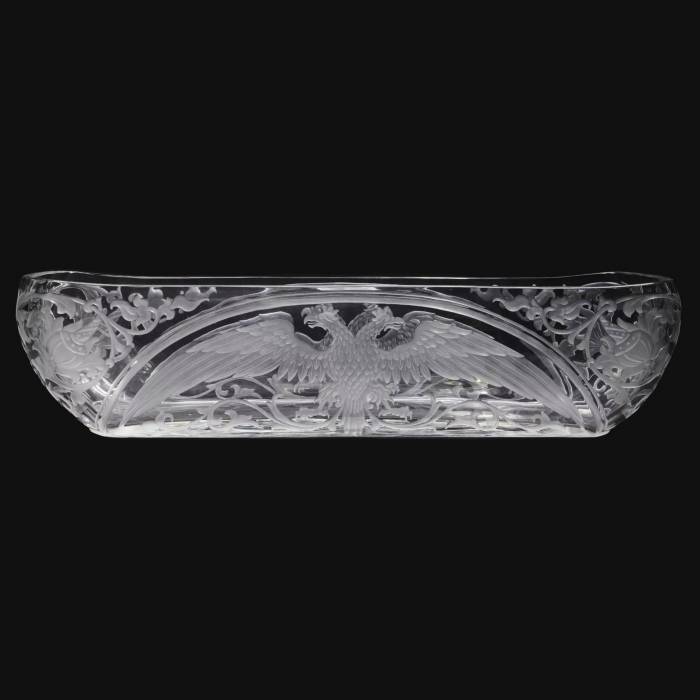
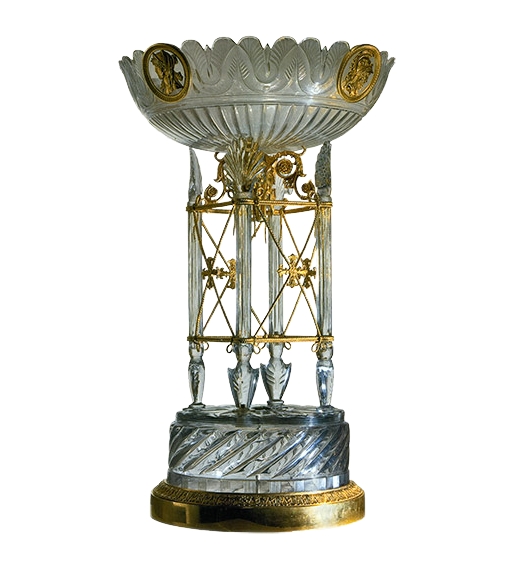
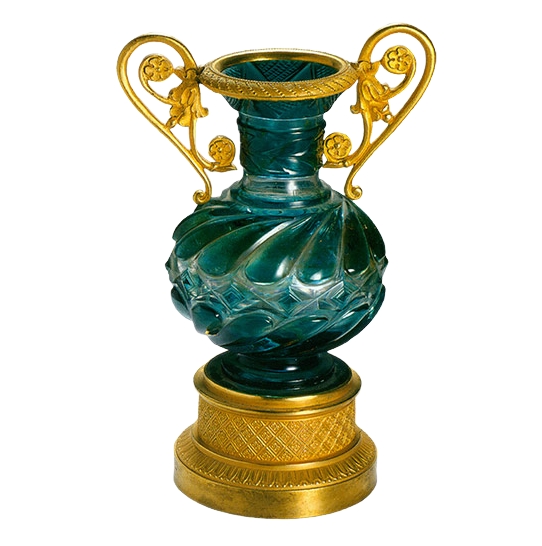
The Imperial Glass Factory was the principal state enterprise of the Russian Empire in the field of artistic glass from the eighteenth to the early twentieth century. It shaped the visual canon of ceremonial interiors, served the Highest Court, and executed representative commissions on behalf of the Cabinet of His Imperial Majesty. The production united European traditions with Russian monumentality of form, becoming the core of the national school of artistic crystal.
We will only share latest what our month on the IMPERIAL GLASS FACTORY.
HISTORY AND FOUNDATION
The prehistory of imperial glass began in the 1730s with a small production established by the English merchant Elmsel on the Fontanka River in Saint Petersburg. He was obliged to manufacture items presented to the Court as well as objects for general sale.
In 1755, by decree of the Senate, the production was transferred from the city to Yamburg and later to the village of Nazya near Shlisselburg.
In 1777, Catherine II granted the factory to Prince Grigory Potemkin, hoping for his patronage and development of the enterprise. This date is considered the official foundation of the Imperial Glass Factory.
Later, the Serene Prince transferred the production to his estate of Ozerki. After Potemkin’s death in 1792, the factory was officially named the Imperial Glass Factory and passed under the authority of the Cabinet of His Imperial Majesty, thus acquiring the status of a court institution.
ORGANIZATION AND COMMISSIONS
According to the “Regulations on the Imperial Glass Factory,” it was required to produce artistic objects for presentation to the Highest Court and for granting to various persons and institutions in the name of the Emperor through the Cabinet of His Majesty.
The factory also fulfilled private commissions submitted through the Glass Factory shop located in Quarenghi’s cabinet on Nevsky Prospect, exclusively with the approval of the Cabinet of His Majesty.
The enterprise regularly replenished the imperial and grand ducal storerooms with crystal tableware, ceremonial vases, lighting fixtures, and diplomatic gifts.
FLOURISH AND ARCHITECTURAL CONNECTIONS
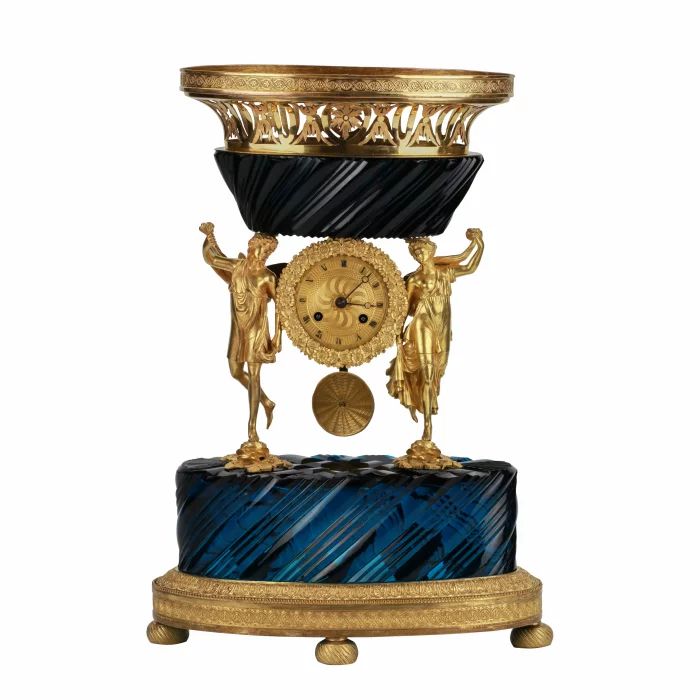
The flourishing of interior glass occurred in the 1820s and was associated with trophy bronze and the synthesis of glass with gilded mounts in the spirit of the Empire style.
Leading architects of the era worked for the factory, including:
Their designs determined the architectural clarity and monumentality of forms. Glass objects were conceived as integral elements of unified palace interiors.
PRODUCTS
The assortment included:
By the end of the nineteenth century, the factory produced approximately 20,000 items annually. It participated in industrial art exhibitions and became one of the notable landmarks of Saint Petersburg.
STYLISTIC EVOLUTION
Eighteenth century - influence of Baroque and Rococo with flowing silhouettes and rocaille ornamentation.
Early nineteenth century - strict Empire style with classical motifs, laurel wreaths, and military symbolism. Forms acquired architectural symmetry and monumentality.
Mid and late nineteenth century - Eclecticism and Historicism, expansion of the color palette, and increasing ornamental complexity, including Neo-Renaissance and Neo-Baroque references.
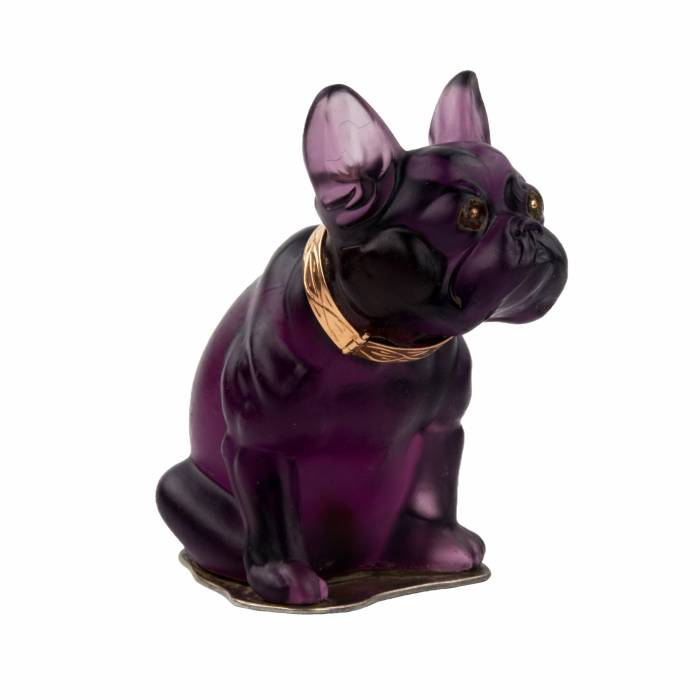
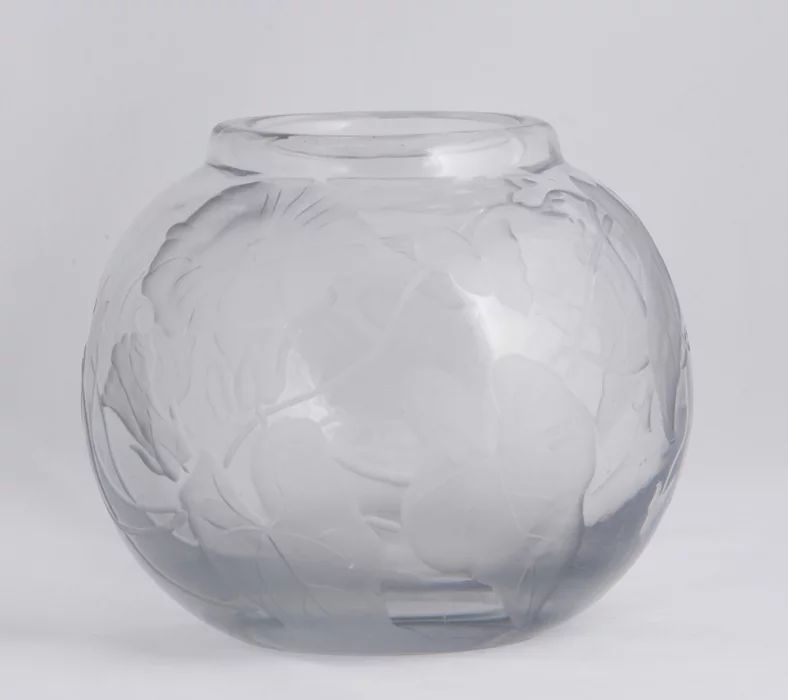
Late nineteenth to early twentieth century - Art Nouveau. Forms became more fluid and organic, with stylized vegetal motifs, asymmetry, and matte or opalescent effects. The fashion for Art Nouveau glass provided the final surge of artistic crystal production at the Imperial Glass Factory.
Despite stylistic changes, the representative state character of the production was consistently preserved.
CLOSURE
The First World War and the economic crisis led to a sharp decline in production. After several unsuccessful attempts to revive operations, the factory was closed in 1917.
LEGACY AND MARKET
Today, works of the Imperial Glass Factory are preserved in major museum collections in Russia and abroad and maintain a stable position on the international art market.
The most valuable are monumental vases of the first half of the nineteenth century, objects with documented imperial provenance, and works connected with specific architectural commissions. Museum-level pieces demonstrate strong investment stability due to their rarity, artistic complexity, and court status.