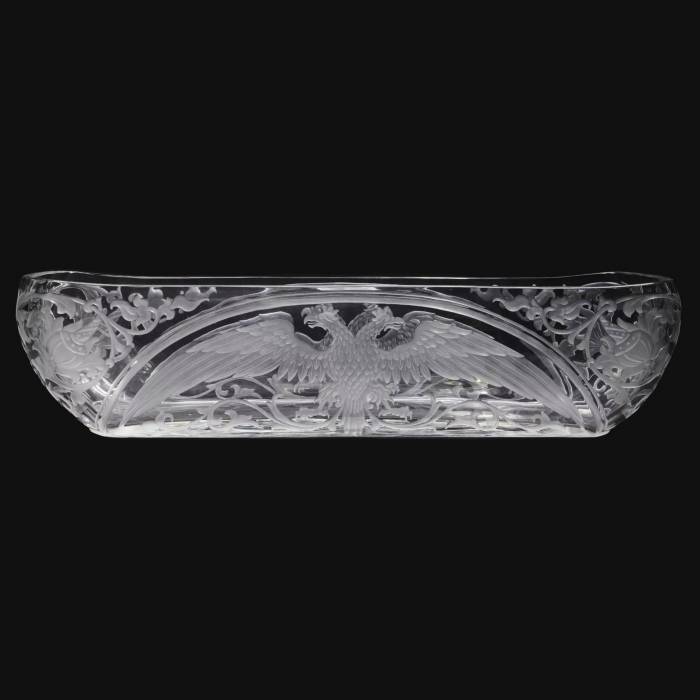
RUSSIAN CRYSTAL JARDINIÈRE OF THE IMPERIAL GLASS FACTORY RUSSIA, SAINT PETERSBURG, 1912
AntiqonART consultant will contact you within one business day after receiving your request.
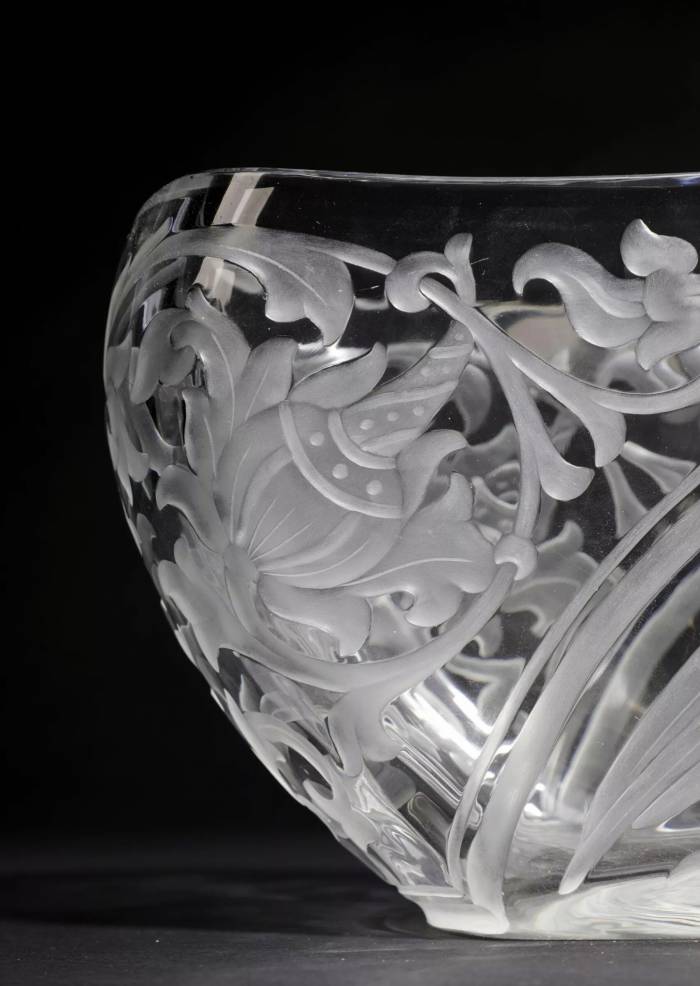
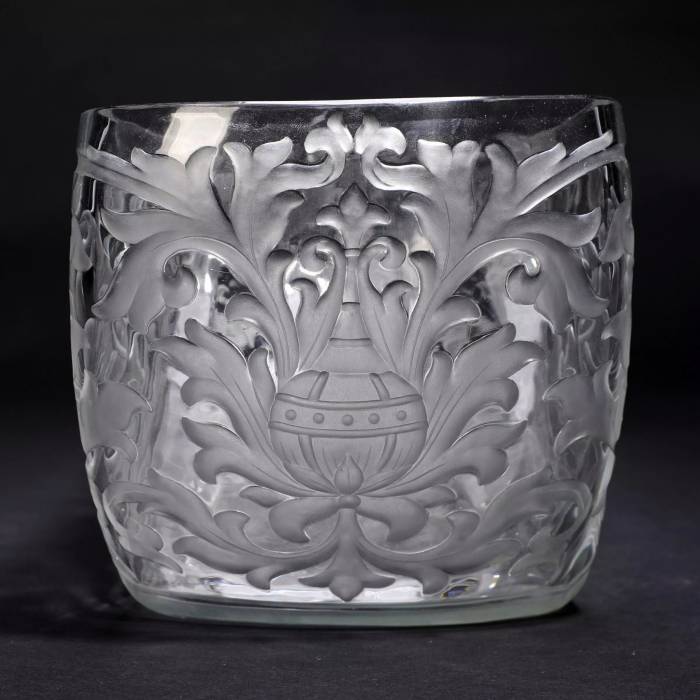
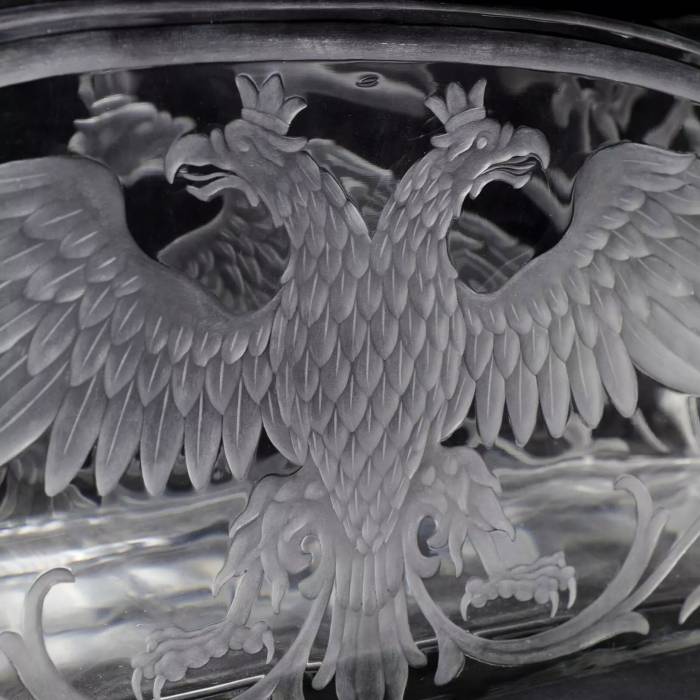
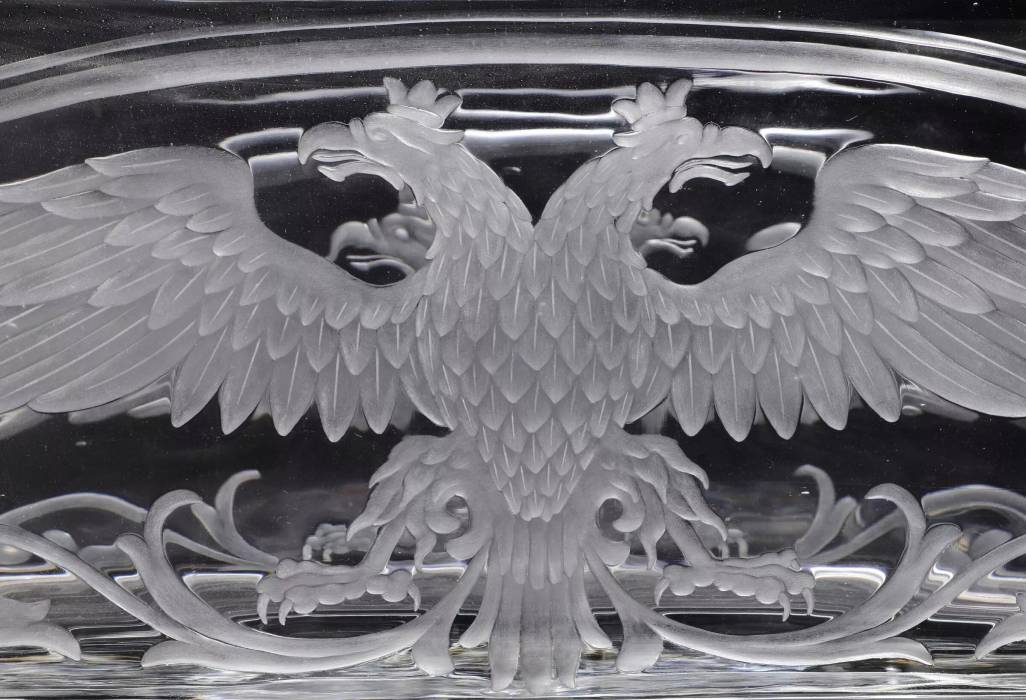
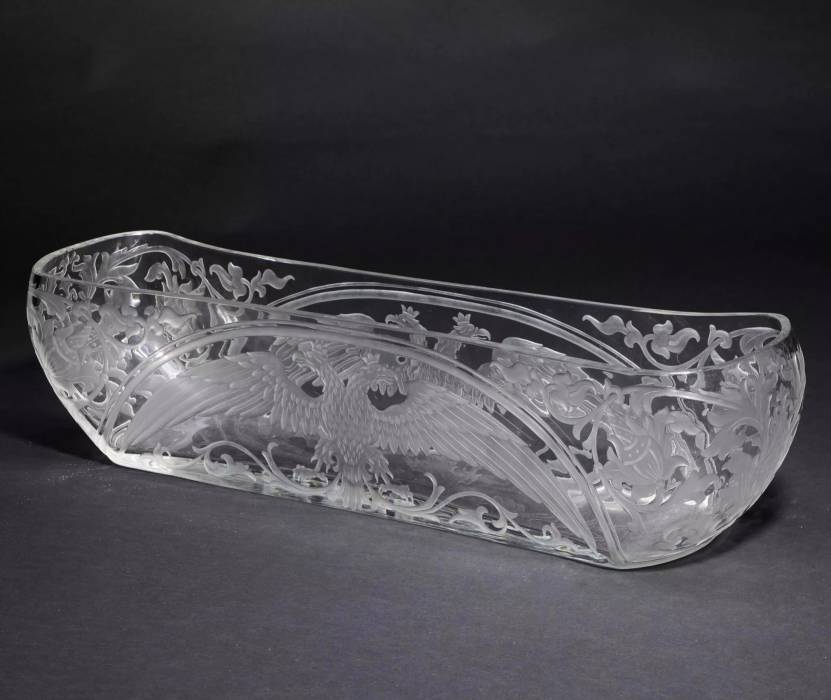
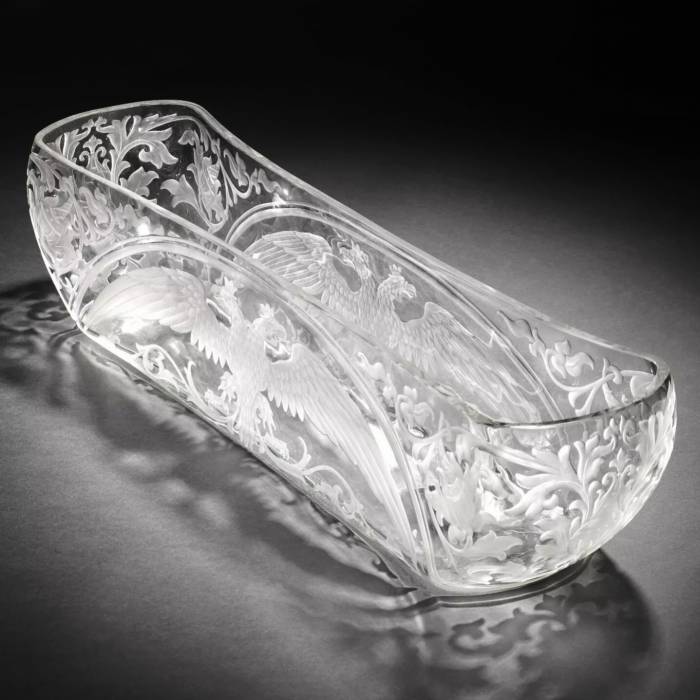
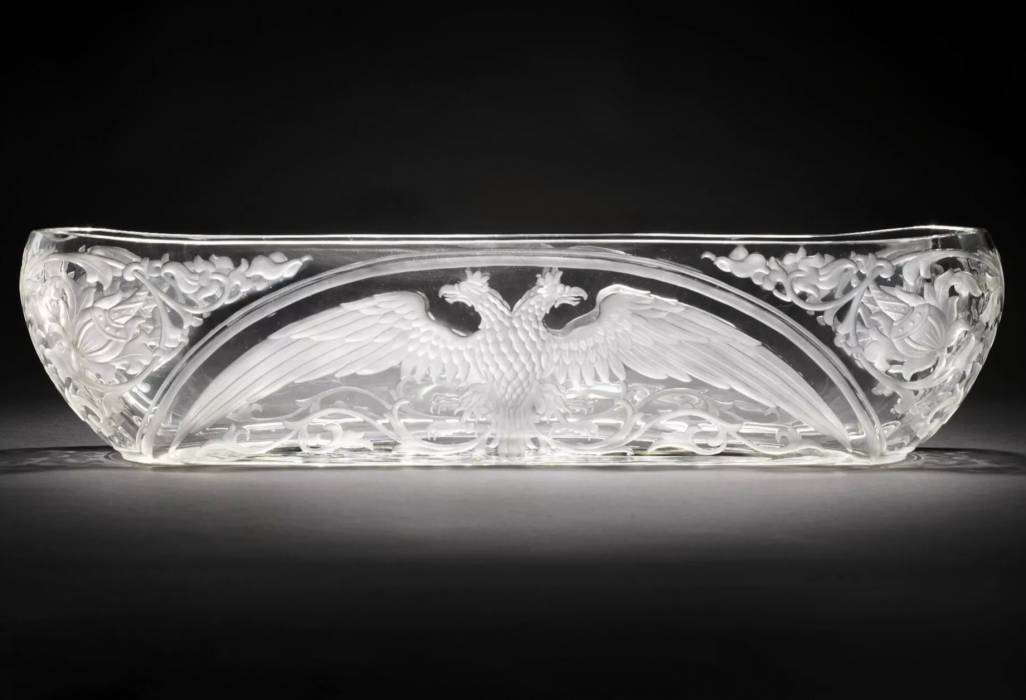
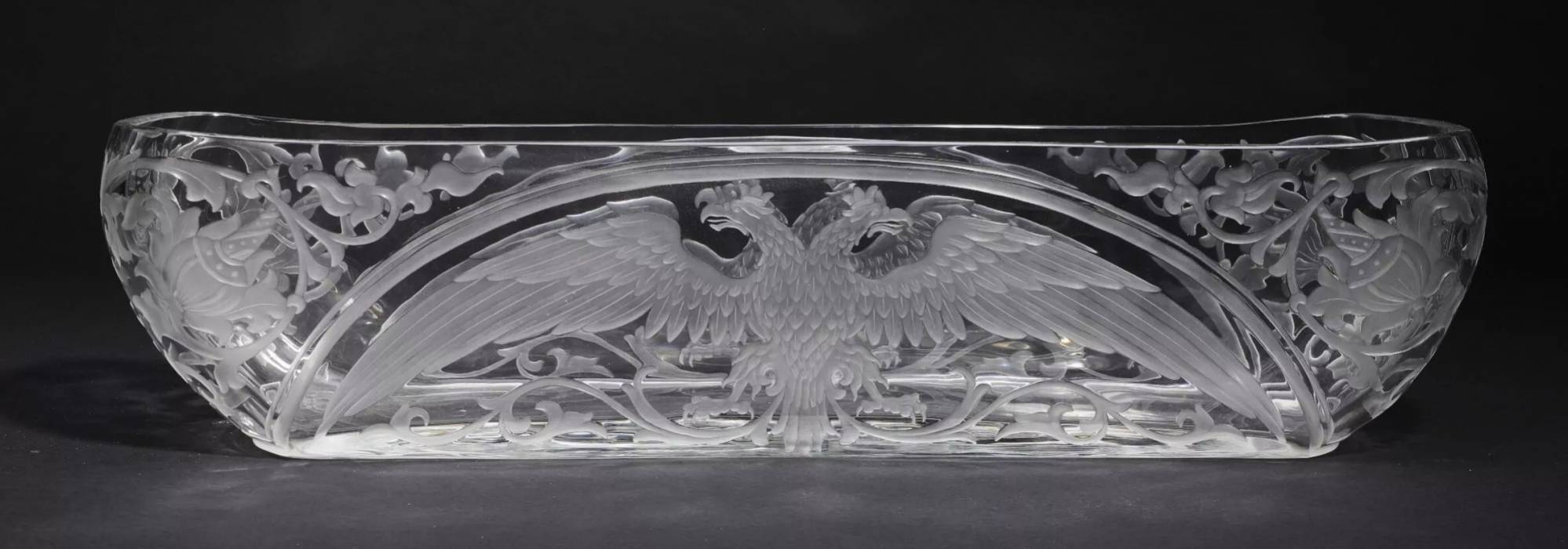
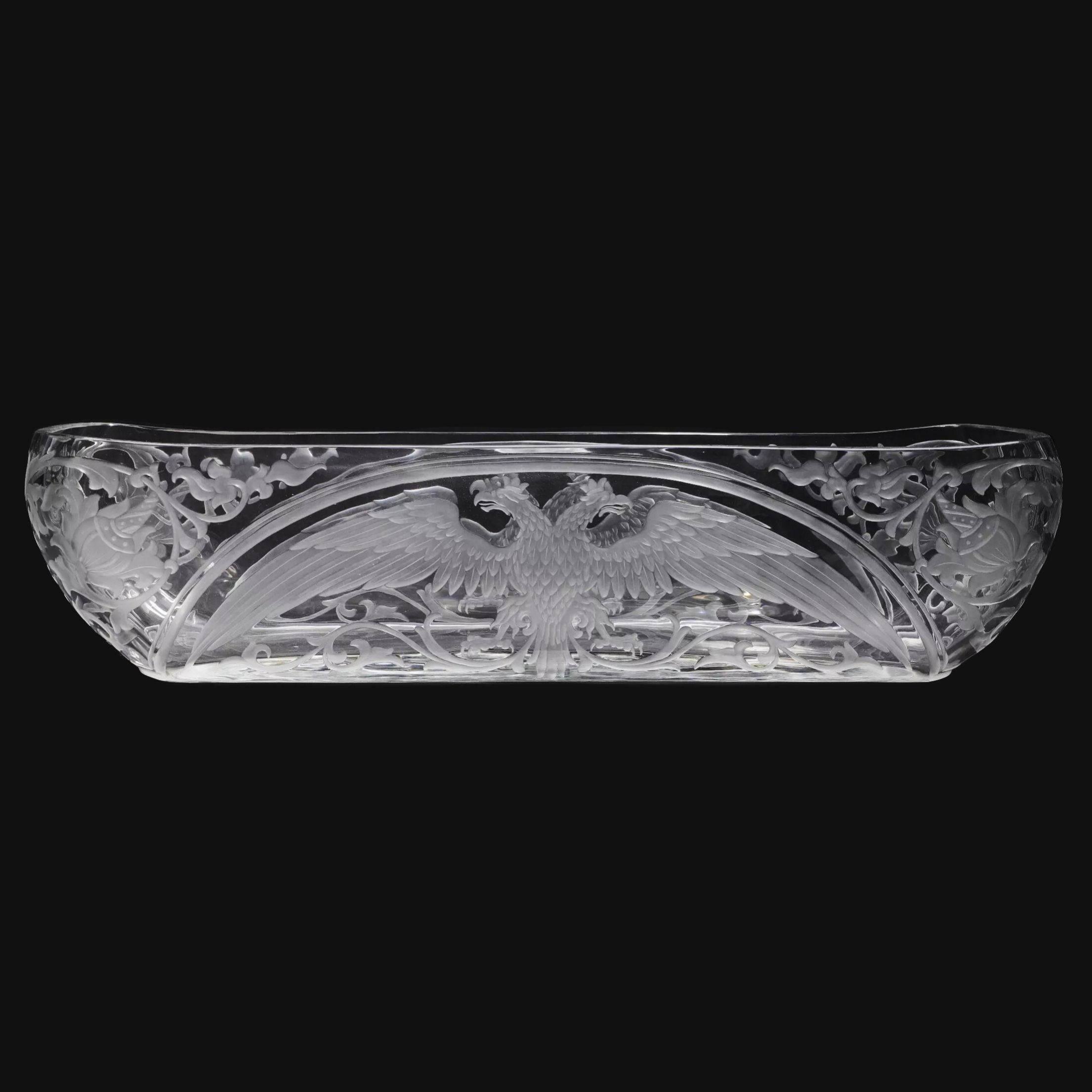
A remarkable crystal jardinière produced by the Imperial Glass Factory represents a rare example of ceremonial decorative art of the early 20th century. Monumental in scale and conceived for grand state interiors, the piece demonstrates architectural clarity and refined balance. Its rectangular body with slightly concave sides, rounded corners and gently protruding ends creates a dynamic yet harmonious silhouette.
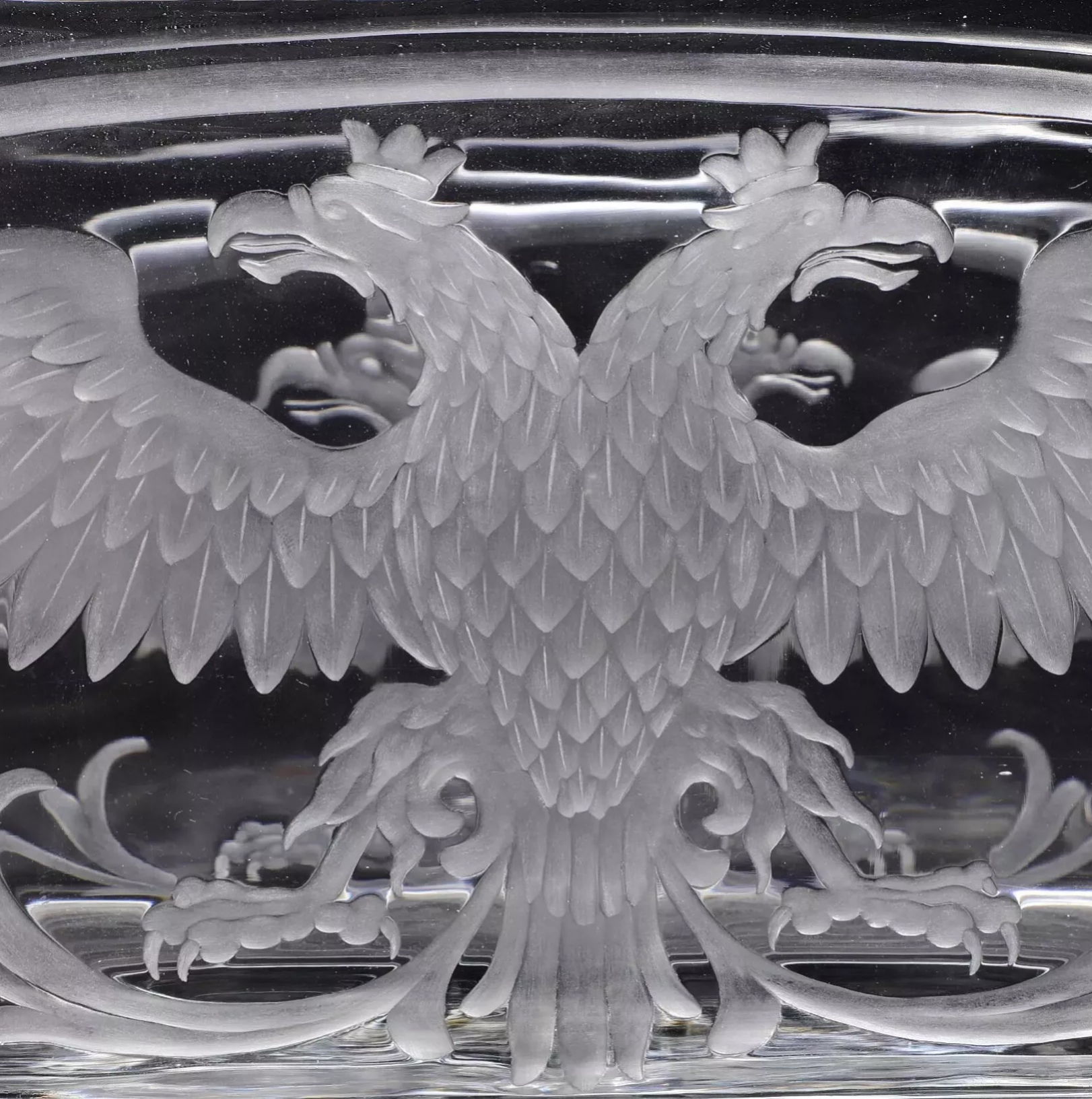
The carved decoration is of particular artistic importance. The sides are adorned with finely executed double-headed eagles, the emblem of Imperial Russia, rooted in Byzantine heraldic tradition and firmly established in Russian state symbolism. The eagles are rendered with exceptional precision, their feathers and crowns deeply cut into the crystal, revealing the virtuosity of the factory’s master engravers. Flowing floral scrolls and foliage complement the imperial imagery, forming an intricate ornamental rhythm that unites symbolism and decorative plasticity.
The carving reflects Renaissance inspiration, characteristic of the late 19th - early 20th century revival of historical styles. At the same time, elements of 17th century Russian ornamental vocabulary are evident, demonstrating the conscious synthesis of European artistic heritage and national tradition.
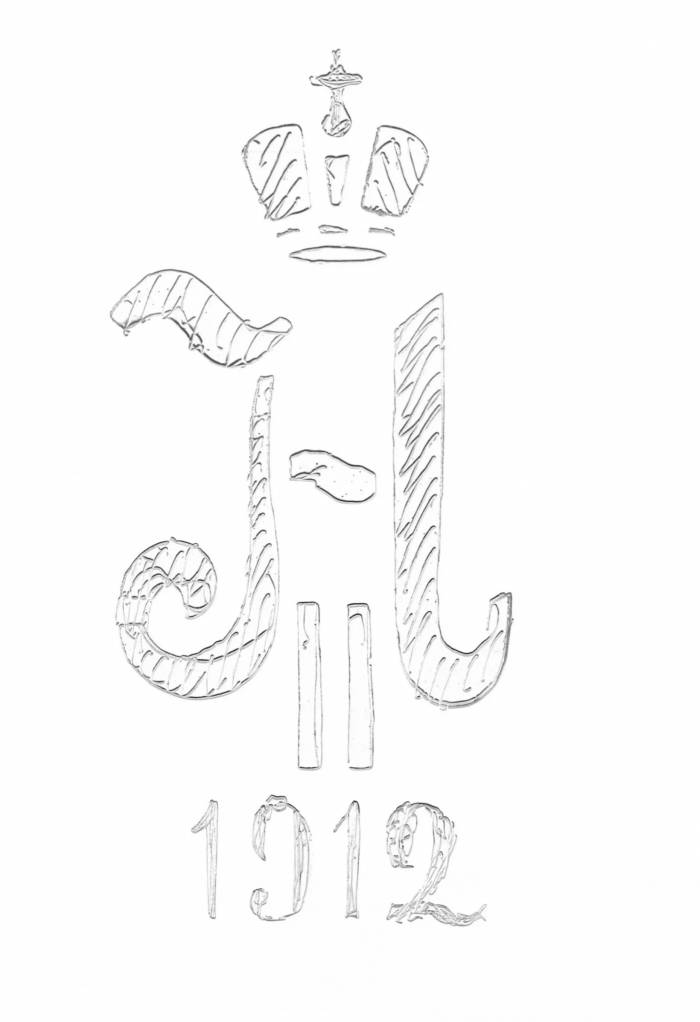
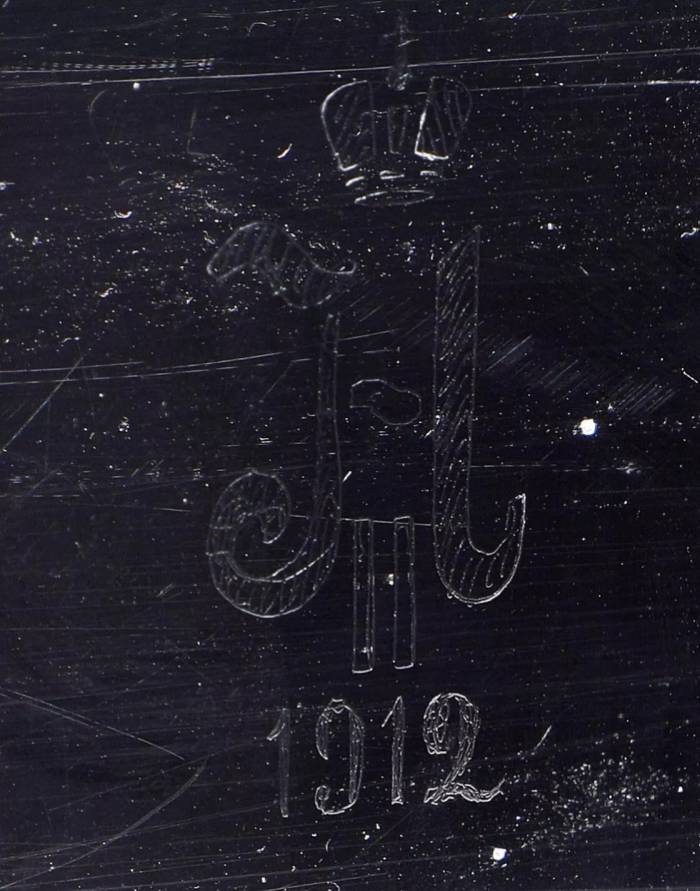
On the base appears the incised mark “H II 1912”, indicating the reign of Nicholas II and confirming the date of production.
Comparable examples are preserved in museum collections, including the Hillwood Museum in Washington, where related works designed by Pyotr Ivanovich Krasnovsky and executed by the engraver Grigory Omrokov attest to the exceptional artistic standard of the Imperial Glass Factory in the early 20th century.
Material: Colourless crystal; blown, cut, carved, engraved and polished.
Marks: Incised inscription on the base “H II 1912”.
Dimensions: Height 15.5 cm; length 69 cm; width 15.5 cm.
Provenance: Private collection.
Condition: Very good.
Founded in 1756 by decree of Empress Elizabeth Petrovna, the Imperial Glass Factory became the leading centre of artistic glass production in the Russian Empire. Throughout the 18th and 19th centuries it supplied the Imperial Court with crystal table services, vases, lighting fixtures and ceremonial objects of the highest refinement. By the reign of Nicholas II, production had reached its technical and artistic apex. Master craftsmen perfected deep carving, multi-faceted cutting and delicate engraving, achieving a remarkable play of light within the body of clear crystal.
Imperial iconography occupied a central place in decorative programs. The double-headed eagle linked such works to official court ceremonial style and expressions of state authority. During this period the factory actively embraced historicism, combining Renaissance and Baroque elements with motifs inspired by 17th century Russian ornament. This stylistic synthesis reflected the cultural policy of the late Russian Empire, which sought to reinforce national identity through artistic form.
The factory’s works adorned the interiors of the Winter Palace, the Alexander Palace in Tsarskoe Selo and other imperial residences. Presentation pieces were offered to diplomats and members of European royal houses. Comparable vases preserved in the Hillwood Museum demonstrate the shared artistic programme and international recognition of the Imperial Glass Factory. The jardinière of 1912 belongs to the final flourishing of Russian artistic glass before the upheavals of the First World War and the Revolution, marking the culmination of Imperial decorative art.
The crystal surface is clear and well preserved. Carving remains sharp, without chips or cracks. Minor signs of age consistent with careful use do not affect the overall aesthetic integrity.
The condition report is provided for informational purposes only.
It is not comprehensive and may not reflect all defects, restorations, alterations, or adaptations, as Antiqon does not perform professional conservation-level assessments. The information is based on a qualified, yet subjective, evaluation by our specialists.Before purchasing, we recommend consultation with an independent expert.Please also consult our Terms and conditions and Glossary A-Z, which contain important information on lot characteristics and sale conditions.