×
Create account and receive
15% DISCOUNT
your first acquisition
or
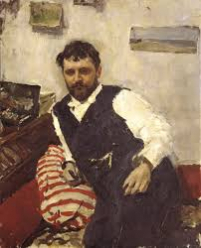
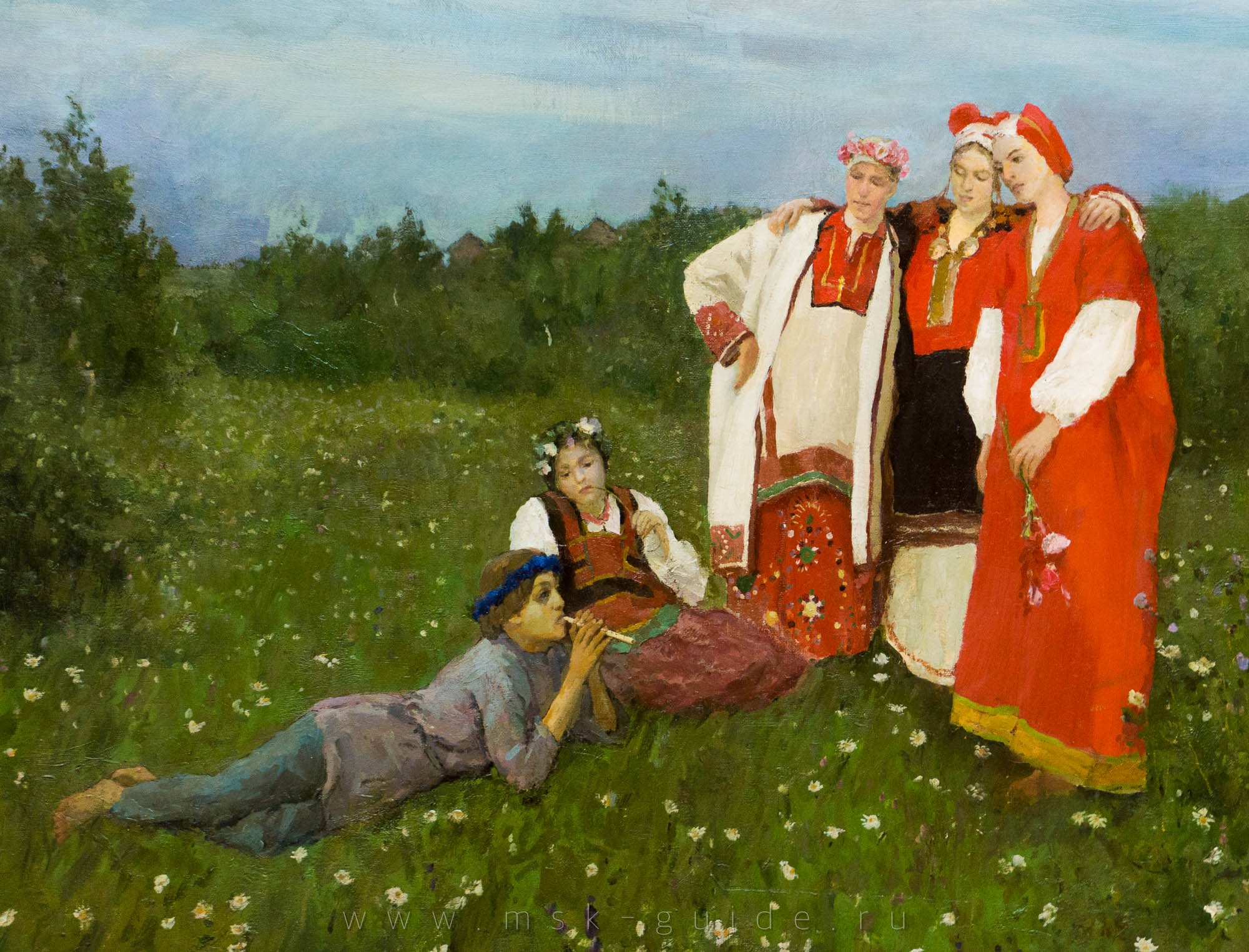
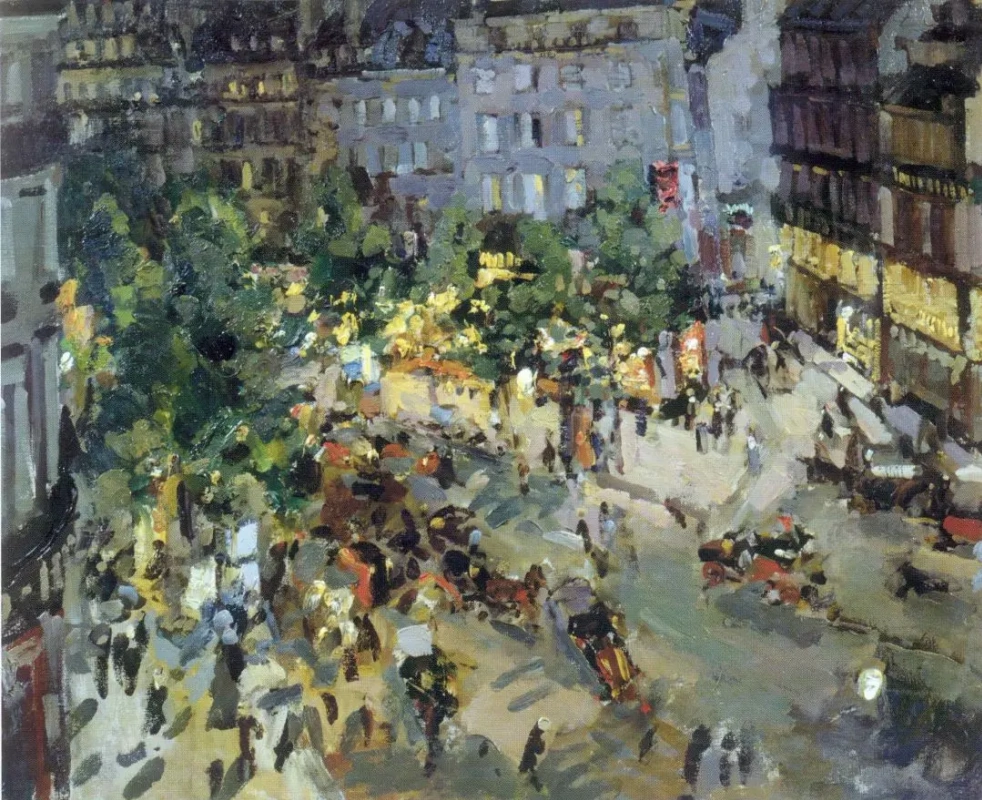
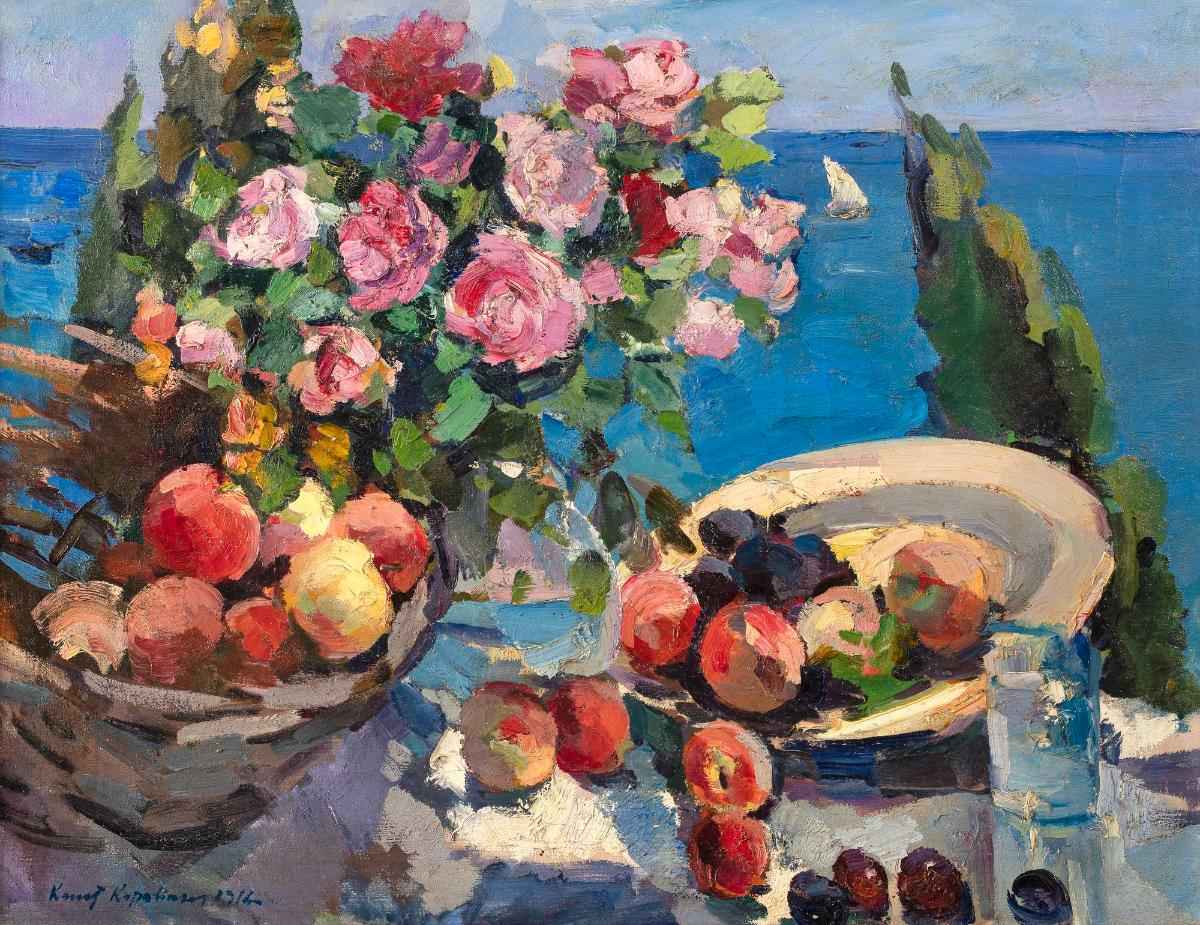
Konstantin Alexeyevich Korovin - Russian painter, theatrical designer and teacher, one of the key representatives of Russian Impressionism. His work combined the traditions of the Moscow school of painting with the artistic discoveries of French Impressionism and significantly influenced the development of plein-air painting and stage design at the turn of the 19th and 20th centuries.
We will only share latest what our month on the KONSTANTIN ALEXEYEVICH KOROVIN.
BIOGRAPHY
Konstantin Alexeyevich Korovin was born in Moscow in 1861 into a merchant family of Old Believer origin. After the financial decline of the family, the future artist grew up within the circle of Moscow’s artistic intelligentsia, which strongly influenced his professional path.
In 1875 he entered the Moscow School of Painting, Sculpture and Architecture. His teachers included Alexei Savrasov and Vasily Polenov. Under their guidance Korovin developed a strong interest in landscape painting and in conveying the atmosphere of nature through light and colour.
During his studies Korovin became closely connected with the artistic circle formed around the Abramtsevo estate of the patron Savva Mamontov. His contacts with artists such as Viktor Vasnetsov, Mikhail Vrubel and Valentin Serov played an important role in shaping his artistic language.
From the late 1880s the artist travelled extensively across the northern regions of Russia. Expeditions to the Arkhangelsk province and the Kola Peninsula became decisive for the formation of his painterly vision. These journeys inspired a series of northern landscapes in which Korovin explored complex light effects and atmospheric conditions.
After the Russian Revolution of 1917 the artist continued to work in Russia for several years. In 1923 he emigrated to France, where he spent the final years of his life in Paris, continuing to paint city views and coastal landscapes.
CAREER STAGES
Korovin’s early creative period was closely connected with the Moscow school of painting and with the search for new approaches to depicting nature. Already in the 1880s he began to work extensively in plein air, seeking to capture immediate impressions of the surrounding environment.
During the 1890s he became one of the first Russian artists to consistently develop Impressionist principles in painting. Works of this period are characterised by a freer brushwork and a sophisticated treatment of colour reflections.
At the same time Korovin worked actively as a theatrical designer. He created stage designs for Savva Mamontov’s Russian Private Opera and later collaborated with the Imperial Theatres. Among his most notable scenographic works are the productions of Nikolai Rimsky-Korsakov’s operas The Snow Maiden, Sadko and The Golden Cockerel.
At the beginning of the 20th century Korovin travelled widely throughout Europe. His visits to France were particularly important, where he became familiar with the works of the French Impressionists.
The French period of his career after 1923 was largely devoted to views of Paris, Normandy and the French Riviera.
STYLE, TECHNIQUE AND ARTISTIC DIRECTION
Korovin occupies a distinctive position in the history of Russian painting of the late 19th and early 20th centuries. He is considered one of the founders of Russian Impressionism, adapting the artistic innovations of the French school to a Russian cultural context.
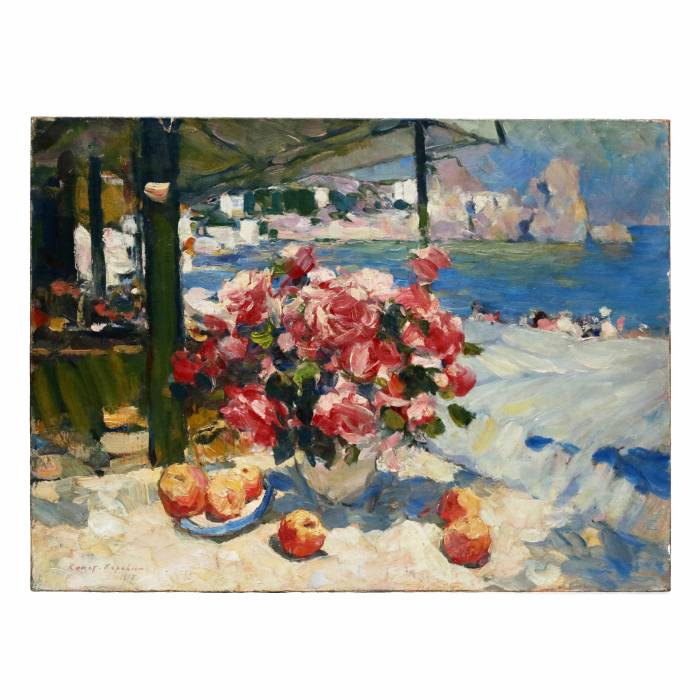
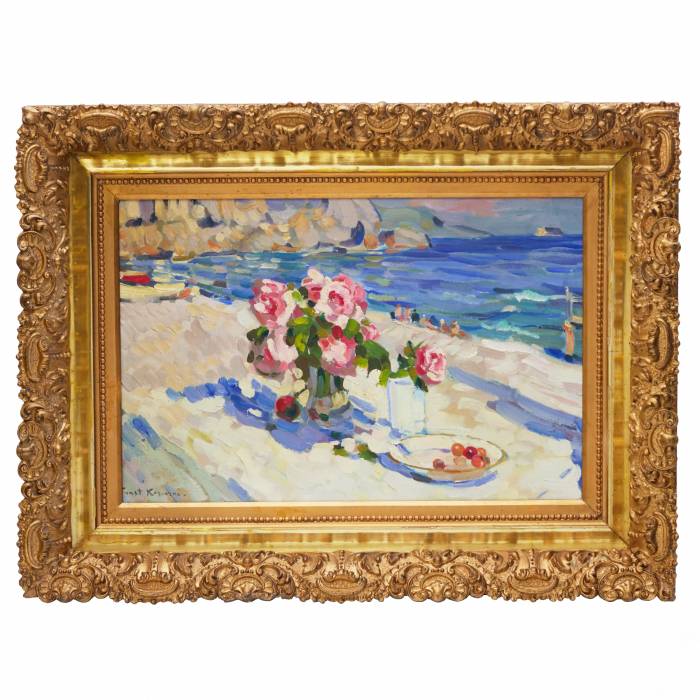
His painting is characterised by a free and energetic brushwork combined with an expressive use of colour. Korovin frequently used broad brushstrokes to convey the changing effects of light.
Light plays a central structural role in his compositions. Through subtle variations of colour and tone he created impressions of moving air, reflections on water and the shimmering lights of urban streets.
Thematically his work encompasses several key areas including northern landscapes of Russia, Parisian city scenes, marine views and theatrical compositions.
LEGACY AND MASTERPIECES
Among Korovin’s most significant works are:
Northern Idyll, 1886, State Tretyakov Gallery
Winter in Lapland, 1894, State Tretyakov Gallery
Paris. Boulevard des Capucines, circa 1906, State Russian Museum
Paris at Night. Boulevard Scene, early 20th century, State Russian Museum
An important part of his artistic heritage also includes stage designs created for productions of Nikolai Rimsky-Korsakov’s operas and other theatrical performances of the early 20th century.
Korovin’s works are held in major museum collections including the State Tretyakov Gallery, the State Russian Museum and numerous European and American collections.
MARKET ANALYSIS
The market for works by Konstantin Korovin demonstrates stable international demand. Paintings by the artist regularly appear at major international auctions and attract collectors of Russian art particularly in Europe and the United States. The strongest demand focuses on works created between the 1890s and the 1920s, when Korovin actively produced cityscapes and northern landscapes.
The most sought-after subjects include Parisian night scenes, Crimean landscapes of the Gurzuf period and large decorative compositions from the early 20th century.
Masterpieces: This category includes major paintings from the artist’s mature period, particularly Parisian city views, northern landscapes and works from the Crimean period.
The highest confirmed result on the international market was achieved in 2005 when the painting Gurzuf in Summer (1916) sold in London for $1,906,984.
Another notable result occurred in 2020 when a painting dated 1923 achieved €1,101,830, significantly exceeding its pre-sale estimate.
The upper segment of the market for major and important works by the artist is therefore currently situated within the range of €1 million to €2 million.
Workshop / Circle: This category includes works of strong museum quality of medium scale, particularly Parisian city views, still lifes and Crimean landscapes.
Such works regularly achieve prices between €80,000 and €600,000 depending on size, period and condition.
For example, the painting Paris (1923) sold at auction in Paris for €559,038, representing one of the most significant results on the French market.
Works in this category often exceed their estimates due to competition among international collectors.
Followers / School: This category includes smaller landscapes, studies and later works by the artist as well as paintings created within the broader tradition of Russian Impressionism.
On the international market such works typically sell within the range of €5,000 to €80,000.