×
Create account and receive
15% DISCOUNT
your first acquisition
or
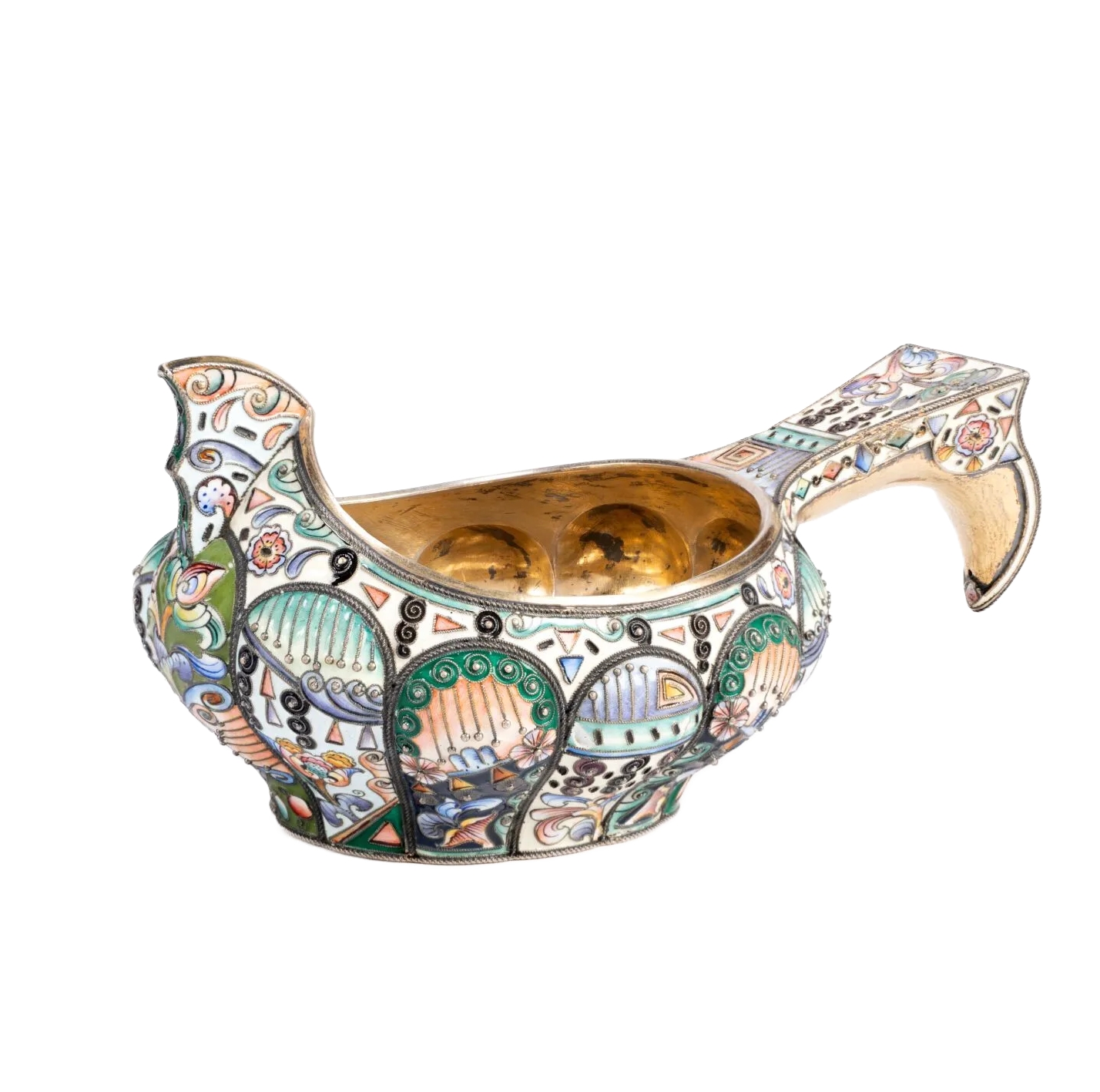
Established in 1908, the Moscow jewellery artels represented a new form of collective artistic craftsmanship, bringing together professional jewellers trained within the traditions of major pre-revolutionary firms. They played a significant role in preserving the culture of silver craftsmanship during the artistic and social transformations of the early 20th century.
We will only share latest what our month on the MOSCOW JEWELLERY ARTELS.
HISTORY AND DEVELOPMENT
The formation of Moscow jewellery artels dates to 1908 and was closely linked to the crisis of individual factory production and the search for new models of labour organisation. Their core consisted of graduates of the Stroganov School as well as masters formerly employed by leading Moscow jewellery firms. Many participants possessed a high level of professional training and experience in executing prestigious commissions.
An important role in the development of the artel movement was played by senior masters. Upon withdrawing from active work, Fyodor Ruckert transferred equipment and tools to the collective on the condition that the artistic practice would continue. The artels also included independent masters previously associated with the firms of Ovchinnikov, Khlebnikov and Fabergé. At the same time, a number of jewellery houses continued to commission works from their former craftsmen after 1908, with the resulting objects often bearing the commercial marks of those firms.
Up to twenty Moscow silver artels are currently known, active until 1917-1918. Among them, the 1st, 2nd, 5th, 7th, 11th, 13th and 15th artels are regarded as the most artistically significant.
ARTISTIC SPECIFICITY AND TECHNIQUES
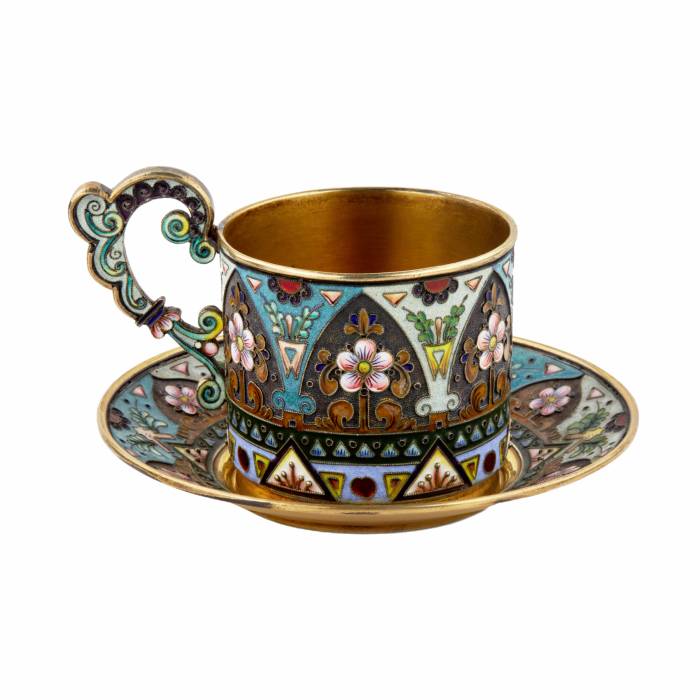
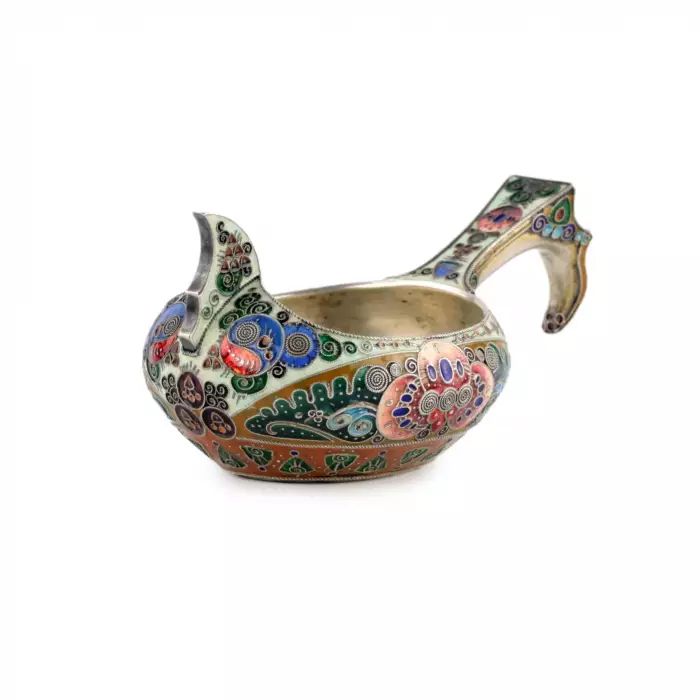
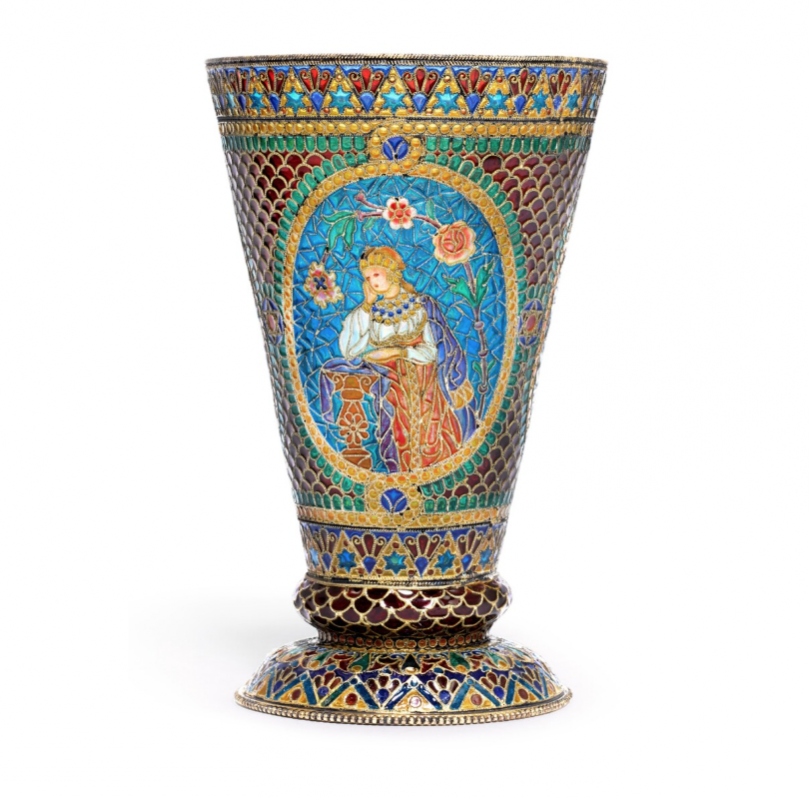
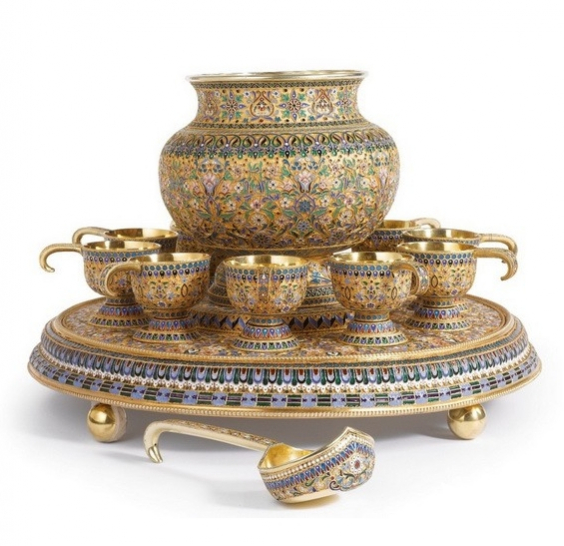
The Moscow artels were characterised by clear professional specialisation. The 1st and 11th artels focused on enamel work, developing small and medium-scale forms such as ladles, salt cellars, podstakanniks, sugar bowls and, more rarely, services. Enamel was treated as an independent artistic medium, enabling the translation of contemporary pictorial innovations into decorative art. Stylistically, these works evolved within Neorussian Style and Russian Art Nouveau.
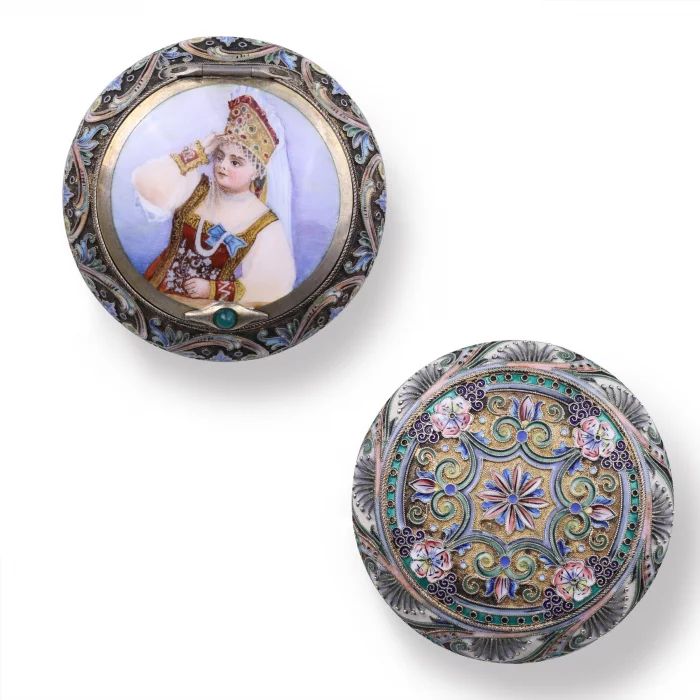
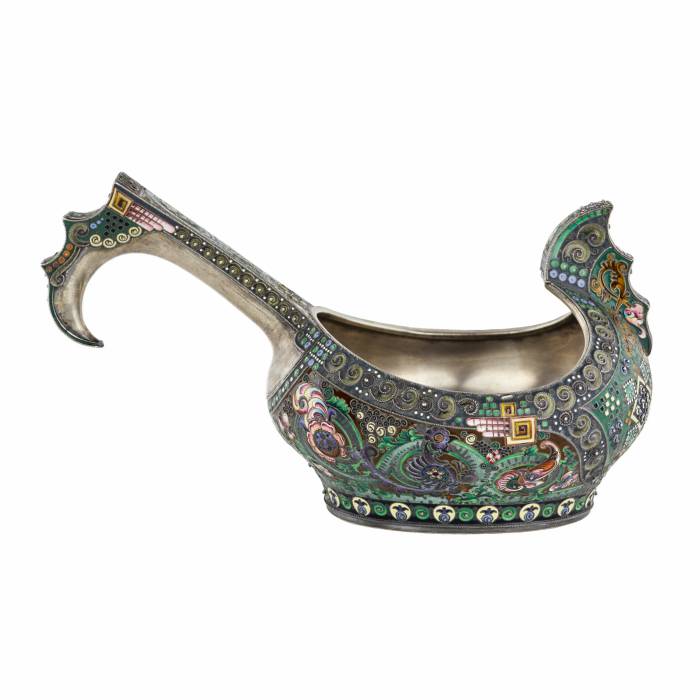
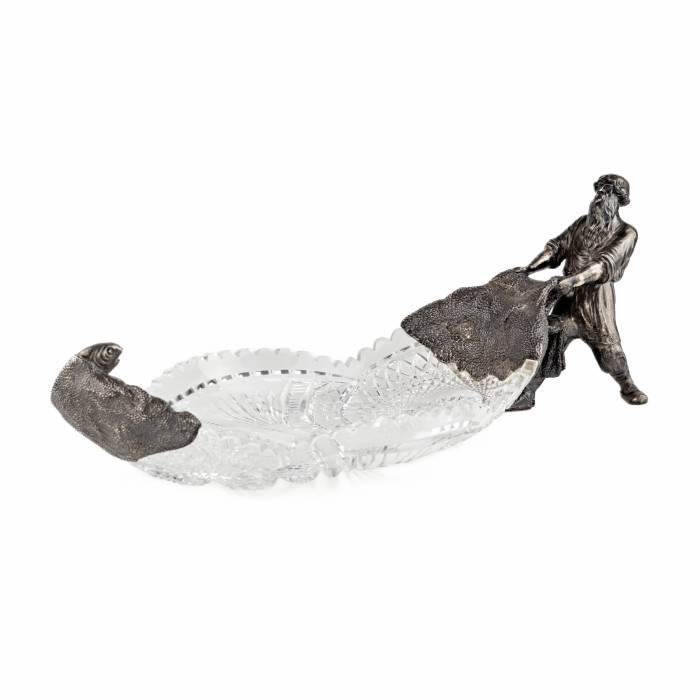
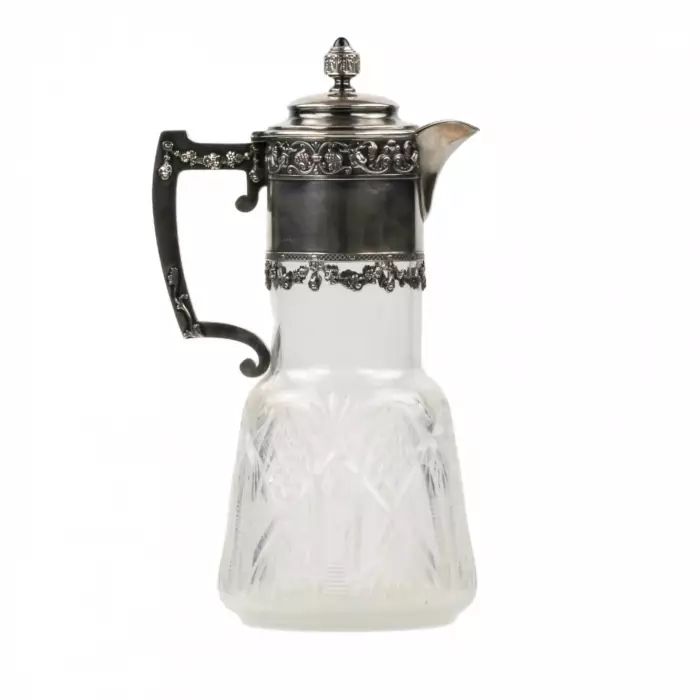
Other artels specialised in massive silver objects intended for table use, ceremonial display and decoration. Their production included tea and punch sets, bonbonnières, vases, cups, ladles and objects incorporating crystal. The artistic language of these works reflects an interaction between Neorussian Style, Russian Art Nouveau and Neo-Empire. Large cast forms with archaic ornamentation mirror the period’s growing interest in national themes and folklore.
LEGACY AND MASTERPIECES
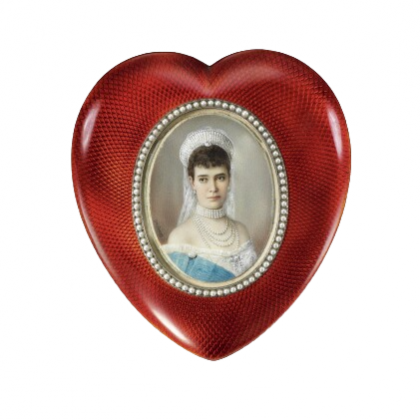
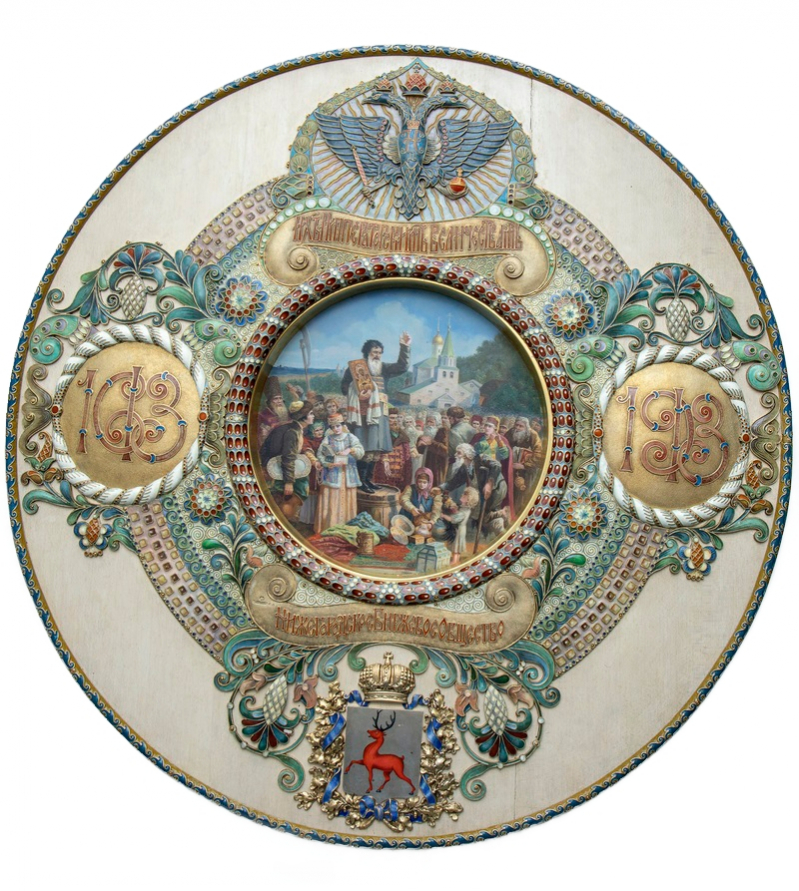
Characteristic works of the Moscow artels include enamelled ladles and podstakanniks in the Russian Art Nouveau style, massive silver ladles and bratina vessels with Neorussian ornament, as well as ceremonial objects combining crystal with sculptural elements. Artel works are represented in museum collections and significant private holdings.
MARKET ANALYSIS
Exceptional works: Rare museum-level objects are valued in the range of €80,000-200,000.
Rare works: High-quality enamelled and massive silver objects are generally valued between €15,000-60,000.
Serial works: Standard utilitarian objects are typically valued between €3,000-15,000. Market demand is confirmed by results from leading international auctions.HISTORY AND DEVELOPMENT
The formation of Moscow jewellery artels dates to 1908 and was closely linked to the crisis of individual factory production and the search for new models of labour organisation. Their core consisted of graduates of the Stroganov School as well as masters formerly employed by leading Moscow jewellery firms. Many participants possessed a high level of professional training and experience in executing prestigious commissions.
An important role in the development of the artel movement was played by senior masters. Upon withdrawing from active work, Fyodor Ruckert transferred equipment and tools to the collective on the condition that the artistic practice would continue. The artels also included independent masters previously associated with the firms of Ovchinnikov, Khlebnikov and Fabergé. At the same time, a number of jewellery houses continued to commission works from their former craftsmen after 1908, with the resulting objects often bearing the commercial marks of those firms.
Up to twenty Moscow silver artels are currently known, active until 1917-1918. Among them, the 1st, 2nd, 5th, 7th, 11th, 13th and 15th artels are regarded as the most artistically significant.
ARTISTIC SPECIFICITY AND TECHNIQUES
The Moscow artels were characterised by clear professional specialisation. The 1st and 11th artels focused on enamel work, developing small and medium-scale forms such as ladles, salt cellars, podstakanniks, sugar bowls and, more rarely, services. Enamel was treated as an independent artistic medium, enabling the translation of contemporary pictorial innovations into decorative art. Stylistically, these works evolved within Neorussian Style and Russian Art Nouveau.
Other artels specialised in massive silver objects intended for table use, ceremonial display and decoration. Their production included tea and punch sets, bonbonnières, vases, cups, ladles and objects incorporating crystal. The artistic language of these works reflects an interaction between Neorussian Style, Russian Art Nouveau and Neo-Empire. Large cast forms with archaic ornamentation mirror the period’s growing interest in national themes and folklore.
LEGACY AND MASTERPIECES
Characteristic works of the Moscow artels include enamelled ladles and podstakanniks in the Russian Art Nouveau style, massive silver ladles and bratina vessels with Neorussian ornament, as well as ceremonial objects combining crystal with sculptural elements. Artel works are represented in museum collections and significant private holdings.
MARKET ANALYSIS
Exceptional works: Rare museum-level objects are valued in the range of €80,000-200,000.
Rare works: High-quality enamelled and massive silver objects are generally valued between €15,000-60,000.
Serial works: Standard utilitarian objects are typically valued between €3,000-15,000. Market demand is confirmed by results from leading international auctions.