Price:
7500 €
Add to cart
short text
We will only share latest what our month on the PLIQUE-À-JOUR ENAMEL .
HISTORY AND ORIGIN
The origins of plique-à-jour enamel can be traced to Byzantine and medieval Western European metalwork of the 12th and 13th centuries, where translucent enamels were employed in ecclesiastical objects and reliquaries. The technique shares conceptual affinities with architectural stained glass, particularly in its emphasis on light transmission and chromatic luminosity.
During the 15th and 16th centuries, plique-à-jour enamel developed primarily in France and Italy but remained rare due to its extreme technical complexity. Its revival and artistic redefinition occurred in the late 19th century, when Art Nouveau artists elevated the technique to an independent expressive medium.
TECHNIQUE AND PROCESS
Plique-à-jour enamel is executed by filling open metal cells with translucent enamel without a permanent backing. A temporary support, organic or mineral in nature, is used during firing and subsequently removed. The enamel is retained solely by the structural integrity of the metal framework.
Each colour requires a separate firing at precisely controlled temperatures. The high risk of distortion, cracking, or enamel loss makes plique-à-jour one of the most demanding techniques in decorative metalwork. Even minimal technical deviation may result in the loss of the entire element.
ARTISTIC AND STYLISTIC CONTEXT
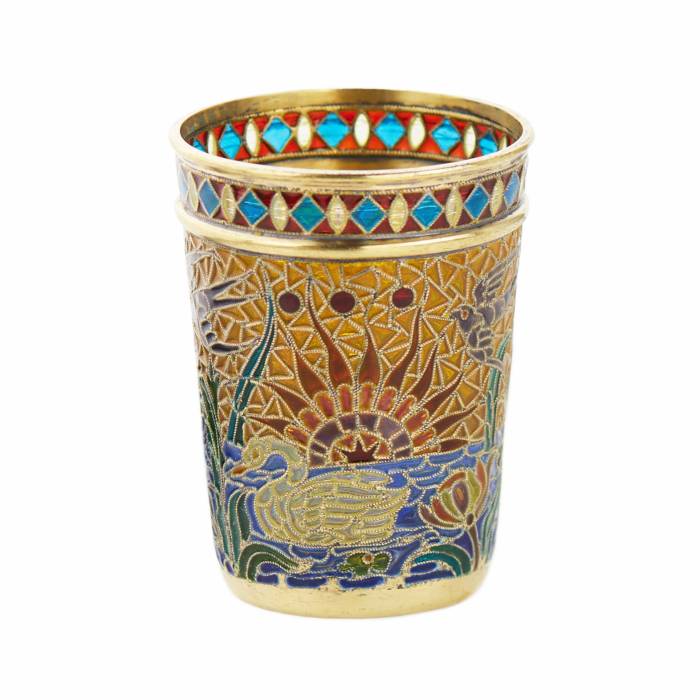
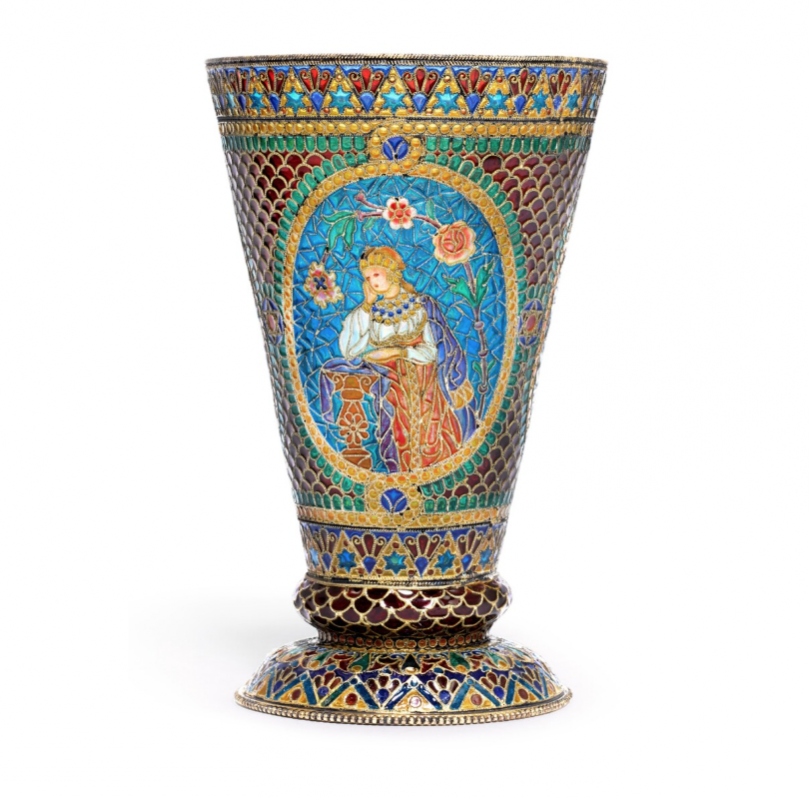
The defining aesthetic characteristic of plique-à-jour enamel lies in its translucency and interaction with light. Colour is perceived as a luminous medium rather than a surface coating, producing an effect of depth and vibrancy that varies with lighting conditions.
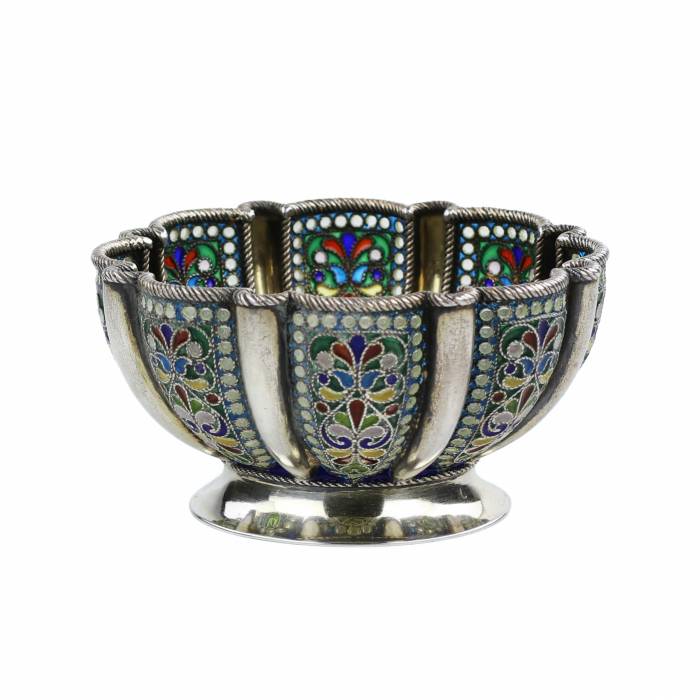
The technique found its most natural expression within Art Nouveau, where it complemented organic forms, botanical motifs, and the stylistic emphasis on fluidity and natural symbolism. In Russian decorative arts, plique-à-jour enamel was often combined with national ornamental traditions, chasing, gilding, and other enamelling techniques.
APPLICATION AND MASTERS
Plique-à-jour enamel was primarily employed in jewellery and small-scale decorative objects, including brooches, pendants, earrings, miniature icons, icon covers, and elements of refined ceremonial and tableware objects. Its most significant period of use occurred in France and Russia at the end of the 19th and beginning of the 20th centuries.
In Western Europe, the technique was masterfully explored by René Lalique, whose jewellery designs exploited the luminous and sculptural potential of plique-à-jour enamel.
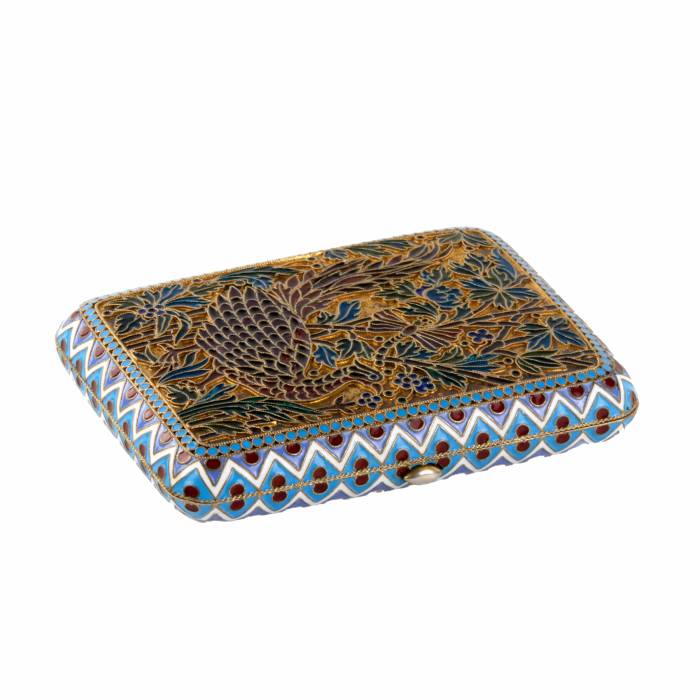
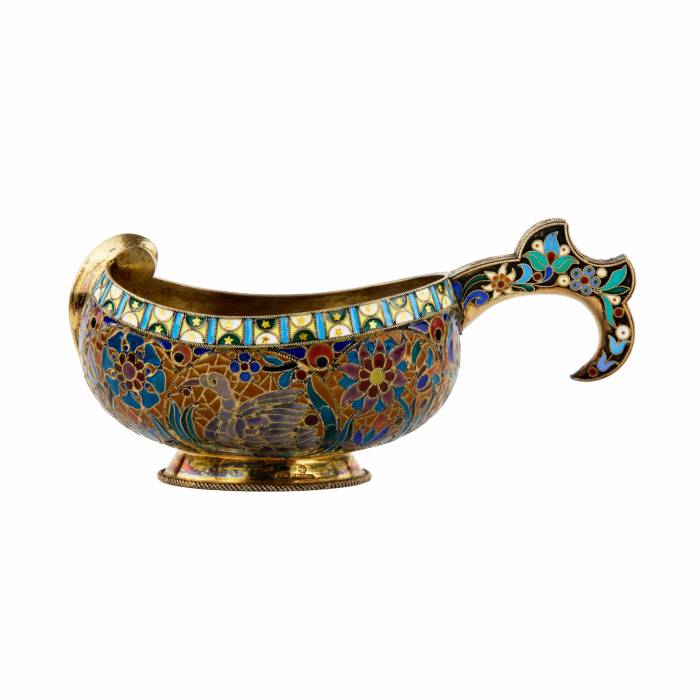
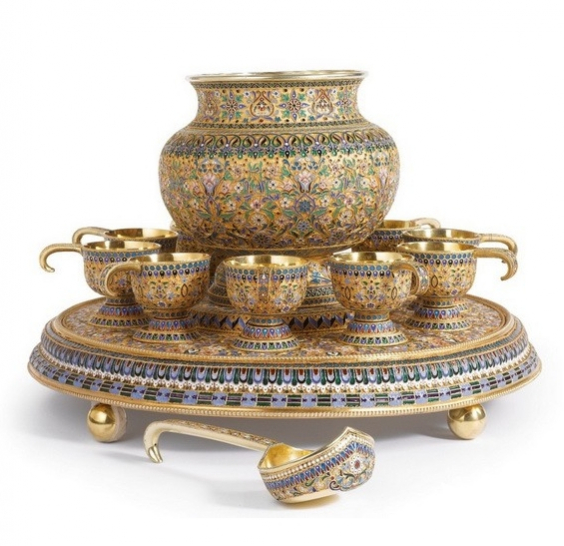
In Russian decorative art, plique-à-jour enamel appears in works produced by leading court workshops of the late 19th century, including the Factory of Pavel Ovchinnikov. Within the factory’s output, the technique was combined with cloisonné and guilloché enamels, as well as chasing and gilding, and was primarily reserved for ceremonial and presentation objects, reflecting the firm’s high technical standards and artistic ambition.
MARKET ANALYSIS
Exceptional examples: Museum-quality Art Nouveau and Russian Modern works featuring plique-à-jour enamel. Price range: €300,000–900,000. Auction record: plique-à-jour enamel brooch with diamonds, circa 1900, sold in 2021 for €820,000.
Rare examples: Late 19th–early 20th century jewellery executed in advanced plique-à-jour technique. Price range: €80,000–250,000. Auction record: plique-à-jour enamel pendant, 1905, sold in 2019 for €210,000.
Standard examples: Later or simplified 20th-century works with limited use of the technique. Price range: €15,000–60,000. Auction record: plique-à-jour enamel brooch, 1920s, sold in 2018 for €48,000.