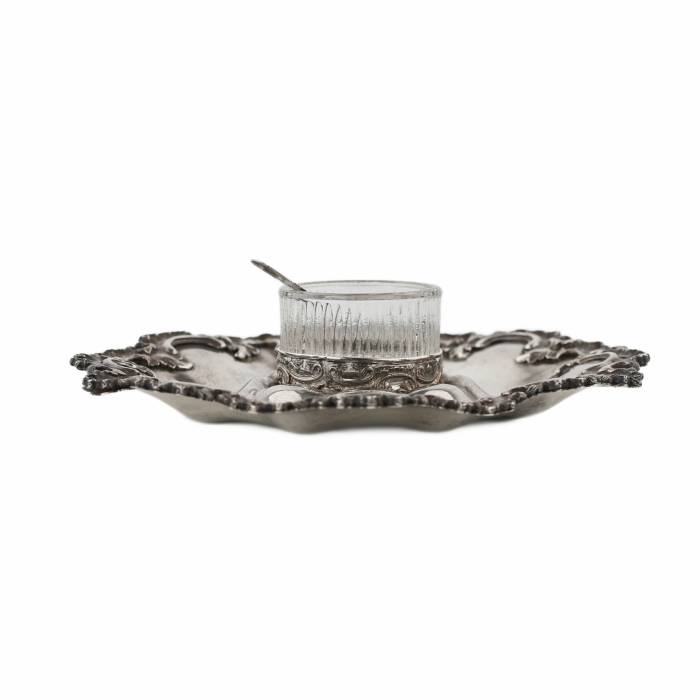

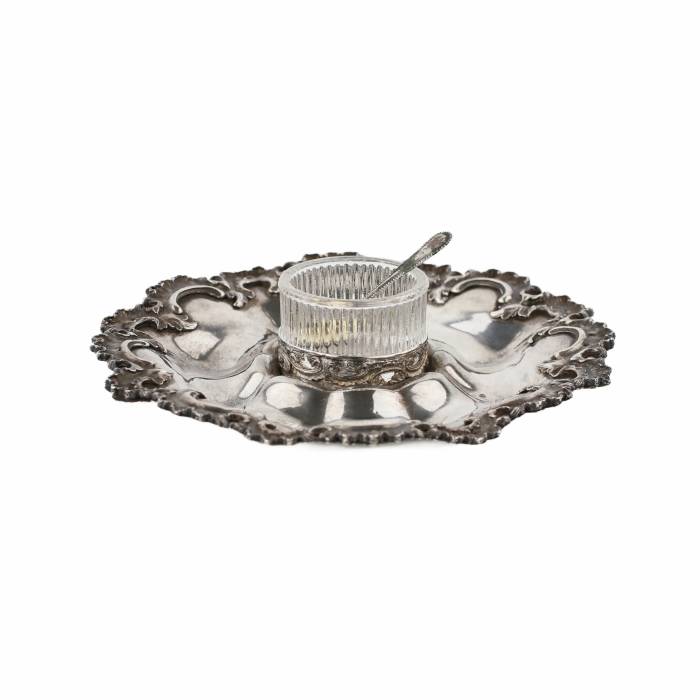
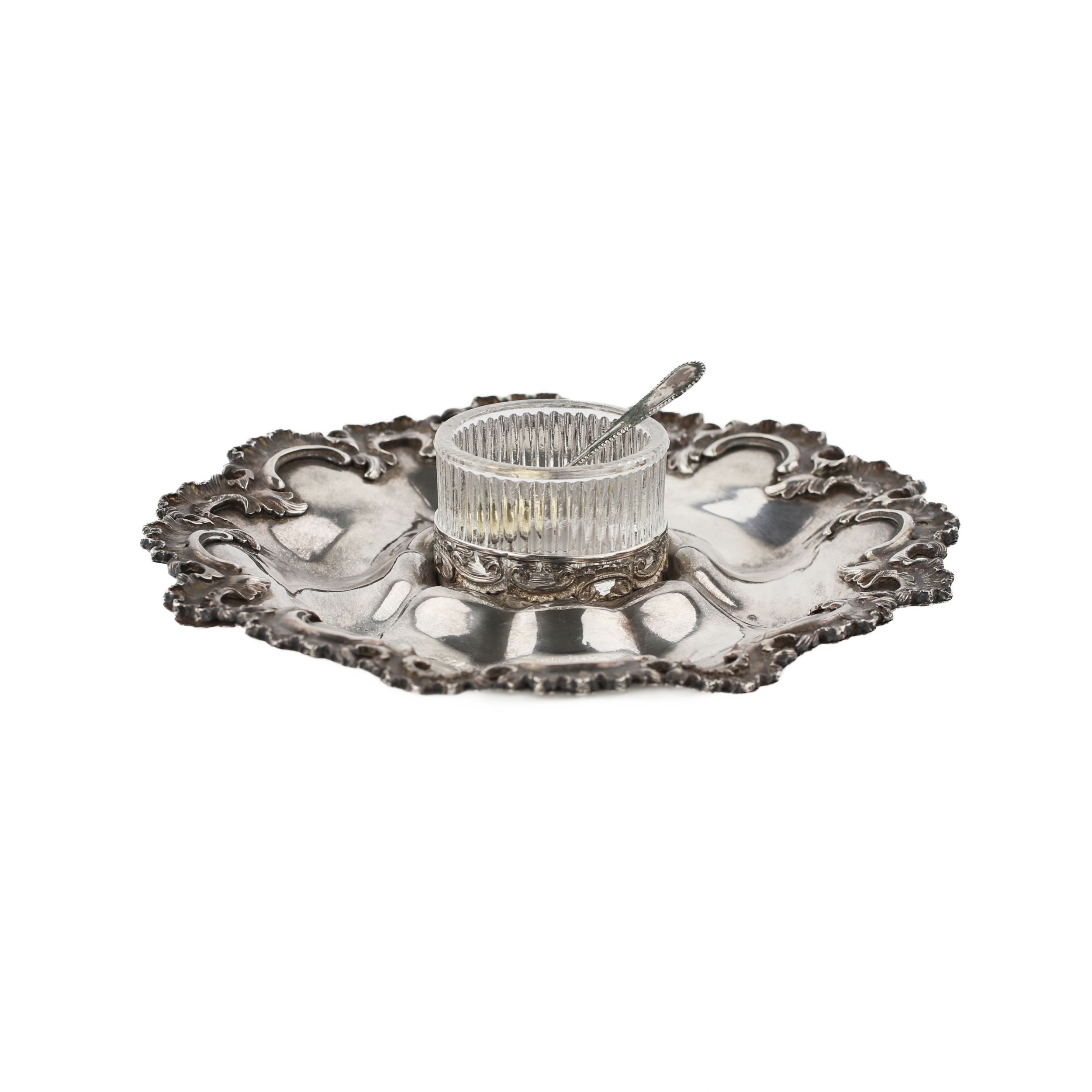
Bol à caviar russe en argent avec plateau en verre et cuillère en argent. 1843.

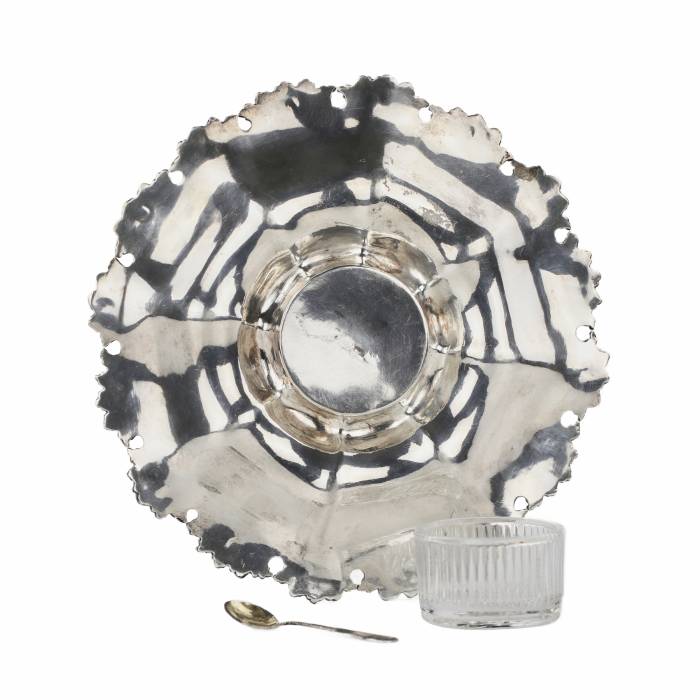
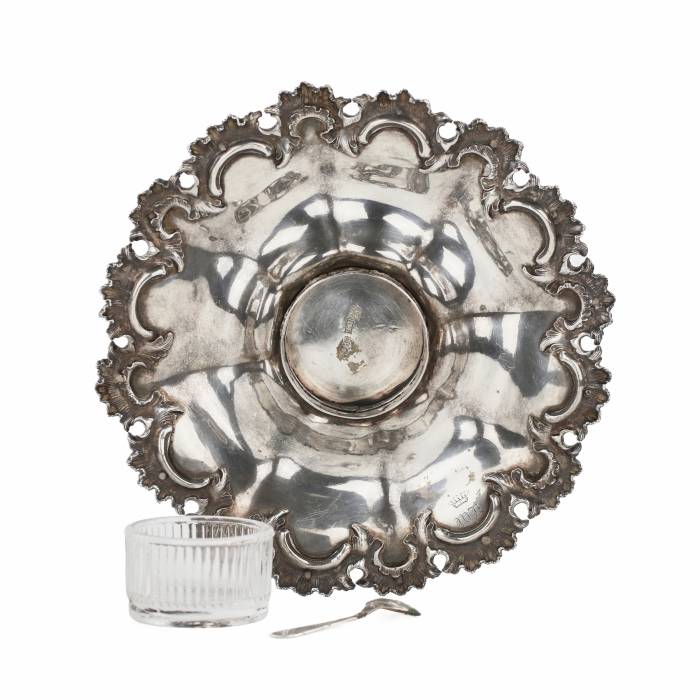
Bol à caviar russe en argent avec plateau en verre et cuillère en argent. 1843.

ID-ANTQ-8339
November 25, 2023 10:00 AM GMT+02:00
Live auction is finished
Estimé
150 - 200 EUR
Lot Sold
 
Lot sold
Use our cost calculator

Discover how the value of similar works has evolved over the past 10 years. Art is not only beauty — it's an investment.

Price History

Discover how the value of similar works has evolved over the past 10 years. Art is not only beauty — it's an investment.

Request a Shipping Quote
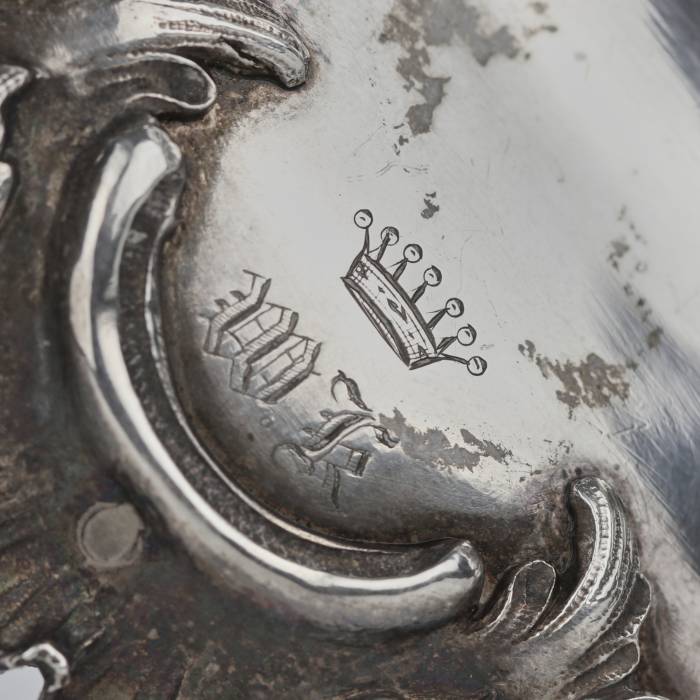
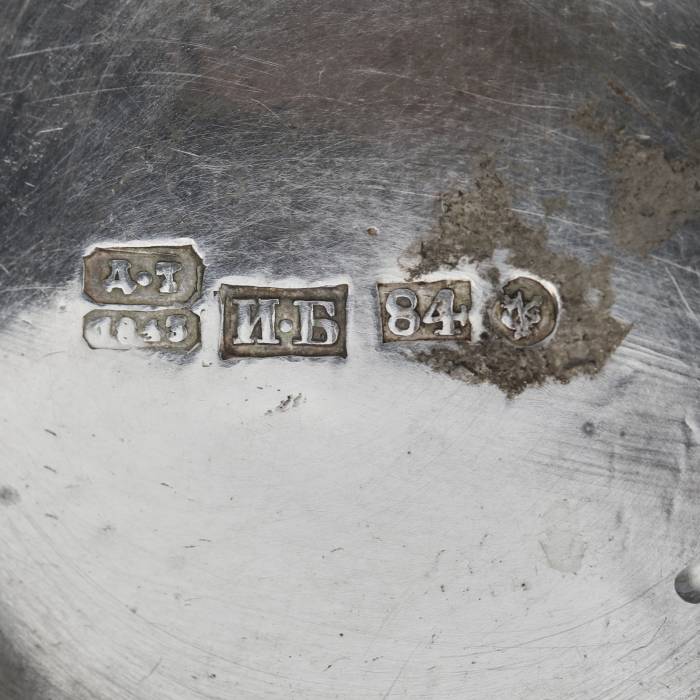
Bol à caviar russe en argent en forme de fleur ronde comportant un plateau en verre et une cuillère en argent. Decore sur le bord de la soucoupe dun motif rocaille de vagues et de cartouches. Dans lun dentre eux, le monogramme gothique MO sous la couronne. Sous linsert en verre se trouvent la marque de Saint-Petersbourg en argent 84, 1843, de lessayeur Dmitri Ilitch Tverskoy et la marque du maître I.B dans un bouclier rectangulaire - Ivan Bednyakov. Connu pour ses plats et salières en 1825-1848. Cuillère europeenne en argent 800. Ø - 17,5 cm, Poids argent : 183 g. Poids total : 235 gr.
Art:
russia
Hauteur:
17 cm
Largeur:
17 cm
Épaisseur:
2 cm
Période:
19Ème Siècle
Style:
Néo-baroque
Pays:
Russie, Saint-Pétersbourg
Matière:
Argent 84, Verre
État:
Revive
Fair
Good
Very good
Like new

The condition report is provided for informational purposes only.

It is not comprehensive and may not reflect all defects, restorations, alterations, or adaptations, as Antiqon does not perform professional conservation-level assessments. The information is based on a qualified, yet subjective, evaluation by our specialists.Before purchasing, we recommend consultation with an independent expert.Please also consult our Terms and conditions and Glossary A-Z, which contain important information on lot characteristics and sale conditions.
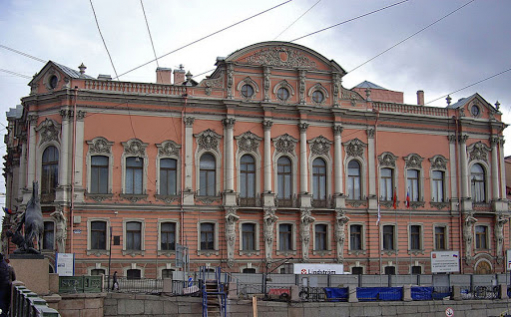
Neo-Baroque.
Neo-baroque is one of the neo-styles that developed in 19th century European art during the period of historicism. Has several different regional variations. In St. Petersburg, the most European city of the Russian Empire, the period of historicism of artistic thinking and neo-styles of the 19th century began to reproduce or, as they said at that time, "renewal in their previous form" of the monuments of the "Peter′s Baroque" period and buildings "in the taste of Count Bartholomew Rastrelli" ... These samples are not baroque architecture in the classical sense, but a special fusion of the Renaissance, Baroque and Mannerist architecture of the Nordic countries, and in Elizabethan time - a bizarre combination of elements of classicism, baroque and French rococo. Neo-baroque features are evident in the interior of St. Isaac′s Cathedral in St. Petersburg (O. Montferrand, 1818-1858), in the Mariinsky Palace, built in the neo-Renaissance style by A.I. Stackenschneider (1839-1844) and in the most important work of the "second baroque": the Beloselsky-Belozersky palace (1846-1848) on the Nevsky Prospect of the Russian capital. In the facades of the Beloselsky-Belozersky palace, the architect Stakenschneider followed the general composition of the Stroganov palace, erected by F.B. Rastrelli was also on Nevsky Prospekt a century earlier. However, Stackenschneider′s powerful plasticity of Rastrelli′s decor turned into refined, but petty "dry" ornamentation, which was positively evaluated by the critics of that time as an improvement in style. Graphic rigidity, refinement and fragmentation, as a rule, distinguish any neo-style from its historical prototype. Such are also many other neo-baroque monuments in St. Petersburg of the middle and second half of the 19th century.
... Read More

Stay up to date with new arrivals
Save Argent Russe and we let you know when new listings appears in this category
Sauvegarder

Related items