BUREAU D’ÉCRITURE DE STYLE BOULLE FRANCE, XIXe SIÈCLE
AntiqonART consultant will contact you within one business day after receiving your request.
Discover how the value of similar works has evolved over the past 10 years. Art is not only beauty — it's an investment.
Discover how the value of similar works has evolved over the past 10 years. Art is not only beauty — it's an investment.
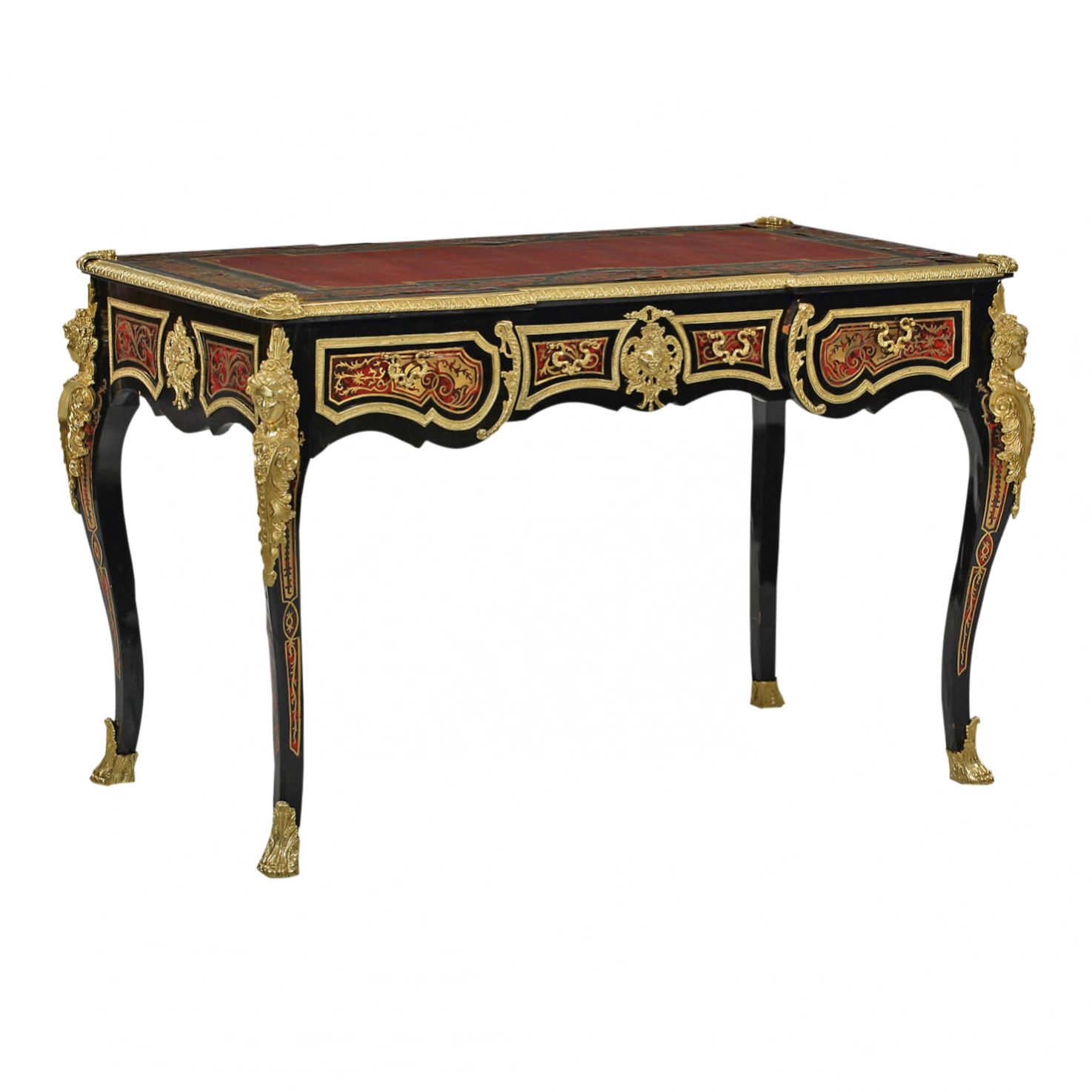
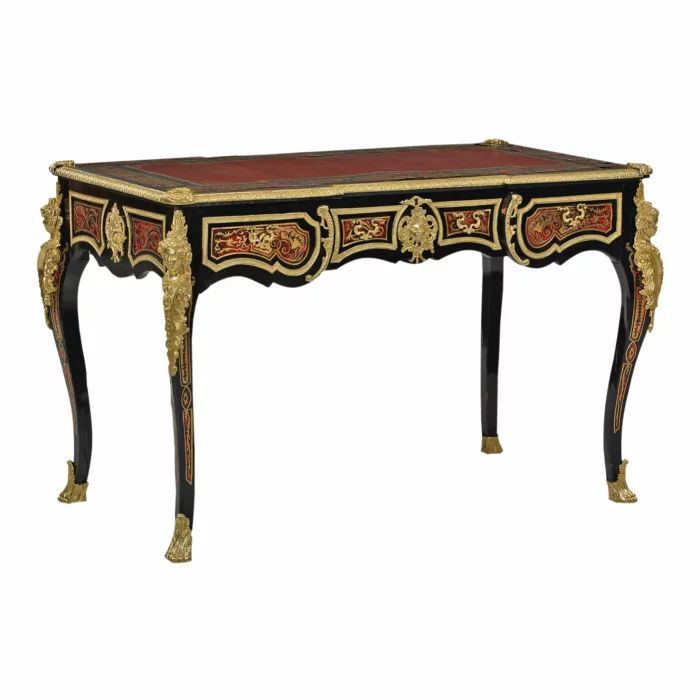
Élégant bureau de cabinet de style Boulle, réalisé dans la tradition de l’historicisme français du XIXe siècle, associant laque noire, marqueterie de laiton, bronze doré et cuir. La composition se distingue par le contraste raffiné entre le fond noir profond et les panneaux ornementaux où le laiton gravé forme des arabesques complexes sur un fond laqué rouge.
Le plateau rectangulaire est garni d’un cuir rouge profond, encadré d’une frise dorée à chaud, soulignant le caractère prestigieux de l’ensemble. La ceinture est rythmée par des cartouches chantournés ornés de rinceaux végétaux, encadrés de montures en bronze doré. La partie centrale est accentuée par un mascaron sculptural inscrit dans un encadrement rocaille, constituant un point focal décoratif.
Les pieds galbés d’inspiration Louis XV se terminent par des sabots en bronze doré finement ciselés. Les côtés sont enrichis de montures figuratives en bronze doré d’une grande qualité de fonte et de ciselure, témoignant du savoir-faire des ateliers parisiens.
Ce bureau incarne l’esthétique du style Boulle, héritée d’André-Charles Boulle et réinterprétée au XIXe siècle, notamment sous le Second Empire. Destiné à un cabinet d’apparat, il associait fonctionnalité et affirmation du prestige social.
Dimensions : Hauteur : 85 cm ; Largeur : 125 cm ; Profondeur : 70 cm.
État : Bon. Restauration professionnelle effectuée. Surfaces stabilisées ; marqueterie et bronzes conservés.
Les bureaux de style Boulle occupent une place majeure dans l’histoire des arts décoratifs français. La technique originelle de marqueterie de laiton et d’écaille fut perfectionnée à la fin du XVIIe siècle par André-Charles Boulle, ébéniste du roi Louis XIV, dont les œuvres sont conservées au Louvre, à Versailles et dans les grandes collections muséales.
Au XIXe siècle, notamment sous le Second Empire, un regain d’intérêt pour le faste baroque et rococo entraîna la renaissance du style Boulle. Les ateliers parisiens produisirent des interprétations savantes mêlant laiton gravé, laque noire et bronzes dorés richement ciselés. Ces créations s’inspiraient des modèles royaux conservés dans les collections nationales.
Ces bureaux étaient destinés aux demeures aristocratiques et aux intérieurs bourgeois prestigieux, où ils incarnaient à la fois le raffinement artistique et la continuité culturelle.
Restauration professionnelle réalisée. Structure stable. Légères traces d’usage conformes à l’âge sur la laque et le cuir. Bronzes dorés en bon état.
The condition report is provided for informational purposes only.
It is not comprehensive and may not reflect all defects, restorations, alterations, or adaptations, as Antiqon does not perform professional conservation-level assessments. The information is based on a qualified, yet subjective, evaluation by our specialists.Before purchasing, we recommend consultation with an independent expert.Please also consult our Terms and conditions and Glossary A-Z, which contain important information on lot characteristics and sale conditions.