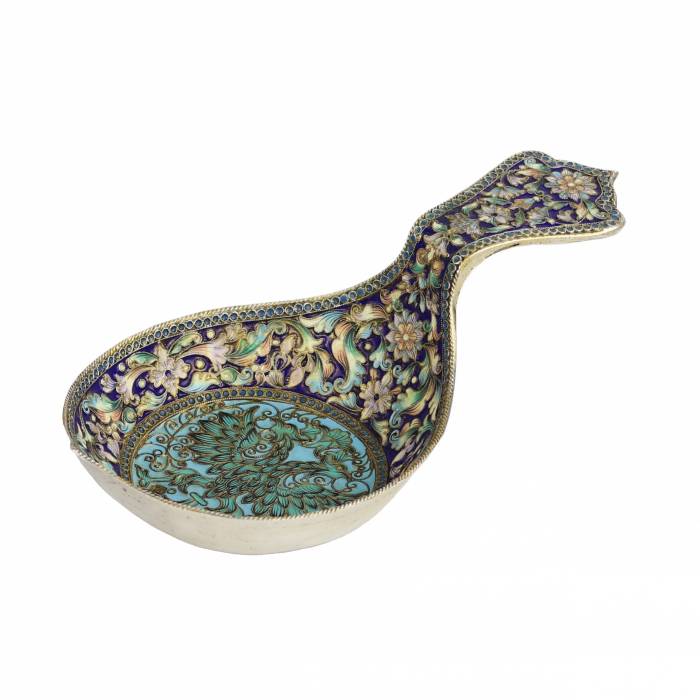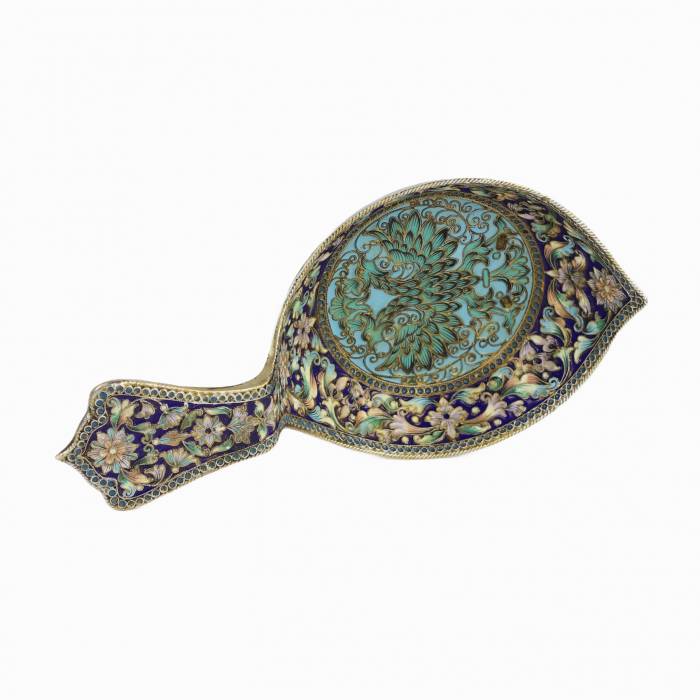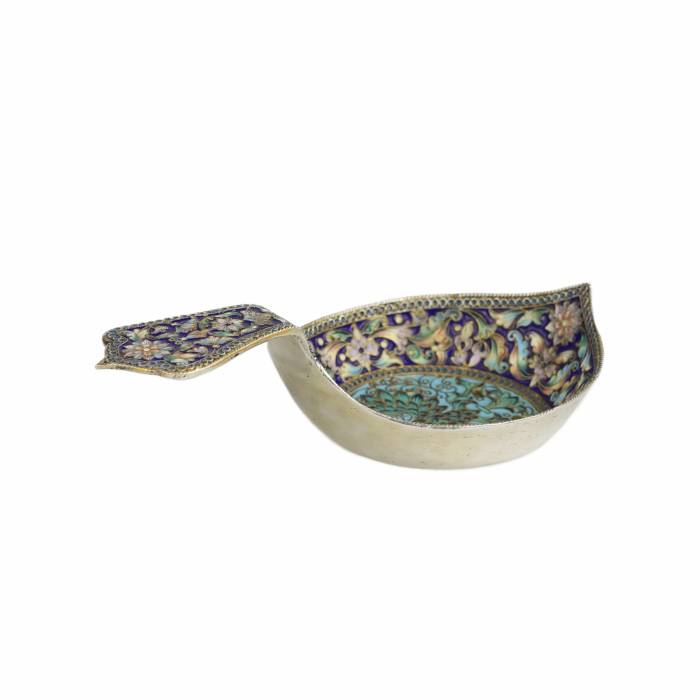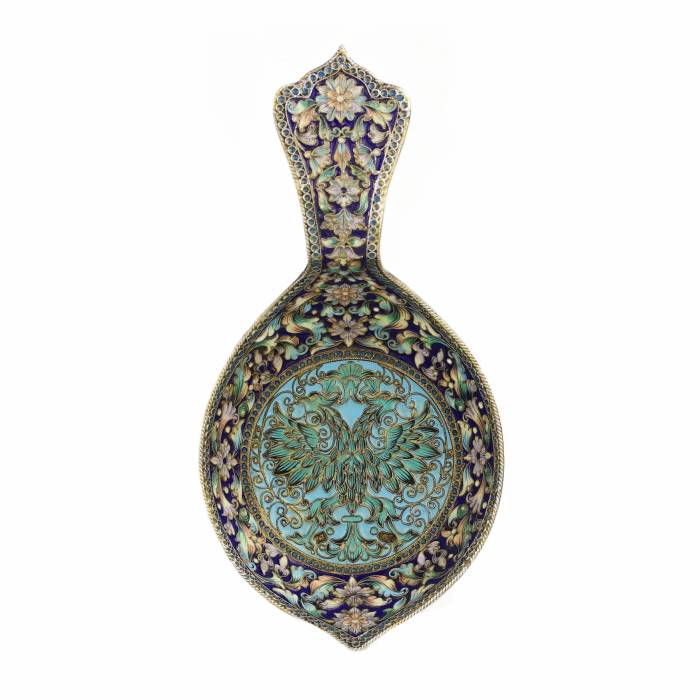

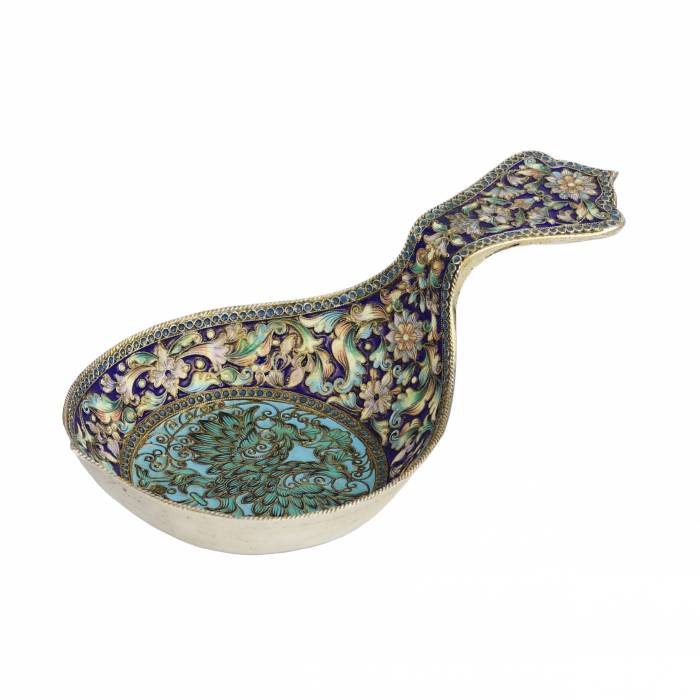
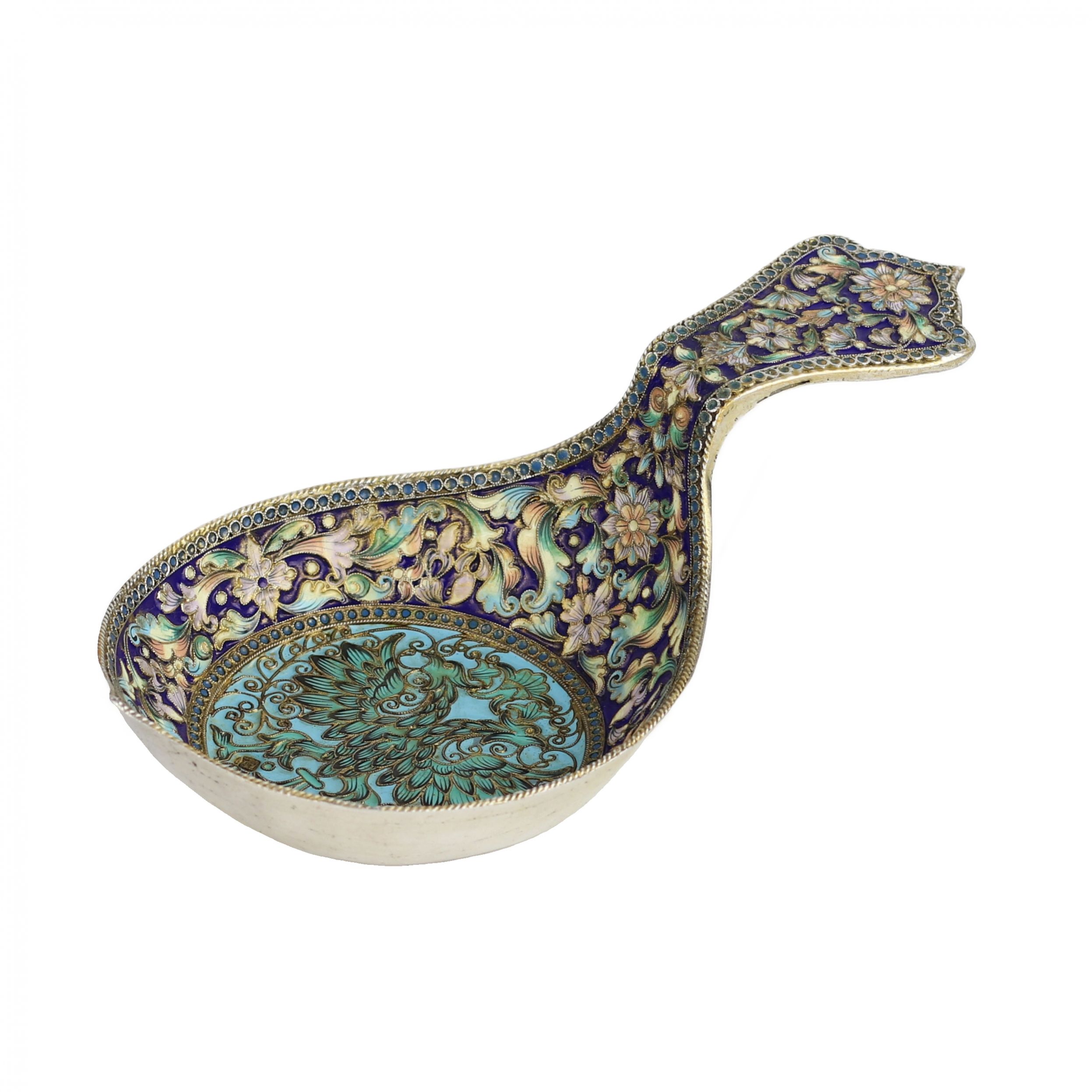
Louche en argent et émail. Saint-Pétersbourg, dernier quart du XIXe siècle.

Louche en argent et émail. Saint-Pétersbourg, dernier quart du XIXe siècle.

ID-ANTQ-12185
November 29, 2025 12:00 PM GMT+02:00
Live auction is finished
Estimé
2000 - 3000 EUR
Bidding is closed
Use our cost calculator

Discover how the value of similar works has evolved over the past 10 years. Art is not only beauty — it's an investment.

Price History

Discover how the value of similar works has evolved over the past 10 years. Art is not only beauty — it's an investment.

Request a Shipping Quote
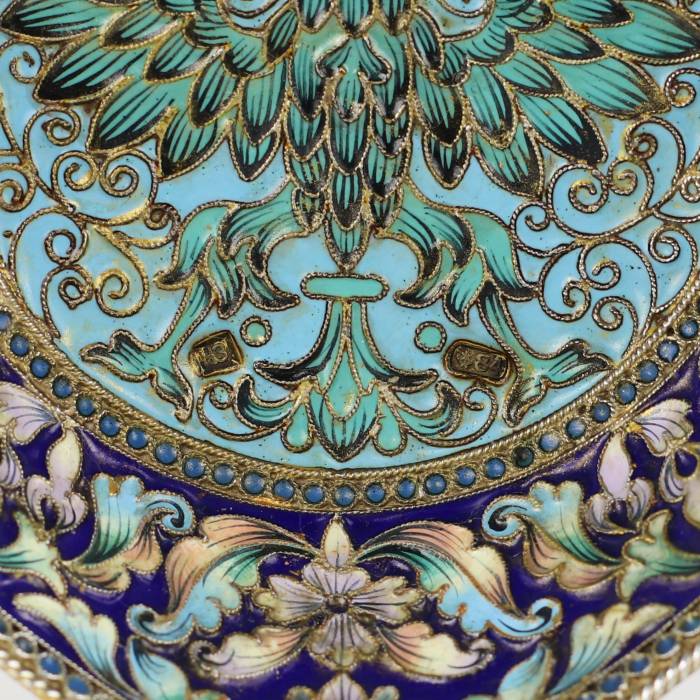
Une louche en argent exquise, réalisée en forme de bateau, est un magnifique exemple d`art décoratif et appliqué de la fin du 19e au début du 20e siècle, créé dans le style néo-russe. Cette tradition artistique combine des éléments de l`architecture et de l`ornementation russes anciennes, qui se manifestent clairement dans la conception de la louche. L`intérieur de la louche et le manche courbé sont décorés d`élégants motifs floraux réalisés selon la technique de l`émail cloisonné. L`élément central de la composition est un aigle à deux têtes - le symbole officiel de l`Empire russe, habilement décoré d`émail turquoise et encadré d`une bordure dorée raffinée. La composition est complétée par un motif floral complexe, réalisé dans des tons riches et pastel, créant un équilibre harmonieux et soulignant la sophistication de l`œuvre. Marques : Nom du maître en cyrillique NZ. Poinçon de Saint-Pétersbourg à l`effigie des armoiries de la ville et du chiffre 84, dans un écu ovale, correspondant au dernier quart du XIXème siècle. Dimensions : Longueur : 17 cm, Largeur : 9 cm, Hauteur : 5 cm Poids : 216 g.
Art:
russia
Hauteur:
9 cm
Largeur:
17 cm
Épaisseur:
5 cm
Période:
Au Tournant Du Siècle 19-20
Style:
Romantisme
Pays:
Russie, Saint-Pétersbourg
Matière:
Argent 84, Émail Cloisonné, Dorure
État:
Revive
Fair
Good
Very good
Like new

The condition report is provided for informational purposes only.

It is not comprehensive and may not reflect all defects, restorations, alterations, or adaptations, as Antiqon does not perform professional conservation-level assessments. The information is based on a qualified, yet subjective, evaluation by our specialists.Before purchasing, we recommend consultation with an independent expert.Please also consult our Terms and conditions and Glossary A-Z, which contain important information on lot characteristics and sale conditions.

Neo-Russian style.
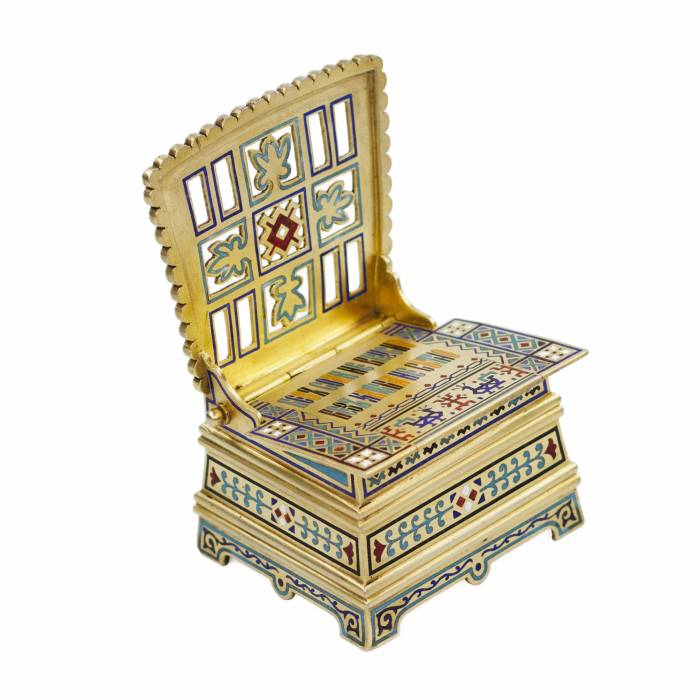
The neo-Russian or pseudo-Russian style is part of the aesthetics of historicism and national identity of the 1815-1880s. It arose as an official position and an internal response of society to the victory of 1812. Concerned about all types of artistic creation, social and philosophical life of society. Determined the type of official architecture, private brick ward architecture, historical graphics and painting, the theme of decorative and applied art. The formation of the style is associated with the question of the originality of Russian history, developed by the Slavophiles. The main forms and techniques of decoration are borrowed from wooden architecture. Geometric definiteness and ethnographic fragmentation of the decor prevail. The style was especially popular in silver. Ladles, brothers, saltcellars in the form of thrones-towers, etc. expanded the range of Russian craftsmen of the second half of the 19th century. The neo-Russian style became a stable form of thought for most of the 19th century until the advent of modernity.
... Read More

Stay up to date with new arrivals
Save Argent Russe and we let you know when new listings appears in this category
Sauvegarder

Related items