SILVER SALT CELLAR IN THE FORM OF A THRONE WITH A PEASANT FIGURINE KHLEBNIKOV WORKSHOP, MOSCOW, CIRCA 1880
AntiqonART consultant will contact you within one business day after receiving your request.

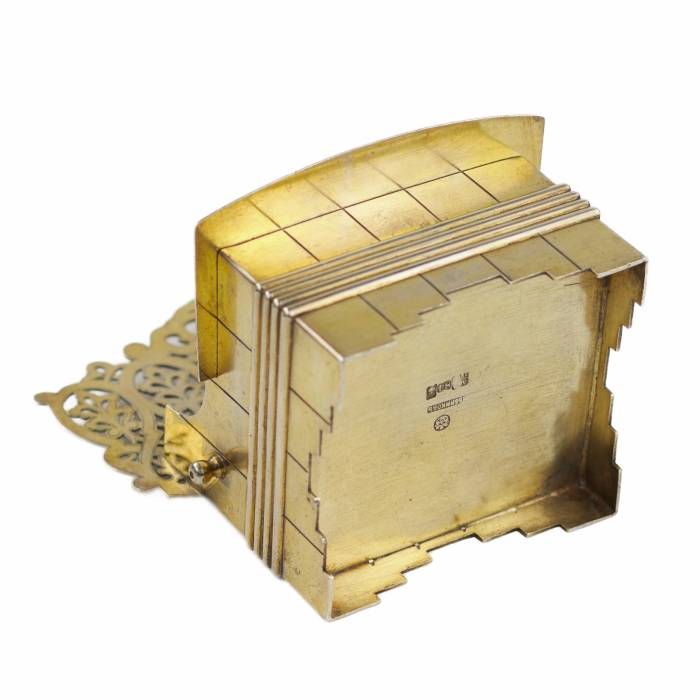

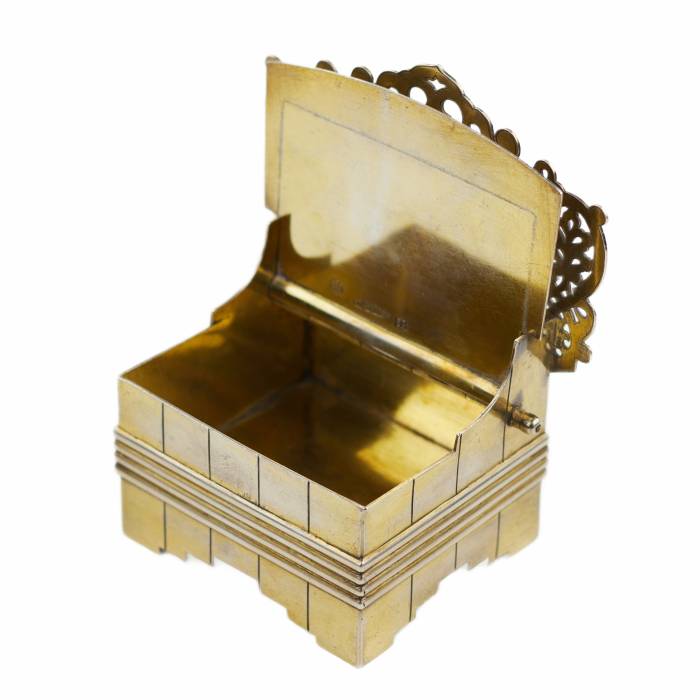
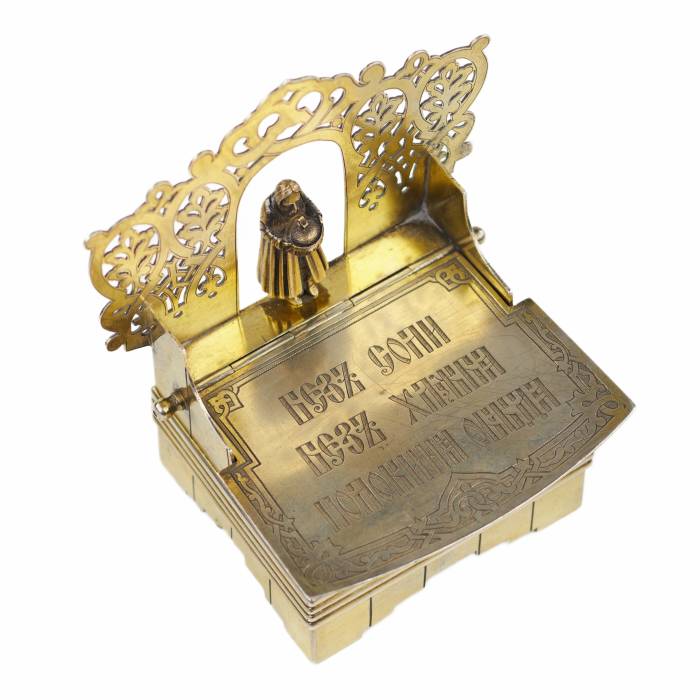


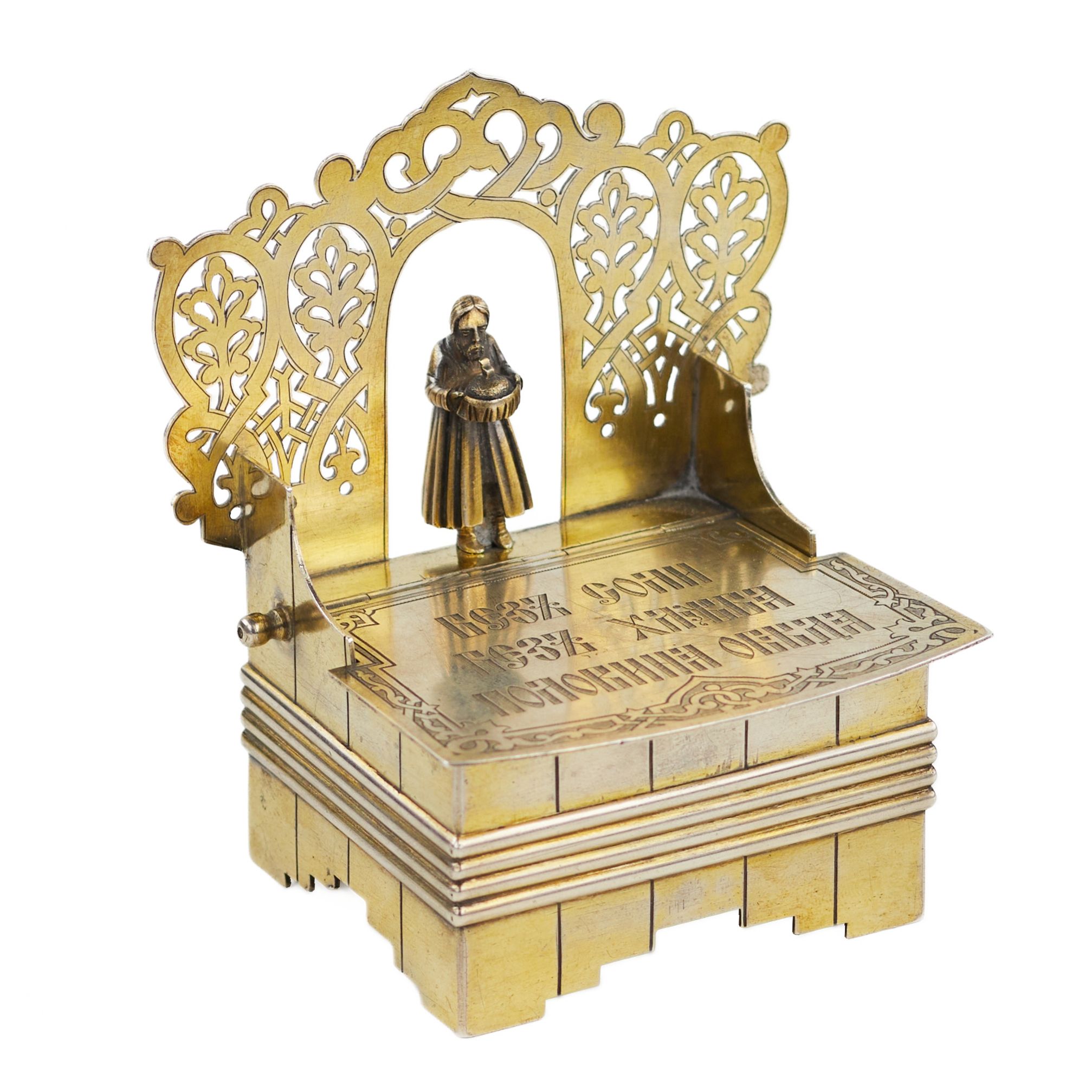
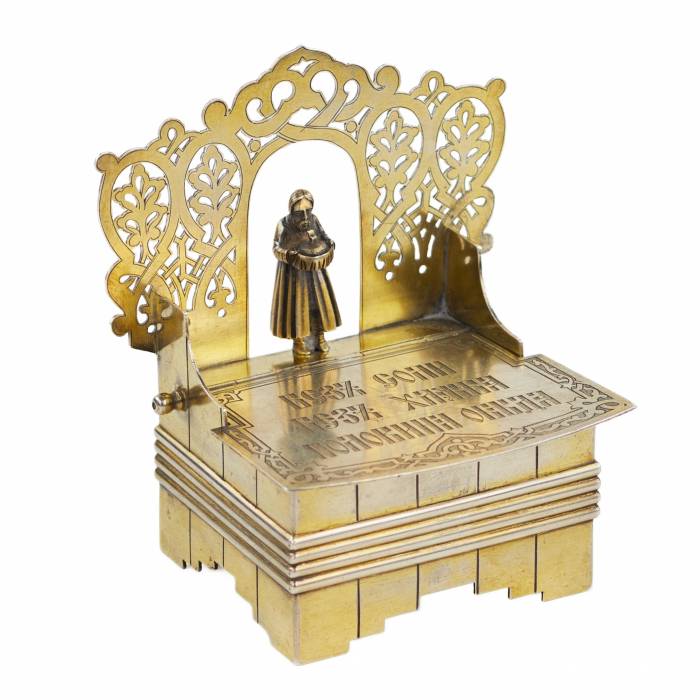
A rare silver salt cellar in the form of a throne with a miniature figure of a peasant, created around 1880 in the renowned Moscow workshop of Ivan Khlebnikov, supplier to the Imperial Court. The architectural composition is inspired by Russian wooden vernacular architecture: the throne’s backrest is carved with a gable and arched niche, where a cast figure of a peasant in a traditional caftan stands, holding a salt dish.
The seat bears an engraved pre-reform proverb: “WITHOUT SALT, WITHOUT BREAD — HALF A MEAL”, revealing the symbolic meaning of salt in Russian life as a sign of hospitality, sustenance, and spiritual purity.
The pierced ornamental details, meticulous finish, and expressive silhouette refer to the style of Russian archaism that dominated late Imperial applied arts. This object combines utility with cultural allegory, characteristic of Khlebnikov’s finest creations showcased at World Exhibitions.
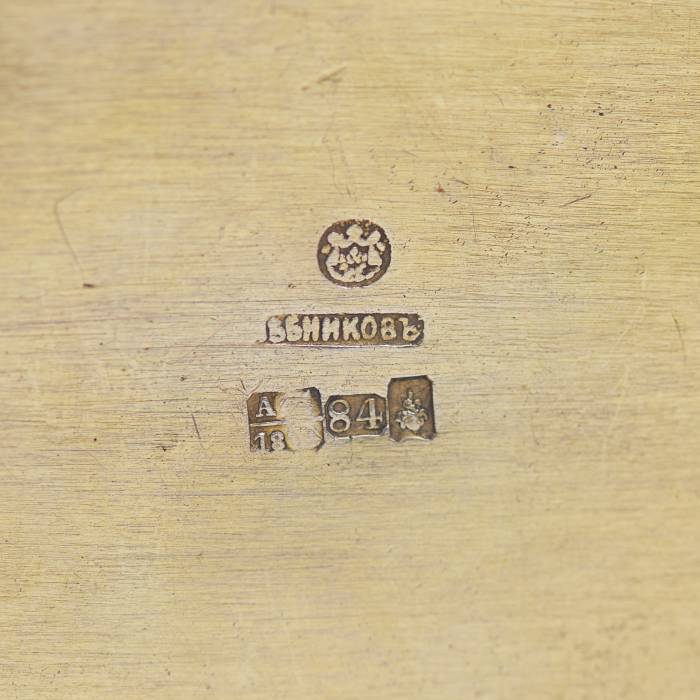
Hallmarks: Full Cyrillic mark “ХЛЕБНИКОВЪ” with the double-headed eagle (Imperial Court supplier), Moscow city assay mark – Saint George slaying the dragon, “84” silver standard, indistinct inspector’s initials (possibly “A...”) above the line with date “18??”.
Dimensions: Width: 9.5 cm, Depth: 7.3 cm, Height: 10.5 cm
Weight: 250 g
Condition: Minor wear to gilding, scratches, and light age-related defects. Overall good condition, with a noble patina and soft luster.
Provenance: Private collection.
Founded in Moscow in 1867, the Khlebnikov factory became one of the leading centers of Russian jewelry art in the late 19th century. Awarded the status of Imperial Court supplier in 1871, the workshop reached the pinnacle of technical and artistic excellence. Khlebnikov was famed for his refined chasing, enamel work, and symbolic compositions combining folk motifs and Orthodox themes.
The throne-shaped salt cellar with a peasant figure is more than a tableware item — it is a layered cultural metaphor. In Russian tradition, salt held sacred significance, present in rituals, proverbs, and folk wisdom. The peasant represents the “folk principle”, the image of a humble host preserving the household spirit.
The architectural design of the throne’s back, resembling a wooden izba, is executed in the spirit of Russian Neo-Romanticism, prevalent in the final decades of the Empire. Such pieces reflected the shift toward national identity and were often exported to Europe as symbols of “Russian taste”.
Khlebnikov’s works in this style are highly sought after by museums and collectors for their rarity, artistry, and allegorical depth. Similar salt cellars are found in the State Historical Museum, the Museum of Applied Arts, and prominent private collections across Europe and the United States.
Minor wear to gilding, scratches, and light age-related defects. Overall good condition, with a noble patina and soft luster.
The condition report is provided for informational purposes only.
It is not comprehensive and may not reflect all defects, restorations, alterations, or adaptations, as Antiqon does not perform professional conservation-level assessments. The information is based on a qualified, yet subjective, evaluation by our specialists.Before purchasing, we recommend consultation with an independent expert.Please also consult our Terms and conditions and Glossary A-Z, which contain important information on lot characteristics and sale conditions.