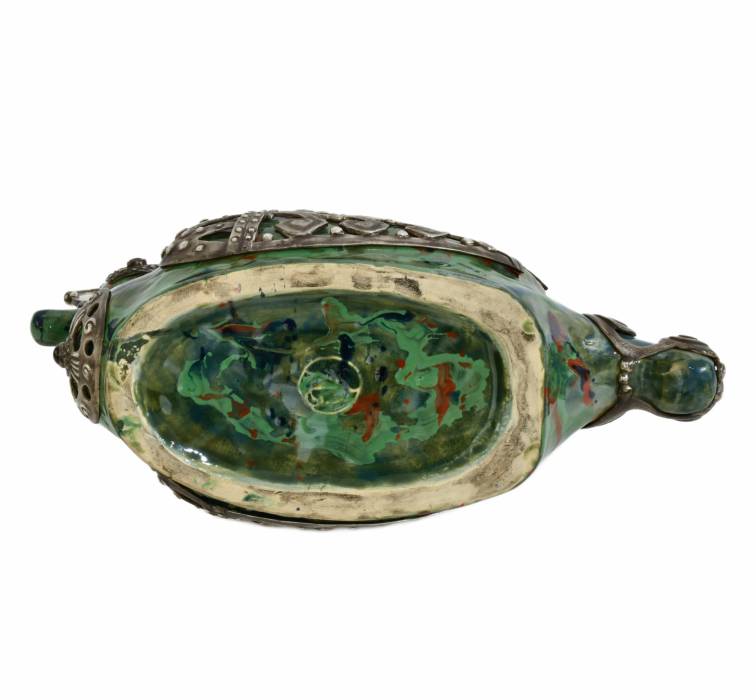
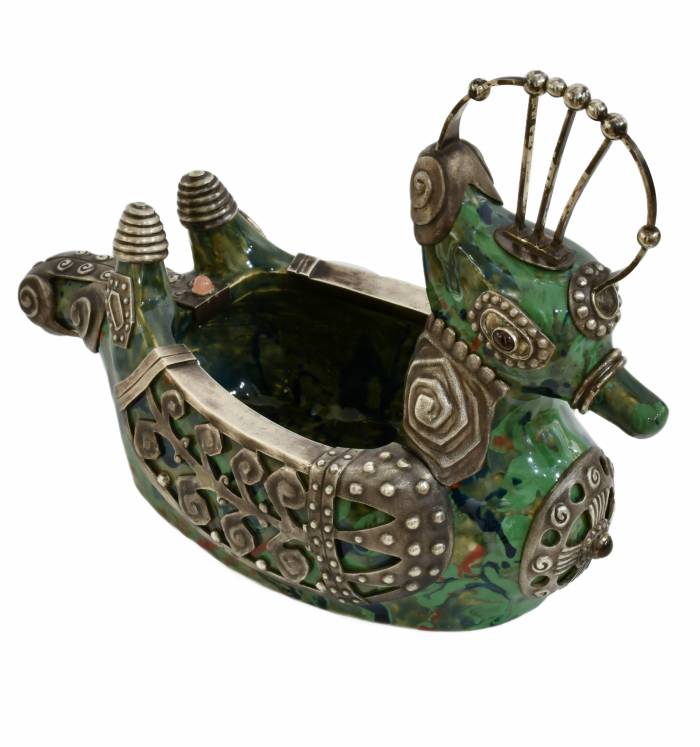
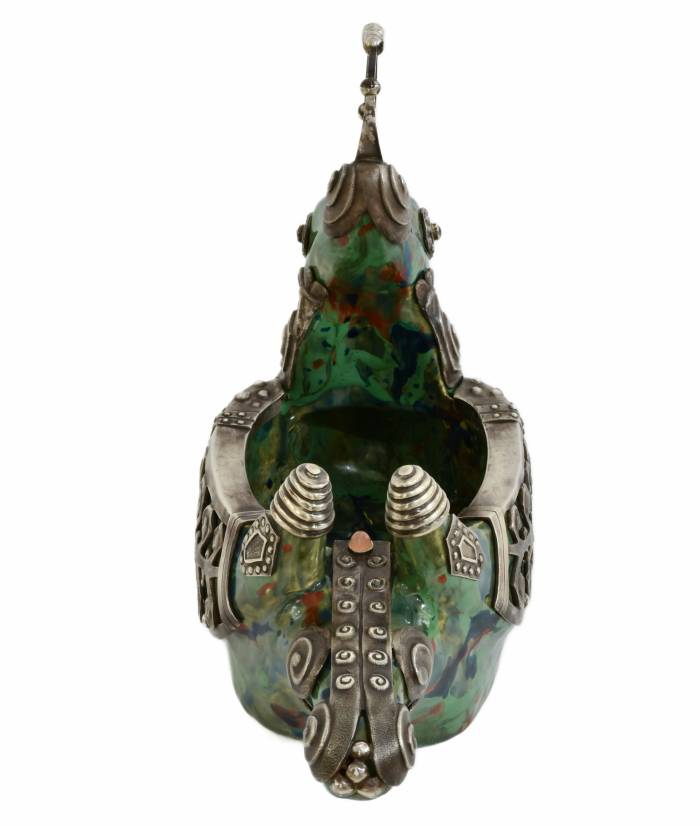
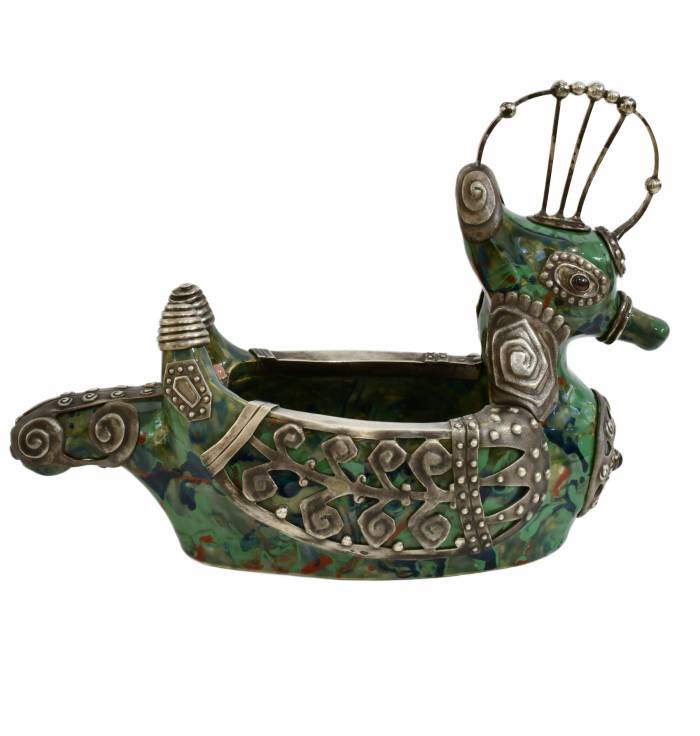
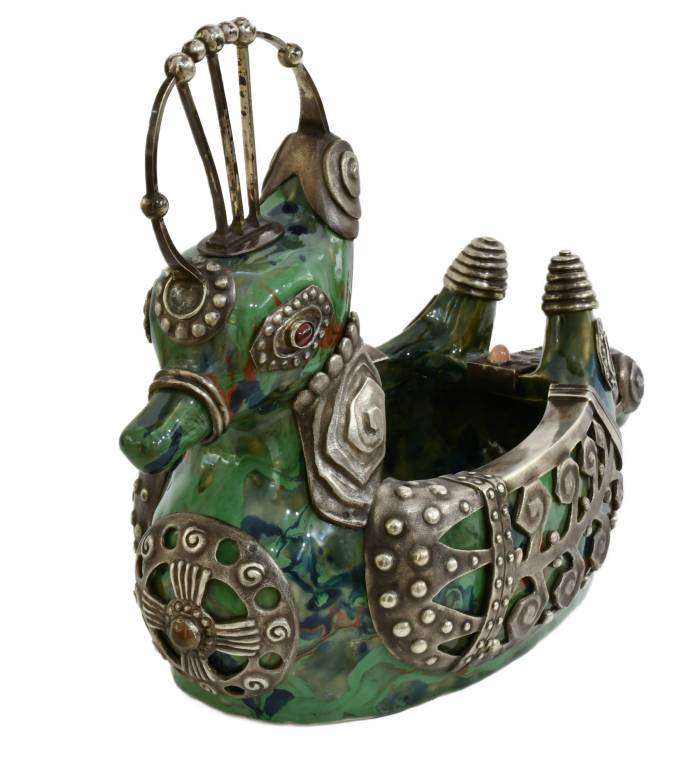
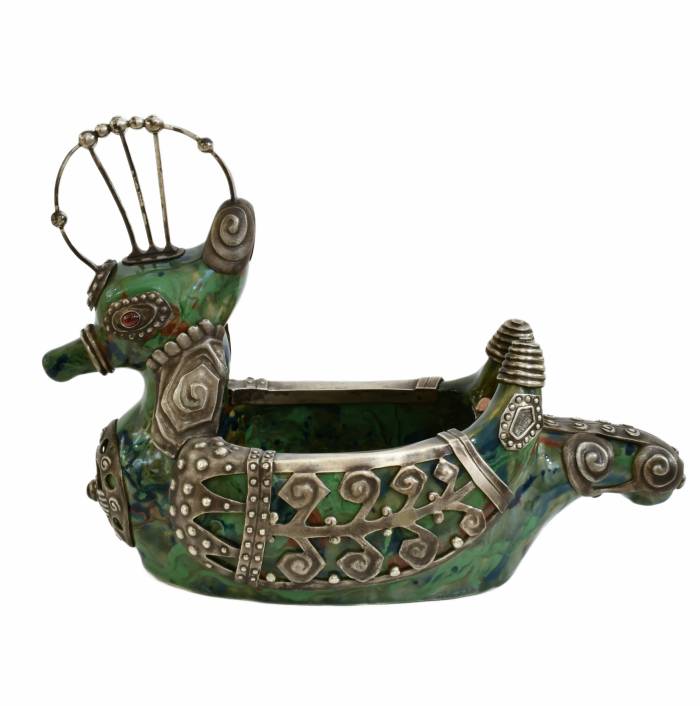
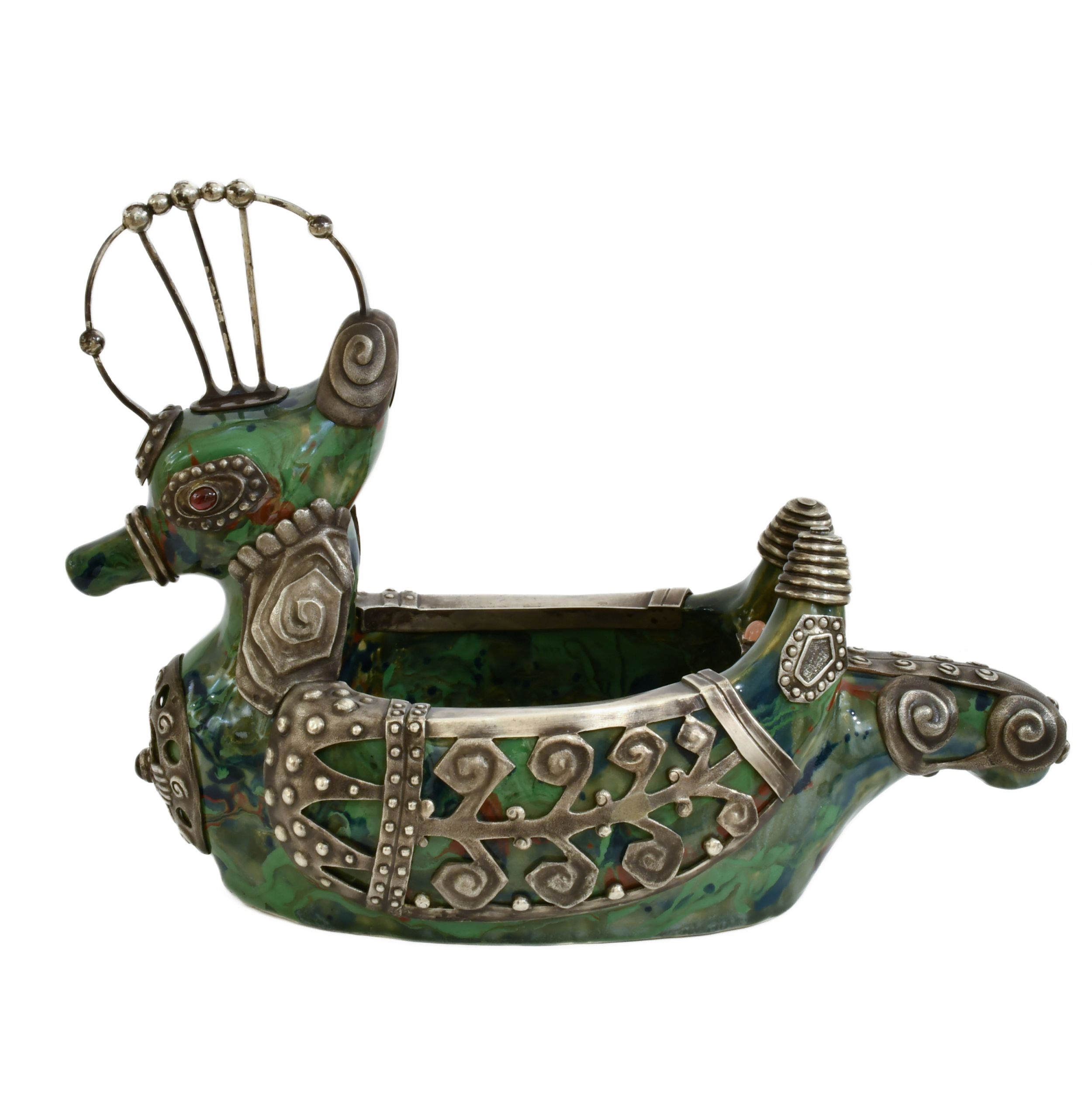
An exceptionally rare kovsh-ladya in the form of a fairy-tale bird, created in the early 20th century as part of a unique collaboration between the artistic workshops of the Imperial Stroganov Central School of Industrial Art and the Moscow workshop of the firm of Karl Fabergé. This object represents an outstanding example of the synthesis of decorative ceramics and high jewellery, embodying the aesthetic principles of the Neo-Russian style and the national romantic movement of the final decade of the Russian Empire.
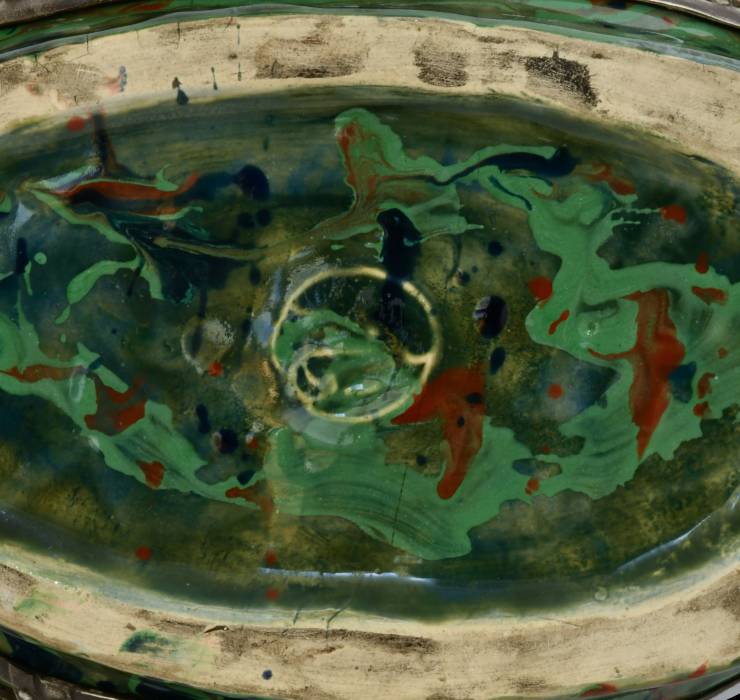
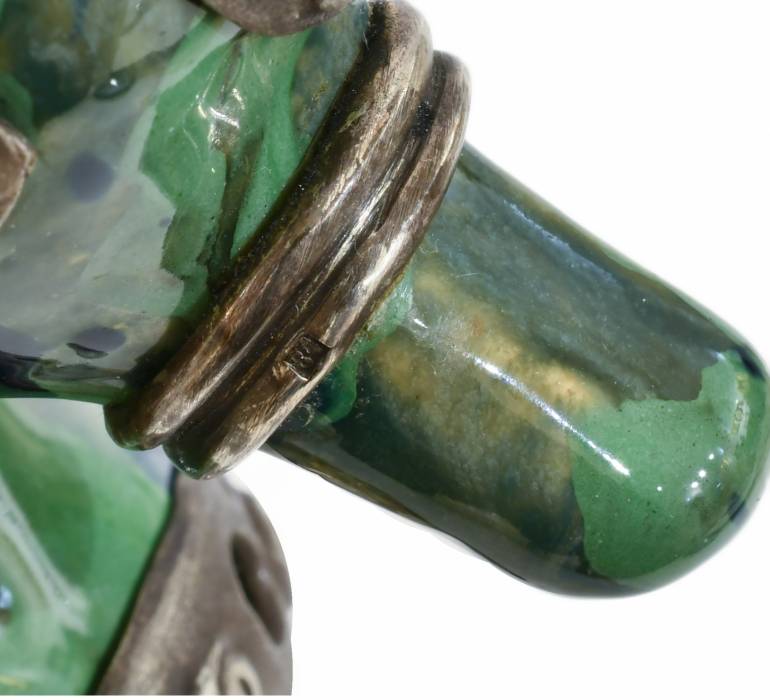
The body of the kovsh is made of artistic ceramics with a fantasy glaze in a rich green tone, animated by painterly marbled flows of blue and red, forming a complex and expressive surface pattern. This technique lends depth and vitality to the form, enhancing the sculptural presence of the fairy-tale bird. The silhouette of the vessel is stylised as a ladya, reinforcing associations with ancient Russian tradition and symbolism related to the journey, movement, and sacred passage.
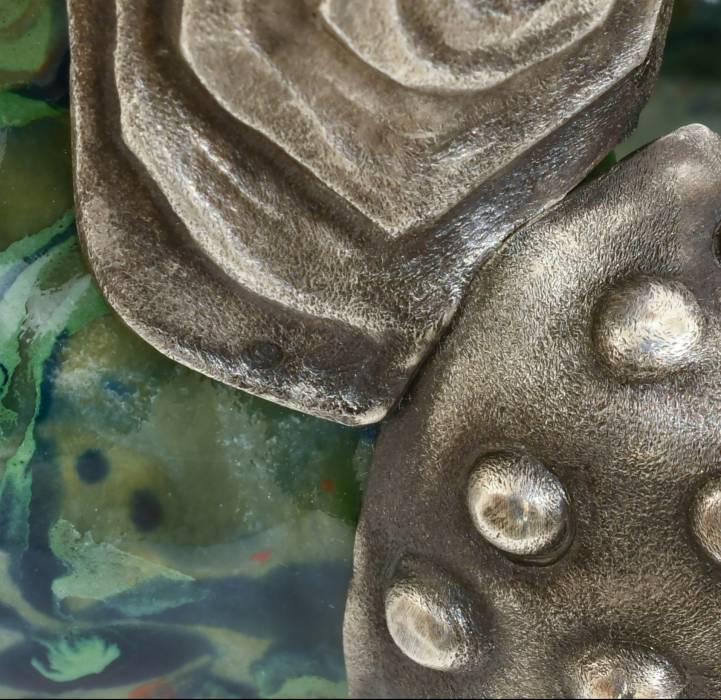
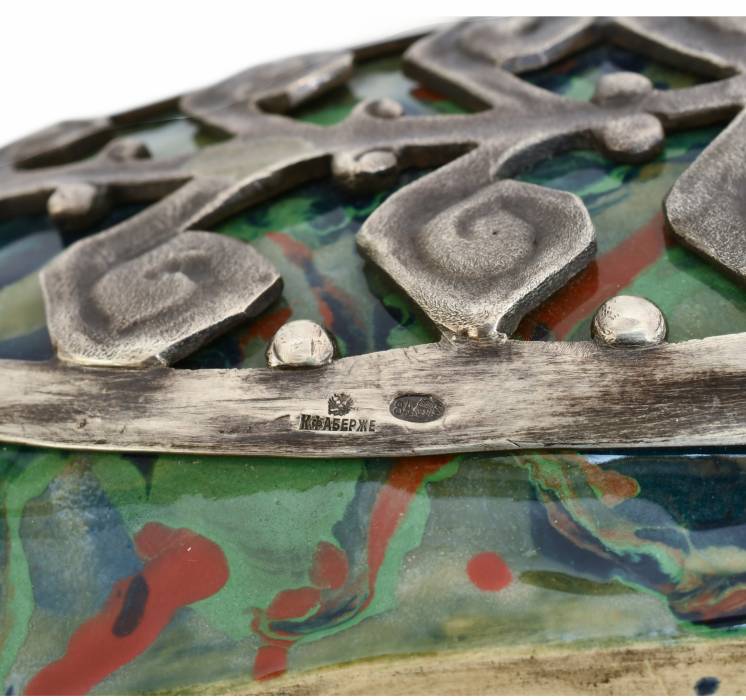
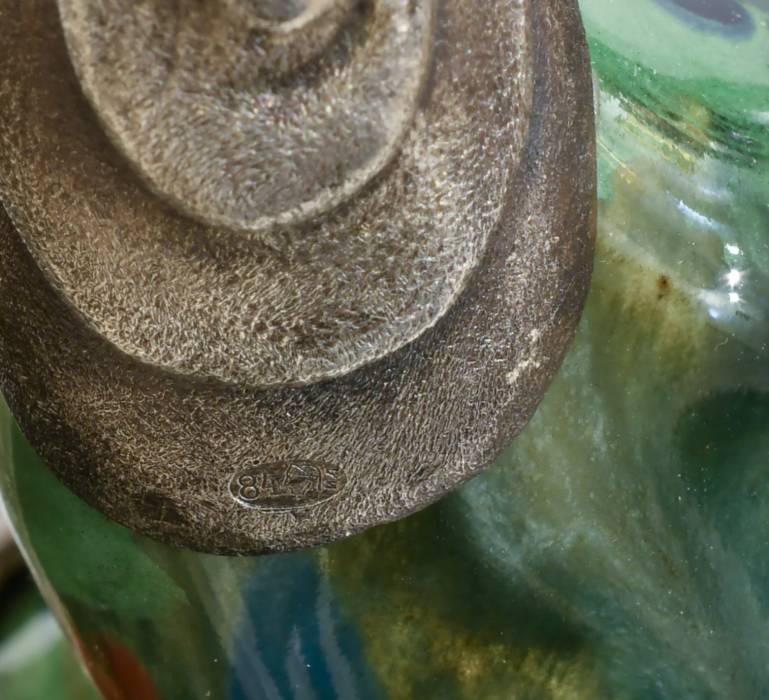
The silver mount, produced in the Moscow workshops of Karl Fabergé, forms an integral structural and decorative framework that closely follows the contours of the ceramic body. The chased and cast elements of the mount display a high level of modelling and a characteristic granular surface texture. The ornamental programme is built upon spiral motifs, shield-like plaques, and rhythmically arranged hemispherical bosses, derived from ancient Russian and Byzantine sources and reinterpreted in the artistic language of the early 20th century.
The decorative ensemble is further enriched by semi-precious stone settings. The eyes of the bird are set with garnets, while selected elements of the body are adorned with agate cabochons. These stones not only enhance the visual effect but also introduce symbolic meanings rooted in folk tradition, where garnet was associated with life force and solar energy, and agate with protection, longevity, and inner harmony. As a result, the kovsh is perceived not merely as a ceremonial vessel, but as an artistic object imbued with multilayered symbolic content.
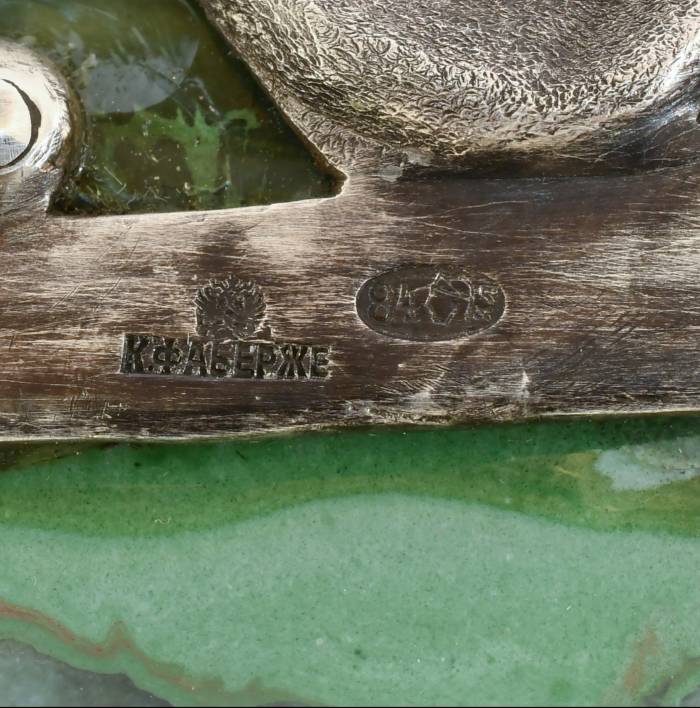
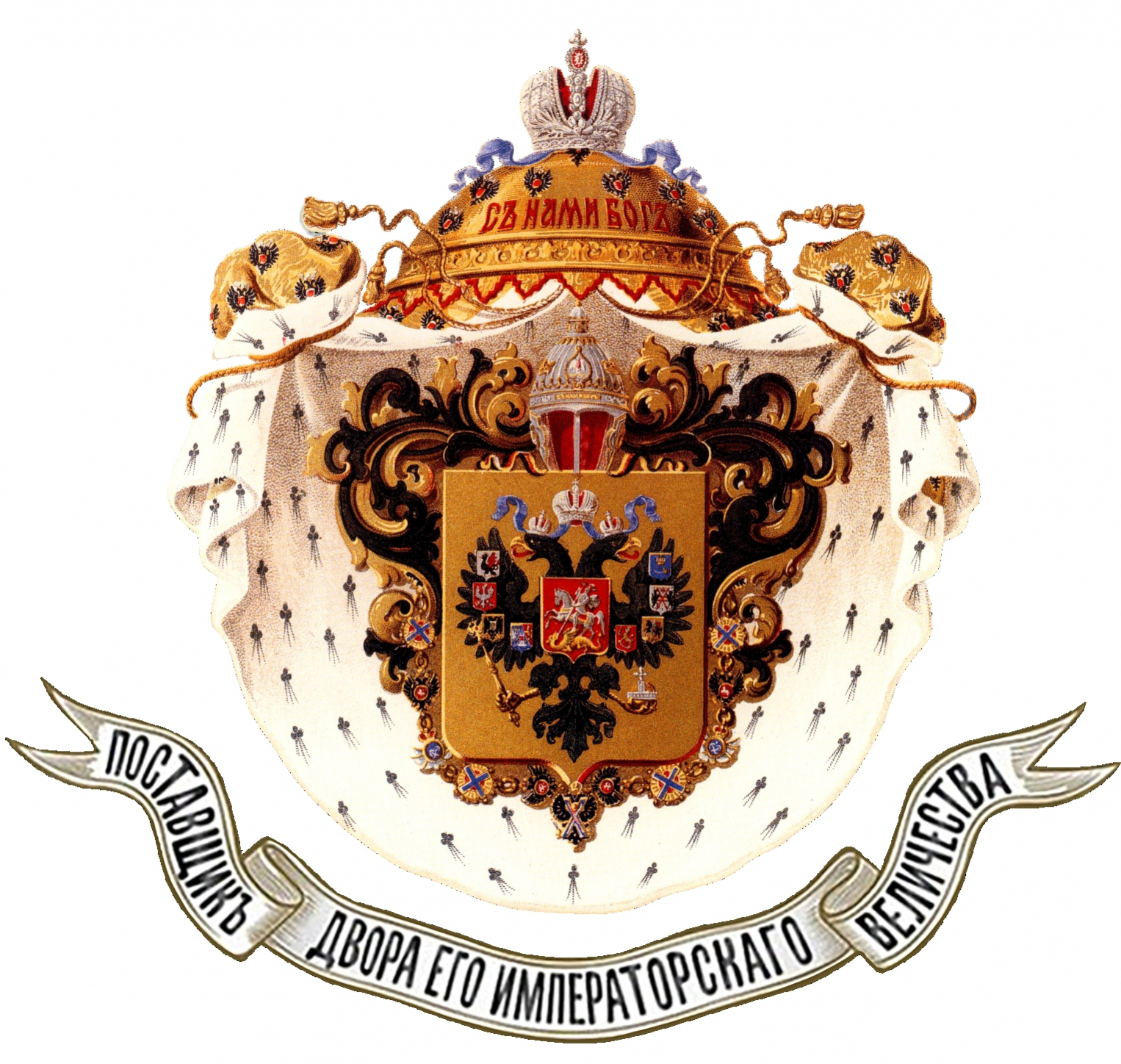
Hallmarks: Maker’s mark “K. FABERGÉ” beneath the double-headed eagle, denoting the status of Purveyor to the Imperial Court; Russian state assay mark of the Moscow Assay District for the period 1908–1917, with the fineness mark “84” in the zolotnik system, the profile of a woman’s head in a kokoshnik facing right, and the initials “IL” of the assay master Ivan Sergeevich Lebedkin; additional assay and city marks on individual silver components. Impressed into the ceramic body, a circular mark “SU” on the base, identifying the Imperial Stroganov Central School of Industrial Art.
Dimensions: Length 28 cm; width 11.5 cm; height 20 cm.
Condition: Excellent. The ceramic body and silver mount are preserved without losses or deformation. All semi-precious stone settings remain intact. A light, even patina enhances the authenticity and age of the object.
Provenance: Private European collection.
Period:
Early 20th century
Material:
Ceramics, Silver 84
The early 20th century marked a period of intense artistic exploration in the field of decorative and applied arts in the Russian Empire. During this time, the Neo-Russian style emerged, based on the reinterpretation of medieval Russian heritage, folk art, and symbolic imagery. The Imperial Stroganov Central School of Industrial Art played a pivotal role in this process, functioning not only as an educational institution but also as an experimental centre where new forms and decorative techniques for ceramics, metal, and glass were developed.
The workshops of the school maintained active collaborations with leading artistic and industrial enterprises. Among the most significant partners was the Moscow workshop of Karl Fabergé, which, during this period, sought to expand the boundaries of traditional jewellery production. Such collaborations resulted in objects that combined multiple materials and artistic disciplines, blurring the distinction between decorative art and sculpture.
The image of the bird occupies a prominent place in ancient Russian mythology and decorative tradition, where it was regarded as a mediator between the earthly and celestial realms, a symbol of protection, renewal, and spiritual ascent. The ladya, in turn, was associated with movement, journey, and sacred transition. The union of these motifs within the form of a kovsh underscores the profound symbolic depth of the object and aligns with the ideological foundations of the Neo-Russian style, which aimed to imbue decorative objects with cultural memory and meaning.
The use of artistic ceramics with fantasy glaze reflects the period’s fascination with painterly surface effects and individuality of material. The silver mount, executed by Fabergé masters, elevates the object to a ceremonial status and affirms its place within the elite artistic culture of the time. Such works were produced in very limited numbers, often as exhibition pieces or presentation gifts, intended for a narrow circle of connoisseurs and collectors. Surviving examples today possess significant museum value and serve as important testimonies to the artistic processes of early 20th-century Russia.
Overall condition is excellent. The ceramic body shows no chips or cracks, and the glaze remains vivid and consistent. The silver mount is free from deformation and retains an even natural patina. All stone settings are secure, with no evidence of restoration.
The condition report is provided for informational purposes only.
It is not comprehensive and may not reflect all defects, restorations, alterations, or adaptations, as Antiqon does not perform professional conservation-level assessments. The information is based on a qualified, yet subjective, evaluation by our specialists.Before purchasing, we recommend consultation with an independent expert.Please also consult our Terms and conditions and Glossary A-Z, which contain important information on lot characteristics and sale conditions.