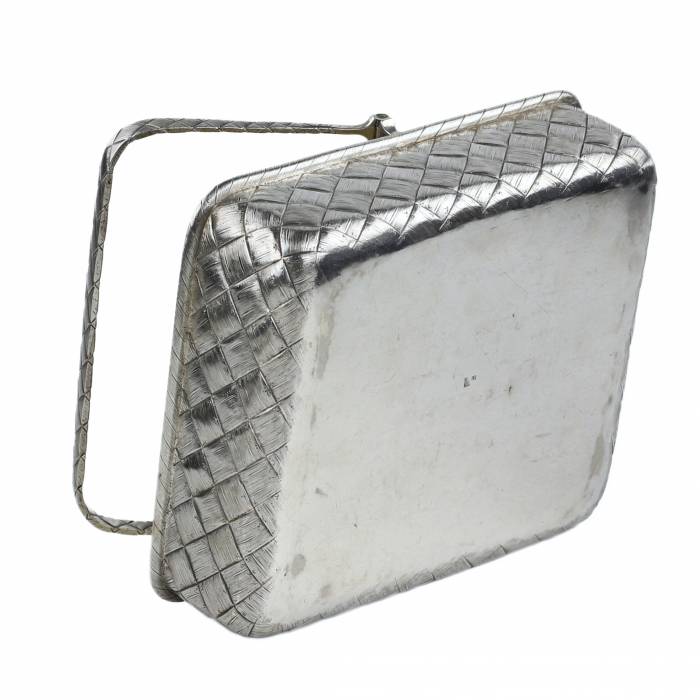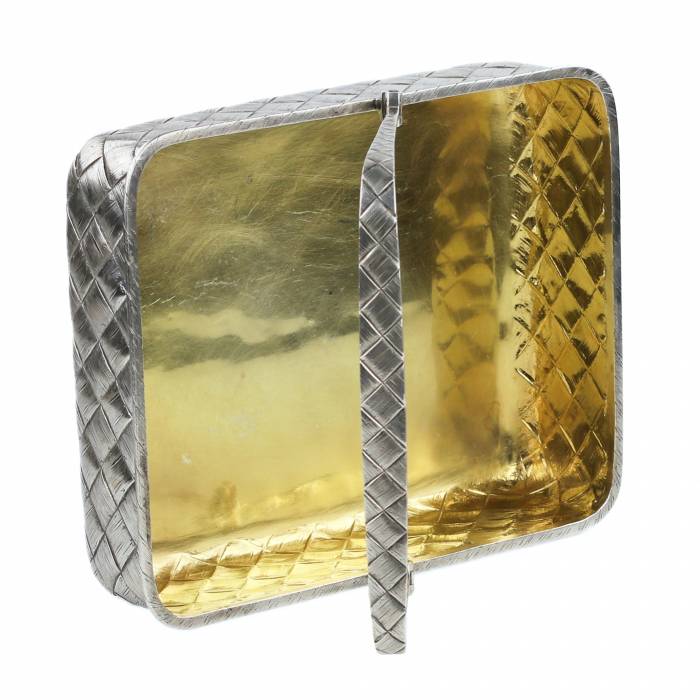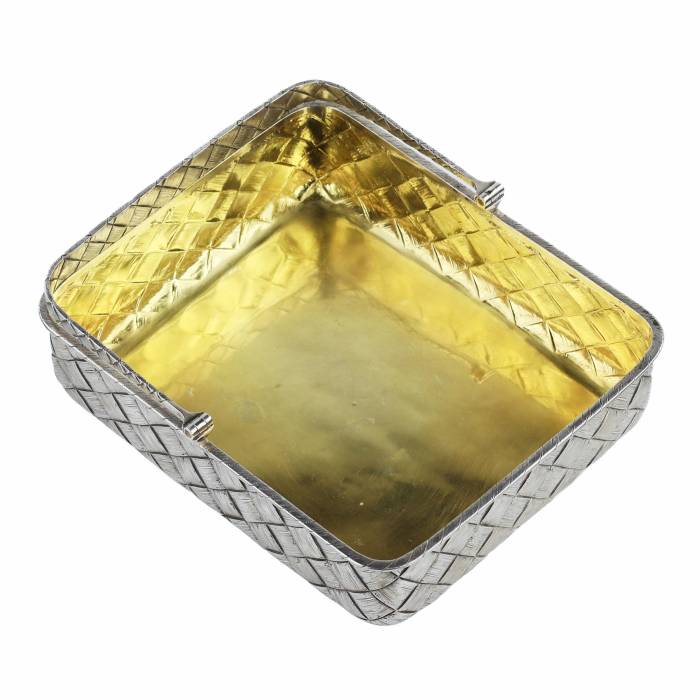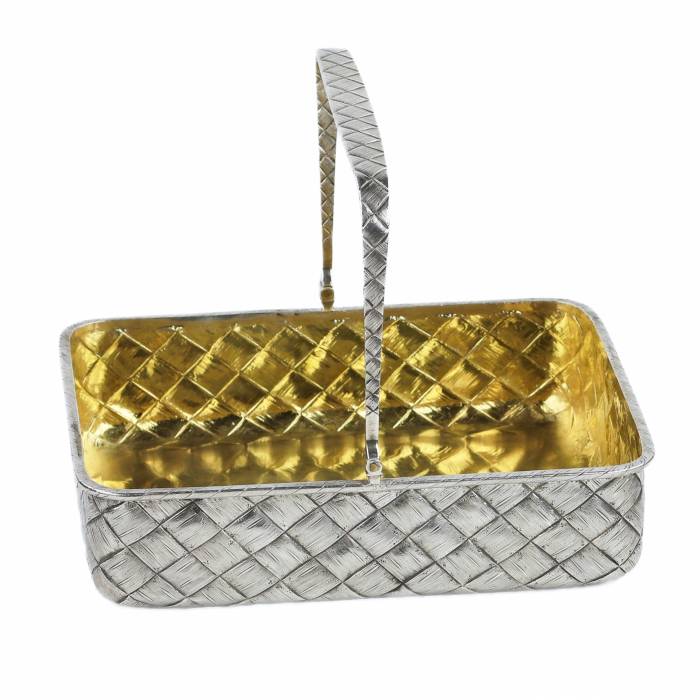
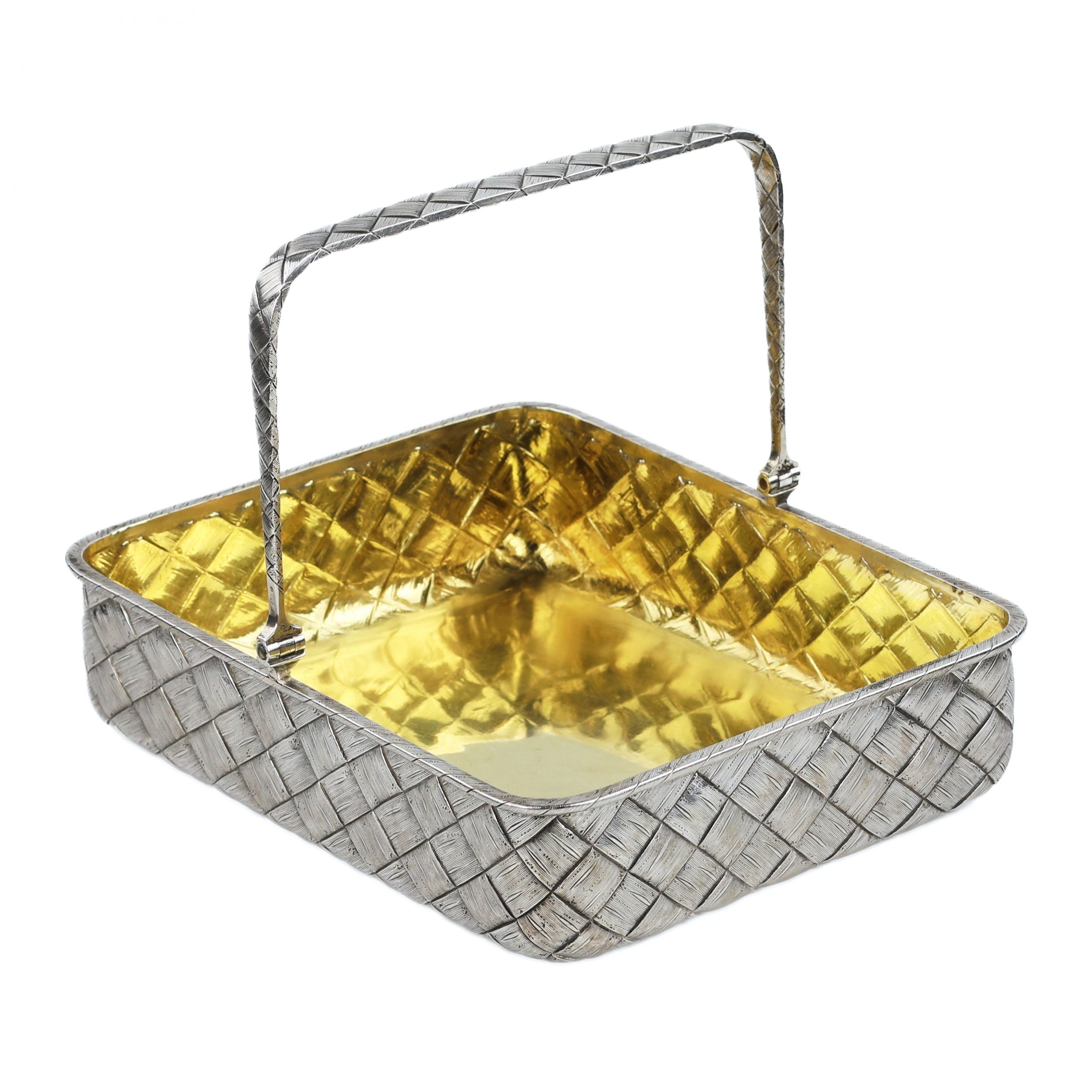
Silver biscuit bowl in the form of a wicker basket, St. Petersburg, 1878

Silver biscuit bowl in the form of a wicker basket, St. Petersburg, 1878

ID-ANTQ-12237
4500 EUR
Add to cart
Request more info
Guarantee of Authenticity

At Antiqon ART, we build trust and value your choice. Every purchase of art and antiques with us is an investment backed by our expertise, reputation, and a 100% authenticity guarantee.

Price History

Discover how the value of similar works has evolved over the past 10 years. Art is not only beauty — it's an investment.

Complimentary Shipping & Returns

Antiqon ART offers free packaging, insurance, and delivery for most items purchased through the company. Exceptions include large and oversized items that require specialized packing and shipping.

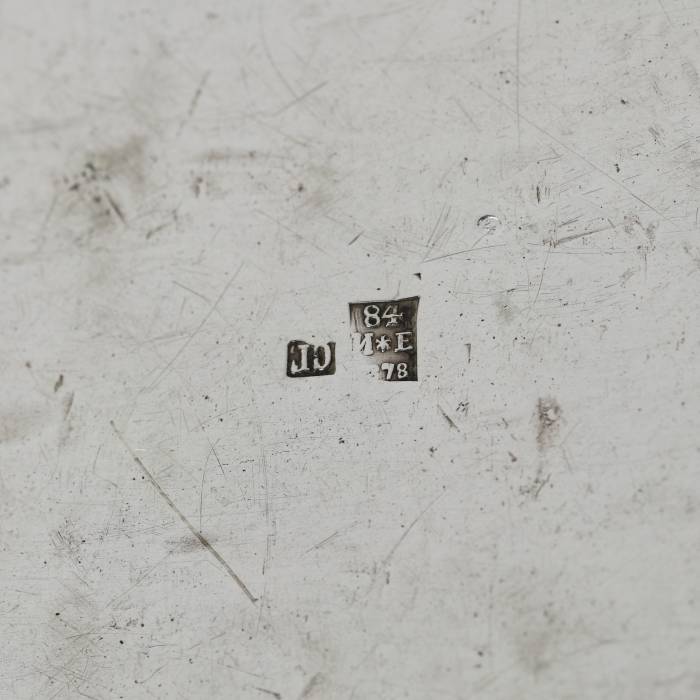
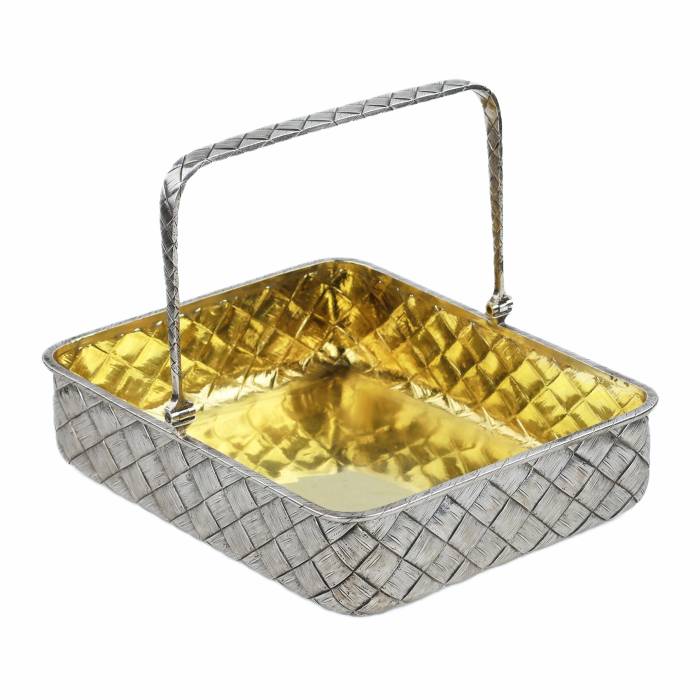
An elegant silver biscuit bowl, created in 1878 in St. Petersburg, is an outstanding example of the neo-Russian style, popular in Russia in the second half of the 19th century. This style is inspired by ancient Russian traditions of decorative art and folk crafts. Stylized as a wicker basket, the biscuit bowl is made using the trompe l`œil technique, masterfully imitating the texture of the vine. The handle of the product, designed in the same style, gives the item an aesthetic completeness and functionality. The inside of the product is covered with gilding, emphasizing the sophistication of the item. Material: 84-carat silver, gilding Hallmarks: SG (in Cyrillic) - unknown silversmith, Hallmark of an unknown assay master, the upper part of the hallmark indicates the 84 assay value, in the middle are the initials I and E, the letters are separated by the city hallmark of St. Petersburg, two anchors and a scepter, in the lower part of the hallmark is the year 1878. Dimensions: Height: 6 cm, Length: 23 cm, Depth: 19 cm. Weight (gross): 726.5 g
Art:
russia
Height:
6 cm
Width:
23 cm
Depth:
19 cm
Period:
19th century
Style:
Neo-Russian
Country:
Russia, St. Petersburg
Material:
Silver 84, Gilding
Condition:
Revive
Fair
Good
Very good
Like new
NEO-RUSSIAN STYLE

The Neo-Russian style is an artistic movement that emerged in Russia in the second half of the 19th century during a period of active search for national identity. Inspired by the aesthetics of Old Russian art, ecclesiastical architecture, and folk crafts, it developed as a reaction to the dominance of Western European canons and embodied the idea of cultural self-affirmation and revival. This style became part of a broader ideological movement aiming to restore continuity between the past and the present by merging historical memory with modern forms of artistic expression.In architecture, the Neo-Russian style was manifested in shapes reminiscent of pre-Petrine Russia: tented and domed churches, decorative kokoshniks, polychrome tiles, ornamental brickwork, and intricate carvings. In decorative arts, it featured motifs of ancient ornamentation, stylized plant forms, curvilinear lines, and traditional geometric patterns.The style gained particular momentum in jewelry. Leading workshops of the Russian Empire, including those of Carl Fabergé, Pavel Ovchinnikov, and the Grachev Brothers, embraced archaic forms and folk symbolism. Their creations often featured intricate enamels, engraving, imitation of woven textures, and decorative elements inspired by Russian folklore. These pieces became emblematic of the refined artistic culture of the late 19th and early 20th centuries, representing a synthesis of traditional craftsmanship and contemporary technological achievements.

The item is in excellent condition. The gilding is fully preserved. The silver retains its noble luster, and all engraved and decorative elements are clearly visible. Minor traces of time are consistent with the age of the piece and confirm its authenticity.

The condition report is provided for informational purposes only.

It is not comprehensive and may not reflect all defects, restorations, alterations, or adaptations, as Antiqon does not perform professional conservation-level assessments. The information is based on a qualified, yet subjective, evaluation by our specialists.Before purchasing, we recommend consultation with an independent expert.Please also consult our Terms and conditions and Glossary A-Z, which contain important information on lot characteristics and sale conditions.

Neo-Russian style.
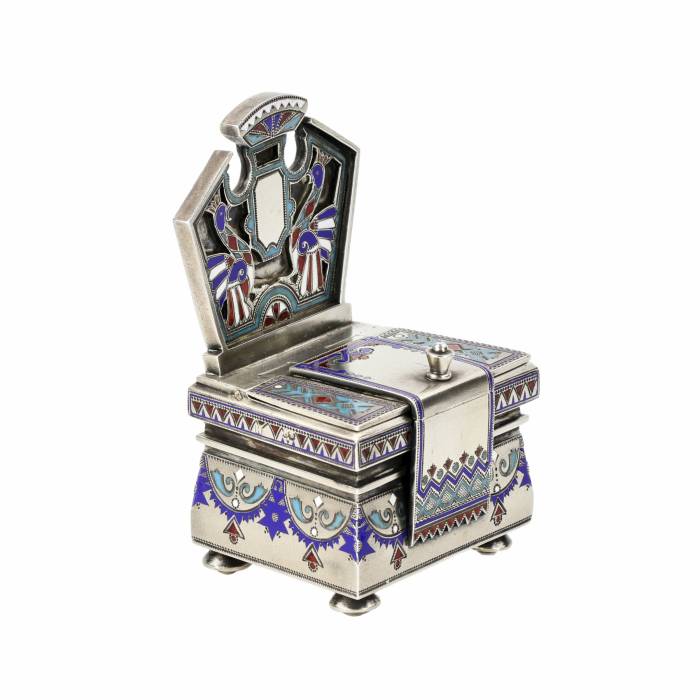
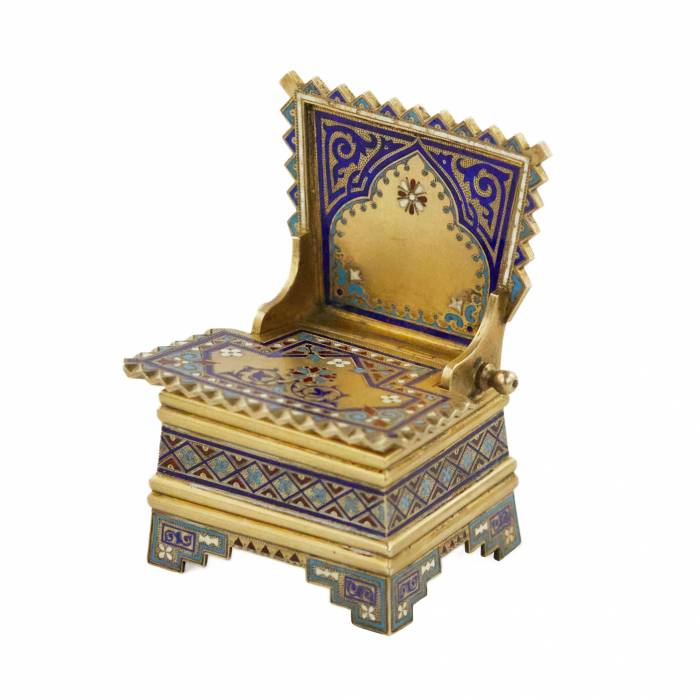
The neo-Russian or pseudo-Russian style is part of the aesthetics of historicism and national identity of the 1815-1880s. It arose as an official position and an internal response of society to the victory of 1812. Concerned about all types of artistic creation, social and philosophical life of society. Determined the type of official architecture, private brick ward architecture, historical graphics and painting, the theme of decorative and applied art. The formation of the style is associated with the question of the originality of Russian history, developed by the Slavophiles. The main forms and techniques of decoration are borrowed from wooden architecture. Geometric definiteness and ethnographic fragmentation of the decor prevail. The style was especially popular in silver. Ladles, brothers, saltcellars in the form of thrones-towers, etc. expanded the range of Russian craftsmen of the second half of the 19th century. The neo-Russian style became a stable form of thought for most of the 19th century until the advent of modernity.
... Read More

Stay up to date with new arrivals
Save Russian silver and we let you know when new listings appears in this category
Save

Related items