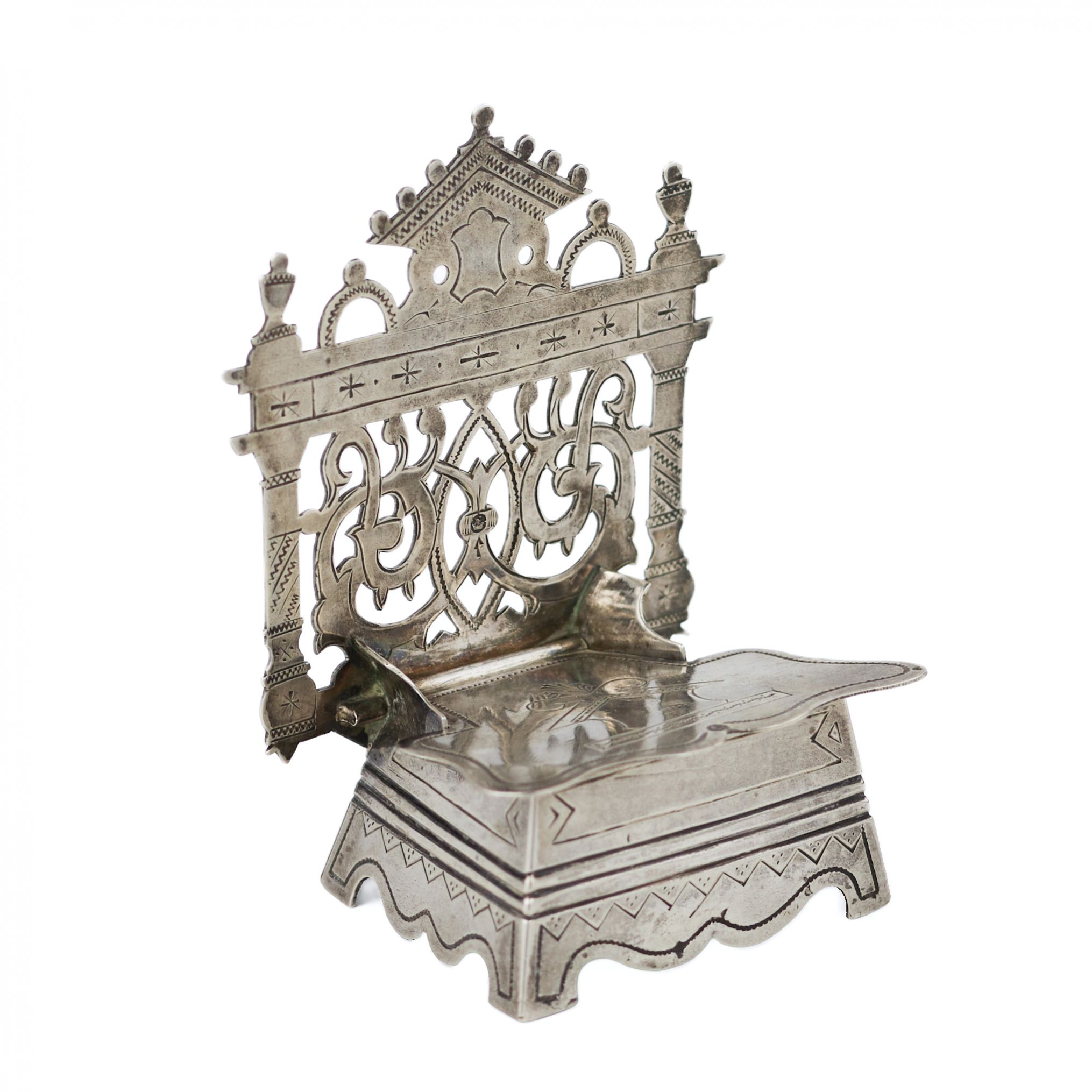
SILVER SALT CELLAR IN THE FORM OF A THRONE WITH AN OPENWORK BACK RUSSIA, KOSTROMA, 1880s–1890s
AntiqonART consultant will contact you within one business day after receiving your request.
Discover how the value of similar works has evolved over the past 10 years. Art is not only beauty — it's an investment.
Discover how the value of similar works has evolved over the past 10 years. Art is not only beauty — it's an investment.
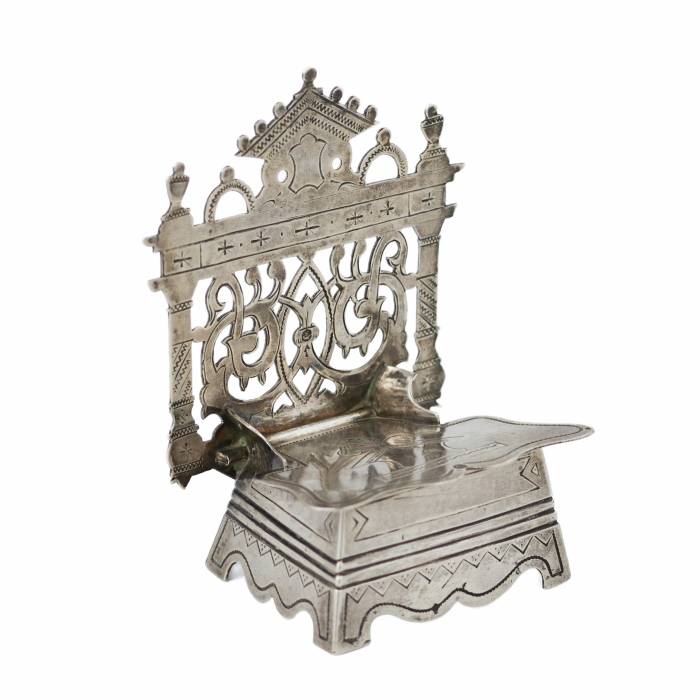
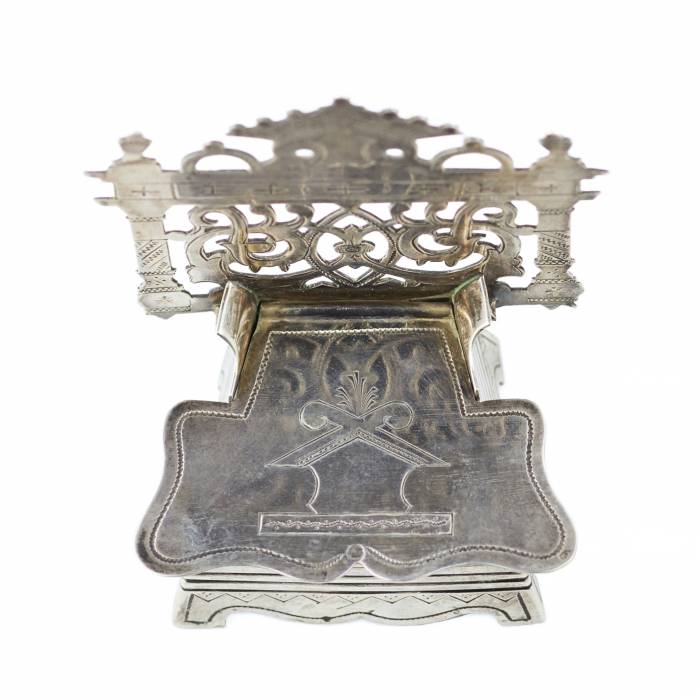
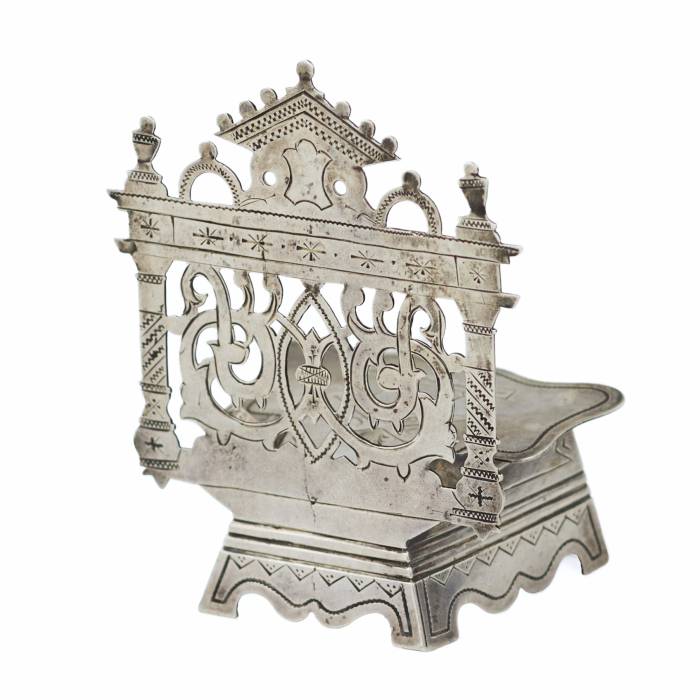
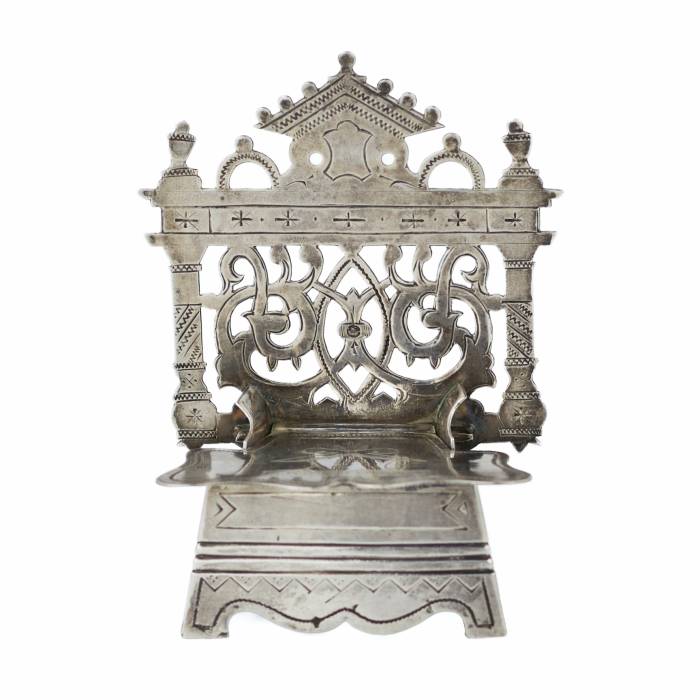
An elegant silver salt cellar executed in the form of a miniature throne with a high architectural back, representing a characteristic example of Russian decorative and applied art of the late 19th century. The composition is based on architectural and furniture motifs, emphasised by the clear geometry of the body, stepped base and richly developed ornamental decoration.
The openwork back is designed as a symmetrical structure with pierced vegetal and geometric ornament organised around a central diamond-shaped motif. The upper section is crowned with a stylised pediment featuring balusters and a crenellated frieze, recalling forms of Old Russian architecture. The side supports are decorated with fine chasing and ornamental bands, reinforcing the architectural character of the object.
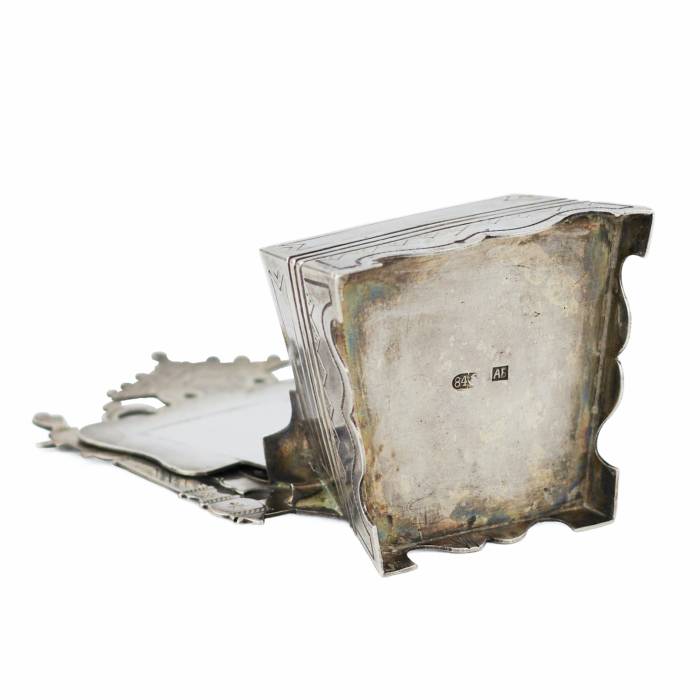
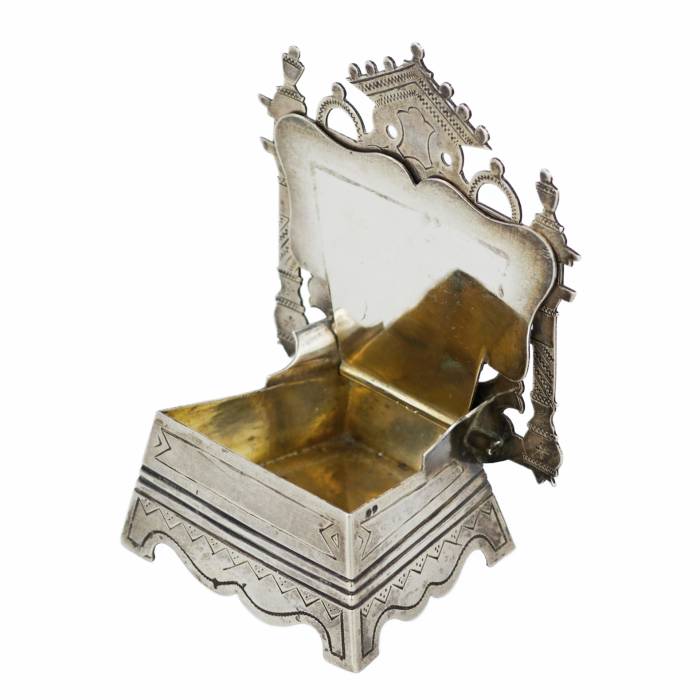
The rectangular body with profiled walls is adorned with linear and zigzag engraved decoration. The base is solid and contoured, providing both stability and visual completeness. The interior of the bowl is fully gilded, a traditional measure used to protect silver from the corrosive effects of salt while simultaneously enhancing the ceremonial appearance of the piece. The hinged lid is functionally and compositionally integrated with the back, preserving the overall harmony of the design.
Material: Silver, 84 standard, gilt interior.
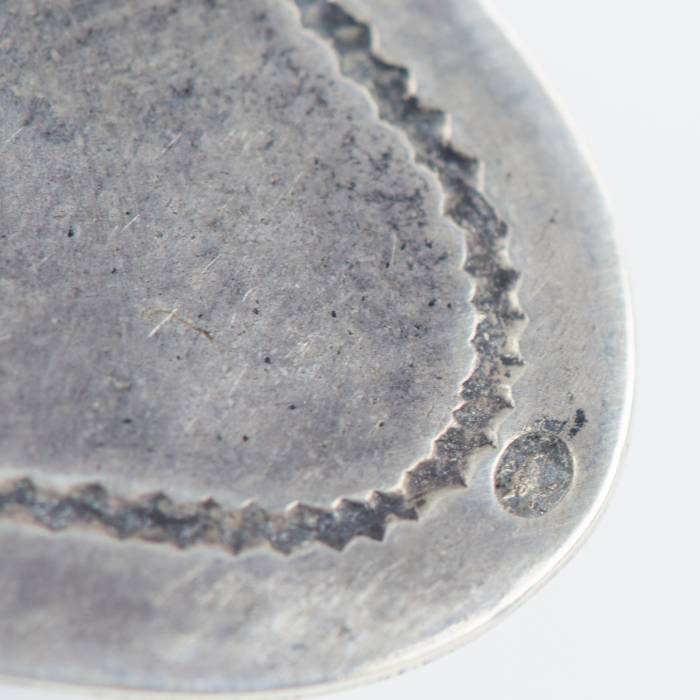
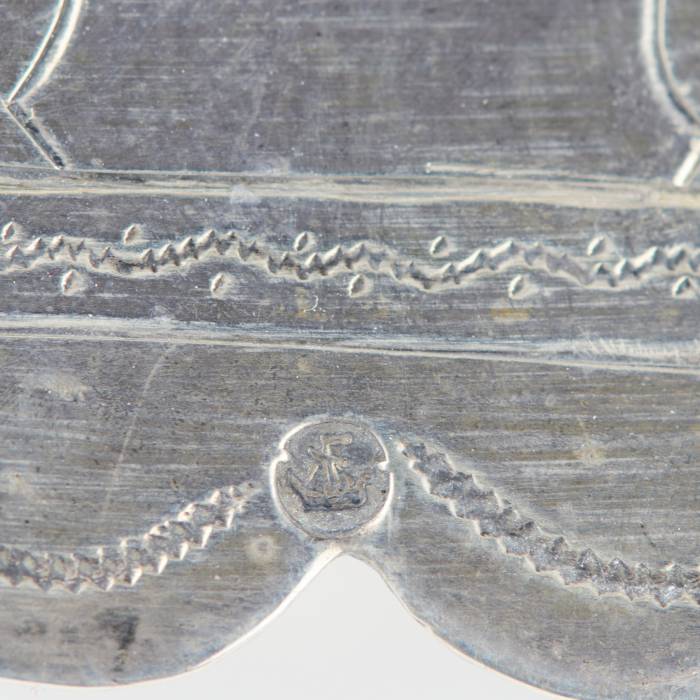
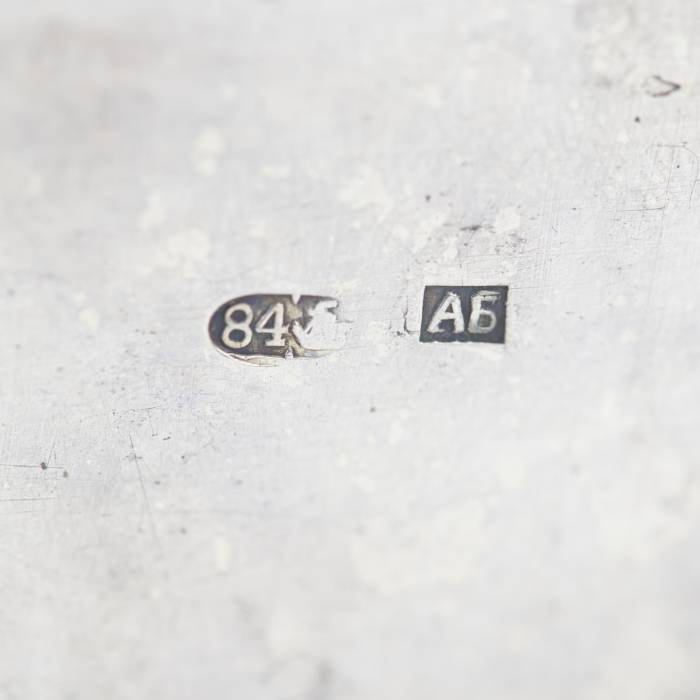
Hallmarks: Maker’s mark of an unidentified master “AB” in a rectangular cartouche; Kostroma town assay mark depicting the city coat of arms – a galley sailing on a river; To the left, the silver standard “84”, characteristic of the Kostroma assay office of the 1880s–1890s; Additional assay marks.
Dimensions: Height: 7.5 cm; Width: 6 cm; Depth: 5 cm.
Condition: Good. Even natural patina to the silver. Gilding to the interior well preserved. Minor signs of age and use consistent with the period. No deformations or restorations observed.
Provenance: Private collection.
In the second half of the 19th century, Kostroma emerged as one of the notable regional centres of silversmithing within the Russian Empire, fostering a stable professional environment of jewellers and silver masters. Local workshops developed under strict state assay supervision, ensuring consistent metal quality, precise hallmarking and compliance with official standards. This system contributed to a high level of craftsmanship and a recognisable artistic language of Kostroma silver, valued both locally and beyond the province.
The artistic practice of Kostroma silversmiths combined academic metalworking techniques with enduring traditions of decorative graphics and ornamental thinking characteristic of central Russia. Crisp engraving, confident chasing and carefully balanced compositions reflected a continuity of craftsmanship and a meticulous approach to detail, particularly evident in small-scale objects.
The 1880s–1890s were marked by an active revival of historical styles and the development of the Neo-Russian movement in decorative arts. Architectural motifs, stylisation of medieval Russian forms and references to thrones, terem palaces and ceremonial furniture became widespread in tableware intended for formal service. Such salt cellars transcended their utilitarian function, becoming symbolic centrepieces of the table setting.
Salt cellars in the form of a throne carried associations of authority, stability and tradition, fully aligned with the aesthetic ideals of the Historicist period. Today, these objects are regarded as significant testimonies to the development of regional schools of Russian silver at the end of the 19th century and are of considerable interest to collectors and museum collections.
Overall good condition. The structure is stable and complete. The silver surface retains a natural patina, with no signs of active corrosion. The interior gilding is preserved. Minor surface wear consistent with age and use.
The condition report is provided for informational purposes only.
It is not comprehensive and may not reflect all defects, restorations, alterations, or adaptations, as Antiqon does not perform professional conservation-level assessments. The information is based on a qualified, yet subjective, evaluation by our specialists.Before purchasing, we recommend consultation with an independent expert.Please also consult our Terms and conditions and Glossary A-Z, which contain important information on lot characteristics and sale conditions.