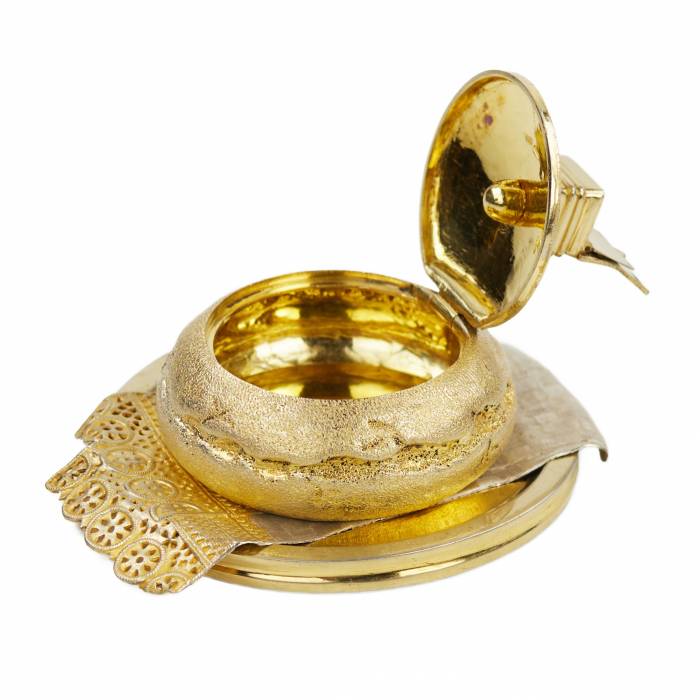
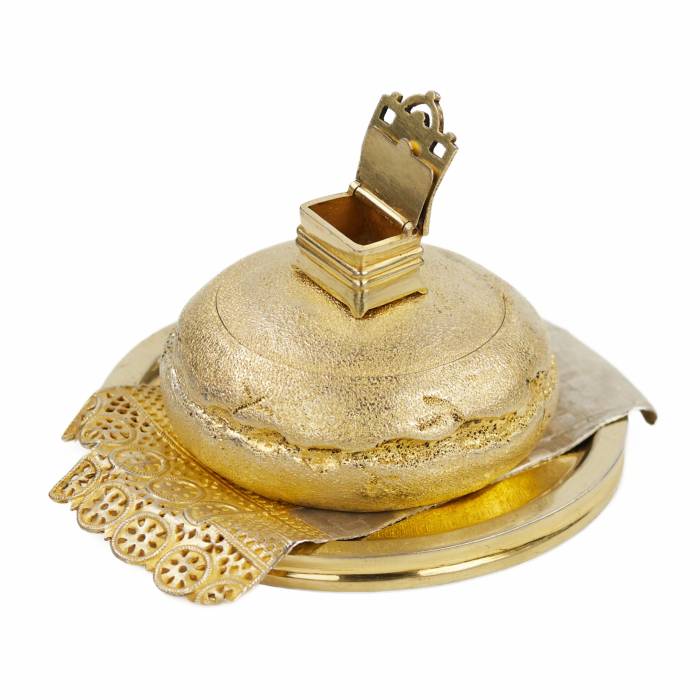
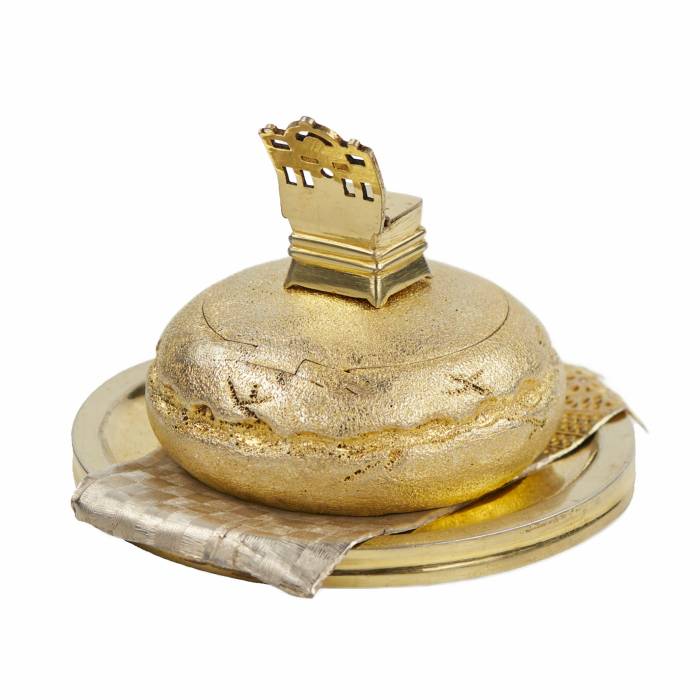
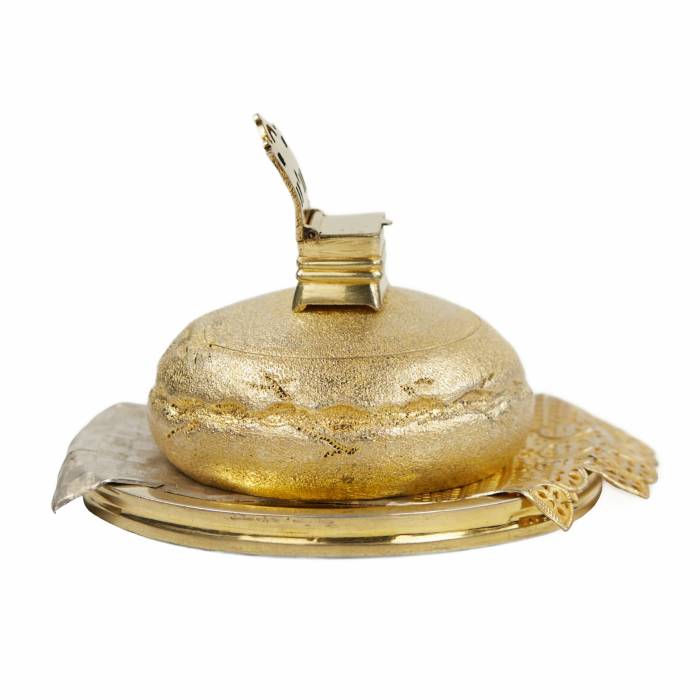
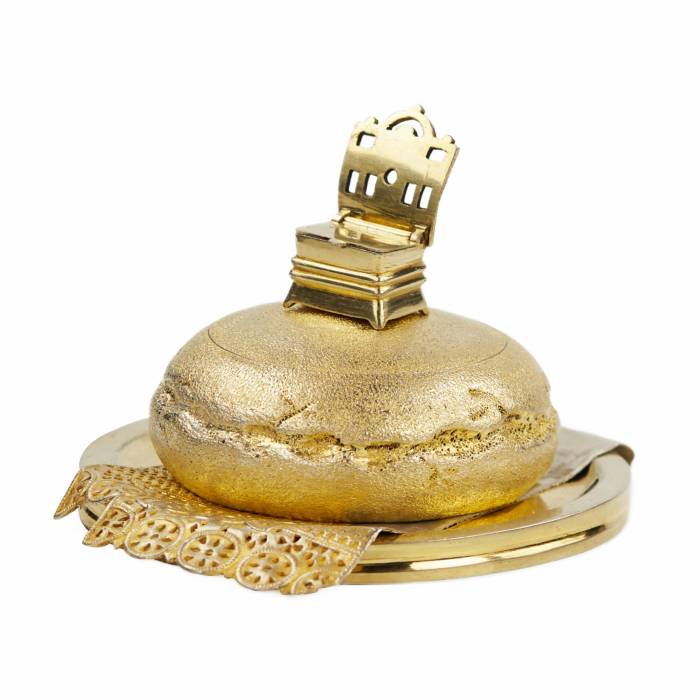
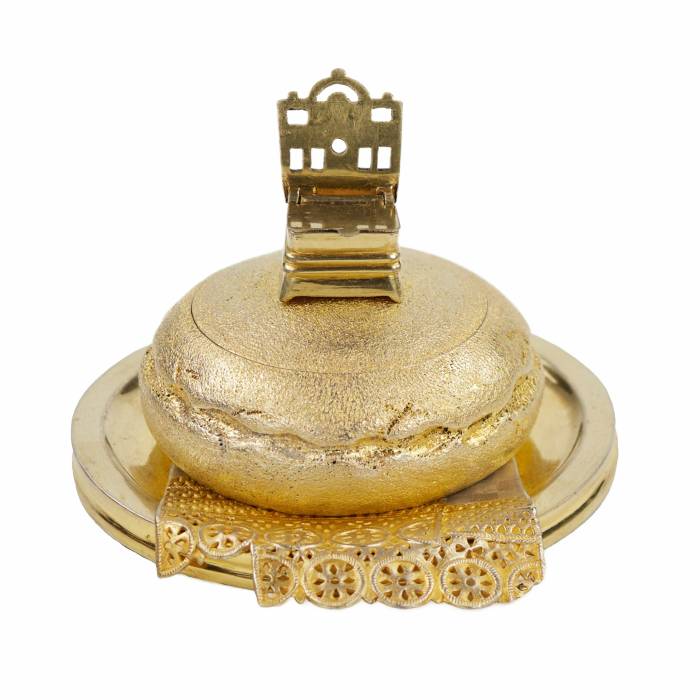
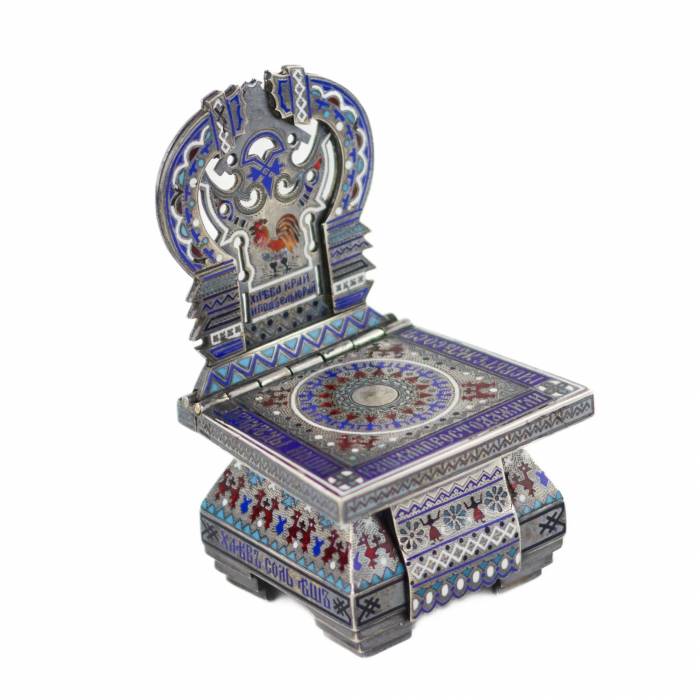
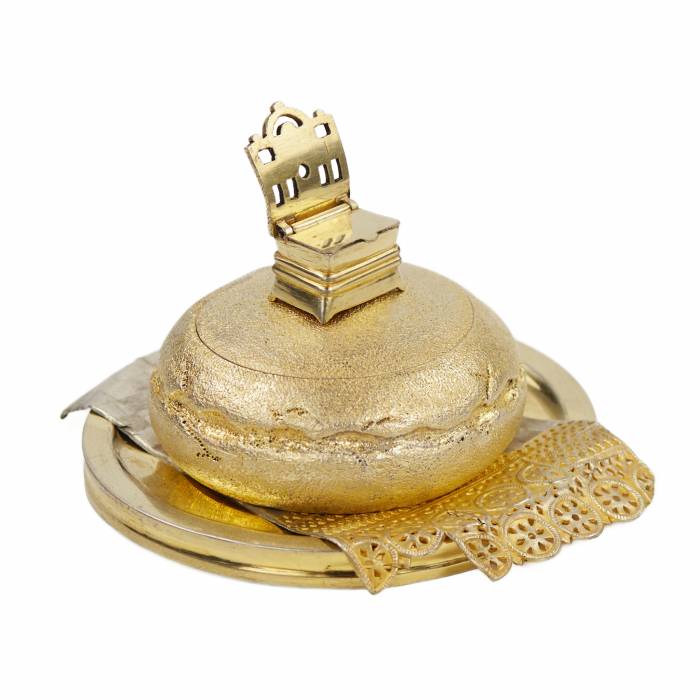
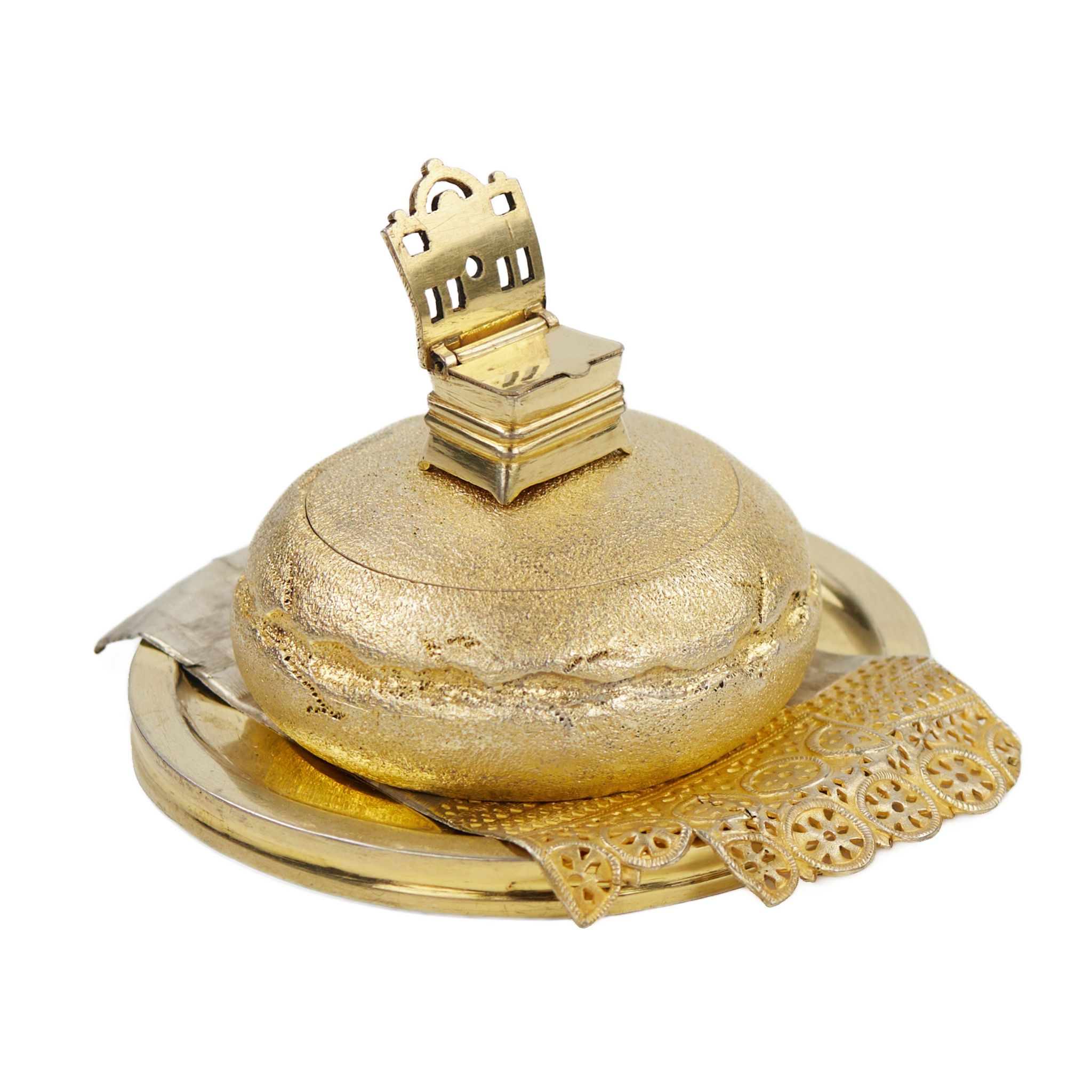
A rare silver salt cellar of ceremonial use, intended to be placed atop a wedding loaf (karavay) — the symbolic centerpiece of a traditional Russian matrimonial welcome. The body is shaped as a stylized round bread with a hinged lid, surmounted by a miniature salt vessel in the form of a chair — an allegorical representation of home, stability, and the foundation of family.
The surface is crafted in the complex trompe-l’œil technique: a finely grained background imitates the bread resting on a rushnyk — a ritual embroidered cloth. The edge is decorated with a fringe-like border and ornamentation in the form of a filigree frieze composed of circular rosettes and geometric patterns. This decorative composition highlights the ethnographic spirit of the piece and the refined craftsmanship of the silversmith.
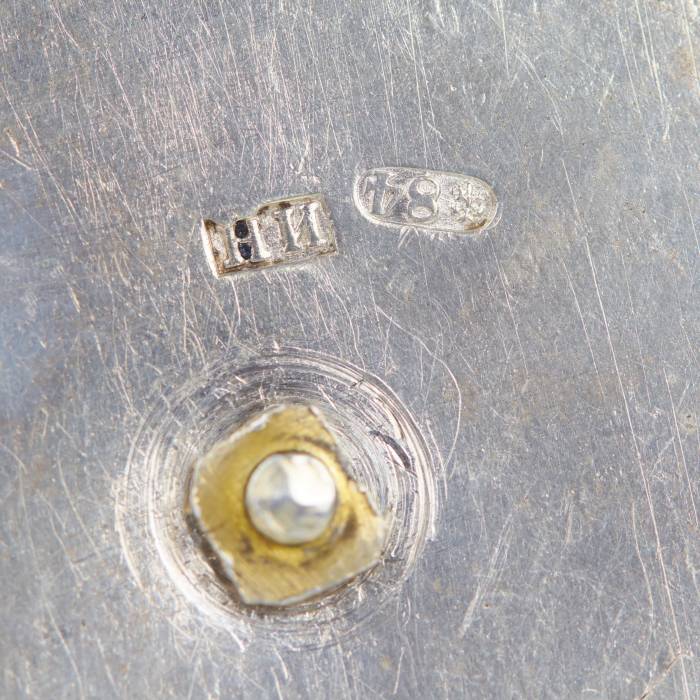
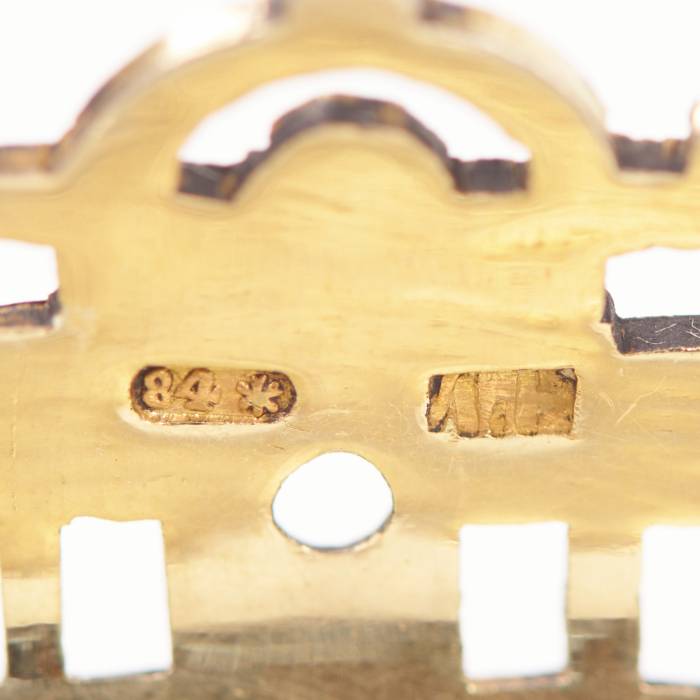
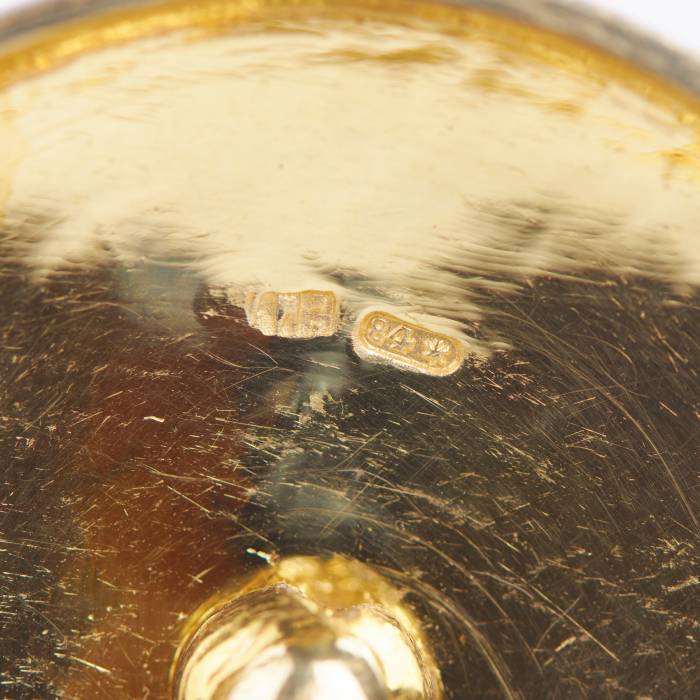
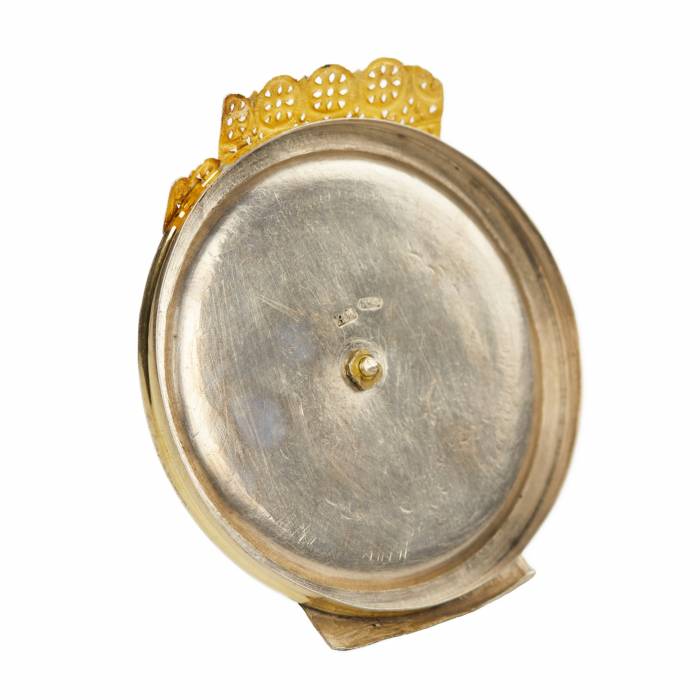
Hallmarks:City mark of Saint Petersburg from the last quarter of the 19th century, featuring the city arms and silver standard “84” in an oval cartouche — the Imperial Russian silver mark. Assay mark: Cyrillic initials “М.А.” above a line with illegible digits — assay master active in Saint Petersburg between 1877 and 1885. Maker’s mark: Cyrillic initials “Н.И.” in a rectangular cartouche — attributed to an unidentified St. Petersburg silversmith.
Dimensions: Diameter of base: 9.5 cm. Height with closed lid: 7.5 cm
Weight: 182 g
Condition: Excellent. Interior gilding is even and intact, without wear. The surface shows no deformations, losses, or restorations. Hinge is stable and functional. Hallmarks are crisp and legible. Fully authentic object with minimal signs of age.
Provenance: Private collection.
Country:
Russia, St. Petersburg
Material:
Silver 84, Gilding
Wedding salt cellars, placed atop a karavay loaf, held a central role in the traditional rituals of Imperial Russia. The loaf and salt symbolized prosperity, purity, and blessing, and the salt cellar was often the visual and symbolic focus of the ceremony. Particularly among the merchant and urban classes, such objects represented a union of cultural heritage and material refinement.
This example reflects the Neo-Russian Revival style prominent in late 19th-century decorative arts, especially in Saint Petersburg. This style blended folk motifs such as embroidery, weaving, and rustic textile patterns with sophisticated silversmithing techniques. The trompe-l’œil technique — here simulating textile, bread, and fringe — created the illusion of a hand-embroidered ritual cloth beneath the stylized loaf. Filigree rosettes and geometric borders enhance its ethnographic character.
Such pieces were often commissioned for weddings or major family events and preserved as heirlooms. Comparable examples with similar decorative programs can be found in the collections of the State Historical Museum, the Russian Ethnographic Museum, and the Russian Museum in Saint Petersburg.
Excellent collector’s condition. Interior gilding is even and intact, without wear. The surface shows no deformations, losses, or restoration. The hinge of the lid is stable and functional. Hallmarks are crisp and clearly legible. The piece is entirely authentic, with minimal age-related wear. Rare preservation of museum quality.
The condition report is provided for informational purposes only.
It is not comprehensive and may not reflect all defects, restorations, alterations, or adaptations, as Antiqon does not perform professional conservation-level assessments. The information is based on a qualified, yet subjective, evaluation by our specialists.Before purchasing, we recommend consultation with an independent expert.Please also consult our Terms and conditions and Glossary A-Z, which contain important information on lot characteristics and sale conditions.