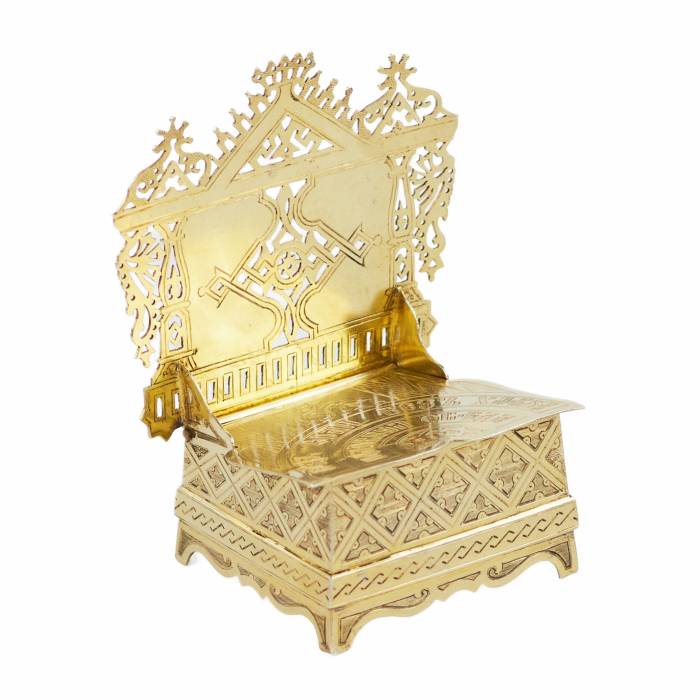
SILVER SALT CELLAR IN THE FORM OF A THRONE RUSSIAN EMPIRE, MOSCOW, 1881
AntiqonART consultant will contact you within one business day after receiving your request.
Discover how the value of similar works has evolved over the past 10 years. Art is not only beauty — it's an investment.
Discover how the value of similar works has evolved over the past 10 years. Art is not only beauty — it's an investment.
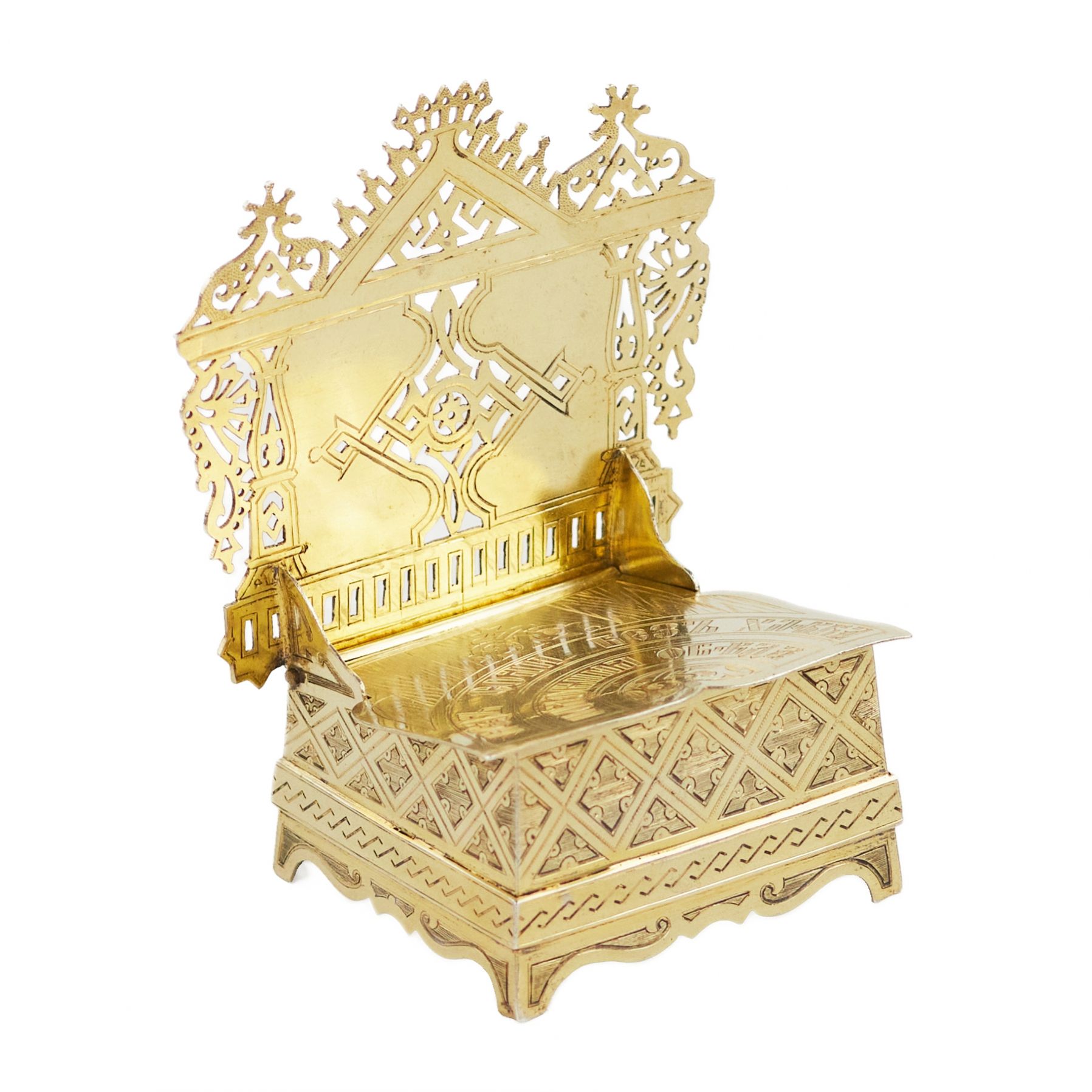
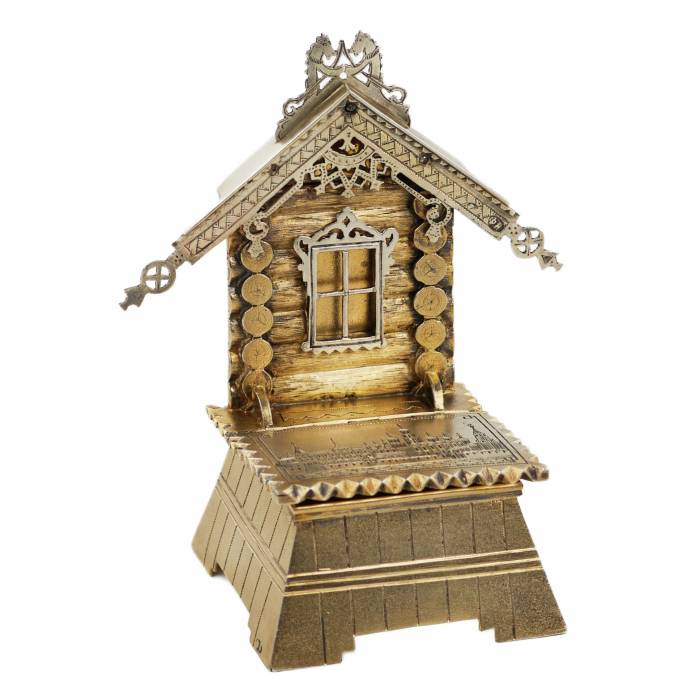
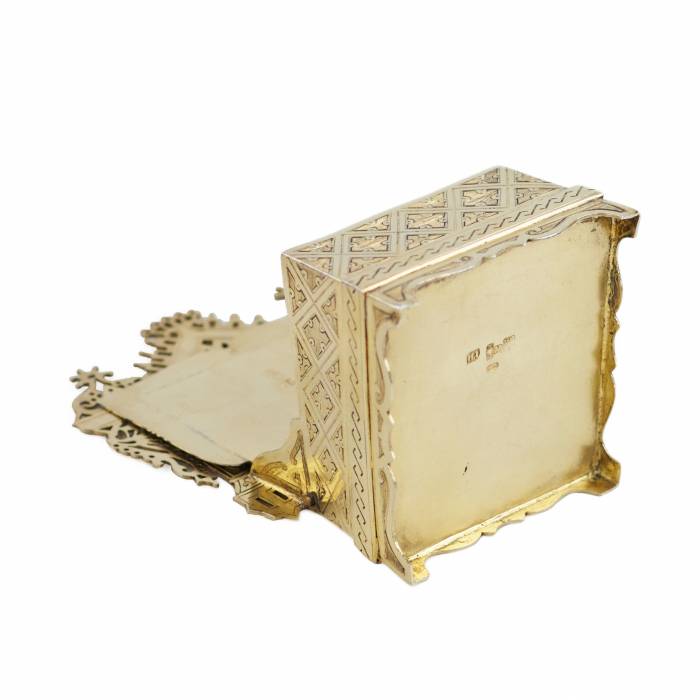
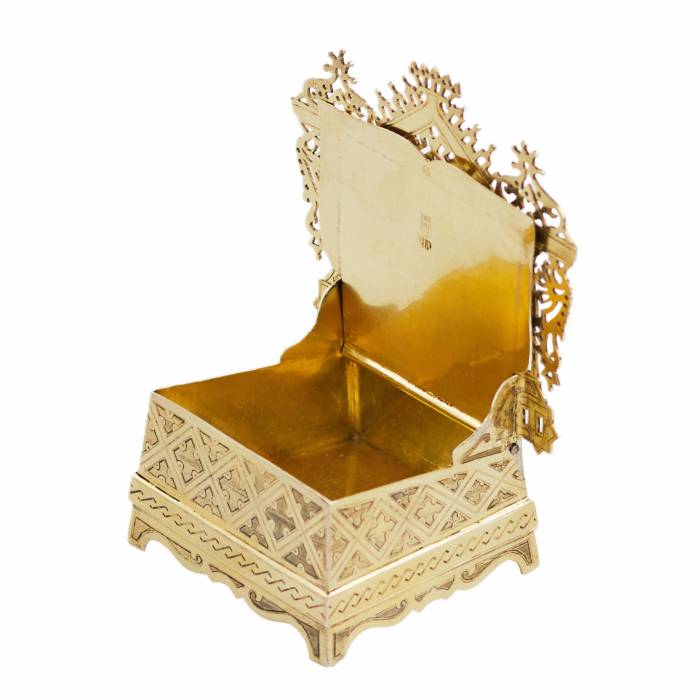
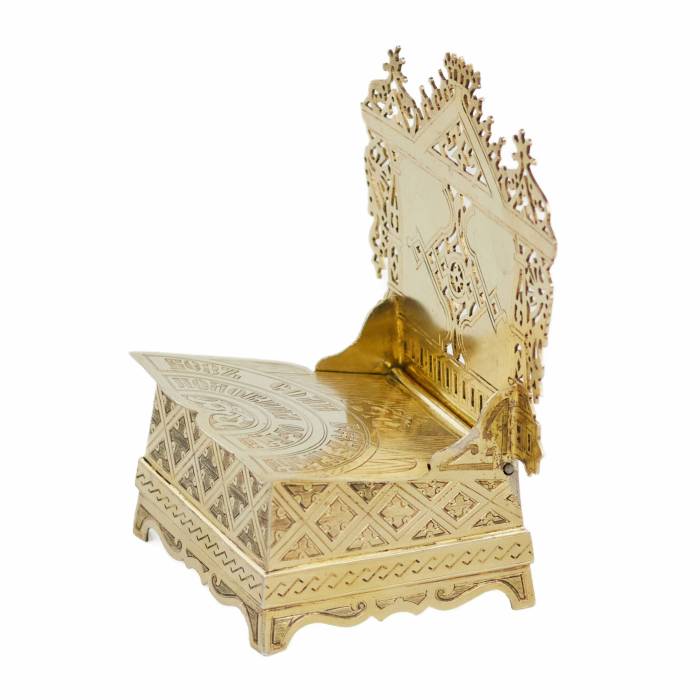
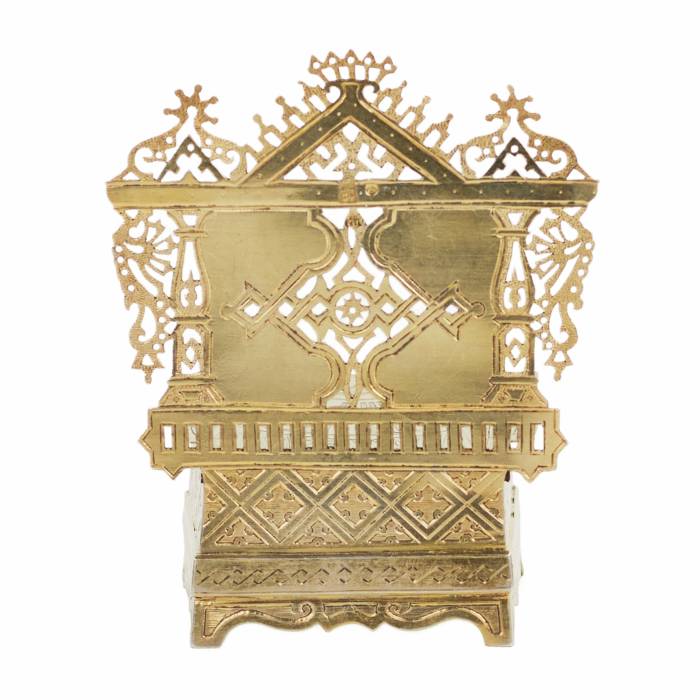
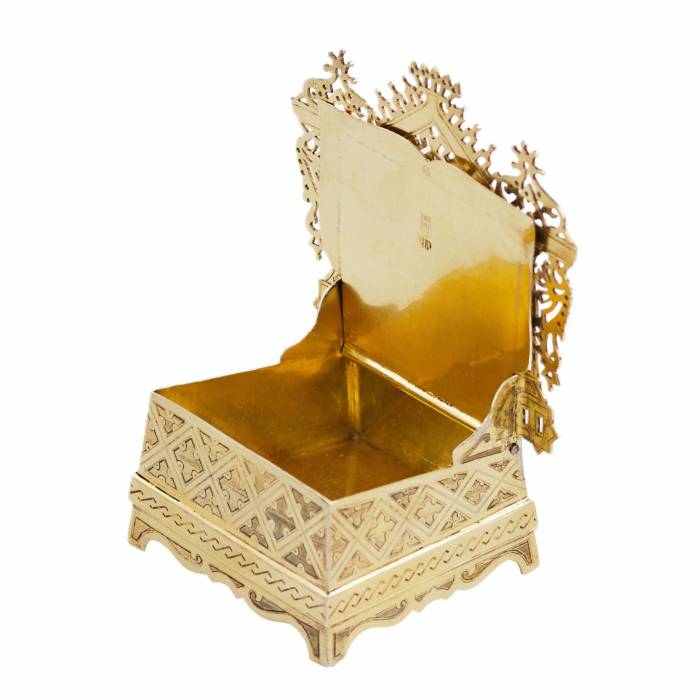
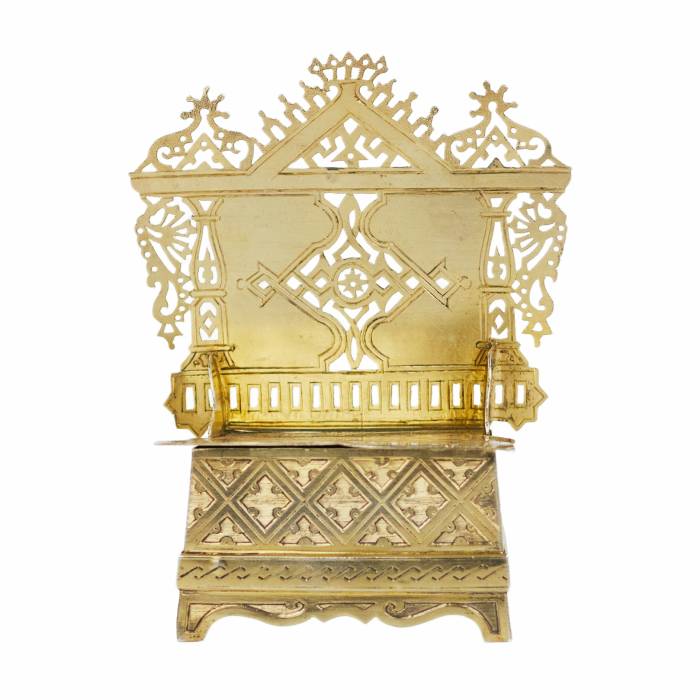
A silver salt cellar executed in the form of a throne with a high openwork back and a hinged lid represents a characteristic example of Moscow artistic silver of the last quarter of the 19th century. The architectural composition follows the concept of a miniature ceremonial throne, emphasizing the symbolic and status-oriented character of the object.
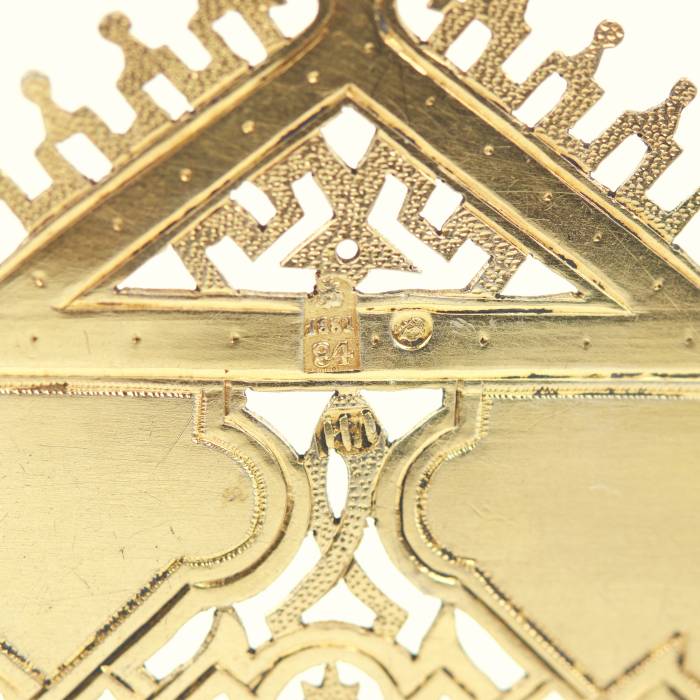
The body is decorated with a rhythmic geometric ornament composed of alternating lozenges and stylized motifs, executed using engraving and pierced techniques, further enriched with trompe-l’oeil ornamentation imitating the texture of tree bark. The base is designed as a solid pedestal with profiled feet, enhancing the impression of monumentality despite the compact dimensions of the piece. The back is rendered in openwork technique and adorned with elements referring to architectural finials and crowned motifs characteristic of the Neo-Russian style.
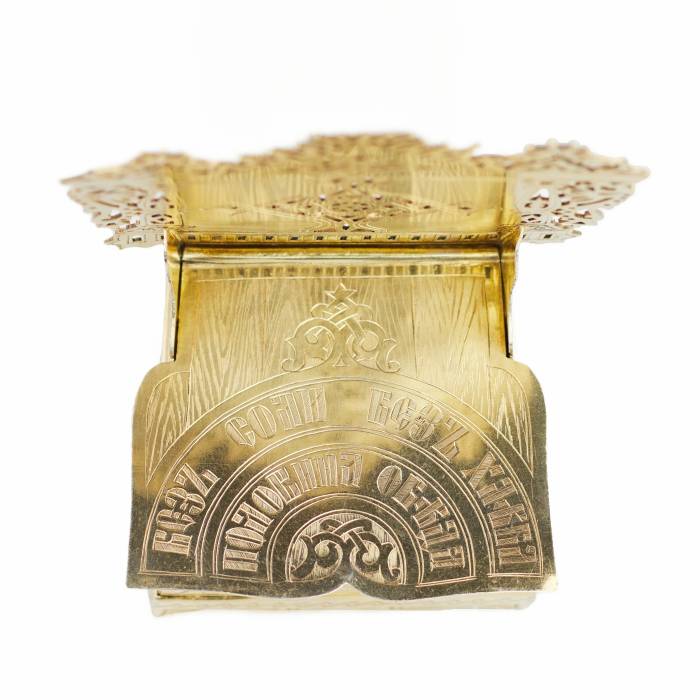
The inner side of the lid bears an engraved inscription, “Without salt and bread, half the meal is missing”, executed in a decorative script and enclosed within an ornamental frame.
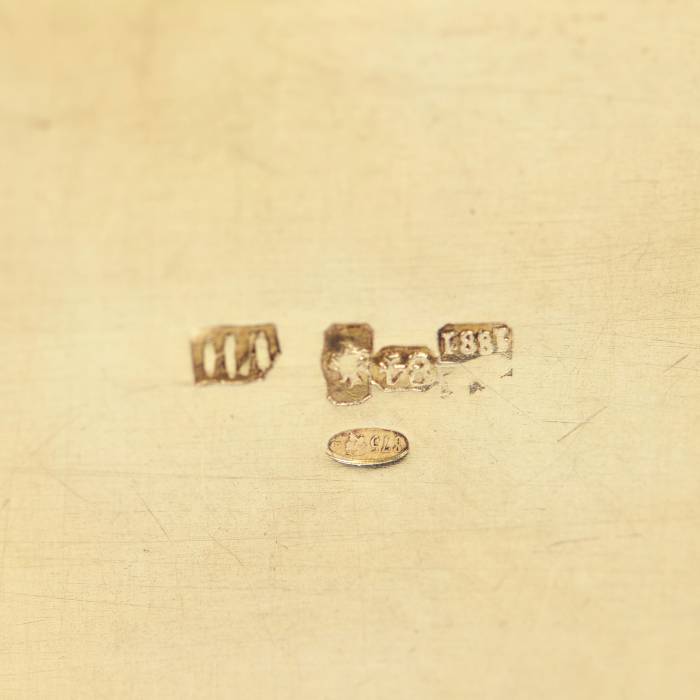
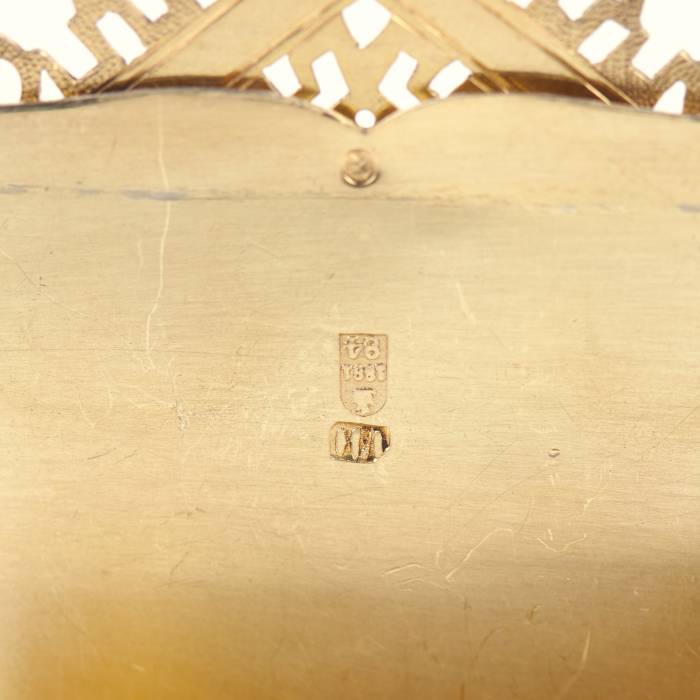
Marks: Maker’s initials “IL”, presumably Iuka Khaimovich Lozinsky, owner of a silverware workshop; State assay mark of the Moscow Assay District depicting the coat of arms of the city of Moscow (Saint George) above the date “1881” and the fineness mark “84” within a shield; Additional Moscow assay marks; Later additional marks indicating the fineness “875”.
Dimensions: Height: 10.5 cm. Width: 8.5 cm. Depth: 6 cm.
Weight: 139 g.
Condition: Good. Gilding to the interior largely preserved. Minor signs of age and use. No deformations, cracks or evidence of restoration.
Provenance: Private collection.
Moscow artistic silver of the second half of the 19th century developed in response to a steady demand for ceremonial tableware combining utilitarian function with an expressive decorative program. During this period, numerous private workshops operated in Moscow, producing both everyday and presentation silver objects catering to the tastes of the urban middle and upper classes.
Among such craftsmen was Iuka Khaimovich Lozinsky, owner of a silverware workshop recorded in Moscow craft and statistical sources of the late 19th century. According to records from 1889, his workshop employed 13 workers and produced silver items valued at 3,000 rubles annually, indicating a stable and well-established enterprise of medium scale.
Works produced by Moscow workshops of this circle are distinguished by careful attention to form, ornament, and symbolic meaning. The use of the throne motif reflects the period’s fascination with Historicism and the Neo-Russian style, within which artisans reinterpreted motifs of ancient Russian architecture and ceremonial furniture. Salt cellars in the form of thrones held a special place in table settings, serving not only as functional objects but also as prominent decorative accents enhancing the solemnity of the meal.
The state assay system of the Russian Empire ensured strict control over silver quality and mandatory hallmarking. The Moscow assay mark dated “1881” with the fineness “84” allows for precise dating of the object and confirms its compliance with the standards of its time. Later additional marks reflect the subsequent history of the object’s circulation in later periods.
Overall condition is good. The structure is stable; the lid and hinges function properly. Wear is consistent with age. No significant losses or later deformations observed.
The condition report is provided for informational purposes only.
It is not comprehensive and may not reflect all defects, restorations, alterations, or adaptations, as Antiqon does not perform professional conservation-level assessments. The information is based on a qualified, yet subjective, evaluation by our specialists.Before purchasing, we recommend consultation with an independent expert.Please also consult our Terms and conditions and Glossary A-Z, which contain important information on lot characteristics and sale conditions.