


RUSSIAN SILVER TROMPE-L’ŒIL CASKET. GERASIM LOSKUTOV RUSSIA, MOSCOW, 1893
AntiqonART consultant will contact you within one business day after receiving your request.
Discover how the value of similar works has evolved over the past 10 years. Art is not only beauty — it's an investment.
Discover how the value of similar works has evolved over the past 10 years. Art is not only beauty — it's an investment.
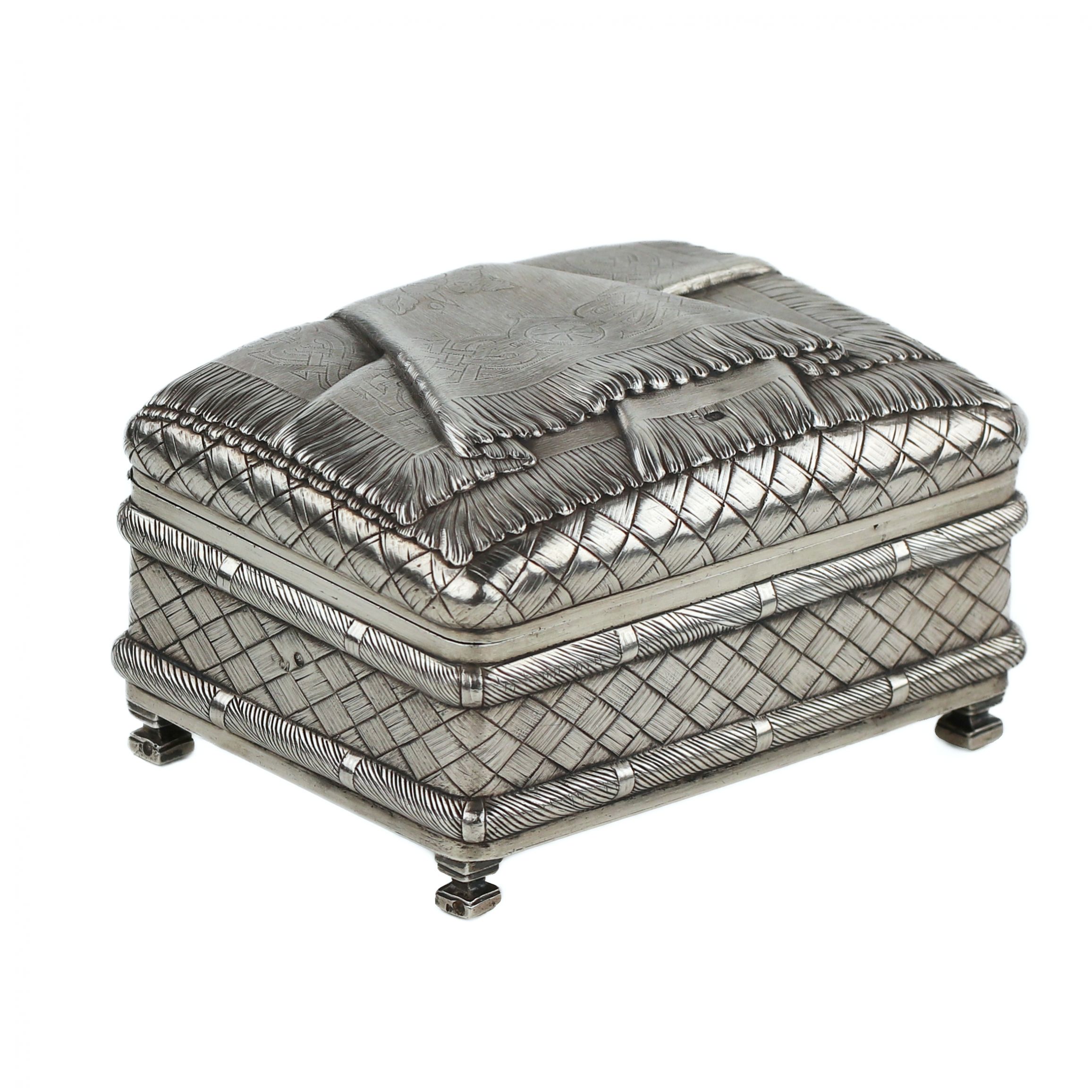
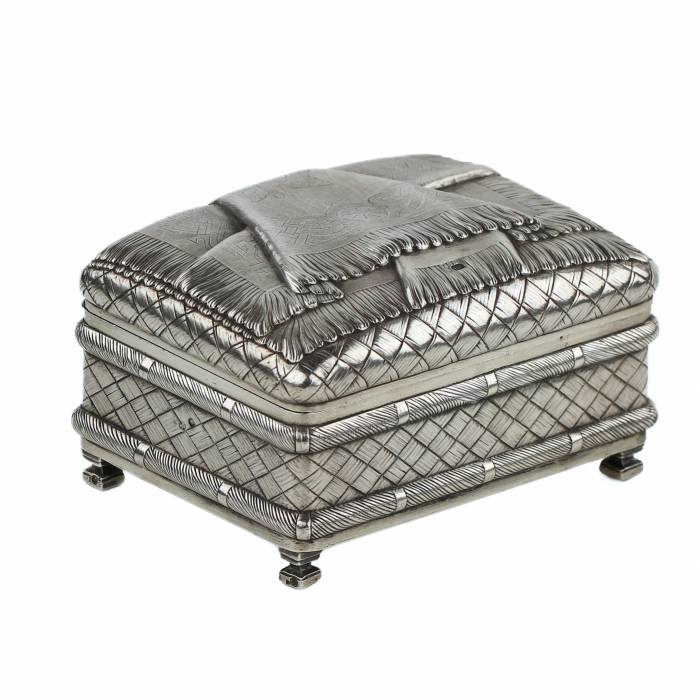
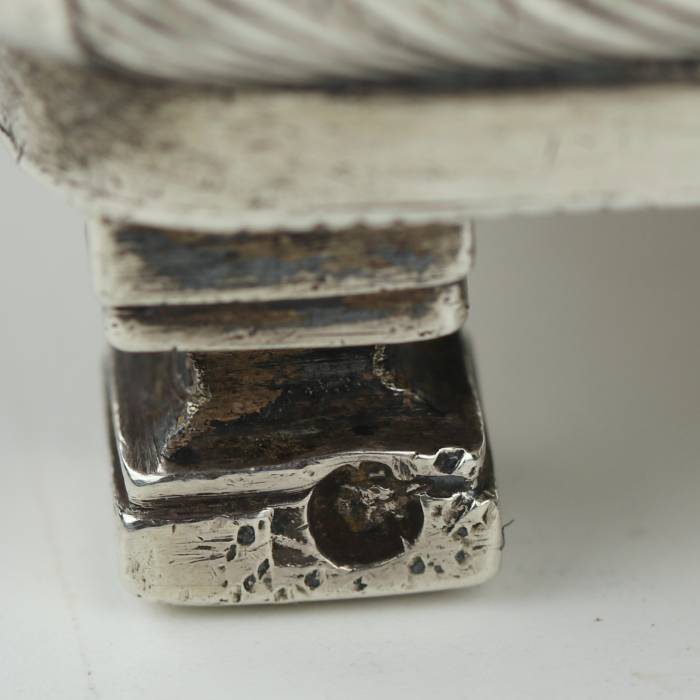
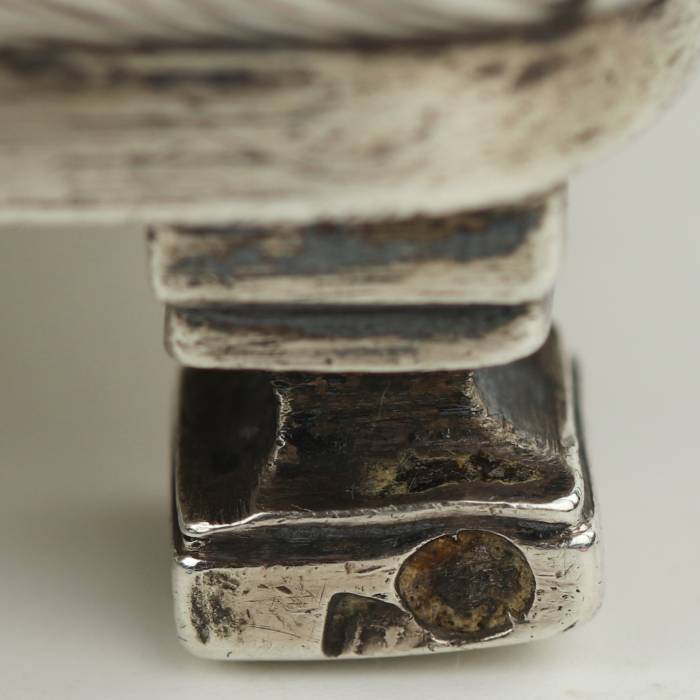
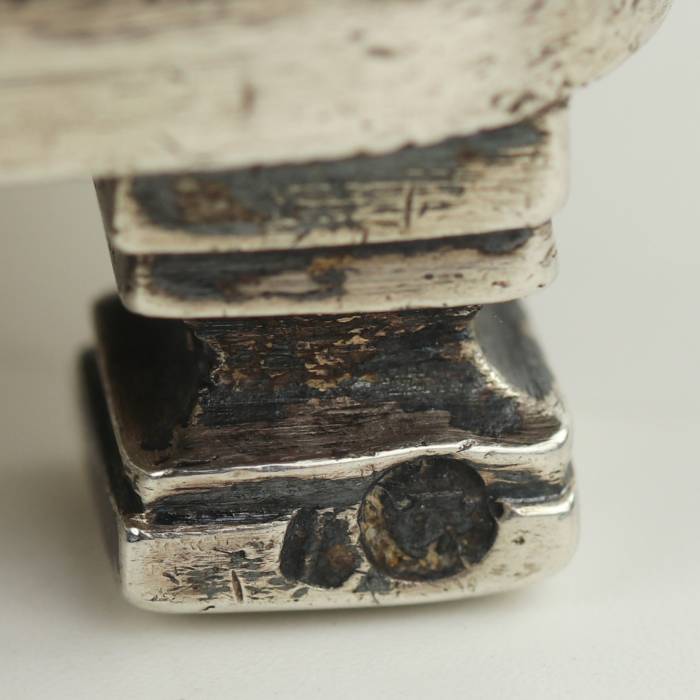
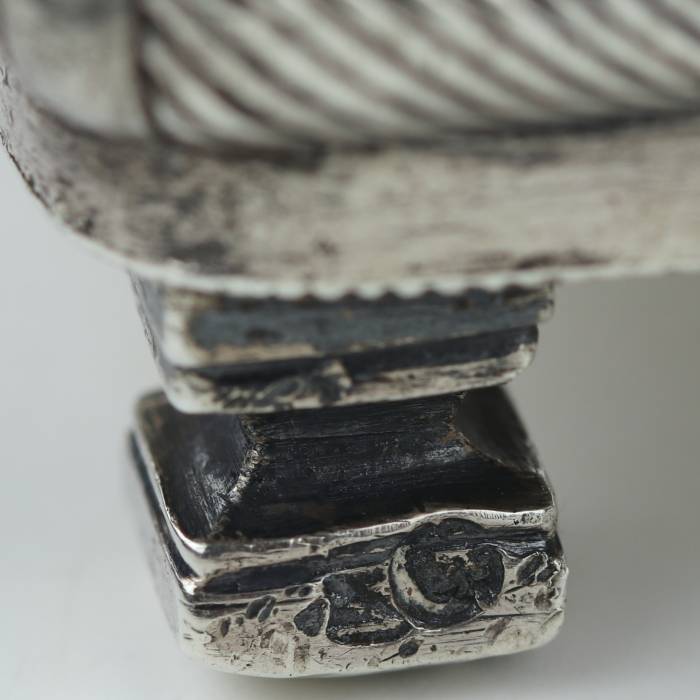
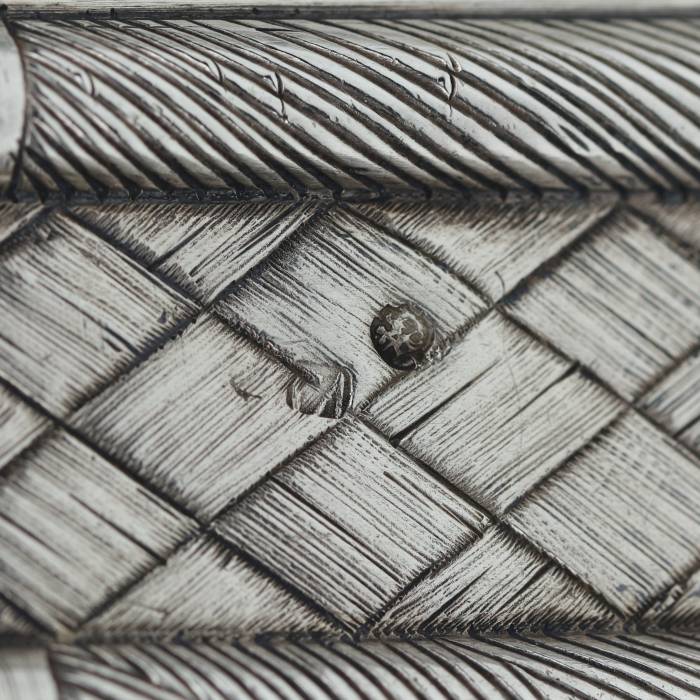
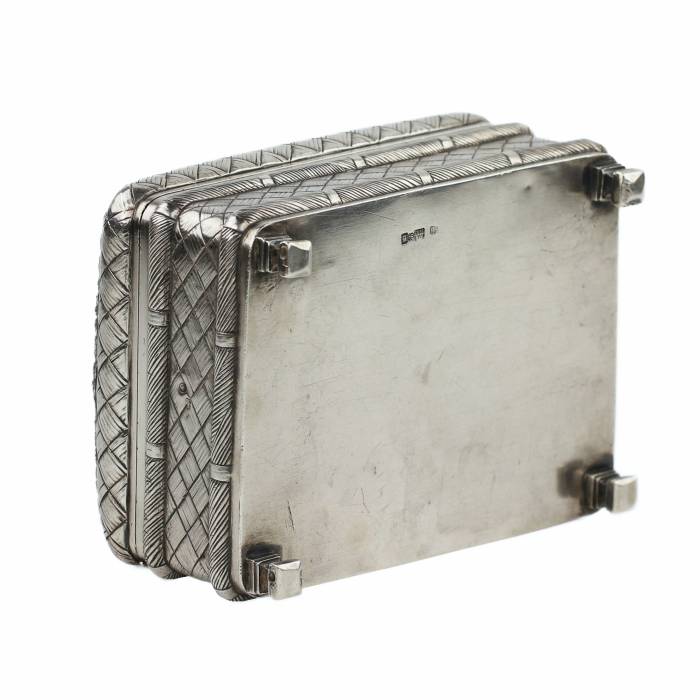
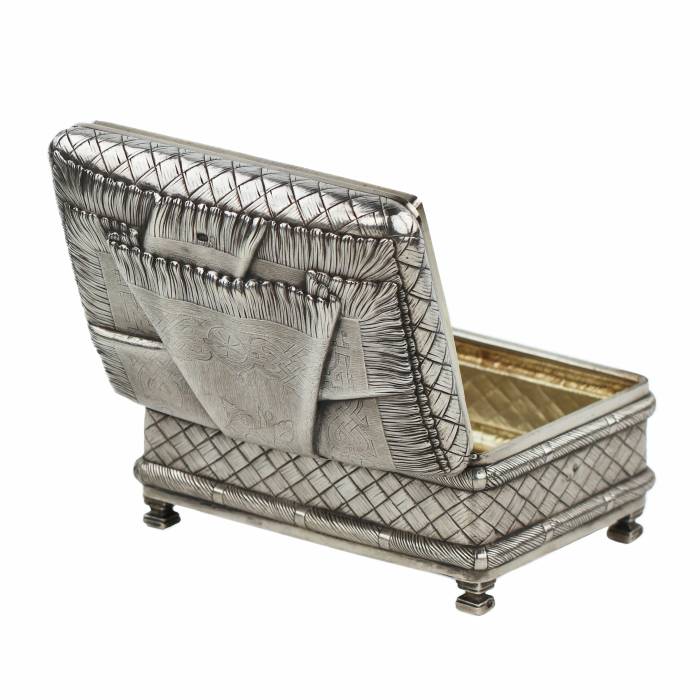
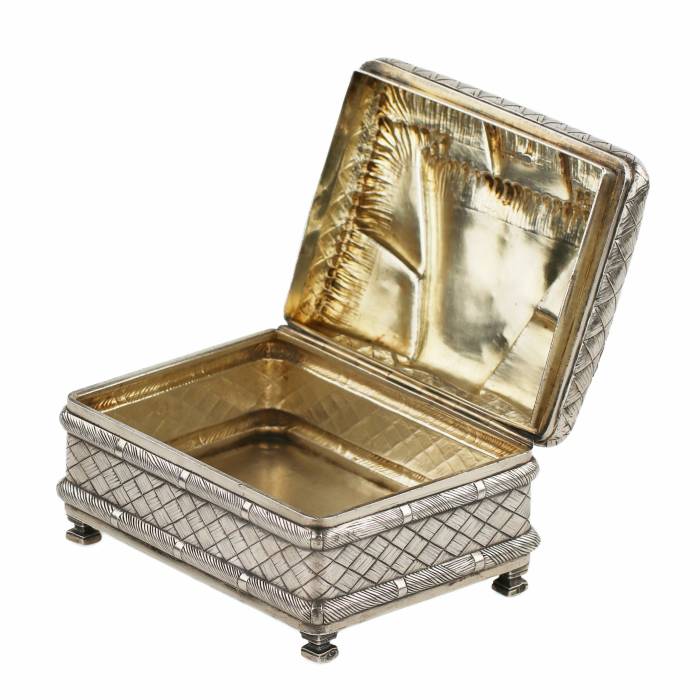
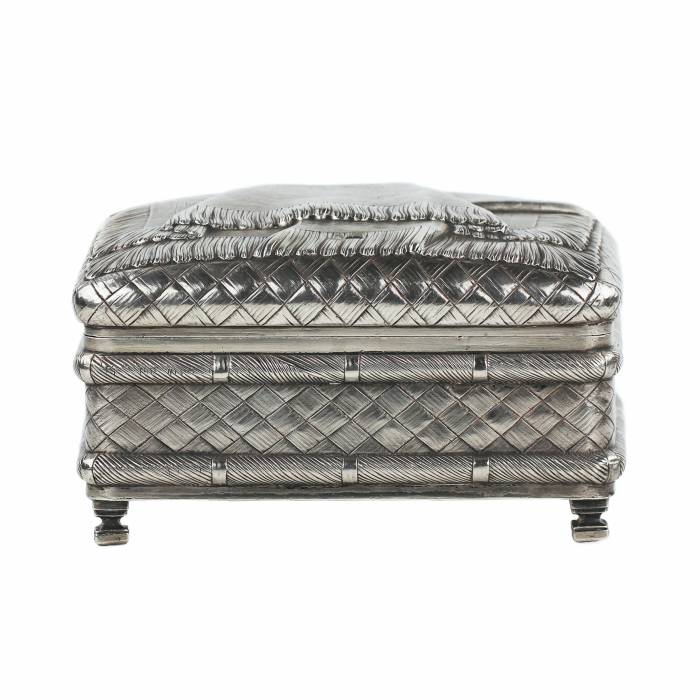
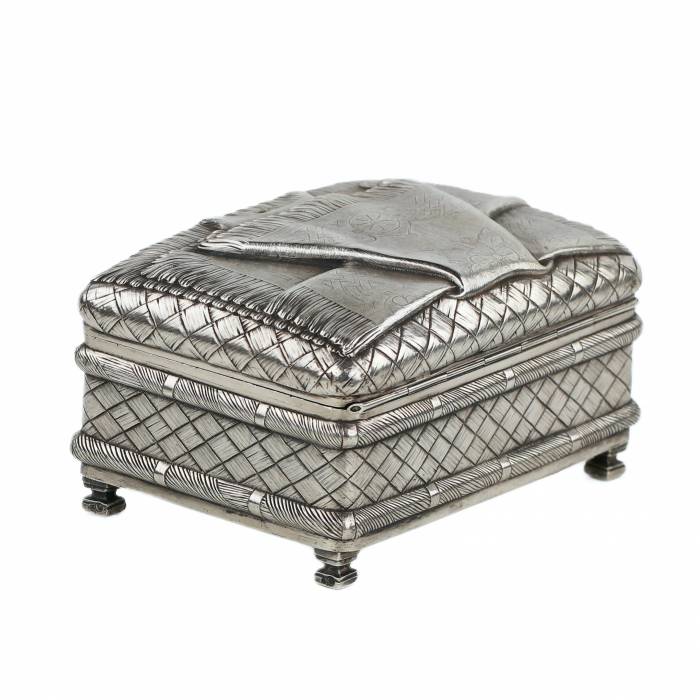
A rare Russian silver trompe-l’œil casket of rectangular form, virtuously imitating bast weaving. The body is conceived as a tightly plaited basket, its textured “wicker” surface rendered with exceptional precision through refined chasing and engraving. The casket is raised on four low shaped feet, lending the composition architectural clarity and stability.
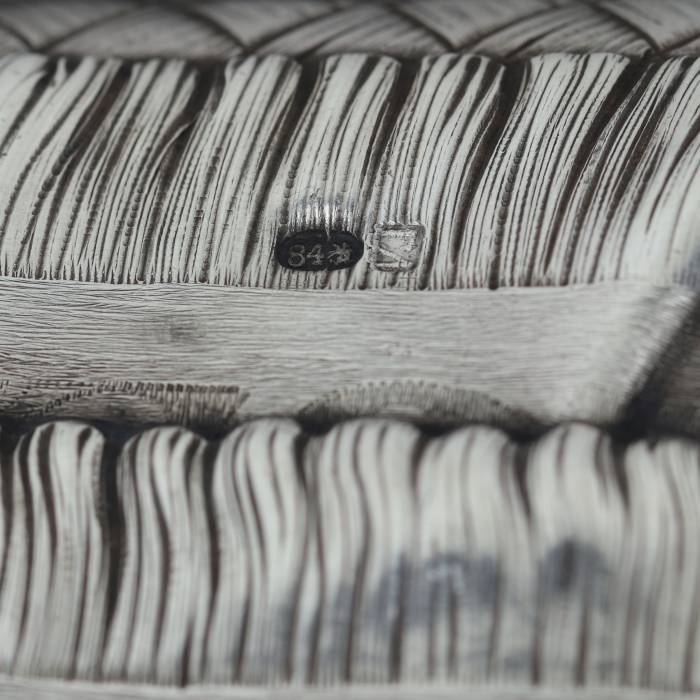
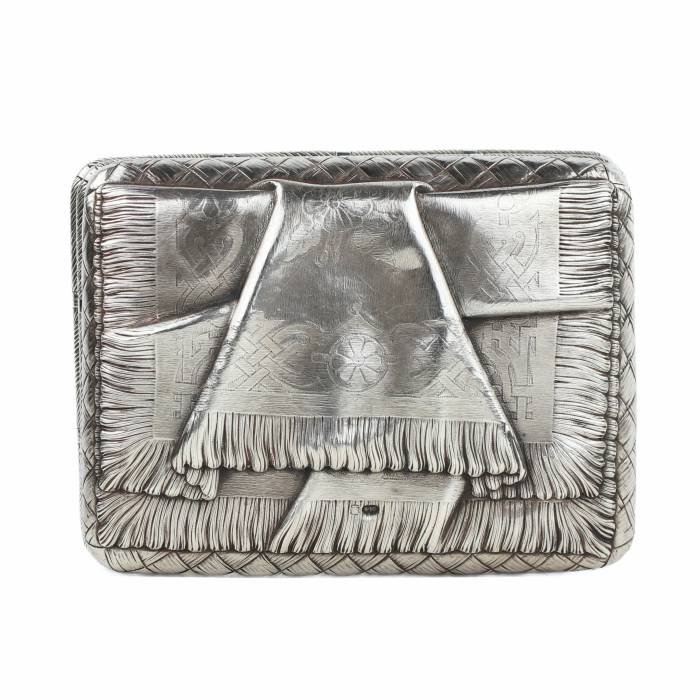
The hinged lid with softly rounded corners is modelled as a draped textile with carefully executed fringe, creating the illusion of a cloth casually laid over the box. The interior is fully fire-gilt, with neatly finished seams and corners, underscoring the high technical standard and ceremonial character of the object. Such trompe-l’œil works rank among the most complex and prestigious creations of the Moscow silver school of the late 19th century and were intended for a highly discerning clientele.
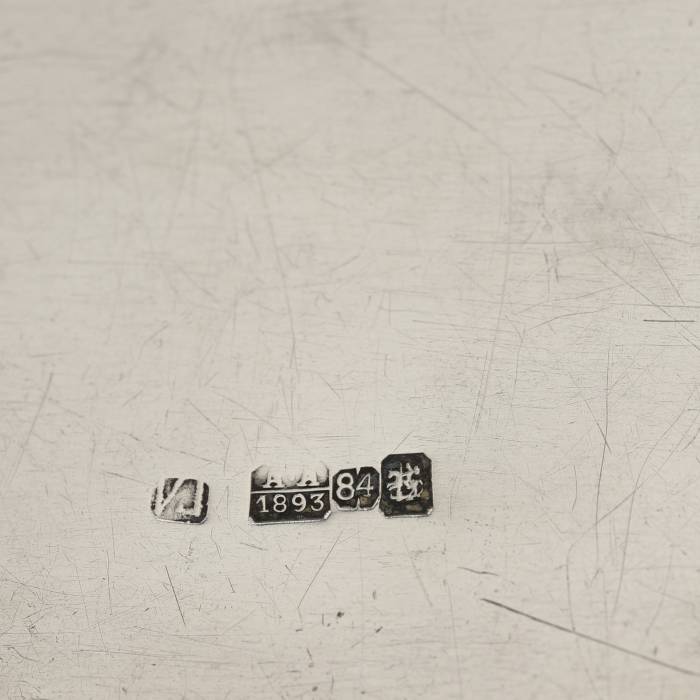
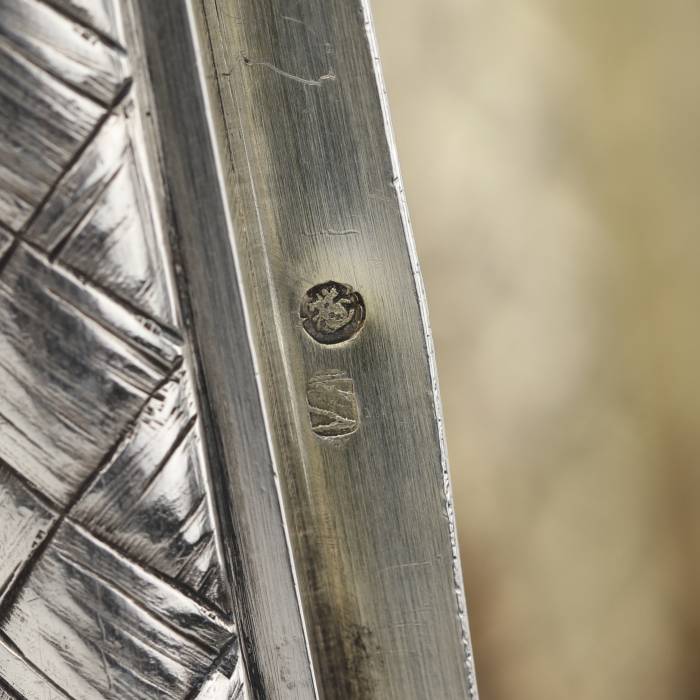
Marks: Maker’s mark “ГЛ” - Gerasim Loskutov; Moscow Assay Office mark with silver standard “84”; City mark of Moscow with St George the Victorious; Assay master’s mark “АА” above the date “1893” - Anatoly Apollonovich Artsibashev.
Dimensions: 14.2 x 10.6 cm.
Weight: 490 g.
Russian decorative and applied art of the second half of the 19th century experienced a period of remarkable flourishing, driven by the growth of artistic industry, the expansion of exhibition culture, and increasing demand for luxury objects of high artistic quality. Within this context, the Moscow school of silversmithing held a particularly prominent position, distinguished by its emphasis on plastic expressiveness, genre motifs, and mastery of chasing and engraving techniques.
Gerasim Loskutov belongs among the most distinctive masters of this tradition. Originating from the peasantry, he rose from a factory chaser to a recognised artist of silverwork. During the 1860s–1870s he worked at the renowned Moscow firm of the Sazikov brothers, where his skill was acknowledged with numerous awards. In 1865 he received a silver medal “For Merit” at the Moscow exhibition, while his silver high relief The Adoration of the Shepherds was highly praised at the Paris World Exhibition of 1867, bringing him international recognition.
By the early 1880s Loskutov had established his own workshop and began executing commissions for leading Moscow jewellery houses, including the firm of I.P. Khlebnikov. It was during this mature phase that he turned to complex trompe-l’œil compositions, combining realistic illusion, decorative sophistication, and absolute command of metal. Silver caskets imitating woven baskets, textiles, or everyday objects served as demonstrations of the artistic and technical potential of Russian silver, comparable to the finest European works of the period.
The date 1893 places this casket within Loskutov’s fully mature period, characterised by confident modelling, rich surface texture, and a harmonious balance between decoration and realism. Such objects were highly prized in private collections and are today regarded as rare and representative examples of Moscow silver art at the close of the 19th century.
Good collector’s condition. Minor signs of wear and age-related use on the feet and edges. Structure firm, lid functioning correctly. Interior gilding intact with an even patina and no losses.
The condition report is provided for informational purposes only.
It is not comprehensive and may not reflect all defects, restorations, alterations, or adaptations, as Antiqon does not perform professional conservation-level assessments. The information is based on a qualified, yet subjective, evaluation by our specialists.Before purchasing, we recommend consultation with an independent expert.Please also consult our Terms and conditions and Glossary A-Z, which contain important information on lot characteristics and sale conditions.