SILVER SALT THRONE WITH ENAMELED PROVERB P.A. OVCHINNIKOV FACTORY, MOSCOW, 1884
AntiqonART consultant will contact you within one business day after receiving your request.
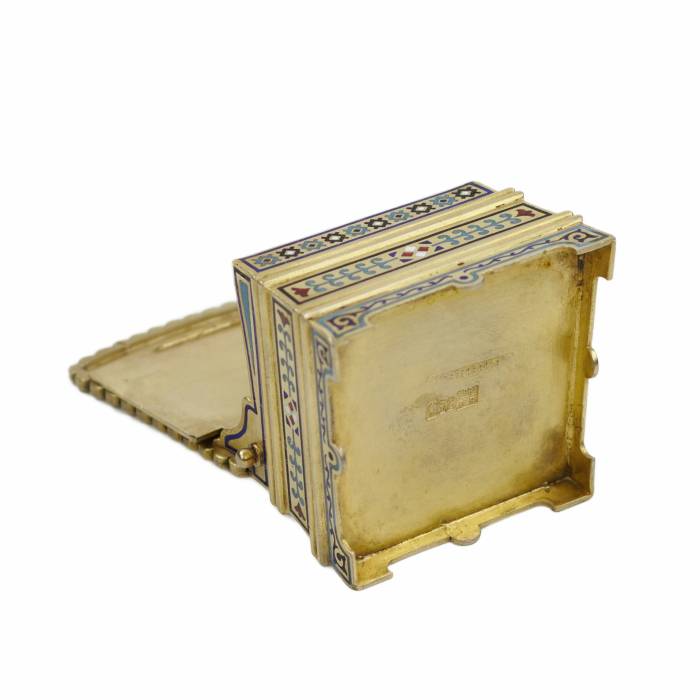
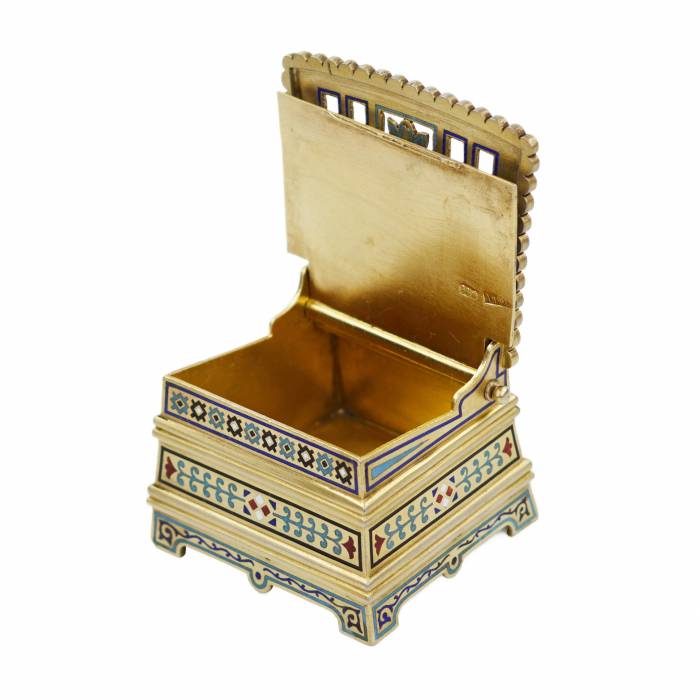
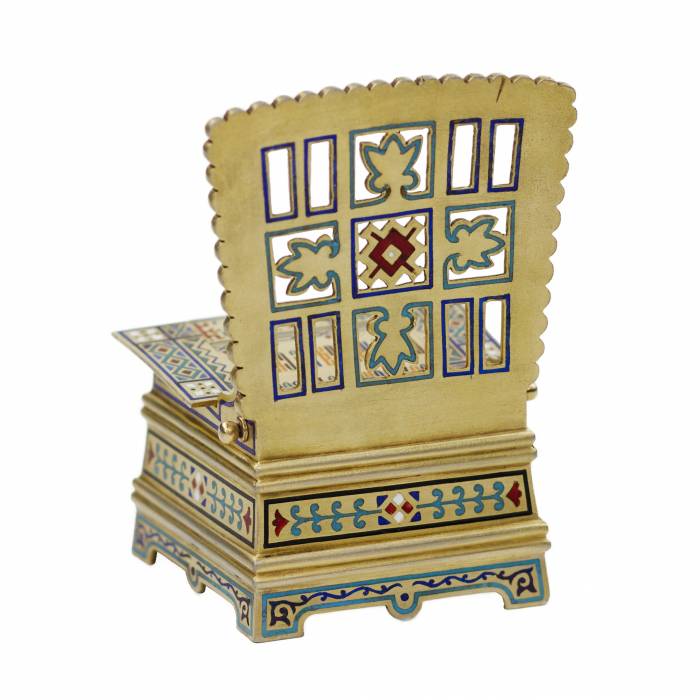
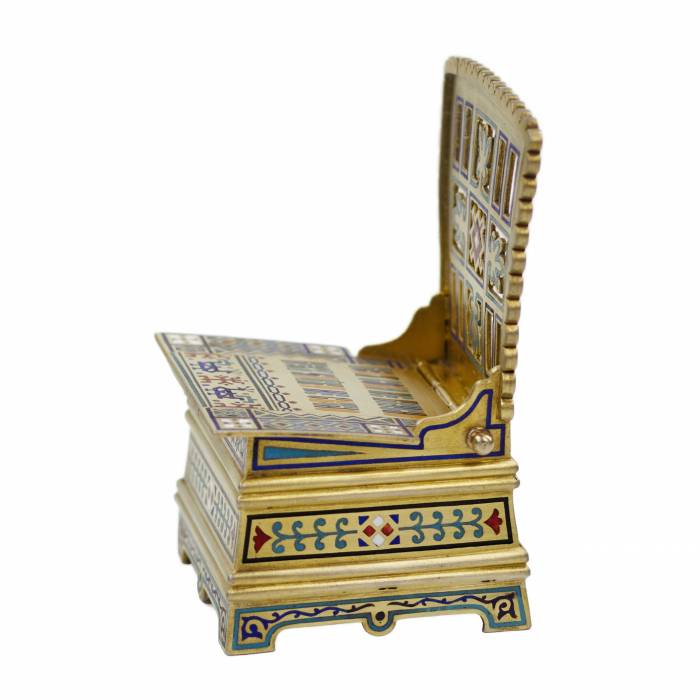
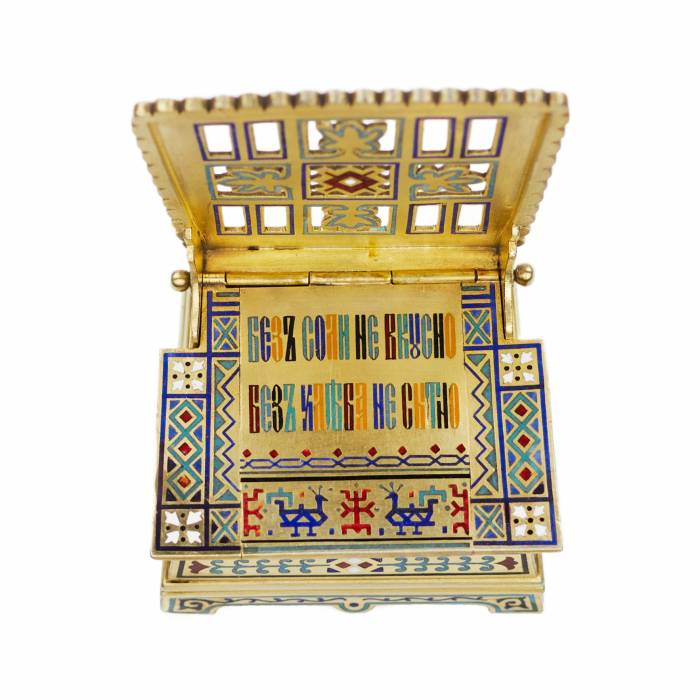
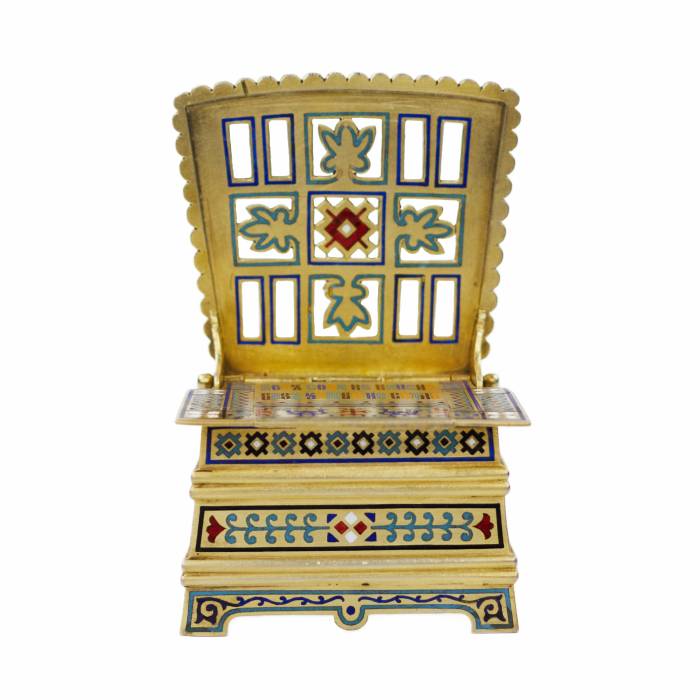
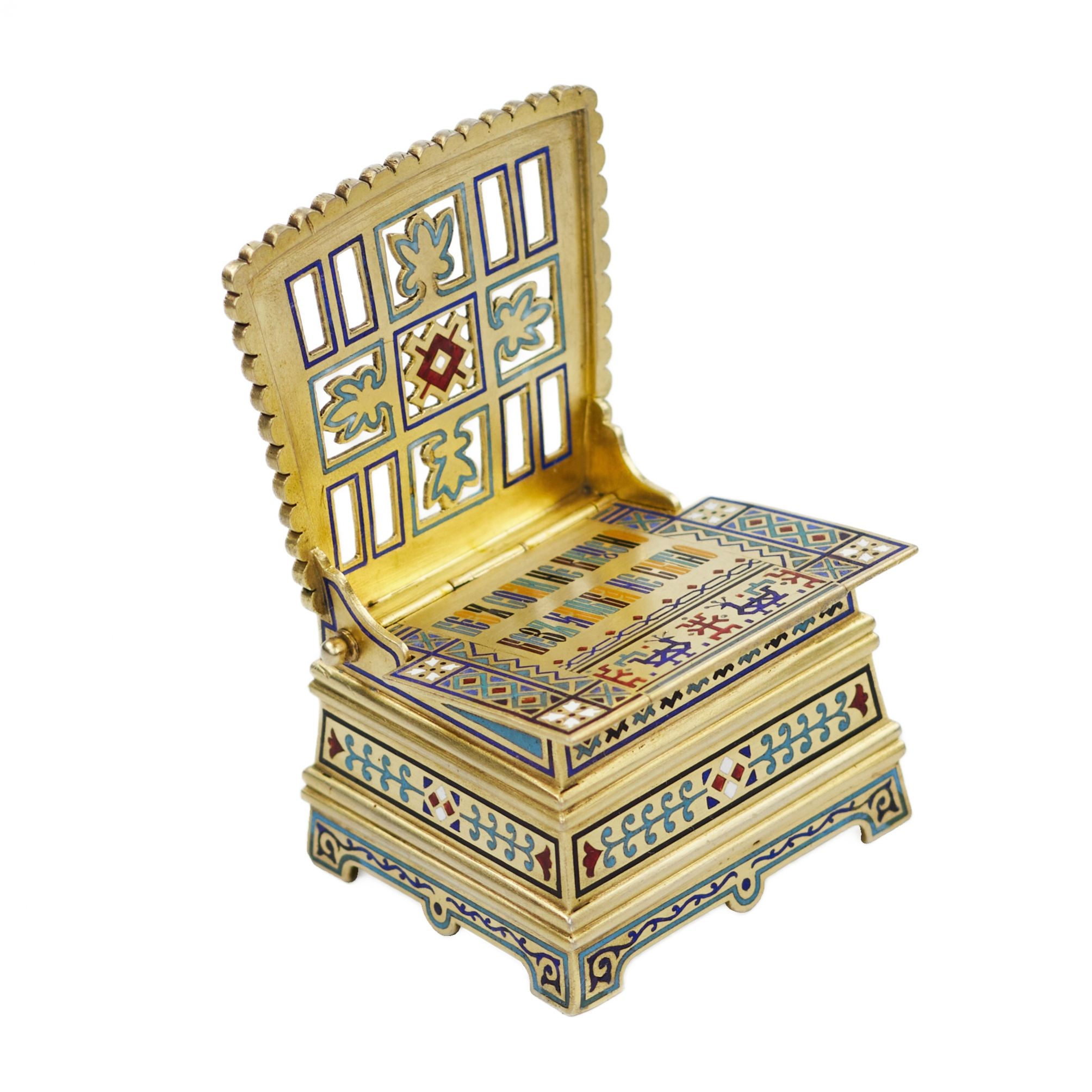
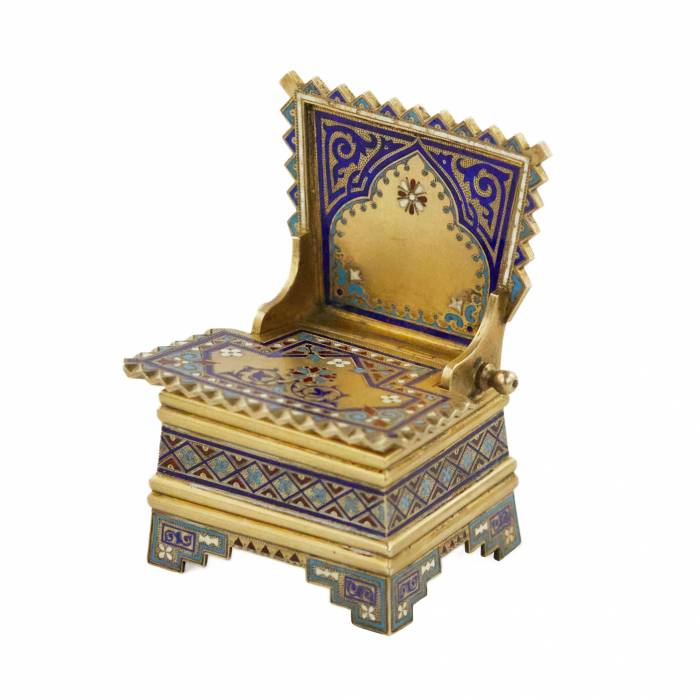
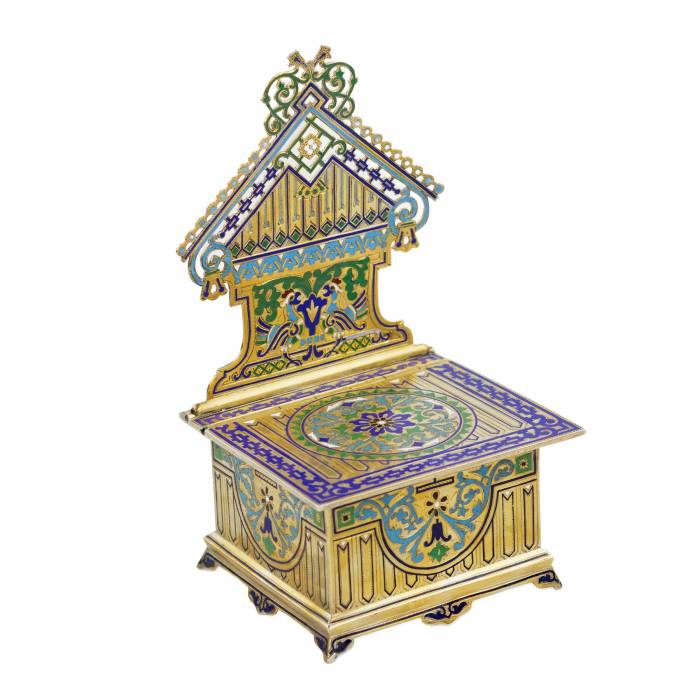
A rare salt cellar in the form of a throne, crafted in silver with original gilding and richly decorated with vibrant cloisonné enamel. This piece is a remarkable example of Russian decorative art from the late 19th century, created at the famous Moscow workshop of Pavel Akimovich Ovchinnikov, official purveyor to the Imperial Court and a key figure of the Russian Revival in silverwork.
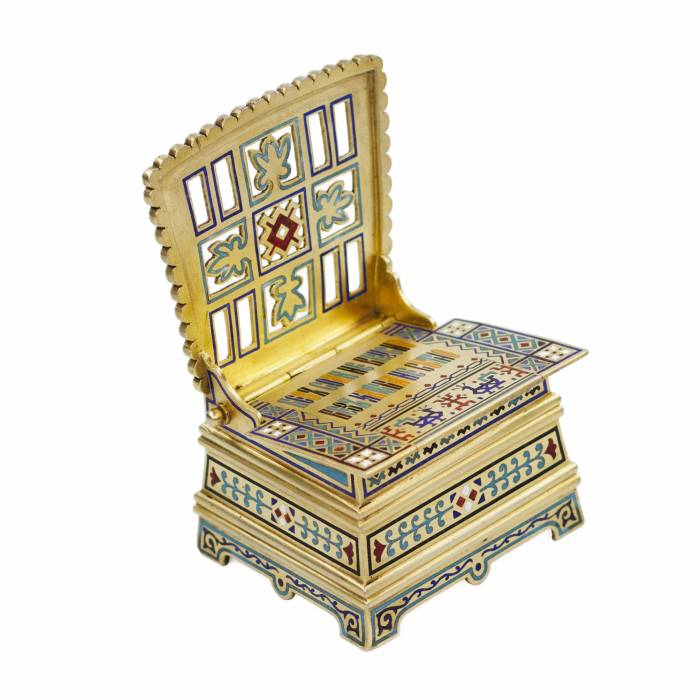
The miniature chair-like form is adorned with colorful folk-inspired enamel ornamentation. Inside the hinged lid is an enameled inscription bearing a traditional Russian proverb:
WITHOUT SALT, IT’S TASTELESS; WITHOUT BREAD, IT’S NOT FILLING — an expression of Russian hospitality and the symbolic role of the table as the heart of family and tradition.
Such salt thrones were used as wedding gifts, ritual items, or ceremonial tableware for festive occasions.
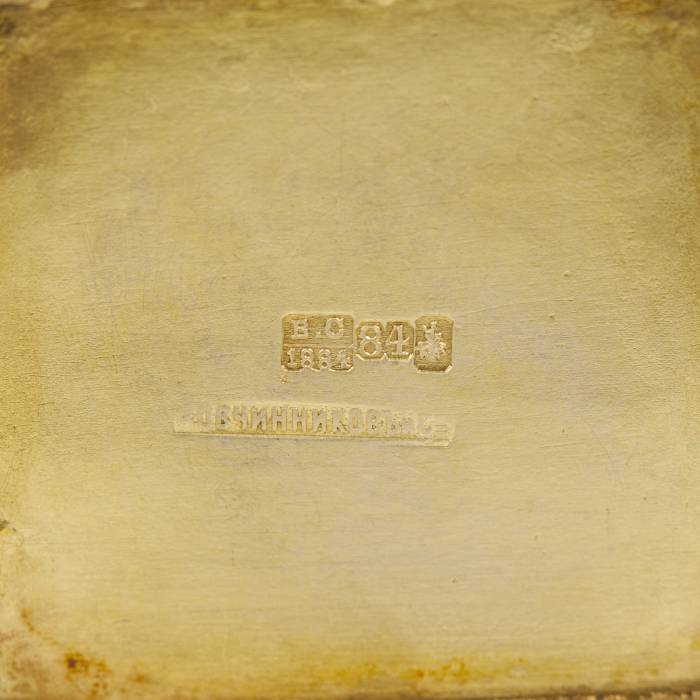
Hallmarks: On the base: Moscow assay mark for 84 silver standard, inspector’s mark “VS” (Vasily Savinsky) above the date “1884”; full maker’s mark “OVCHINNIKOV & Co”; city mark — St. George on horseback slaying the dragon.
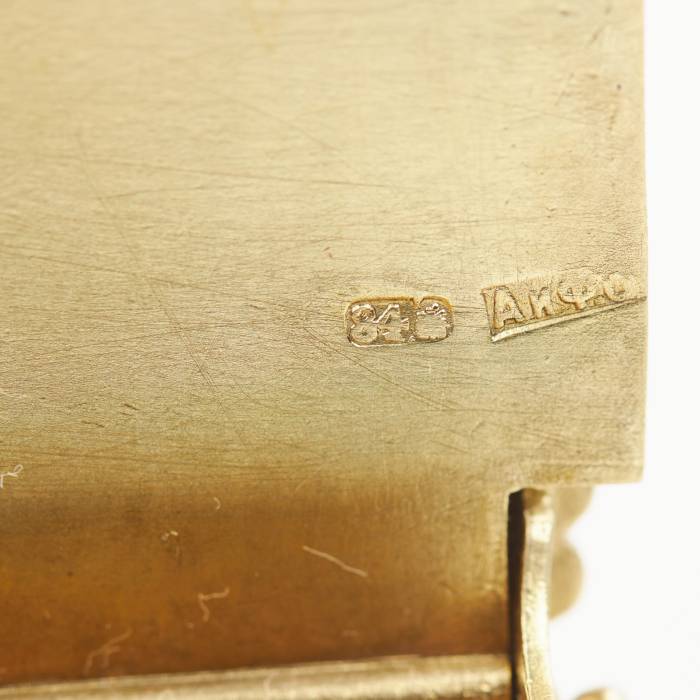
On the lid: additional 84 standard mark with the St. George emblem, and the stamp “AiF.O” — short for Artel i Fabrika Ovchinnikova (Artel and Factory of Ovchinnikov), used on pieces produced by the factory’s cooperative division.
Dimensions: Height: 7.5 cm; Width: 5.5 cm; Depth: 4.5 cm
Weight: 115 g
Condition: Good, considering its age. Enamels intact, original gilding preserved, hallmarks clearly legible. One of the best-preserved examples of its type.
Provenance: Private collection.
In the final quarter of the 19th century, under the reigns of Alexander III and Nicholas II, there was a revival of national artistic traditions in the Russian Empire. This cultural movement extended to the decorative arts, where household and ritual objects were often designed in the Russian Revival style. One of the most important centers of this movement was the Moscow-based workshop of Pavel Ovchinnikov, founded in 1853.
As a Court Supplier and innovator in cloisonné and champlevé enameling techniques, Ovchinnikov’s factory played a crucial role in defining Russian national aesthetics. The workshop’s creations combined academic precision with ornamental elements drawn from folk traditions — embroidery, wood carving, and Old Slavonic script. Particularly popular were salt cellars in the form of thrones, inscribed with proverbs, celebrating abundance, hospitality, and tradition.
After Ovchinnikov’s death in 1884, the factory passed to his heirs and continued expanding. During this period, a new division emerged under the mark “AiF.O” — Artel and Factory of Ovchinnikov. This indicated a cooperative structure within the firm, enabling expanded production without sacrificing quality. The “AiF.O” division produced pieces to the same high standard, combining artisanal handwork with the infrastructure of a major enterprise.
Salt thrones with enameled inscriptions by Ovchinnikov are rare and highly regarded. Similar examples are held in the State Historical Museum, the Hermitage, and the Victoria and Albert Museum in London.
Good condition for its age. Enamels rich and undamaged, original gilding evenly preserved. Hallmarks sharp, lid closes securely. No repairs, restorations, or losses observed.
The condition report is provided for informational purposes only.
It is not comprehensive and may not reflect all defects, restorations, alterations, or adaptations, as Antiqon does not perform professional conservation-level assessments. The information is based on a qualified, yet subjective, evaluation by our specialists.Before purchasing, we recommend consultation with an independent expert.Please also consult our Terms and conditions and Glossary A-Z, which contain important information on lot characteristics and sale conditions.