


SILVER BEER TANKARD WITH ATLAS AND CARVED IVORY RELIGIOUS SCENES LÜBECK, FREE IMPERIAL CITY, 17TH CENTURY
AntiqonART consultant will contact you within one business day after receiving your request.

Discover how the value of similar works has evolved over the past 10 years. Art is not only beauty — it's an investment.
Discover how the value of similar works has evolved over the past 10 years. Art is not only beauty — it's an investment.
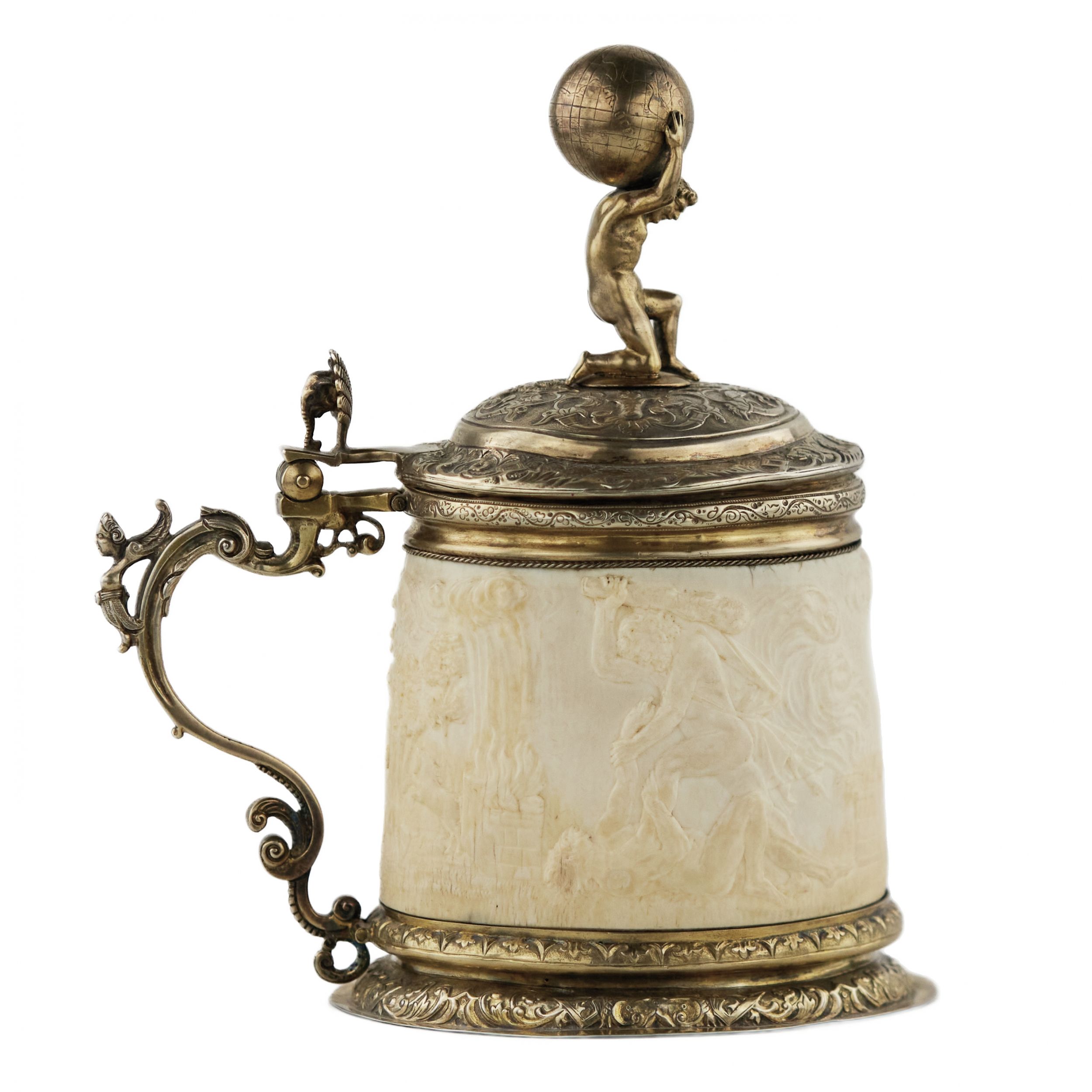
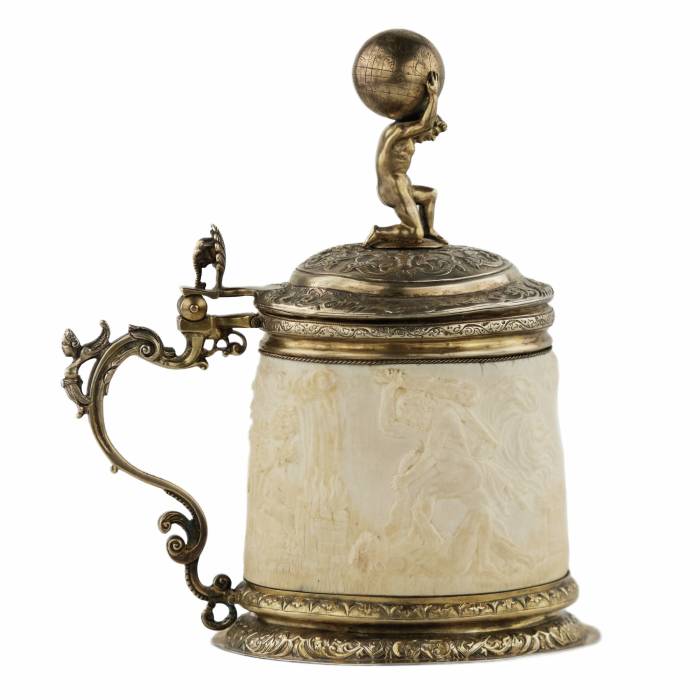
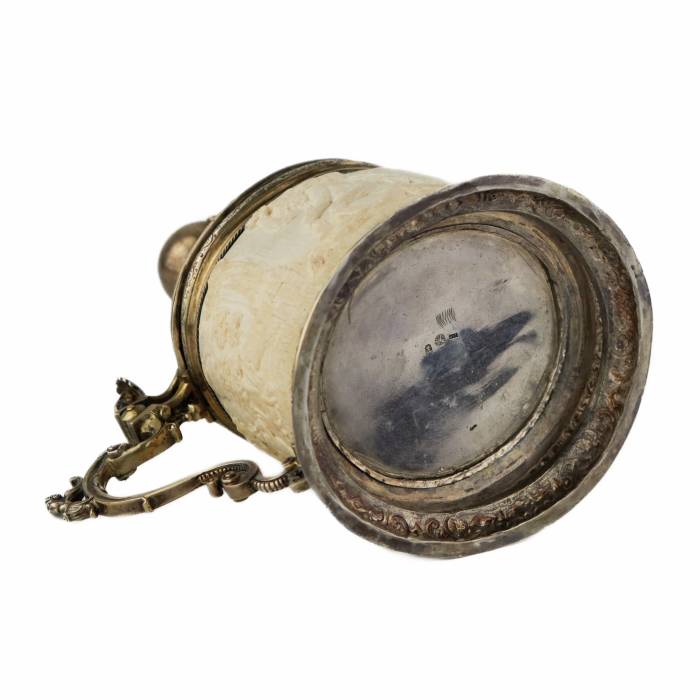
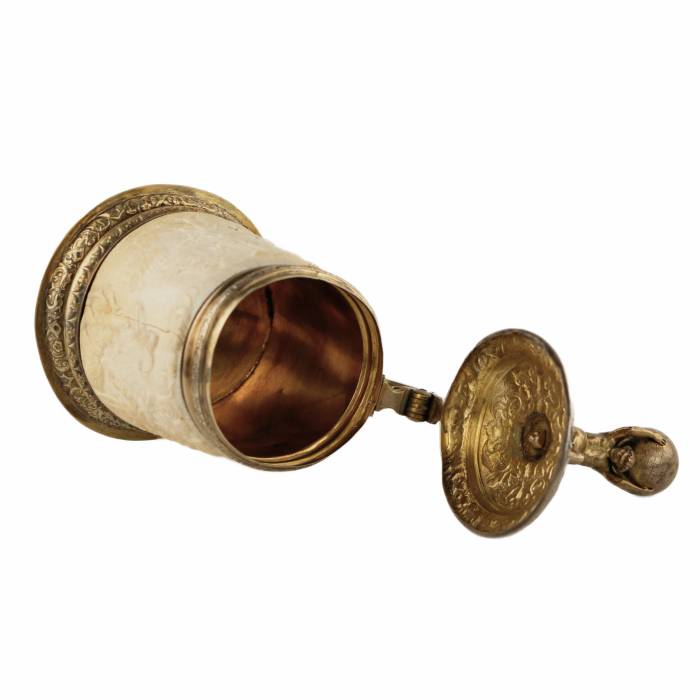
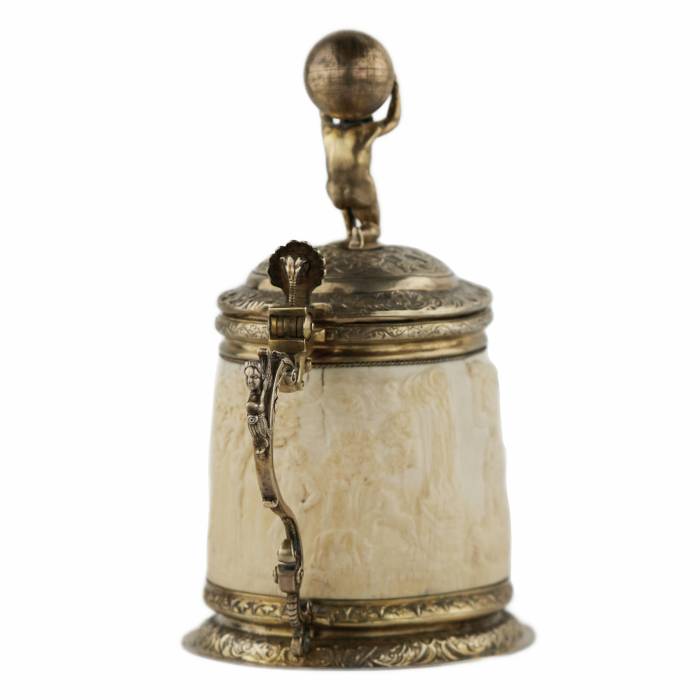
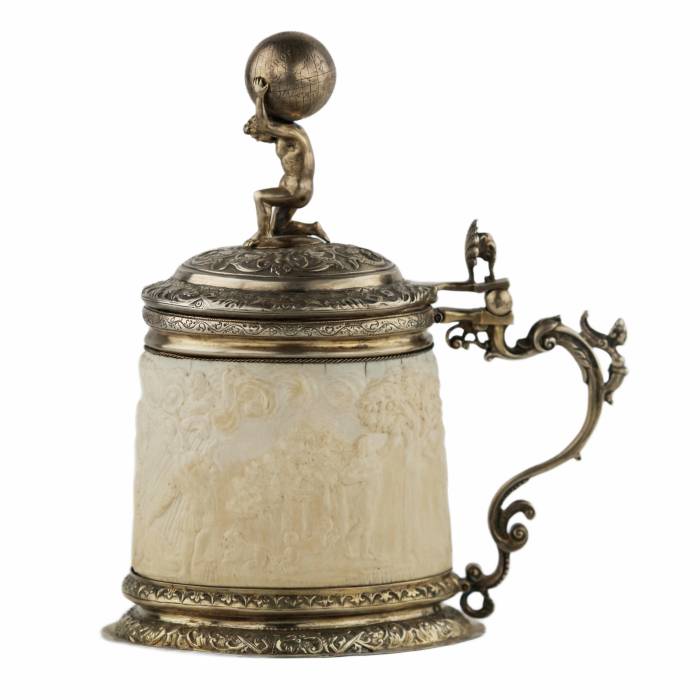
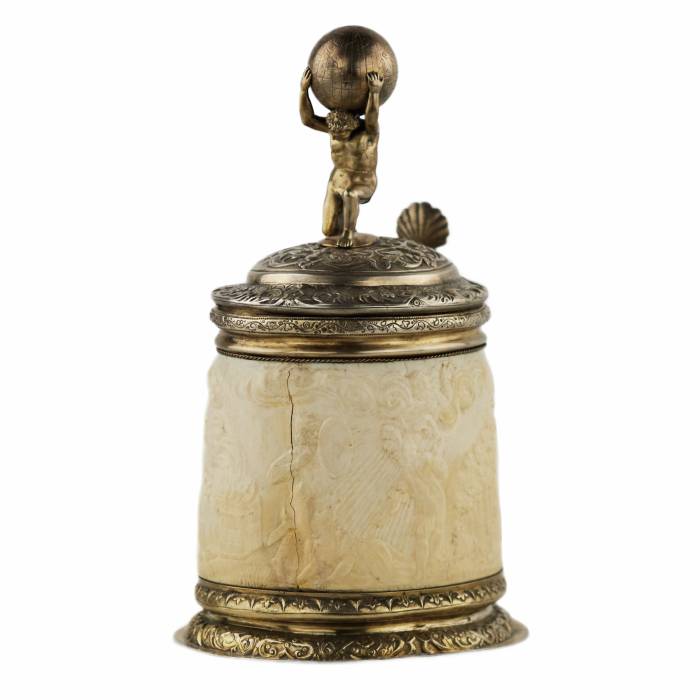
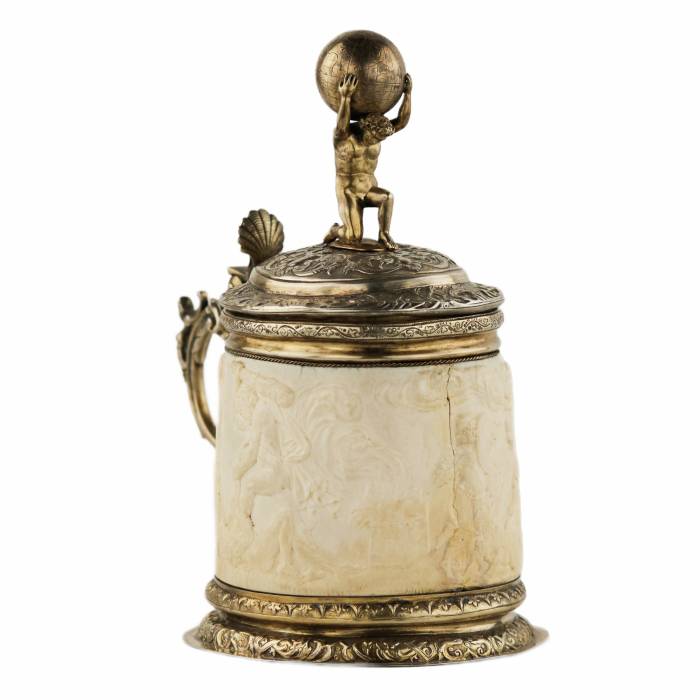
A monumental ceremonial Hanseatic beer tankard executed in chased and parcel-gilt silver, with a cylindrical body encased in a single carved ivory sleeve. The vessel belongs to the prestigious category of guild presentation cups combining ceremonial function with theological symbolism.
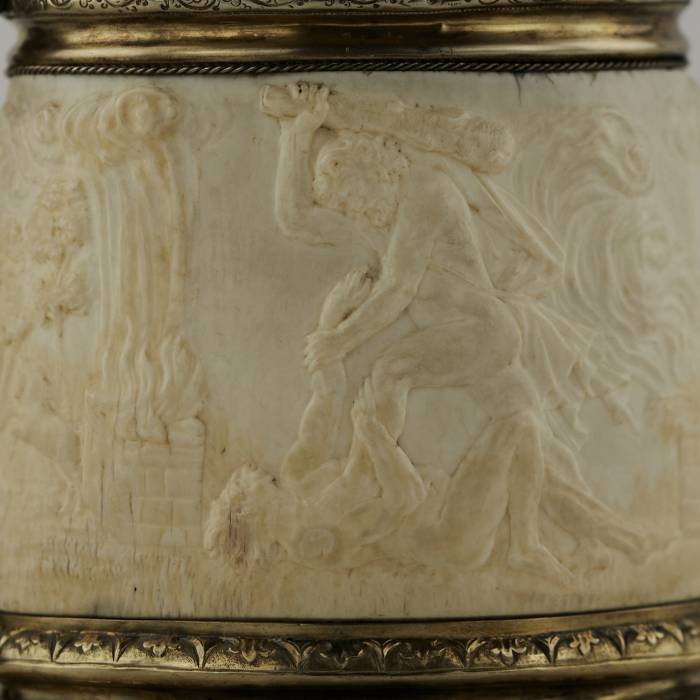
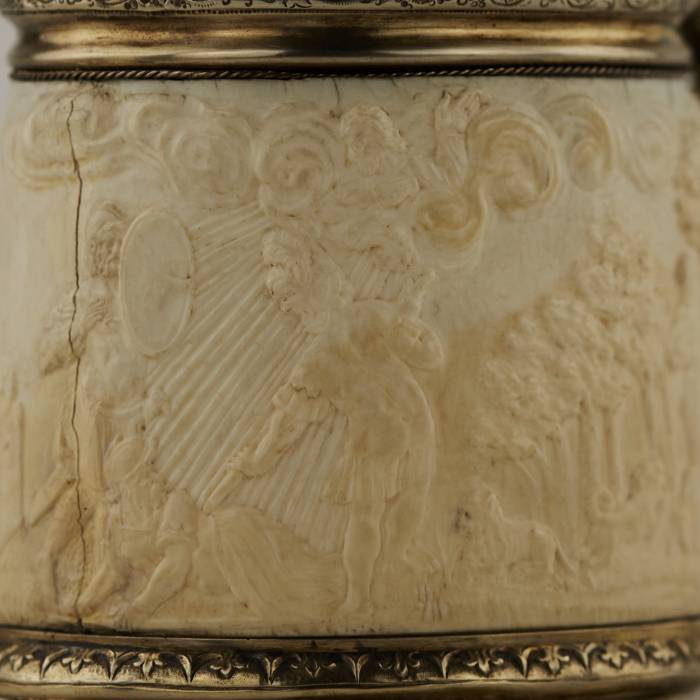
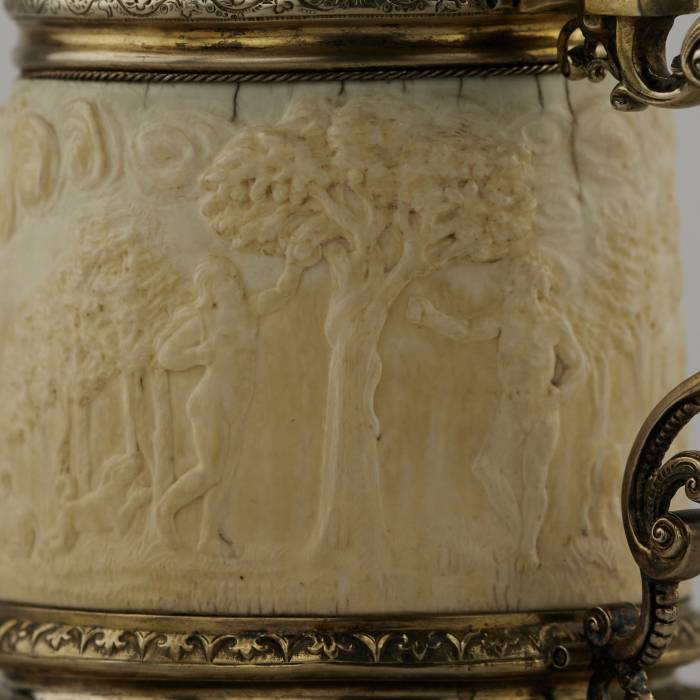
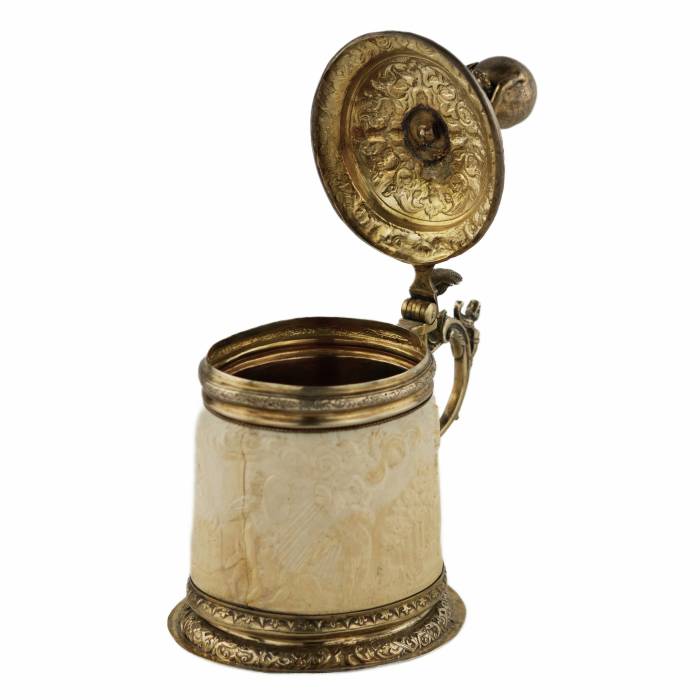
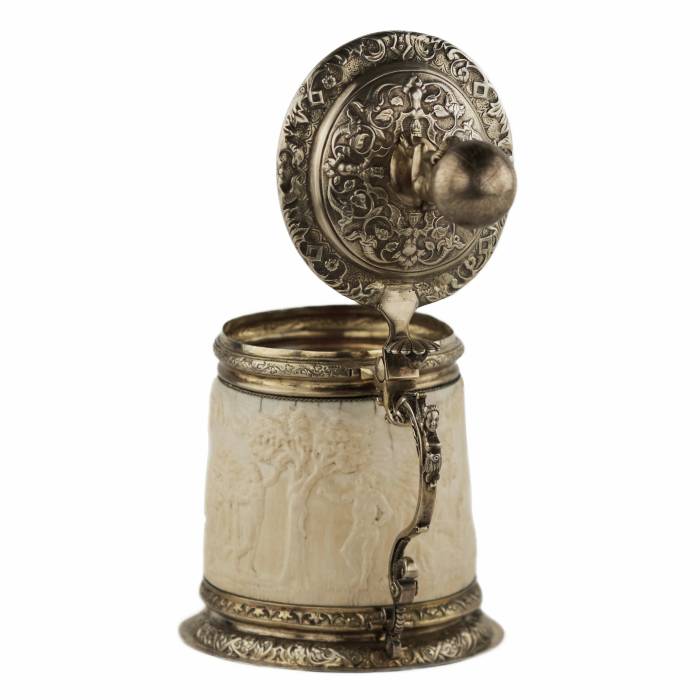
The iconographic program unfolds in high relief and includes The Fall of Man, The Sacrifice of Cain and Abel, and The Transfiguration. The sequence forms a theological narrative of redemption – from original sin to divine transformation. The carving is executed from a single solid section of ivory with refined modeling and deeply articulated background.
The hinged cover is engraved with Romano-Gothic ornament incorporating hops, mascarons and cornucopia motifs. The finial takes the form of a kneeling Atlas supporting a globe engraved with geographical names; among them appears Riga, symbolically referring to Lübeck’s Hanseatic connection with the Baltic trading world.
The borders and foot are decorated with a diamond-pattern frieze featuring marine chimeras. The cast Rocaille handle is adorned with a winged maiden and a thumb rest formed as a shell. The interior is gilt.
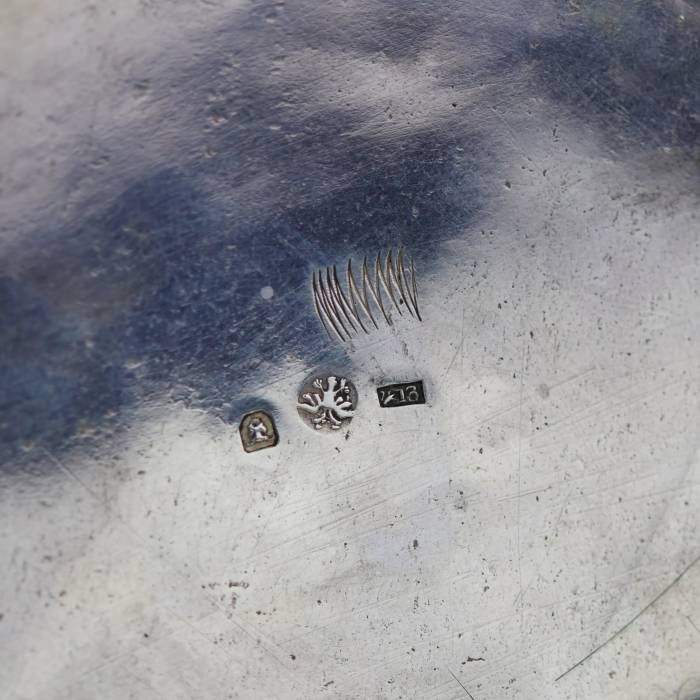
Hallmarks: On the base: rectangular assay mark “13” (13-loth standard, approximately 812 silver); circular city mark of Lübeck with the imperial double-headed eagle; maker’s mark depicting a tree within a hexagonal shield. The combination corresponds to Lübeck’s 17th-century hallmarking system.
Dimensions: Height 23 cm.
Weight: 685 g.
Condition: Good museum condition. Age-related stable cracks to the ivory without loss of carving. Silver with noble patina and partial wear to gilding on raised areas. Hinge and cover functioning correctly.
Provenance: Private European collection. CITES certificate for ivory No. BA-S-0332023.
Ceremonial tankards produced in 17th-century Lübeck occupied a distinguished place within Hanseatic urban culture. As a Free Imperial City and leading center of the Hanseatic League, Lübeck maintained a highly developed guild system regulating the production and marking of silver. The city mark with the imperial eagle guaranteed quality according to the traditional loth system.
The combination of silver and ivory is characteristic of prestigious North German Baroque works. The contrast between the pale carved surface and parcel-gilt mounts enhanced narrative depth and emphasized theological meaning. Such vessels were used during formal gatherings of merchant guilds and confraternities, where communal drinking was intertwined with moral and religious reflection.
The figure of Atlas supporting the globe reflects 17th-century emblematic culture and the expanding commercial worldview of the Baltic cities. The engraved geographical references reinforce the concept of global trade under divine order.
This tankard unites sacred symbolism, Lübeck’s civic identity, and the highest standards of North European 17th-century silversmithing.
Stable age cracks to ivory. Silver with even patina and expected wear. Partial loss of gilding. Hallmarks legible. Structurally sound.
The condition report is provided for informational purposes only.
It is not comprehensive and may not reflect all defects, restorations, alterations, or adaptations, as Antiqon does not perform professional conservation-level assessments. The information is based on a qualified, yet subjective, evaluation by our specialists.Before purchasing, we recommend consultation with an independent expert.Please also consult our Terms and conditions and Glossary A-Z, which contain important information on lot characteristics and sale conditions.