


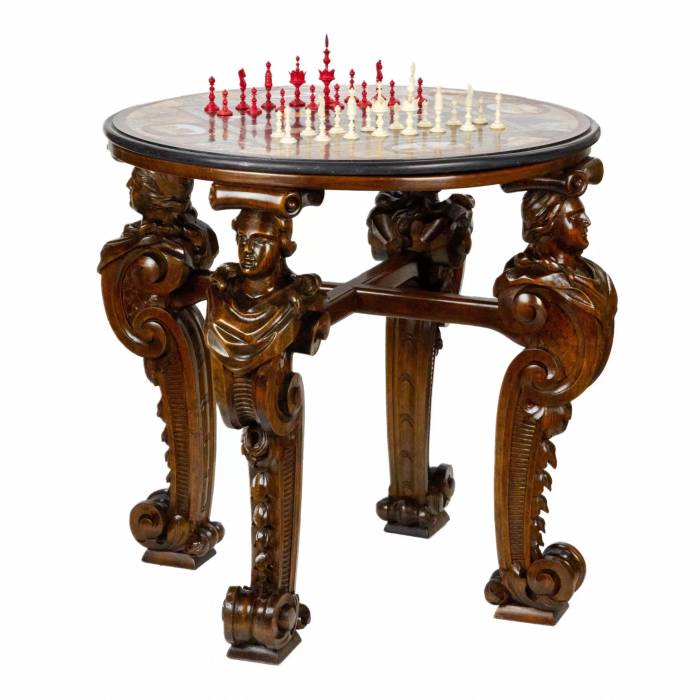
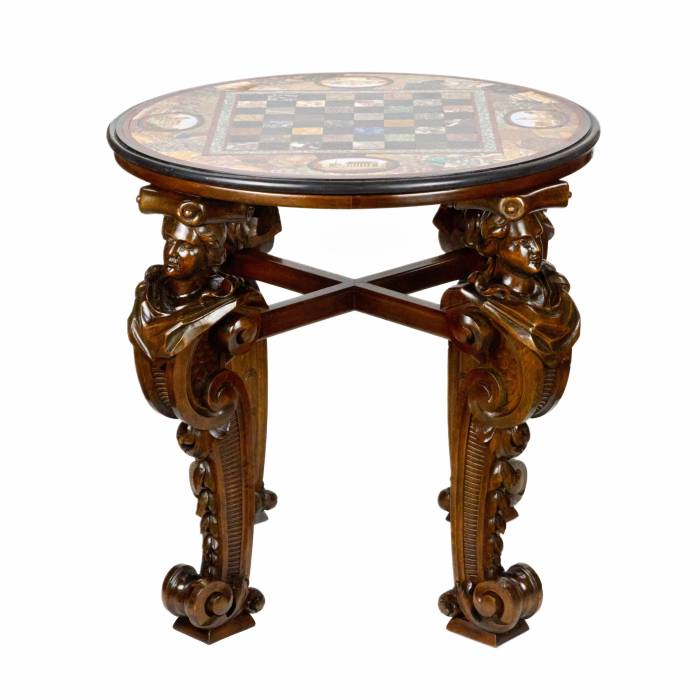
IMPRESSIVE CHESS TABLE WITH PRECIOUS ROMAN MOSAIC ON CARVED LEGS. ITALY. 19TH CENTURY
AntiqonART consultant will contact you within one business day after receiving your request.
Discover how the value of similar works has evolved over the past 10 years. Art is not only beauty — it's an investment.
Discover how the value of similar works has evolved over the past 10 years. Art is not only beauty — it's an investment.
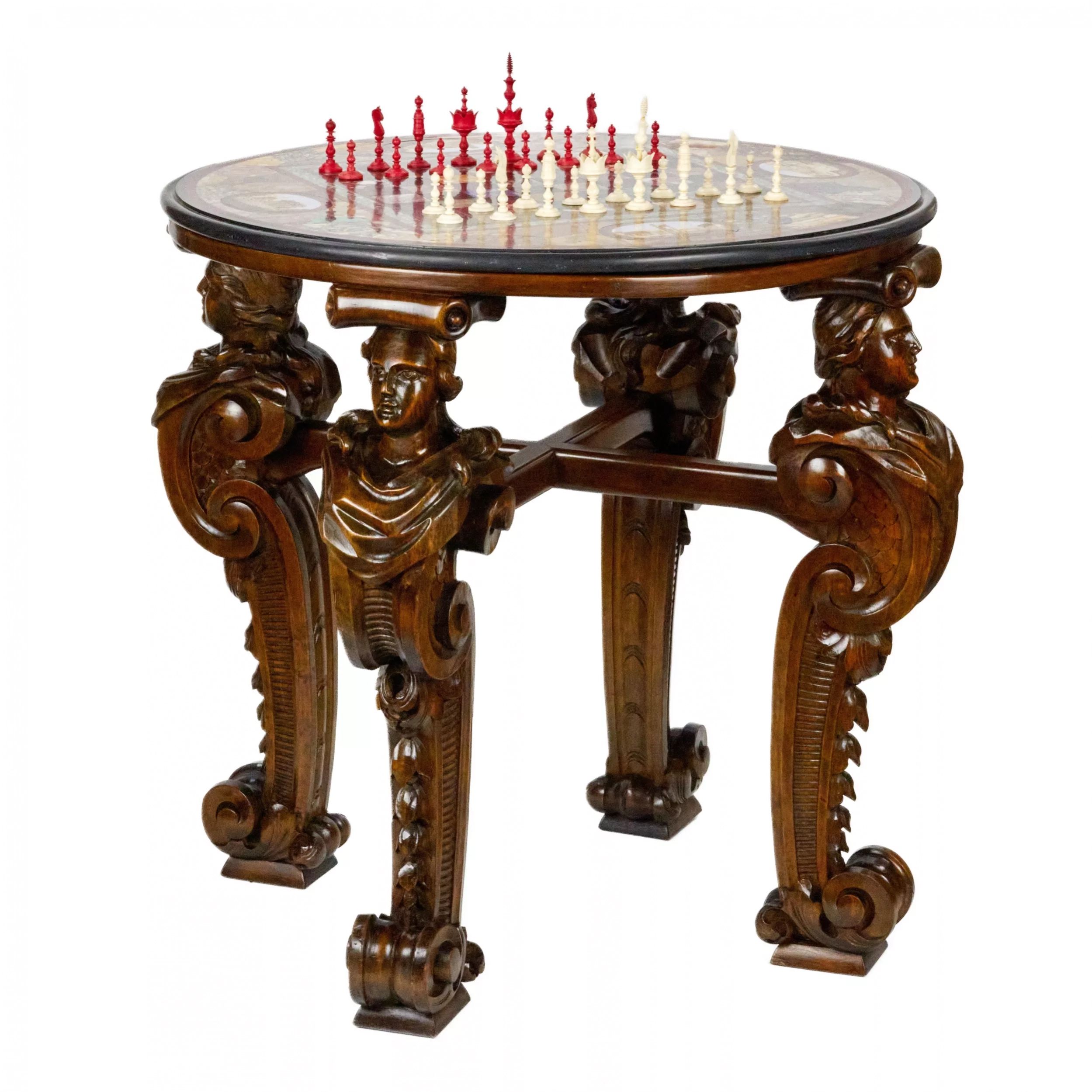
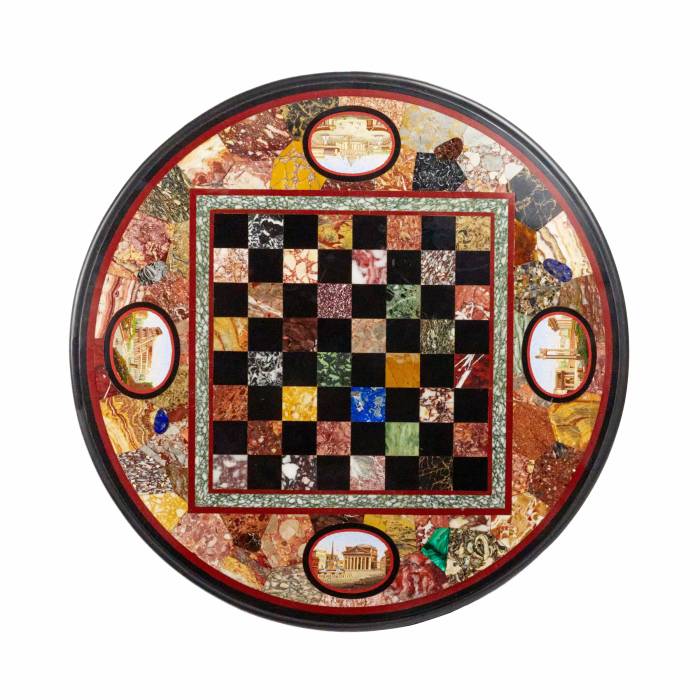
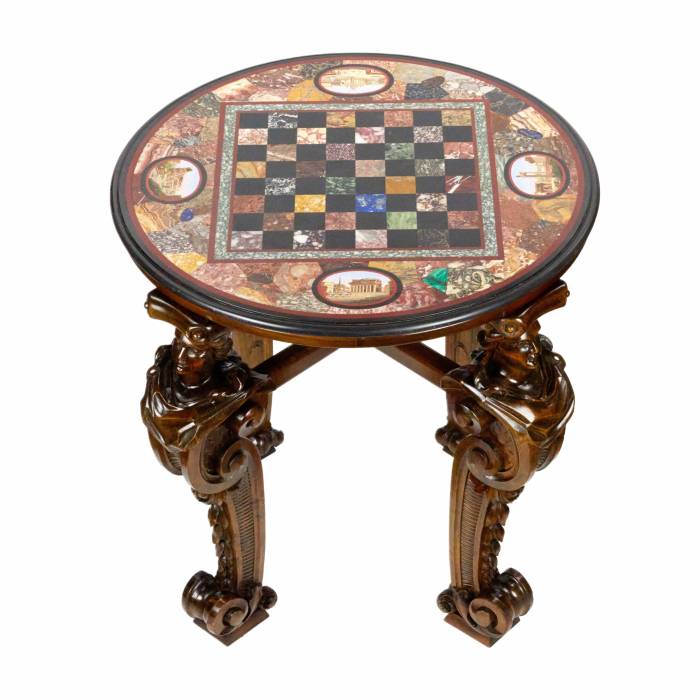
An impressive chess table, crafted in 19th-century Italy, represents an exceptional example of decorative art with a vivid allegory of eternity, embodied both in the chess game and in the eternal city of Rome.
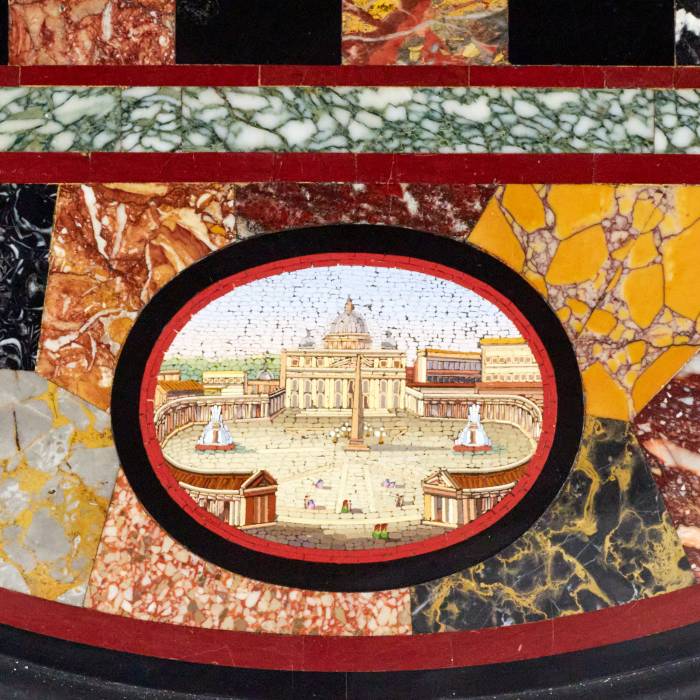
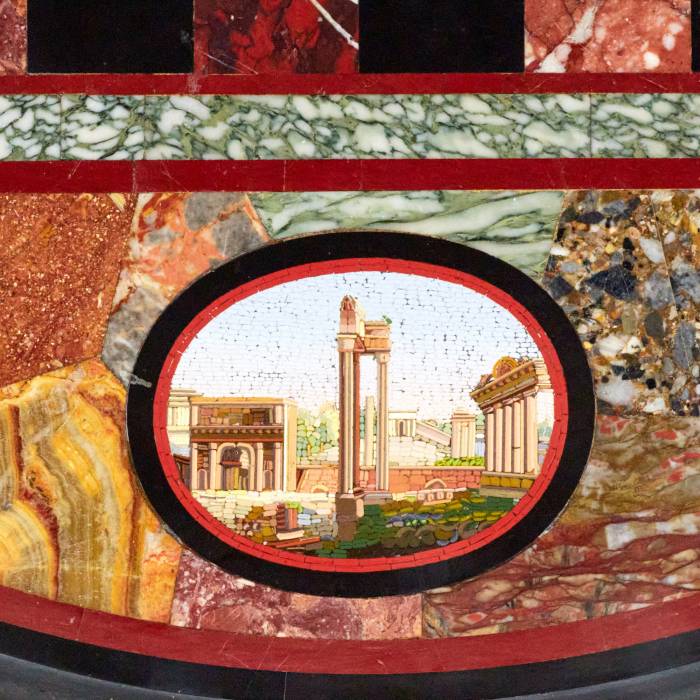
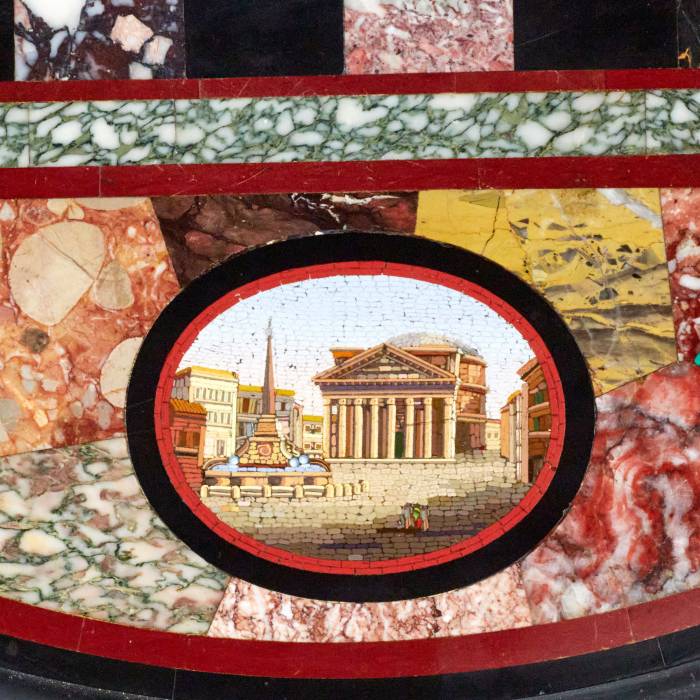
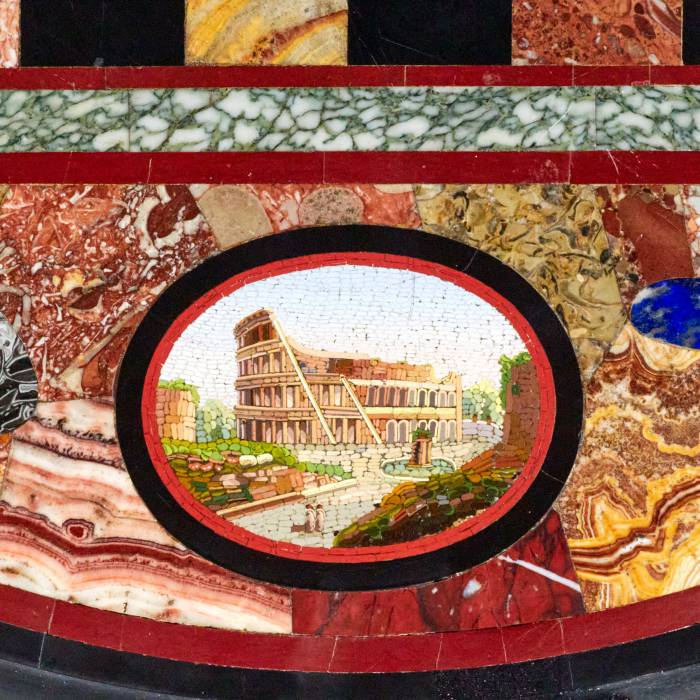
The round tabletop, executed in the pietra dura technique (semi-precious stone inlay), is a unique panel combining a chessboard of alternating squares made of jasper, malachite, agate, lapis lazuli, and onyx, framed with micromosaic tondi depicting Roman landmarks: the Colosseum, the Pantheon, St. Peters Square, and the Roman Forum.
The colorful mosaic of stones is complemented by architectural micromosaic miniatures—true masterpieces of lapidary art.
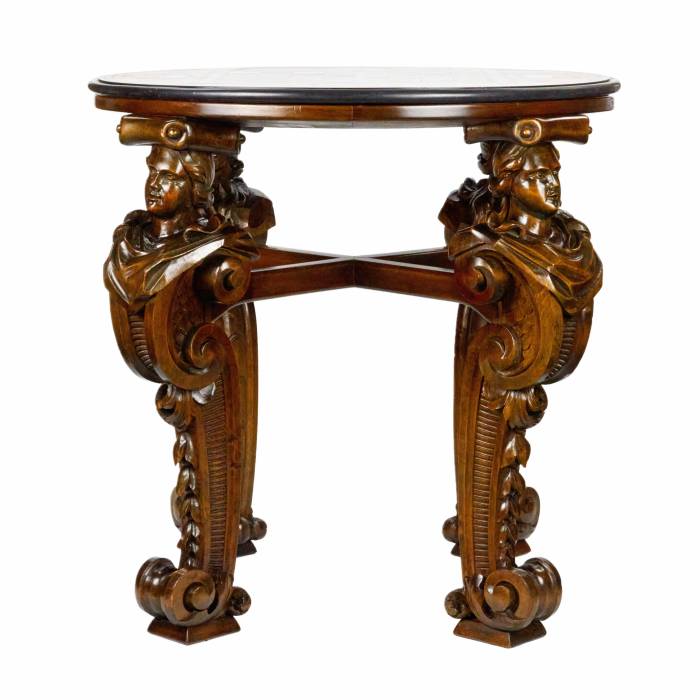
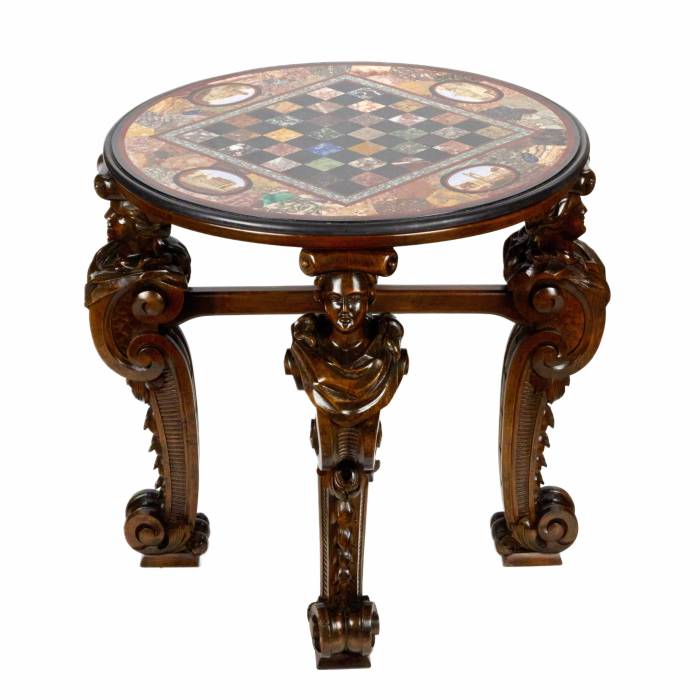
The table stands on four richly carved Neo-Renaissance legs, each adorned with mascarons in the form of classical busts, spiral acanthus elements, and cross-bracing.
Marks: none or not specified
Dimensions: Height – 66 cm; Top diameter – 62 cm
Condition: Excellent condition, minimal signs of wear
Origin: Italy, 19th century
In the 19th century, the technique of pietra dura inlay saw a new flourishing in Italy, particularly in Florence and Rome, where workshops revived the traditions established by the Medici in the 16th century. Chess tables like this one became symbols of status and intellect, often custom-made for European aristocracy and collectors.
Subjects featuring Roman landmarks became especially popular in the Roman micromosaic technique, developed by artists of the Vatican Mosaic Studio. These miniatures, made from thousands of tiny pieces of smalto and stone, depict the eternal symbols of Rome—the Colosseum, the Pantheon, St. Peters Square, and the Forum. Due to their portability, such items were often acquired as souvenirs by participants of the Grand Tour—an educational journey for the cultured elite of Europe.
The intricate wood carving supporting the tabletop demonstrates the high craftsmanship of Italian cabinetmakers, inspired by Renaissance and Baroque architecture. The mascarons framed by acanthus scrolls reflect the classical ideal of man as part of a harmonious universe—an apt parallel for the philosophical nature of chess.
This table is not merely a functional piece but a work of art combining craftsmanship, antiquity and Christian iconography, aesthetic richness, and intellectual depth. It holds significant value for both furniture collectors and lovers of 19th-century decorative arts.
The table is in excellent condition. The inlay, micromosaic, and carving preserve their color vibrancy and sharpness. Minor edge wear does not detract from the overall appearance.
The condition report is provided for informational purposes only.
It is not comprehensive and may not reflect all defects, restorations, alterations, or adaptations, as Antiqon does not perform professional conservation-level assessments. The information is based on a qualified, yet subjective, evaluation by our specialists.Before purchasing, we recommend consultation with an independent expert.Please also consult our Terms and conditions and Glossary A-Z, which contain important information on lot characteristics and sale conditions.