×
Create account and receive
15% DISCOUNT
your first acquisition
or

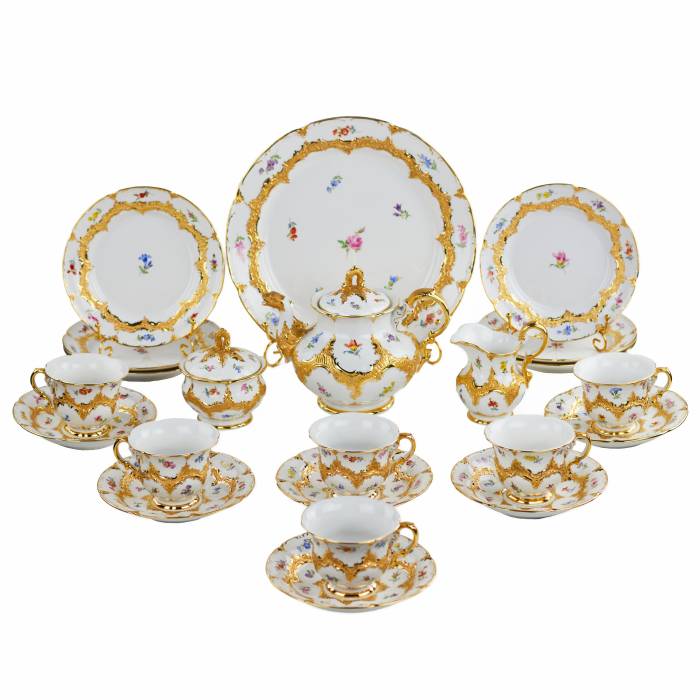
The Meissen Porcelain Manufactory is the first European producer of hard-paste porcelain, founded in Saxony under the patronage of Augustus the Strong. From its inception, it established the artistic and technological standards of European porcelain, shaping court and export production throughout the 18th and 19th centuries.
We will only share latest what our month on the MEISSEN PORCELAIN MANUFACTORY.
HISTORY AND DEVELOPMENT
The manufactory was founded in 1710 in Meissen following the discovery of the secret of hard-paste porcelain by Johann Friedrich Böttger, with the scientific contribution of Ehrenfried Walther von Tschirnhaus. Production was initially housed in the Albrechtsburg Castle and operated under strict state control of the Saxon court. During the 18th century, Meissen became the leading centre of European porcelain, supplying royal and aristocratic commissions across the continent. In the 19th century, the manufactory adapted to changing artistic movements and industrial conditions while retaining its status as a state-owned enterprise of Saxony.
TITLES, AWARDS AND COMMISSIONS
The manufactory served as the official supplier to the Saxon Electorate and Royal Court. Meissen porcelain was commissioned for European monarchs, diplomatic gifts and ceremonial palace interiors. Its production was regularly exhibited at major international industrial and art exhibitions of the 19th century and entered important state and museum collections throughout Europe.
ARTISTIC SPECIFICITY AND TECHNIQUES
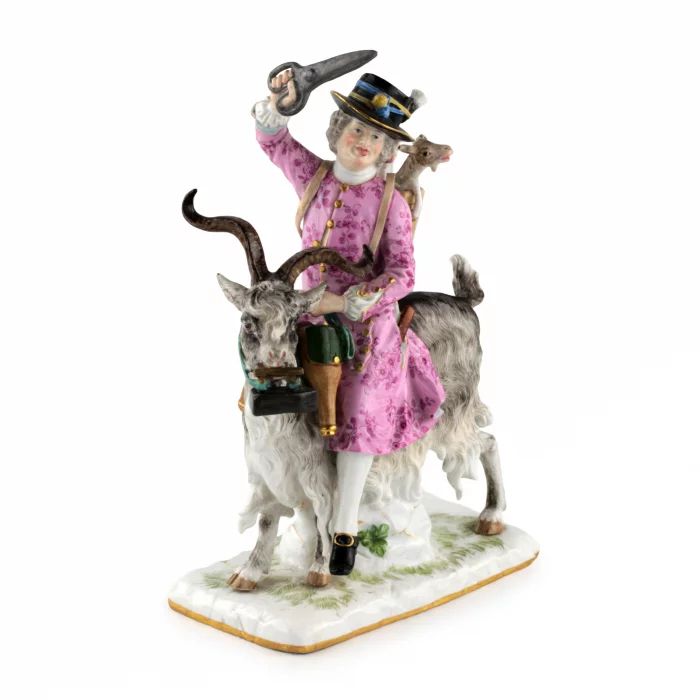
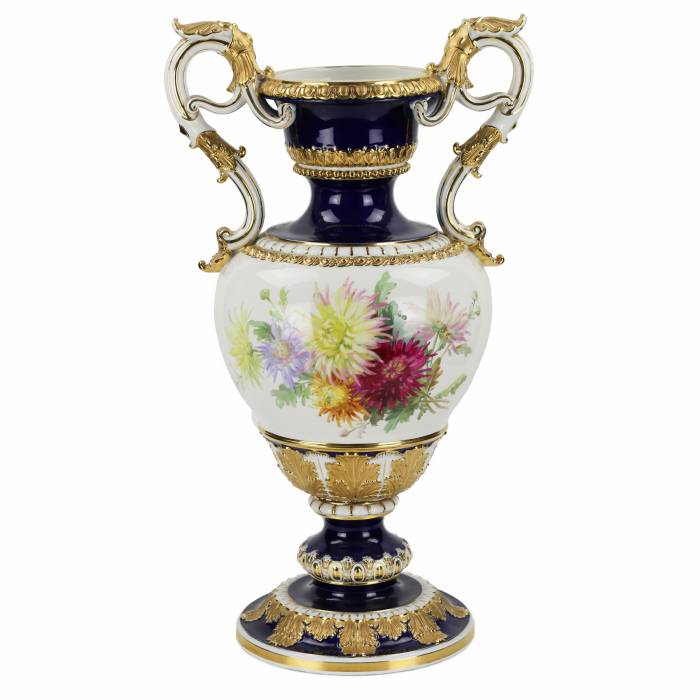
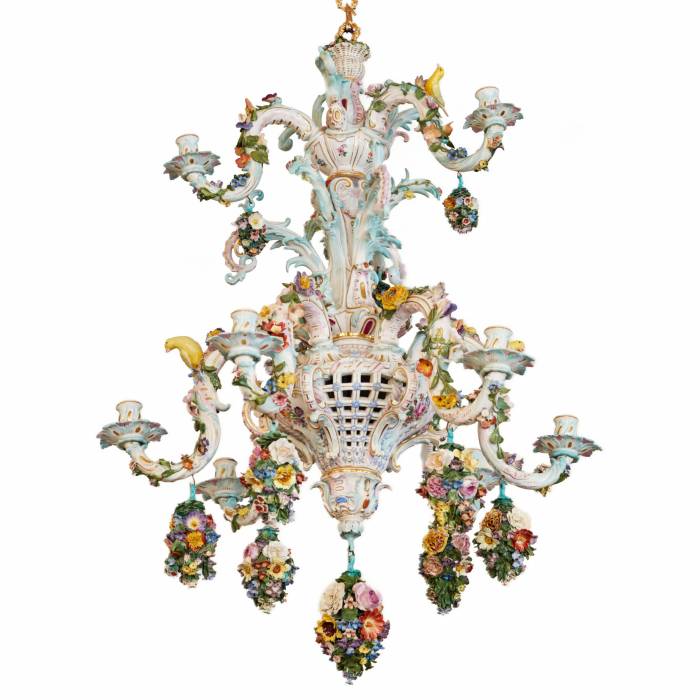
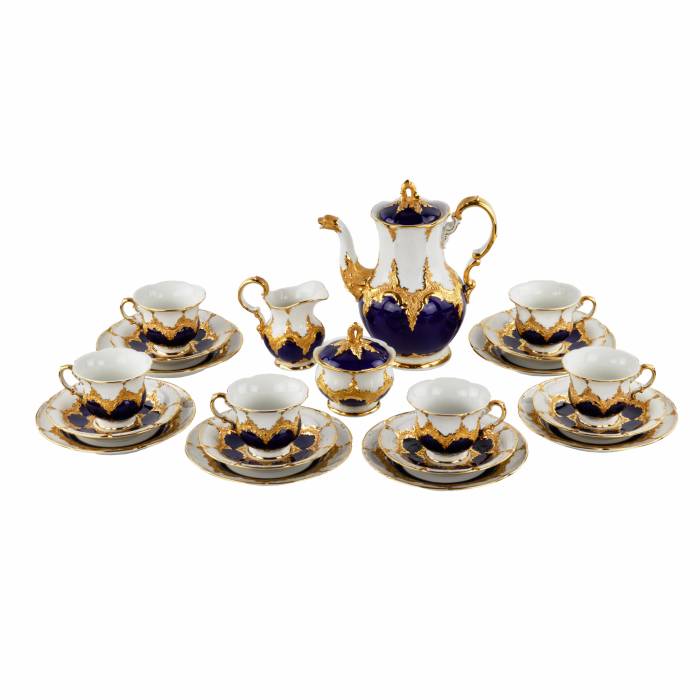
Meissen specialised in hard-paste porcelain characterised by a dense body and exceptional whiteness. Its artistic vocabulary encompassed Rococo, Neoclassicism, Historicism, Neo-Rococo and early Modern styles. Distinctive features include hand-painted polychrome decoration, elaborate gilding, sculptural modelling and complex figural compositions. Since the 1720s, the crossed swords mark has served as the official manufactory emblem and remains one of the most recognisable porcelain marks in the history of decorative arts.
LEGACY AND MASTERPIECES
Key reference works include ceremonial vases and services of the 18th century produced for the Saxon court, sculptural groups by Johann Joachim Kändler from the 1730s–1760s, and monumental decorative ensembles created for palace interiors. Meissen porcelain is represented in major museum collections in Germany, France, the United Kingdom and Russia.
MARKET ANALYSIS
Exceptional works: Ceremonial vases, services and sculptural ensembles of museum quality, produced for royal or imperial commissions, occupy the highest market segment. Indicative price range €200,000 - 1,200,000.
Rare works: Authorial vases, services and sculptures of the 18th and 19th centuries with painterly decoration and complex gilding demonstrate sustained collector demand. Price range €50,000 - 300,000.
Series works: Serial production of the 19th and 20th centuries, retaining a high level of craftsmanship and original factory marks, is generally valued between €5,000 and 50,000 depending on period, condition and artistic quality.