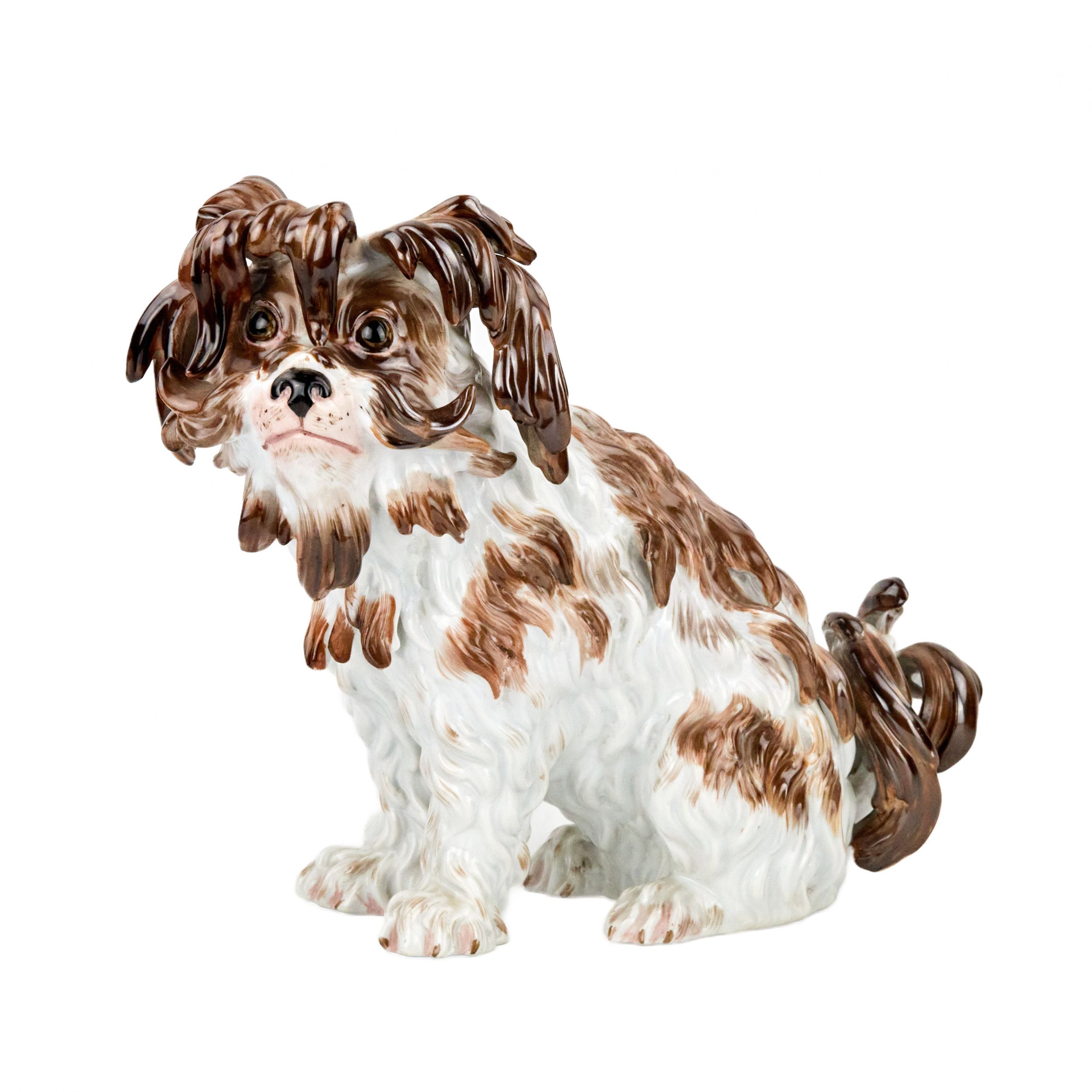



MEISSEN PORCELAIN FIGURE OF A LAPDOG GERMANY, MEISSEN, SECOND HALF OF THE 19TH CENTURY
AntiqonART consultant will contact you within one business day after receiving your request.
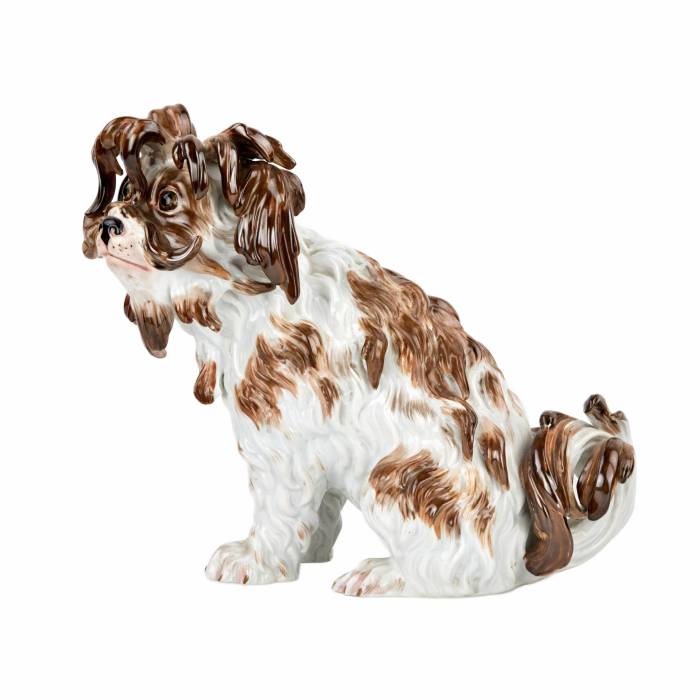
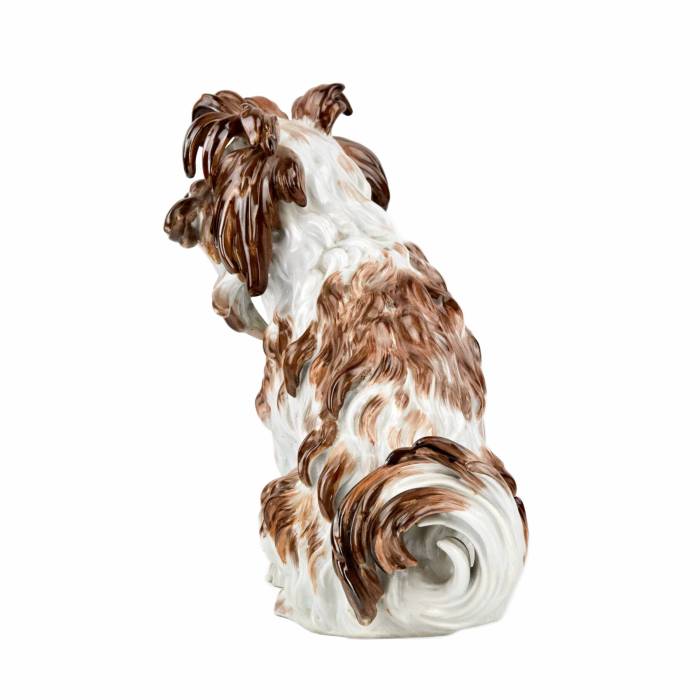
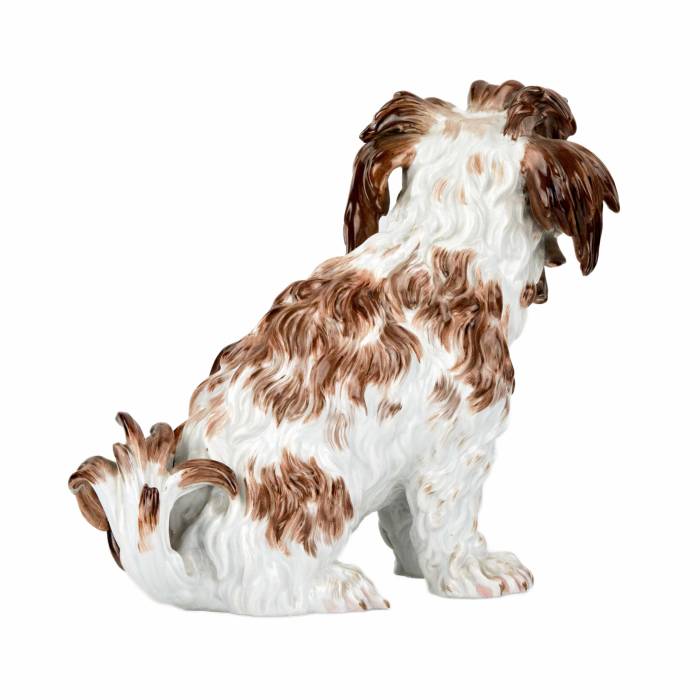
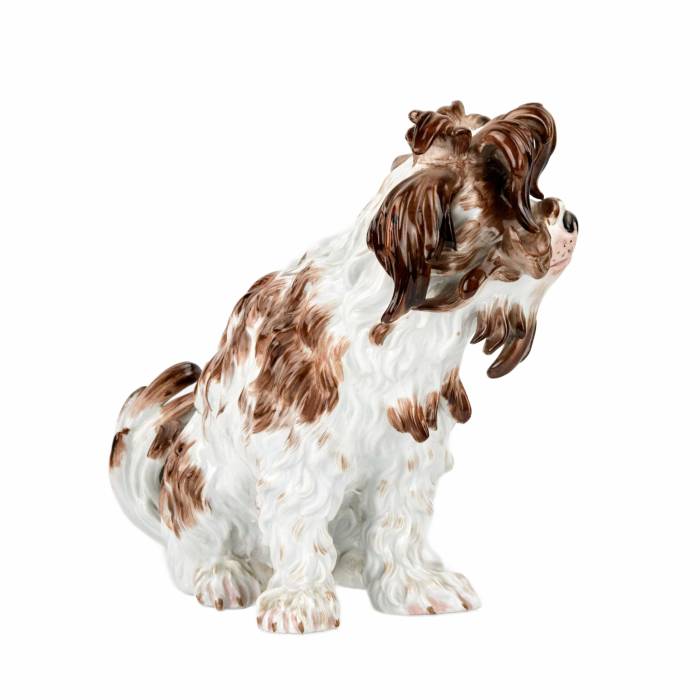
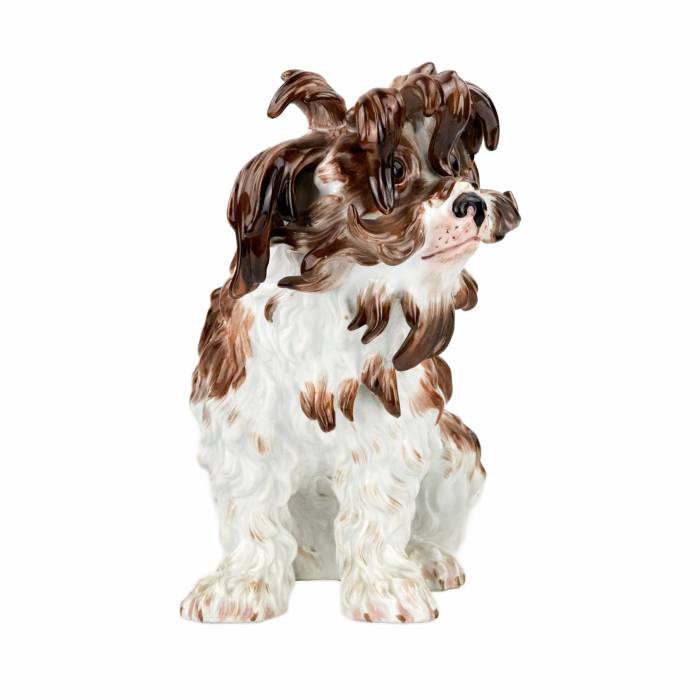
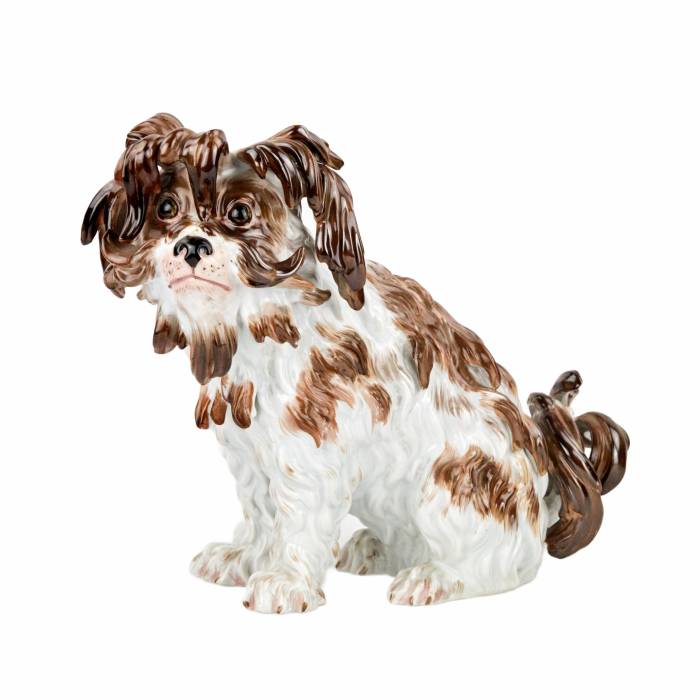
An expressive, one-piece porcelain figure of a lapdog, created at the Meissen manufactory in the second half of the 19th century. The small decorative dog is portrayed seated on its hind legs, with a tilted head, large protruding eyes, and richly modelled curls of fur. The coloration in white and reddish-brown tones accentuates the realistic texture and volume. The figure bears a sentimental and almost portrait-like character, designed to adorn the intimate interiors of bourgeois homes. This sculpture belongs to Meissens classical animal genre, inspired by the traditions of Johann Joachim Kändler.
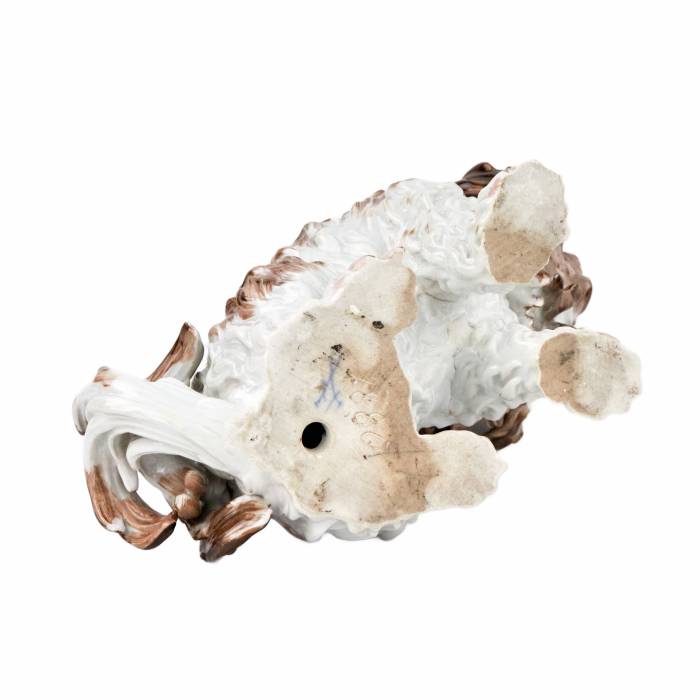
Marks: Blue crossed swords underglaze (Meissen), impressed model number 2880 on the base, moulding marks and kiln vent hole.
Dimensions: 23 × 29 × 12 cm
Condition: In good condition. No visible losses, with minor signs of age. Clear marks, preserved glaze.
Provenance: From a private European collection. An original Meissen work, Germany, 19th century.
The porcelain figure of a lapdog created at the Meissen porcelain manufactory in the second half of the 19th century represents a vivid example of animalistic sculpture in German decorative art. Founded in 1710 under the patronage of Augustus the Strong, Meissen was the first European hard-paste porcelain manufacturer and a hub of artistic innovation. The traditions of master modeller Johann Joachim Kändler, established in the mid-18th century, continued well into the 19th century and adapted to changing tastes. During this period, sentimental and domestic subjects became increasingly popular, and small lapdogs—symbols of affection, refinement, and social status—were frequently depicted in porcelain. Meissen preserved a high level of naturalism, with remarkable attention to the texture of fur and the lifelike expression of animals. Such figures are now held in major porcelain collections including the Porcelain Collection of Dresden, the Leipzig Museum of Applied Arts, and Berlin’s Museum of Decorative Arts.
Good condition. Minor signs of age. The glaze is even, without cracks. Clear Meissen mark on the base.
The condition report is provided for informational purposes only.
It is not comprehensive and may not reflect all defects, restorations, alterations, or adaptations, as Antiqon does not perform professional conservation-level assessments. The information is based on a qualified, yet subjective, evaluation by our specialists.Before purchasing, we recommend consultation with an independent expert.Please also consult our Terms and conditions and Glossary A-Z, which contain important information on lot characteristics and sale conditions.