Price:
22500 €
Add to cart
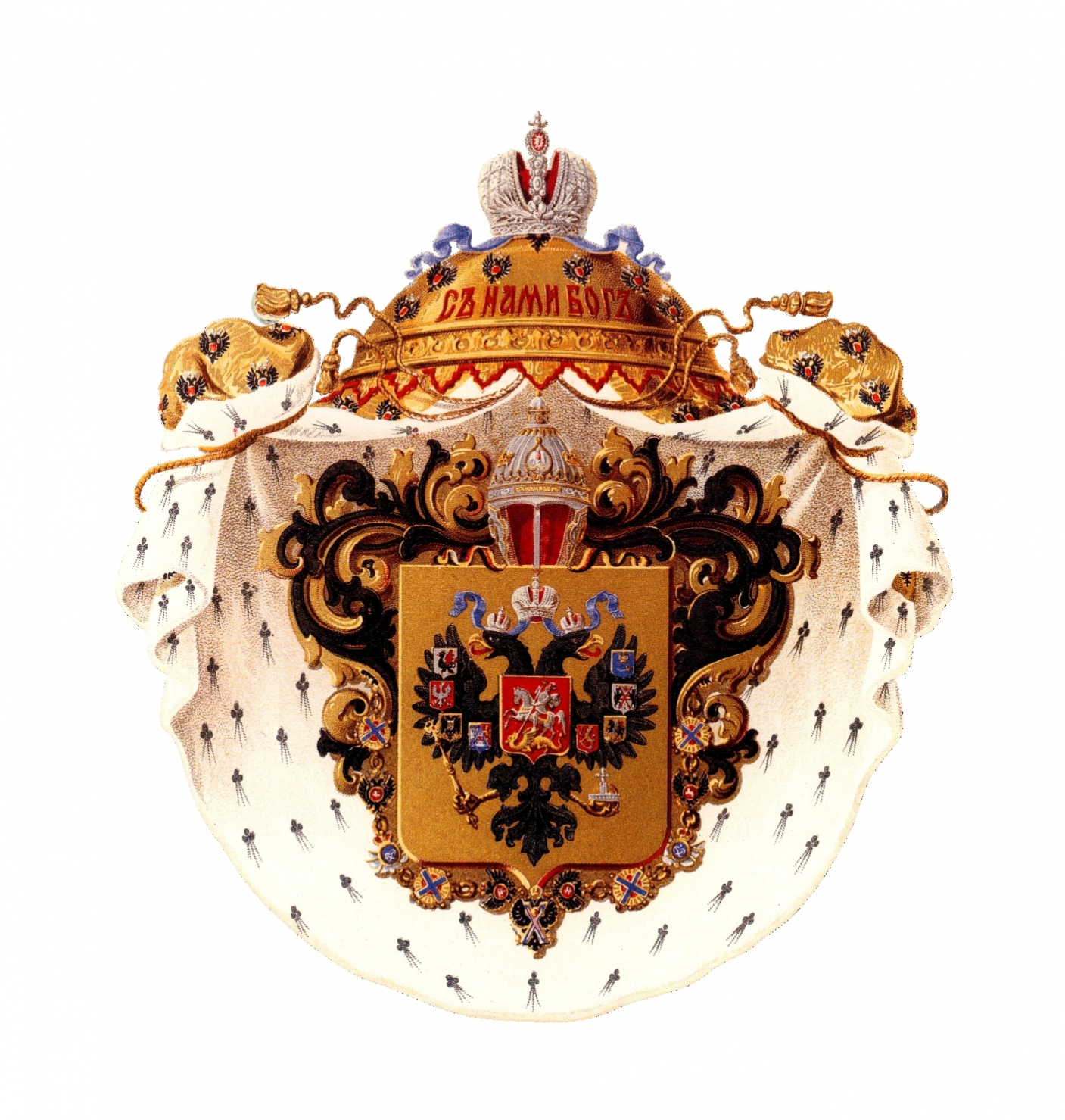
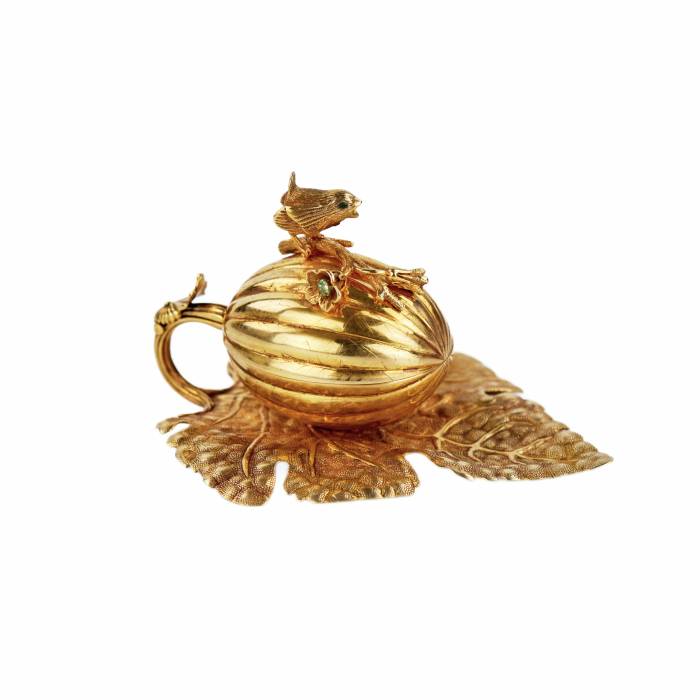
The firm of F.A. Lorier was a Moscow jewellery enterprise founded in 1871, producing gold and silver objects. In 1912, Yu.A. Guerrieri and A.F. Lemkul, associated with the Moscow branch of Fabergé, joined the firm as partners. The company held a stable position on the capital’s jewellery market at the turn of the 19th - 20th century.
We will only share latest what our month on the FIRM OF FYODOR ANTONOVICH LORIER.
HISTORY AND DEVELOPMENT
The jewellery workshop was founded in Moscow in 1871 by Anton-Ajille Lorier. After his death, management passed to his son Fyodor Antonovich Lorier, under whom the enterprise expanded its commercial activity and strengthened its position on the capital’s market.
In the late 19th - early 20th century, the firm conducted trade at 4 Kuznetsky Most, Moscow. From 1 March 1912, the enterprise operated as a Trading House; among the full partners were Yu.A. Guerrieri and A.F. Lemkul, known for their involvement with the Moscow branch of Fabergé. In 1916 the firm passed to Alexei Ivanovich Sokolov. Production ceased in 1917.
As of 1910, the workshop employed 22 workers; the annual turnover amounted to approximately 25,000 roubles.
TITLES, AWARDS AND COMMISSIONS
According to reference sources, the firm was awarded a silver medal at the St Petersburg Industrial and Art Exhibition of 1903 - 1904. Its products were manufactured both under its own maker’s mark and for Moscow trading houses, including “Beylin & Son”. Part of the production was distributed through Moscow jewellery workshops, including that of Egor Kuzmich Cheryatov.
The enterprise was oriented towards the private metropolitan market and operated within the high-quality urban jewellery segment.
ARTISTIC SPECIFICITY AND TECHNIQUES
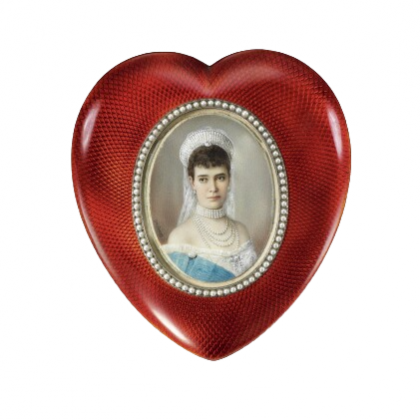
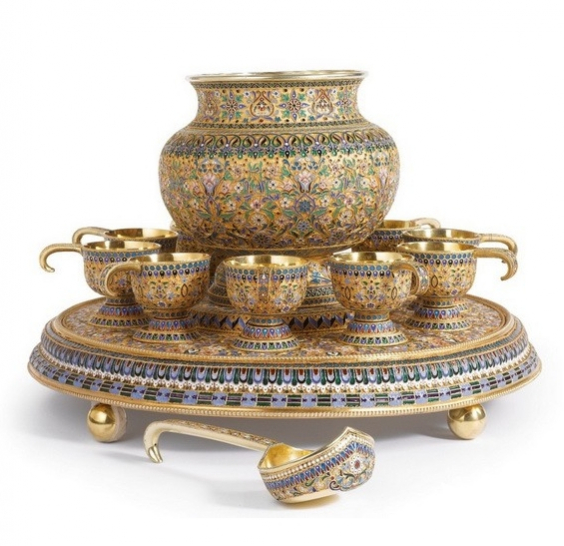
The range included jewellery such as earrings, rings, pendants, brooches, lockets and tokens, as well as table silver and decorative objects. Techniques employed comprised chasing, engraving, gilding, enamelling and gemstone setting.
The firm’s works combine the traditions of the Moscow silver school with the aesthetics of Art Nouveau and Neoclassicism of the fin de siècle. Crystal decanters mounted in silver, vases, tableware and decorative vessels were produced. On certain pieces appears the maker’s mark “E.Ch.” attributed to Egor Kuzmich Cheryatov.
The firm used full pre-revolutionary maker’s marks in the forms “F.A. LORIE”, “F. LORIE” or “LORIE”, as well as a smaller monogram mark “FL”. These were applied together with Moscow assay marks certifying the silver or gold standard.
LEGACY AND MASTERPIECES
The works of F.A. Lorier represent the development of Moscow jewellery production at the turn of the 19th - 20th century and illustrate the interaction between trading houses and manufacturing workshops. Representative groups include enamelled jewellery of the late 19th century, silver-mounted crystal decanters of the early 20th century and large decorative vases in the Art Nouveau style.
PRICE HISTORY
Exceptional Works: This category includes large decorative objects with enamel, complex modelling and documented provenance. A realistic price range is €80,000-250,000. In rare cases, where condition and artistic quality are outstanding, results above €300,000 may occur; however, no consistent practice of million-level sales has been recorded for the firm.
Rare Works : Enamelled jewellery with gemstones, silver-mounted decanters and vases, and limited Art Nouveau models. Price range: €15,000-120,000. Value is determined by enamel quality, condition, rarity of form and demand for the Moscow silver school.
Series Works : Standard jewellery pieces and table silver without complex decorative programmes. Price range: €1,000-20,000. This segment forms the principal volume of the secondary market for the firm’s works.