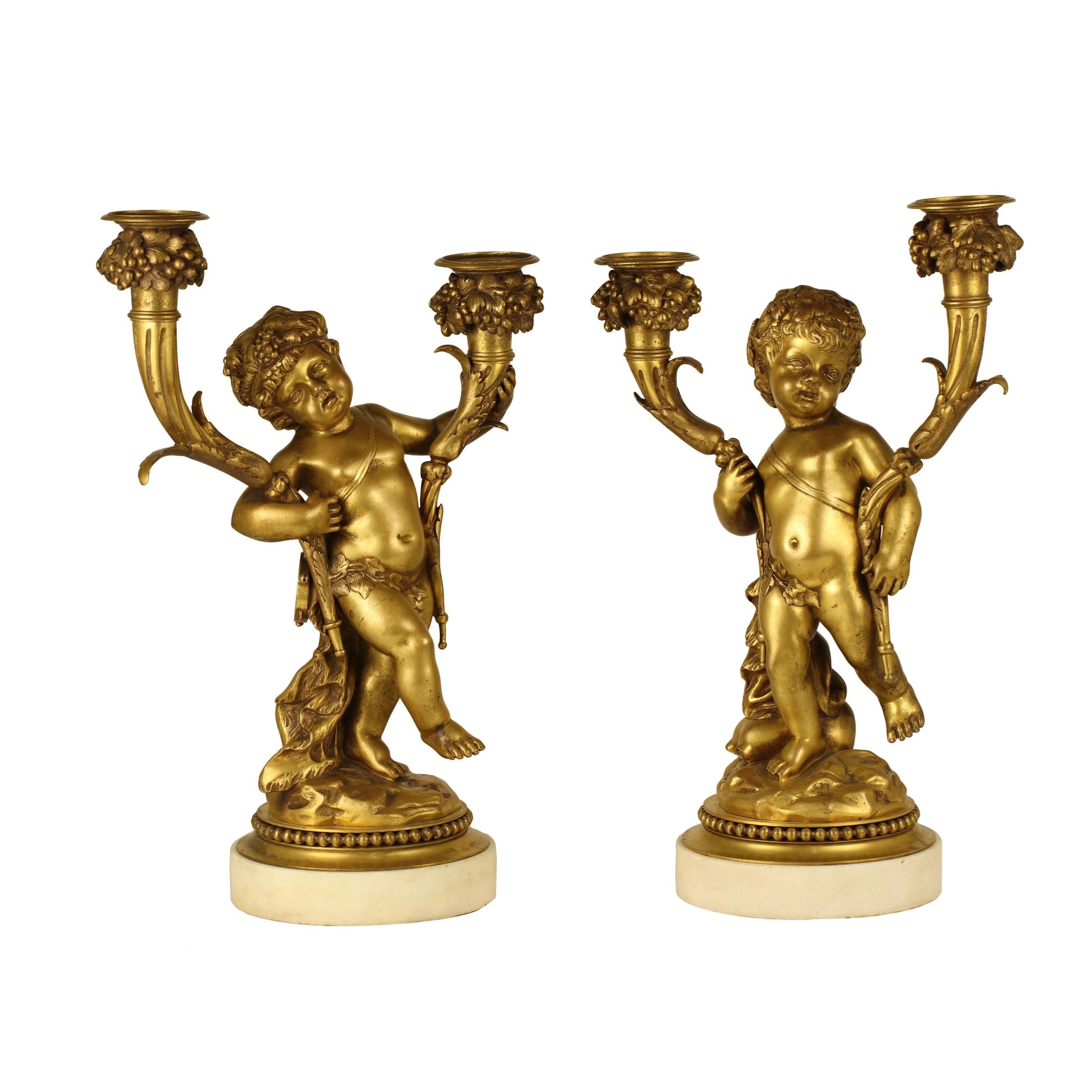



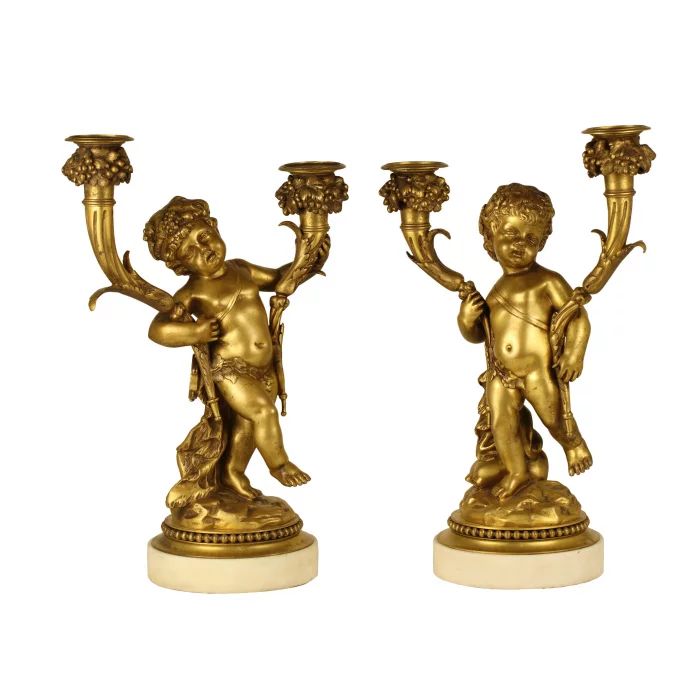
PAIRE DE CANDELABRES AUX FIGURES D’AMOURS FRANCE, SECONDE MOITIÉ DU XIXᵉ SIÈCLE
AntiqonART consultant will contact you within one business day after receiving your request.
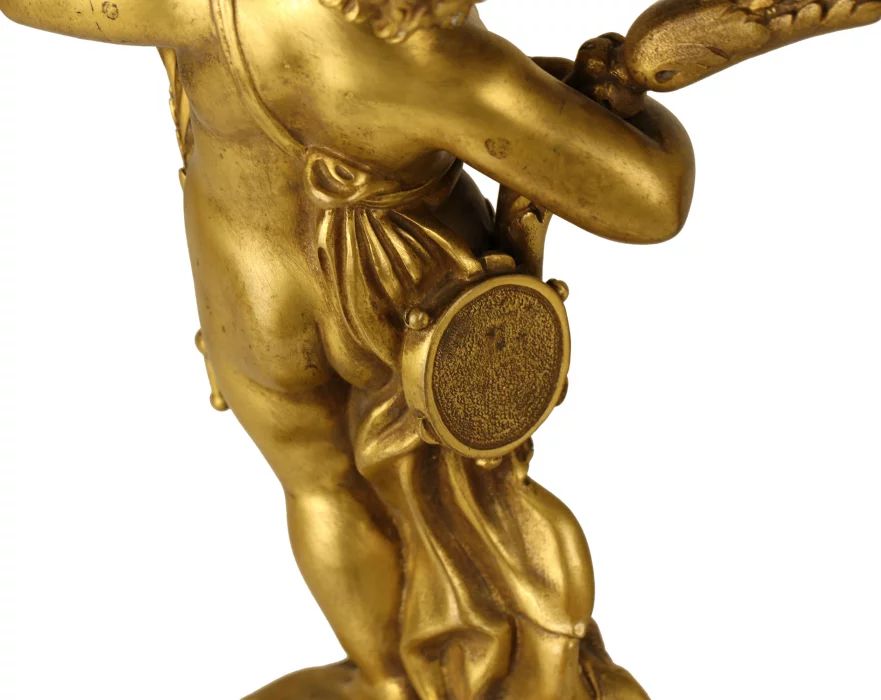
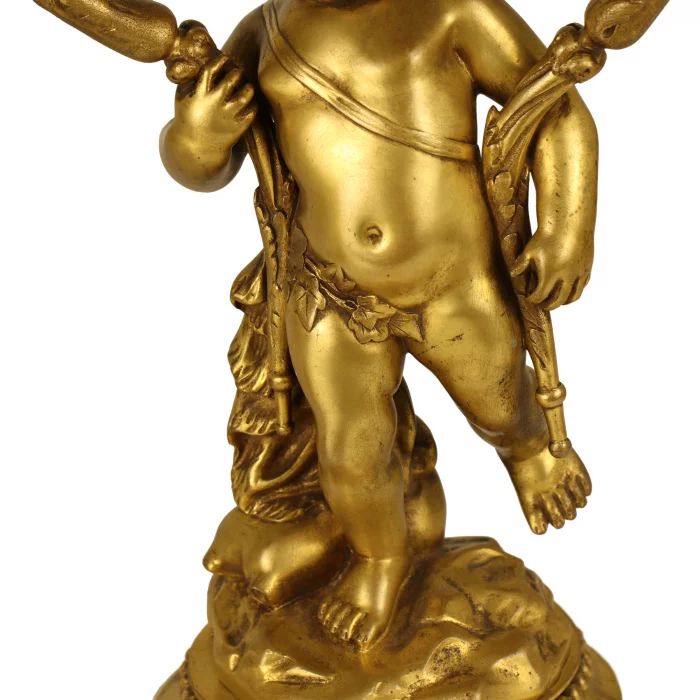
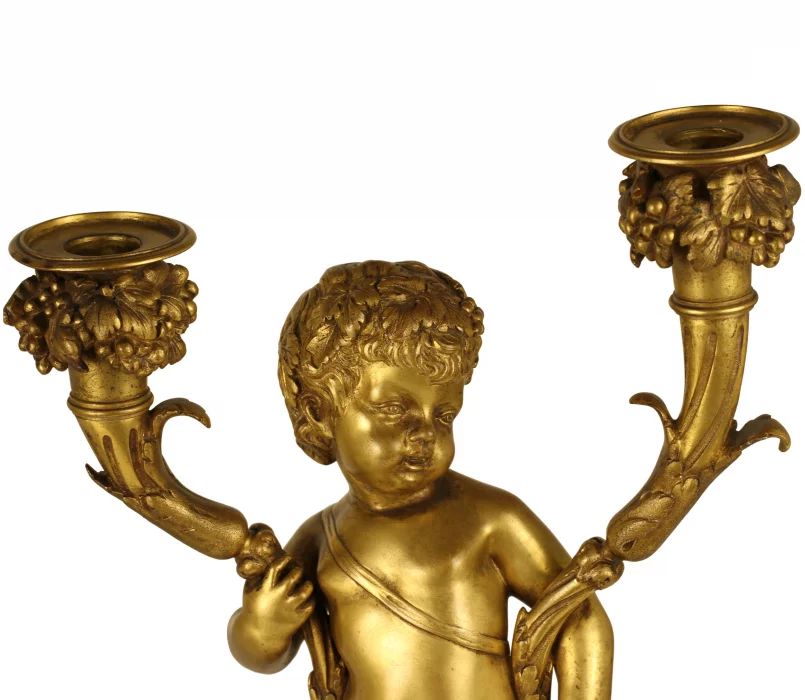
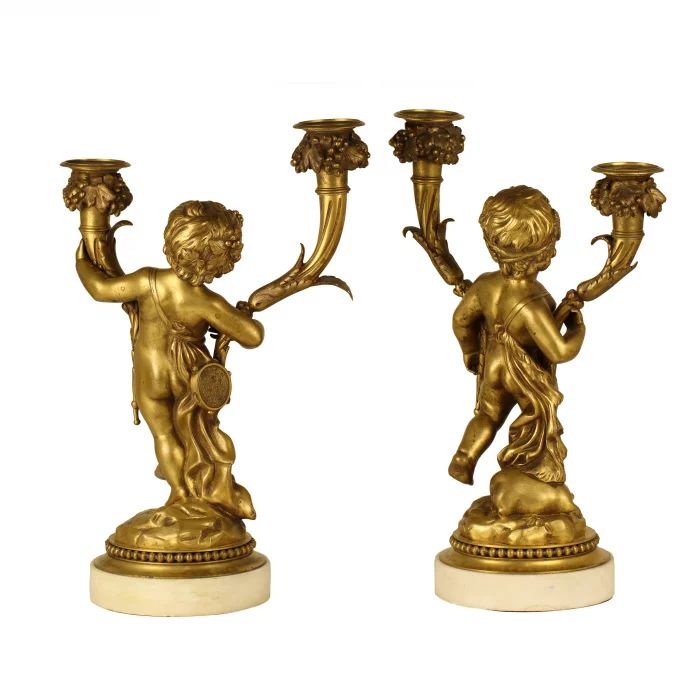
Paire de candélabres décoratifs figurant des amours, constituant un remarquable exemple de la production française en bronze doré de la période de l’Historisme, avec une influence marquée du Néo-rococo. Chaque figure est fondue en bronze et richement dorée, mettant en valeur la qualité du modelé, la douceur du traitement anatomique et le haut niveau d’exécution. Les amours sont représentés dans des poses animées et élégantes, avec des torsions légères du corps, conférant à l’ensemble un sentiment de mouvement et de vivacité.
Les figures tiennent des bras de lumière en forme de corne d’abondance, ornés de guirlandes de pampres et de grappes de raisin, symboles traditionnels de prospérité, de fertilité et de joie. Les détails sont finement ciselés, avec un soin particulier apporté aux feuilles, aux fruits et aux textures de surface. Les candélabres reposent sur des socles circulaires en marbre blanc, créant un contraste raffiné avec la chaleur du bronze doré et soulignant le caractère prestigieux de l’ensemble.
La composition s’intègre harmonieusement dans des intérieurs de style Louis XV Revival, Belle Époque et éclectisme de la seconde moitié du XIXᵉ siècle, destinée à orner des cheminées, des consoles ou à servir d’éléments décoratifs centraux dans des salons de réception.
Dimensions: Hauteur – 37,5 cm; Largeur – 15 cm; Profondeur – 5,5 cm.
Matériau: Bronze doré; base – marbre blanc.
État: Bon état. Dorure homogène, avec de légères traces d’usure du temps sur les parties en relief. Socles en marbre sans fissures ni éclats.
Provenance: Collection privée européenne.
Au cours de la seconde moitié du XIXᵉ siècle, la France connaît un regain d’intérêt pour les styles historiques, en particulier pour l’héritage du rococo du XVIIIᵉ siècle, qui se manifeste par la diffusion d’objets décoratifs dans le goût Néo-rococo. La période de l’Historisme se caractérise par une réinterprétation consciente des formes et des motifs du passé, adaptée aux intérieurs bourgeois et aristocratiques de la Belle Époque.
Les figures d’amours et de putti occupent une place centrale dans les arts décoratifs français, prolongeant les traditions établies sous le règne de Louis XV. Dans les créations du XIXᵉ siècle, ces figures se distinguent par une approche plus académique, mettant l’accent sur la justesse anatomique et la clarté décorative. L’utilisation de la corne d’abondance et de la vigne renvoie à une symbolique antique liée à la fertilité, à l’abondance et à la vitalité, rendant ces œuvres particulièrement prisées pour les intérieurs de représentation.
Les candélabres de ce type étaient réalisés dans des ateliers spécialisés de bronziers parisiens et destinés à l’ornementation des cheminées, buffets et consoles, associant fonctionnalité et qualité sculpturale. Les bases en marbre blanc renforçaient les références au classicisme et soulignaient le statut élevé de ces objets en tant qu’éléments décoratifs de prestige. Aujourd’hui, de telles œuvres sont conservées dans des collections muséales et privées et sont considérées comme des exemples caractéristiques des arts décoratifs français du XIXᵉ siècle.
Bon état général. Bronze doré avec surface homogène, présentant de légères marques d’usure conformes à l’âge. Bases en marbre stables, sans restaurations ni pertes.
The condition report is provided for informational purposes only.
It is not comprehensive and may not reflect all defects, restorations, alterations, or adaptations, as Antiqon does not perform professional conservation-level assessments. The information is based on a qualified, yet subjective, evaluation by our specialists.Before purchasing, we recommend consultation with an independent expert.Please also consult our Terms and conditions and Glossary A-Z, which contain important information on lot characteristics and sale conditions.