
ICÔNE DE SAINT ALEXANDRE NEVSKI EN OKLAD D’ARGENT AVEC ÉMaux. RUSSIE, 1895

ICÔNE DE SAINT ALEXANDRE NEVSKI EN OKLAD D’ARGENT AVEC ÉMaux. RUSSIE, 1895

ID-ANTQ-13313
November 29, 2025 12:00 PM GMT+02:00
Live auction is finished
Estimé
2500 - 3500 EUR
Bidding is closed
Use our cost calculator

Discover how the value of similar works has evolved over the past 10 years. Art is not only beauty — it's an investment.

Price History

Discover how the value of similar works has evolved over the past 10 years. Art is not only beauty — it's an investment.

Request a Shipping Quote

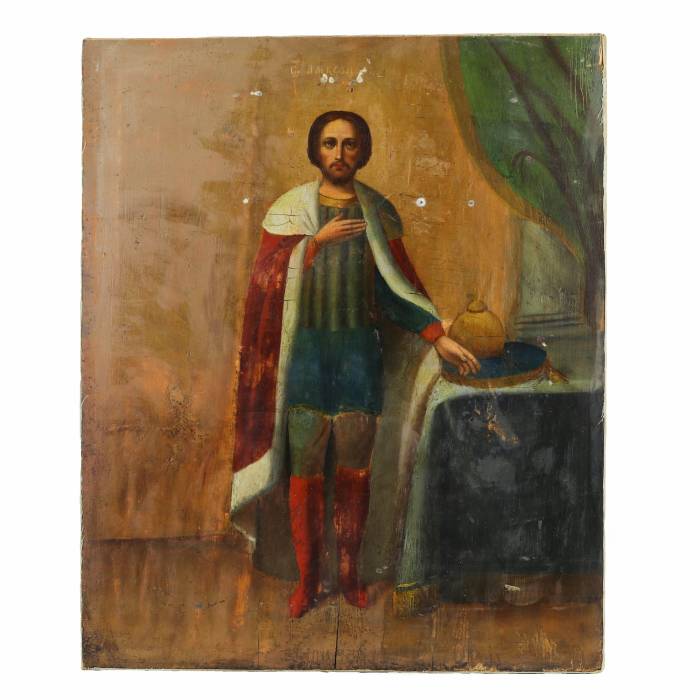
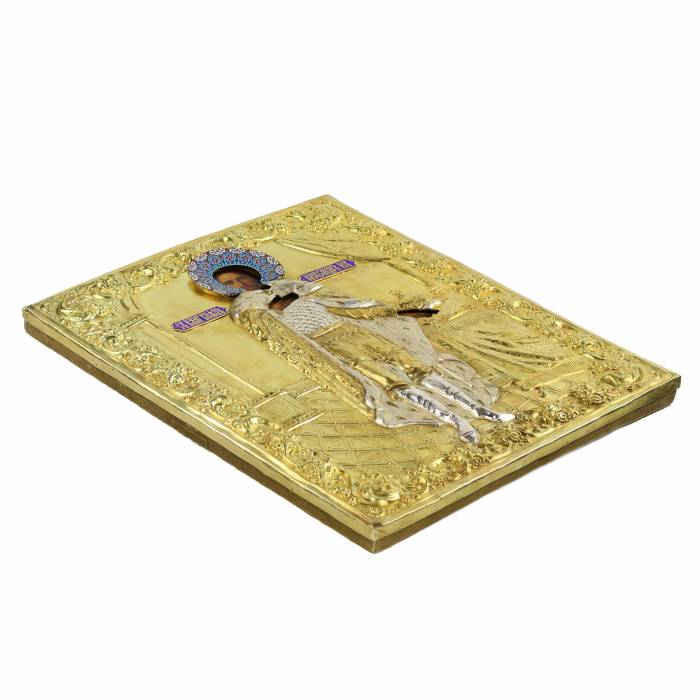
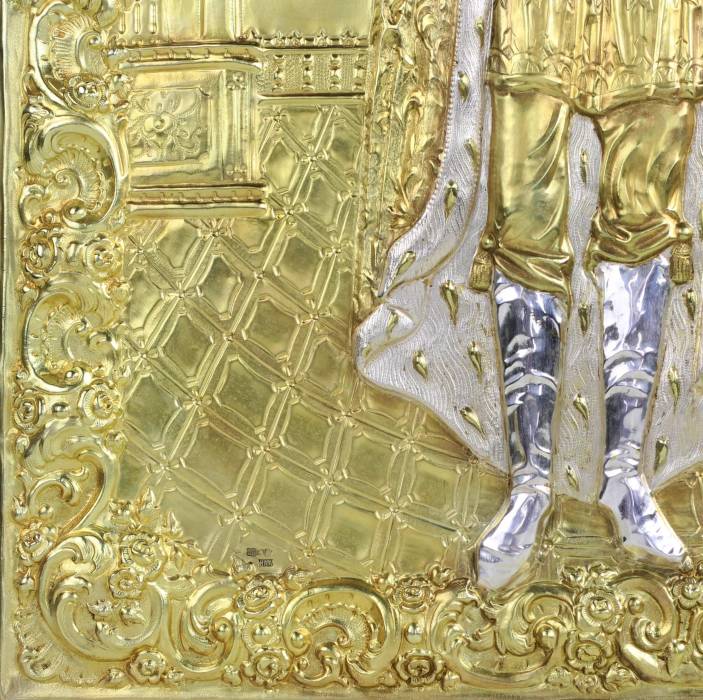
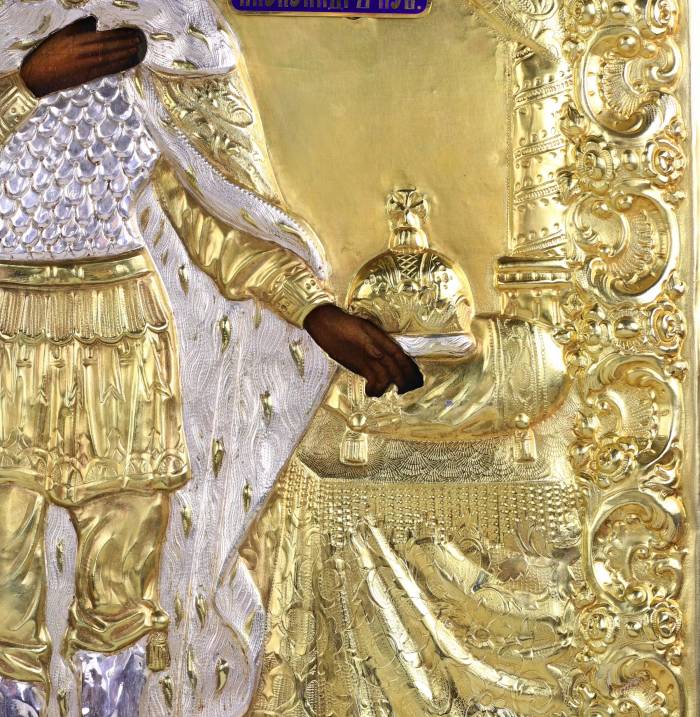
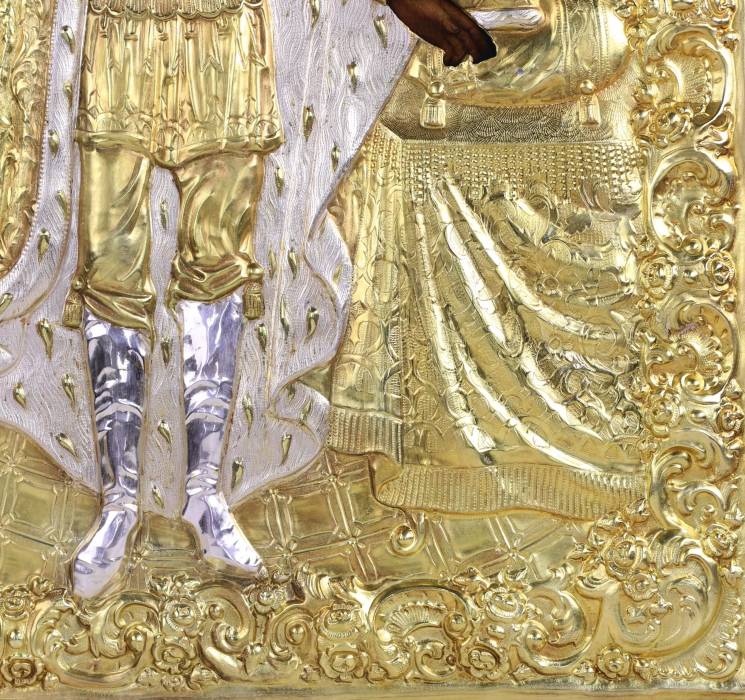
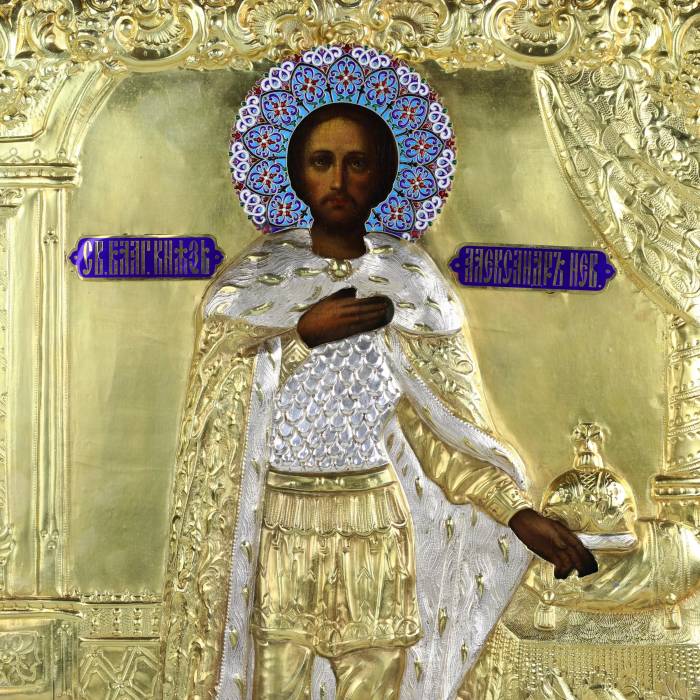
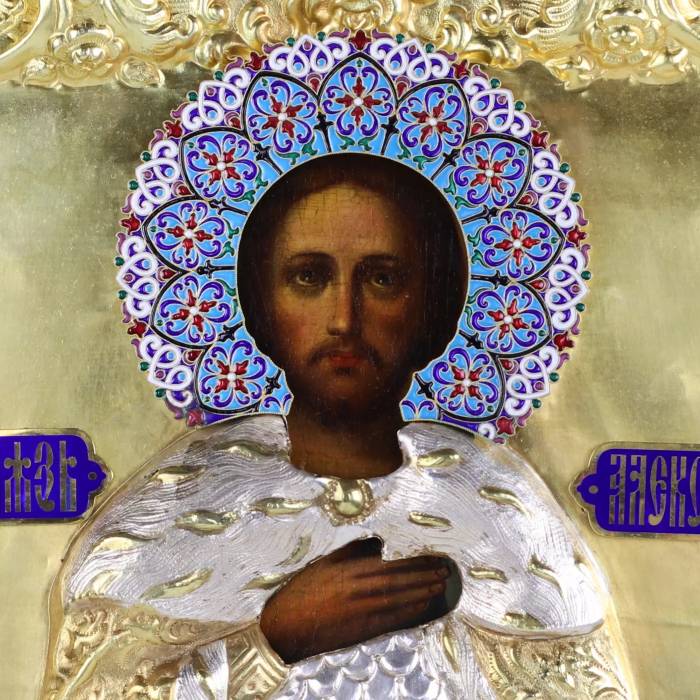
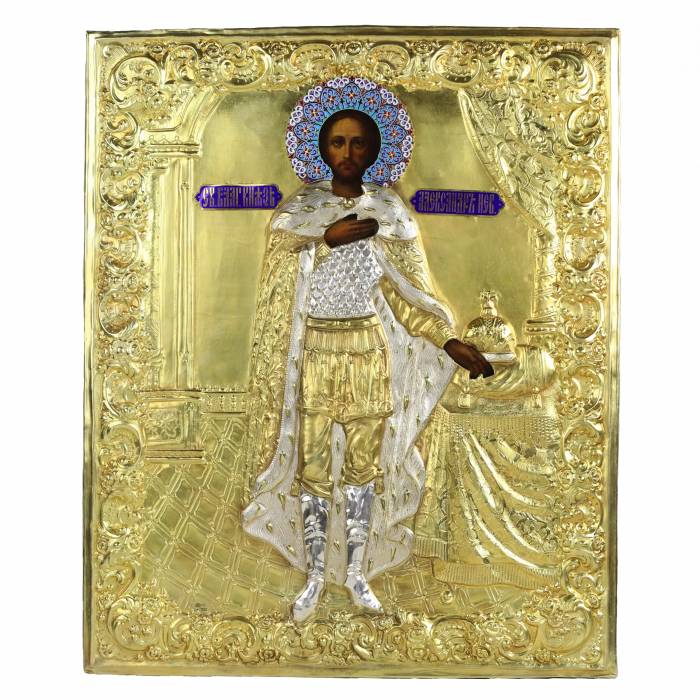
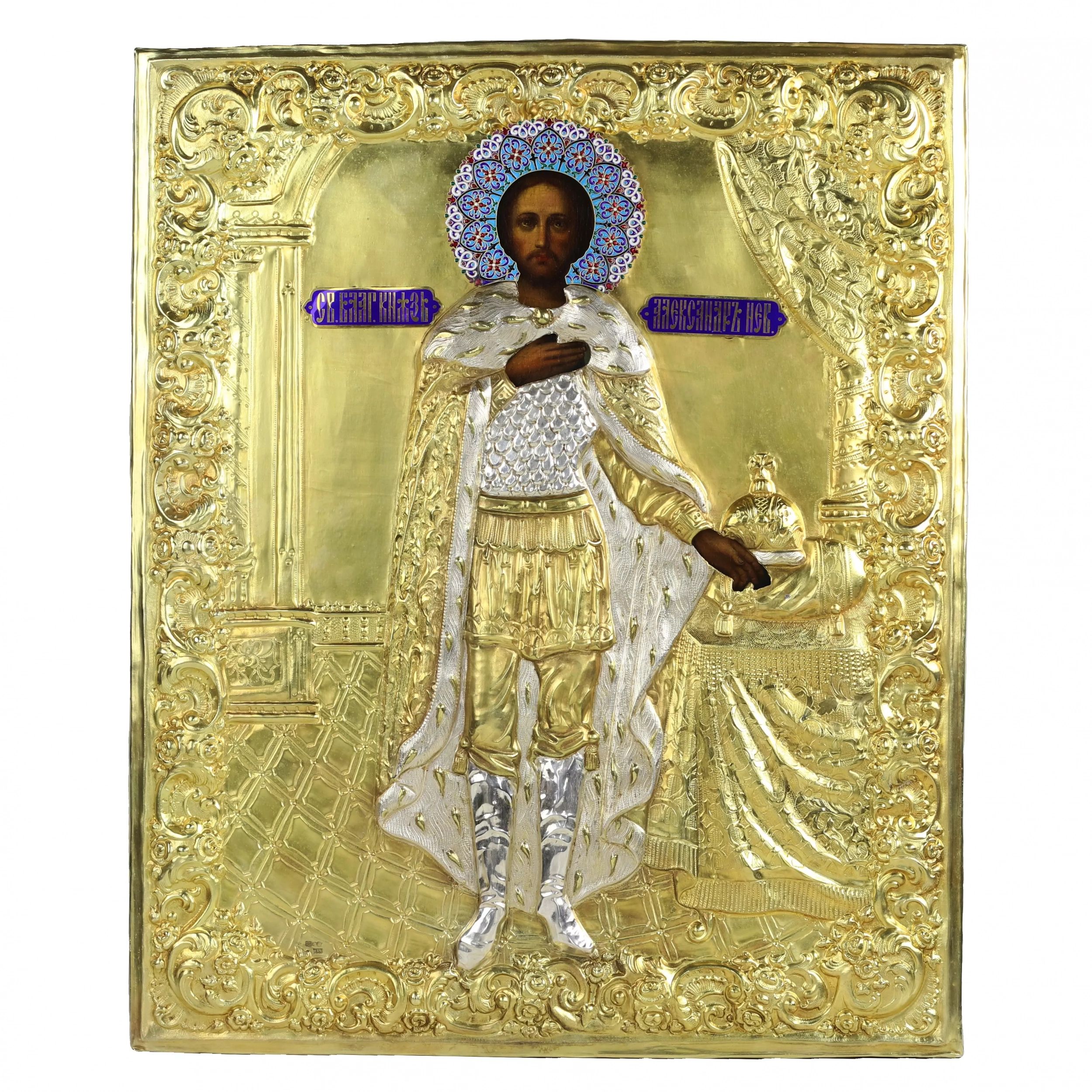
Rare exemple d’iconographie russe de la fin du XIXe siècle — icône en pied de Saint Alexandre Nevski, réalisée à Moscou en 1895 dans l’atelier d’Ivan Alekseev. Peinte à l’huile sur bois, l’icône est sertie dans un oklad en argent richement décoré de ciselures fines, d’émail polychrome cloisonné, de gravures et de dorures. Le saint est représenté en habits princiers, tenant un globe et une épée — symboles du pouvoir et de la force spirituelle. La composition est surmontée d’un halo en émail et d’inscriptions émaillées. L’arrière-plan est orné d’éléments architecturaux et de motifs décoratifs évoquant un tapis.

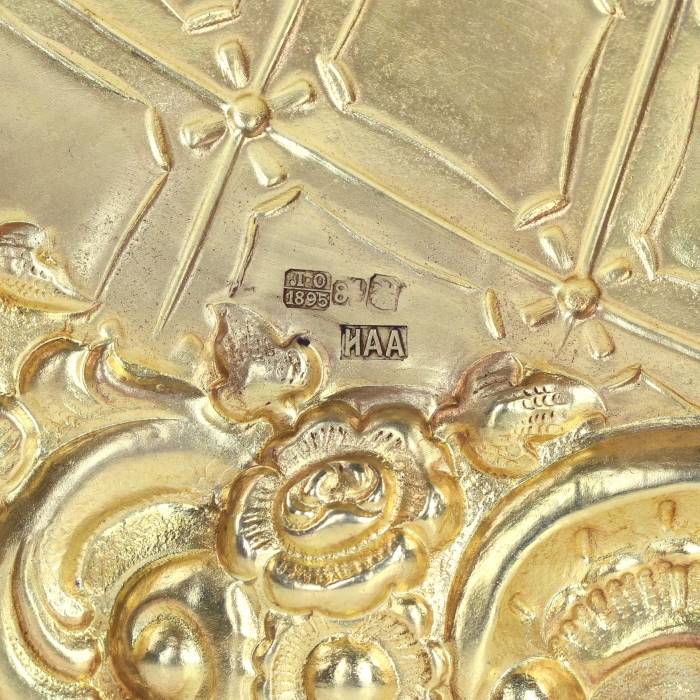
Poinçons : Poinçon argent 84 dans un cartouche rectangulaire, marque municipale de Moscou représentant Saint Georges tourné vers la droite, dans un écu à coins biseautés, poinçon du bureau d’essai de Moscou avec les initiales de l’essayeur “L.O.” (Lev Oleks ; Moscou, 1890–1896) au-dessus de la date “1895”, poinçon de l’atelier d’Ivan Alekseev en cyrillique “ИАА”

Dimensions : Icône : 53 × 43,9 cm, Oklad : 53,4 × 44 cm, Kiot : 62,3 × 53,2 × 7 cm
Poids : Environ 1706 g (oklad en argent)
État : Icône en bon état. Présence de traces de restauration ancienne.

Art:
russia
Hauteur:
53 cm
Largeur:
44 cm
Épaisseur:
3 cm
Période:
Au Tournant Du Siècle 19-20
Pays:
Russie, Moscou
Matière:
Argent 84, Émail Cloisonné, Dorure
État:
Revive
Fair
Good
Very good
Like new

Saint Alexandre Nevski, grand-prince de Novgorod et de Kiev, occupe une place unique dans la tradition spirituelle et politique russe. Canonisé par l’Église orthodoxe russe comme défenseur de la terre russe et de la foi face aux invasions étrangères, ses victoires sur les Suédois à la Neva (1240) et sur les chevaliers teutoniques au lac Peïpous (1242) lui ont valu le statut de héros national. Sa prudence diplomatique face à la Horde dOr renforça encore son image de guide de l’unité.

À la fin du XIXe siècle, sous Alexandre II et III, les figures nationales telles qu’Alexandre Nevski furent redécouvertes dans un esprit de continuité impériale et d’identité orthodoxe. Cette époque fut marquée par l’essor des ateliers d’icônes et de l’orfèvrerie religieuse, produisant des œuvres d’une qualité exceptionnelle.

L’atelier d’Ivan Alekseev, actif à Moscou, était réputé pour ses oklads finement exécutés avec émaux de qualité. L’utilisation de motifs architecturaux et textiles dans cette icône illustre le style historiciste et éclectique russe, mêlant baroque, néo-byzantin et romantisme national. Une œuvre de ce type, réalisée en 1895, ornait probablement une chapelle privée ou un intérieur aristocratique, servant à la fois d’objet de piété et de prestige.

Icône en bon état. Traces d’usage, pertes mineures de la couche picturale. Présence de restaurations anciennes.

The condition report is provided for informational purposes only.

It is not comprehensive and may not reflect all defects, restorations, alterations, or adaptations, as Antiqon does not perform professional conservation-level assessments. The information is based on a qualified, yet subjective, evaluation by our specialists.Before purchasing, we recommend consultation with an independent expert.Please also consult our Terms and conditions and Glossary A-Z, which contain important information on lot characteristics and sale conditions.
IVAN ALEKSEEVS WORKSHOP (1876–1912)
Founded in Moscow in 1876, Ivan Alekseev’s workshop became one of the leading manufacturers of ecclesiastical silverware and liturgical objects in Russia at the turn of the 20th century. The firm earned a strong reputation for its high-quality silver icon covers (oklads), devotional items, and religious household goods that combined traditional Orthodox aesthetics with richly decorated elements in the Neo-Russian revival style.FOUNDATION AND DEVELOPMENTIvan Alekseev (I.A. Alekseev) began his career as an independent silversmith in the final quarter of the 19th century. He quickly developed his modest atelier into a fully registered factory in Moscow. According to the Directory of Factories and Plants of the Russian Empire (1903), the enterprise was located at Yakovoapostolsky Lane and employed up to 40 workers. The workshop’s core specialization included the production of icon covers, tabernacles, kiots (icon frames), and pectoral crosses crafted from 84 zolotnik silver.Alekseev’s silverwork was in consistent demand among both private clients and religious institutions. His creations were regularly presented at All-Russian exhibitions, receiving praise for their refinement, precise ornamentation, and reliable craftsmanship.ARTISTIC FEATURES AND TECHNIQUESThe Alekseev workshop embraced the principles of artistic synthesis typical of the Neo-Russian style. Its decorative vocabulary incorporated a rich array of traditional techniques:Chasing and engraving with pronounced relief and ornamental complexity;Polychrome filigree enamel following the Moscow enamel tradition of the 19th century;Gilding and niello to heighten symbolic expressiveness and visual contrast;Multicolored enamel in tones of blue, green, crimson, and white, embellishing haloes, crowns, inscriptions, and icon borders.Thematically, the factory focused on canonical depictions of Christ Pantocrator, the Mother of God (including the Kazan, Tikhvin, and Iveron icons), Saint Nicholas, and large-format feast icons for church interiors. Alekseev’s products stood out for their iconographic accuracy, adherence to ecclesiastical canons, and meticulous detailing.ECCLESIASTICAL AND SOCIAL RECOGNITIONThanks to its consistently high quality and strong liturgical focus, the Alekseev factory received numerous commissions from churches, monasteries, and diocesan authorities, especially in the final decades of the Russian Empire. Its works spread beyond Moscow to regions such as Vladimir, Tambov, Yaroslavl, and Nizhny Novgorod.The stylistic and iconographic features of the workshop reflect the influence of the Moscow school and Stroganov traditions, particularly in the miniature-like precision of ornament and use of architectural frames. Alekseev’s icon covers were often commissioned for family shrines and memorial icons, which further enhances their cultural and historical significance.DECLINE OF THE WORKSHOPThe workshop ceased operations shortly after the death of Ivan Alekseev in 1912. The absence of direct successors and the growing political unrest that culminated in the 1917 Revolution prevented the continuation of the business. Nevertheless, many objects produced by the Alekseev factory have survived in private and museum collections and remain benchmarks of the Moscow school of silver icon frames.MUSEUM COLLECTIONS AND ANTIQUE VALUEObjects made by Ivan Alekseev’s factory are preserved in the collections of the State Historical Museum, the Moscow Kremlin Museums, the Tsaritsyno Museum-Reserve, and various ecclesiastical museums and private collections in Russia and abroad. Particularly rare and sought-after are icon covers with filigree enamel commissioned for prominent churches and noble families.
... Read More

Stay up to date with new arrivals
Save Icônes and we let you know when new listings appears in this category
Sauvegarder

Related items