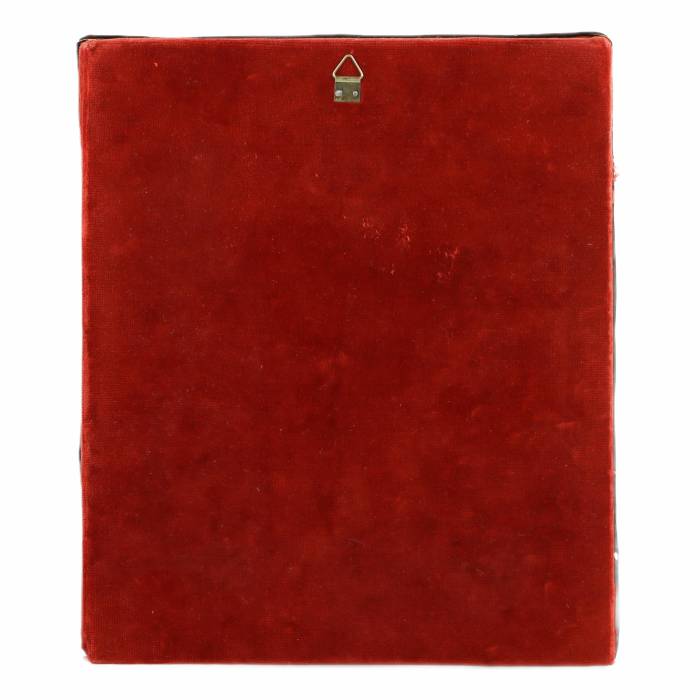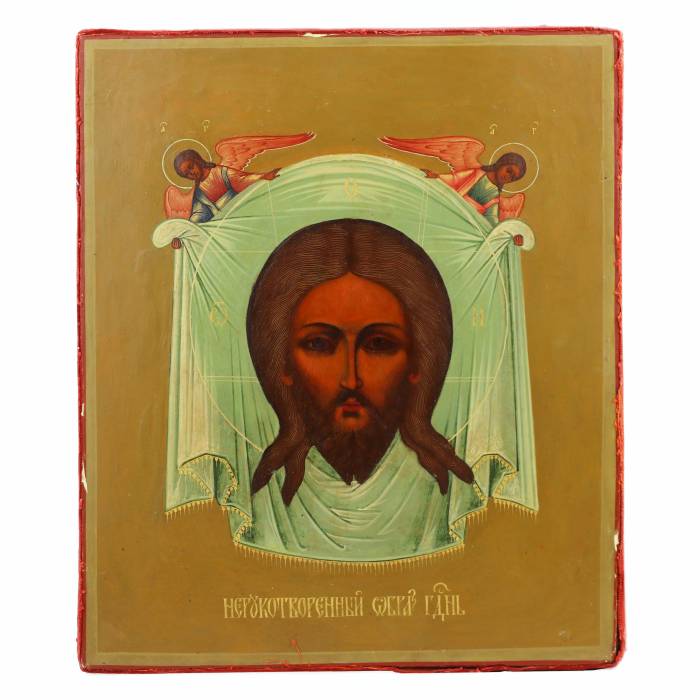

SAINTE MANDYLION (SPAS NERUKOTVORNY) DANS UN OKLAD EN ARGENT DORÉ ÉMAILLÉ PAR IVAN TARABROV  RUSSIE, MOSCOU, 1894

SAINTE MANDYLION (SPAS NERUKOTVORNY) DANS UN OKLAD EN ARGENT DORÉ ÉMAILLÉ PAR IVAN TARABROV RUSSIE, MOSCOU, 1894

ID-ANTQ-12216
November 29, 2025 12:00 PM GMT+02:00
Live auction is finished
Estimé
8000 - 12000 EUR
Lot Sold
 
Lot sold
Use our cost calculator

Discover how the value of similar works has evolved over the past 10 years. Art is not only beauty — it's an investment.

Price History

Discover how the value of similar works has evolved over the past 10 years. Art is not only beauty — it's an investment.

Request a Shipping Quote

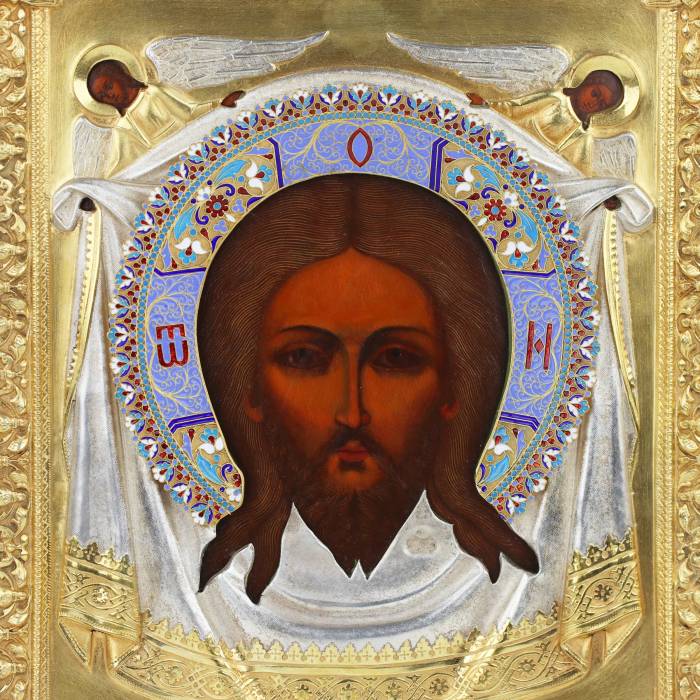
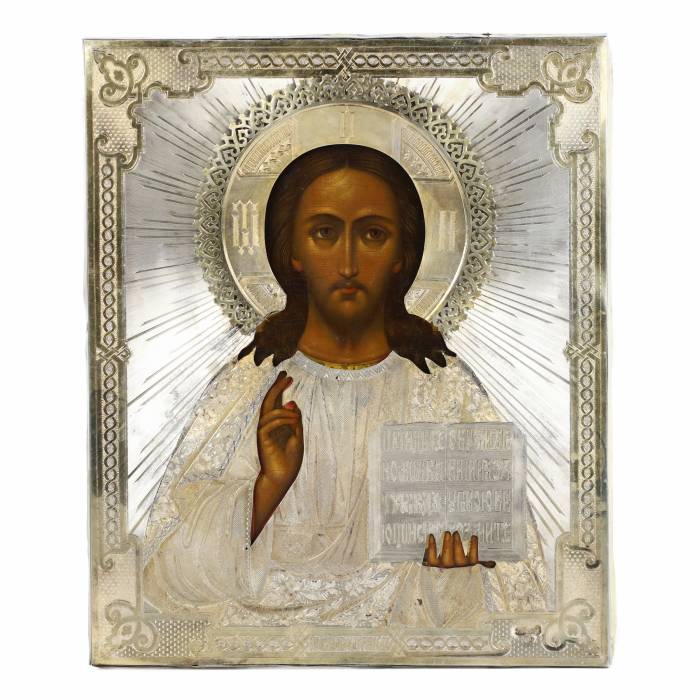
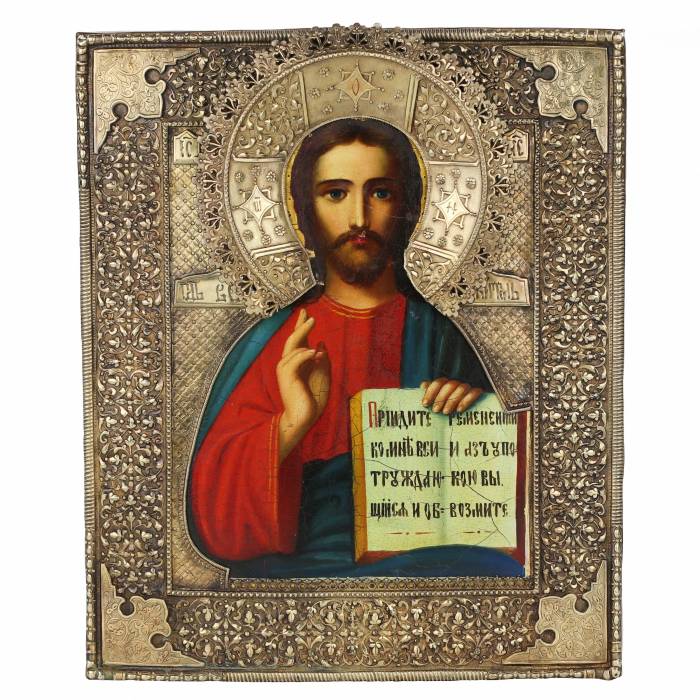
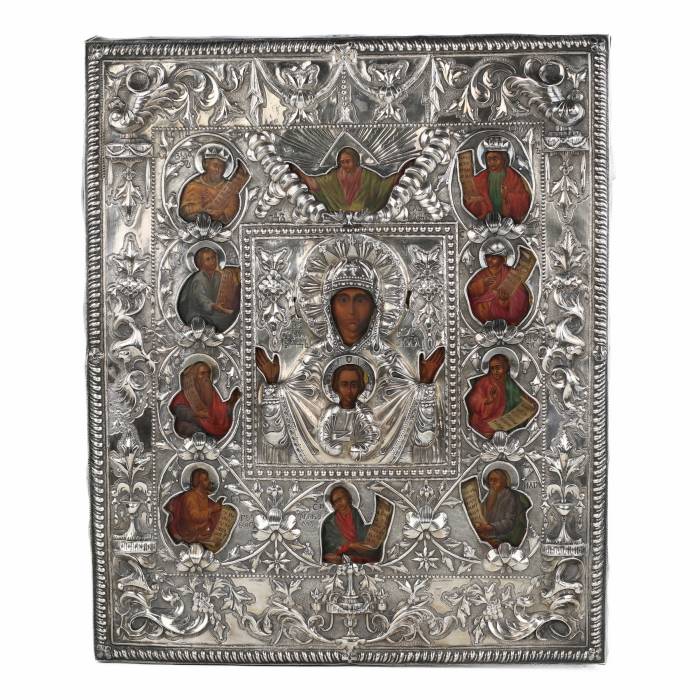
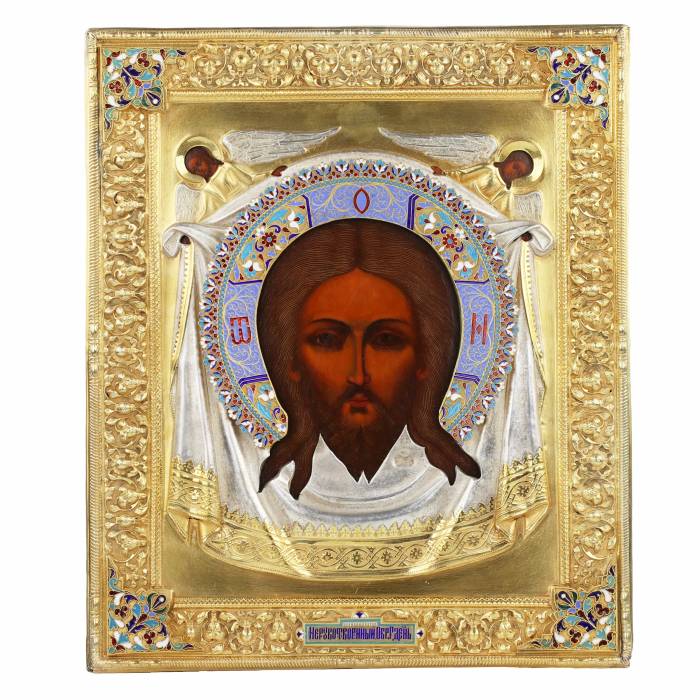
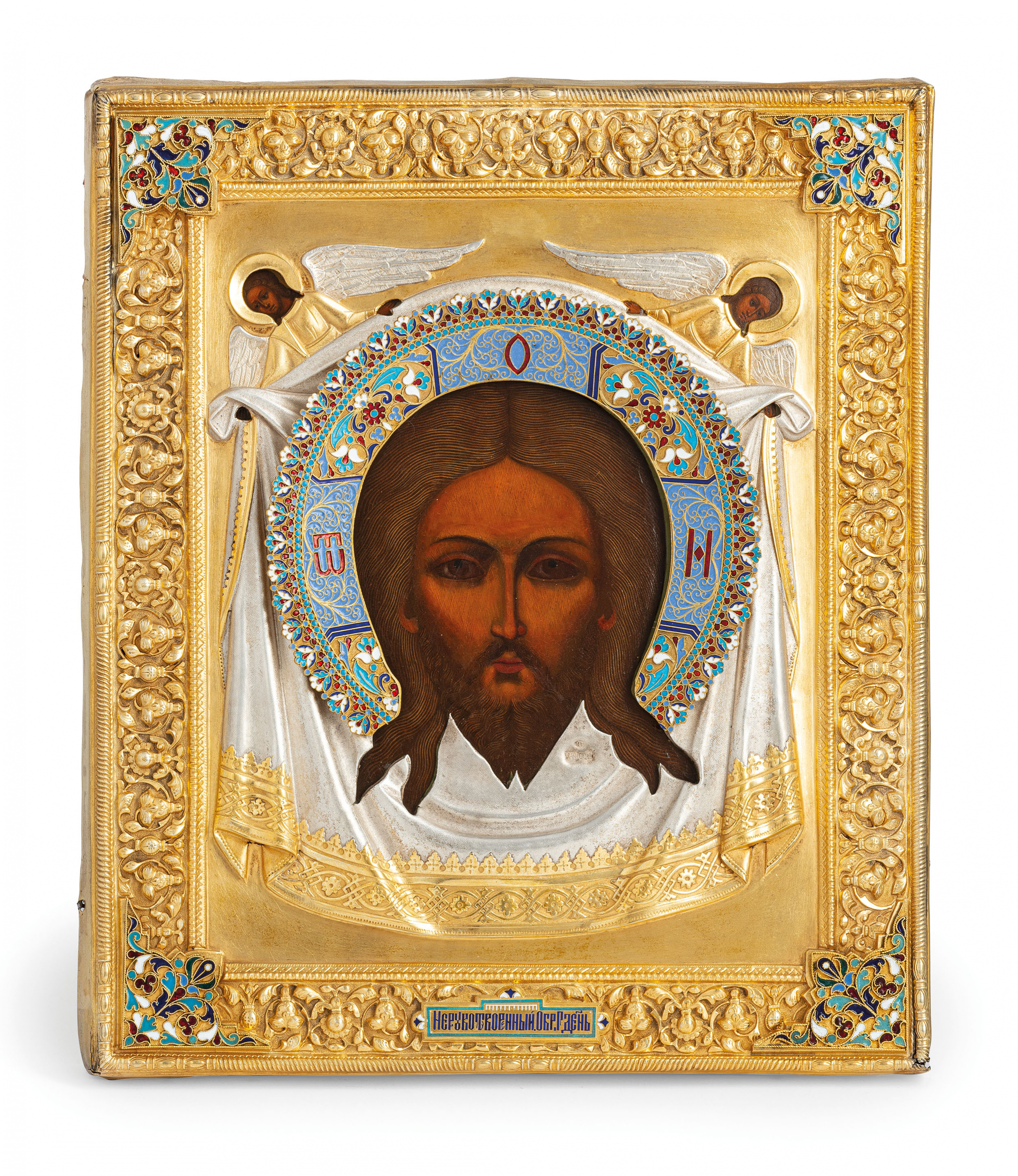
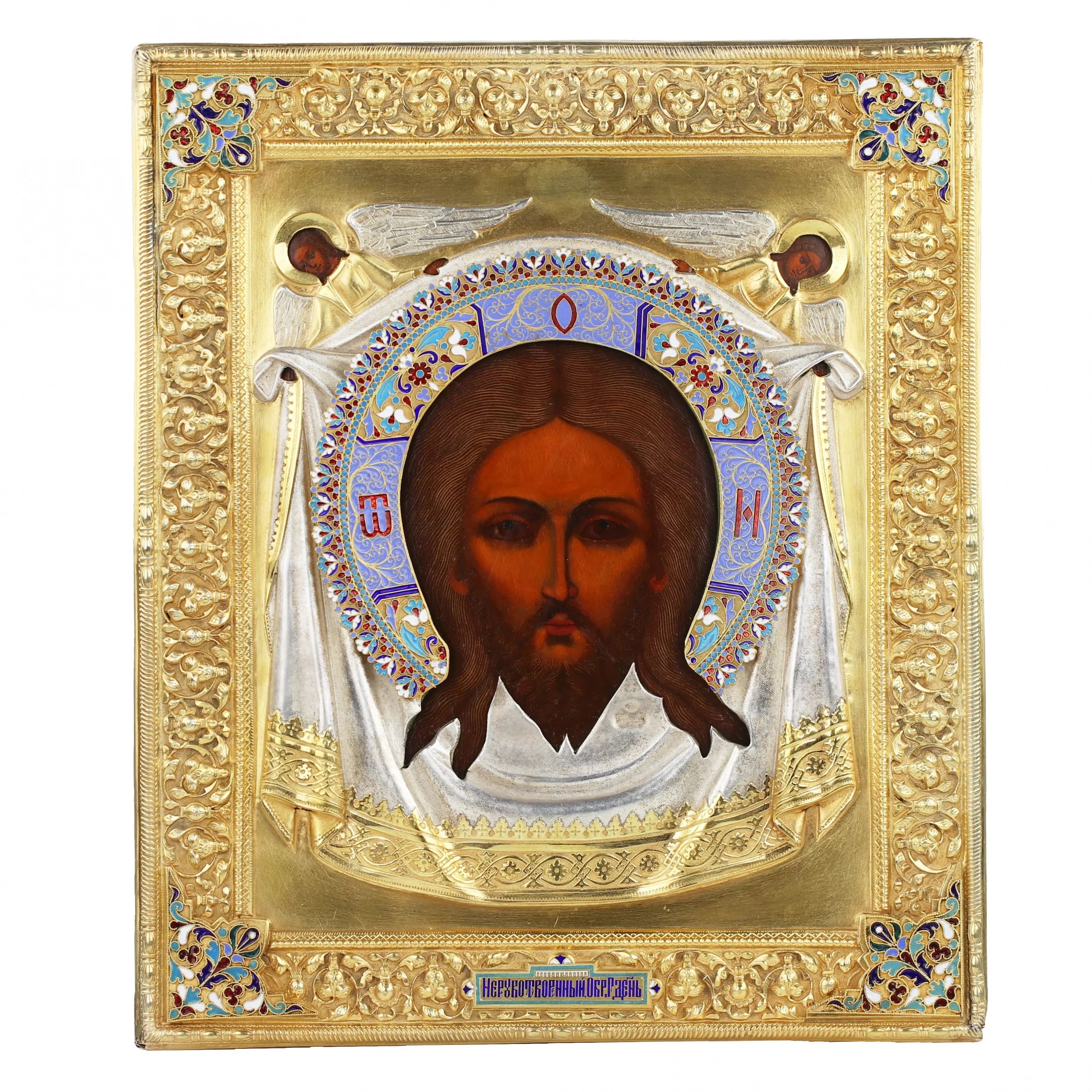
La Sainte Mandylion (Spas Nerukotvorny) constitue un remarquable exemple de l’art orthodoxe russe de la fin du XIXᵉ siècle, où la rigueur canonique s’allie harmonieusement à la virtuosité de l’orfèvrerie moscovite. L’image du Christ, exécutée à la tempera sur bois, se distingue par une modélisation douce des traits, une profonde concentration intérieure et un regard pénétrant, empreint de spiritualité. La composition est enrichie par la présence de deux anges soutenant le voile portant l’image miraculeuse, renforçant ainsi la signification théologique et l’idée de révélation divine et de protection céleste.

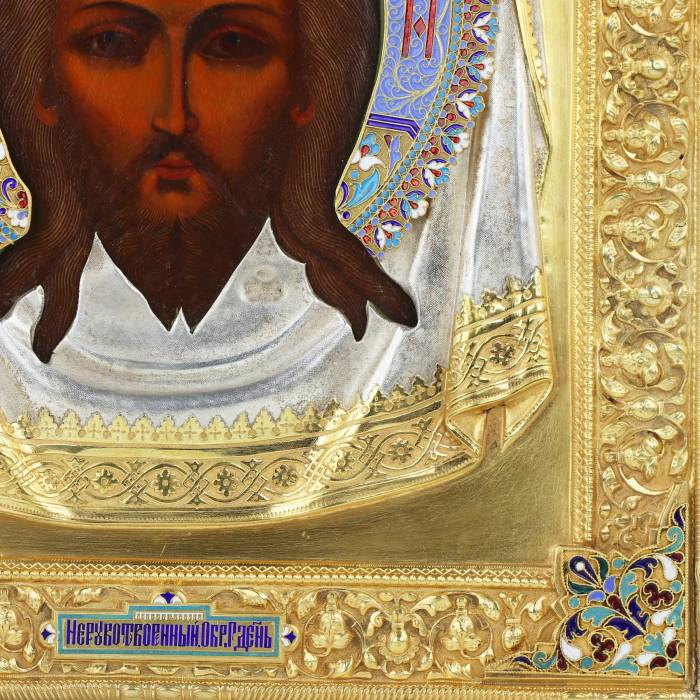
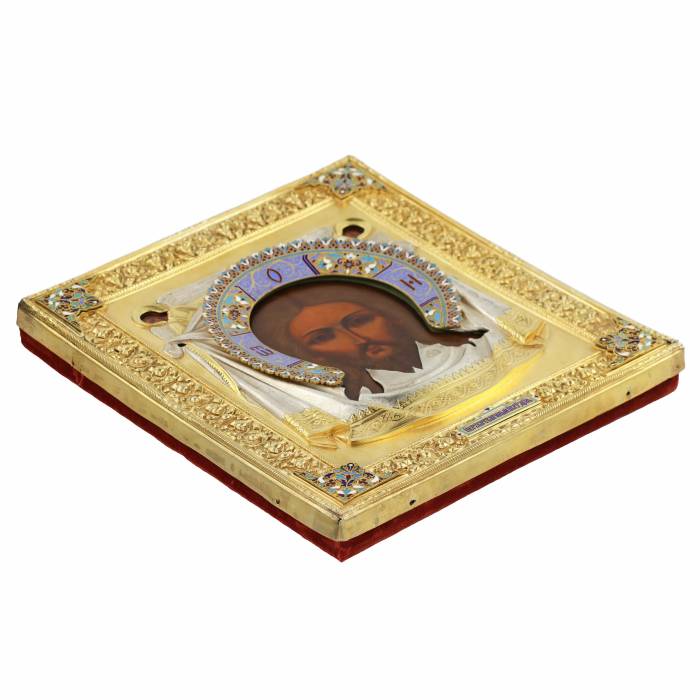
L’icône est présentée dans un somptueux oklad en argent doré réalisé en 1894 dans la célèbre manufacture moscovite d’Ivan Filippovitch Tarabrov. L’oklad est richement décoré d’émaux cloisonnés et champlevés. L’auréole entourant le visage du Christ est ornée d’un décor complexe associant des tons profonds de bleu, de rouge et de blanc sur un fond doré et bleu. Une caractéristique distinctive de la production de Tarabrov réside dans l’utilisation de feuille d’or placée sous l’émail rouge, créant une profondeur chromatique et un éclat intérieur particulièrement lumineux.

Le voile (ubrus) portant l’image du Christ est décoré d’une fine ciselure sur fond d’argent, ses bordures étant soulignées de motifs en relief sur fond doré. Les écoinçons sont ornés de motifs végétaux exécutés en filigrane avec remplissage d’émail. Les champs de l’oklad sont enrichis d’élégants ornements végétaux en haut relief et encadrés par des bandeaux gravés, conférant à l’ensemble une harmonie et une élégance raffinées. Chaque détail témoigne d’une précision d’exécution exceptionnelle et d’un goût artistique élevé, soulignant le caractère sacré et solennel de l’œuvre.

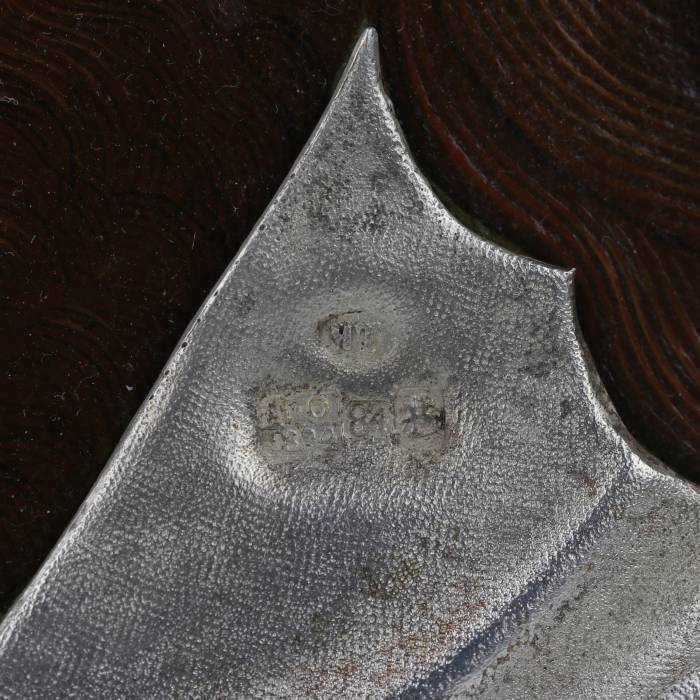
Poinçons: Lettres cyrilliques « ИТ » – poinçon du maître orfèvre Ivan Filippovitch Tarabrov; Poinçon de garantie portant les initiales du maître essayeur « Л•О » (Oleks Lev Fiodorovitch), placées au-dessus de la date « 1894 »; Poinçon de la ville de Moscou représentant saint Georges terrassant le dragon.

Technique et matériaux: Bois, tempera; argent, dorure; émaux cloisonnés et champlevés; ciselure, gravure, filigrane.

Dimensions: 31,5 × 28 cm.

Art:
russia
Hauteur:
31.5 cm
Largeur:
28 cm
Épaisseur:
4 cm
Période:
Fin Du 19Ème Siècle
Style:
Neorussian
Pays:
Russie, Moscou
Matière:
Argent 84, Émail Cloisonné, Dorure
État:
Revive
Fair
Good
Very good
Like new

L’image de la Sainte Mandylion occupe une place centrale dans l’iconographie byzantine et russe. Selon la tradition ancienne, le visage du Christ se serait miraculeusement imprimé sur un voile envoyé au roi Abgar d’Édesse, faisant de cette image la première représentation non faite de main d’homme du Sauveur. Dans la tradition russe, ce type iconographique acquiert une importance particulière dès le XVe siècle et devient l’un des symboles majeurs de la foi orthodoxe, de la protection spirituelle et de la présence divine.

À la fin du XIXᵉ siècle, la représentation de la Sainte Mandylion fait partie intégrante du répertoire des principales manufactures d’icônes et d’orfèvrerie de l’Empire russe. L’école de Moscou se distingue alors par la richesse décorative de ses œuvres, associant les formes canoniques anciennes à l’esthétique du style impérial tardif. Fondée dans les années 1870, la manufacture d’Ivan Tarabrov acquiert une large renommée grâce à la qualité exceptionnelle de son exécution et à ses procédés techniques novateurs. Les oklads de Tarabrov furent présentés lors d’expositions nationales, appréciés par les contemporains et intégrés tant aux collections ecclésiastiques qu’aux collections privées.

L’icône datée de 1894 appartient à la période de pleine maturité artistique du maître et illustre de manière éloquente les traits caractéristiques de son style: perfection technique, complexité ornementale, unité stylistique et équilibre rare entre austérité canonique et richesse décorative. Elle peut être considérée comme l’un des témoignages les plus significatifs de l’art iconographique et de l’orfèvrerie russe de la fin du XIXᵉ siècle.

Icône en bon état de conservation ancien. Les émaux présentent un craquelé naturel conforme à l’époque. Dorure lumineuse. Aucune perte constatée. L’état de la peinture est stable.

The condition report is provided for informational purposes only.

It is not comprehensive and may not reflect all defects, restorations, alterations, or adaptations, as Antiqon does not perform professional conservation-level assessments. The information is based on a qualified, yet subjective, evaluation by our specialists.Before purchasing, we recommend consultation with an independent expert.Please also consult our Terms and conditions and Glossary A-Z, which contain important information on lot characteristics and sale conditions.
Factory of I.F. Tarabrov (1893-1917)
I.F. Tarabrov Factory: History, Achievements, and Masterpieces of Russian Jewelry Art The I.F. Tarabrov Factory stands as one of the brightest examples of Russian jewelry craftsmanship from the late 19th to early 20th centuries. Renowned as a unique producer of gold and silver items, the factory was celebrated both in Russia and internationally. Established in Moscow in 1893 by Ivan Filippovich Tarabrov, the workshop quickly rose to prominence, creating exquisite metalworks that combined refined craftsmanship with sophisticated artistic style. Founding and Development of the Factory Ivan Filippovich Tarabrov, a talented entrepreneur and jeweler, founded the enterprise in 1893. It soon became a symbol of quality and refinement. Initially located on Krasnokholmskaya Street, the factory later moved to Tarabrov′s private residence on Bolshaya Dvoryanskaya Street (now Pioneer Street) in Moscow. By 1897, the factory employed 46 workers and achieved an annual production volume of 52,000 rubles. Its primary focus was on creating jewelry, interior decor items, icon covers, and decorative pieces that adorned the homes of the nobility and churches. Technological Achievements The I.F. Tarabrov Factory was one of the first in Russia to adopt innovative methods for processing gold and silver, utilizing domestic raw materials and developing unique enamel techniques. A signature feature of its products was the use of transparent green enamel and multicolored dots against backgrounds of contrasting enamel shades, lending a vivid painterly quality to the pieces. Beneath red enamel, gold foil was always applied, creating a distinctive brilliance. Sharp relief chasing and modernist elements such as asymmetry and botanical ornaments gave the factory′s creations a unique identity. Artistic Features One of the key hallmarks of the factory′s works was fine engraving, the use of enamel, and meticulous ornamentation. The compositions were characterized by a harmonious blend of blue, red, and white tones. Modernist motifs, including clover flowers, buds along field edges, and multilobed crown designs, emphasized the sophistication of the pieces. The exceptional quality of the factory′s works was ensured by the expertise of engravers and artists collaborating with the factory. Most Renowned Works of the Factory "Imperial Lily" Necklace (1895, Moscow) — A luxurious gold necklace with diamonds and enamel, crafted in the Art Nouveau style, symbolizing the refined taste of the era."Harvest Celebration" Bowl (1897, State Historical Museum, Moscow) — A silver bowl adorned with multicolored enamel, depicting rural scenes."Russian Ornament" Snuffbox (1900, Sergiev Posad Museum-Reserve) — A decorative gold snuffbox with filigree and enamel, highly popular among the nobility."Christ Pantocrator" Icon (1905, Church Archaeological Cabinet of the Moscow Theological Academy) — A silver icon cover embellished with mother-of-pearl and intricate chasing."Northern Lights" Bracelet (1902, Private Collection) — A platinum and diamond bracelet, notable for its unique interplay of light and shadow."Chamomile Summer" Tea Set (1910, Moscow Kremlin Museums) — A silver set coated with floral enamel, combining elegance with functionality. Hallmarks and Identification Features The factory’s hallmarks, "IT" and "I.T.," by Ivan Tarabrov, were distinctive:A hallmark featuring the initials "IT" enclosed in a square.Another type included "I.T." with dots under each letter, enclosed in a rectangle.The third variant for icon covers featured "I.T." with dots under each letter, enclosed in a triangle.These hallmarks were used to identify the factory′s products, highlighting their artistic and historical value. Items bearing these hallmarks can be found in major Russian and international museum collections. Legacy of the Factory Today, the works of the I.F. Tarabrov Factory are an integral part of Russia′s cultural heritage. They are preserved in prominent museums, including the State Historical Museum, the Moscow Kremlin Museums, the Sergiev Posad Museum-Reserve, the Church Archaeological Cabinet of the Moscow Theological Academy, and the Fabergé Museum in Saint Petersburg, as well as in private collections worldwide. Each piece represents not only exceptional craftsmanship but also the history of an era encapsulated in precious metals. Conclusion The I.F. Tarabrov Factory holds a unique place in the history of Russian jewelry art. Its products, which seamlessly combined technical excellence with artistic sophistication, became symbols of high taste and skill. The factory′s story is not only a tale of entrepreneurial and artistic success but also an enduring contribution to the world′s cultural heritage.
... Read More

Stay up to date with new arrivals
Save Icônes and we let you know when new listings appears in this category
Sauvegarder

Related items