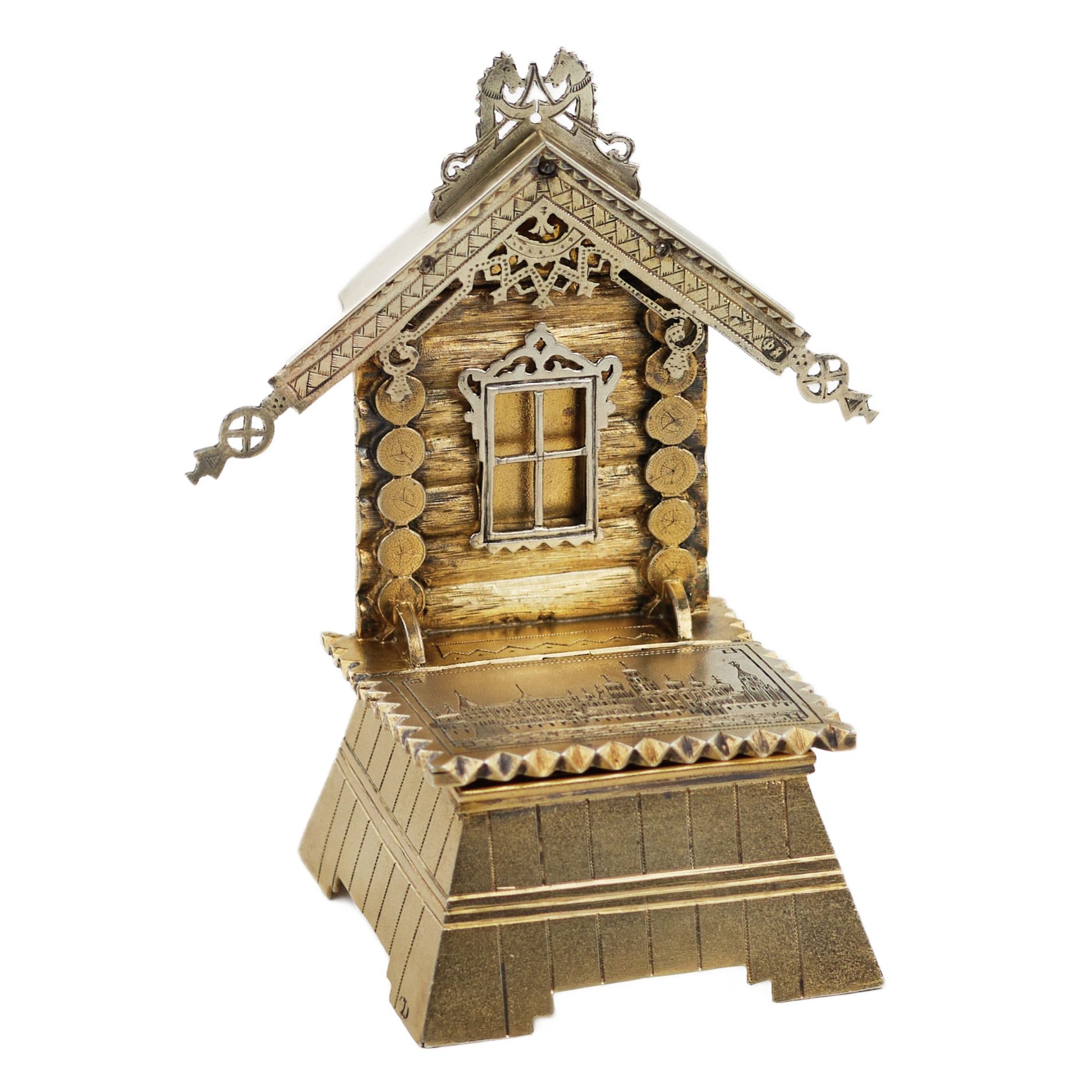
SILVER GILDED SALT THRONE. WORKSHOP OF FYODOR YARTSEV RUSSIA, MOSCOW, 1882

SILVER GILDED SALT THRONE. WORKSHOP OF FYODOR YARTSEV RUSSIA, MOSCOW, 1882

ID-ANTQ-13327
7000 EUR
Sold
Guarantee of Authenticity

At Antiqon ART, we build trust and value your choice. Every purchase of art and antiques with us is an investment backed by our expertise, reputation, and a 100% authenticity guarantee.

Price History

Discover how the value of similar works has evolved over the past 10 years. Art is not only beauty — it's an investment.

Complimentary Shipping & Returns

Antiqon ART offers free packaging, insurance, and delivery for most items purchased through the company. Exceptions include large and oversized items that require specialized packing and shipping.

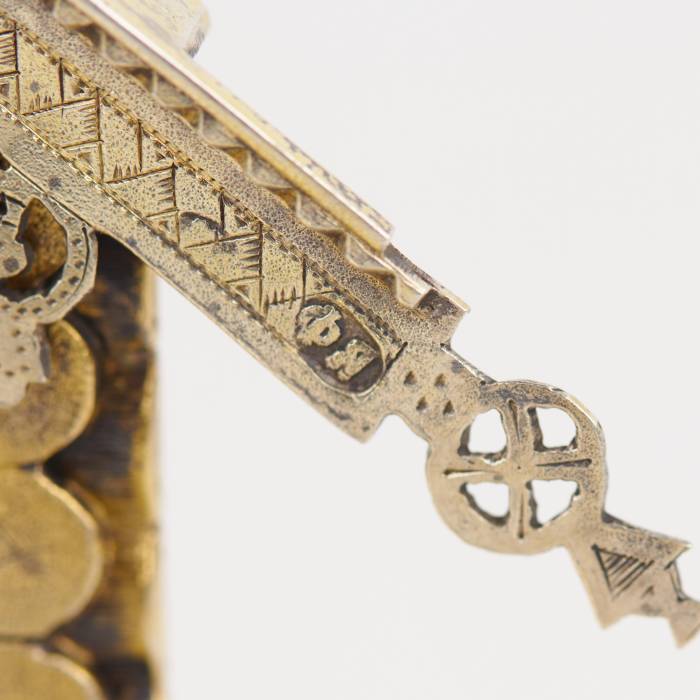
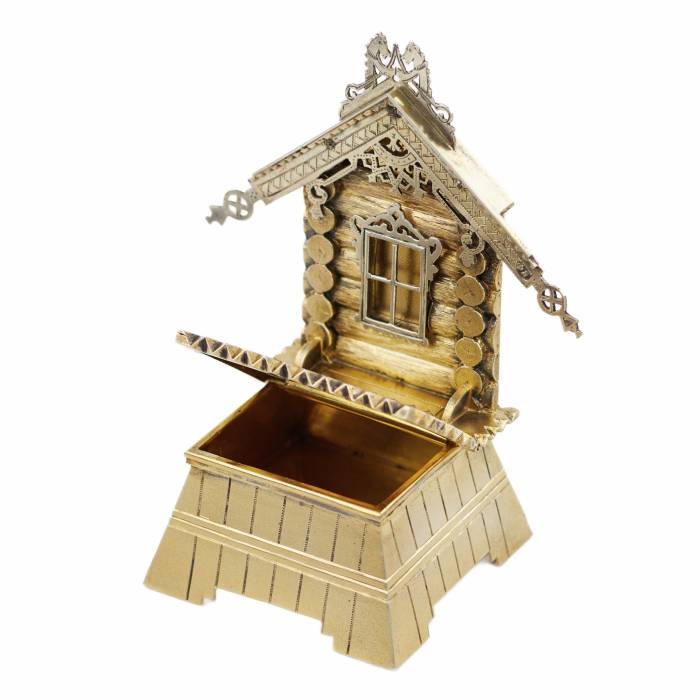
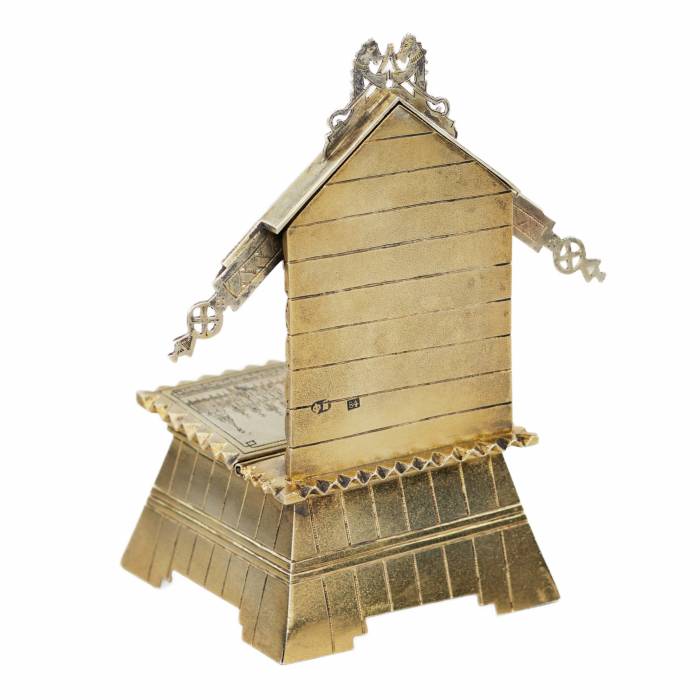
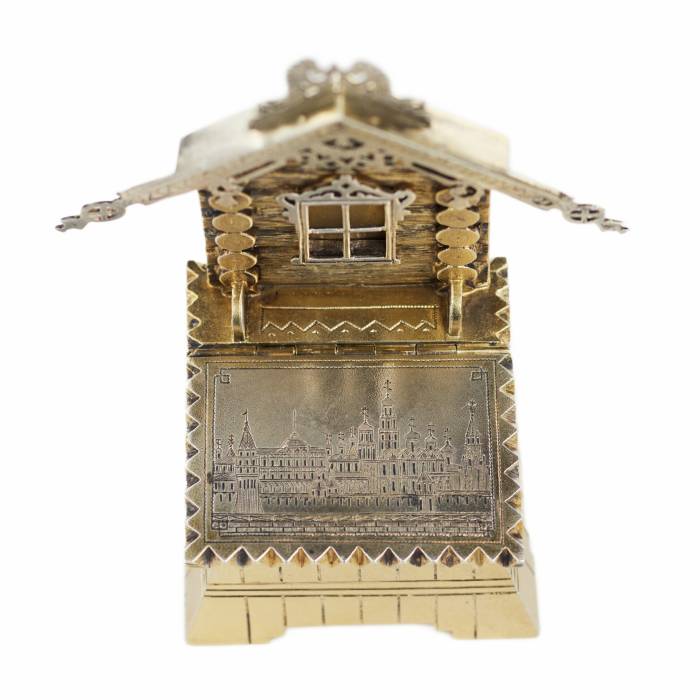
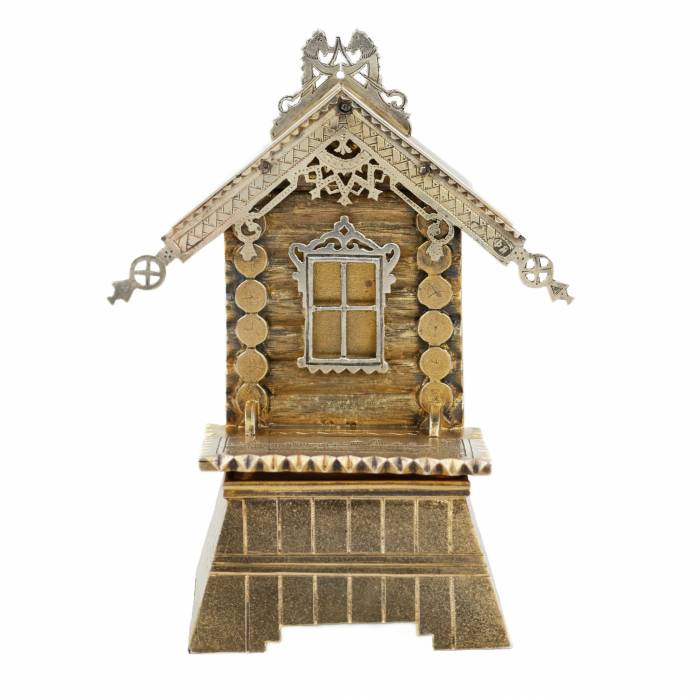
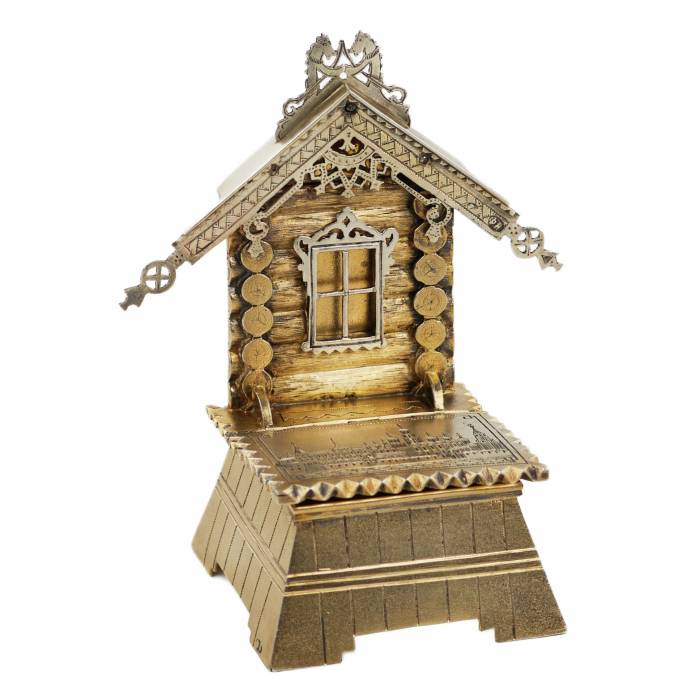
An exceptional silver and gilded salt cellar in the shape of a throne, made in the Moscow workshop of Fyodor Kirillovich Yartsev in 1882. The architectural composition of the object reproduces the appearance of a Russian hut: the façade is stylized as a log wall with a window in a figured casing, the pediment is decorated with carvings and ornamental motifs. The roof is crowned with decorative ends in the form of symbolic solar signs. The seat of the throne is equipped with a loop and functions as a lid; the inner surface is gilded, decorated with an engraved view of Moscow architecture. Such objects were intended for ceremonial storage of salt and had both a practical and symbolic function.

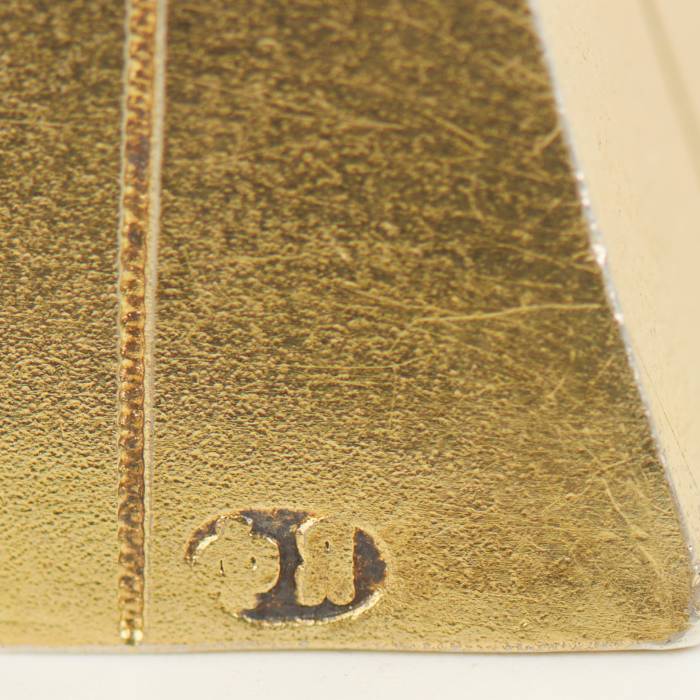
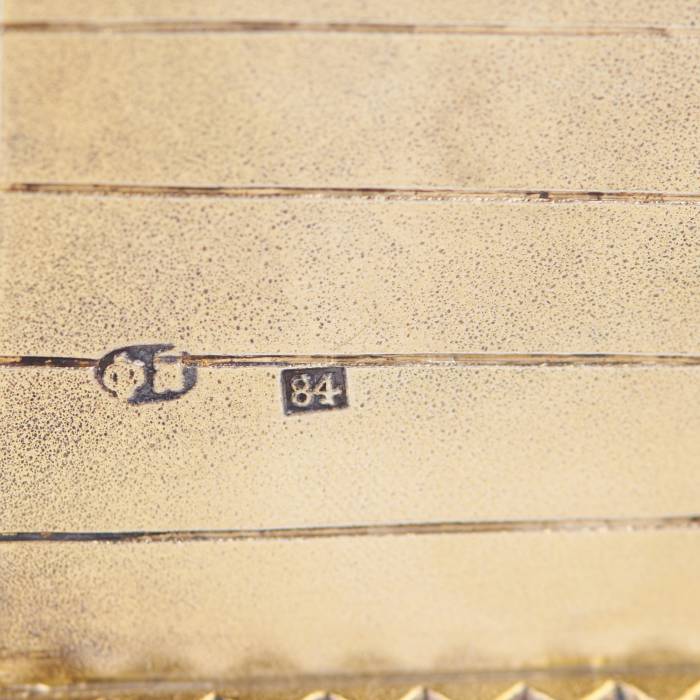
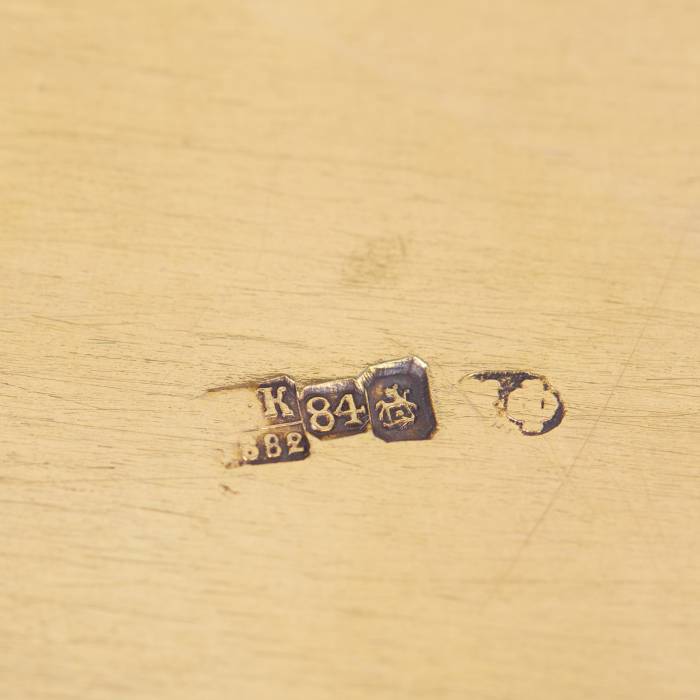
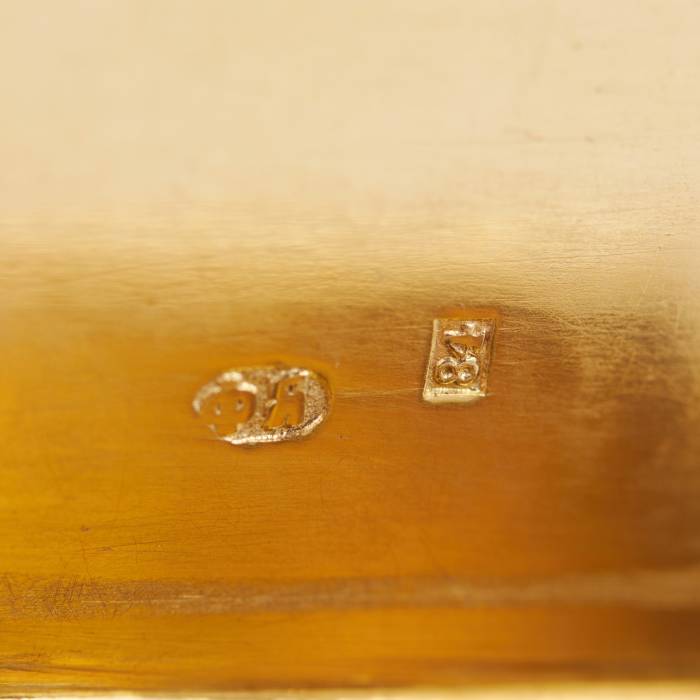
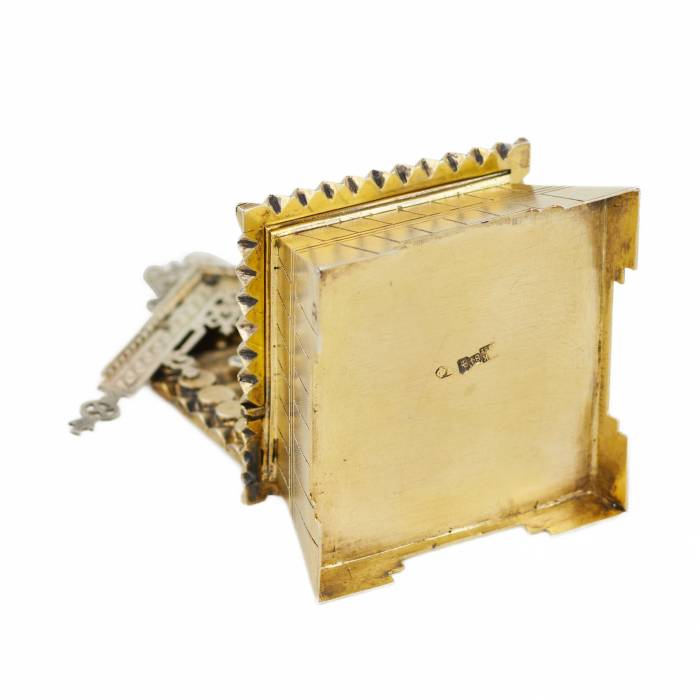
Hallmarks: Moscow assay mark of 1882 with the initials of the assay master AK - Alexey Alexandrovich Kuchkin, who served in the Moscow Assay Chamber, located above the year 1882; silver hallmark 84 (silver of 84th assay value); city hallmark of the city of Moscow - Saint George, striking the dragon; master`s hallmark FYa in an oval - Fyodor Kirillovich Yartsev, owner of a Moscow silver workshop.

Dimensions: Height 11.5 cm, width 6 cm, depth 6 cm.

Weight: 202 gr.

Condition: Well preserved with a noble patina and natural traces of time; the gilding is evenly preserved, the lid is in good condition.

Origin: Moscow, workshop of Fyodor Kirillovich Yartsev, 1882.

Art:
russia
Height:
12 cm
Width:
6 cm
Depth:
6 cm
Period:
19th century
Style:
Romanticism
Country:
Russia, Moscow
Material:
Silver 84, Gilding
Condition:
Revive
Fair
Good
Very good
Like new

Salt thrones represent a unique category of Russian decorative art in the second half of the 19th century, uniting national symbolism with refined silver craftsmanship. In Russian culture, salt symbolized wealth, purity, and hospitality. Salt cellars held pride of place at festive tables and, in elaborate forms, were presented as prestigious gifts.

Following the World Exhibitions in Vienna (1873) and Moscow (1882), the Russian style flourished, drawing inspiration from wooden architecture, churches, and towers. Silver masters reinterpreted ancient motifs into refined objects that combined archaic symbolism with technical mastery.

Fyodor Kirillovich Yartsev was among the talented Moscow silversmiths of the period, known for precise chasing, attention to detail, and strong architectural motifs. His workshop produced high-quality pieces for aristocratic commissions and exhibitions.

The 1882 Moscow assay mark with assayer AK — Alexey Alexandrovich Kuchkin — together with Yartsev’s ФЯ confirms the authenticity and origin of this piece, placing it within the highest level of Moscow silver craftsmanship. Comparable examples are preserved in the State Historical Museum and the Armoury Chamber of the Moscow Kremlin.

Condition Report: Good condition with noble patina and natural traces of age: gilding evenly preserved, lid intact.

Good condition with noble patina and natural traces of age: gilding evenly preserved, lid intact.

The condition report is provided for informational purposes only.

It is not comprehensive and may not reflect all defects, restorations, alterations, or adaptations, as Antiqon does not perform professional conservation-level assessments. The information is based on a qualified, yet subjective, evaluation by our specialists.Before purchasing, we recommend consultation with an independent expert.Please also consult our Terms and conditions and Glossary A-Z, which contain important information on lot characteristics and sale conditions.

Neo-Russian style.
The neo-Russian or pseudo-Russian style is part of the aesthetics of historicism and national identity of the 1815-1880s. It arose as an official position and an internal response of society to the victory of 1812. Concerned about all types of artistic creation, social and philosophical life of society. Determined the type of official architecture, private brick ward architecture, historical graphics and painting, the theme of decorative and applied art. The formation of the style is associated with the question of the originality of Russian history, developed by the Slavophiles. The main forms and techniques of decoration are borrowed from wooden architecture. Geometric definiteness and ethnographic fragmentation of the decor prevail. The style was especially popular in silver. Ladles, brothers, saltcellars in the form of thrones-towers, etc. expanded the range of Russian craftsmen of the second half of the 19th century. The neo-Russian style became a stable form of thought for most of the 19th century until the advent of modernity.
... Read More

Stay up to date with new arrivals
Save Russian silver and we let you know when new listings appears in this category
Save

Related items