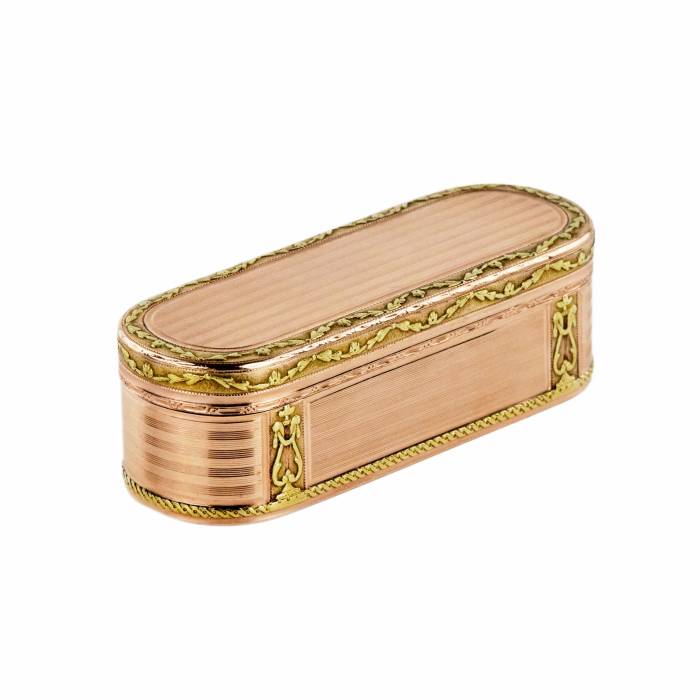
TWO-TONE GOLD NEOCLASSICAL SNUFFBOX FRANCE, LATE 19TH CENTURY, CIRCA 1890s
AntiqonART consultant will contact you within one business day after receiving your request.
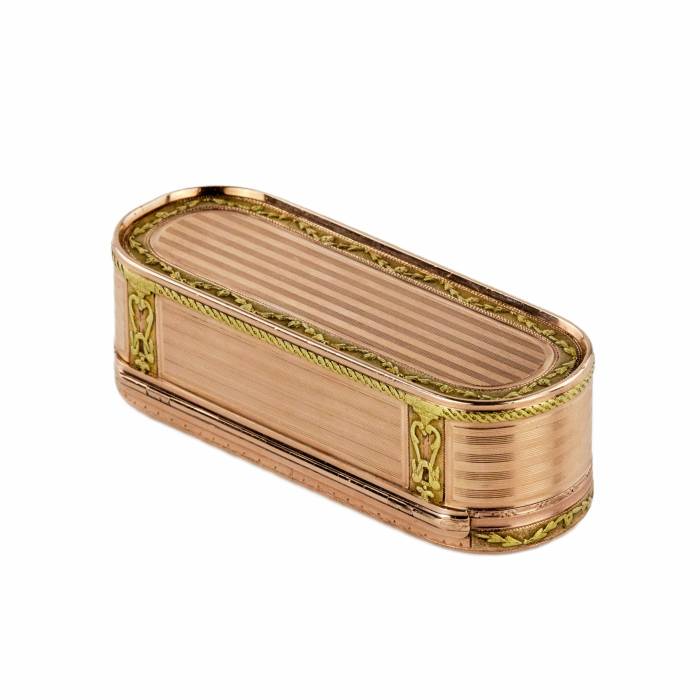
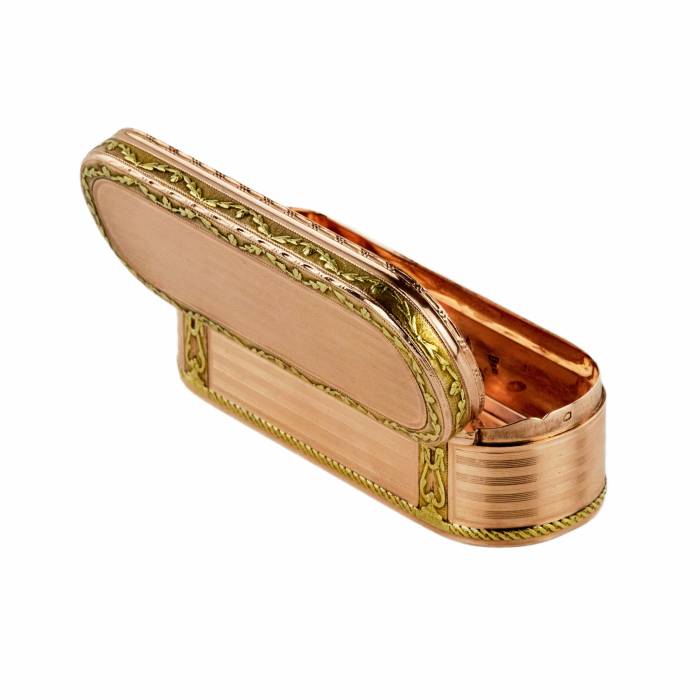
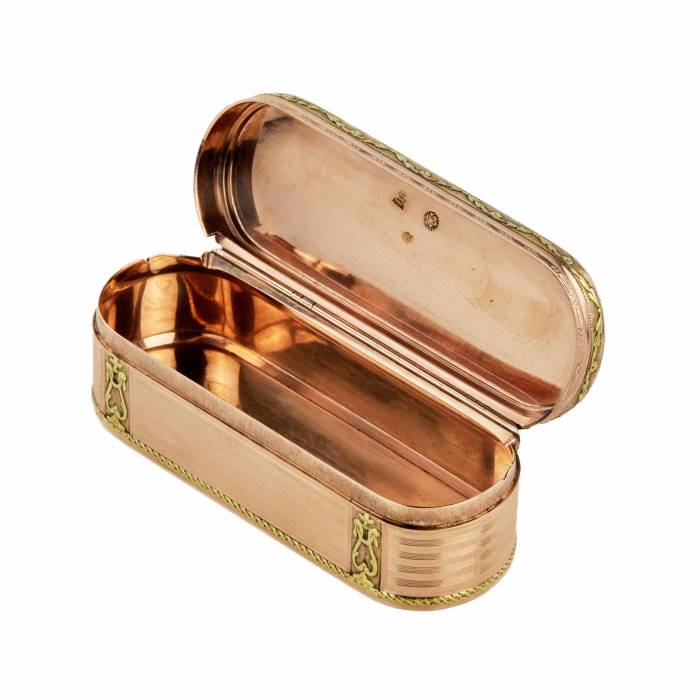
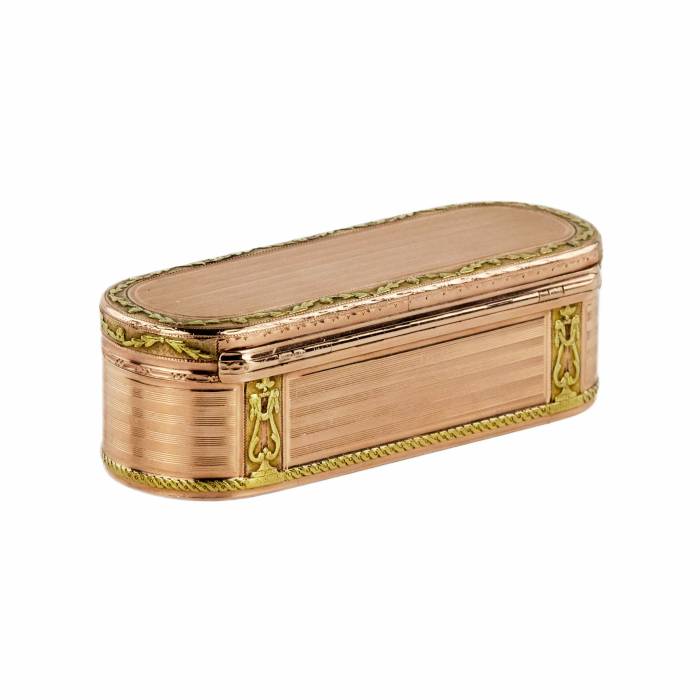
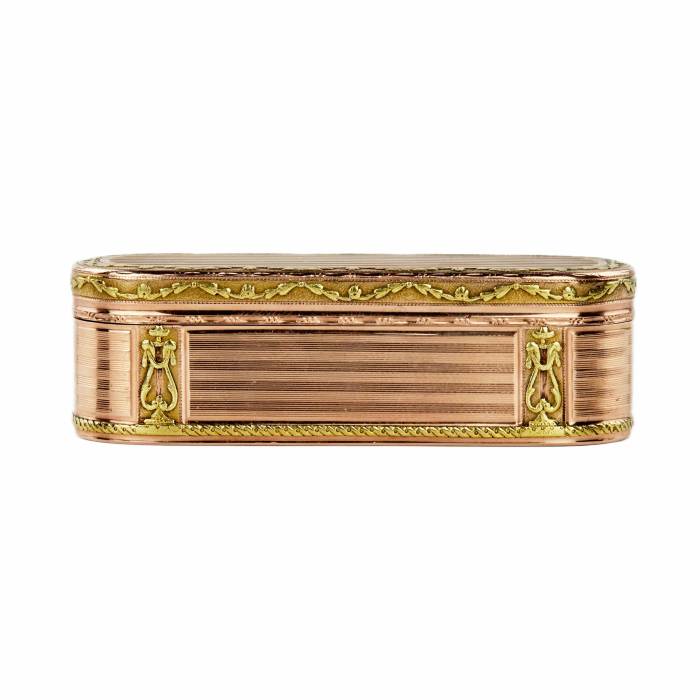
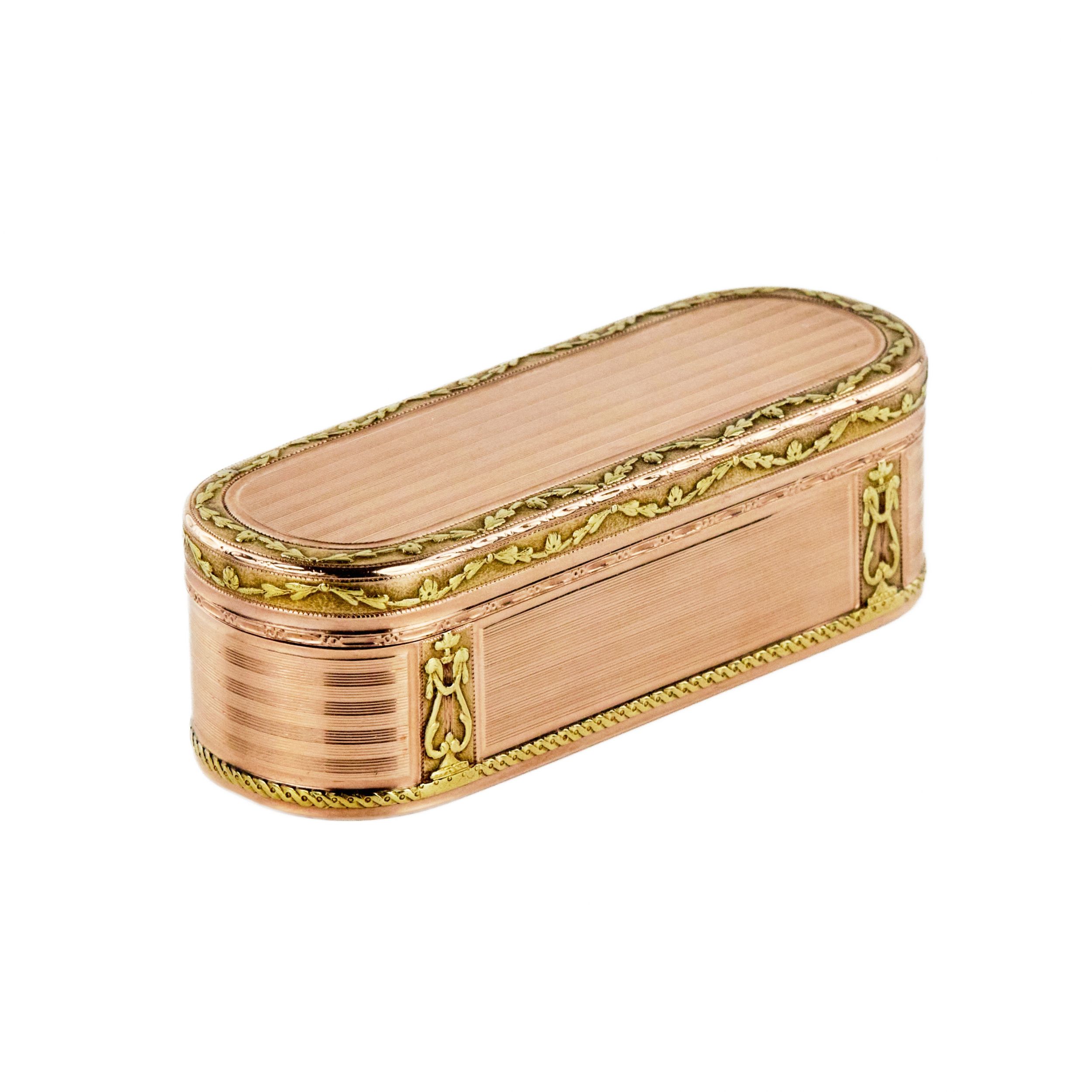
An elegant elongated oval snuffbox crafted in two-tone gold, executed in a restrained Neoclassical style. The surfaces of the case are decorated with fine longitudinal engraving, emphasizing the clarity of proportions and the architectural character of the form. A decorative frieze of vegetal garlands runs along the perimeter of the lid and body, executed in a contrasting tone of gold. The sides are accentuated with applied lyre motifs, characteristic of the Neoclassical repertoire and directly referencing the aesthetic language of 18th-century French decorative arts. The restrained ornamentation and high quality of execution reflect the refined taste of the Belle Époque and the traditions of French goldsmithing at the end of the 19th century.
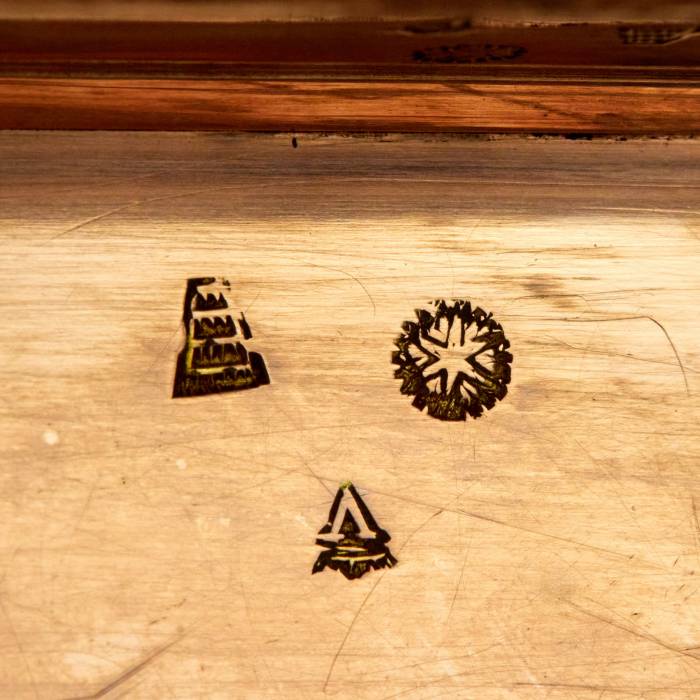
Hallmarks: French assay marks on the inner side of the lid, including a maker’s mark in a lozenge-shaped cartouche, the principal state gold assay mark, and an additional state control mark of abstract form, characteristic of the French hallmarking system of the late 19th century.
Dimensions: Length: 101.5 mm; Width: 37.2 mm; Height: 31 mm.
Weight: 154.1 g.
Condition: Good.
Provenance: Private collection.
French snuffboxes of the late 19th century occupy a distinct position in the history of decorative arts as a continuation of the tradition of objets de vertu established during the reigns of Louis XV and Louis XVI. Around the 1890s, within the cultural climate of the Belle Époque, a renewed interest in Neoclassical forms inspired by 18th-century aesthetics became particularly pronounced. Goldsmiths consciously turned to classical models, reinterpreting them through the lens of contemporary technical refinement and late 19th-century taste.
Snuffboxes made of two-tone gold became a characteristic expression of this tendency. The contrast between different gold hues allowed craftsmen to emphasize architectural structure and ornamental rhythm without excessive decoration. Longitudinal engraving, vegetal garlands, and lyre motifs refer to the symbolic vocabulary of Neoclassicism, in which harmony, balance, and proportion were considered supreme aesthetic values. Such objects were produced for an affluent clientele and often formed part of private collections.
By the end of the 19th century, the snuffbox had evolved from a purely utilitarian object into a marker of personal status and cultural identity. The presence of a complete set of French assay marks confirms that the object was produced within the legally regulated framework of French goldsmithing. Today, snuffboxes of this type are regarded as representative examples of French Neoclassicism of the late 19th century and are appreciated in museum and auction contexts for their craftsmanship and stylistic clarity.
Overall condition is good. Minor surface scratches and signs of wear consistent with age and use. The lid mechanism functions properly. No deformations, cracks, restorations, or losses observed
The condition report is provided for informational purposes only.
It is not comprehensive and may not reflect all defects, restorations, alterations, or adaptations, as Antiqon does not perform professional conservation-level assessments. The information is based on a qualified, yet subjective, evaluation by our specialists.Before purchasing, we recommend consultation with an independent expert.Please also consult our Terms and conditions and Glossary A-Z, which contain important information on lot characteristics and sale conditions.