


SILVER THRONE-FORM SALT CELLAR IN THE HISTORICISM STYLE RUSSIAN EMPIRE, MOSCOW, 1891
AntiqonART consultant will contact you within one business day after receiving your request.
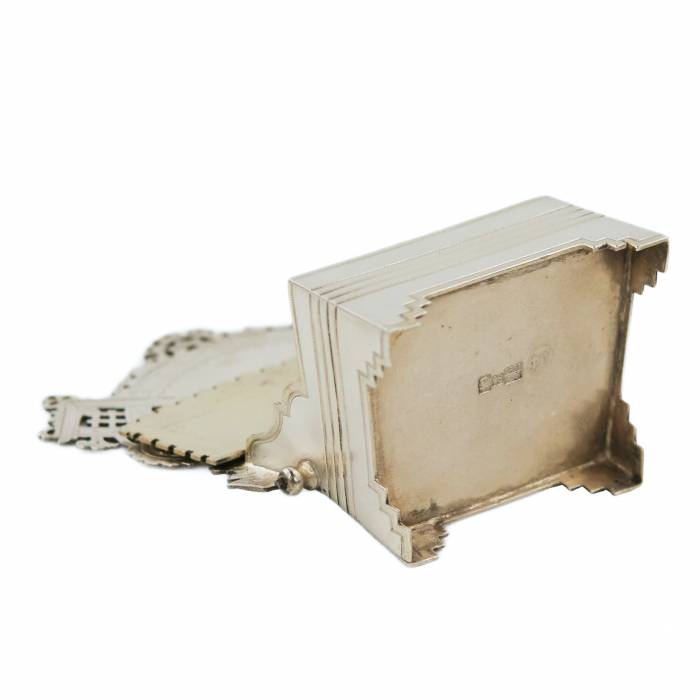
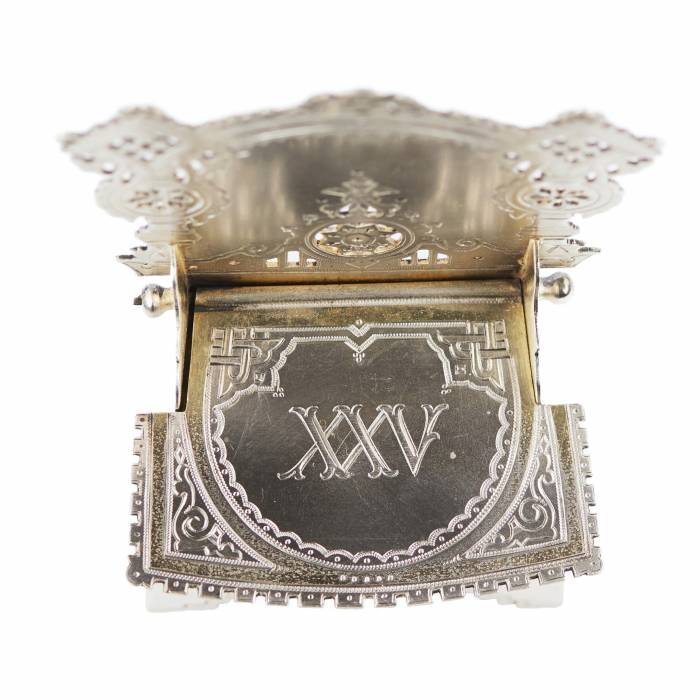
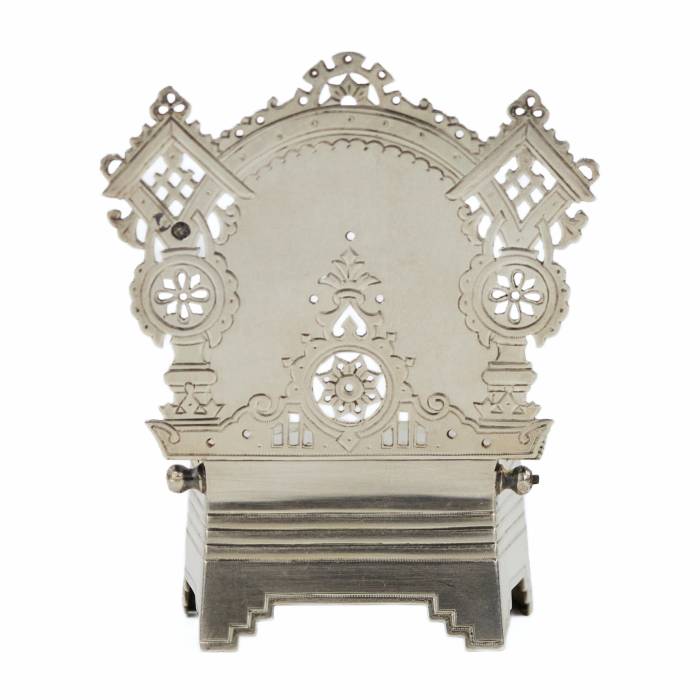
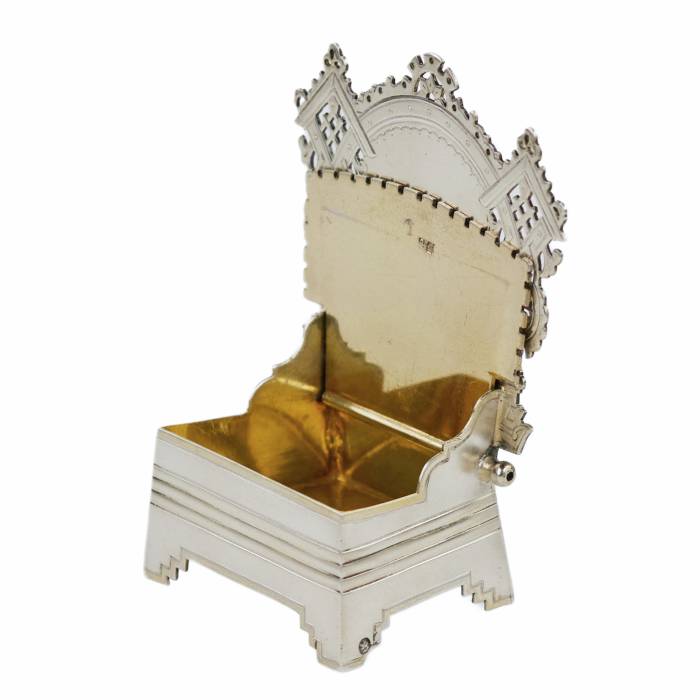
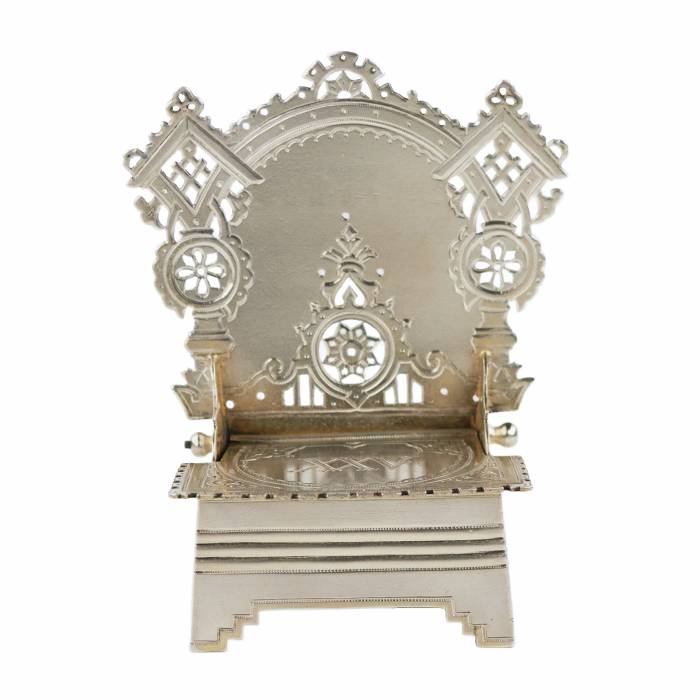
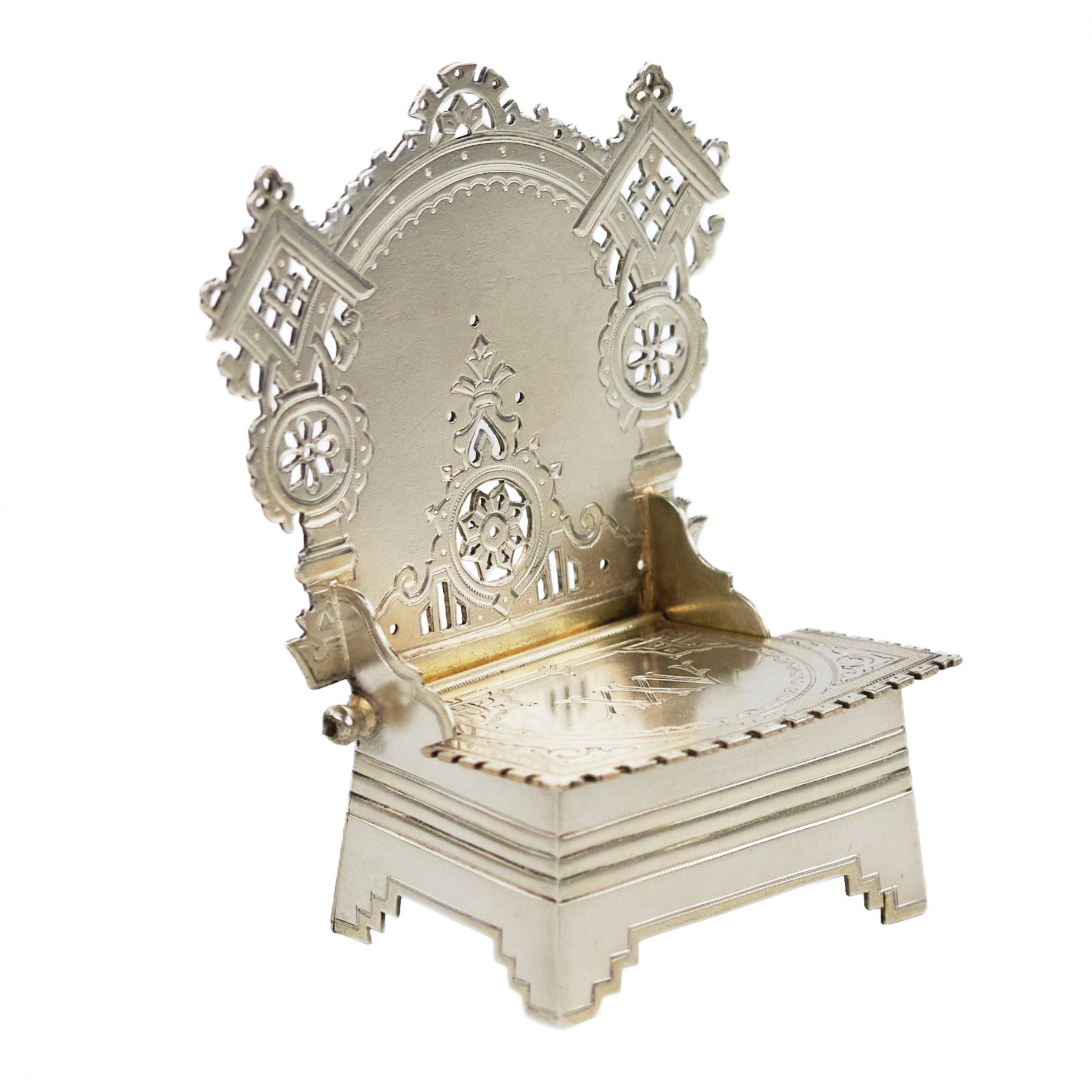
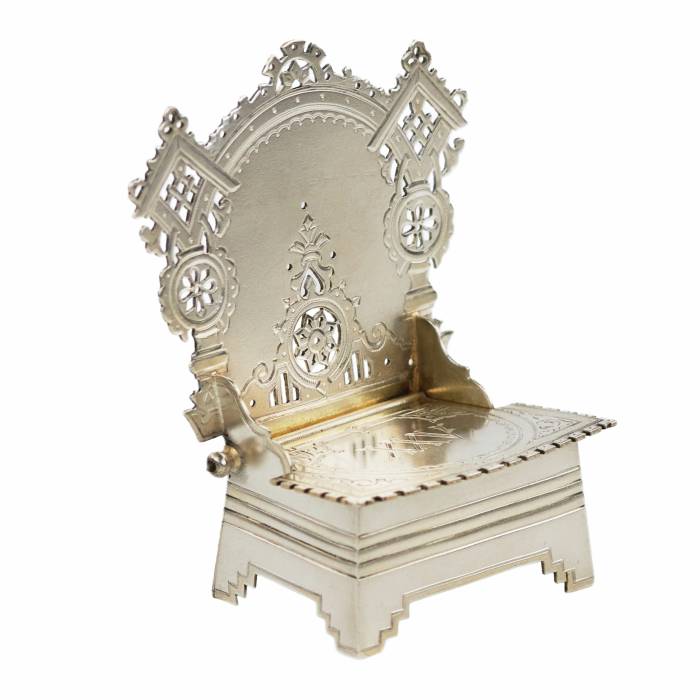
An elegant silver salt cellar executed in the form of a throne with a high openwork back, representing a characteristic example of Russian decorative and applied art of the Historicism period. The architecturally structured composition refers to ceremonial furniture forms and Neo-Russian stylistic motifs, emphasized by the complex silhouette, strict symmetry, and richly developed ornamental decoration.
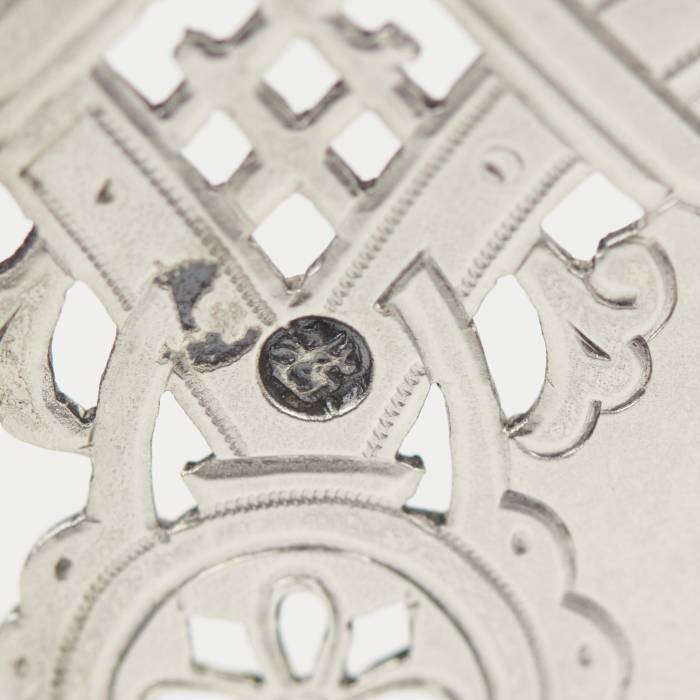
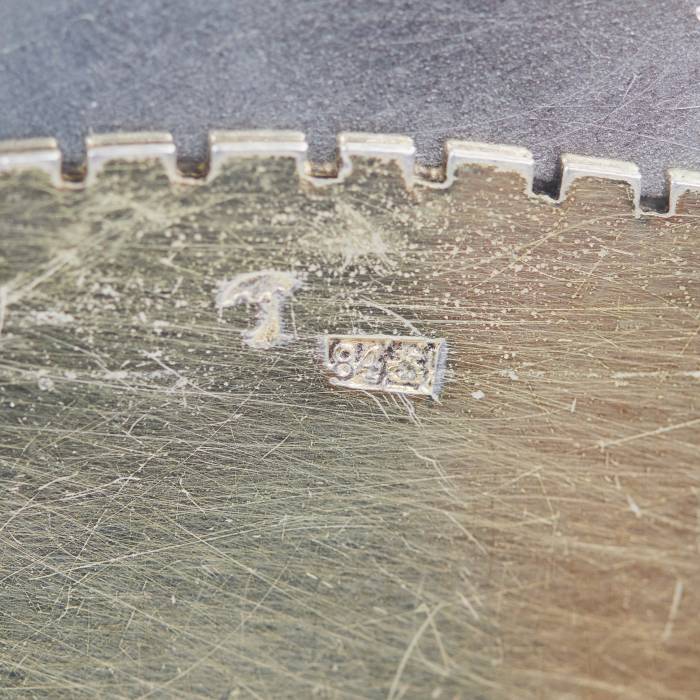
The pierced back is adorned with vegetal and geometric ornamentation centered by a rosette motif, flanked by stylized columns and shield-like elements forming a miniature architectural façade. The base is designed as a massive platform with architecturally articulated feet, enhancing the object’s stability and monumental presence. The interior of the bowl is fully gilded, a traditional practice intended to protect silver from the corrosive effects of salt while simultaneously enhancing the ceremonial appearance of the piece.
Material: Silver, 84 standard, gilt interior.
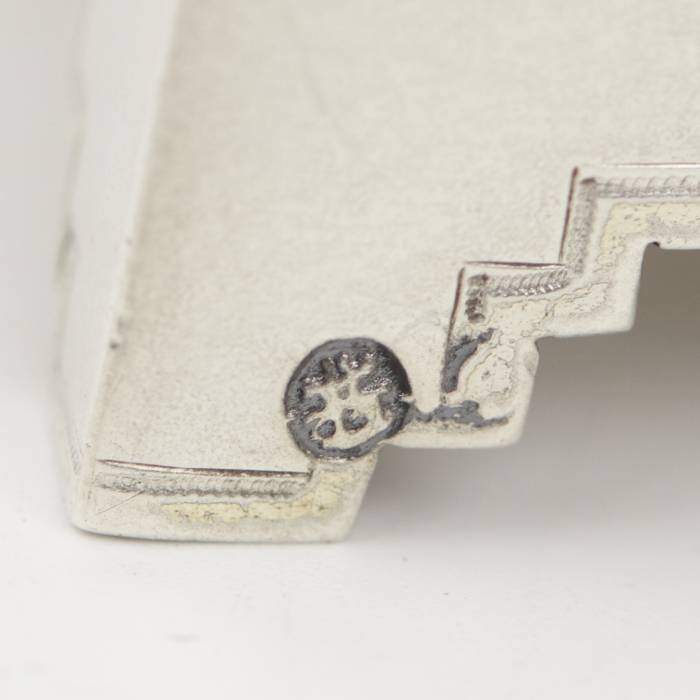
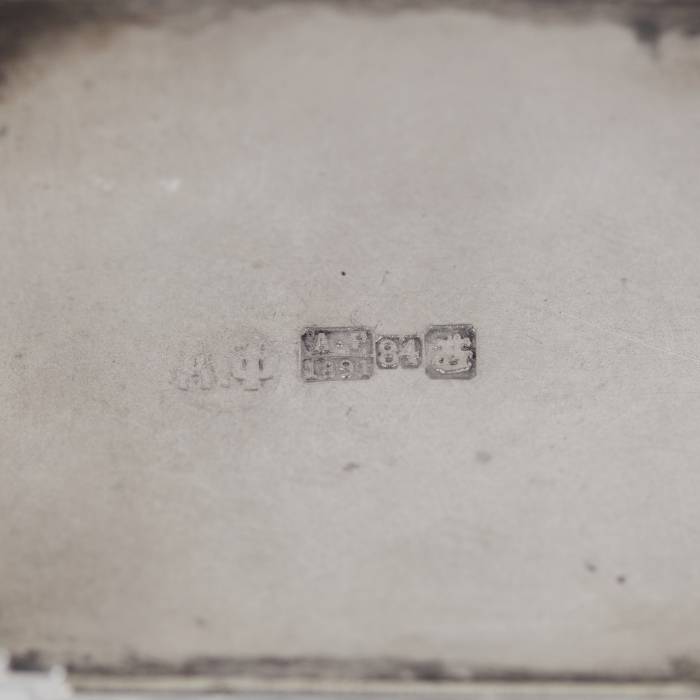
Marks: Maker’s mark “A.F.” in an oval - Alexander Iosifovich Fuld, owner of a silverware factory; Assay mark “84”; Moscow assay mark with the initials of the assayer “A.R.” above a line and the date “1891”; City mark of Moscow; Additional control and technical marks.
Dimensions: Height - 8.5 cm; width - 7 cm; depth - 4 cm.
Weight: 80 g.
Condition: Good. Stable construction. Gilding of the interior well preserved. Minor signs of wear consistent with age. No deformations or losses.
Provenance: Private collection.
The late nineteenth century marked a period of active development of Historicism within Russian decorative and applied arts, particularly in the artistic milieu of Moscow. Craftsmen increasingly turned to nationally oriented artistic programs, reinterpreting forms of ancient Russian architecture, ceremonial furniture, and symbols of authority. The Neo-Russian style, widely disseminated during the 1880s and 1890s, became a key component of this movement, characterized by monumentality, architectural clarity, and rich ornamental vocabulary.
Silver salt cellars designed in the form of thrones occupied a special place in the table culture of the Russian Empire. They functioned not only as utilitarian serving objects but also as markers of social hierarchy, status, and continuity of tradition. The throne motif in applied art symbolized authority and order, making such objects particularly appropriate for formal dining settings.
The workshop of Alexander Iosifovich Fuld was among the notable Moscow silver manufactories of the late nineteenth century. His production was distinguished by high technical standards, precision of casting and chasing, and a strong sense of stylistic coherence. Today, throne-form salt cellars from Moscow workshops of this period are regarded as significant monuments of Russian silverwork and are highly valued in museum and private collections.
Overall good condition. The silver shows no structural damage. Gilding is even and well preserved. Minor surface wear consistent with age. No evidence of restoration.
The condition report is provided for informational purposes only.
It is not comprehensive and may not reflect all defects, restorations, alterations, or adaptations, as Antiqon does not perform professional conservation-level assessments. The information is based on a qualified, yet subjective, evaluation by our specialists.Before purchasing, we recommend consultation with an independent expert.Please also consult our Terms and conditions and Glossary A-Z, which contain important information on lot characteristics and sale conditions.