


SILVER TEA SET WITH CLOISONNÉ ENAMEL AND THE INSCRIPTION “PRIYATNOGO APPETITA” RUSSIA, MOSCOW, 1891
AntiqonART consultant will contact you within one business day after receiving your request.
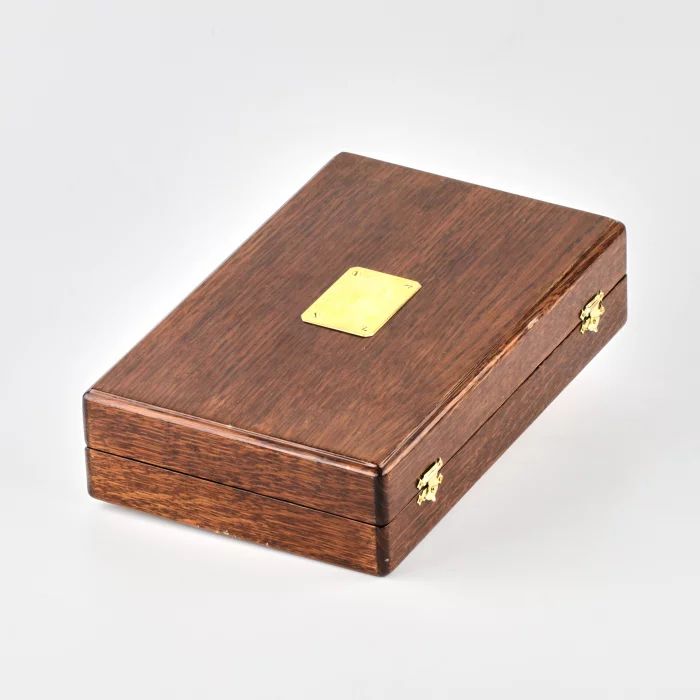
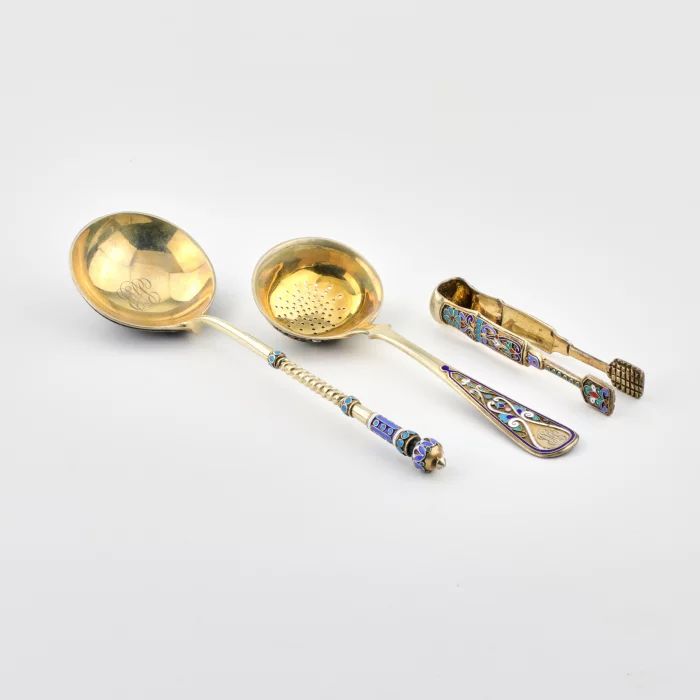
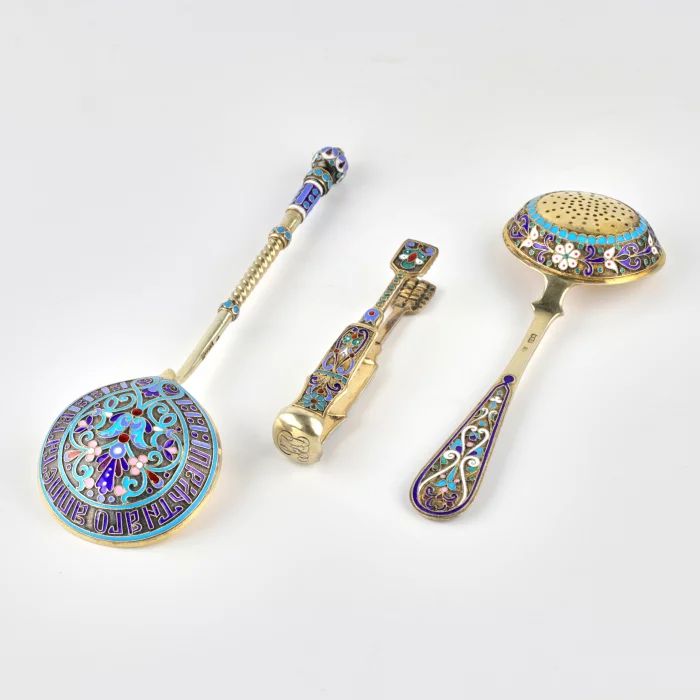
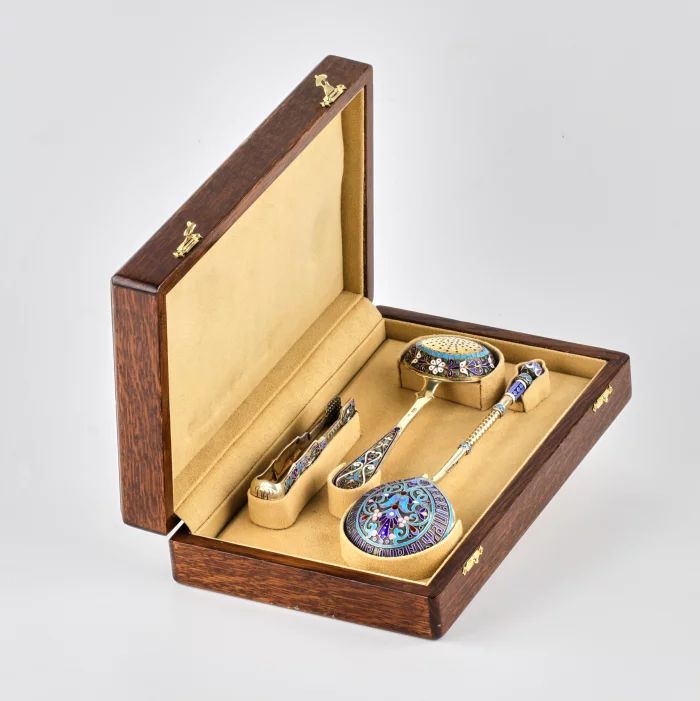
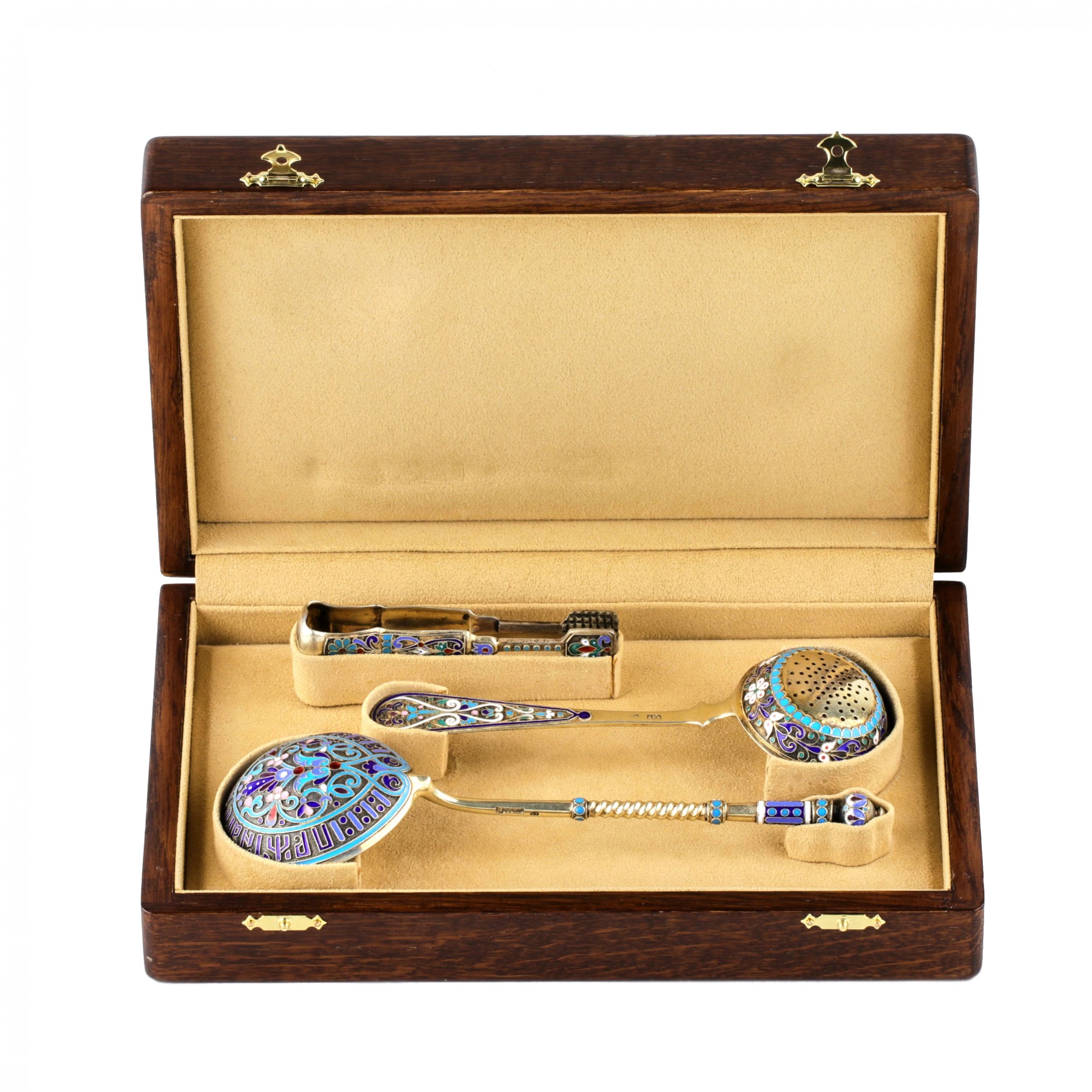
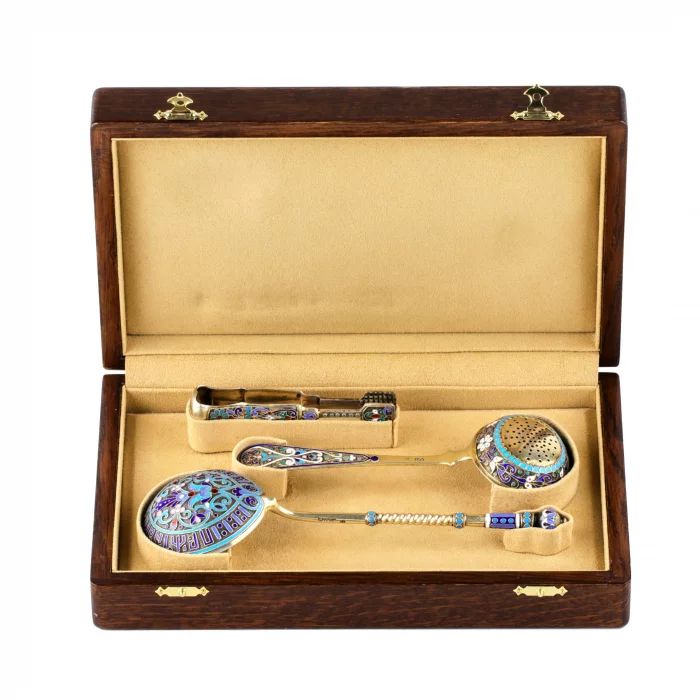
An elegant silver tea set produced in Moscow in 1891, representing a characteristic example of Russian decorative silverwork of the late 19th century. The ensemble comprises a large jam-serving spoon bearing the decorative inscription “Priyatnogo Appetita” (“Bon Appétit”), a tea strainer, and sugar tongs. All elements are crafted in 88 zolotnik silver and richly adorned with high-quality polychrome cloisonné enamel.
The ornamental decoration is based on a refined combination of deep blue, turquoise, violet, and white enamels forming intricate vegetal and geometric motifs typical of the Moscow school of the late 19th century. Selected surfaces are enhanced with fire-gilding, emphasizing the decorative richness and ceremonial character of the ensemble. The inscription on the spoon carries an intimate, almost personal tone, reflecting the gift-giving traditions and tea etiquette of the period.
The set is presented in its original wooden case with a fabric-lined interior precisely fitted to the contours of each object, underscoring its status as a complete and unified presentation ensemble.
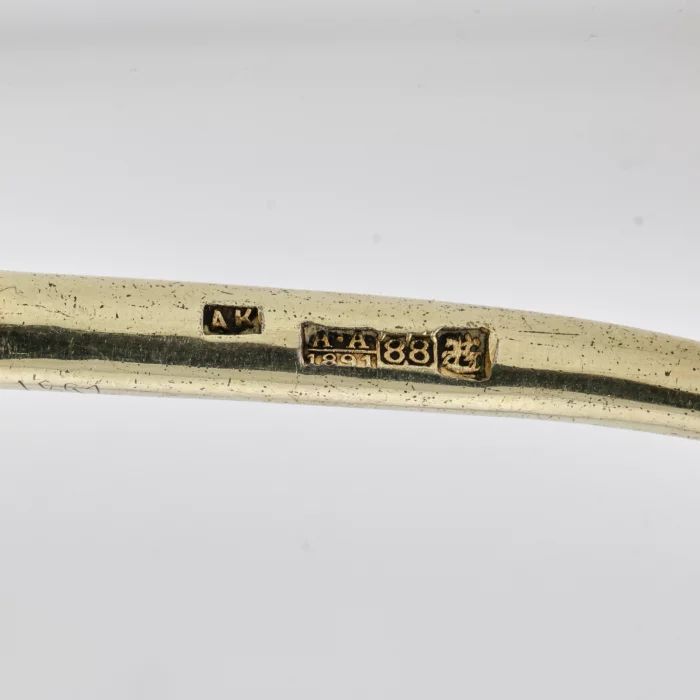
Marks: Maker’s mark “AK”, presumably Antip Ivanovich Kuzmichev; assay mark indicating silver fineness “88”; date mark “1891”; Moscow assay office mark.
Dimensions: Vary according to each item.
Weight: 183 g.
Condition: Good.
Provenance: Private collection.
The Moscow school of cloisonné enamel of the late 19th century occupies a distinctive place in the history of Russian decorative and applied arts. During this period, enamel evolved from a purely decorative technique into an independent artistic language associated with exceptional craftsmanship and sophisticated chromatic harmony. Moscow emerged as one of the principal centers for the production of enameled silver objects intended for ceremonial table and tea service.
The maker’s mark “AK” is traditionally associated with Antip Ivanovich Kuzmichev, proprietor of a silverware manufactory founded in 1856. The enterprise reached its peak during the 1890s, when the workshop produced refined cloisonné enamel objects for the affluent urban milieu. Works attributed to this circle are distinguished by precise cloisonné partitions, evenly fired enamel surfaces, and balanced color compositions.
Comparable enameled silver objects are preserved in major museum collections, including the State Historical Museum, where enameled beakers, salt cellars, and milk jugs of Moscow manufacture from the late 19th century are held. Kuzmichev is cited in the fundamental study by N. G. Postnikova-Loseva on Russian silver as a representative of the Moscow cloisonné enamel tradition (see Postnikova-Loseva, p. 207).
Tea sets of this type combined utilitarian function with a symbolic expression of hospitality. Inscribed wishes incorporated into tableware reflected the social customs of dining and the cultural significance of the tea ceremony in late Imperial Russia.
Good condition. Silver with even gilding and natural patina. Enamels without significant losses, showing only minimal age-related wear. The case with minor signs of careful use consistent with age.
The condition report is provided for informational purposes only.
It is not comprehensive and may not reflect all defects, restorations, alterations, or adaptations, as Antiqon does not perform professional conservation-level assessments. The information is based on a qualified, yet subjective, evaluation by our specialists.Before purchasing, we recommend consultation with an independent expert.Please also consult our Terms and conditions and Glossary A-Z, which contain important information on lot characteristics and sale conditions.