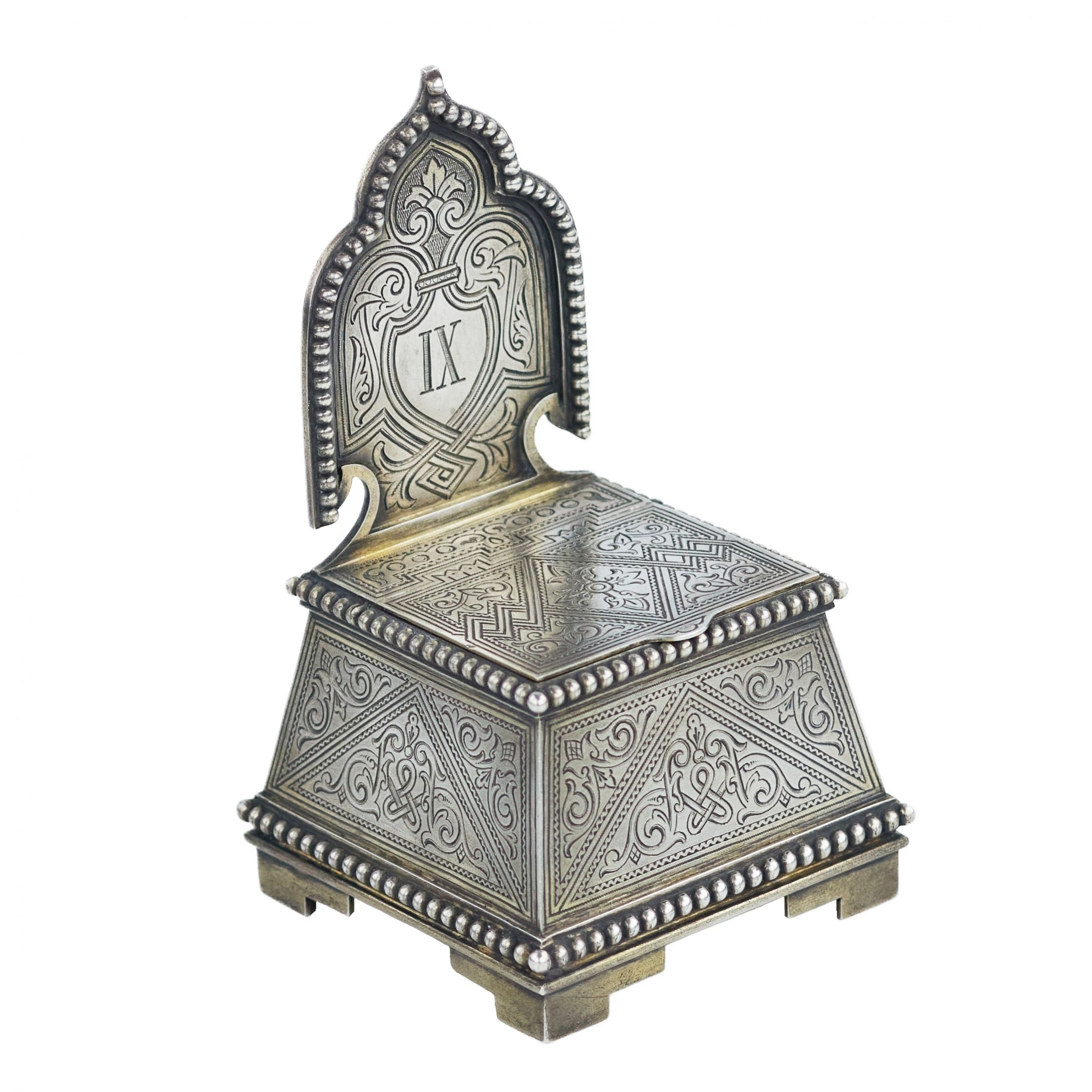
SILVER SALT CELLAR IN THE FORM OF A THRONE, KHLEBNIKOV FIRM RUSSIAN EMPIRE, MOSCOW, 1883
AntiqonART consultant will contact you within one business day after receiving your request.
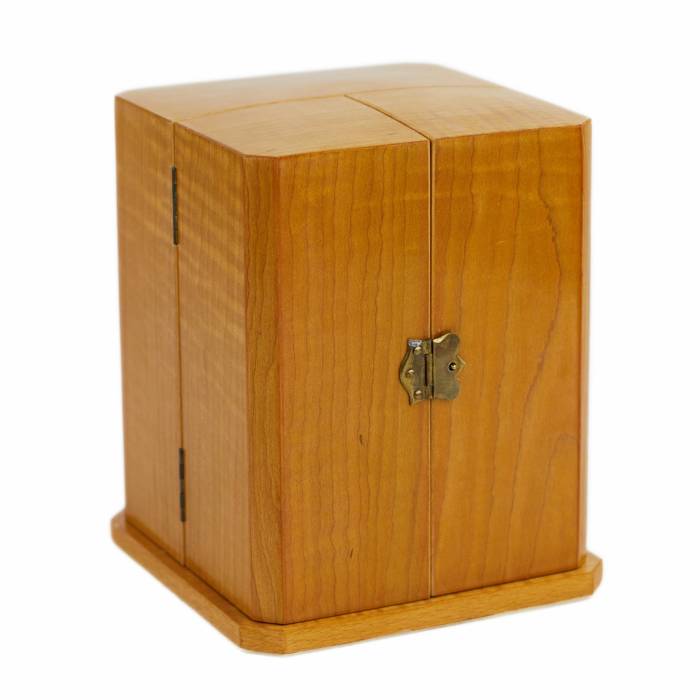
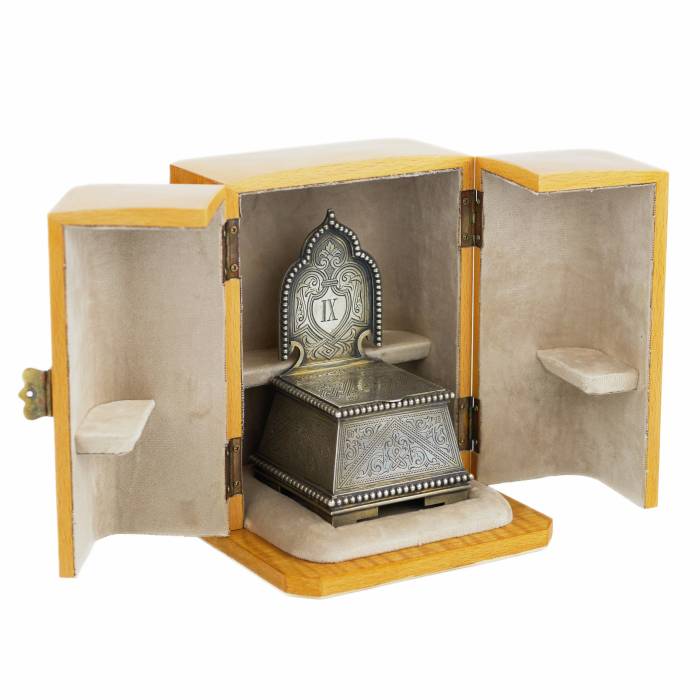
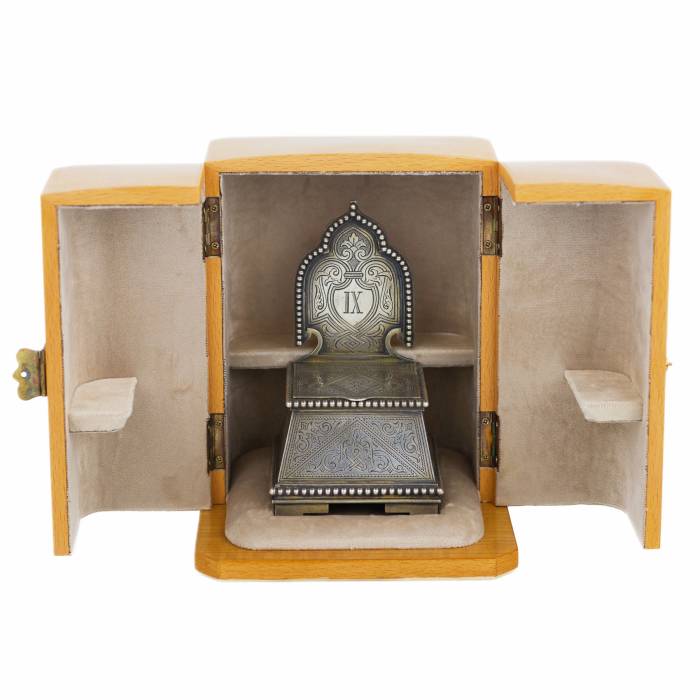
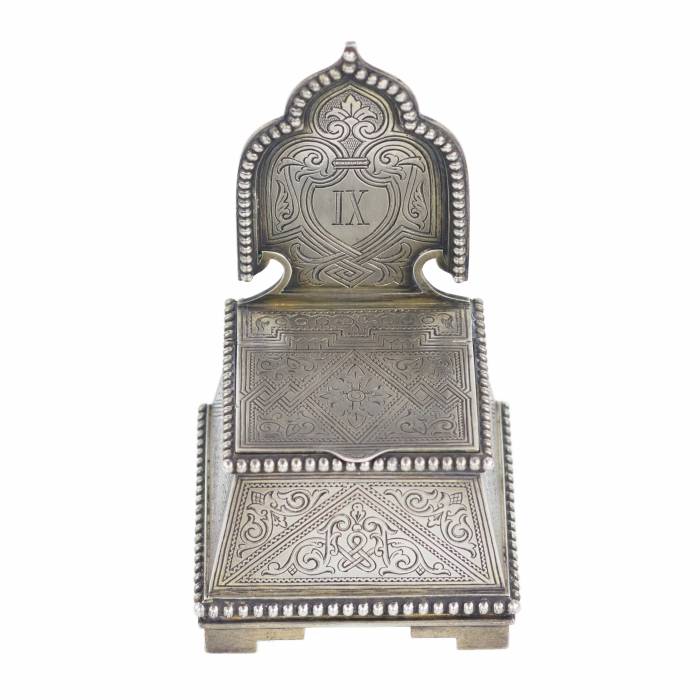
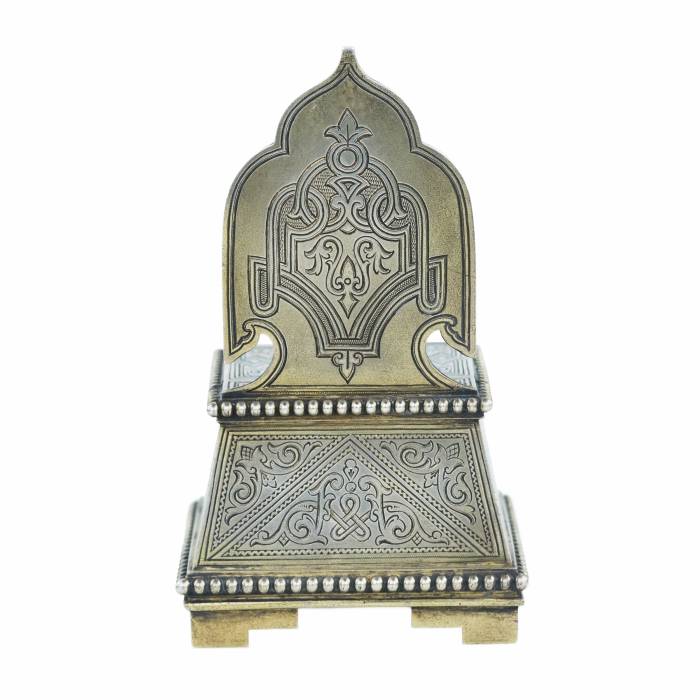
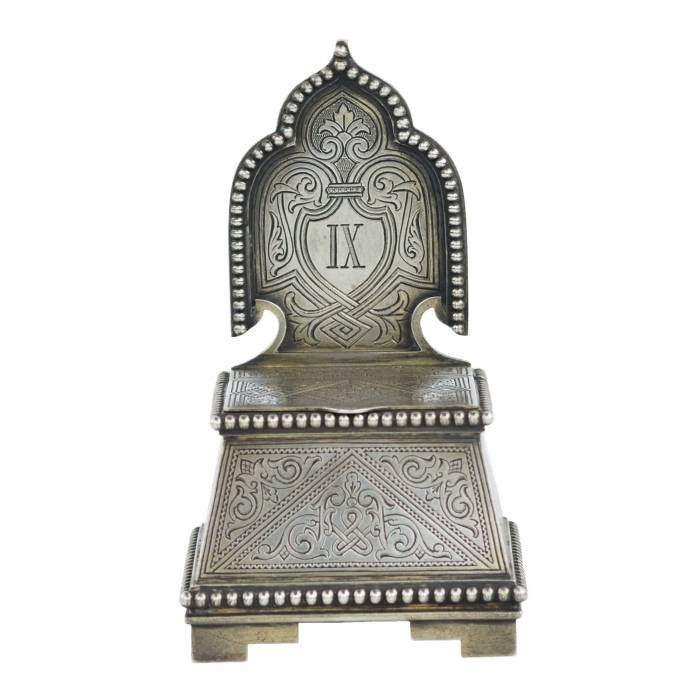
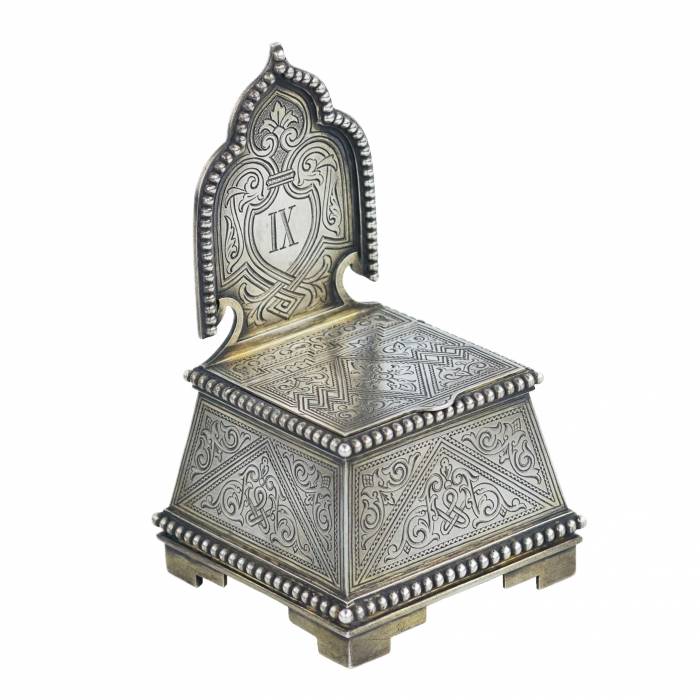
A large silver salt cellar created in 1883 in the workshop of the Imperial Court supplier Khlebnikov represents a rare and highly expressive example of Moscow silverwork from the last quarter of the 19th century. The object is executed in the form of a ceremonial throne with a high sculptural back, directly referencing symbols of authority and the formal court culture of the Russian Empire.
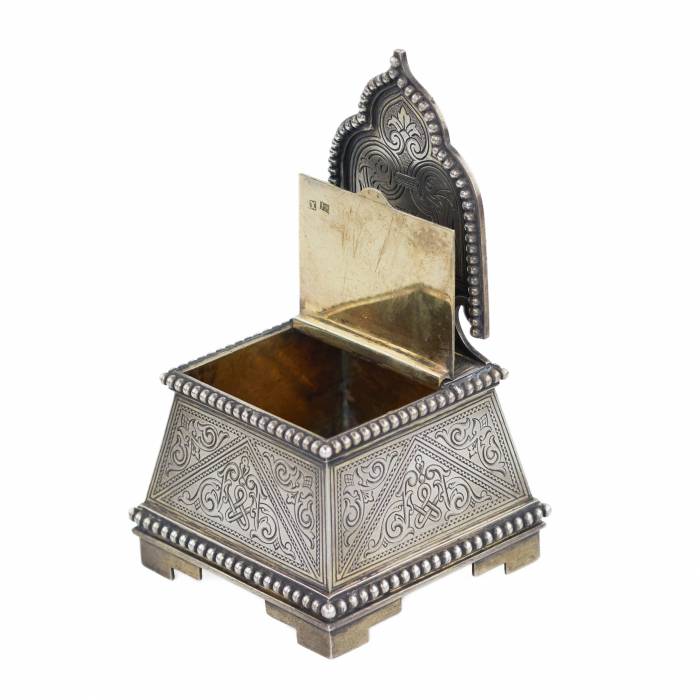
The architecturally structured body is distinguished by a monumental silhouette, precise geometry, and balanced proportions. The surfaces are richly decorated with finely engraved ornamentation combining scrolling foliage, geometric patterns, and stylised elements of the Neo-Russian style. The back of the salt cellar is accentuated by a decorative cartouche engraved with the Roman numeral “IX” and framed by a raised beaded border, reinforcing the ceremonial and representative character of the piece.
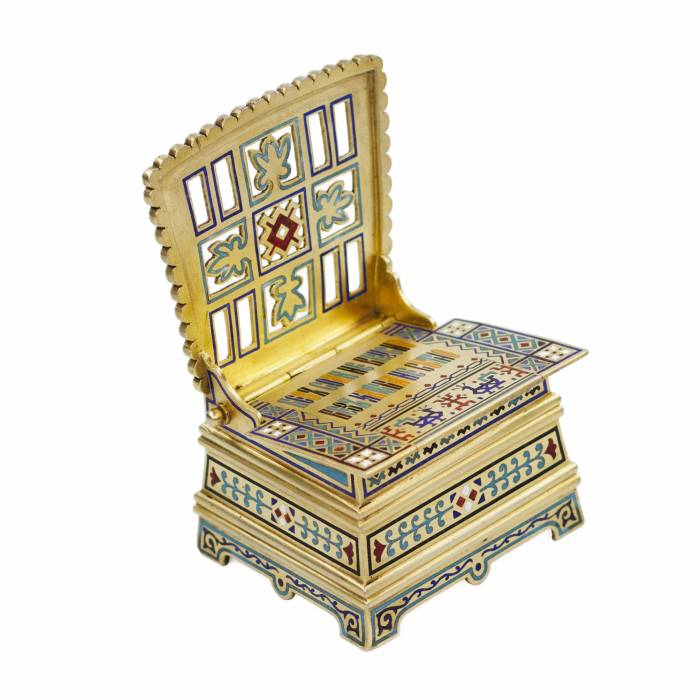
The massive base with stable feet enhances the architectural presence of the composition. The interior of the bowl is traditionally gilded, in accordance with the highest standards of Russian table silver and to protect the silver from the corrosive effects of salt.
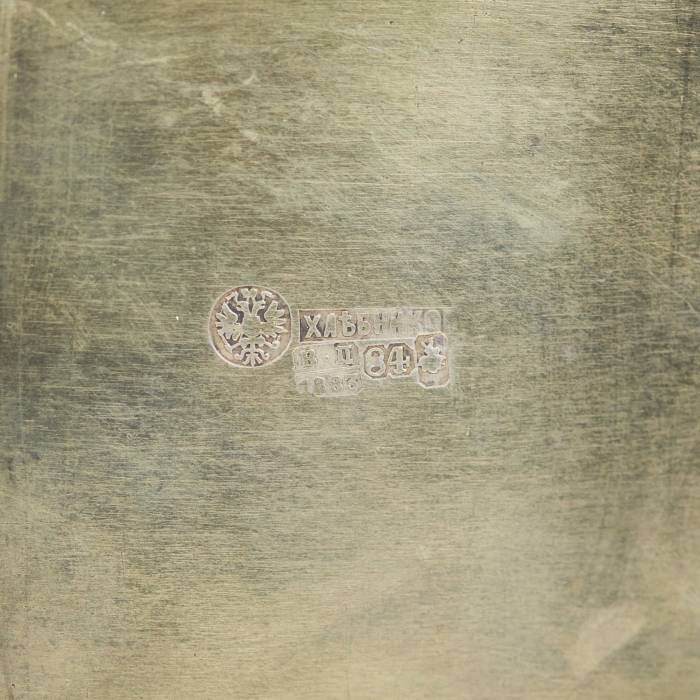
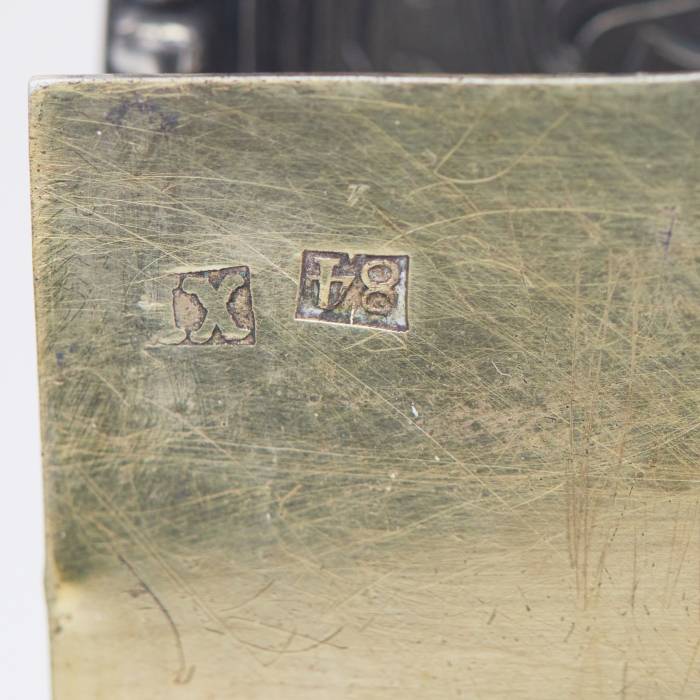
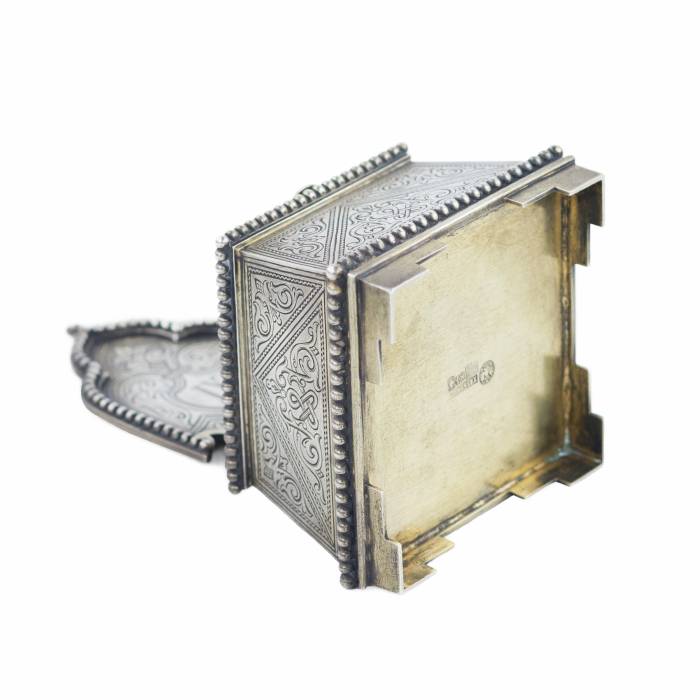
Marks: Full hallmark of the Imperial Court supplier Khlebnikov; Assay master’s mark “V.P” with a dividing line and the date “1883” below; State assay mark with fineness “84”; Moscow city assay mark depicting St George slaying the dragon; Additional assay marks.
Dimensions: Height 12.5 cm; Width 7.5 cm; Depth 7 cm.
Weight: 237 g.
Condition: Good. Gilding evenly preserved. Minor wear to the base. No deformation, cracks, restorations, or signs of active use.
Provenance: Private collection.
The Khlebnikov firm held a leading position among Moscow jewellery houses in the second half of the 19th century and enjoyed the official status of Supplier to the Imperial Court, a distinction reflecting the exceptional artistic quality, technical mastery, and consistently high standards of its production. During this period, Russian decorative and applied arts evolved within the framework of Historicism and the Neo-Russian style, drawing inspiration from ancient Russian architecture, state symbolism, and ceremonial court furniture.
Salt cellars in the form of a throne belonged to the category of representative table silver and were intended for formal dining and official receptions. Such objects served not only utilitarian purposes but also functioned as visual statements of status, emphasising the owner’s social standing, elite affiliation, and refined artistic taste.
Overall good condition consistent with age. Engraving remains crisp and legible. Interior gilding preserved. Minor age-related wear does not affect the integrity or visual impact of the piece.
The condition report is provided for informational purposes only.
It is not comprehensive and may not reflect all defects, restorations, alterations, or adaptations, as Antiqon does not perform professional conservation-level assessments. The information is based on a qualified, yet subjective, evaluation by our specialists.Before purchasing, we recommend consultation with an independent expert.Please also consult our Terms and conditions and Glossary A-Z, which contain important information on lot characteristics and sale conditions.