


SILVER SALT CELLAR IN THE FORM OF A THRONE. MASTER P. P. MILYUKOV RUSSIAN EMPIRE, MOSCOW, 1895
AntiqonART consultant will contact you within one business day after receiving your request.
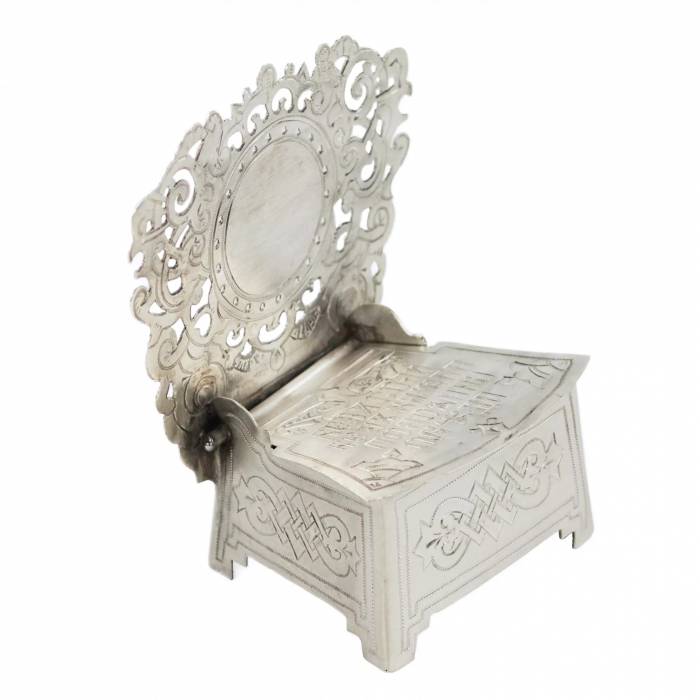
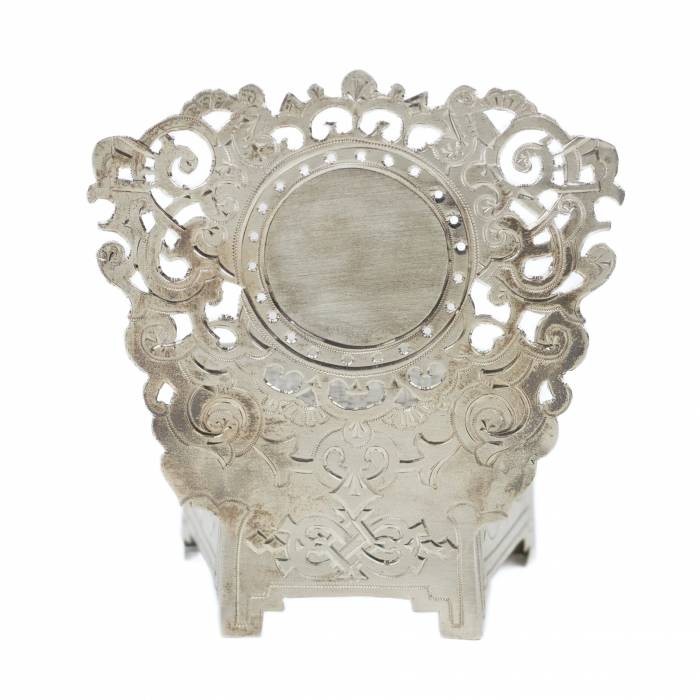
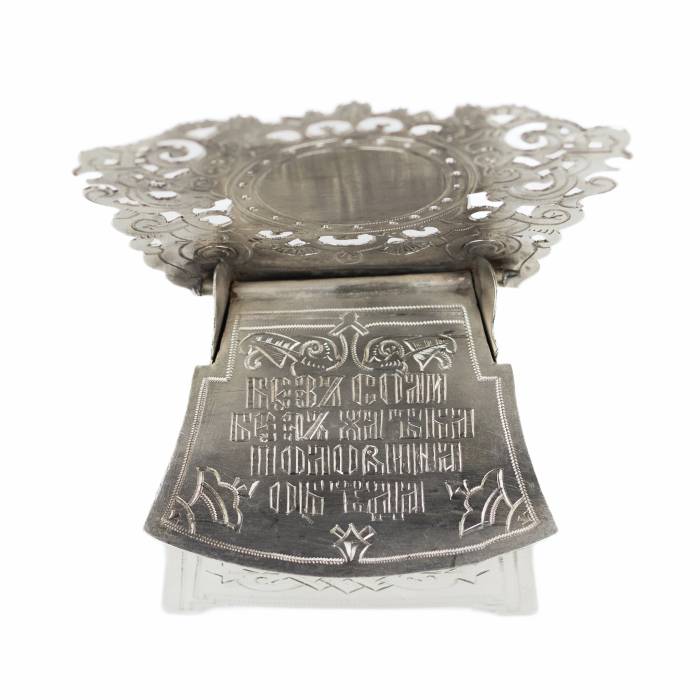
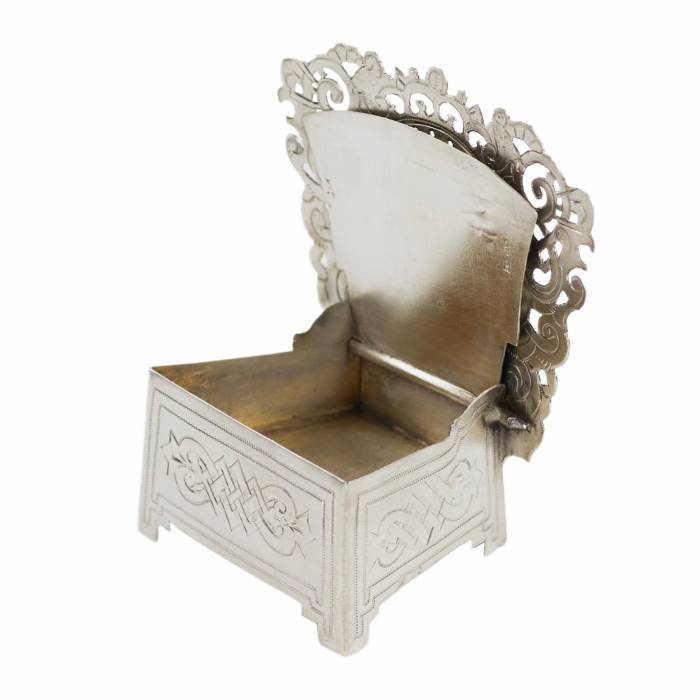
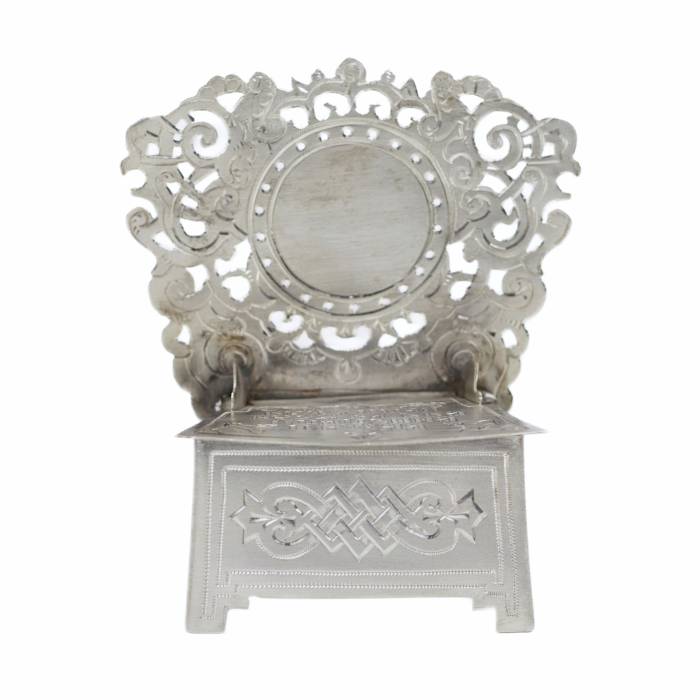
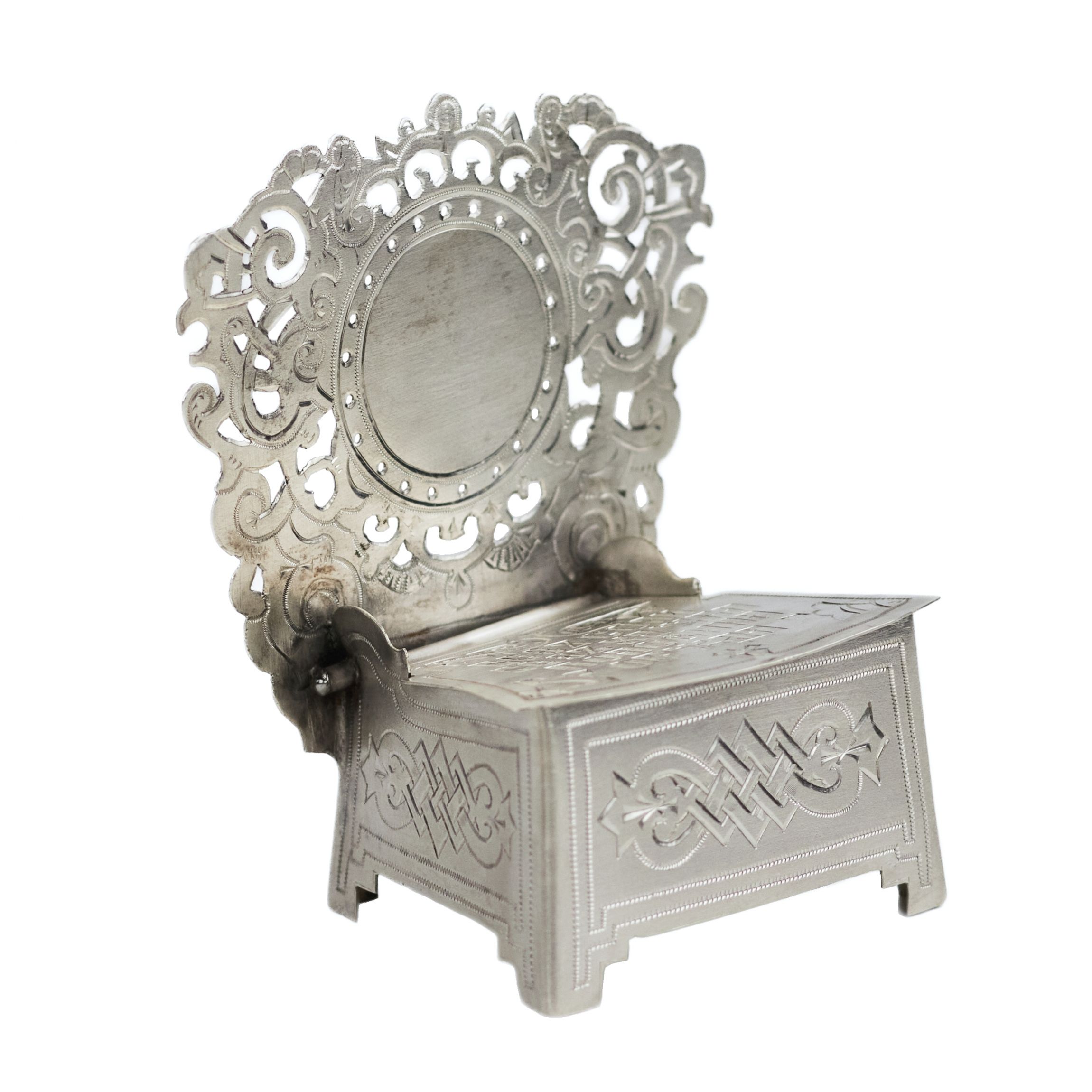
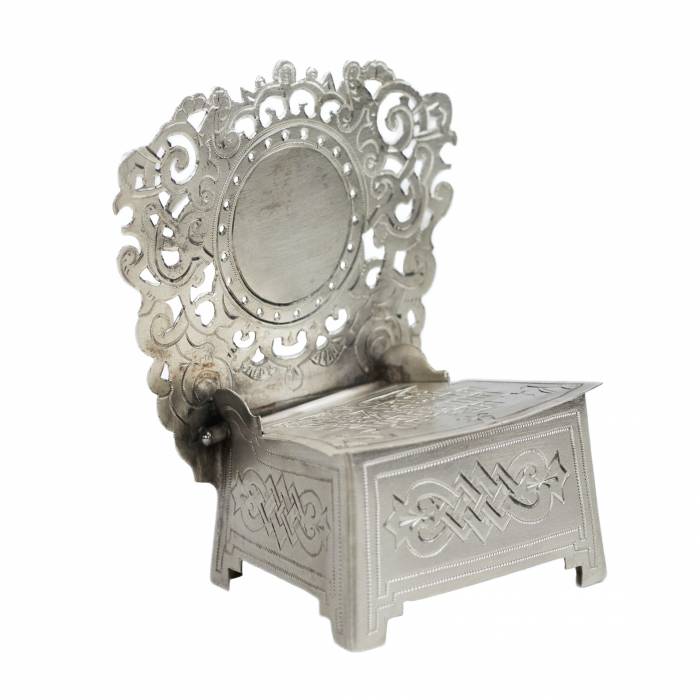
An elegant silver salt cellar, executed in the workshop of Pyotr Pavlovich Milyukov in 1895 and conceived in the form of a throne with a high openwork back and a hinged front panel, represents a characteristic example of Moscow silverwork of the late 19th century. The artistic composition is based on an architectural metaphor of a ceremonial chair, lending the object a symbolic and dignified presence while preserving its utilitarian function.
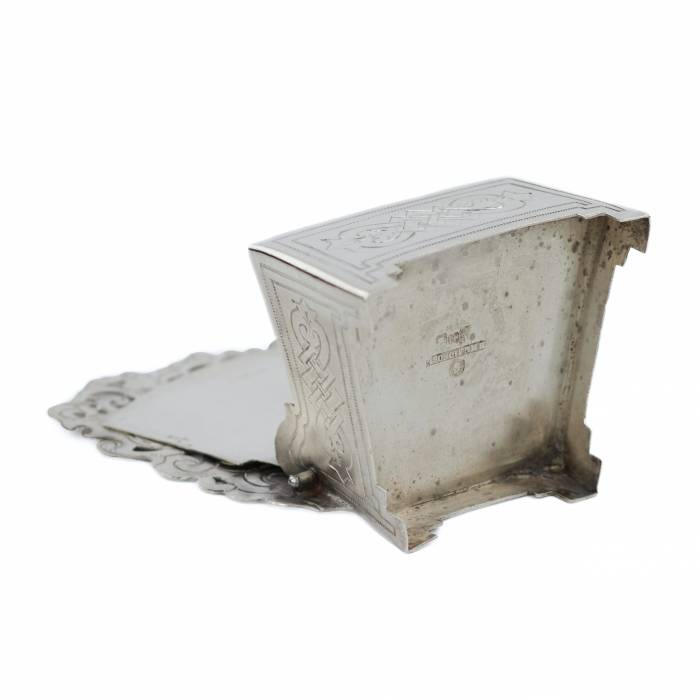
The rectangular body stands on profiled feet. The front, side, and rear panels are decorated with engraved geometrized ornamentation built on symmetry, zigzag lines, and interlaced motifs characteristic of Historicism and the Neo-Russian style. The high back is executed in pierced openwork technique with vegetal ornament and a central circular medallion.
The hinged front panel bears an engraved inscription: “Without salt and bread, half the meal is missing”, rendered in a stylized Cyrillic script. This proverbial phrase emphasizes the object’s connection to Russian dining traditions and imparts a pronounced symbolic and likely gift-related character.
The interior of the bowl retains traces of original gilding, traditionally applied to protect silver from the corrosive effects of salt. The quality of execution and precision of engraving attest to the high professional standards of a Moscow workshop of the period.
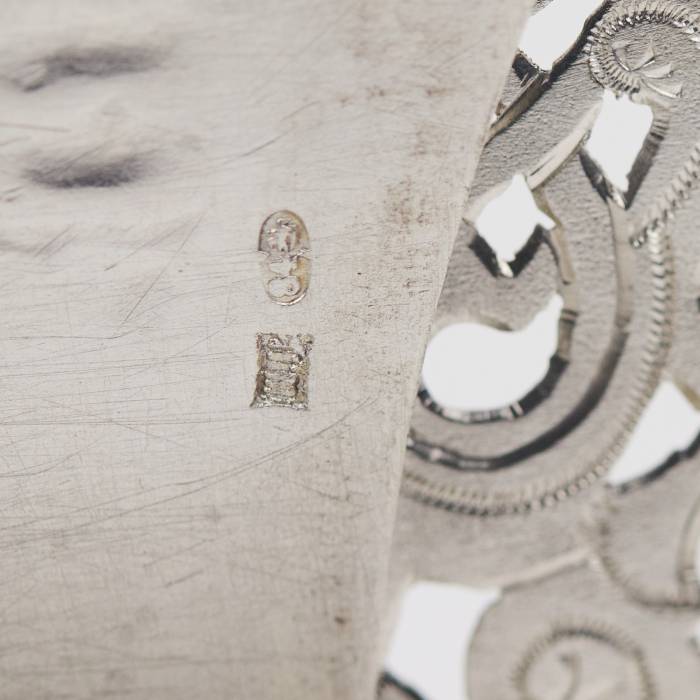
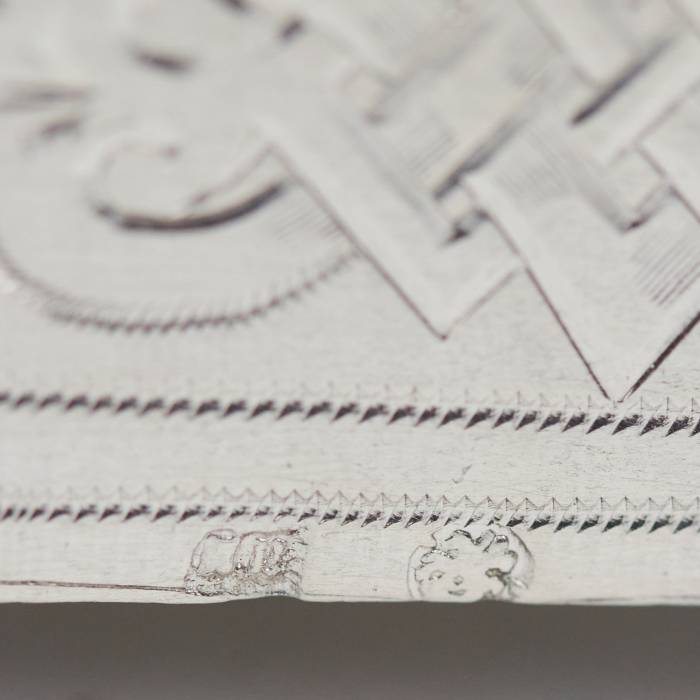
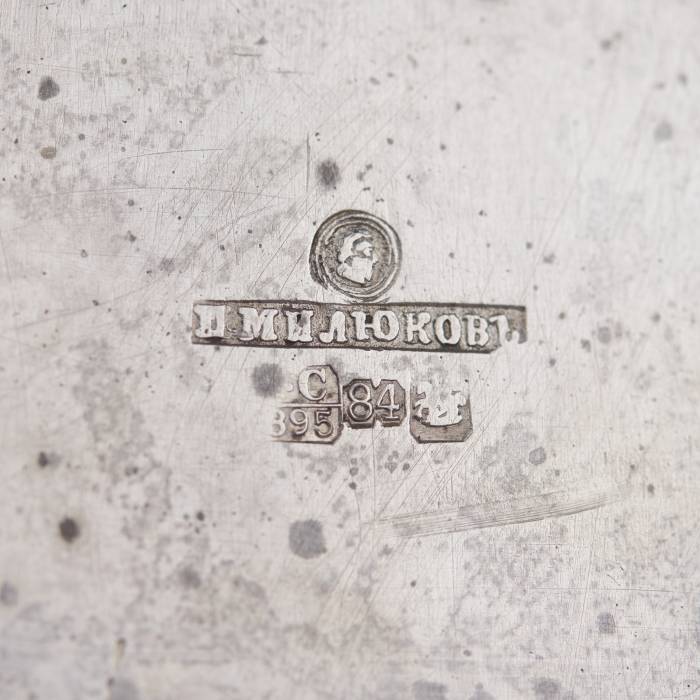
Hallmarks: Full maker’s mark “P. Milyukov”; Moscow Assay Office mark with the date “1895”; State assay mark “84” with the Moscow city emblem (St. George).
Dimensions: Height: 9 cm. Width: 8 cm. Depth: 5.5 cm.
Weight: 68 g.
Provenance: Private collection.
In Russia of the 18th–19th centuries, silver salt cellars served not only a practical purpose but also carried symbolic meaning connected with the tradition of bread and salt as signs of hospitality and prosperity. In the second half of the 19th century, Moscow workshops increasingly produced salt cellars in architectural forms—thrones, chairs, and terem-like structures—reflecting the era’s fascination with national history and folklore.
Pyotr Pavlovich Milyukov was among the notable Moscow silversmiths of his time. He founded his own factory in 1877, specializing in artistic table silver. By 1897, the enterprise employed 18 craftsmen and 15 apprentices, indicating substantial production capacity and steady demand. The use of 84 zolotnik silver complied with Imperial Russian standards and guaranteed material quality.
Good overall condition. The structure is stable, with no deformations. Engraving and openwork are well preserved. The interior shows wear and remnants of gilding consistent with age and use.
The condition report is provided for informational purposes only.
It is not comprehensive and may not reflect all defects, restorations, alterations, or adaptations, as Antiqon does not perform professional conservation-level assessments. The information is based on a qualified, yet subjective, evaluation by our specialists.Before purchasing, we recommend consultation with an independent expert.Please also consult our Terms and conditions and Glossary A-Z, which contain important information on lot characteristics and sale conditions.