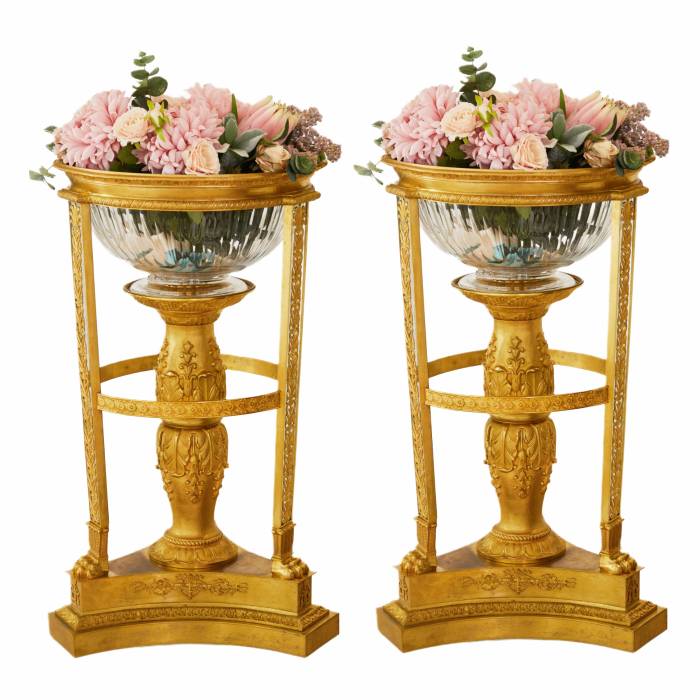
PAIR OF MONUMENTAL FLOOR JARDINIERES IN THE NAPOLEON III STYLE FRANCE, TURN OF THE 19TH–20TH CENTURY
AntiqonART consultant will contact you within one business day after receiving your request.
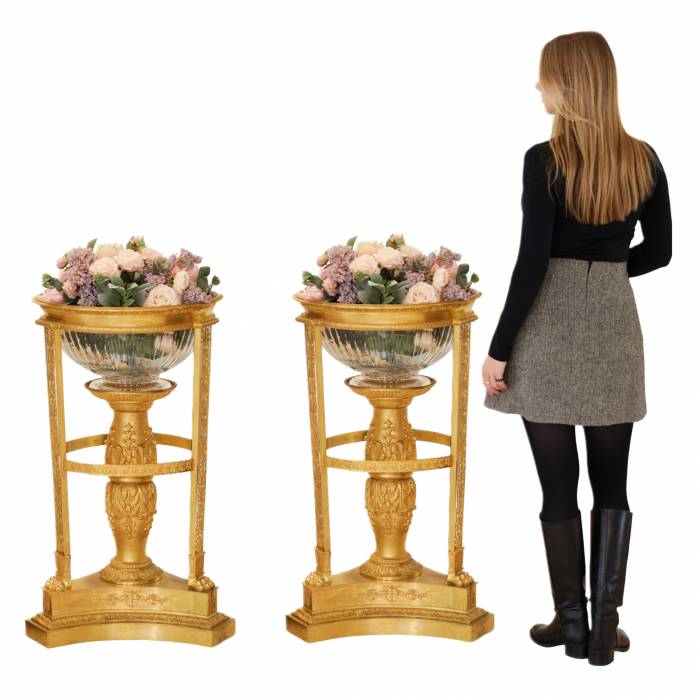
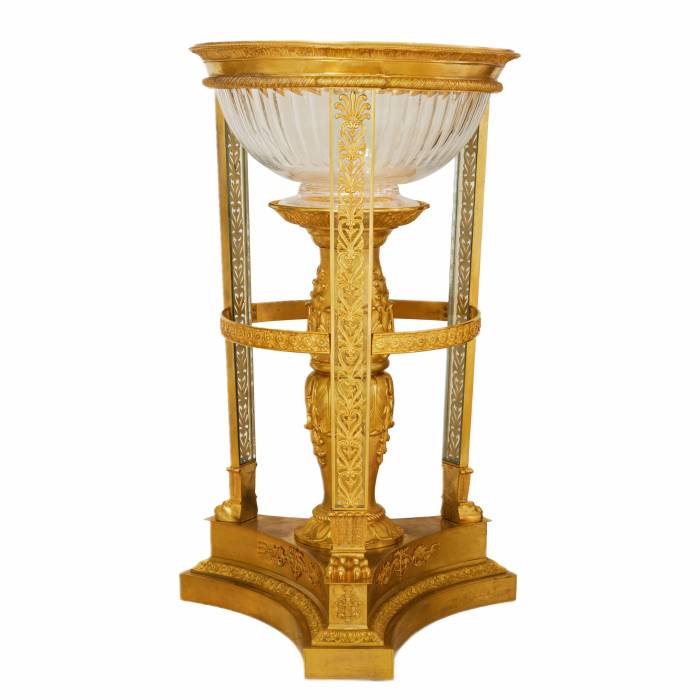
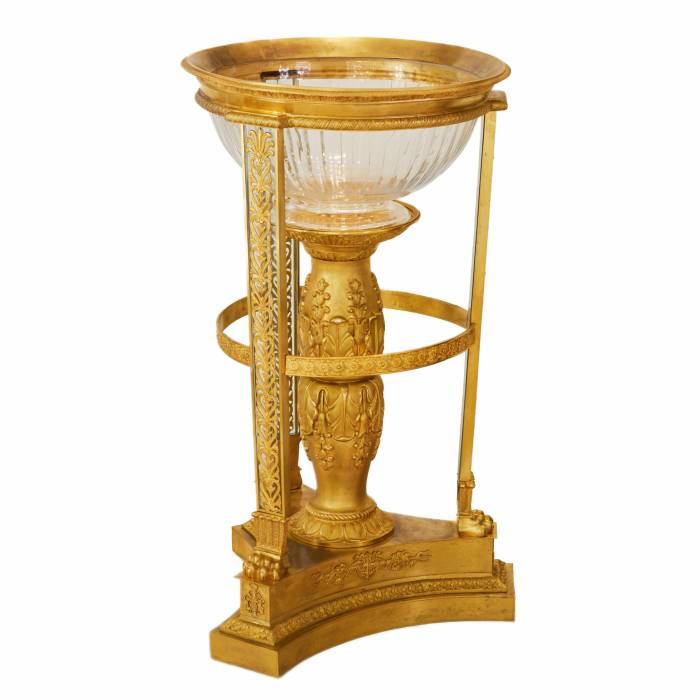
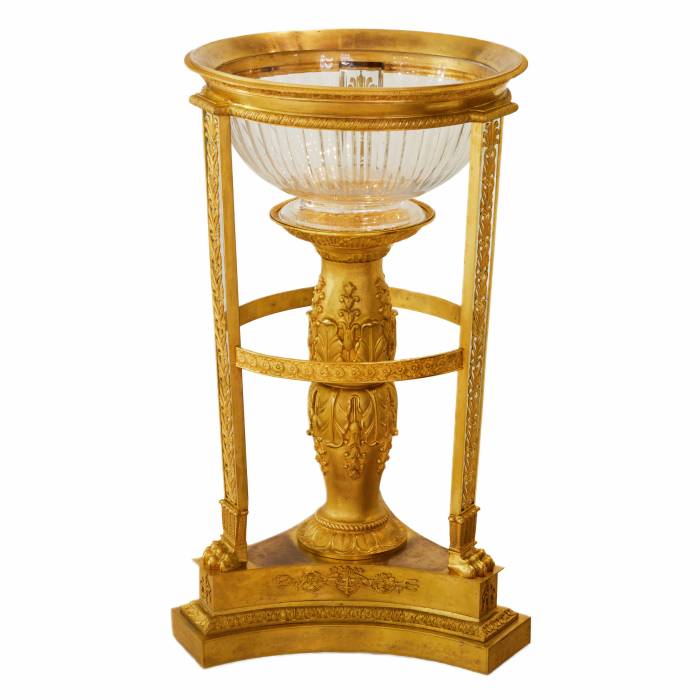
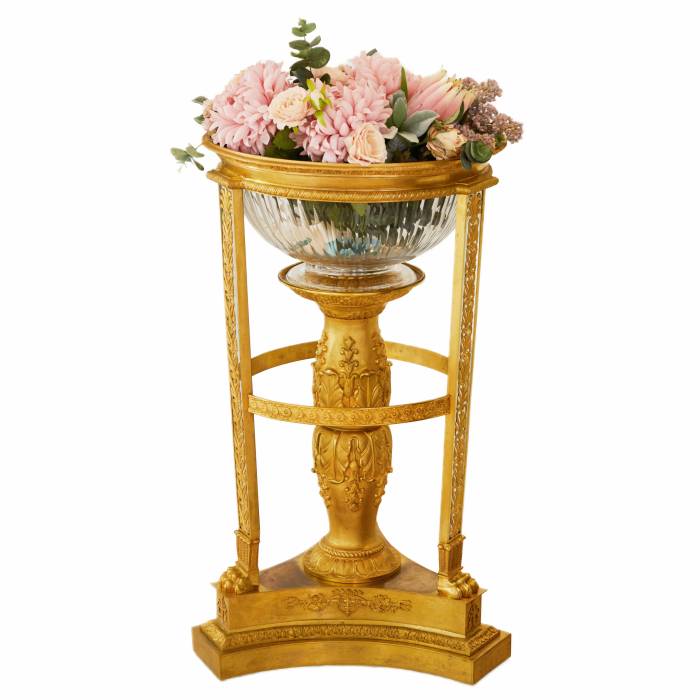
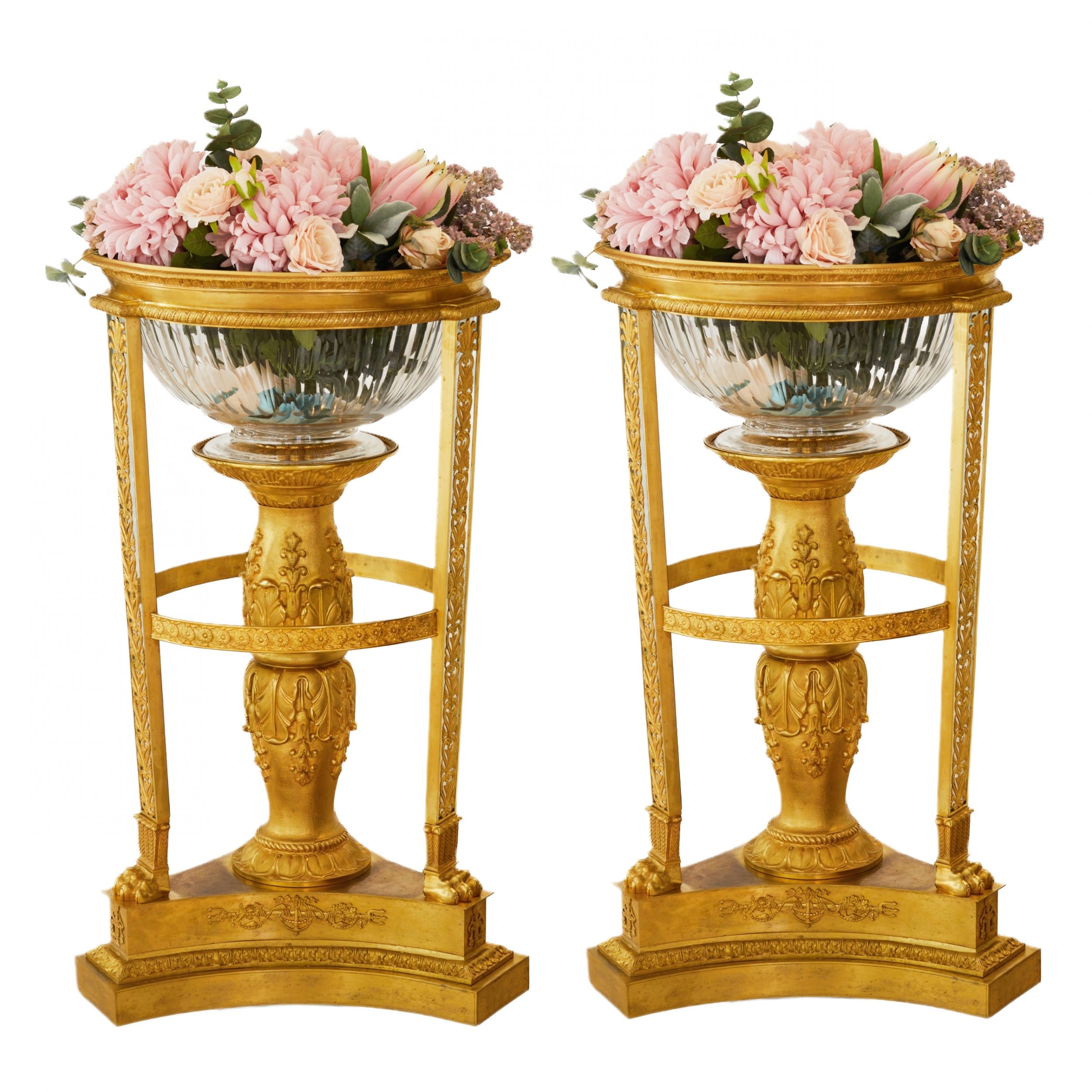
A grand pair of monumental floor jardinières conceived for the decoration of formal and representative interiors. The composition is conceived as an architectural ensemble, combining the elegance of the glass bowls with the sculptural presence of a richly ornamented gilt bronze structure. Intended for use with live, dried, or decorative floral arrangements, these jardinières are ideally suited to salons, galleries, reception halls, and entrance spaces.
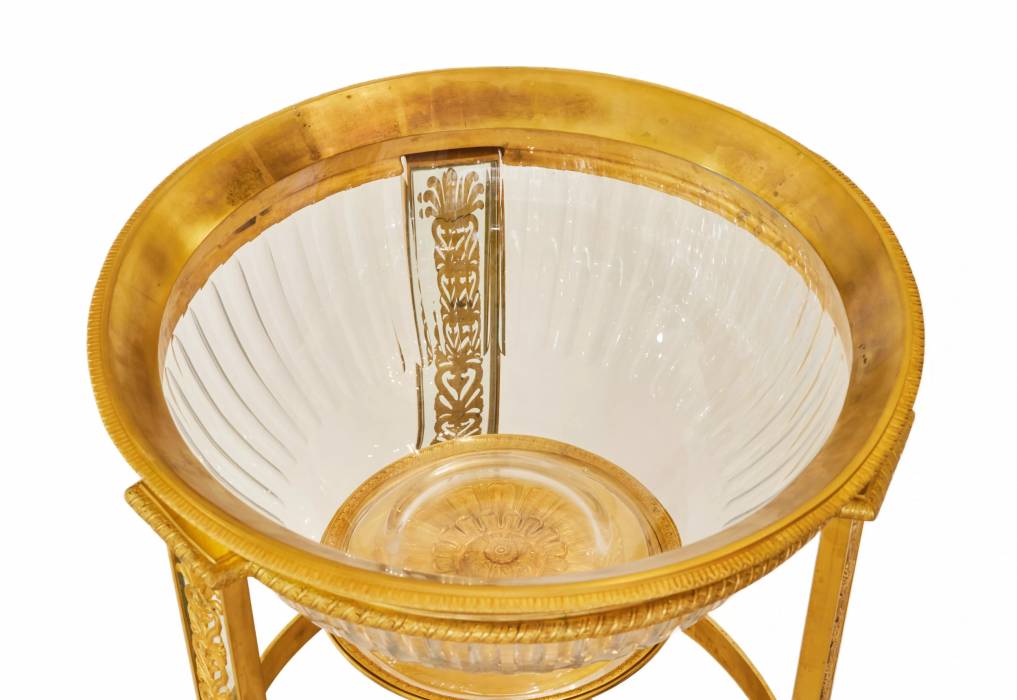
The transparent hemispherical bowls are executed in finely ribbed glass of high quality, presumably produced by the Baccarat manufactory. The vertical ribbing enhances the depth of the form and creates a refined play of light characteristic of late 19th-century French artistic glass.
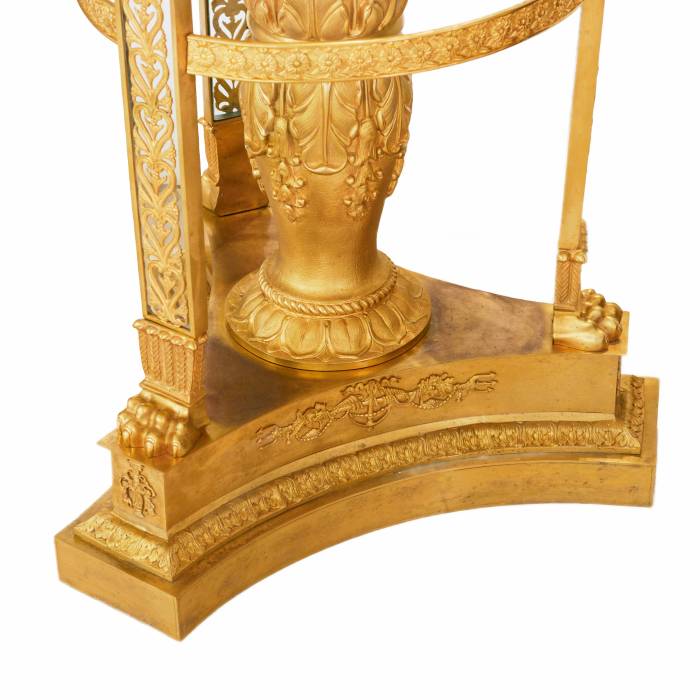
The supporting structure is executed in gilt bronze and comprises a vase-shaped central shaft, decorative vertical columns, circular bands, and a substantial three-armed base. The bronze elements are richly embellished with chased ornament featuring palmettes, acanthus leaves, grotesques, and twisted cord motifs. The decorative supports rest on sculptural lion’s paws, lending the composition a sense of monumentality and symbolic stability.
Particular attention is drawn to the decoration of the base. The façade panels are adorned with a symmetrical trophy-like allegorical relief composed of crossed batons and torches, bound with garlands of beads and intertwined ribbons. At the center of the composition appears an oval shield suspended by decorative cords with tassels, evoking the classical and Empire decorative vocabulary. The lower register of the base is enriched with a continuous frieze of stylized acanthus leaves, emphasizing the curved silhouette and reinforcing the architectural character of the ensemble.
The richness of the ornamentation and the high quality of casting and chasing identify these jardinières as characteristic examples of French decorative art of the fin de siècle, executed in the aesthetic of Neoclassicism and the Napoleon III style.
Material: Bronze, glass.
Technique: Casting, chasing, gilding.
Dimensions: Height – 105 cm; diameter – 57 cm.
Provenance: France. Paris, private townhouse (Hôtel particulier).
French floor jardinières of the late 19th and early 20th centuries occupy a significant place within the decorative vocabulary of the Belle Époque, a period in which interior decoration was regarded as an extension of architecture itself. During this era, French decorative arts actively revisited the legacies of Classicism, the Louis XVI style, and the Empire, reinterpreting these traditions through the lens of eclecticism and the Napoleon III style.
Jardinières of this scale and quality were integral elements of formal interiors in Parisian townhouses, palaces, hôtels particuliers, and public buildings. Often conceived as paired elements, they were positioned symmetrically alongside fireplaces, staircases, portals, or entrance halls. The combination of gilt bronze and artistic glass reflects the late 19th-century fascination with opulence, luminosity, and refined material contrasts.
The use of finely ribbed glass underscores the prestigious nature of the commission. At the turn of the century, leading French glassmakers frequently collaborated with bronze workshops to create integrated interior objects in which glass and metal entered into a balanced artistic dialogue. Such ensembles were commissioned for aristocratic residences, the homes of the wealthy bourgeoisie, and prestigious hotels and salons.
Ornamental motifs such as palmettes, acanthus leaves, and grotesques derive from classical and Renaissance traditions, while the lion’s paw supports evoke symbolism of strength, authority, and permanence, widely employed in French decorative arts of the 19th century. Jardinières of this magnitude and refinement exemplify the exceptional level of French bronze casting and decorative craftsmanship at the fin de siècle.
Overall condition is good and consistent with age. Gilding remains largely intact with minor signs of natural wear. Glass bowls are free from chips and cracks. Structurally stable, with no evidence of restoration.
The condition report is provided for informational purposes only.
It is not comprehensive and may not reflect all defects, restorations, alterations, or adaptations, as Antiqon does not perform professional conservation-level assessments. The information is based on a qualified, yet subjective, evaluation by our specialists.Before purchasing, we recommend consultation with an independent expert.Please also consult our Terms and conditions and Glossary A-Z, which contain important information on lot characteristics and sale conditions.