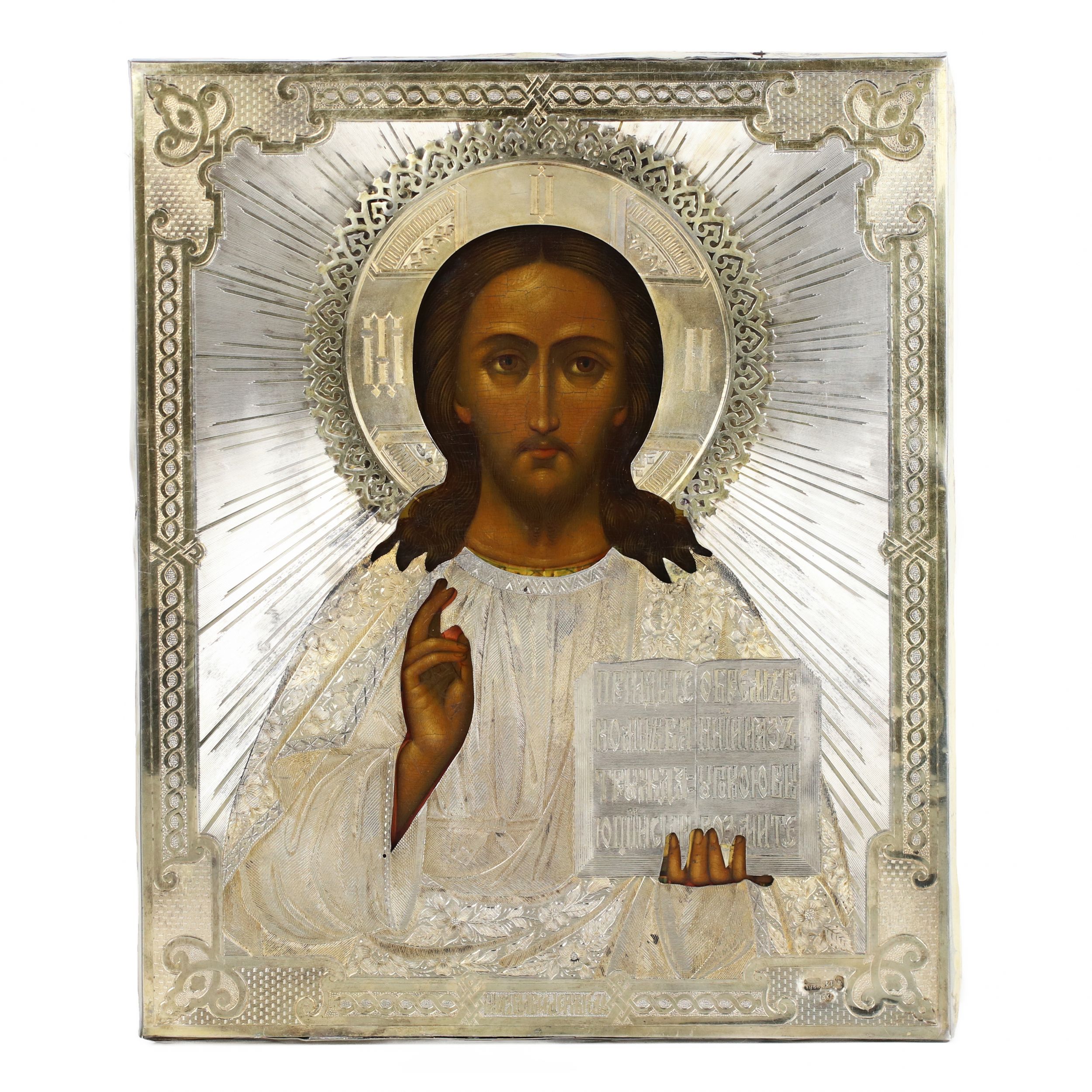



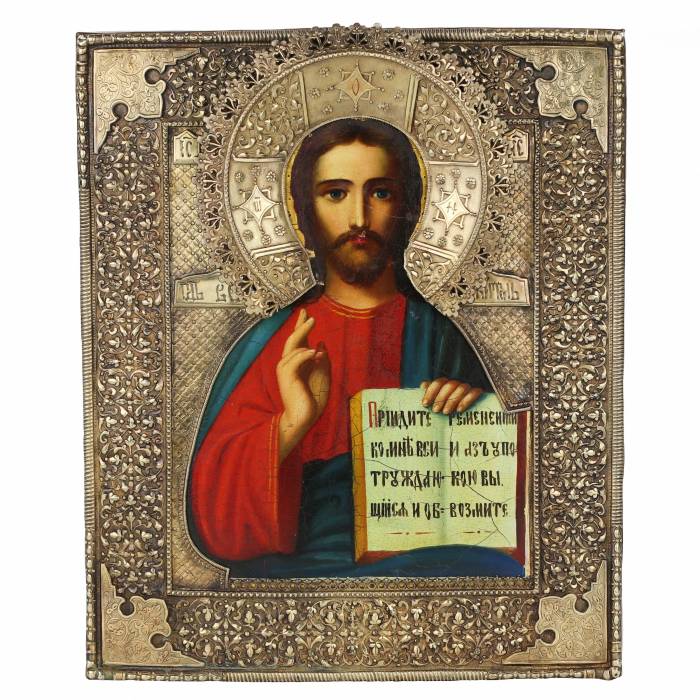
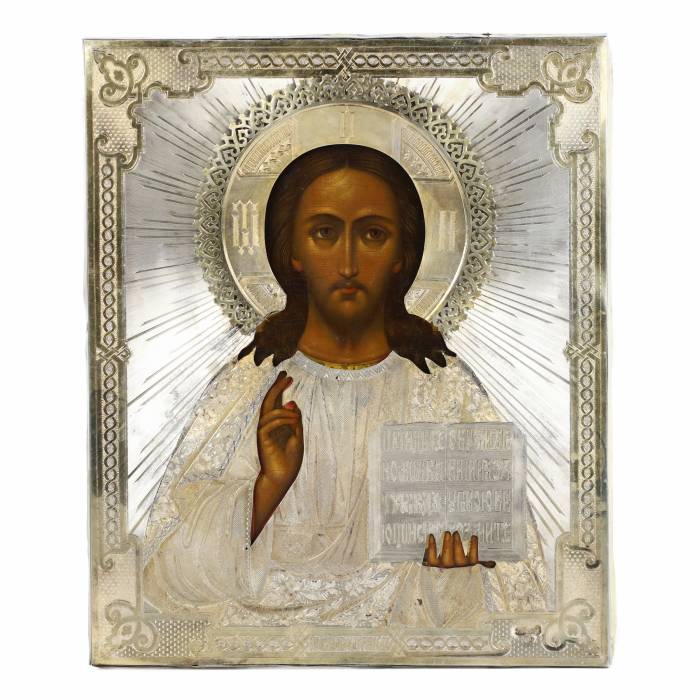
ICON “CHRIST PANTOCRATOR” WITH SILVER OKLAD BY THE FIRM OF P.A. OVCHINNIKOV RUSSIA, MOSCOW, 1866
AntiqonART consultant will contact you within one business day after receiving your request.
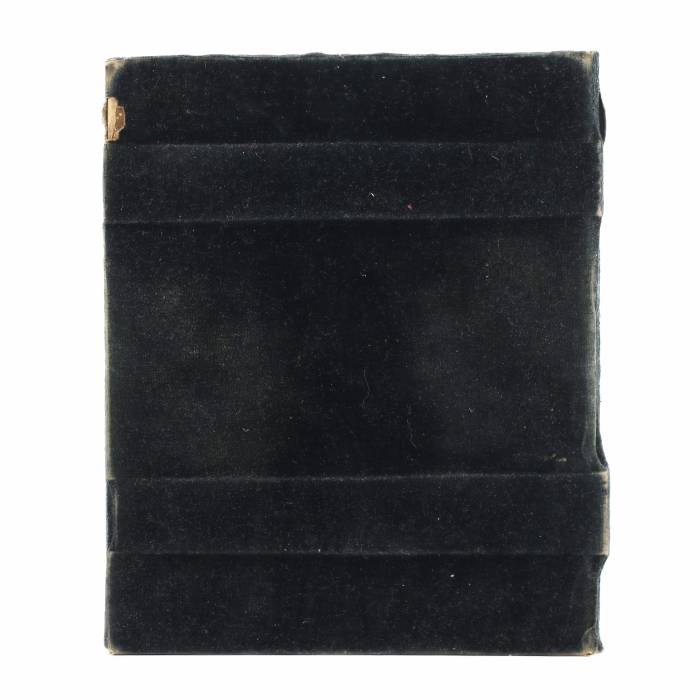
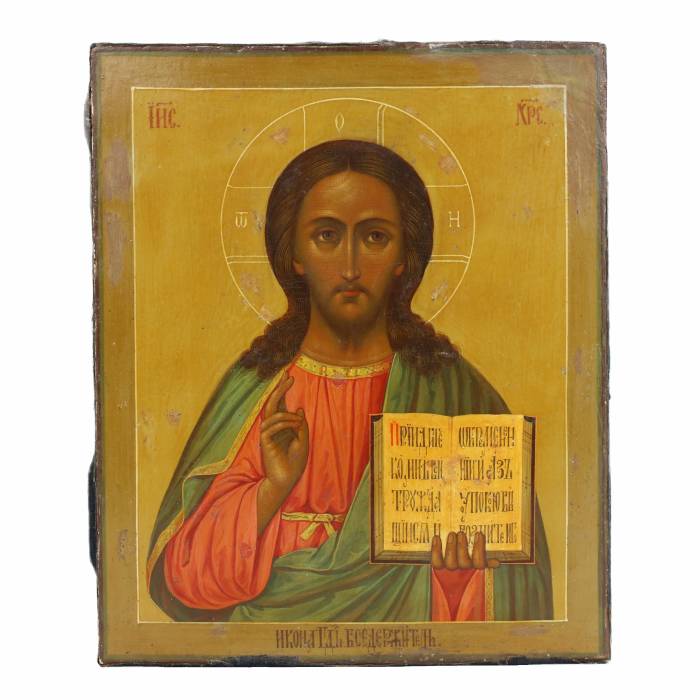
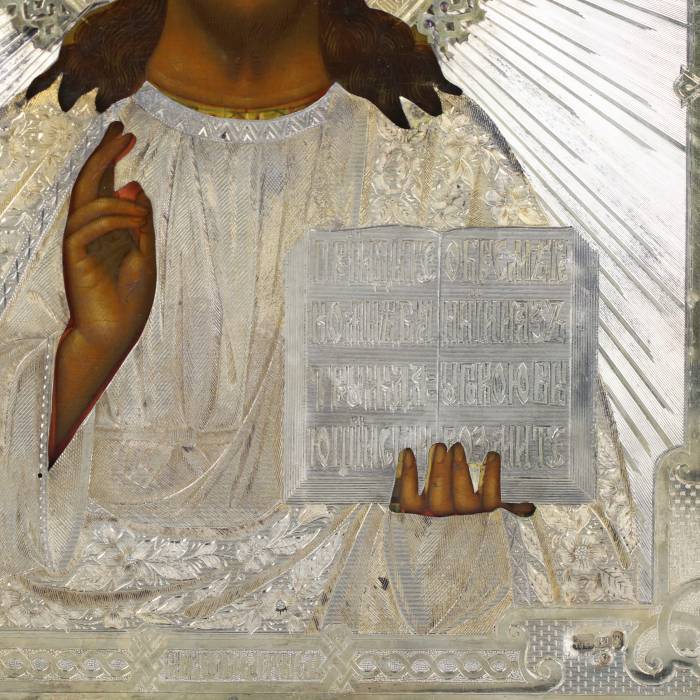
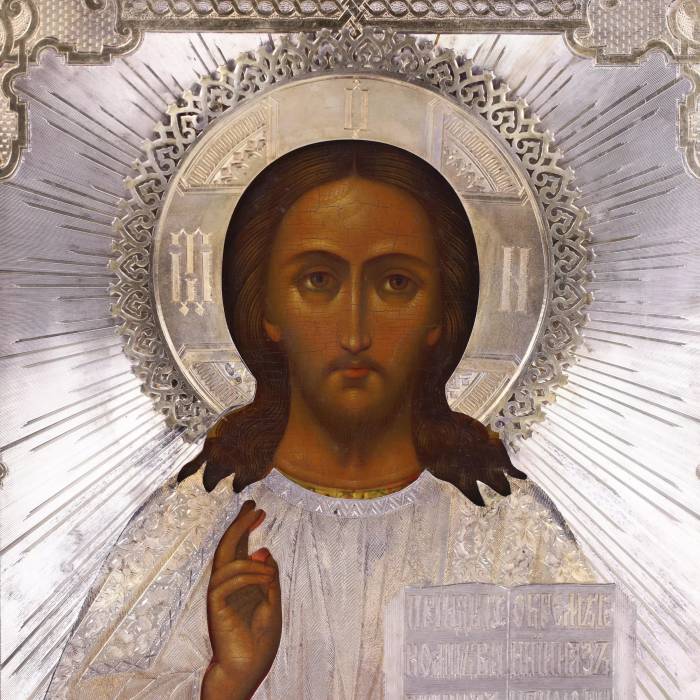
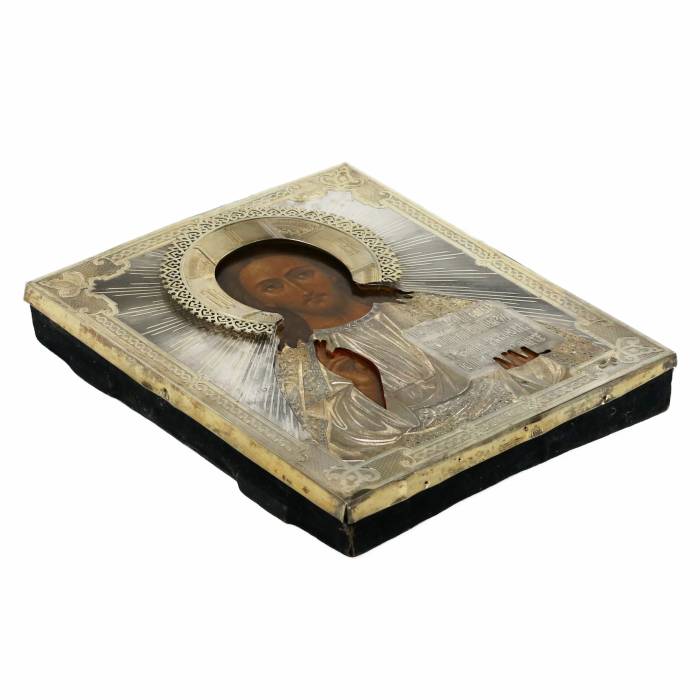
The icon “Christ Pantocrator” represents a high-quality monument of the Moscow icon-painting and silversmithing schools of the mid-19th century. The half-length image of Christ is executed in a strict academic canon, characteristic of the period, with restrained psychological expression and a balanced, harmonious composition. Christ is depicted frontally, with a blessing gesture of the right hand and an open book in the left, emphasizing His image as Judge and Teacher.
The painted panel was executed by a professional icon painter on a wooden board with gesso, using egg tempera. The face is distinguished by soft modeling, refined detailing, and a harmonious palette rooted in the academic traditions of Moscow workshops. The golden background enhances the sacred significance of the image and reinforces its liturgical presence.
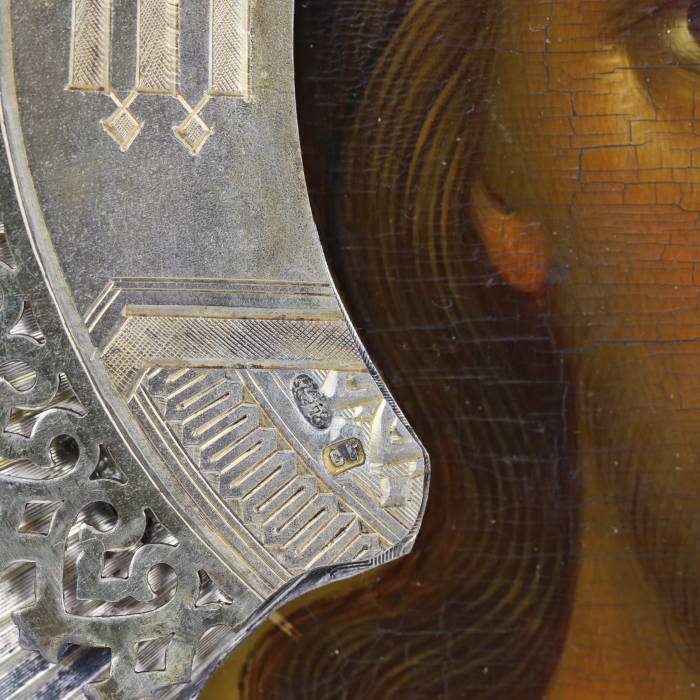
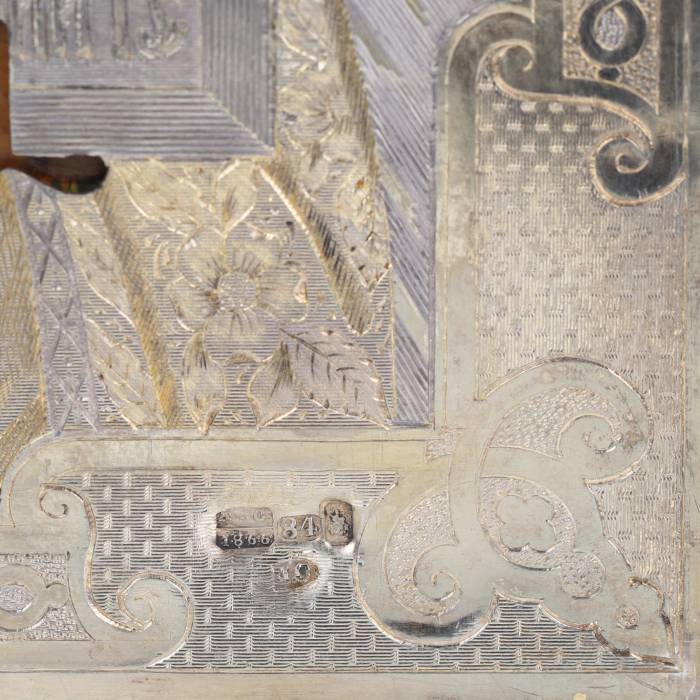
The silver-gilt oklad is an outstanding example of Russian goldsmithing and belongs to the early period of the renowned Moscow firm of Pavel Akimovich Ovchinnikov. Crafted from 84 standard silver, the oklad is decorated with an elaborate ornamental design executed using hand engraving with a burin, chasing, matting, piercing, and gilding. Radiant rays, ornamental frames, and decorative motifs demonstrate the exceptional craftsmanship and artistic refinement characteristic of Ovchinnikov’s production of the 1860s.
This icon is a rare and early example of ecclesiastical art created in the workshop of a future Supplier to the Imperial Court and possesses significant artistic, historical, and collectible value.
Materials: Icon: Wooden board, gesso, egg tempera, velvet (reverse). Oklad: Silver 84 standard, gilding, chasing, matting, piercing, hand engraving with a burin, grinding, polishing, assembly.
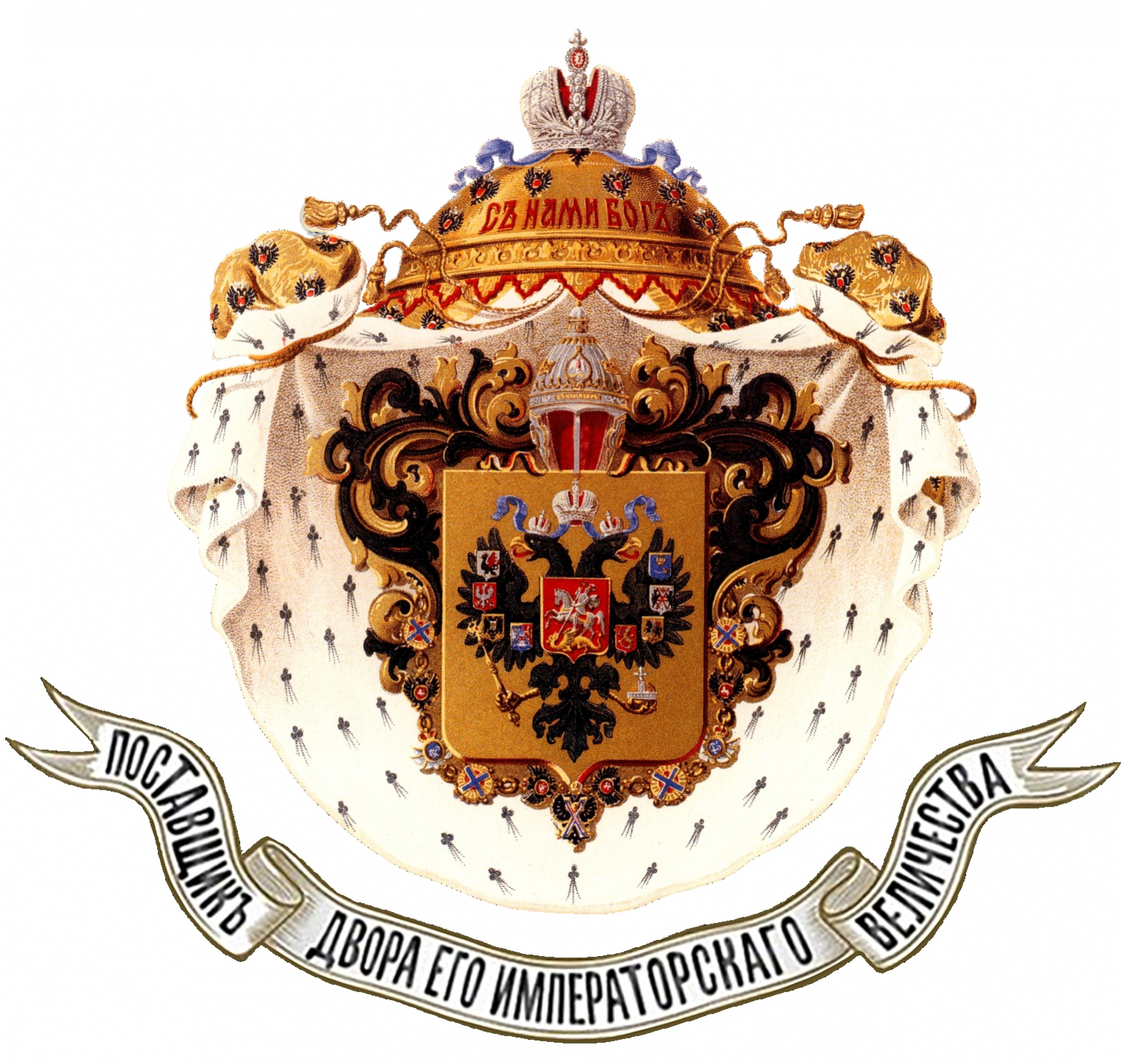
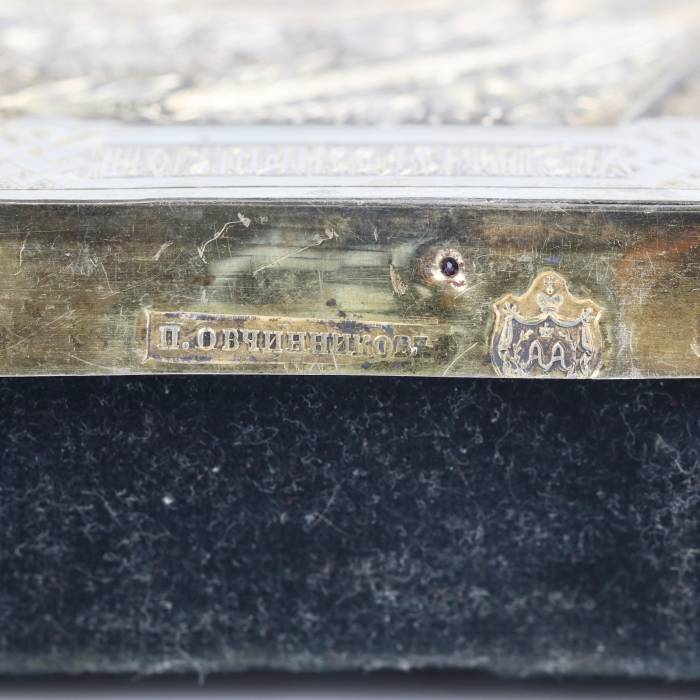
Marks: Full hallmark of the firm of P.A. Ovchinnikov, Supplier to the Court of Tsarevich Alexander Alexandrovich; assay mark with the initials “A.S.” above the date “1866,” corresponding to the assay master Alexander Svechin (active 1862–1875); Moscow city assay mark depicting Saint George slaying the dragon in a rectangular shield with clipped corners; silver standard mark “84.”
Dimensions: Height: 26.5 cm. Width: 22.5 cm.
Condition: Good collector’s condition. Minor traces of age consistent with the period. The painted surface and silver oklad are well preserved, without losses or deformation.
Provenance: Private collection.
The firm of Pavel Akimovich Ovchinnikov occupies a prominent place in the history of Russian goldsmithing and ecclesiastical art of the 19th century. Founded in Moscow in 1851, the workshop began as a modest enterprise but by the 1860s had developed a distinctive artistic language combining academic rigor, Russian historical forms, and exceptional technical quality. The present silver oklad, dated 1866, belongs precisely to this formative early period.
In the second half of the 19th century, Moscow witnessed the development of a close collaboration between icon painters and silversmiths, whereby icons were conceived not only as devotional objects but as unified artistic ensembles combining painting and metalwork. Ovchinnikov’s firm became one of the leading centers of this tradition, producing oklads, icon cases, and church vessels distinguished by their complexity and flawless execution. The use of 84 standard silver, intricate hand engraving, and rich ornamentation met the highest ecclesiastical standards and established a benchmark of the Moscow style.
In 1865, the firm was awarded the title of Supplier to the Court of Tsarevich Alexander Alexandrovich, an official recognition of its artistic and technical excellence. This distinction was confirmed in subsequent decades and secured Ovchinnikov’s position among the foremost jewelry houses of the Russian Empire. Early works such as the present icon are particularly valued by collectors and museums as evidence of the formation of the firm’s signature style and artistic vision.
Icons with silver oklads by Ovchinnikov are today preserved in major museum collections and distinguished private holdings, and their appearance on the market is rare. The present icon of Christ Pantocrator is a genuine monument of its era and a vivid testament to the high level of Moscow ecclesiastical art of the mid-19th century.
The icon and silver oklad are in good collector’s condition. Light patina and age-related wear are consistent with the period. The painted layer is stable, with no cracks or losses; the oklad shows no deformation.
The condition report is provided for informational purposes only.
It is not comprehensive and may not reflect all defects, restorations, alterations, or adaptations, as Antiqon does not perform professional conservation-level assessments. The information is based on a qualified, yet subjective, evaluation by our specialists.Before purchasing, we recommend consultation with an independent expert.Please also consult our Terms and conditions and Glossary A-Z, which contain important information on lot characteristics and sale conditions.