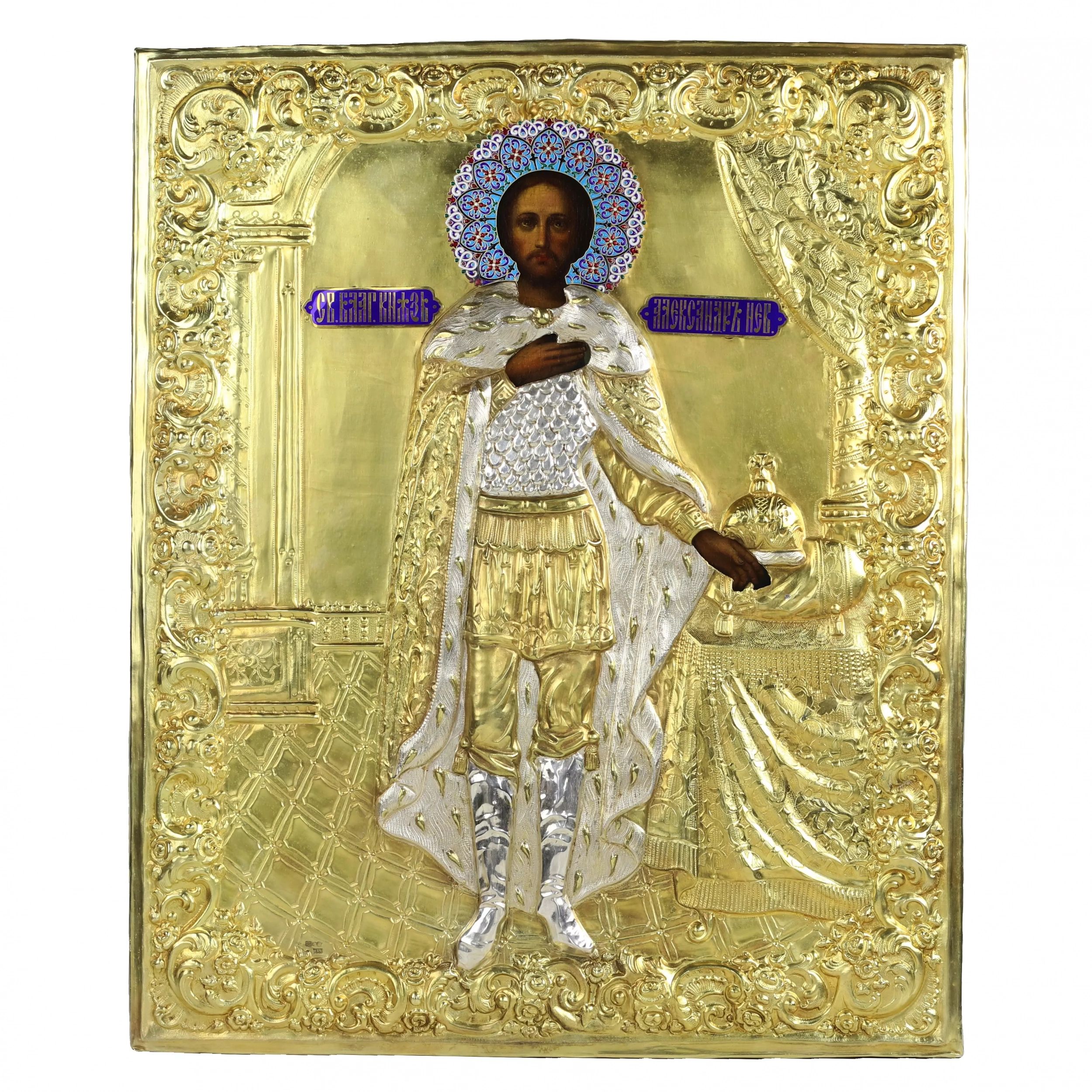



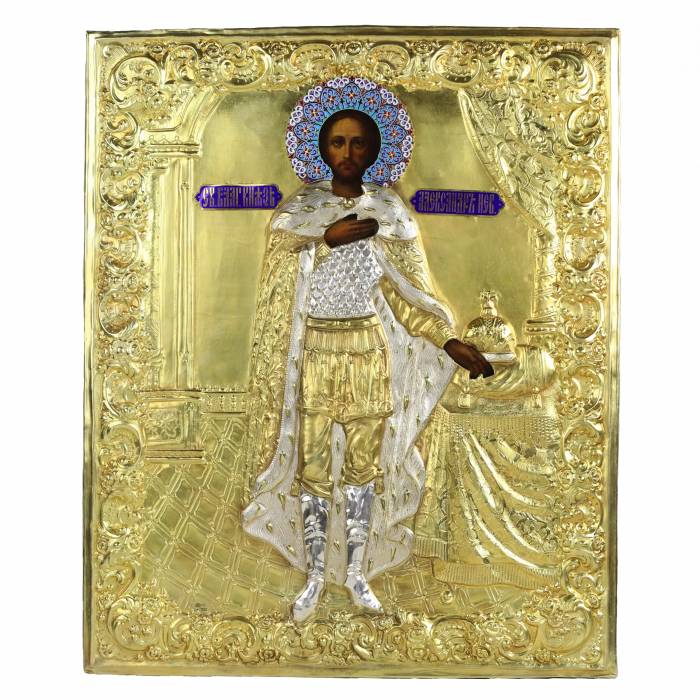
ICON OF SAINT BLESSED PRINCE ALEXANDER NEVSKY IN A SILVER OKLAD WITH ENAMELS. RUSSIA, 1895
AntiqonART consultant will contact you within one business day after receiving your request.

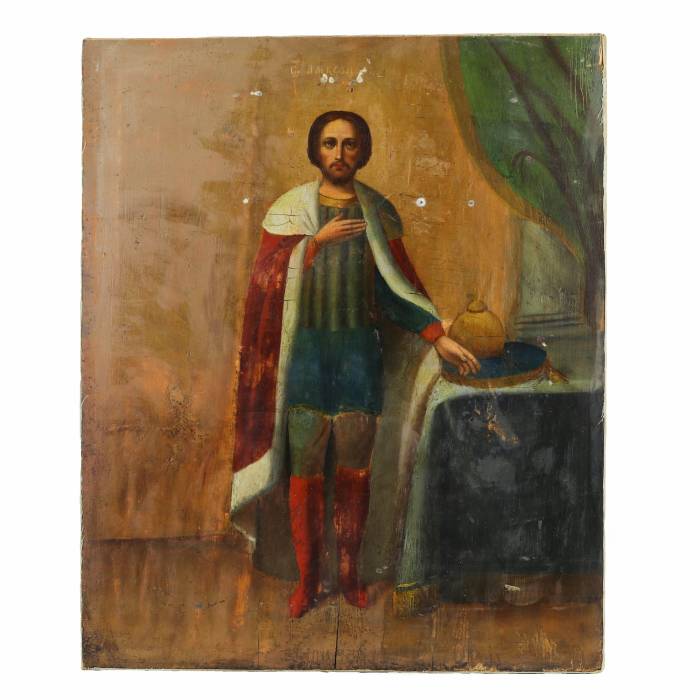
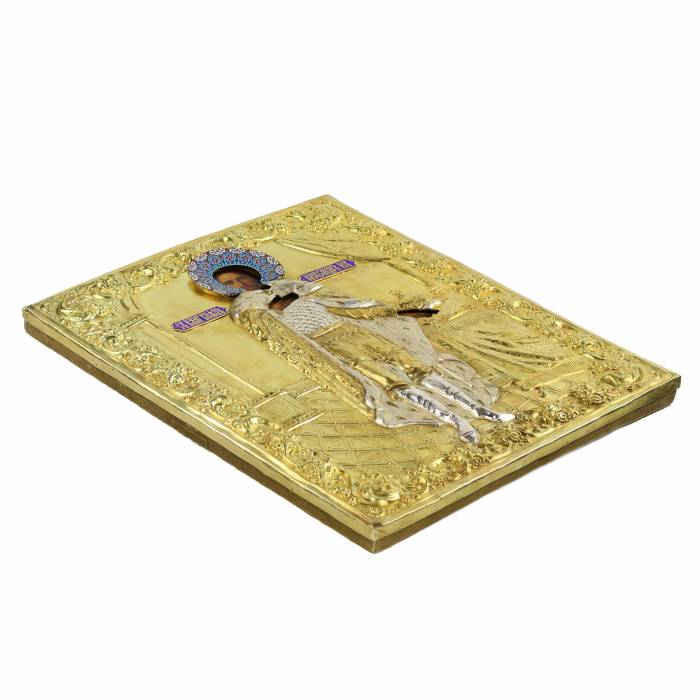
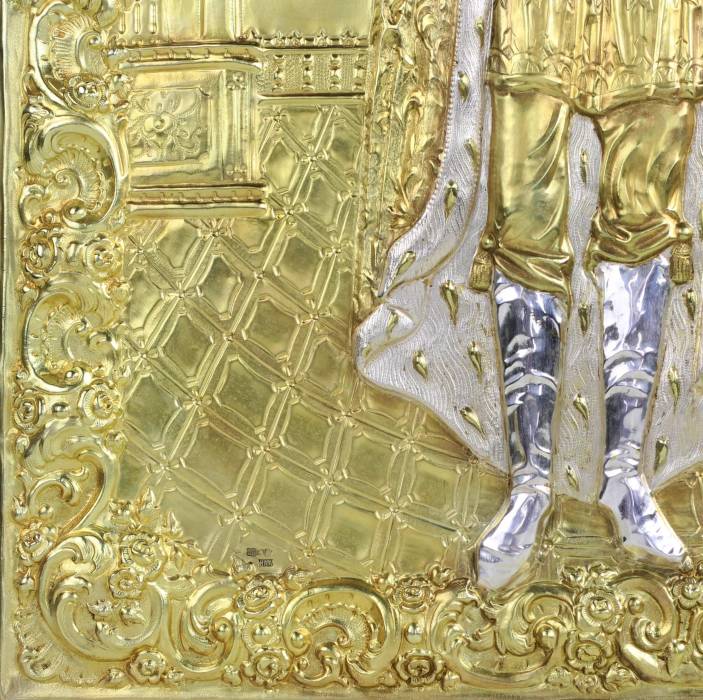
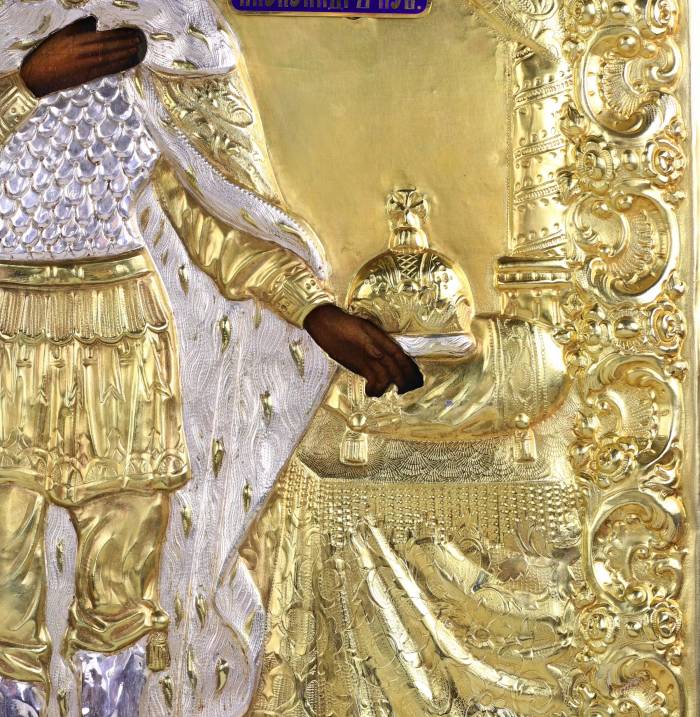
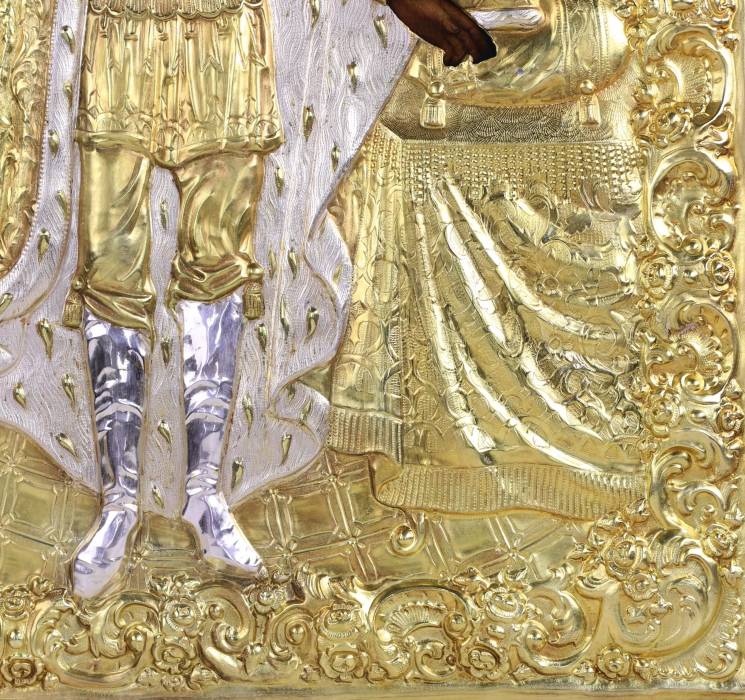
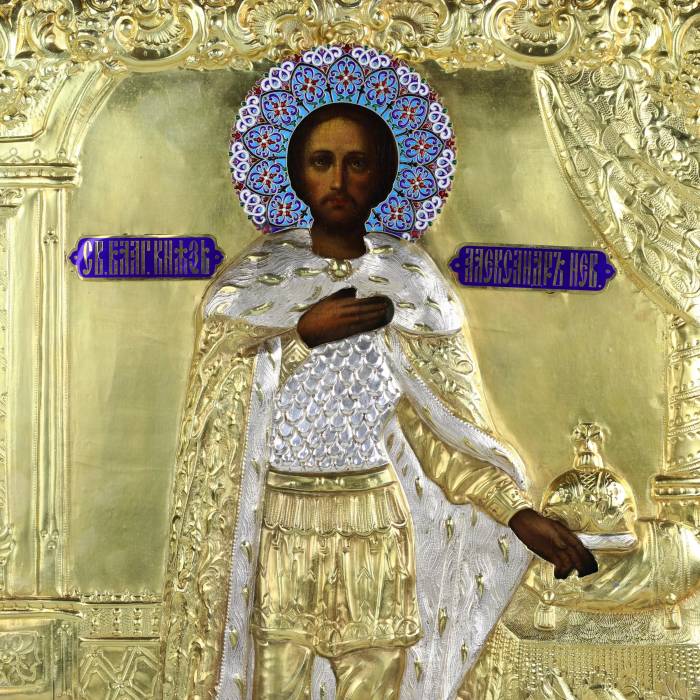
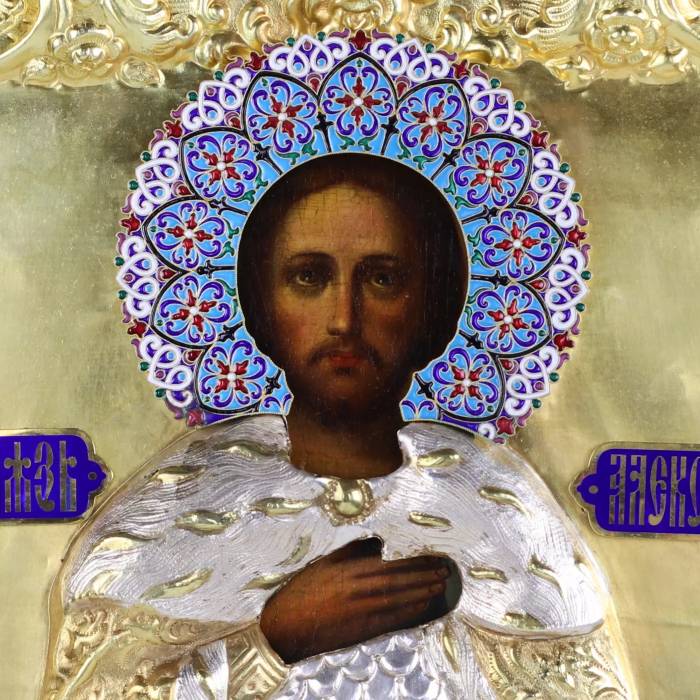
A rare example of Russian iconography from the late 19th century — a full-length icon of Saint Blessed Prince Alexander Nevsky, produced in Moscow in 1895 at the workshop of Ivan Alekseev. The image is painted in oil on wood and set within a rich silver oklad, adorned with delicate chasing, polychrome cloisonné enamel, engraving, and gilding. The saint is depicted in princely attire, holding an orb and sword — symbols of sovereignty and spiritual power. The composition is crowned with an enamel halo and enamel inscriptions. The background is enriched with architectural elements and carpet-like ornamentation.
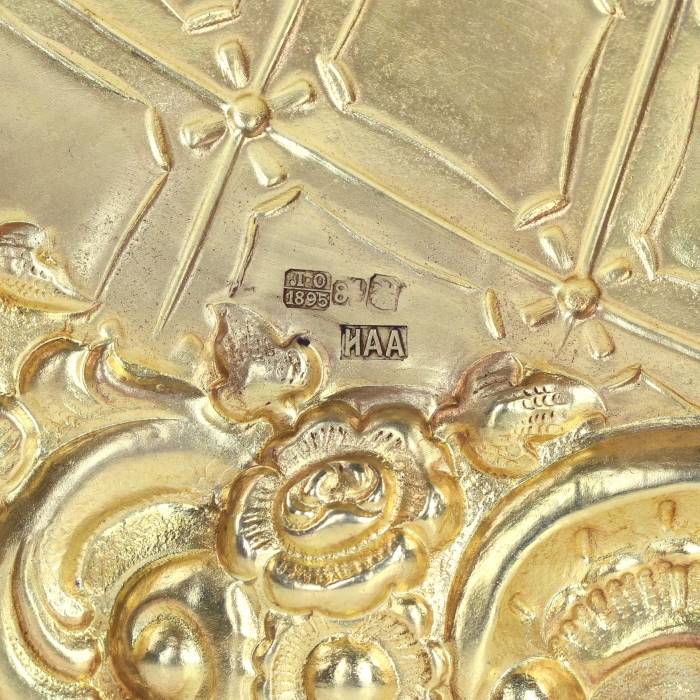
Hallmarks: Silver hallmark 84 in a rectangular cartouche, Moscow city mark featuring Saint George slaying the dragon, turned right in a shield with beveled corners, Moscow assay office mark with initials of assayer “L.O.” (Lev Oleks; Moscow, 1890–1896) above the date “1895”, and Ivan Alekseevs workshop mark in Cyrillic “ИАА”
Dimensions: Icon: 53 × 43.9 cm, Oklad: 53.4 × 44 cm, Kiot: 62.3 × 53.2 × 7 cm
Weight: Approx. 1706 g (silver oklad)
Condition: The icon is in good condition. Traces of early restoration.
Saint Alexander Nevsky, Grand Prince of Novgorod and Kiev, occupies a unique position in Russian spiritual and political tradition. Canonized by the Russian Orthodox Church as a defender of the Russian land and faith during foreign invasions, his victories over the Swedes at the Neva (1240) and the Teutonic Knights at Lake Peipus (1242) earned him the status of a national hero. Yet it was not only military prowess but also diplomatic foresight in dealings with the Golden Horde that made him a symbol of unity and survival for Rus in a time of turmoil.
In the second half of the 19th century, national symbols and historical figures were reinterpreted during the reigns of Alexander II and Alexander III, with the image of Saint Alexander Nevsky acquiring renewed significance, emphasizing imperial continuity and Orthodox identity. This was the golden age of icon-painting workshops and silver ateliers, producing commissioned works for churches and private devotion, marked by exceptional technical quality in chasing, filigree, and enameling.
The workshop of Ivan Alekseev, active in Moscow during this period, was known for its refined oklads with high-quality enamel decoration. The use of architectural and textile motifs in this icon is characteristic of the style of high historicism and Russian eclecticism, combining elements of Baroque, Neo-Byzantine, and national romantic aesthetics. An icon like this, created in 1895, likely belonged to a private chapel or noble household, serving as both a devotional object and a marker of status.
The icon is in good condition. Signs of wear, minor losses to the paint layer. Evidence of restoration.
The condition report is provided for informational purposes only.
It is not comprehensive and may not reflect all defects, restorations, alterations, or adaptations, as Antiqon does not perform professional conservation-level assessments. The information is based on a qualified, yet subjective, evaluation by our specialists.Before purchasing, we recommend consultation with an independent expert.Please also consult our Terms and conditions and Glossary A-Z, which contain important information on lot characteristics and sale conditions.