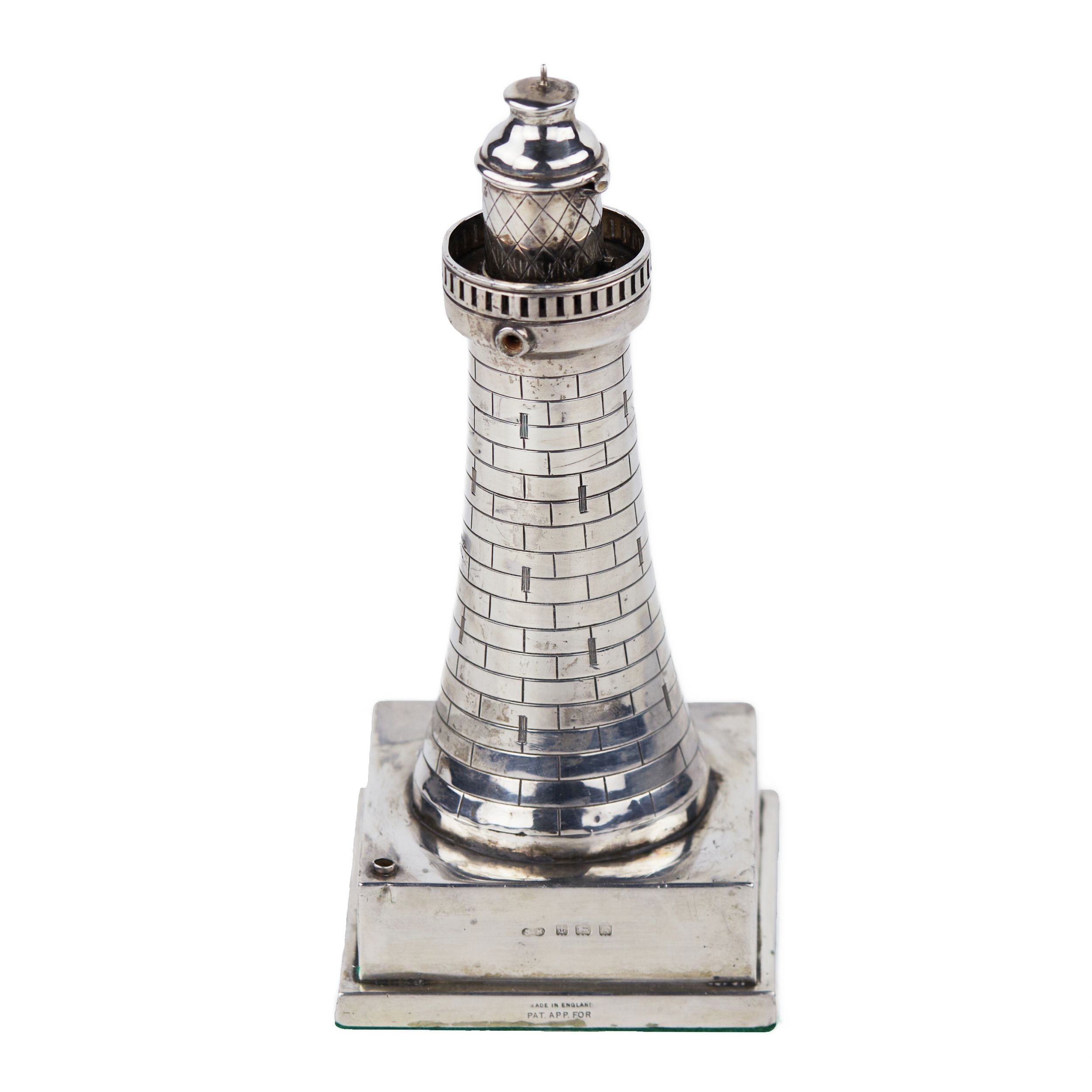




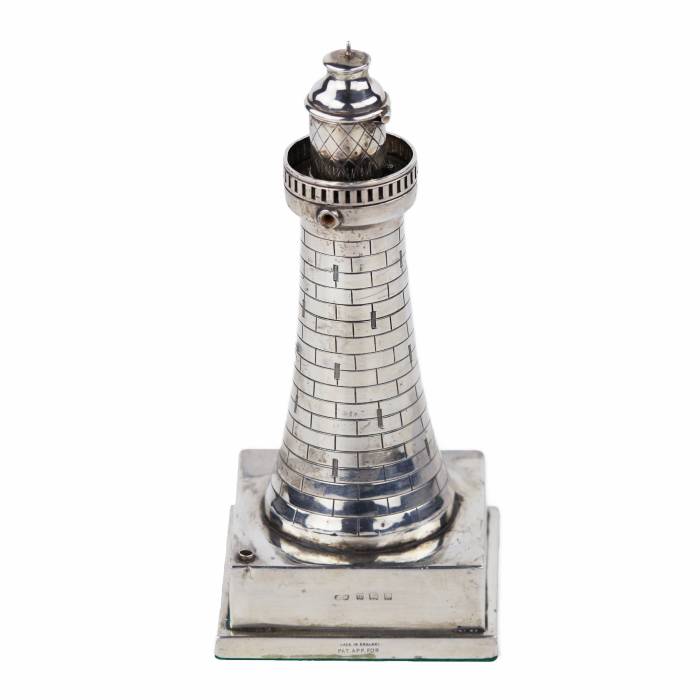
SILVER LIGHTHOUSE-FORM LIGHTER, SHORT & MASON, BIRMINGHAM, 1931
AntiqonART consultant will contact you within one business day after receiving your request.
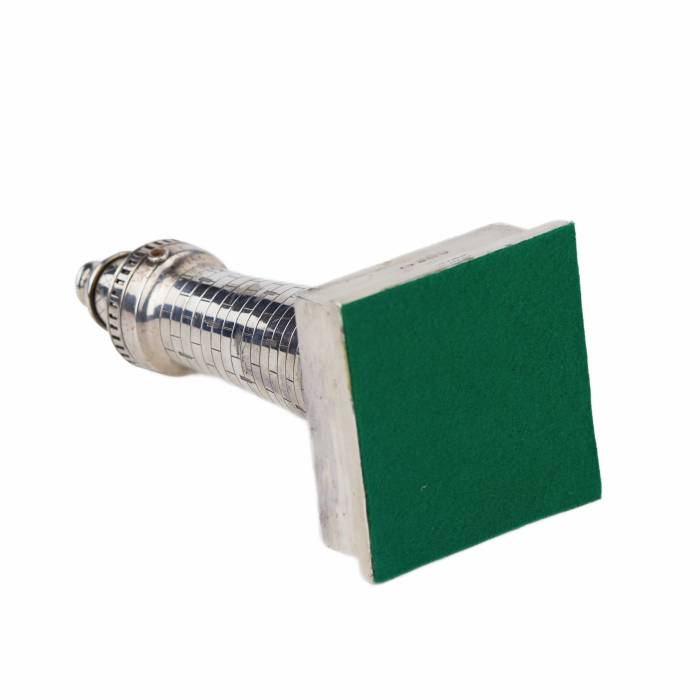
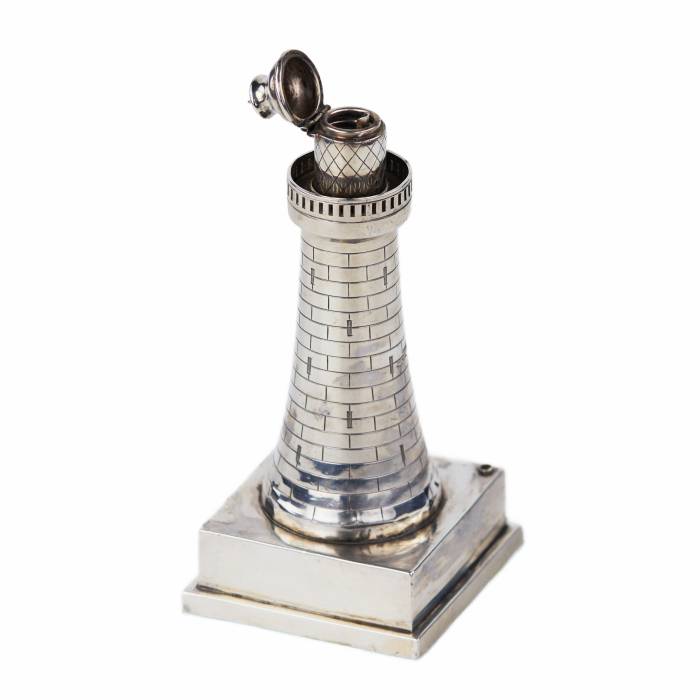
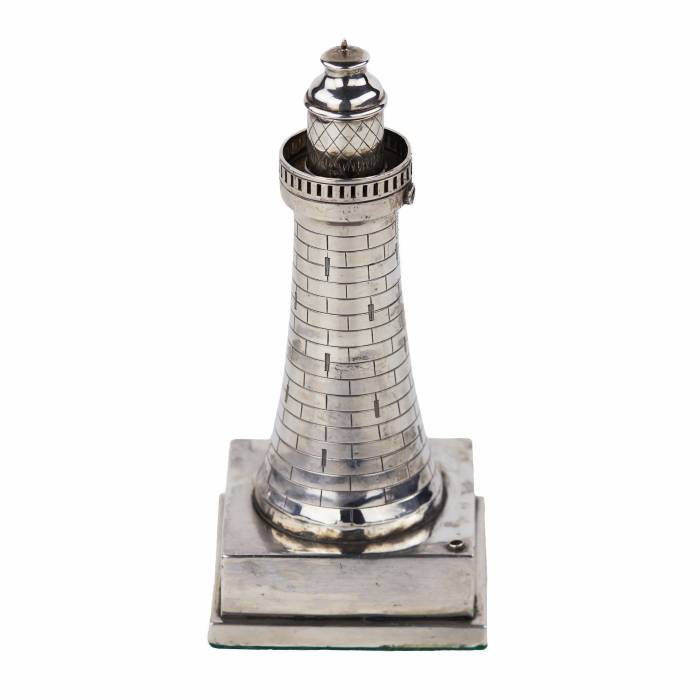
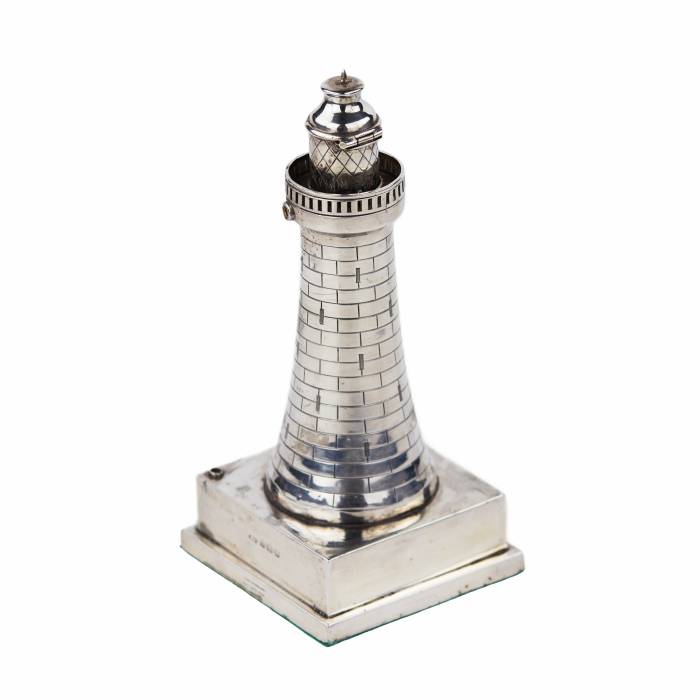
A rare collectible silver lighter in the shape of a lighthouse, created in 1931 in Birmingham by the renowned firm Short & Mason, known for precision instruments and refined desk accessories. Reflecting the aesthetics of British Art Deco, the piece combines sculptural elegance with functionality. The upper section is designed as a removable lantern with a hinged lid concealing the wick and flint. The square base includes a compartment for batteries. The bottom is lined with green felt to protect surfaces.
The symbolic lighthouse form lends architectural clarity and depth of meaning, evoking light, guidance and assurance. This lighter is a rare and stylish object, worthy of a gentleman’s study or cigar lounge where early 20th-century engineering elegance is appreciated.
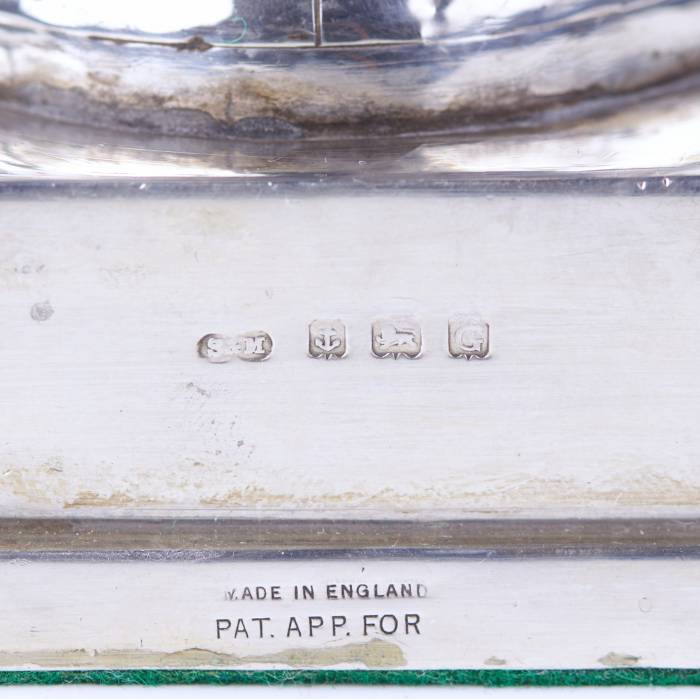
Hallmarks: Birmingham assay marks (1931), maker’s mark Short & Mason.
Dimensions: Height 17 cm.
Weight: 165 g.
Condition: The mechanism is not functional and requires servicing. Otherwise, the overall condition is good, with natural signs of age.
Founded in 1875 in London, Short & Mason became widely known for producing precision scientific instruments — barometers, anemometers, compasses, and technical accessories. Their products were highly valued during an era when refined and technologically advanced objects were a hallmark of affluent lifestyles. The firm’s reputation rested on uncompromising quality, engineering precision, and decorative elegance that bridged science and style.
In the 1920s–1930s, during the rise of Art Deco, Short & Mason expanded into the decorative field, creating refined interior accessories, including silver objects, combining practical function with architectural aesthetics. Lighthouse-form lighters gained particular popularity in this period. They symbolised reliability, direction, and the romance of exploration and modernity. Often offered as prestigious gifts, such items reflected their owner’s taste and status.
This particular lighter reflects the influence of early 20th-century engineering and the aesthetics of the machine age. The integrated electric ignition mechanism was a novelty of its time. Objects like this were often displayed in gentlemen’s studies, cigar lounges, and drawing rooms of the British elite. Today, they are valued as rare examples of functional design, technical ingenuity, and decorative art of the early 20th century.
The mechanism is not functional and requires servicing. Otherwise, overall condition is good with natural signs of age. Minor surface wear and small deformations on decorative elements. Residual traces of gilding. Moving parts are present. Hallmarks are clear.
The condition report is provided for informational purposes only.
It is not comprehensive and may not reflect all defects, restorations, alterations, or adaptations, as Antiqon does not perform professional conservation-level assessments. The information is based on a qualified, yet subjective, evaluation by our specialists.Before purchasing, we recommend consultation with an independent expert.Please also consult our Terms and conditions and Glossary A-Z, which contain important information on lot characteristics and sale conditions.