
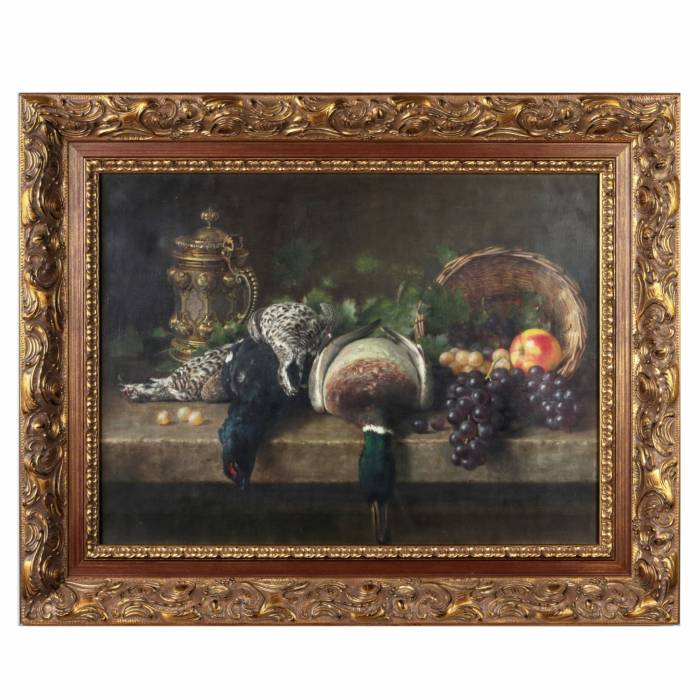
ALFRED ALEXANDROVICH GIRV (1880–1918). STILL LIFE WITH GAME RUSSIA, 1913
AntiqonART consultant will contact you within one business day after receiving your request.
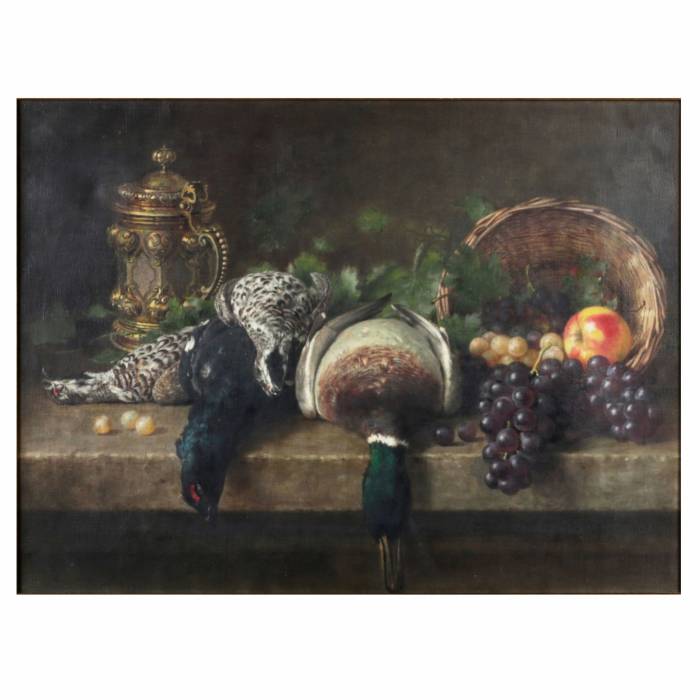
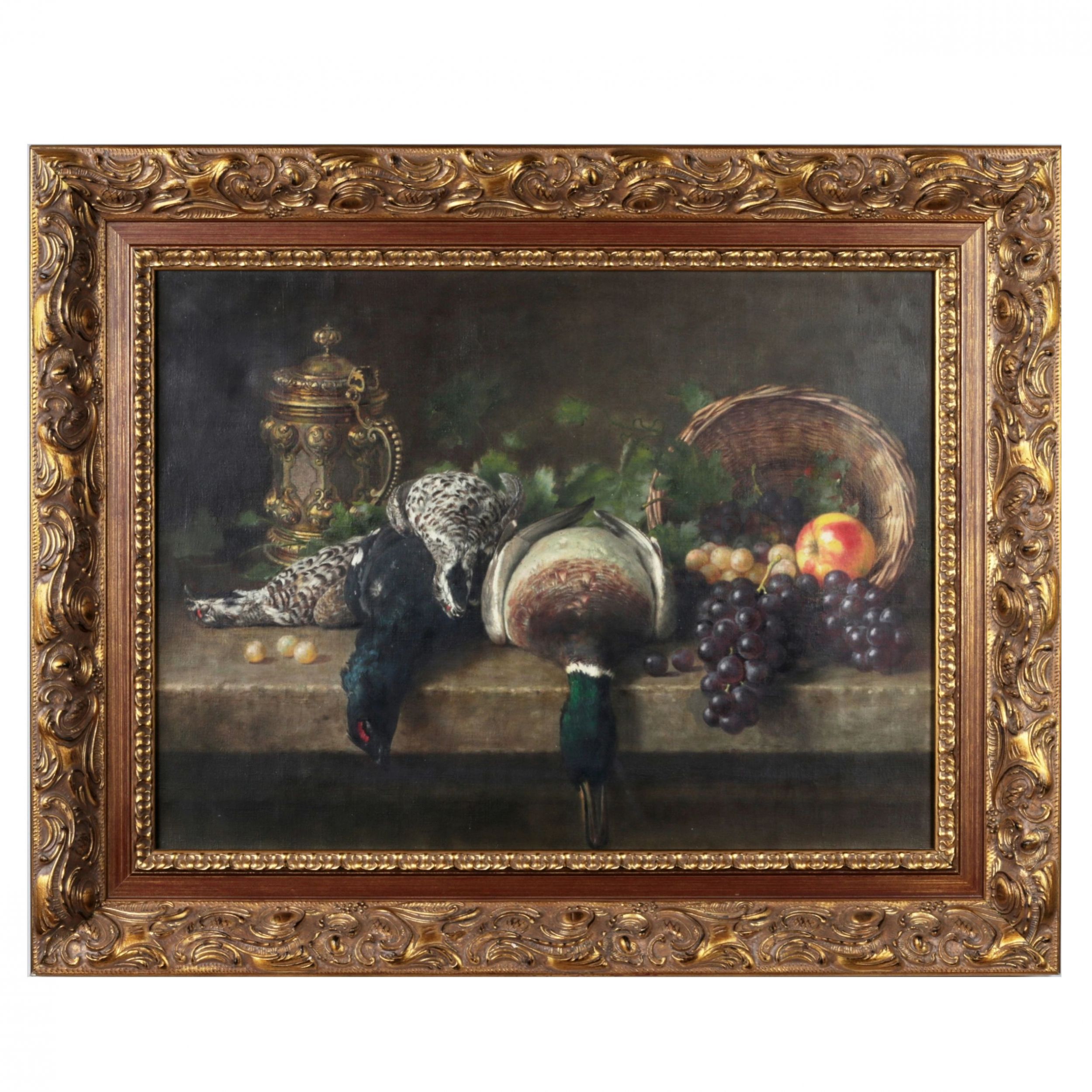
Executed on a massive stone tabletop reminiscent of a cracked funerary slab, this still life unfolds as a composition of concentrated tragedy. A goblet, slain game, and a basket of fruit are presented before the viewer. The hanging tongues of the guinea fowl and drake, echoing the cascading clusters of grapes, create an almost heraldic symmetry, forming a tense compositional and semantic core. Deprived of decorative lightness, the objects appear heavy and solemn; the restrained palette and dense, confident painterly modeling emphasize their material presence.
The work is imbued with profound metaphorical and philosophical meaning. The slain game and bleeding grapes are perceived as images of sacrificial blood, mourning the loss of innocent lives - hers and his, of lovers, of family, of the very origin of being. The basket, interpreted as a nest, encloses the symbol of life’s beginning embodied in the apple, while the unripe green grapes allude to a path only just begun. The goblet becomes a sign of human glory and vanity: for man it is a trophy, joy, and fullness of existence, remaining indifferent to loss. The still life emerges as a profound meditation on the cost of victory and the fragility of life.
Dimensions:
– Unframed: 52 × 70 cm.
– Framed: 74 × 92 cm.
Medium: Oil on canvas.
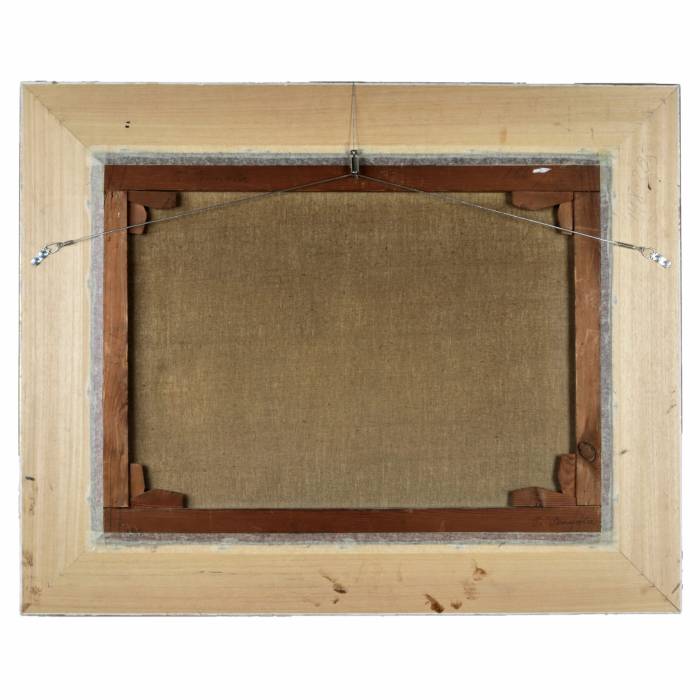
Condition: Good. The paint layer is stable. Minor signs of age are present, consistent with the period of execution.
Provenance: Private collection.
Still life painting in early twentieth-century Russia underwent a period of profound reassessment and increasing conceptual complexity. Moving away from the decorative and narrative solutions of the late nineteenth century, artists turned toward symbolically charged compositions in which the world of objects became a bearer of philosophical, existential, and historical meanings. It was within this artistic context that the work of Alfred Alexandrovich Girv developed - an artist whose life and career coincided with the dramatic threshold of an era preceding the catastrophes of the First World War and the Russian Revolution.
The hunting still life, traditionally associated with abundance, prosperity, and social status, acquired a different, often tragic resonance in the art of the early twentieth century. In Russian and European museum collections, works of this type are frequently interpreted as allegories of the transience of existence, the vanity of human ambition, and the inevitability of loss. The stone surface forming the compositional base intensifies associations with memorial and funerary symbolism, aligning the painting with the vanitas genre as reinterpreted through Symbolism and post-realist artistic inquiry.
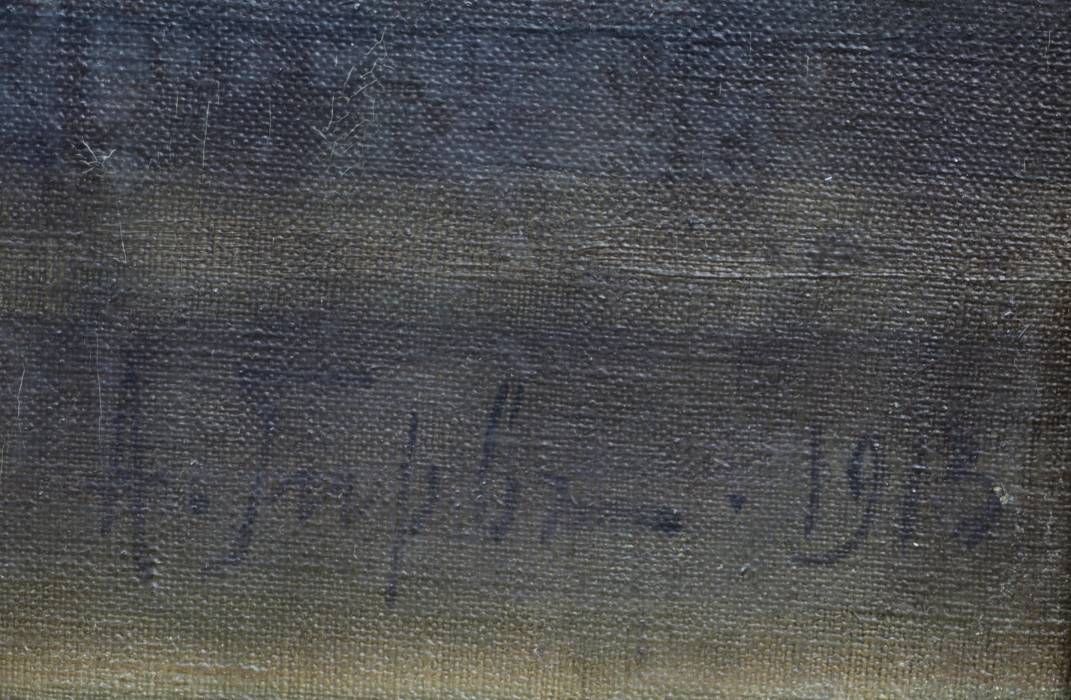
The year 1913, indicated in the dating of the work, is now perceived as a pivotal moment - the last peaceful year of the Russian Empire before the impending historical catastrophe. Artists of the period acutely sensed the tension of the age, the premonition of the collapse of the familiar world order, and the vulnerability of human existence. In this context, Girv’s still life unfolds as a visual meditation on life and death, where objects relinquish their utilitarian function and are transformed into signs of fate. Grapes, the apple, and the goblet, widely employed in European and Russian artistic symbolism, are here united into a complex system of allusions resonant with museum examples of Symbolist still life at the turn of the century. The work integrates seamlessly into the artistic explorations of the pre-revolutionary era, affirming the high intellectual and philosophical level of Russian easel painting in the early twentieth century.
Overall condition is good. The canvas is flat and free of deformation. The paint surface is stable, with no losses. Minor age-related changes are present and do not affect the overall visual perception or artistic value of the work.
The condition report is provided for informational purposes only.
It is not comprehensive and may not reflect all defects, restorations, alterations, or adaptations, as Antiqon does not perform professional conservation-level assessments. The information is based on a qualified, yet subjective, evaluation by our specialists.Before purchasing, we recommend consultation with an independent expert.Please also consult our Terms and conditions and Glossary A-Z, which contain important information on lot characteristics and sale conditions.