MARBLE SCULPTURE “THE BATHING VENUS” EUROPE, 19TH - EARLY 20TH CENTURY
AntiqonART consultant will contact you within one business day after receiving your request.
Discover how the value of similar works has evolved over the past 10 years. Art is not only beauty — it's an investment.
Discover how the value of similar works has evolved over the past 10 years. Art is not only beauty — it's an investment.
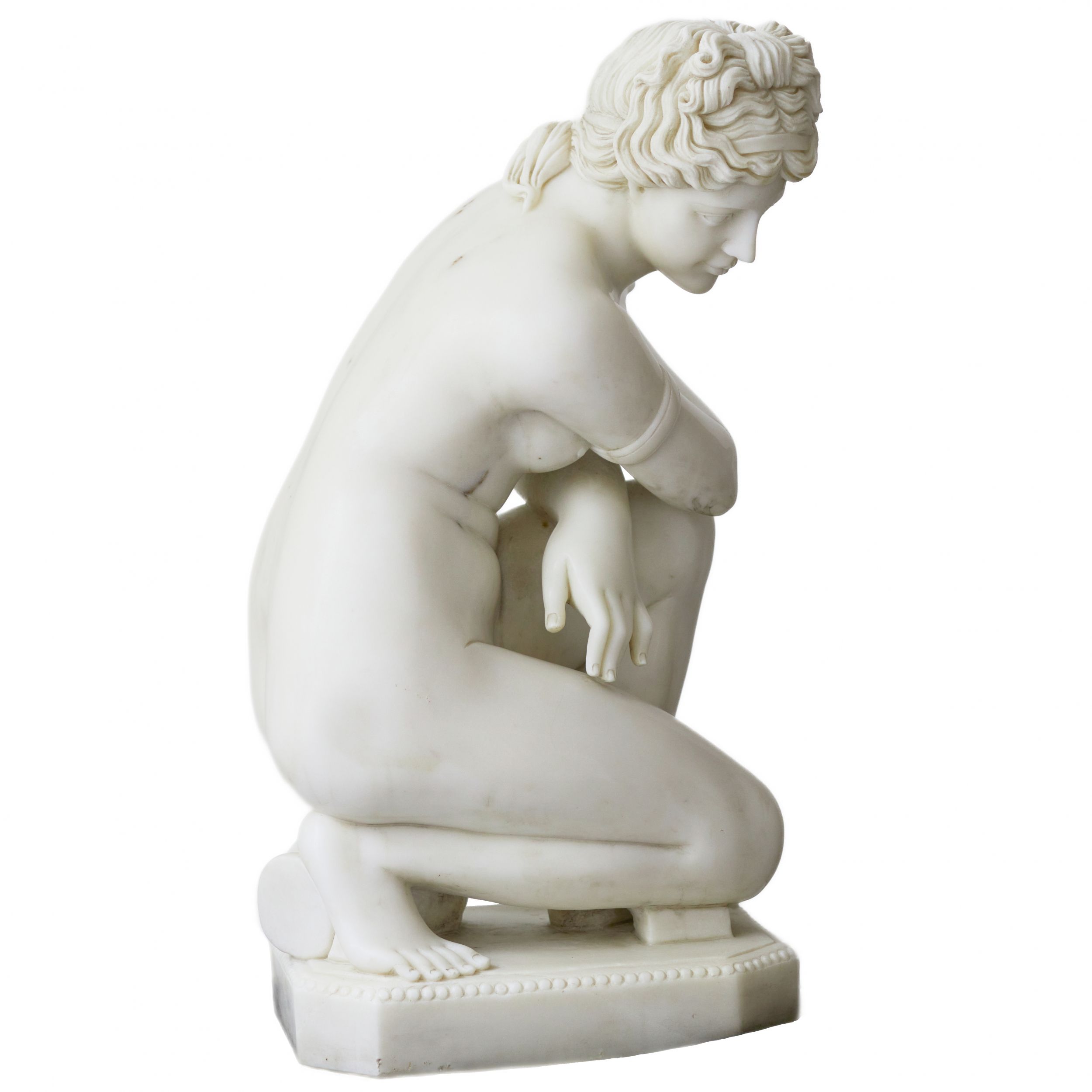
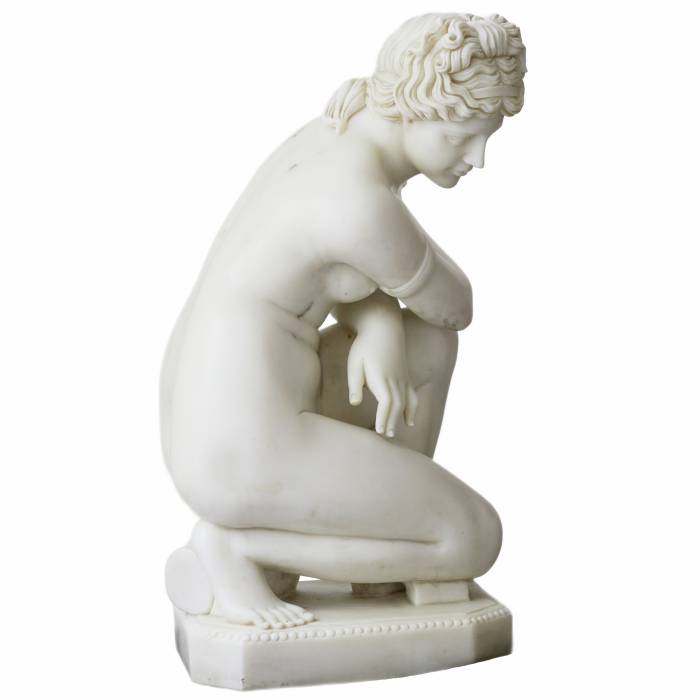
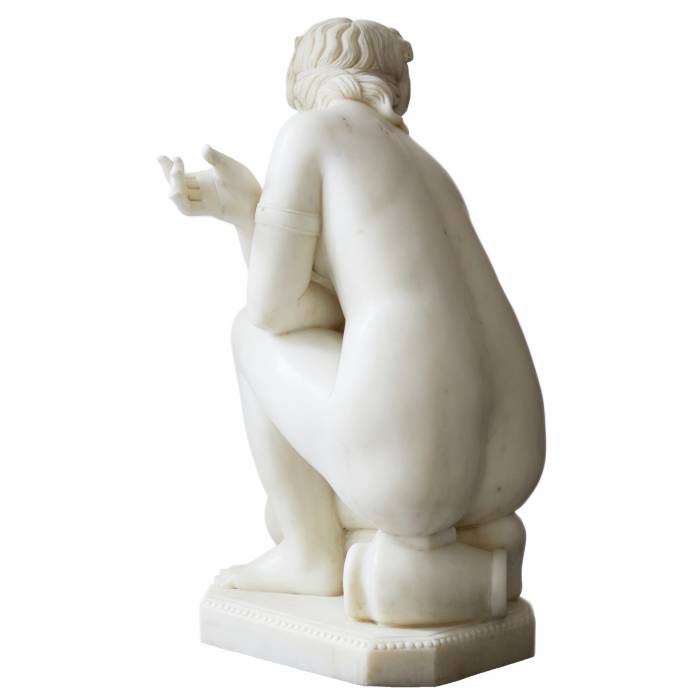
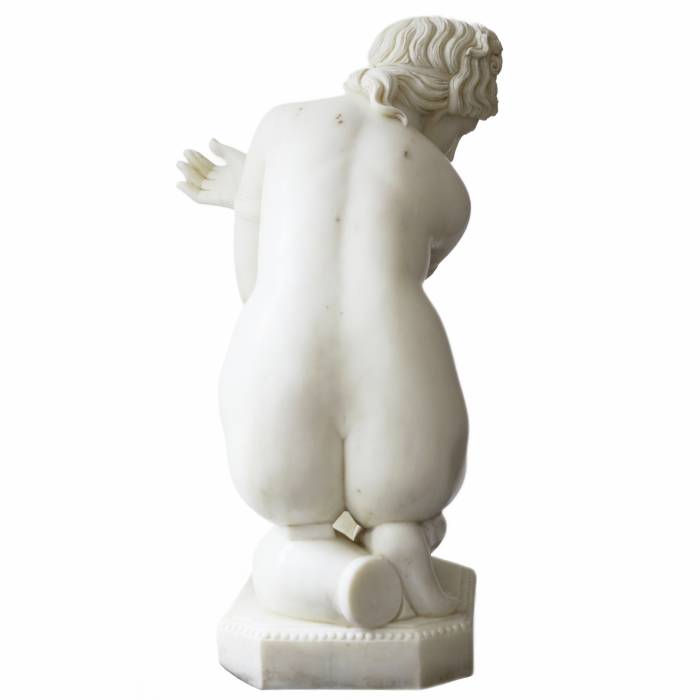
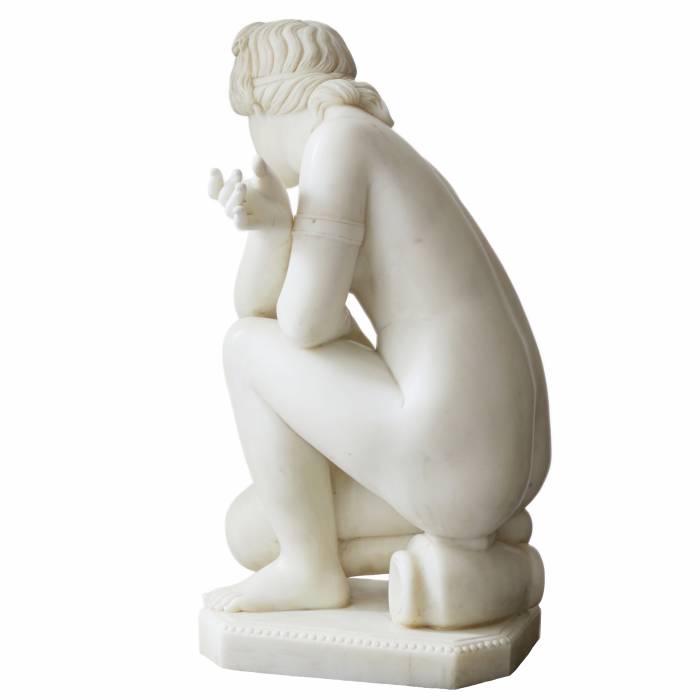
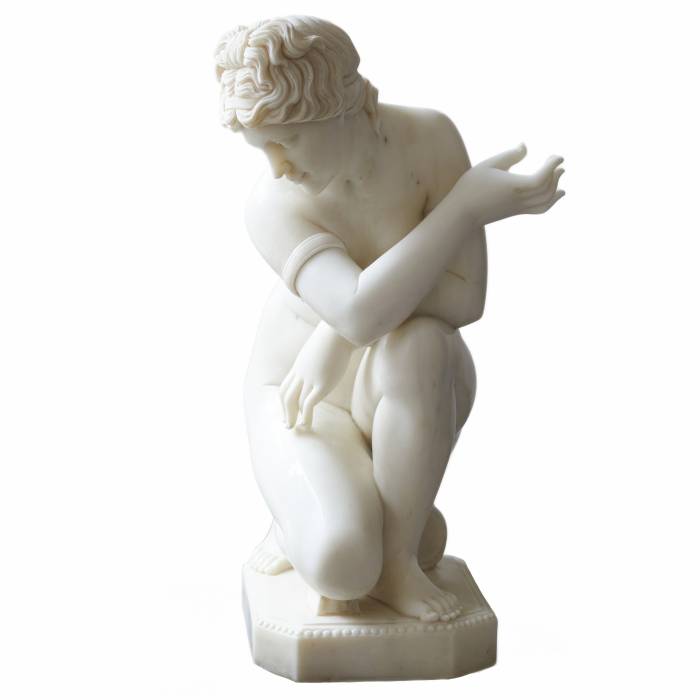
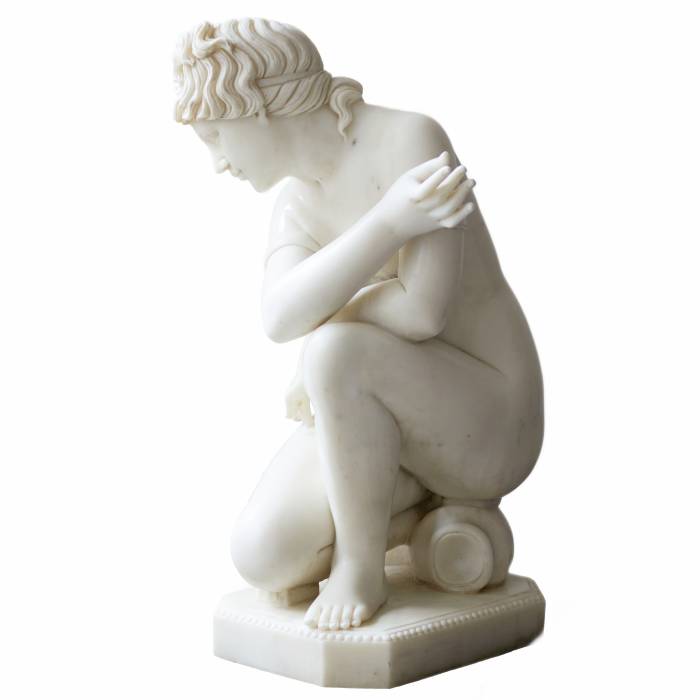
A monumental marble sculpture depicting the goddess Venus in a moment of intimate contemplation at a sacred spring. The nude figure is shown in the canonical crouching pose: one arm resting upon the bent knee, the other gracefully extended to the side, creating a refined cross-rhythm of movement. The turn of the head and the gentle inclination of the torso form a subtle interplay of volumes, emphasizing the introspective and poetic character of the image.
The iconography derives from the celebrated Antique prototype of the “Bathing Venus,” known through Roman marble copies of the 2nd century BC. The 19th-century sculptor interprets the ancient canon in a refined Academic manner, paying particular attention to idealized anatomy, smooth modeling, and the delicate treatment of the marble surface. The white marble, enriched by a soft natural patina, enhances the sense of purity and timeless harmony.
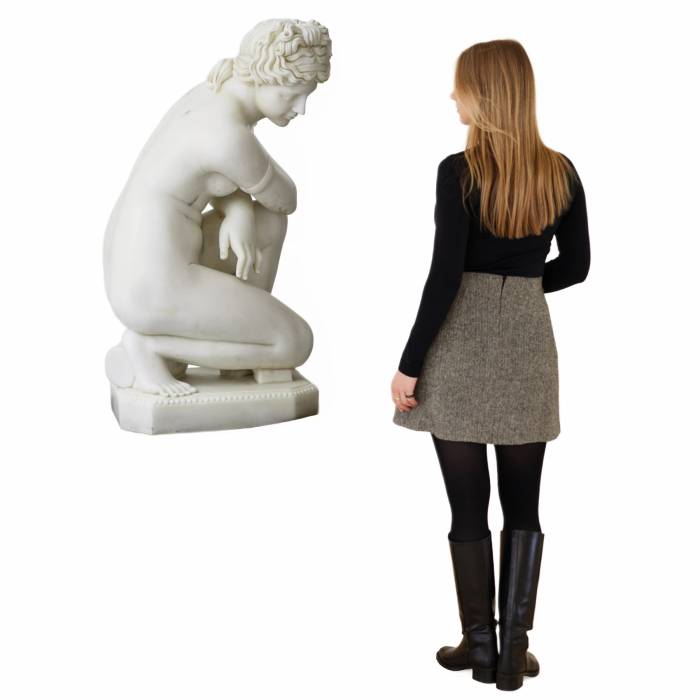
The figure stands upon a strict octagonal base decorated with a pearl frieze, underscoring the Neoclassical character of the work. The near life-size scale grants the sculpture a museum presence and architectural dignity.
Hallmarks: None observed.
Dimensions: Height 89 cm; Width 50 cm; Depth 49 cm.
Weight: 120 kg.
Condition: Good. Minor surface wear consistent with age and a light natural patina. No visible restorations.
Provenance: Private European collection.
The image of the Bathing Venus occupies a central place in the history of European sculpture and in the formation of the canon of feminine beauty. Its origins lie in the Hellenistic tradition, where Aphrodite was first represented in an intimate moment associated with water. Roman workshops produced numerous marble copies of Greek bronze originals, disseminating the type throughout the Mediterranean world. These works established a model of sensual yet idealized harmony that profoundly influenced later artistic traditions.
During the 19th century, within the framework of Neoclassicism, the revival of Antique prototypes became fundamental to Academic training and artistic production. Sculptors in France, Italy, Germany, and the Austro-Hungarian Empire reinterpreted classical models inspired by the collections of the Vatican Museums, the Louvre, and the Capitoline Museums. Marble statues of Venus adorned aristocratic residences, palace interiors, and winter gardens, symbolizing ideals of harmony, cultural continuity, and refined taste.
Works of the late 19th and early 20th centuries such as the present example are not merely replicas but reinterpretations that reflect the aesthetic values of their time. Their high level of craftsmanship and adherence to classical proportion secure their enduring appeal on the international art market.
The marble surface remains in good condition. Minor natural inclusions and light traces of age are visible. No cracks, losses, or later restorations detected.
The condition report is provided for informational purposes only.
It is not comprehensive and may not reflect all defects, restorations, alterations, or adaptations, as Antiqon does not perform professional conservation-level assessments. The information is based on a qualified, yet subjective, evaluation by our specialists.Before purchasing, we recommend consultation with an independent expert.Please also consult our Terms and conditions and Glossary A-Z, which contain important information on lot characteristics and sale conditions.