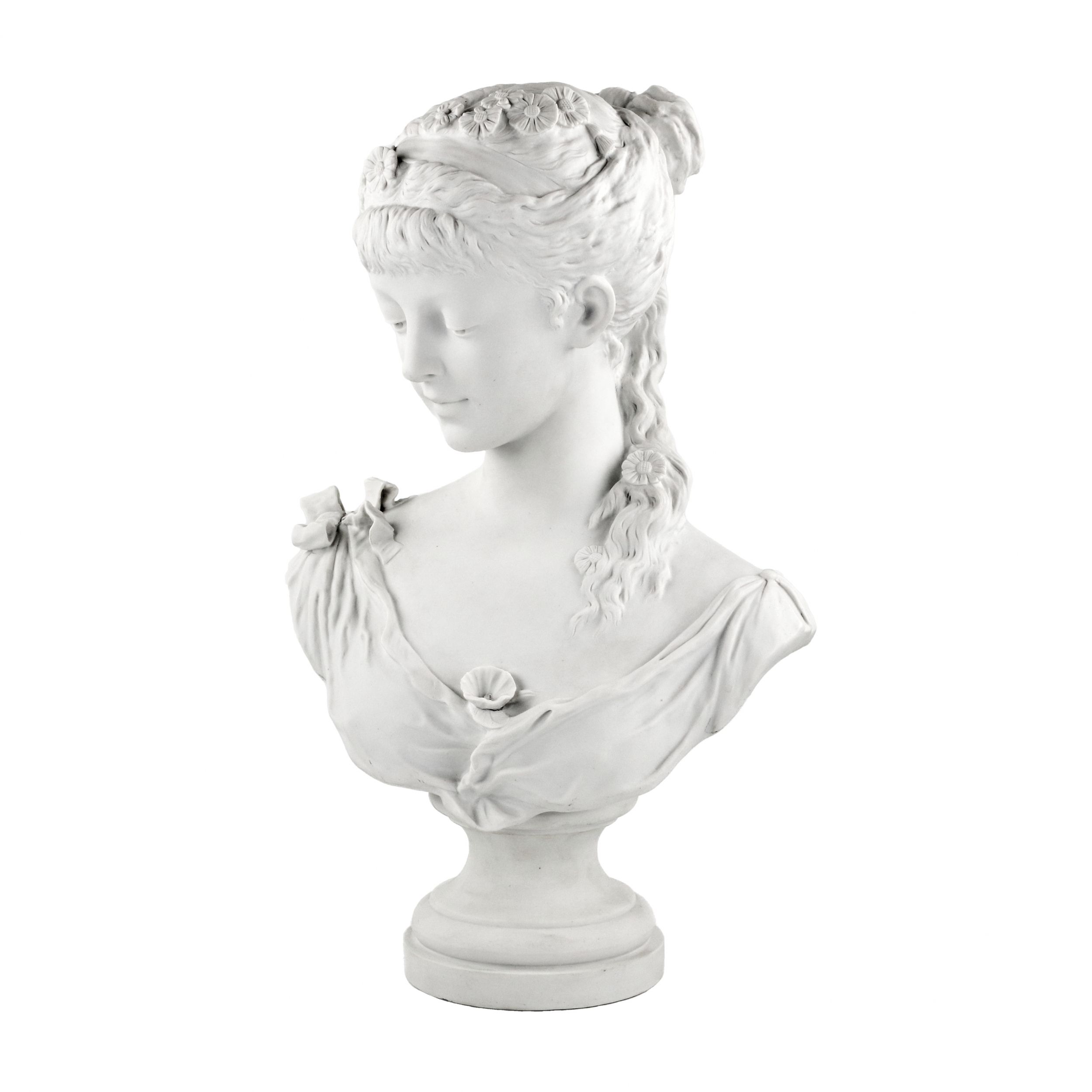
BISCUIT PORCELAIN BUST OF A YOUNG GIRL CHARLES LEVY & CO, FRANCE, CIRCA 1876-1881
AntiqonART consultant will contact you within one business day after receiving your request.
Discover how the value of similar works has evolved over the past 10 years. Art is not only beauty — it's an investment.
Discover how the value of similar works has evolved over the past 10 years. Art is not only beauty — it's an investment.
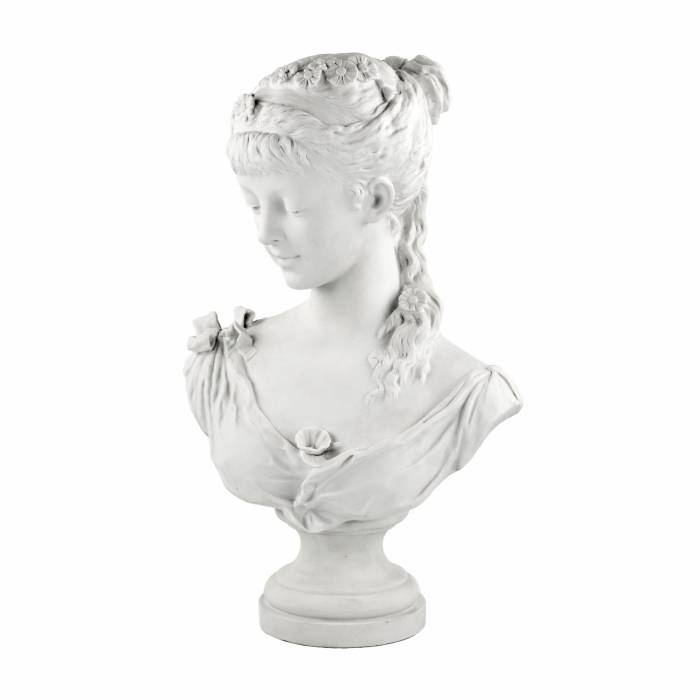
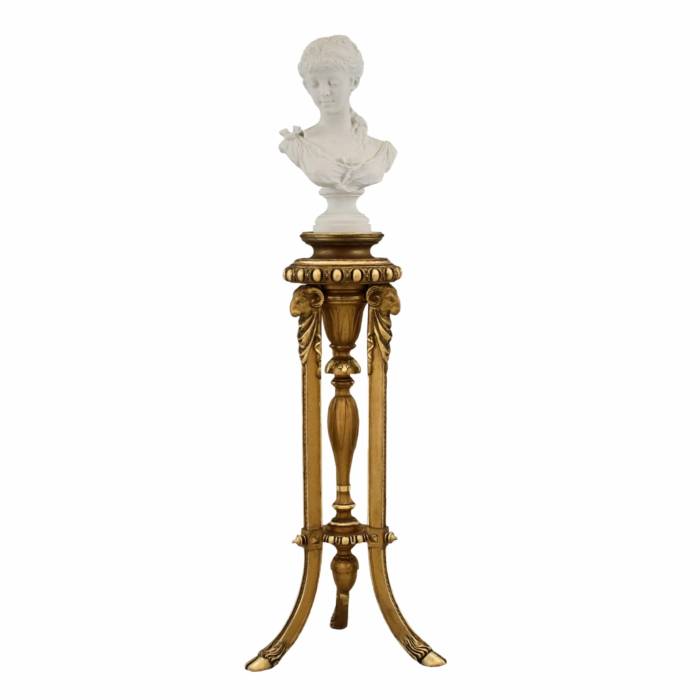
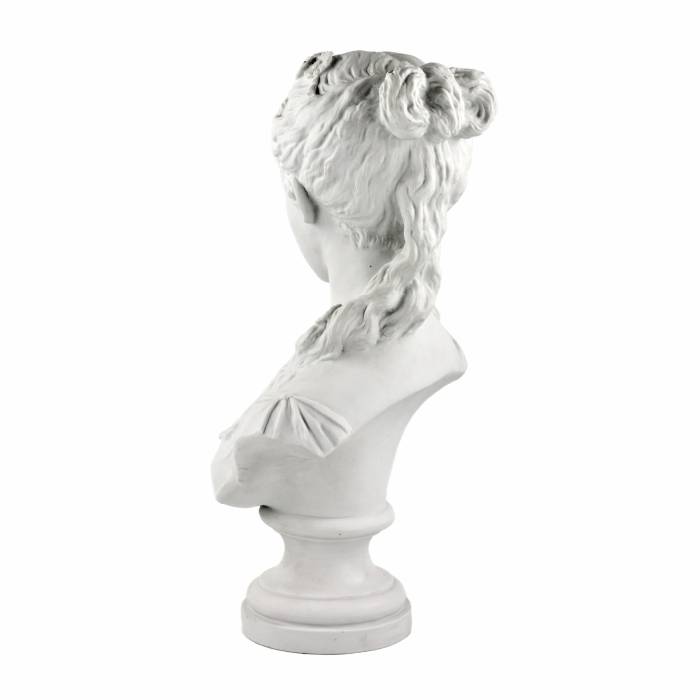
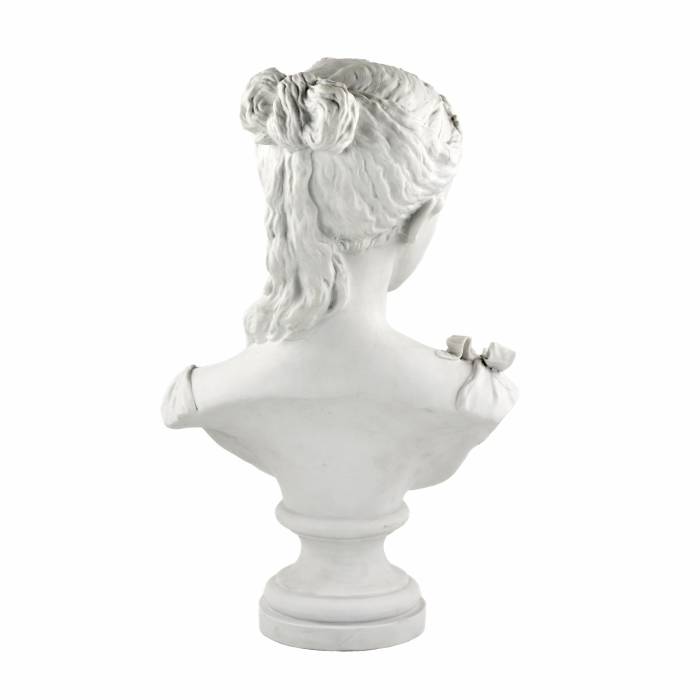
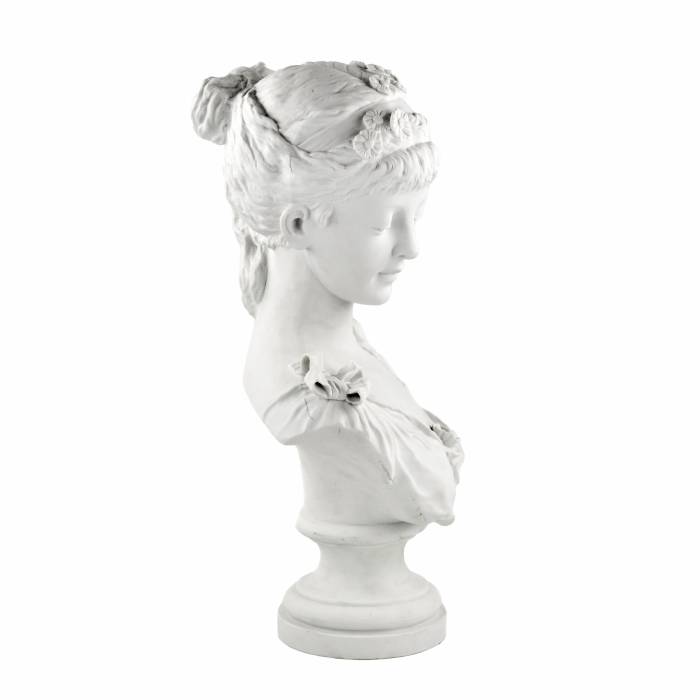
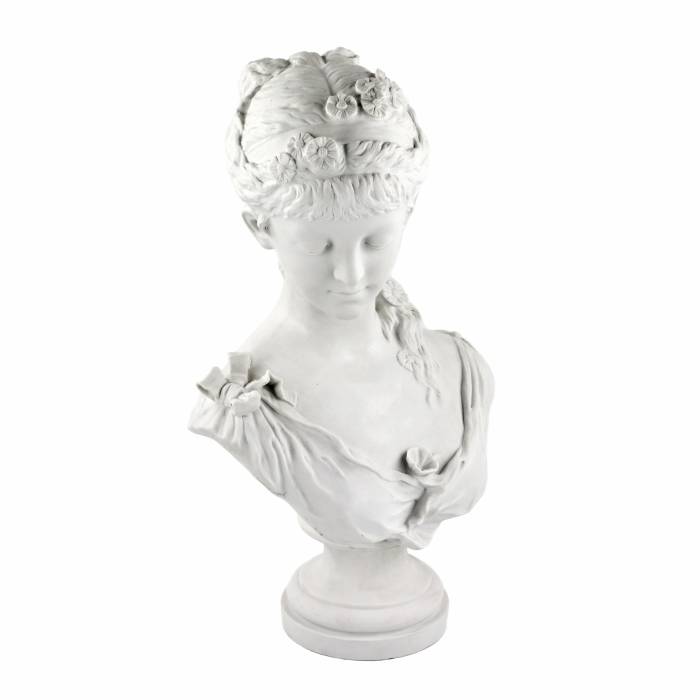
An elegant biscuit porcelain bust created by Charles Levy & Co in Charenton-le-Pont near Paris, representing a refined example of French decorative sculpture of the last quarter of the 19th century. The work unites the traditions of Neoclassicism and Salon Historicism with subtle elements of Naturalistic Romanticism characteristic of the Belle Époque aesthetic.
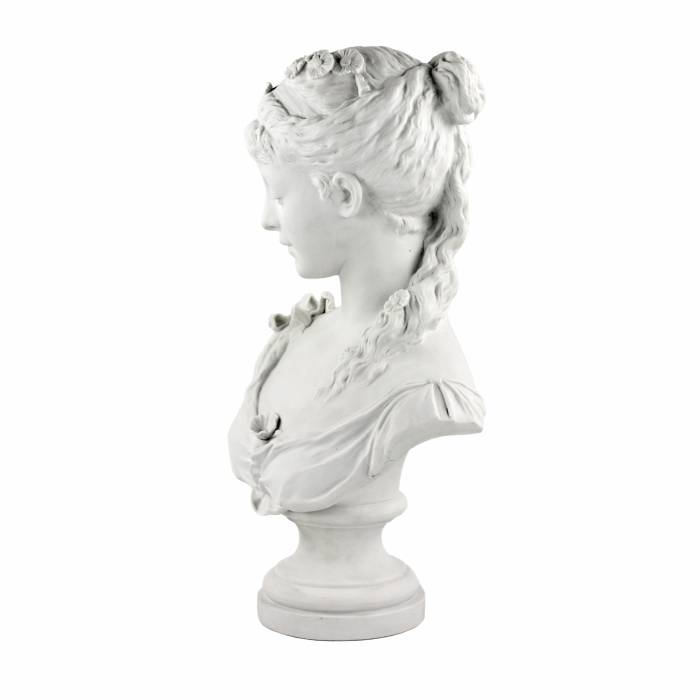
The composition is conceived in a three-quarter turn, lending the figure pictorial depth and gentle dynamism. The young heroine lowers her gaze toward a flower placed along the neckline. An asymmetrical wreath of daisies, a loosely arranged braid falling over the shoulder, and delicately modeled drapery create a subtle dialogue between academic precision and a freer, almost Impressionistic interpretation of detail.
The matte surface of the biscuit porcelain enhances its resemblance to marble sculpture and emphasizes the purity of the modeling. Soft transitions of volume and restrained emotional expression define the sculptural character. The bust rests on a molded base with a cylindrical pedestal, forming a balanced architectural silhouette.
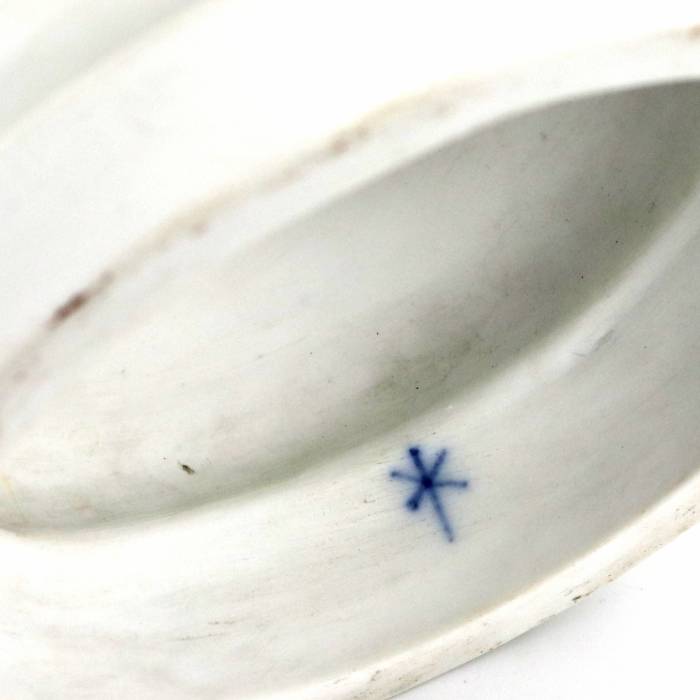
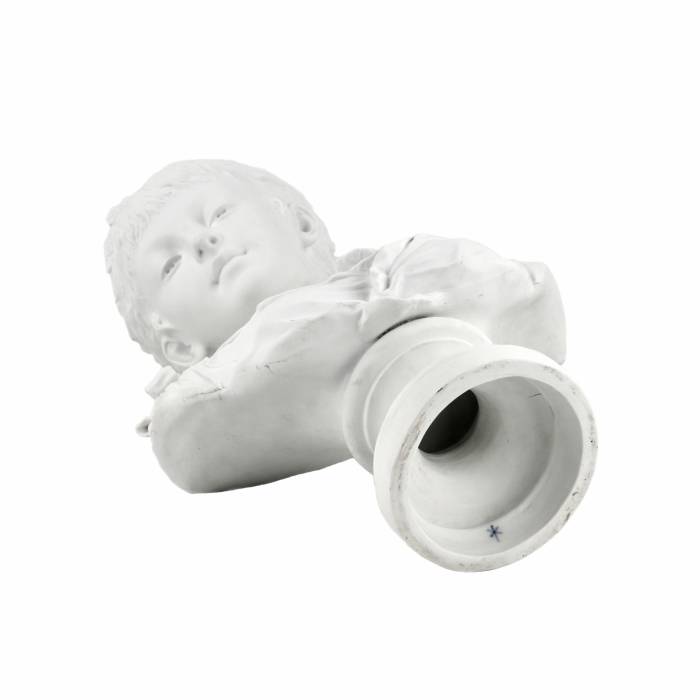
Marks: Underglaze blue mark in the form of a six-pointed star, characteristic of Charles Levy & Co, Charenton-le-Pont, circa 1876-1881.
Dimensions: Height 47.5 cm.
Condition: Good. Light signs of age to the base.
In the second half of the 19th century, France maintained a leading position in the production of artistic porcelain, shaping the tastes of the European decorative arts market. Alongside the state manufactory of Sèvres, numerous private factories flourished in the Paris region, among them Charles Levy & Co in Charenton-le-Pont.
Active in the 1870s and early 1880s, the manufactory specialized in artistic biscuit porcelain and interior sculpture. It catered to the Salon market of the Third Republic, producing busts, allegorical figures and decorative compositions intended for bourgeois townhouses and country residences. Its production was distinguished by refined modeling and technical precision.
The underglaze blue six-pointed star mark dates to circa 1876-1881 and serves as a key attribution element. Biscuit porcelain, left unglazed, allowed for exceptionally precise modeling and a marble-like effect, making it particularly desirable for intimate sculptural works.
The iconography of a young girl with a flower continues the European sculptural tradition in which innocence is combined with subtle psychological suggestion. Such works were highly sought after in Belle Époque interiors, reflecting the synthesis of Salon elegance, technical excellence and commercial success of private French manufactories.
The biscuit surface is clean and even. No cracks or chips observed. Minor soiling along the edge of the base consistent with age. Structurally stable.
The condition report is provided for informational purposes only.
It is not comprehensive and may not reflect all defects, restorations, alterations, or adaptations, as Antiqon does not perform professional conservation-level assessments. The information is based on a qualified, yet subjective, evaluation by our specialists.Before purchasing, we recommend consultation with an independent expert.Please also consult our Terms and conditions and Glossary A-Z, which contain important information on lot characteristics and sale conditions.