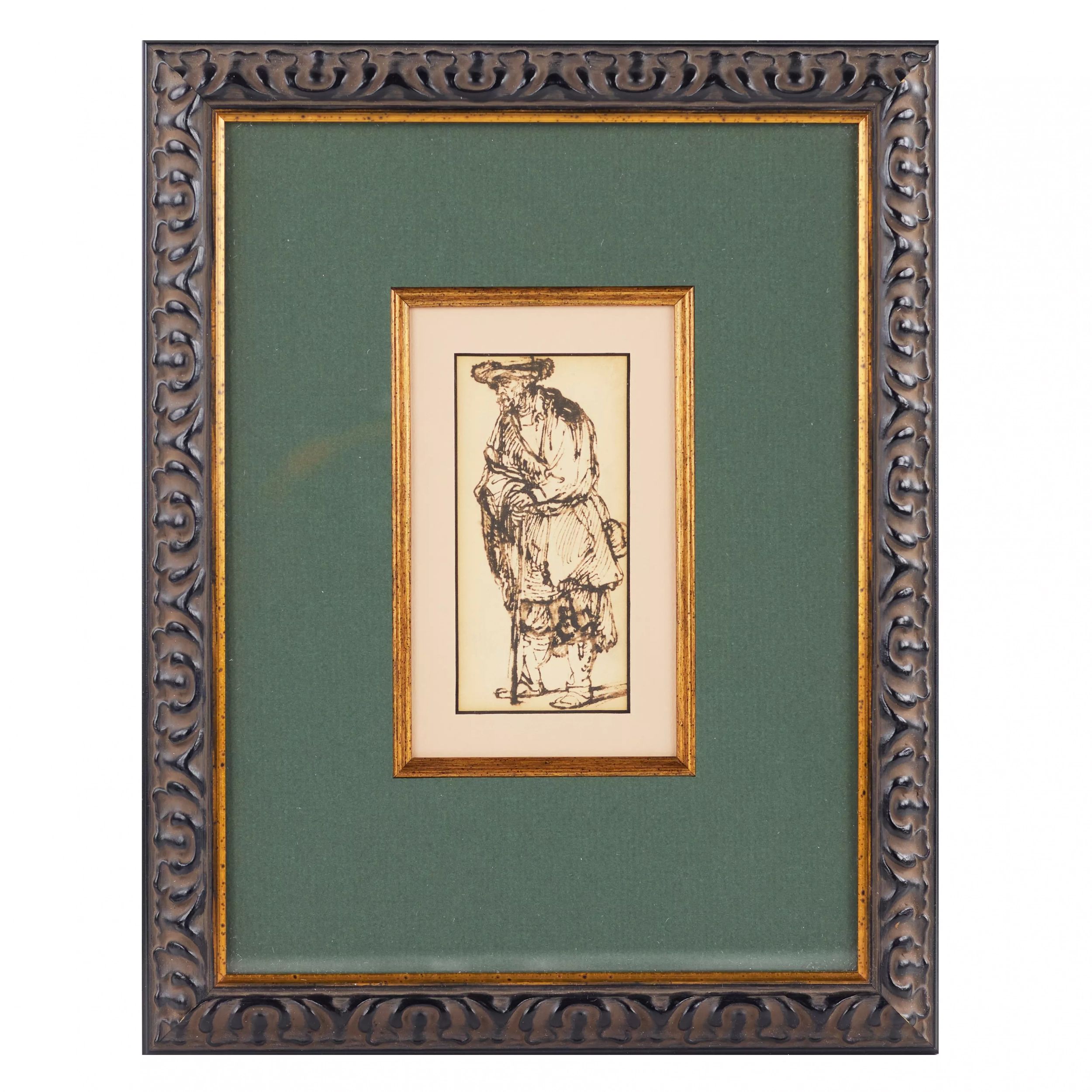
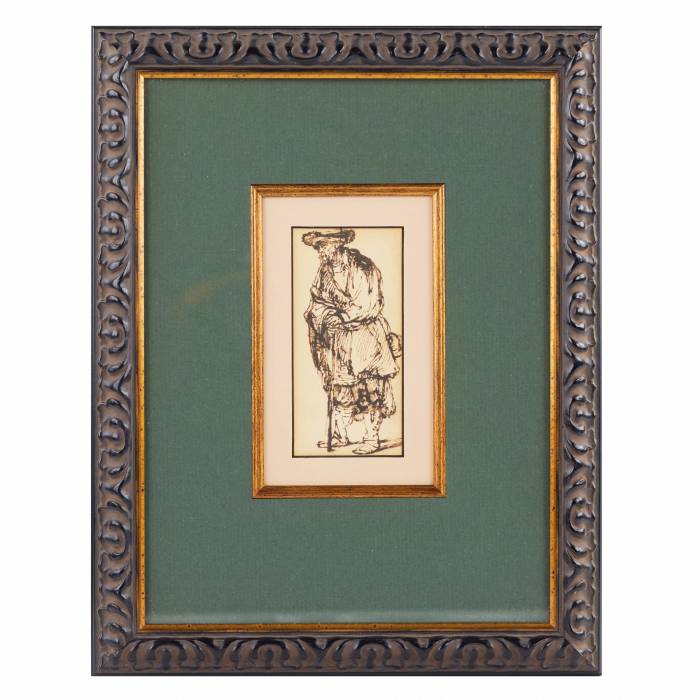
OLD MAN WITH A STAFF. PEN DRAWING IN THE MANNER OF REMBRANDT EUROPE, 19TH CENTURY
AntiqonART consultant will contact you within one business day after receiving your request.
Discover how the value of similar works has evolved over the past 10 years. Art is not only beauty — it's an investment.
Discover how the value of similar works has evolved over the past 10 years. Art is not only beauty — it's an investment.
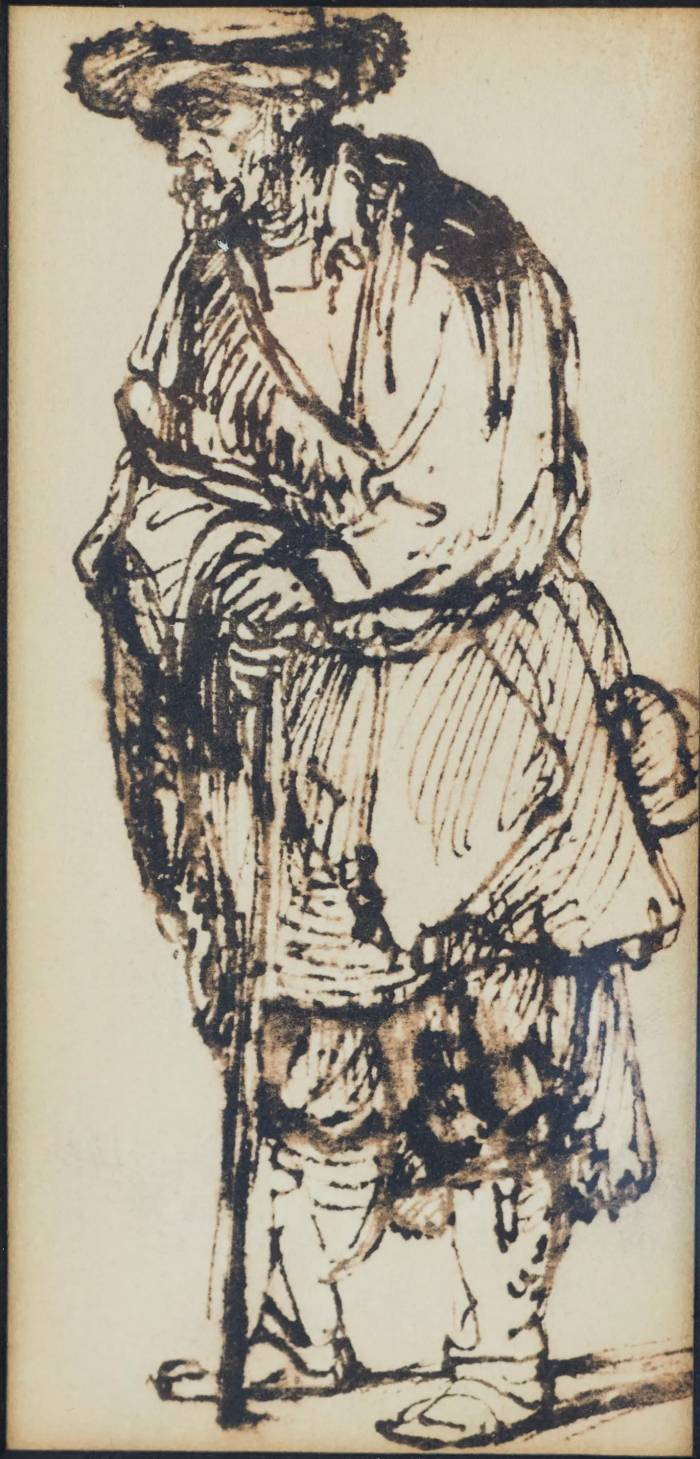
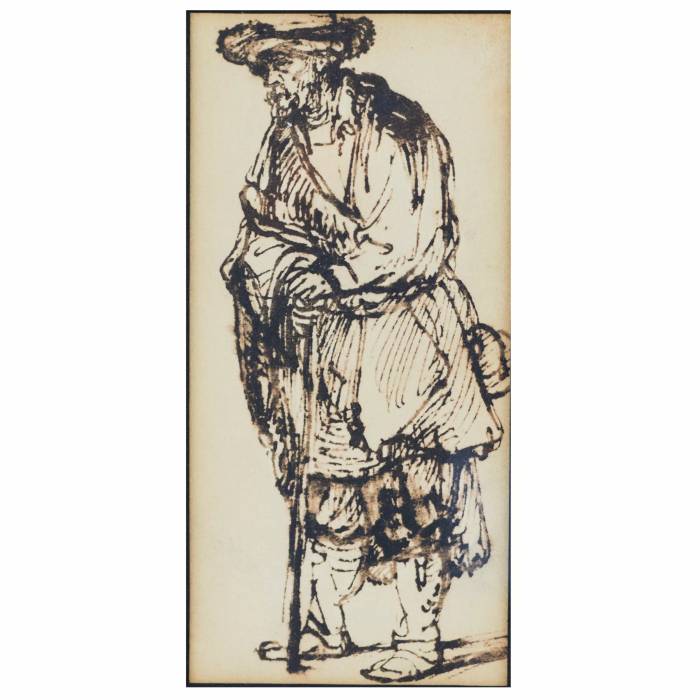
A small graphic sheet depicting an elderly man leaning on a walking staff. The figure is rendered in a manner characteristic of the Northern European graphic tradition of the seventeenth century. The old man is shown in heavy, folded garments and a soft cap, with his head slightly bowed and his expression thoughtful and contemplative. The composition is built upon the expressive silhouette of the figure and the energetic freedom of the pen line.
The drawing is executed in pen and ink, employing dense hatching and swift contour strokes. The artist makes active use of the contrast between deep dark accents and the light tone of the paper, creating a strong sense of plasticity and emphasizing the volume of the figure. The manner of execution - characterized by broken, lively strokes and concentrated linear shading in the darker areas - recalls the graphic language of the works of the Dutch master Rembrandt Harmenszoon van Rijn (1606 - 1669) and his school.
Such representations of solitary old men, wanderers, and biblical figures occupy an important place within Rembrandt’s graphic legacy. In these works the artist sought to convey the inner state of the individual, the weight of experience and spiritual introspection. The present drawing was likely created by a European artist of the nineteenth century working within the tradition of historical emulation of the Old Masters and inspired by the graphic works of the Dutch school of the seventeenth century.
Dimensions: Drawing: 10.5 × 5 cm. Framed: 30 × 24 cm.
Material: Paper, pen and ink.
Condition: Good. The paper shows slight natural toning and minor traces of age along the edges.
Provenance: Private European collection.
The graphic legacy of Rembrandt Harmenszoon van Rijn occupies a special place in the history of European seventeenth-century art. His pen and reed-pen drawings are distinguished by exceptional freedom of line, immediacy of observation, and profound psychological insight. Rembrandt frequently used drawing as a means of studying the world around him, producing numerous sketches of people from different social backgrounds, including beggars, travelers, elderly men, craftsmen, and peasants.
Images of elderly figures leaning on staffs or dressed as wanderers appear in many drawings associated with Rembrandt and his circle. These figures are often interpreted as biblical characters, philosophers, or solitary travelers immersed in contemplation. Such compositions are marked by remarkable economy of means, where only a few vigorous lines are sufficient to convey the age, character, and emotional state of the figure.
During the nineteenth century, the fascination with the Old Masters intensified throughout Europe. Artists, collectors, and scholars closely studied and copied the drawings of Rembrandt, recognizing in them a model of expressive draftsmanship and artistic spontaneity. In academic training, the graphic works of the Dutch master often served as exemplary study material for young artists.
As a result, a significant number of drawings created “in the manner of Rembrandt” appeared during the nineteenth century. These works frequently reproduced characteristic types, poses, and graphic techniques associated with the master. Such drawings reflect the academic practice of studying the Old Masters while simultaneously demonstrating the enduring influence of the Rembrandt school on European artistic culture.
The sheet is in good collectible condition. The paper shows natural aging and slight toning. No visible restoration interventions were detected. The work is presented in a decorative frame with mat.
The condition report is provided for informational purposes only.
It is not comprehensive and may not reflect all defects, restorations, alterations, or adaptations, as Antiqon does not perform professional conservation-level assessments. The information is based on a qualified, yet subjective, evaluation by our specialists.Before purchasing, we recommend consultation with an independent expert.Please also consult our Terms and conditions and Glossary A-Z, which contain important information on lot characteristics and sale conditions.