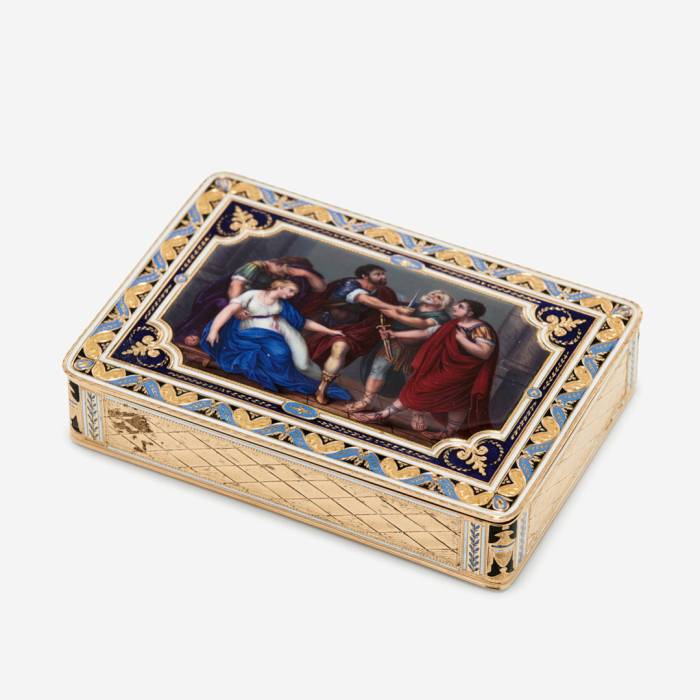
GOLD SNUFFBOX WITH ENAMEL. GEORG REMOND, LAMY ET CIE GENEVA, 1801–1805
AntiqonART consultant will contact you within one business day after receiving your request.
Discover how the value of similar works has evolved over the past 10 years. Art is not only beauty — it's an investment.
Discover how the value of similar works has evolved over the past 10 years. Art is not only beauty — it's an investment.
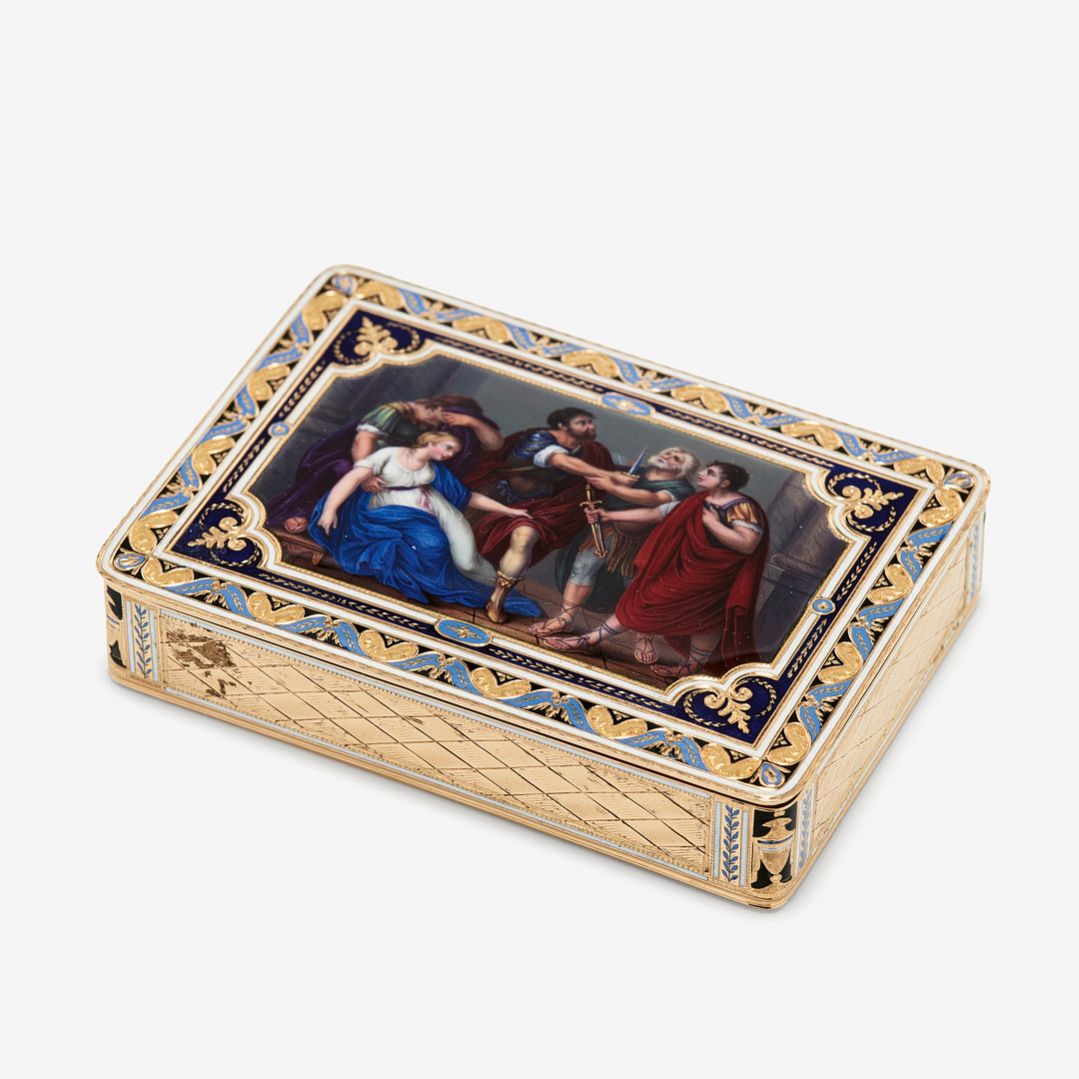
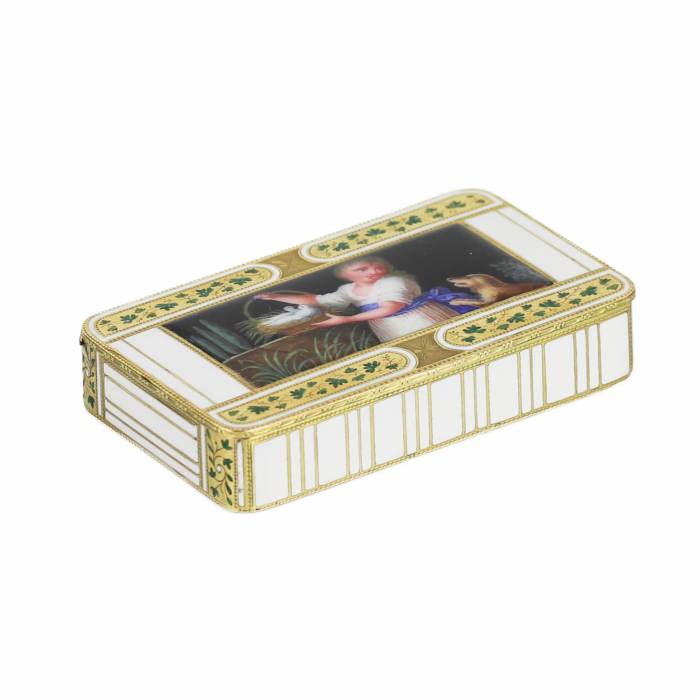
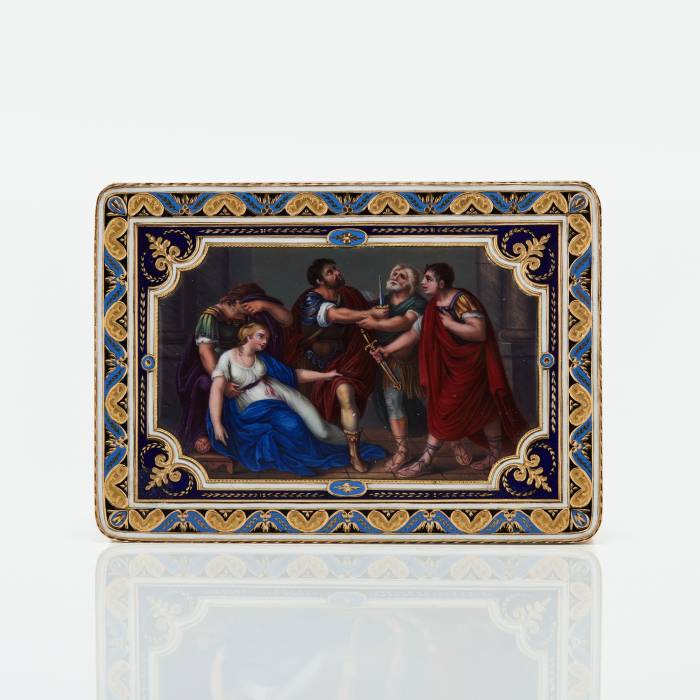
A rare gold snuffbox created in Geneva between 1801 and 1805 in the workshop of Georg Rémond & Lamy et Cie, one of the leading Swiss jewellers of the early 19th century. The lid is adorned with a finely executed multi-figure composition in painted enamel depicting the dramatic classical subject “The Death of Lucretia”. The scene is framed by an elegant border of chased gold and contour enamel in deep cobalt and black tones, characteristic of the Geneva school of the Consulate period.
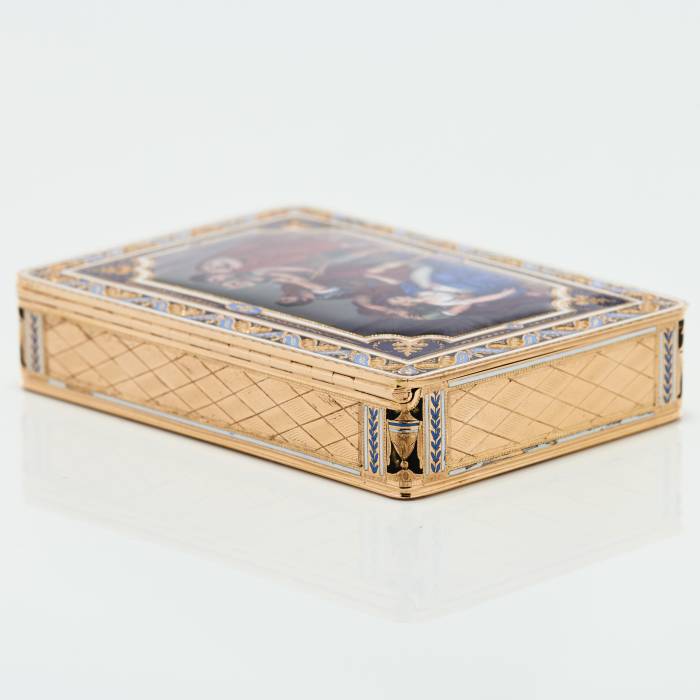
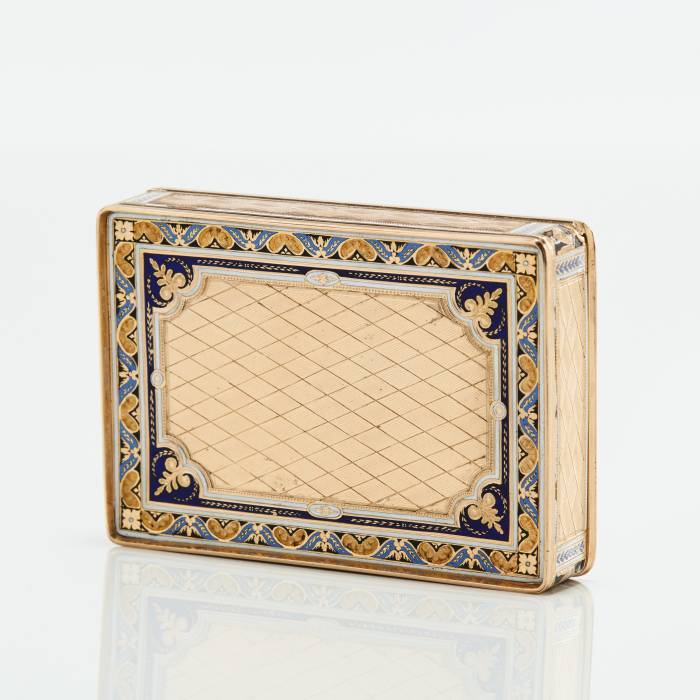
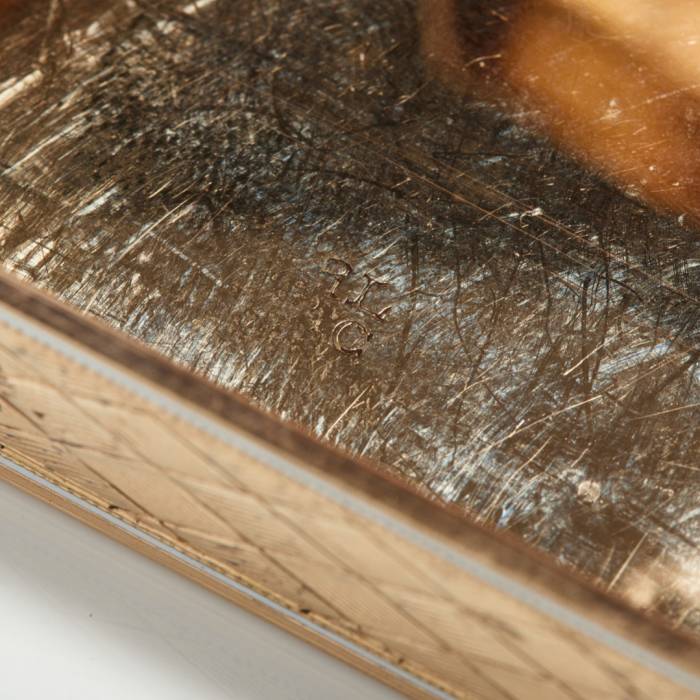
The body is crafted in 18K gold and decorated with delicate guilloché in a diagonal pattern. The perimeter is accentuated by ornamental borders alternating stylised ribbons, foliate motifs and inserts of blue enamel. The corners are defined by vertical panels with classical elements. The interior surfaces of the lid and body are polished to a mirror finish, emphasising the exceptional quality of execution.
Marks: Initials G R L C, corresponding to the workshop of Georg Rémond & Lamy et Cie, Geneva, 1801–1805.
Dimensions: Length: 8.3 cm.Width 6 cm. Height 1,5 cm.
Weight: 104 g.
Condition: Good. Minor traces of use.
Provenance: Private collection of Jan Ribbhagen.
In the early 19th century, Geneva established itself as one of the principal centres of European jewellery and enamel production, developing a distinctive tradition of luxury objects intended for an international clientele. Gold snuffboxes with painted enamel held a particularly important position within this context, combining the function of a personal accessory with refined artistic expression. The workshop of Georg Rémond & Lamy et Cie occupies a significant place within this tradition, representing the transition of the Geneva school from late Neoclassicism to the stylistic language of the Consulate and early Empire periods.
The works of this atelier are distinguished by the high purity of gold, precision of guilloché work and the use of enamel miniatures executed to a standard comparable with easel painting. Comparable examples are preserved in major museum collections, including the Musée du Louvre, the Victoria and Albert Museum and The Metropolitan Museum of Art, where they are regarded as benchmark works of early 19th century decorative art. Their decorative programmes draw upon classical and historical subjects widely disseminated during the Napoleonic era, when references to the Roman Republic embodied ideals of civic virtue and moral integrity.
The subject of “The Death of Lucretia” occupies a central place in the iconography of the period. The story of the Roman matron, whose tragic fate symbolised virtue and moral resolve, was widely interpreted in painting, printmaking and decorative arts. Geneva artisans adapted such compositions into the format of enamel miniatures, achieving remarkable levels of detail and expressive clarity. This approach transformed the snuffbox into a sophisticated cultural object, combining aesthetic refinement with intellectual depth.
Characteristic features of works by Rémond & Lamy include complex guilloché surfaces, contrasting enamel borders and compositions inspired by Western European painting. These elements serve as important criteria for attribution and confirm the object’s connection to the Geneva artistic tradition, which set an international standard of luxury in the early 19th century. Snuffboxes of this type are regarded as key collector’s objects and bear witness to the exceptional level of European decorative arts of the period.
In good collectible condition. Minor traces of use on the gold surface. The enamel miniature is intact, without visible losses or cracks. The hinge functions correctly, and the lid closes securely.
The condition report is provided for informational purposes only.
It is not comprehensive and may not reflect all defects, restorations, alterations, or adaptations, as Antiqon does not perform professional conservation-level assessments. The information is based on a qualified, yet subjective, evaluation by our specialists.Before purchasing, we recommend consultation with an independent expert.Please also consult our Terms and conditions and Glossary A-Z, which contain important information on lot characteristics and sale conditions.