SILVER SALT CELLAR IN THE FORM OF A THRONE RUSSIAN EMPIRE, MOSCOW, 1883
AntiqonART consultant will contact you within one business day after receiving your request.
Discover how the value of similar works has evolved over the past 10 years. Art is not only beauty — it's an investment.
Discover how the value of similar works has evolved over the past 10 years. Art is not only beauty — it's an investment.
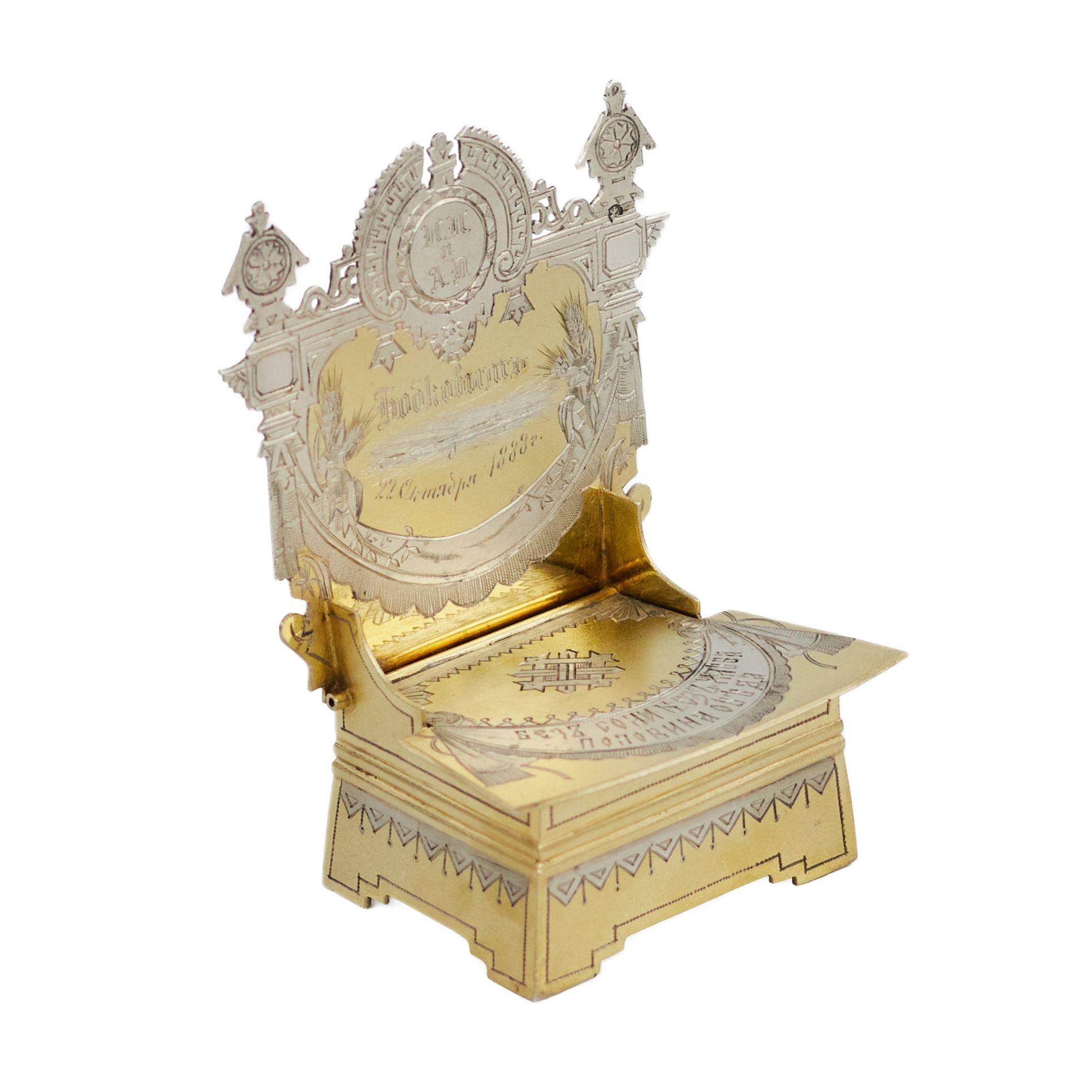
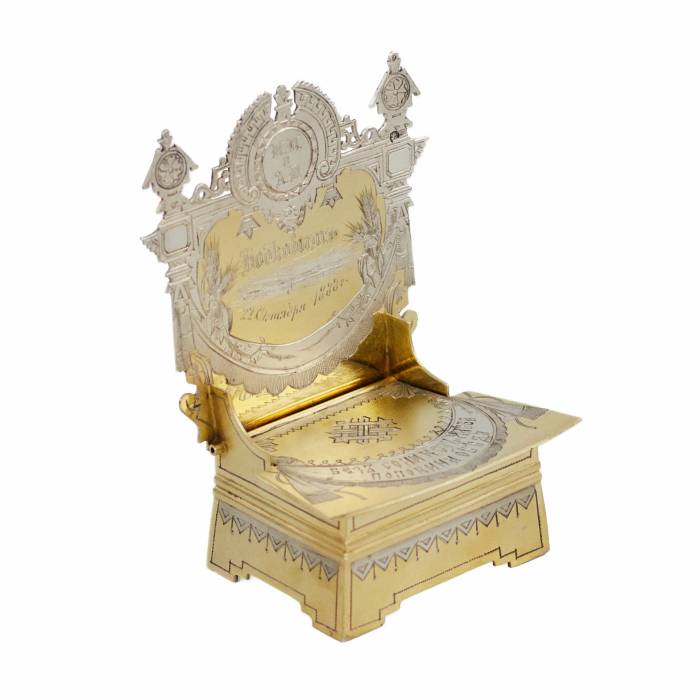
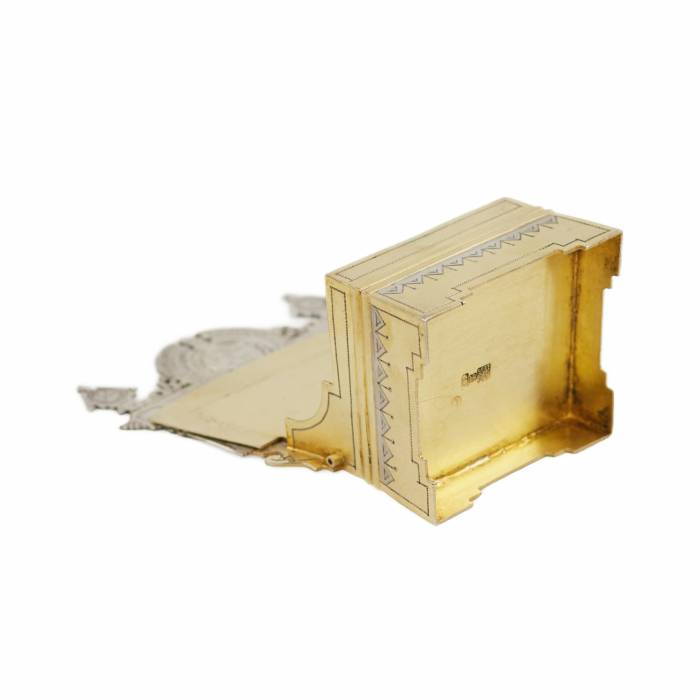
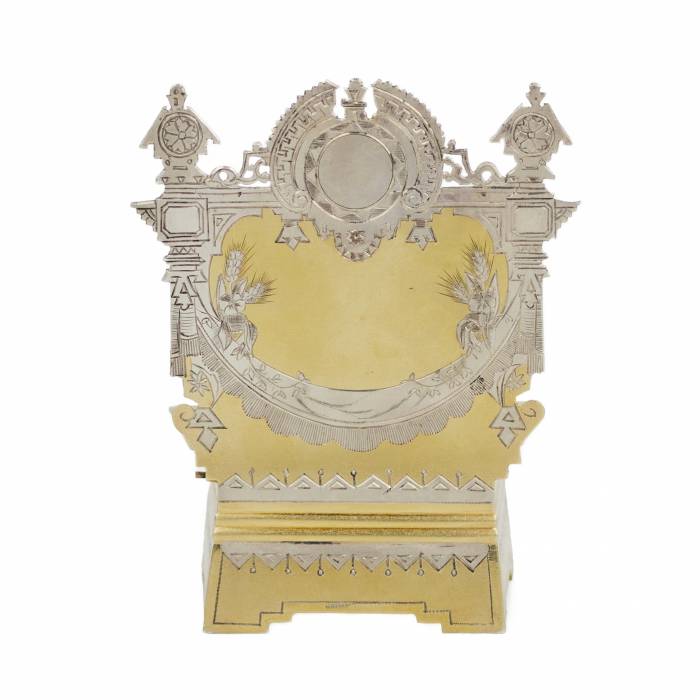
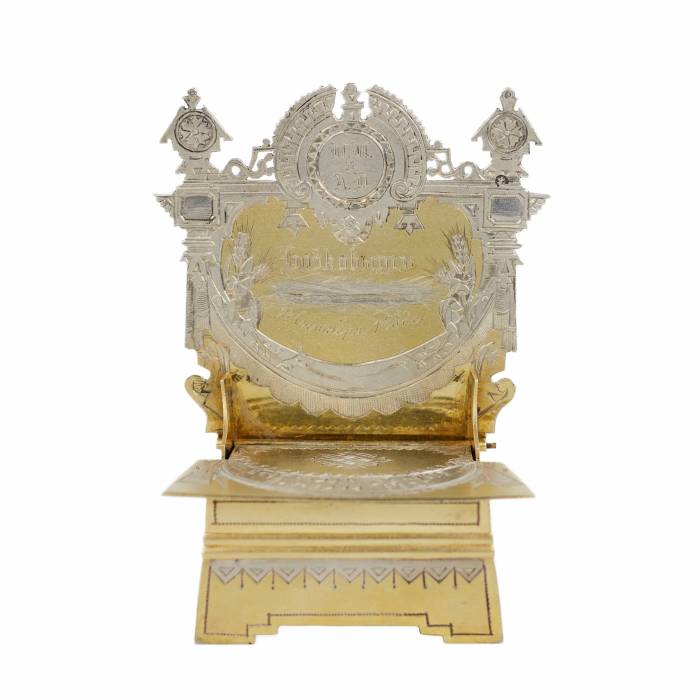
A silver salt cellar fashioned in the form of a throne with a high architectural back and a hinged front panel represents a characteristic example of Moscow artistic silver from the last quarter of the 19th century. The object belongs to the category of ceremonial tableware, in which utilitarian function is deliberately subordinated to an artistic and symbolic concept.
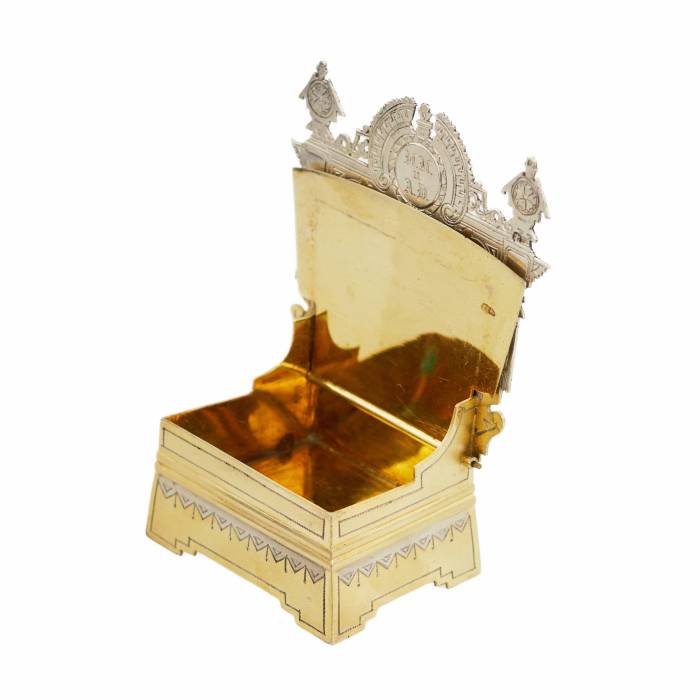
The composition is conceived as a miniature architectural model. The body has a строг rectangular form with a pronounced plinth and stepped base, decorated with engraved geometric ornament. The interior is fully gilded, in accordance with the sanitary requirements of the period and the established tradition of decorating silver salt cellars.
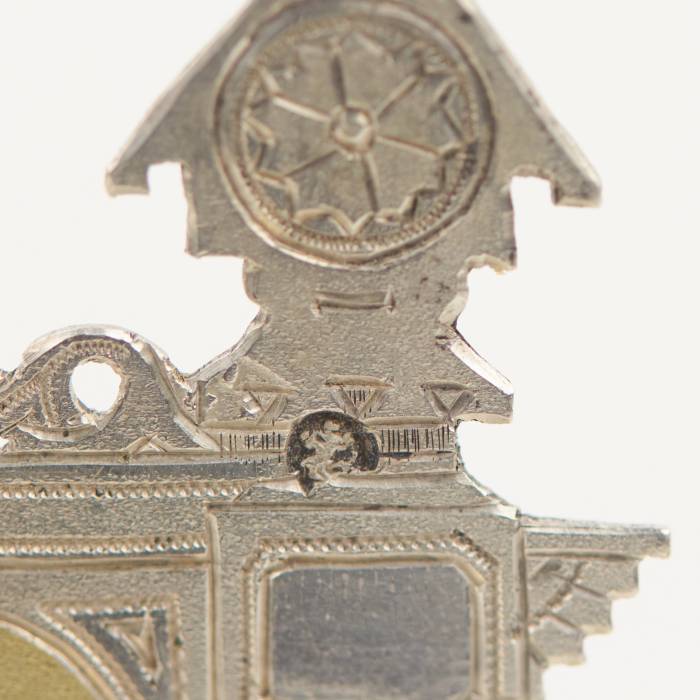
The back is designed as a complex architectural and decorative structure with columns, shields and a central medallion. The upper section is accentuated by a circular cartouche flanked by stylised throne finials. The central field is adorned with an engraved commemorative inscription and date, enclosed within an ornamental wreath of vegetal motifs, bringing the object closer to the tradition of presentation silver.
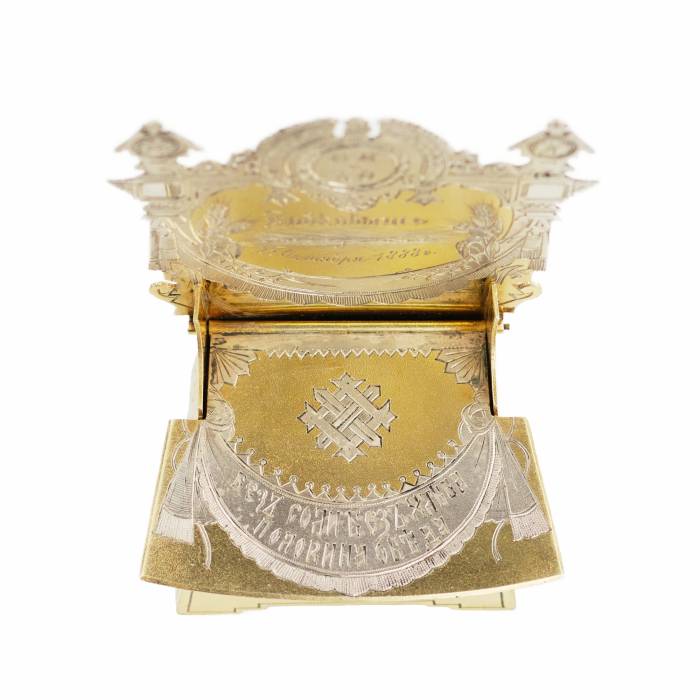
The hinged front panel is engraved with the Russian folk proverb “Without salt and bread, half the meal is lost”, lending the piece a pronounced folkloric and symbolic character and emphasising its connection to the traditional culture of the Russian table.
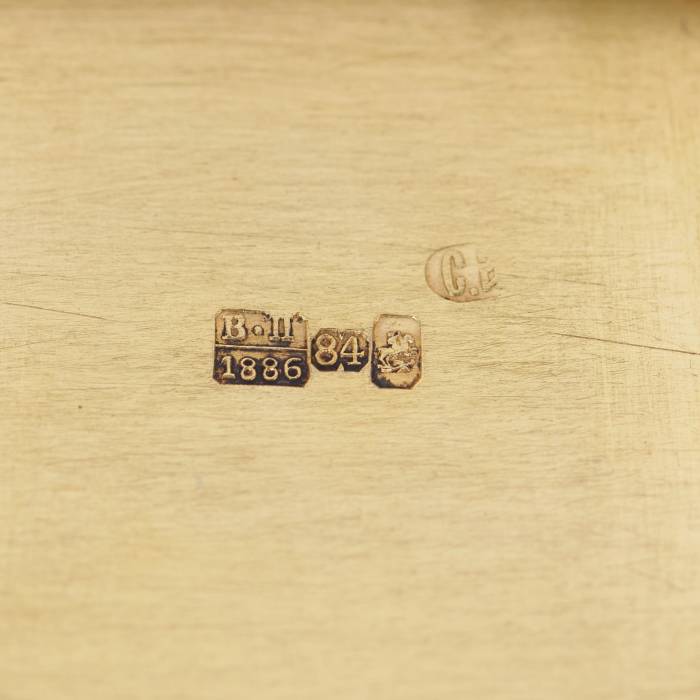
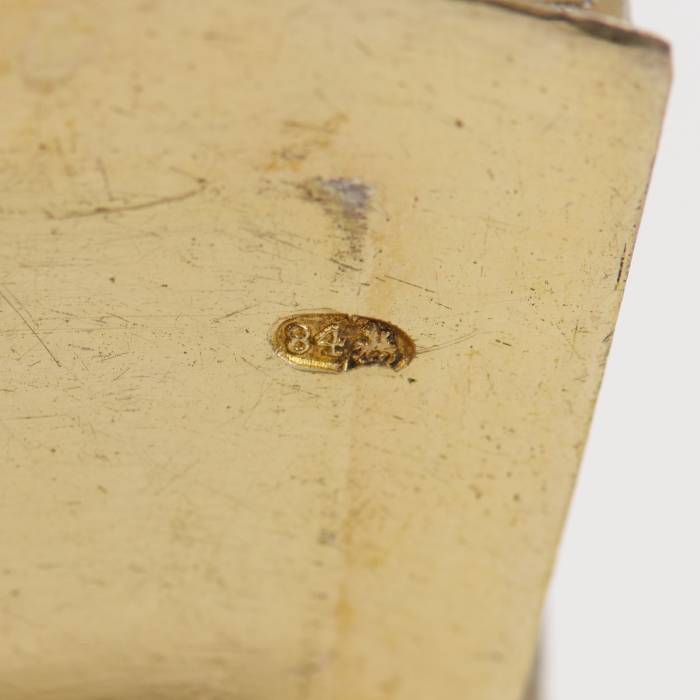
Marks: Maker’s mark with the initials “S.A” in an oval cartouche; Assay mark with the initials “V.P” separated by a dot and a dividing line, with the date “1883” below; State assay mark indicating silver standard “84”; Moscow city assay mark depicting St George slaying the dragon; Additional assay marks.
Dimensions: Height 9.5 cm; Width 6.5 cm; Depth 5 cm.
Weight: 103 g.
Condition: Good. The interior gilding is largely preserved. Minor surface wear and signs of age consistent with use. Structurally sound, the hinged panel operates correctly.
Provenance: Private collection.
Moscow silver production in the second half of the 19th century was characterised by a high level of artistic refinement combined with a strict state assay system ensuring quality and authenticity. During the 1880s, ceremonial tableware intended for formal entertaining and the representation of social status became especially widespread.
The throne motif in the decorative arts of this period carried stable symbolic associations with authority, hierarchy and tradition. In miniature table silver, this motif acquired a камерный yet distinctly ceremonial character. Salt cellars of this type functioned as visual focal points of the table, combining practical use with a strong symbolic image.
The careful architectural logic of form, refined engraved decoration and extensive use of gilding typical of Moscow workshops allow such objects to be regarded as independent works of jewellery art. The inclusion of folk texts and proverbs reflects a late 19th century tendency to merge national imagery with an academic decorative language.
Today, salt cellars of this kind are valued as rare examples of Moscow silver production and as material testimonies to the culture of the Russian ceremonial table in the period of late Historicism.
Good overall condition. Silver with natural patina, gilding preserved. Minor surface wear consistent with age. No losses or structural issues observed.
The condition report is provided for informational purposes only.
It is not comprehensive and may not reflect all defects, restorations, alterations, or adaptations, as Antiqon does not perform professional conservation-level assessments. The information is based on a qualified, yet subjective, evaluation by our specialists.Before purchasing, we recommend consultation with an independent expert.Please also consult our Terms and conditions and Glossary A-Z, which contain important information on lot characteristics and sale conditions.