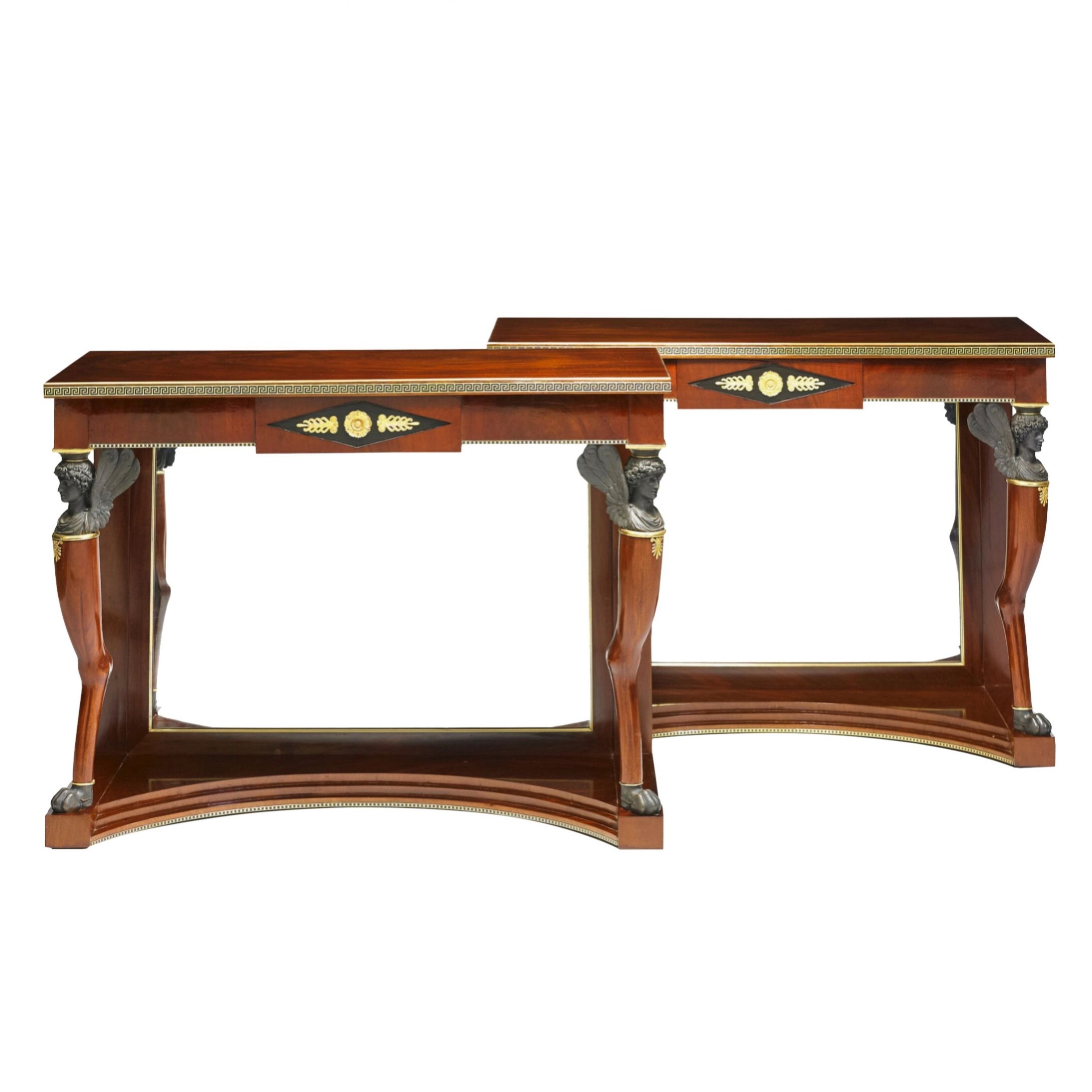
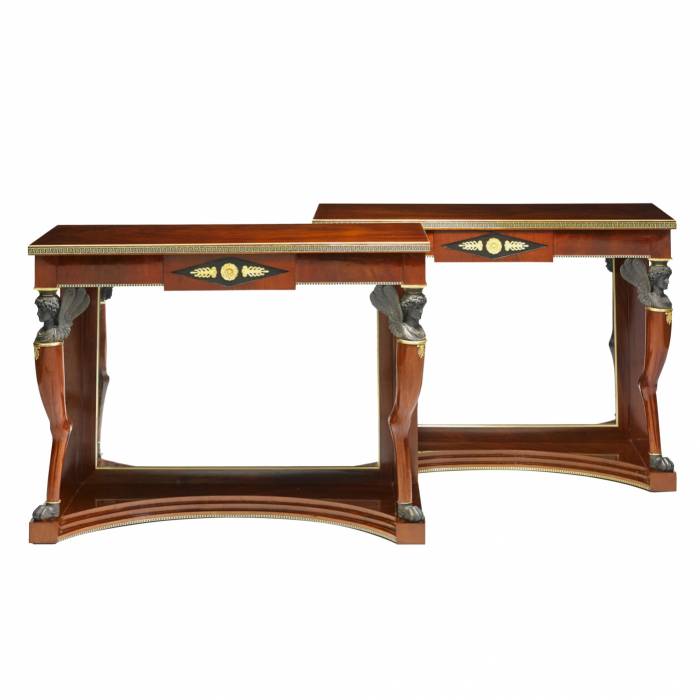
A PAIR OF RUSSIAN NEOCLASSICAL WALL CONSOLES ST PETERSBURG, LATE 19TH - EARLY 20TH CENTURY
AntiqonART consultant will contact you within one business day after receiving your request.
Discover how the value of similar works has evolved over the past 10 years. Art is not only beauty — it's an investment.
Discover how the value of similar works has evolved over the past 10 years. Art is not only beauty — it's an investment.
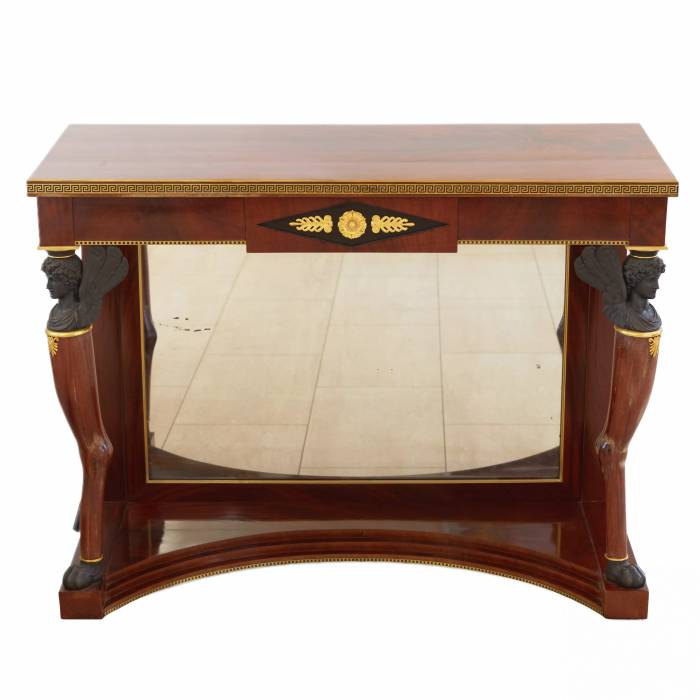
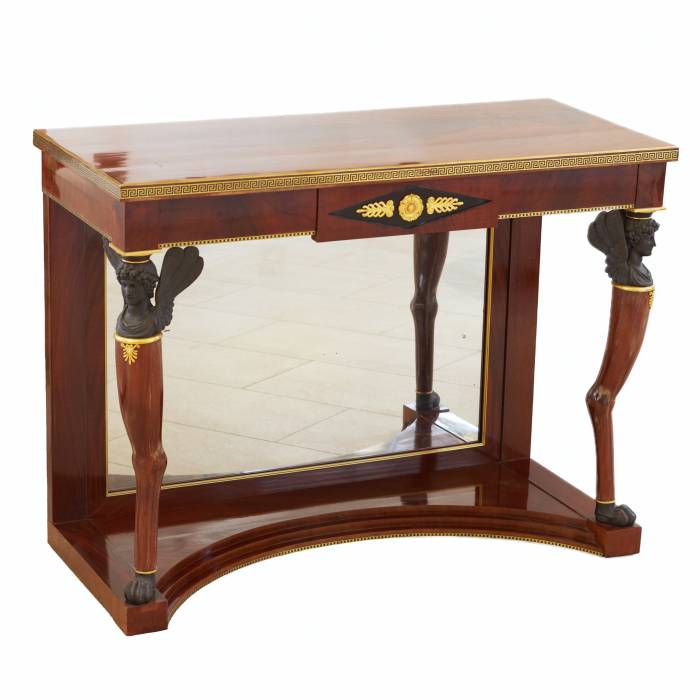
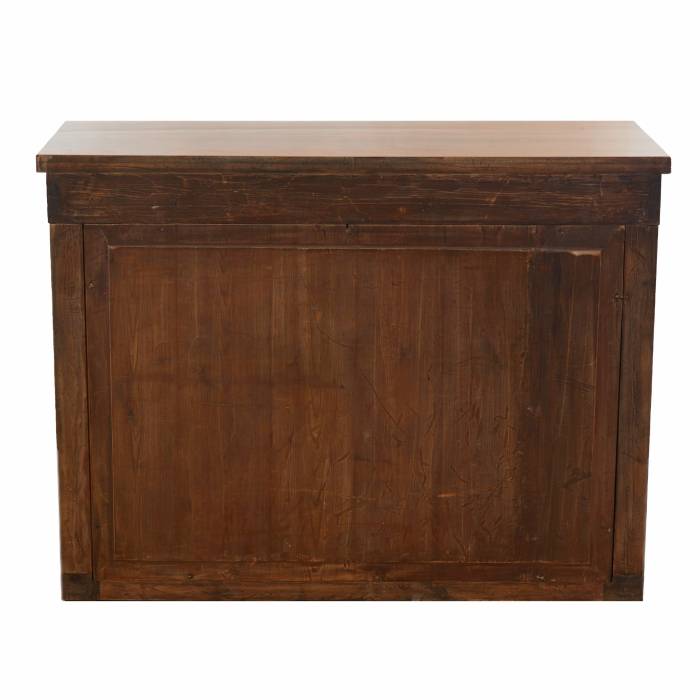
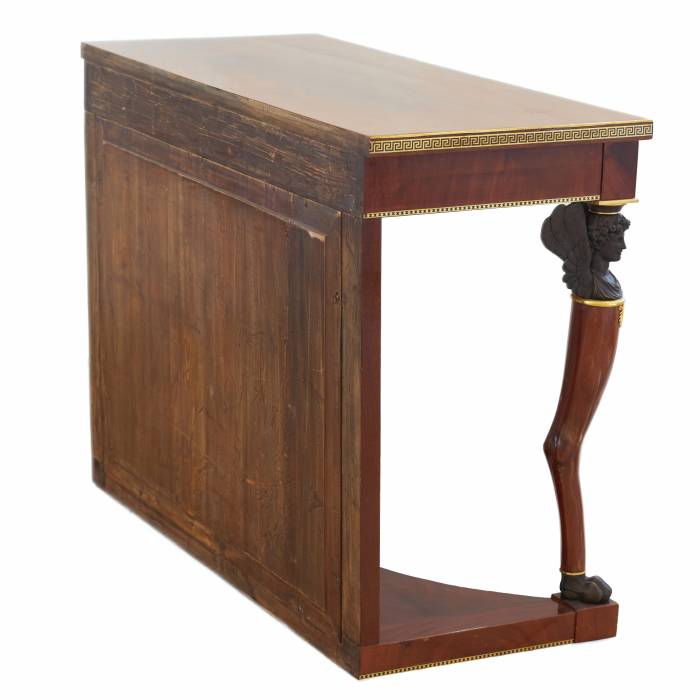
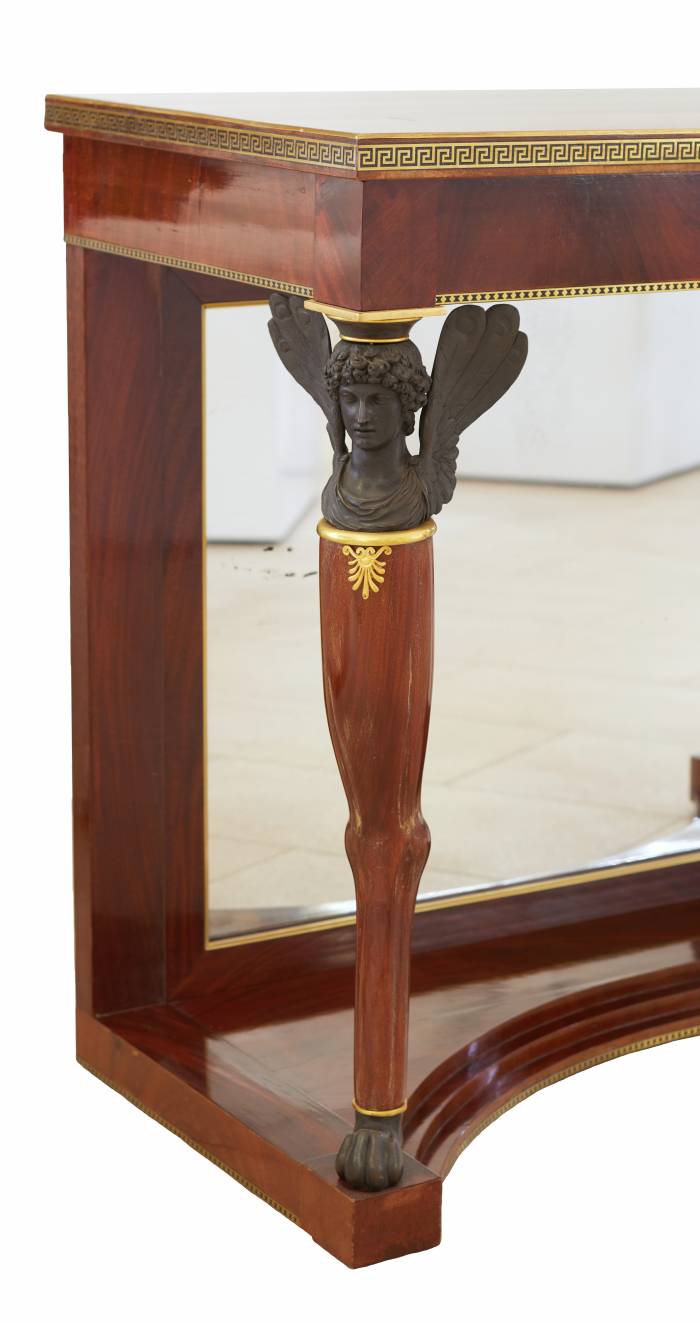
A pair of ceremonial wall consoles executed in the traditions of Russian Neoclassicism, inspired by the models of the workshop of Heinrich Daniel Gambs (1765-1831). Structurally, each console is conceived according to a strict architectural principle: a rectangular top with a moulded edge rests on two front supports joined by a curved lower stretcher.
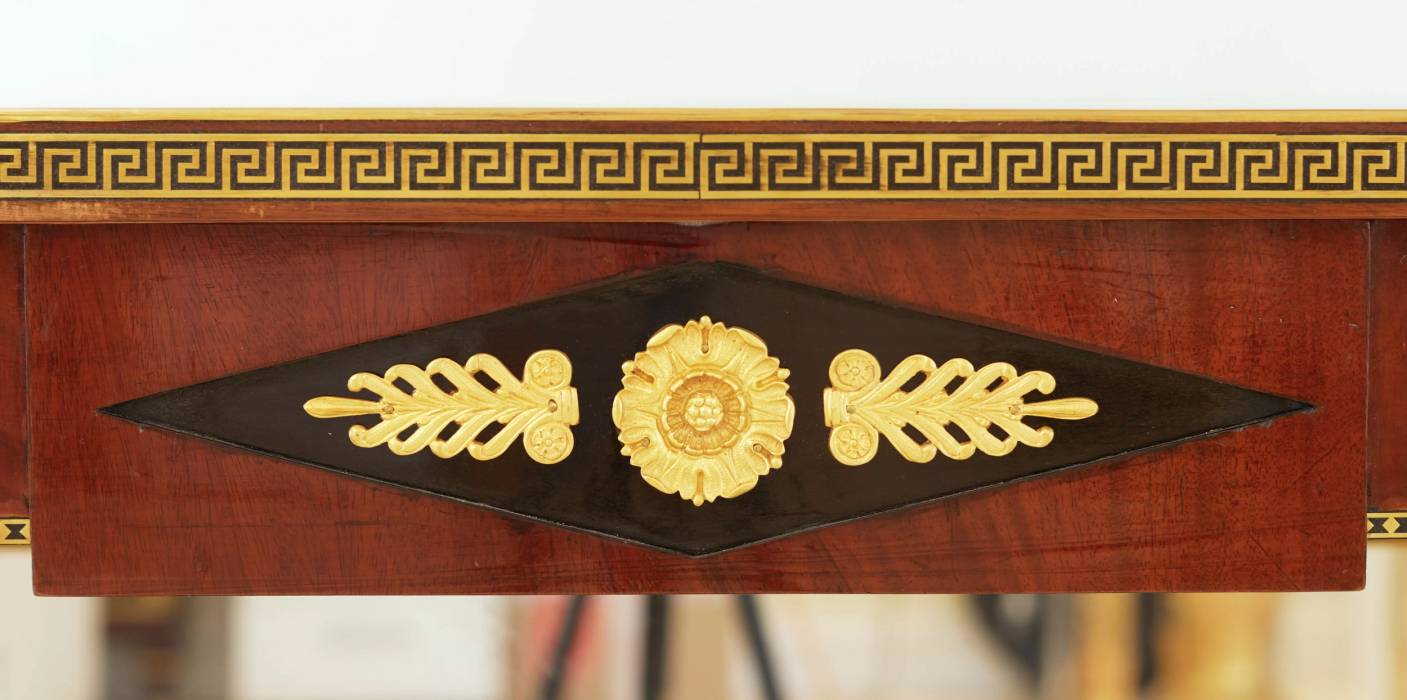
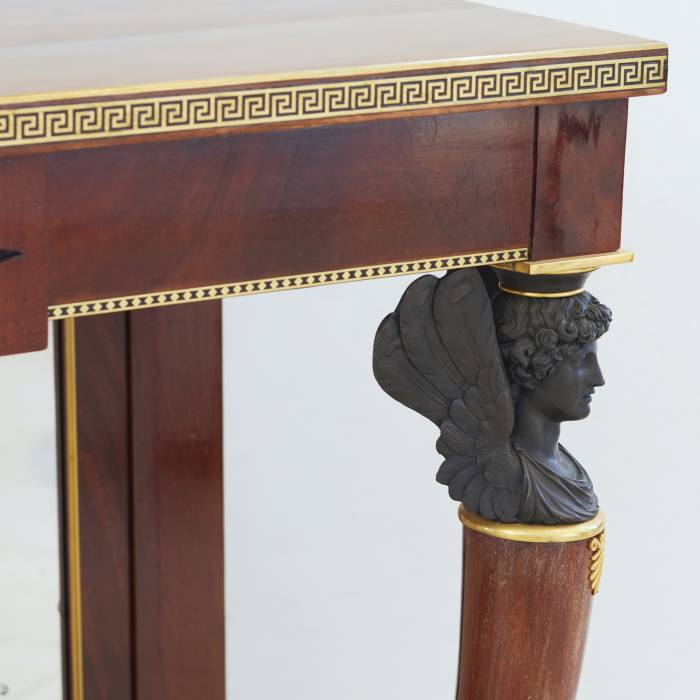
The bodies are crafted in carefully selected mahogany veneer, enhanced by a deep mirror-like polish. The frieze is decorated with an inlaid geometric band recalling the antique meander motif. The central section features a diamond-shaped panel with a gilt-bronze medallion framed by stylised laurel branches, forming a solemn imperial accent.
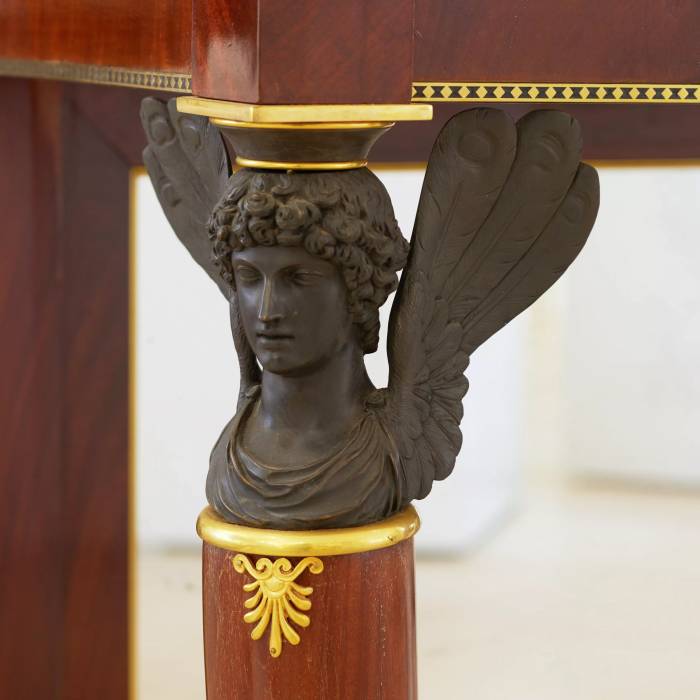
The front supports are designed as herm figures with busts of winged genii executed in patinated bronze. The sculptural modelling of curls, facial features and wings demonstrates a high level of artistic casting. The legs terminate in bronze lion’s paw feet, reinforcing the symbolism of strength and stability. Gilt mouldings and rosettes create a striking contrast with the warm tone of the mahogany and give the composition a sense of completion.
The present pair reflects the characteristic reinterpretation of the St Petersburg Empire tradition at the turn of the 19th and 20th centuries, when historical models of the Alexander I period were reproduced in the interiors of aristocratic mansions and ceremonial halls of the late Imperial era.
Dimensions: Height: 83 cm; width: 110 cm; depth: 48 cm (each).
Condition: Professionally restored. Overall good condition. Minor signs of age and use.
Provenance: Private collection.
Russian Neoclassicism of the late 19th and early 20th century emerged as a conscious revival of the Empire aesthetic associated with the reign of Alexander I and the heritage of St Petersburg court workshops. The workshop of Heinrich Daniel Gambs, one of the principal suppliers to the Imperial Court, played a key role in establishing the canon of architectural furniture combining mahogany with finely chased gilt bronze and classical motifs, including herm figures and allegorical elements.
In the second half of the 19th century, interest in the Empire style intensified due to the development of museum collections and historical awareness. Aristocratic interiors once again embraced strict symmetry and classical iconography. The use of patinated and gilt bronze, refined veneering techniques and carefully calculated proportions emphasized status and cultural continuity.
Consoles of this type served not only a decorative but also a representational function, forming the compositional centre of a wall and reinforcing the architectural rhythm of the interior. The sculptural winged genii refer to classical symbolism of guardianship and triumph, characteristic of the Imperial artistic language of St Petersburg. During the late Imperial period such objects were perceived as markers of cultural memory and the enduring authority of Russian Classicism.
The mahogany surface retains an even polish with minor signs of use. The bronze mounts display a noble patina. Age-related wear visible to the mirrors.
The condition report is provided for informational purposes only.
It is not comprehensive and may not reflect all defects, restorations, alterations, or adaptations, as Antiqon does not perform professional conservation-level assessments. The information is based on a qualified, yet subjective, evaluation by our specialists.Before purchasing, we recommend consultation with an independent expert.Please also consult our Terms and conditions and Glossary A-Z, which contain important information on lot characteristics and sale conditions.