


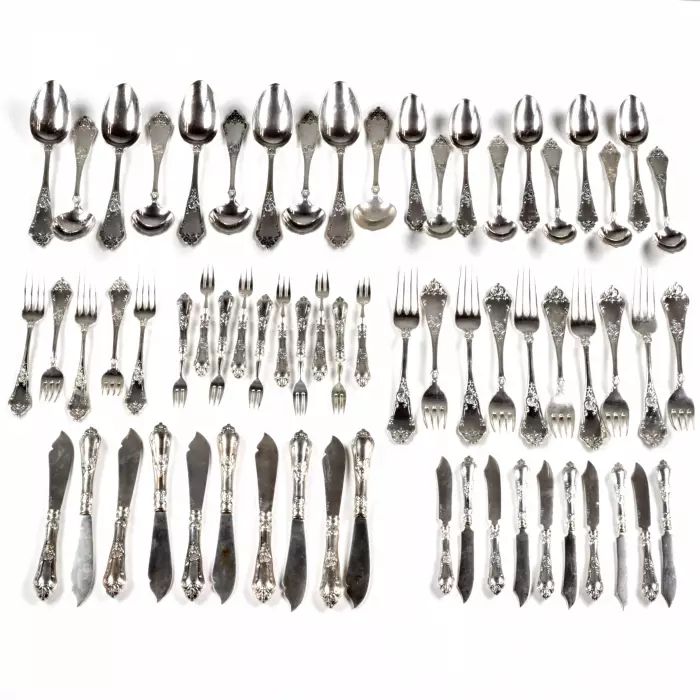
SILVER TABLE SERVICE BY G. KLINGERT RUSSIA, MOSCOW, 1908–1917
AntiqonART consultant will contact you within one business day after receiving your request.
Discover how the value of similar works has evolved over the past 10 years. Art is not only beauty — it's an investment.
Discover how the value of similar works has evolved over the past 10 years. Art is not only beauty — it's an investment.
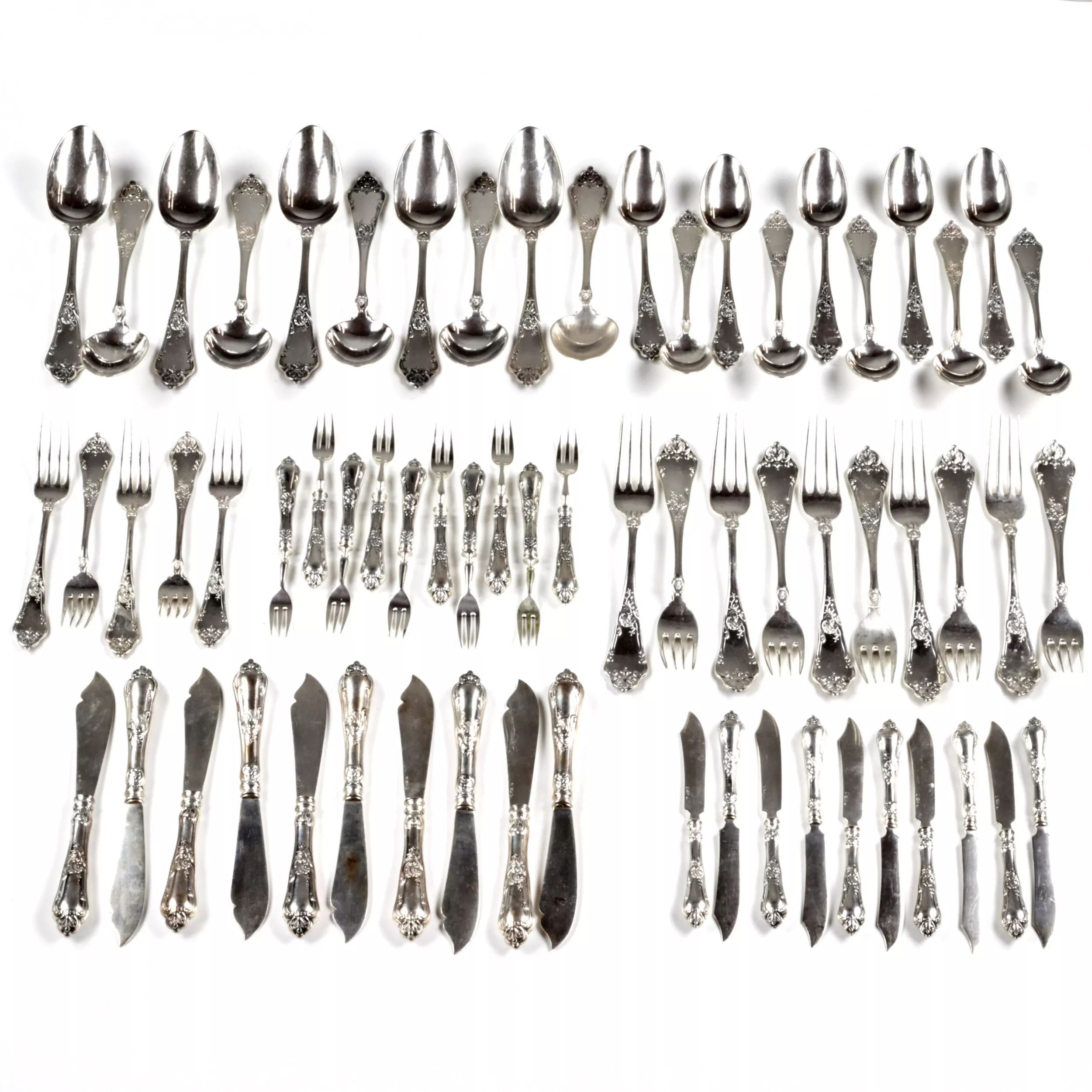
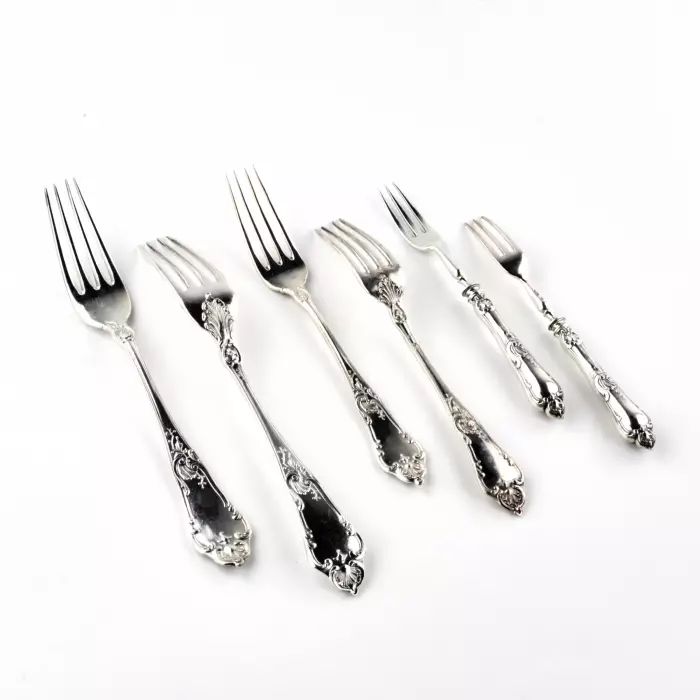
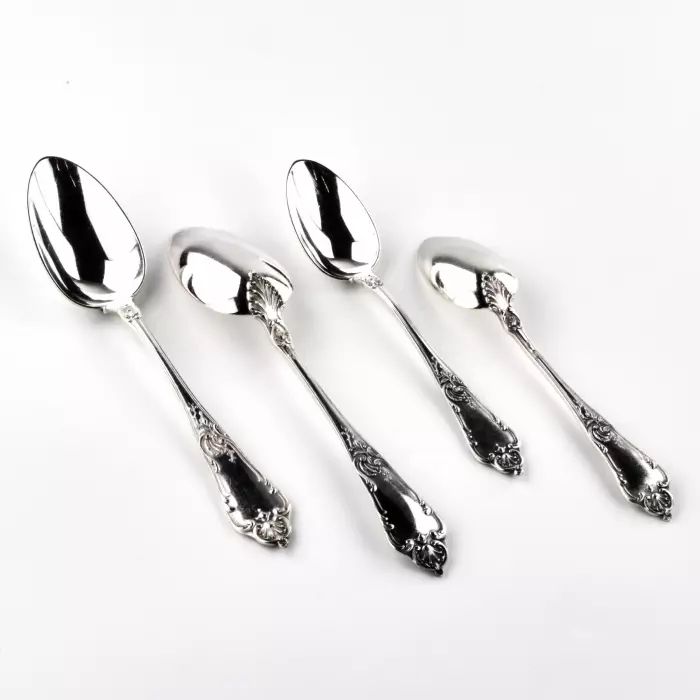
A highly artistic silver table service produced in the workshop of Gustav Klingert, one of the leading Moscow silversmiths of the early 20th century. Crafted in 84-standard silver, the set represents a cohesive, full-weight ensemble of ceremonial tableware, intended for use in the representative interiors of the late Russian Empire.
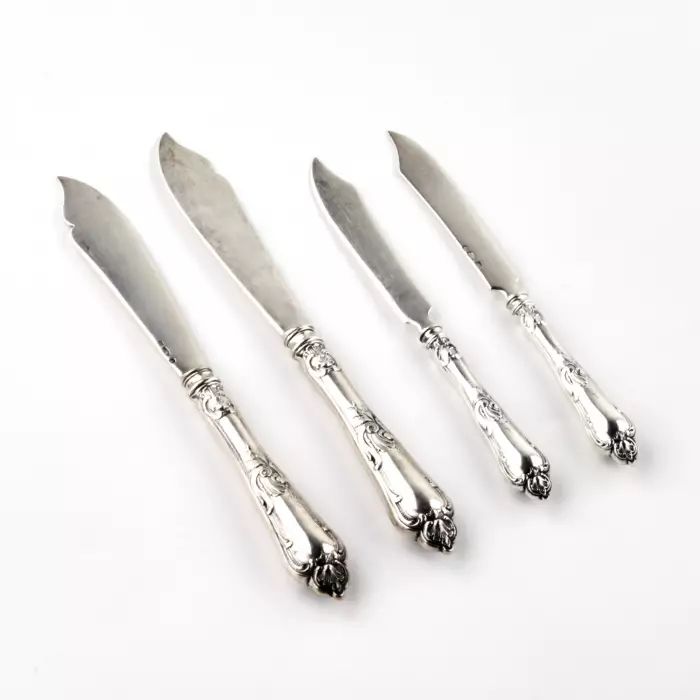
The forms of the pieces follow the classical tradition, with softly profiled contours, balanced proportions and carefully calculated ergonomics. The handles are adorned with relief ornamentation in the spirit of historicist Baroque: elegant vegetal scrolls, stylised foliage and rocaille motifs create a sense of sculptural depth and decorative completeness. The ornamentation remains refined and restrained, organically emphasising the structure of each piece, a hallmark of the finest Moscow silver of the pre-revolutionary period.
The set is distinguished by a high standard of craftsmanship: precise detailing, careful chasing, even polishing and preserved silver weight testify to the professionalism of the workshop and its orientation towards a demanding clientele. Compositionally and stylistically, the pieces form a unified ensemble designed for the comprehensive presentation of dishes during formal dinners and ceremonial receptions.
Set composition: 10 table spoons, 10 table forks, 6 table knives, 10 dessert spoons, 5 dessert forks, 10 fish knives, 10 fruit knives, 10 fruit forks.
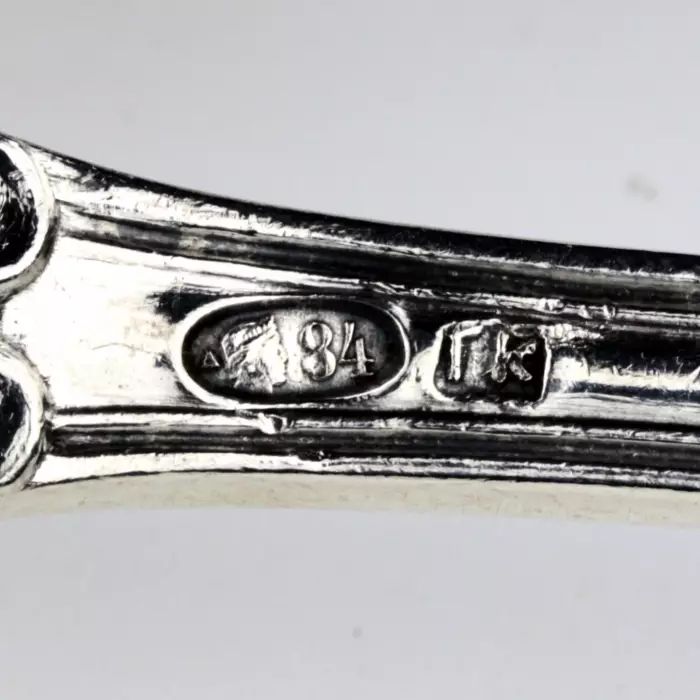
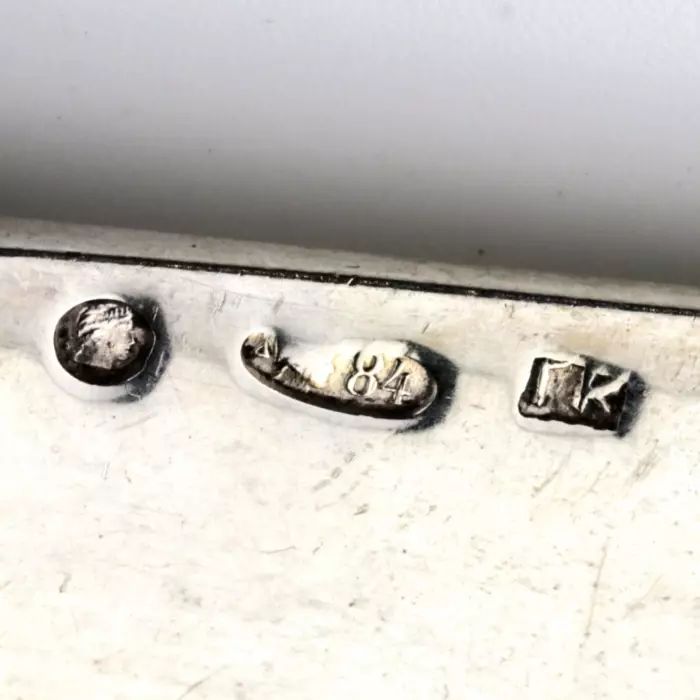
Marks: Imperial Russian assay mark with fineness “84”; Moscow city assay mark; maker’s mark “GK” for Gustav Klingert; assay marks of the period 1908–1917.
Dimensions: Standard sizes of table and dessert utensils in accordance with formal serving norms of the early 20th century.
Weight: 3179 g.
Condition: Good. No deformations. Traces of use and light polishing consistent with age. Ornamentation crisp and intact.
Provenance: Private collection.
The factory of Gustav Gustavovich Klingert ranks among the most significant private silver enterprises in Moscow of the second half of the 19th – early 20th centuries. Founded by a German-born master who settled in Moscow in 1865, the workshop rapidly secured a strong position within the city’s artistic and industrial milieu, becoming a recognised centre for the production of table silver and enamelled works.
The activity of the Klingert factory developed during the period of flourishing Moscow silver craftsmanship, when private workshops played a decisive role in shaping the ceremonial culture of the Russian Empire. Klingert’s production was distinguished by the high quality of the alloy, full-weight construction and meticulous technical execution, meeting the expectations of a wealthy merchant and aristocratic clientele. The workshop gained particular renown for its enamel work, in which Klingert was rightly regarded as one of Moscow’s leading enamellers and fulfilled commissions for the firm of Fabergé.
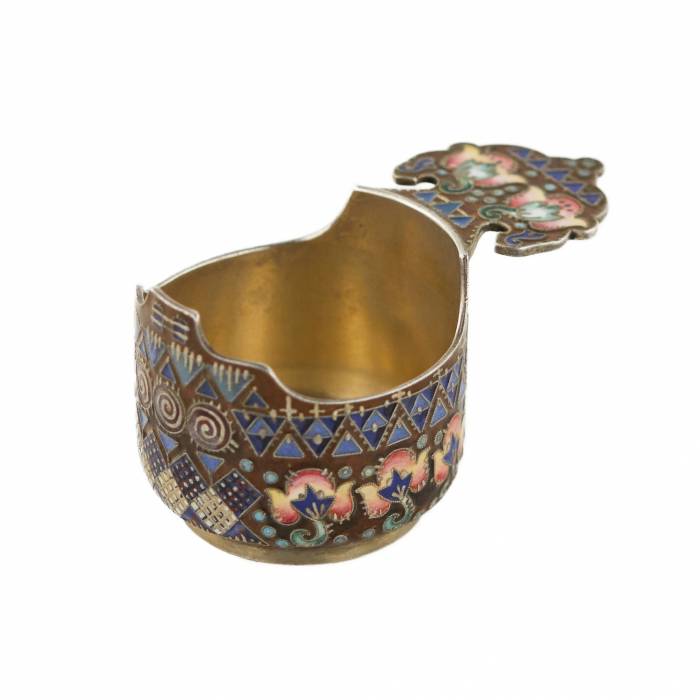
The artistic language of the factory was based on a balanced combination of historicist forms and expressive ornamentation. Enamelled works are characterised by a rich turquoise and blue palette, complemented by white and dark blue accents, creating an effect of inner luminosity and depth. Repeating rapport ornament was skilfully adapted to the volume of each object, forming cohesive, rhythmically organised compositions that emphasise the plasticity of form.
By the end of the 19th century, the Klingert factory had developed into a major enterprise: by 1893, annual production reached substantial volumes, and the workforce numbered in the hundreds. The firm’s output was repeatedly awarded prizes and honorary diplomas at Russian and international exhibitions, securing its reputation as one of the leading centres of artistic silver production in Moscow.
The end of the factory’s activity is associated with the events of 1916–1917, after which private silver workshops either ceased operations or were sold. Today, Klingert’s pre-revolutionary works are regarded as important historical and collectible testimonies to the final phase of Russian imperial silver production. The factory’s works are represented in museum collections, including the State Historical Museum, and remain highly valued on the international antiques market.
Good condition. The silver is full-weight, without deformations. Traces of careful use and light polishing consistent with age. Marks are clear and legible.
The condition report is provided for informational purposes only.
It is not comprehensive and may not reflect all defects, restorations, alterations, or adaptations, as Antiqon does not perform professional conservation-level assessments. The information is based on a qualified, yet subjective, evaluation by our specialists.Before purchasing, we recommend consultation with an independent expert.Please also consult our Terms and conditions and Glossary A-Z, which contain important information on lot characteristics and sale conditions.