



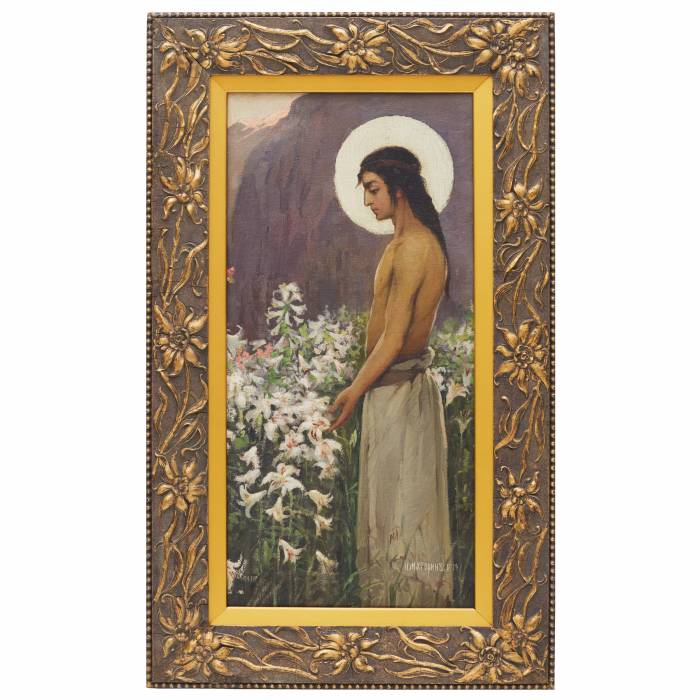
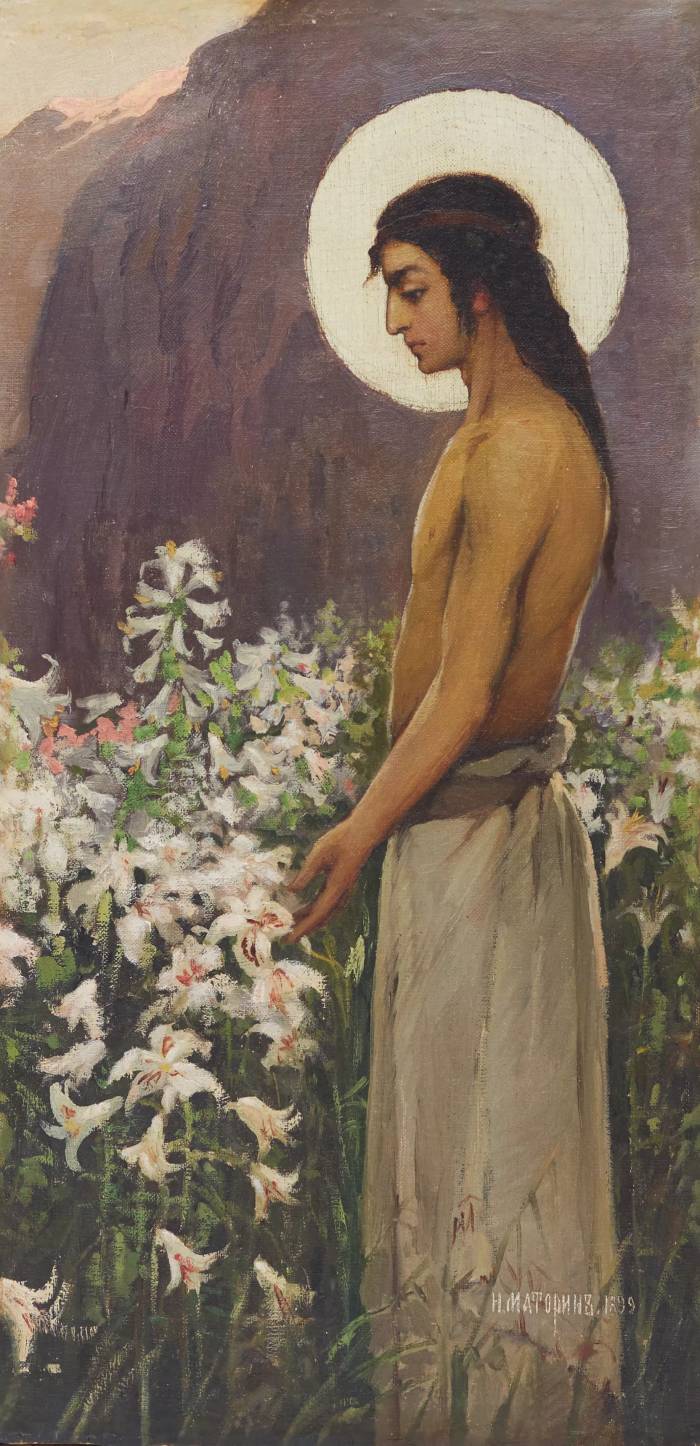
DUMA. NIKOLAI MATORIN, 1899 Russia, 1899
AntiqonART consultant will contact you within one business day after receiving your request.
Discover how the value of similar works has evolved over the past 10 years. Art is not only beauty — it's an investment.
Discover how the value of similar works has evolved over the past 10 years. Art is not only beauty — it's an investment.
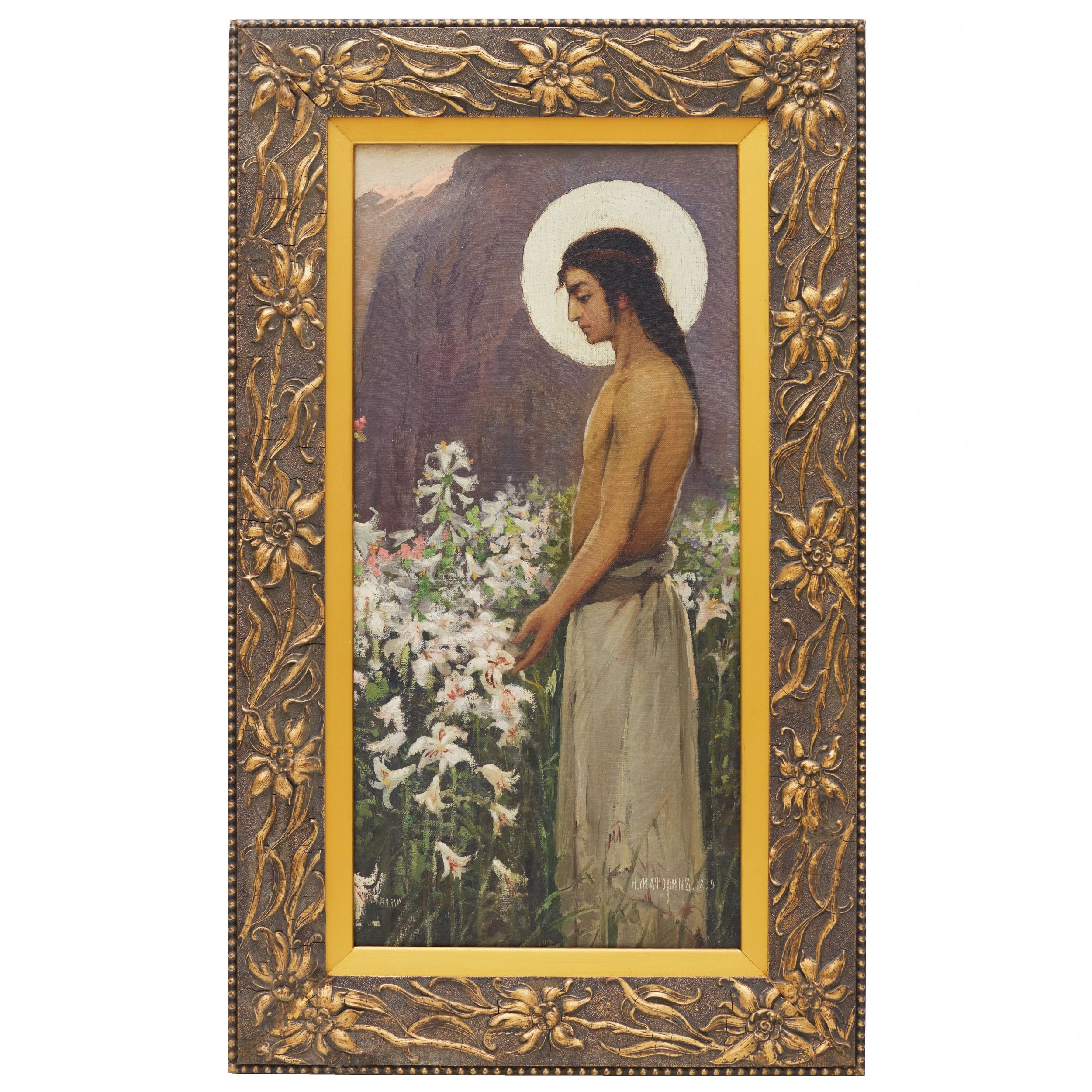
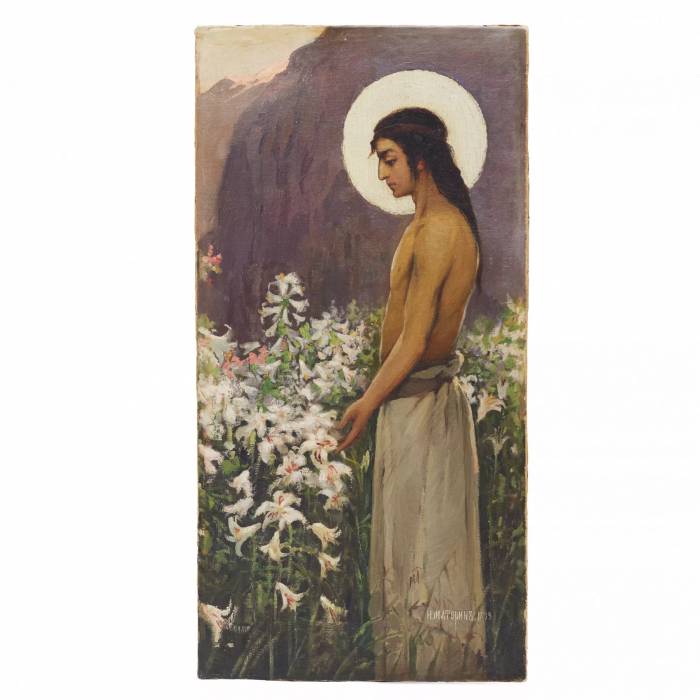
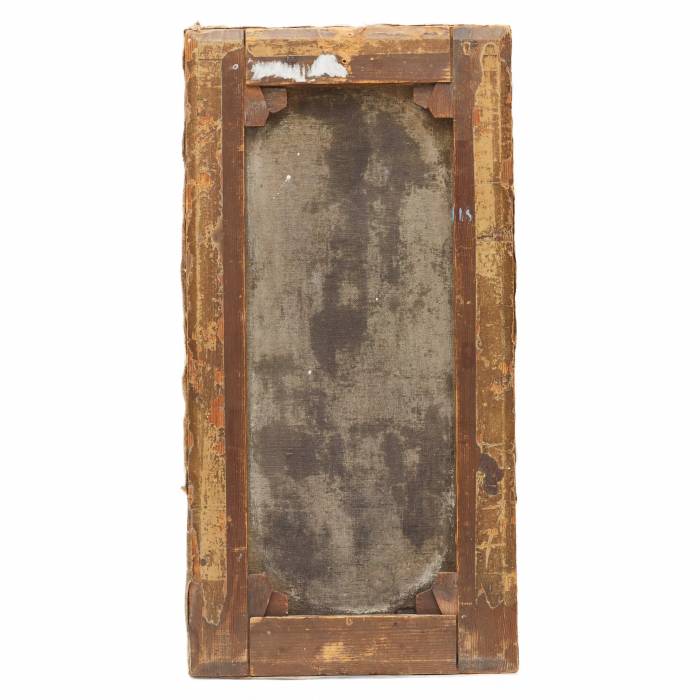
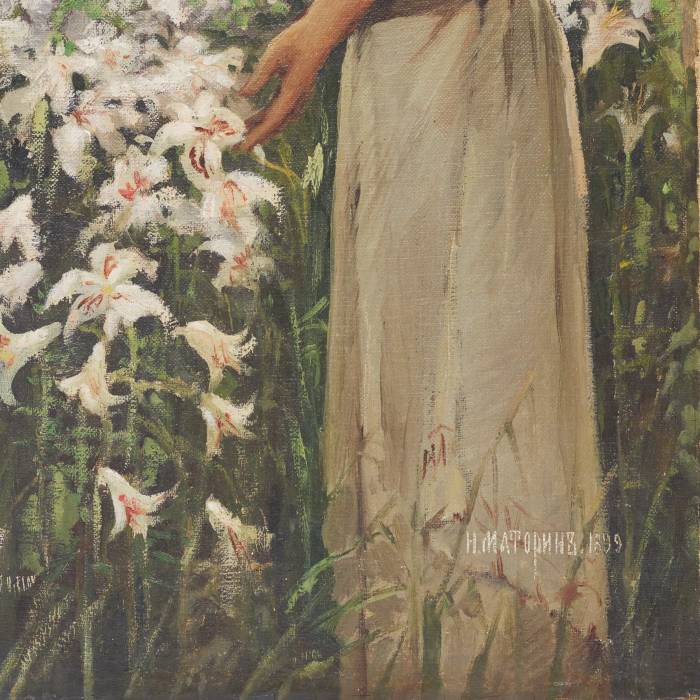
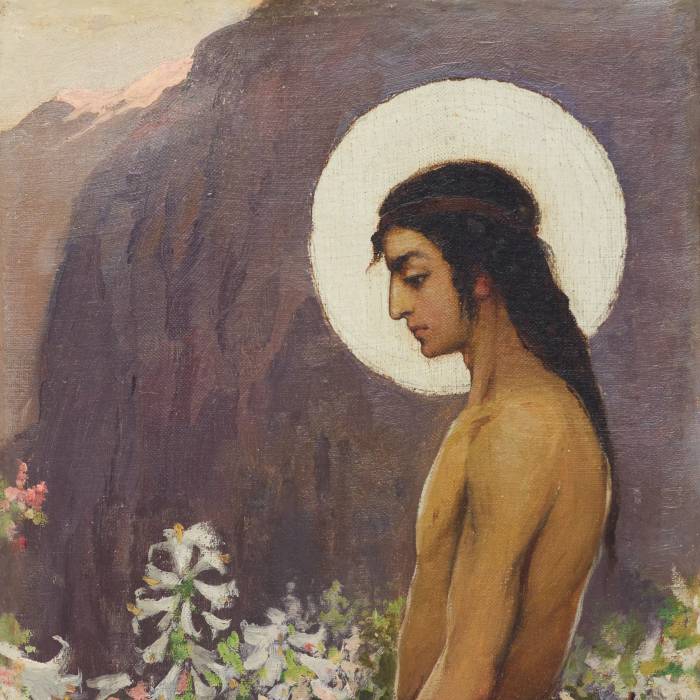
A rare and evocative work of Russian Symbolism from the late 19th century, painted by Nikolai Matorin (1876–1919). Duma presents a young man immersed in contemplative silence amid a blooming field of white lilies. The composition is built on a striking contrast between the sharply defined figure with a radiant halo and the muted, almost monochrome mountain backdrop. Bare-chested and clad in a simple cloth, the figure symbolizes purity, sacrifice, and spiritual unity with nature. The luminous halo reinforces the painting’s religious and philosophical overtones. Signed and dated in Cyrillic “Н. Маторинъ. 1899” in the lower right. Oil on canvas, original stretcher.
Dimensions: 60 × 30 cm
Material: Oil on canvas
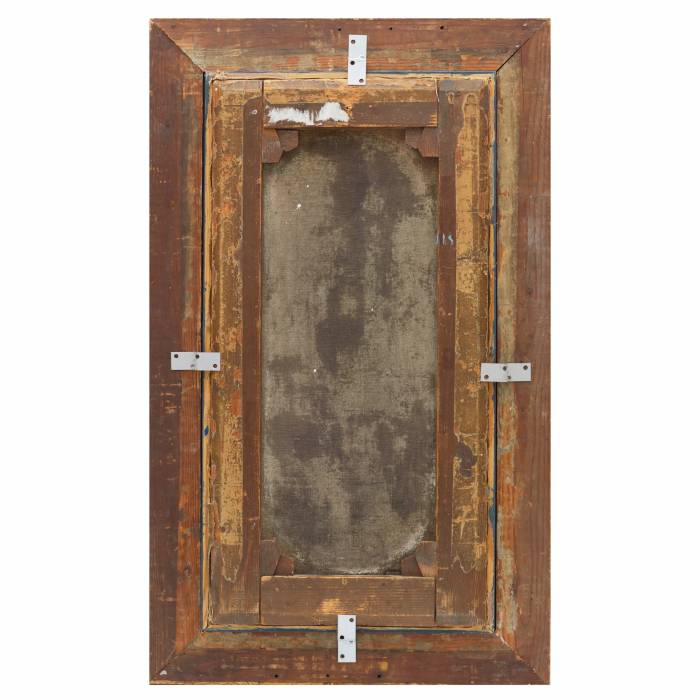
Condition: Very good overall condition. Surface with natural patina and minor age-related wear at edges. Original stretcher preserved.
Provenance: Private collection, Europe
Nikolai Matorin was a representative of the Russian Symbolist generation that emerged at the turn of the 20th century, deeply influenced by mysticism, philosophy, and religious art. Trained at the Imperial Academy of Arts, Matorin absorbed the aesthetic principles of the Pre-Raphaelites, Vasnetsov, and late-period Vrubel. A pivotal influence on his style was the work of Mikhail Nesterov, whose spiritualized images of solitary saints and dreamers in the Russian landscape find echoes in Matorin’s poetic visual meditations.
Like Nesterov, Matorin approached the figure not as a narrative character, but as a bearer of inner states—timeless, serene, and elevated. In Duma (1899), the artist combines iconographic structure (the halo, the serene posture, the sacred gesture) with the symbolism and naturalism of Art Nouveau. The youthful figure among lilies evokes multiple layers of meaning: angelic innocence, spiritual longing, and a metaphoric presence of death and purity. The garden of lilies is a liminal space—part paradise, part dream, part grave.
The painting resonates with the ideas of the Russian religious renaissance, the aesthetics of the Mir Iskusstva movement, and the philosophical legacy of Vladimir Solovyov. It may be seen as a secular icon of a new age—modern yet metaphysical. The historical and artistic value of this work lies in its rarity, its symbolic depth, and the painter’s mastery of tone and form. Few works by Matorin are held in museum collections today, and the rediscovery of his oeuvre offers a compelling addition to the canon of Russian Symbolist art at the fin-de-siècle.
Original canvas and stretcher. Stable surface with a soft aged patina. Minor edge abrasions, no restoration observed. A well-preserved and untouched example with authentic presence.
The condition report is provided for informational purposes only.
It is not comprehensive and may not reflect all defects, restorations, alterations, or adaptations, as Antiqon does not perform professional conservation-level assessments. The information is based on a qualified, yet subjective, evaluation by our specialists.Before purchasing, we recommend consultation with an independent expert.Please also consult our Terms and conditions and Glossary A-Z, which contain important information on lot characteristics and sale conditions.