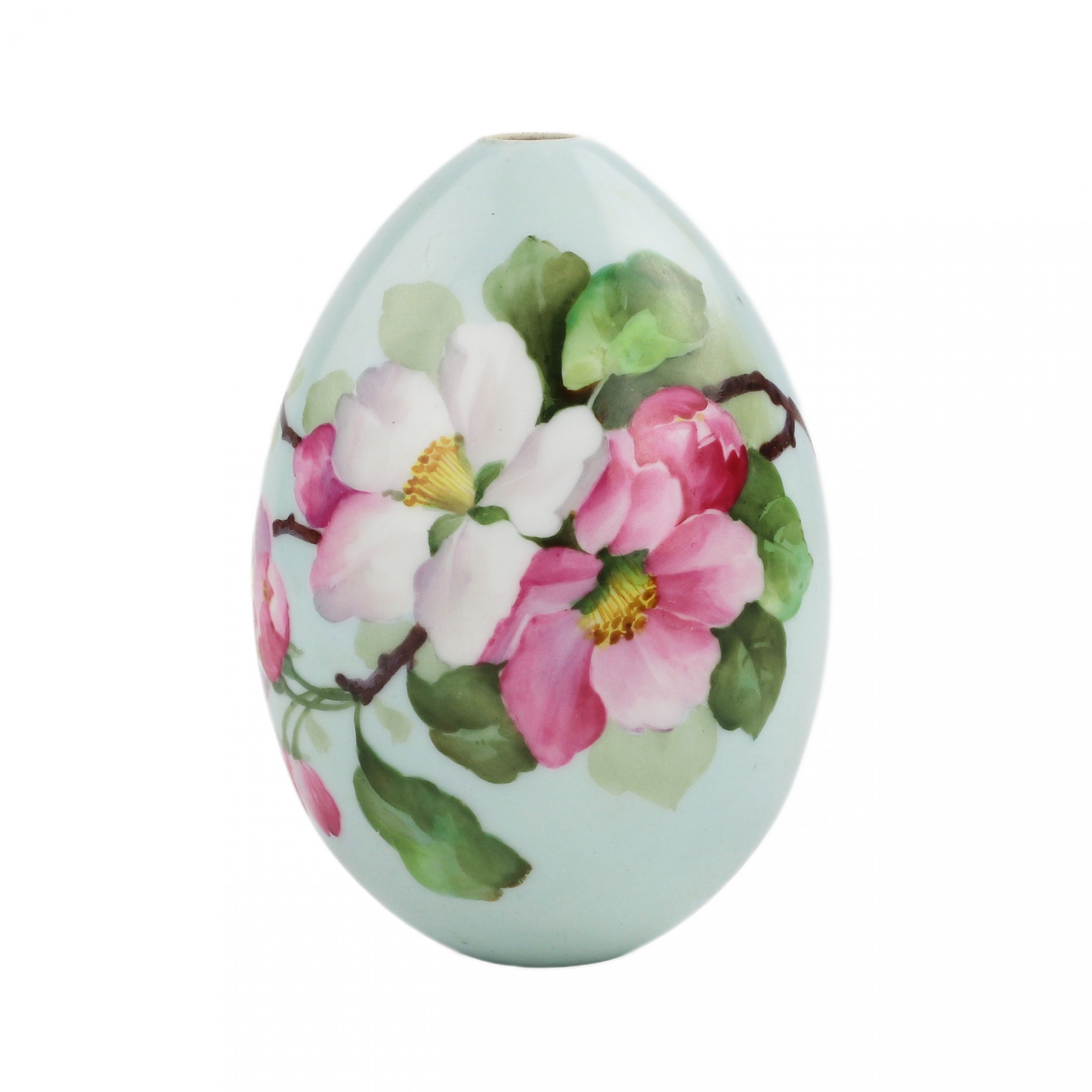



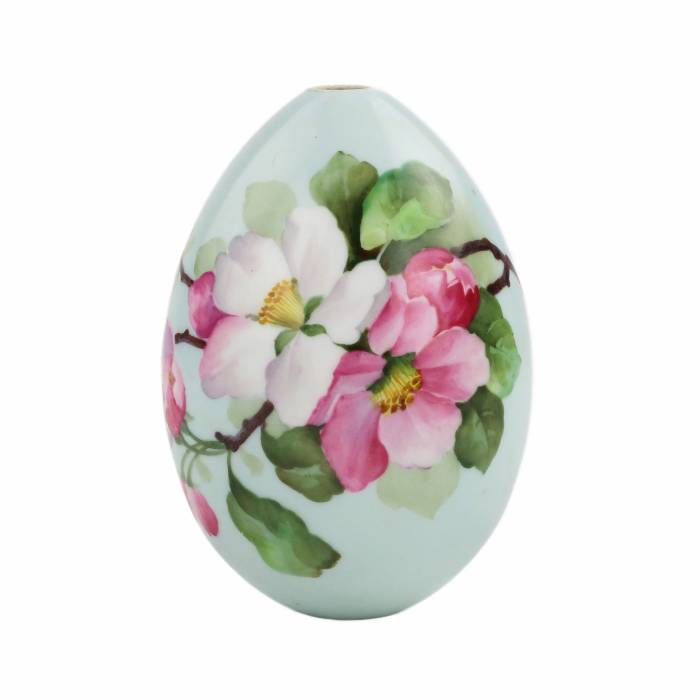
PORCELAIN EASTER EGG WITH HAND-PAINTED BLOSSOMING APPLE ORCHARD RUSSIA, LATE 19TH CENTURY (C. 1890–1900)
AntiqonART consultant will contact you within one business day after receiving your request.
Discover how the value of similar works has evolved over the past 10 years. Art is not only beauty — it's an investment.
Discover how the value of similar works has evolved over the past 10 years. Art is not only beauty — it's an investment.
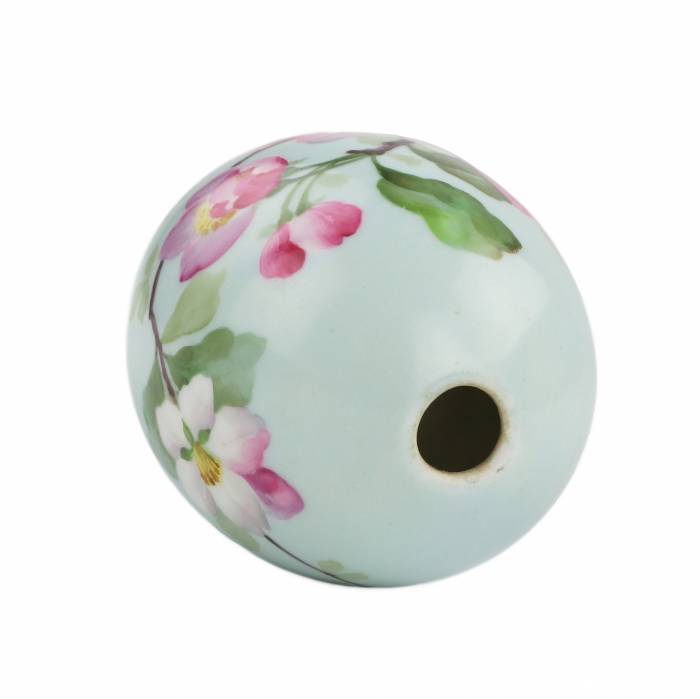
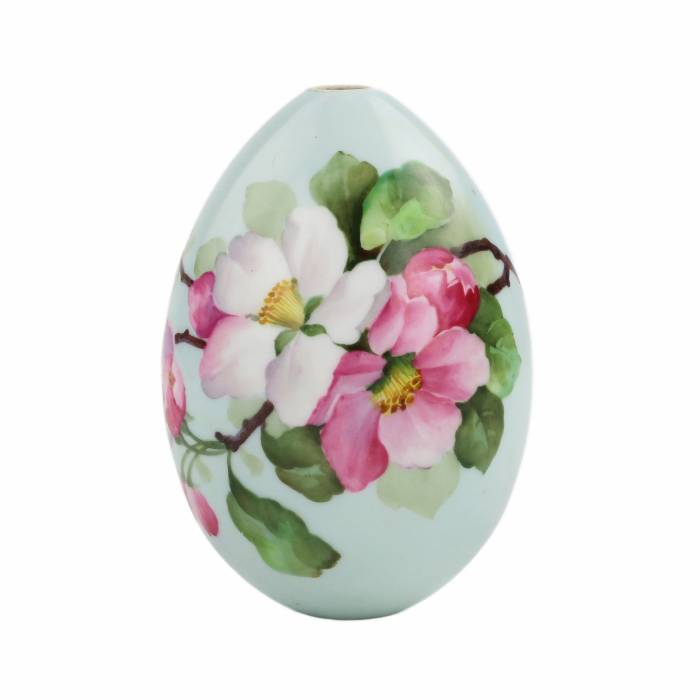
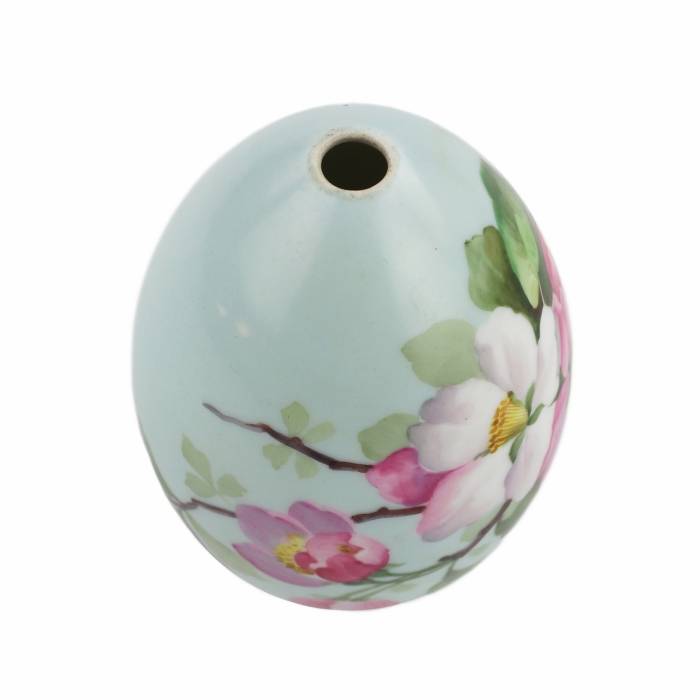
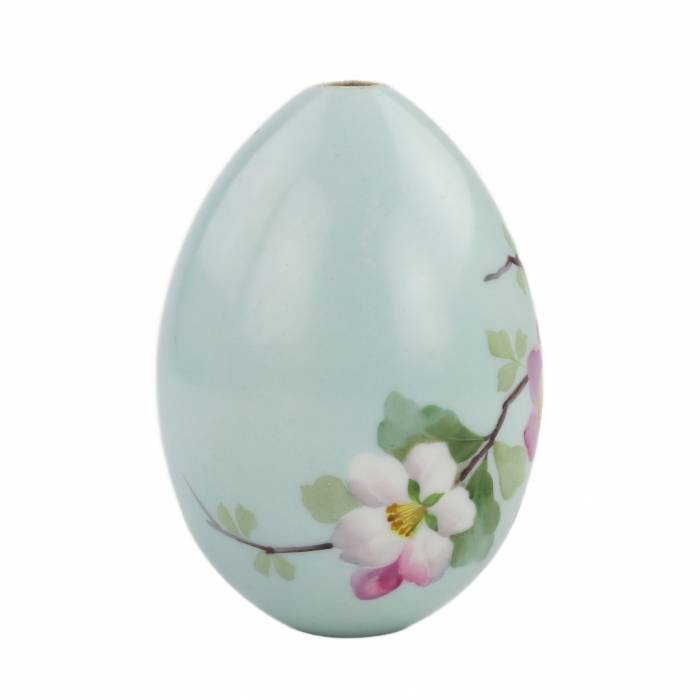
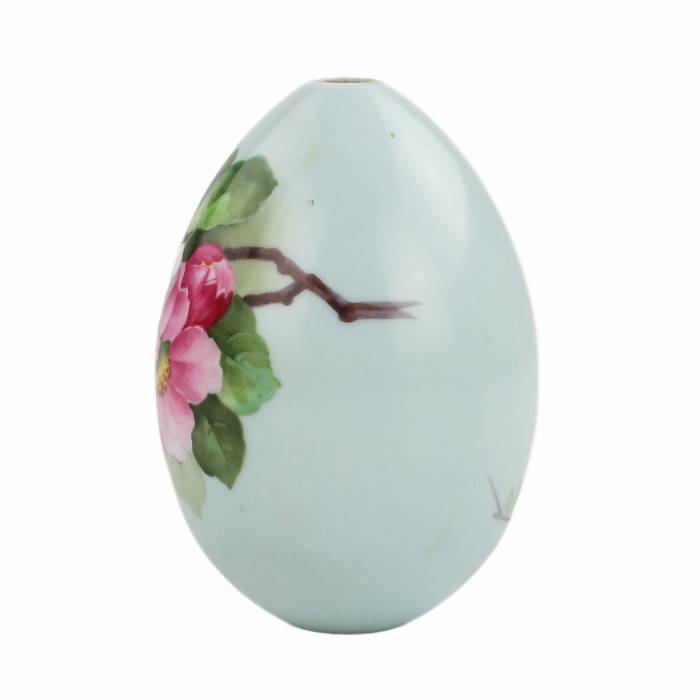
A rare porcelain Easter egg created in Russia at the end of the 19th century, presumably in the workshops of the Imperial Porcelain Factory in Saint Petersburg. The surface is covered with a typical pastel green glaze of the period, featuring a delicate hand-painted design of blossoming apple branches — white and pink-purple petals, yellow stamens, and lush green leaves. The composition is executed in a free painterly manner, inspired by Japonism and Impressionism, characteristic of IPFs decorative approaches in the 1890s.
Its oval shape, refined porcelain quality, and exquisite level of painterly detail make this piece representative of the artistic trends influenced by international exhibitions. A stylistically and chromatically similar example is published in:
Tamara Kudriavtseva & Harold Whitbeck, Russian Imperial Porcelain Easter Eggs (London: Merrell, 2001), Nos. 203–212, pp. 255–259.
Dimensions: Height: 11 cm, Width: 7 cm, Depth: 7 cm
Condition: Good, no chips or restorations; minor signs of age
Provenance: Private collection
Porcelain Easter eggs became an integral part of Russian imperial and artistic culture in the 19th century. Initially inspired by the Orthodox tradition of Easter egg gifting, they evolved into refined decorative objects by century’s end. The Imperial Porcelain Factory in Saint Petersburg led the production of these works in the 1890s, creating hand-painted series on pastel enamel backgrounds.
Founded in 1744 by order of Empress Elizabeth Petrovna, the Imperial Porcelain Factory (IPF) was the first porcelain manufactory in Russia and the third in Europe. By the 19th century, IPF had become one of Europe’s leading centers of fine porcelain, supplying the court, diplomatic gifts, and international exhibitions. During the reigns of Alexander III and Nicholas II, the factory expanded its decorative line, including Easter eggs for the imperial family and nobility. Its hallmarks were flawless material quality, complex glazes, hand-painted designs, and a blend of Russian and European aesthetics.
The 1890s saw the rise of Japonism in Europe — an aesthetic inspired by Japanese art and prints. It significantly influenced porcelain painting, particularly floral motifs in expressive, asymmetrical compositions. Impressionist influences also shaped decorative techniques of the period, aiming to convey light, mood, and spontaneity.
At the 1889 Paris World’s Fair, the American firm Lenox introduced a collection in cream and green glazes, captivating European audiences. Such palettes — soft creamy and pastel tones — were quickly embraced by major European and Russian porcelain houses, including IPF. These hues formed the basis for floral-decorated Easter eggs.
Today, such eggs are considered part of the late classical period of Russian porcelain — a transition from academicism to Art Nouveau. They are highly valued in museum collections and among collectors, symbolizing the refined tastes of the aristocracy and imperial family under Alexander III and Nicholas II.
No damage or repairs. Light signs of wear consistent with age. A well-preserved example of late imperial porcelain artistry.
The condition report is provided for informational purposes only.
It is not comprehensive and may not reflect all defects, restorations, alterations, or adaptations, as Antiqon does not perform professional conservation-level assessments. The information is based on a qualified, yet subjective, evaluation by our specialists.Before purchasing, we recommend consultation with an independent expert.Please also consult our Terms and conditions and Glossary A-Z, which contain important information on lot characteristics and sale conditions.